 |
|
 |
 |
| TORTURED SOULS | |
 July 14, 1999 
|
||

|
|
Correspondent Charles Krause talks with Helen Bamber, a woman who has devoted her life to combating torture around the world.
|


|
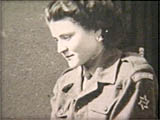
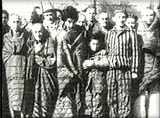
Praised for her selfless and pioneering work, Bamber is the subject of a new book by Neil Belton, "The Good Listener: Helen Bamber, A Life Against Cruelty." It chronicles Bamber's life, beginning with her first experience with victims of torture in 1945, when as a 20-year-old, she worked with survivors of the Bergen Belsen Concentration Camp in Germany. After the war, she returned to London, where she worked with children who had survived the camps.
|
||||||||||||||||
| A conversation with Helen Bamber | |||||||||||||||||
|
HELEN BAMBER: The medical foundation was established at the end of 1985, and the purpose of the organization was to offer a comprehensive, holistic service to people who live in the UK and who suffered torture. We have seen over 16 -- I think it's now about 17,500 people since we started. We saw, last year, just under 3,000 new people.
CHARLES KRAUSE: What happens, or what has happened, to the people who come to your foundation? What are some of the kinds of things that these people have been through? HELEN BAMBER: The torture? CHARLES KRAUSE: Yes. HELEN BAMBER: It's so difficult to describe torture. People are often suspended in very uncomfortable positions. The arm is held over the back, and the other arm drawn together so that the two hands meet. The two hands meet, and people will be strung up in that position. Electricity then may be applied to sensitive parts of the body so that the body convulses in that very uncomfortable situation that they're held in. They may be burnt. They may be beaten very severely. The soles of the feet is a very common form of beating.
CHARLES KRAUSE: In your view, as someone who has worked with the victims of torture, and who is dedicated to trying to stop torture in the world, is it important that the leaders of governments like General Pinochet and Mr. Milosevic are brought to trial and held accountable for torture? Will that make any difference? HELEN BAMBER: I think that Milosevic is somebody who is impervious to reason and impervious to how many deaths he creates in the pursuit of his aims. That's the problem. How can you recover, really recover, when your torturers are walking around, and where the people responsible for them are walking free and going about their business? That's hard. You can't have a healthy society in those circumstances. |
|||||||||||||||||
| A lifetime of service | |||||||||||||||||
|
HELEN BAMBER: I went to Germany with a Jewish relief unit under the auspices of AMRA. CHARLES KRAUSE: In 1945? HELEN BAMBER: In 1945. CHARLES KRAUSE: Right after it was liberated by the British army.
There was also, amongst those that I worked with, a need to hold you tight and to tell you their stories. And I've often described that as something quite extraordinary. It was less like listening to people talking than witnessing somebody almost vomiting out the must appalling stories. And I was, in my naivete, unable at first to cope with my own inability to do something about this, and it only came with time that I understood that I couldn't change the past; that all I could do was to listen.
HELEN BAMBER: It's a very good question, and it's a very difficult one to answer. It's, I suppose for some, an effective way of maintaining political power. I think it's fearful governments, governments who want to eliminate an enemy and control the population. And by torturing some of the main opponents, it's an example to others of what might happen to them. I don't think it ever really works. You never get the names that you want. You never get total political control. There will always be a movement for change. There will always be people who will surmount it. But it's a devastating practice, and it is unbelievable that it continues in over 90 countries today. I wish I had the answer. |
|||||||||||||||||
| Overcoming 'terrible things' | |||||||||||||||||
|
CHARLES KRAUSE: In this book, one of the questions that Neil Belton asks again and again is why someone dedicates their life to good, to doing good, to trying to help the victims of torture, as you have done. Why have you spent your life at this work, doing this sort of thing?
We could put it like that, that I've been trying to overcome my fear and my wish to see change. I believe that we can make change, but it's so difficult, but that's what I'm working for. I want more understanding of why we carry violence within us that, given certain opportunities, spurts out into cruelty. And we're not good at that. We've conquered so much in the 20th century in terms of medicine and science, but we've learned relatively little about ourselves and we are very cruel beasts. But we have -- we have other things as well. CHARLES KRAUSE: Thank you very much. |
|||||||||||||||||


 CHARLES
KRAUSE: It was in London in 1985 that Helen Bamber founded the Medical
Foundation for the Care of Victims of Torture. Since then, she and her
colleagues have provided both physical and psychological therapy to
more than 17,000 people, victims of torture from more than 80 countries.
CHARLES
KRAUSE: It was in London in 1985 that Helen Bamber founded the Medical
Foundation for the Care of Victims of Torture. Since then, she and her
colleagues have provided both physical and psychological therapy to
more than 17,000 people, victims of torture from more than 80 countries.
 Eventually,
she joined Amnesty International, working to expose torture in countries
like Chile and Argentina. In 1993, Bamber also testified on behalf of
a Palestinian prisoner she believed had been tortured by the Israelis.
She has said it was a particularly difficult decision because she is
Jewish. We talked to Helen Bamber recently in New York City.
Eventually,
she joined Amnesty International, working to expose torture in countries
like Chile and Argentina. In 1993, Bamber also testified on behalf of
a Palestinian prisoner she believed had been tortured by the Israelis.
She has said it was a particularly difficult decision because she is
Jewish. We talked to Helen Bamber recently in New York City.  CHARLES
KRAUSE: Thank you, Mrs. Bamber, very much, for joining us. Tell me about
your foundation. How many victims of torture do you treat each year,
and what do you try to do for them?
CHARLES
KRAUSE: Thank you, Mrs. Bamber, very much, for joining us. Tell me about
your foundation. How many victims of torture do you treat each year,
and what do you try to do for them?  Torture's
a very complex issue. It affects not only somebody's body that's been
assaulted, and maybe even mutilated or injured, it's about the effect
on the family and on the children. And so we began to develop services
that were what we felt to be appropriate for people whose cultures were
different, whose belief systems were different, whose views of healing
were different than perhaps our own, so that listening to them, understanding
what mattered to them, became very important indeed, so that we entered
a learning situation as much as, what, a caring or giving situation.
Torture's
a very complex issue. It affects not only somebody's body that's been
assaulted, and maybe even mutilated or injured, it's about the effect
on the family and on the children. And so we began to develop services
that were what we felt to be appropriate for people whose cultures were
different, whose belief systems were different, whose views of healing
were different than perhaps our own, so that listening to them, understanding
what mattered to them, became very important indeed, so that we entered
a learning situation as much as, what, a caring or giving situation.
 Our
work in the early days was about identifying torture, very sophisticated
forms of torture, where methods were used to maximize pain but to leave
few signs, as we saw in Latin America and in South Africa in the 70's,
for example; in the former Soviet Union, where the misuse of psychiatry
is a form of torture, actually, where people were forcibly drugged with
pain-inducing drugs, and so on.
Our
work in the early days was about identifying torture, very sophisticated
forms of torture, where methods were used to maximize pain but to leave
few signs, as we saw in Latin America and in South Africa in the 70's,
for example; in the former Soviet Union, where the misuse of psychiatry
is a form of torture, actually, where people were forcibly drugged with
pain-inducing drugs, and so on. CHARLES
KRAUSE: You yourself were a young woman when you first came in contact
with victims -- in fact, victims of the Holocaust. I wonder if you would
tell us a little bit about how you became involved in that, and how
that affected your outlook and your determination to do something about
it.
CHARLES
KRAUSE: You yourself were a young woman when you first came in contact
with victims -- in fact, victims of the Holocaust. I wonder if you would
tell us a little bit about how you became involved in that, and how
that affected your outlook and your determination to do something about
it.  HELEN
BAMBER: Not immediately after it was liberated, some few months after
it was liberated. So Camp One, the infamous Camp One, which stays in
people's mind from the films that we see of Belsen, had been burnt down
because of the typhus. The disease was rampant. By the time I got there,
people were recovering, and some were still very ill, and many died.
But recovery brought with it memory. I think that people who'd been
starved for so long and had been subjected to such immense cruelty were
really in a state of almost what one might call in jargon "psychic
numbing." I think they were unable to remember everything.
HELEN
BAMBER: Not immediately after it was liberated, some few months after
it was liberated. So Camp One, the infamous Camp One, which stays in
people's mind from the films that we see of Belsen, had been burnt down
because of the typhus. The disease was rampant. By the time I got there,
people were recovering, and some were still very ill, and many died.
But recovery brought with it memory. I think that people who'd been
starved for so long and had been subjected to such immense cruelty were
really in a state of almost what one might call in jargon "psychic
numbing." I think they were unable to remember everything.  CHARLES
KRAUSE: Why is it, do you think, that countries which are considered
civilized countries-- countries like Chile, countries like Argentina,
countries like Israel, where you have, in fact, been and testified about
the use of torture-- why do they continue to use torture as a method
against their own people?
CHARLES
KRAUSE: Why is it, do you think, that countries which are considered
civilized countries-- countries like Chile, countries like Argentina,
countries like Israel, where you have, in fact, been and testified about
the use of torture-- why do they continue to use torture as a method
against their own people?  HELEN
BAMBER: I don't feel I'm necessarily doing good. I think that I'm using
skills, and my colleagues are using skills, to help people overcome
some very terrible things that have happened to them, to find a way
to live again. I don't think of myself as doing good, really, but what
can I say? I was influenced as a child to abhor violence and cruelty.
I lived with the fear of it for many years as a child growing up in
London, where fascists were strong, or seemed to me to be very strong,
where they were marching through the streets of London, where fascism
was growing in Europe. And I suppose in a way, I've always been dealing
with my own fears.
HELEN
BAMBER: I don't feel I'm necessarily doing good. I think that I'm using
skills, and my colleagues are using skills, to help people overcome
some very terrible things that have happened to them, to find a way
to live again. I don't think of myself as doing good, really, but what
can I say? I was influenced as a child to abhor violence and cruelty.
I lived with the fear of it for many years as a child growing up in
London, where fascists were strong, or seemed to me to be very strong,
where they were marching through the streets of London, where fascism
was growing in Europe. And I suppose in a way, I've always been dealing
with my own fears.