|
|
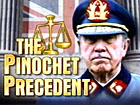
PHIL PONCE: For more on what the Pinochet case means we're joined by
Diane Orentlicher, Professor of Law at American University's Washington
College of Law and director of its war crimes research office; Anne-Marie
Slaughter, Professor of International Law at Harvard Law School and
co-director of the Center for Civil, Criminal, and Administrative Justice;
Jeremy Rabkin, Professor of Government at Cornell University and author
of the forthcoming book, Why Sovereignty Matters; and Alfred
Rubin, distinguished Professor of International Law at the Fletcher
School of Law and Diplomacy at Tufts University and a former attorney
with the Defense Department. Welcome all. Professor Orentlicher, your
reaction to the ruling that General Pinochet has no immunity.
|
|
Diplomatic
immunity?
|
|
|
 DIANE
F. ORENTLICHER, American University: Well, I think it was the right
ruling, and if I could explain why, the court was really presented with
a very narrow question, which is whether General Pinochet's acts, as
charged by Spanish courts, should be considered acts protected under
the doctrine that we don't – courts of one country don't examine the
acts of another sovereign in the exercise of sovereign power. So the
courts have to decide was this an exercise of public authority entitled
to respect by another country's courts. Now, once you're presented with
that question, you have two alternatives. You can either say torture,
disappearances, alleged genocide aren't legitimate exercises of public
authority entitled to the respect of other countries, or they're not.
I think once you understand that that was the issue presented, there's
really no way they should have come out, other than the way they did. DIANE
F. ORENTLICHER, American University: Well, I think it was the right
ruling, and if I could explain why, the court was really presented with
a very narrow question, which is whether General Pinochet's acts, as
charged by Spanish courts, should be considered acts protected under
the doctrine that we don't – courts of one country don't examine the
acts of another sovereign in the exercise of sovereign power. So the
courts have to decide was this an exercise of public authority entitled
to respect by another country's courts. Now, once you're presented with
that question, you have two alternatives. You can either say torture,
disappearances, alleged genocide aren't legitimate exercises of public
authority entitled to the respect of other countries, or they're not.
I think once you understand that that was the issue presented, there's
really no way they should have come out, other than the way they did.
PHIL PONCE: Professor Rabkin, is that what it comes down to, a question
of the kinds of acts that a former dictator is accused of being responsible
for or charged with?
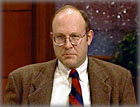
 JEREMY
RABKIN, Cornell University: No. I think that's not right. First of all,
I want to take issue with the title of the statement – Justice for Dictators.
There's no way this can be confined to dictators. None of the relevant
international standards make that distinction between dictators and
democracies. Chile, itself, is a democracy now. Chile doesn't want to
proceed, and Britain is saying or at least is saying it's all right
for Spain to pursue a case, but Chile doesn't want to pursue. Once you
let that principle loose in the world it will quickly be applied to
Israel; it will probably be applied to the United States. The definitions
of torture, the definitions of war crimes are so loose and elastic they
can be applied to any country that finds itself in civil strife. I am
not defending things that General Pinochet did. Some of the things he
did were terrible. But there are people in Russia, there are people
in China, there are people in South Africa, who have done many worse
things on a much larger scale. People aren't saying let's reach into
those countries, grab some of them, and put them on trial. I think this
is the equivalent of assassinating of a foreign leader. JEREMY
RABKIN, Cornell University: No. I think that's not right. First of all,
I want to take issue with the title of the statement – Justice for Dictators.
There's no way this can be confined to dictators. None of the relevant
international standards make that distinction between dictators and
democracies. Chile, itself, is a democracy now. Chile doesn't want to
proceed, and Britain is saying or at least is saying it's all right
for Spain to pursue a case, but Chile doesn't want to pursue. Once you
let that principle loose in the world it will quickly be applied to
Israel; it will probably be applied to the United States. The definitions
of torture, the definitions of war crimes are so loose and elastic they
can be applied to any country that finds itself in civil strife. I am
not defending things that General Pinochet did. Some of the things he
did were terrible. But there are people in Russia, there are people
in China, there are people in South Africa, who have done many worse
things on a much larger scale. People aren't saying let's reach into
those countries, grab some of them, and put them on trial. I think this
is the equivalent of assassinating of a foreign leader.
PHIL PONCE: Professor.
JEREMY RABKIN: Yes. We've had a lot of nastiness in the world, and
people have really refrained from that because they say it's a dangerous
thing to let loose.
|
|
| Debating
jurisdiction. |
|
PHIL PONCE: Professor Slaughter, is this the equivalent of assassinating
a former leader?
 ANNE-MARIE
SLAUGHTER, Harvard University: No. Jeremy Rabkin's notion that there's
no distinction in international law between states that violate human
rights and states that don't, and democracies, and non-democracies just
flies in the face of the evolution of human rights law since 1945 and
certainly since 1945 and certainly since 1989. This - the law has evolved
in such a way precisely as to tell states that they have obligations
to their own citizens, that they have responsibilities, as well as rights,
and that means that states that obey human rights, that have a rule
of law and, indeed, that maintain democratic elections, are increasingly
treated differently than states that don't. ANNE-MARIE
SLAUGHTER, Harvard University: No. Jeremy Rabkin's notion that there's
no distinction in international law between states that violate human
rights and states that don't, and democracies, and non-democracies just
flies in the face of the evolution of human rights law since 1945 and
certainly since 1945 and certainly since 1989. This - the law has evolved
in such a way precisely as to tell states that they have obligations
to their own citizens, that they have responsibilities, as well as rights,
and that means that states that obey human rights, that have a rule
of law and, indeed, that maintain democratic elections, are increasingly
treated differently than states that don't.
PHIL PONCE: So are you saying that in the examples that Professor Rabkin
gave - Israel and the United States - because of their "democratic traditions,"
they would be, what, exempt from this kind of a possibility?
ANNE-MARIE SLAUGHTER: Well, I don't think we can say that they would
be exempt. But I do think there are lots of safeguards that mean that
to equate an Israeli leader or a US leader with Gen. Pinochet is really
a bogeyman that is often trotted out but there's very little support.
It's - if anything - we have problems getting prosecution, so the United
States went around the world last year trying to find a country that
was willing to try Pol Pot and there were no takers. This has been an
incredible case but a rare one in which a country was willing to exercise
jurisdiction over General Pinochet, and there are far more obstacles
against prosecution and safeguards one court looking at another court's
jurisdiction, all of the back and forth between not only Britain and
Spain, but the British political and judicial authorities that would
almost certainly protect most of the leaders in the world, other than
recognize war criminals.
PHIL PONCE: Thank you. Professor Rubin, does the - does this action
against General Pinochet open the door to other world leaders?
 ALFRED
P. RUBIN, Tufts University: Well, I think it's a pretty horrible action.
One forgets that the British court split three to two on this, was a
narrow decision based upon British law. It was not a major international
law holding, despite the sayings of some of the judges there. They exaggerated
their position. And forgets that Judge Garzon in Spain is not an international
law judge; he's a Spanish judge put in position by the Spanish constitutional
system, applying only the Spanish version of international law to the
acts of Pinochet. Now, there's nothing to prevent the Iranians from
applying the Iranian version of international law to General Schwarzkopf.
I guess Iraq would do that or to a Salman Rushdie, and we long ago decided
that international law really does not justify criminal charges against
individuals. It may involve diplomatic correspondence about states that
don't forbid torture within their territory, but to say that it applies
directly to individuals and that there's an international criminal law,
somehow, they can be applied by states is such a tremendous far reach,
and I was very pleased that the British courts, except for one or two
judges that mistook international law, really did not resolve that issue,
didn't presume to step on it. ALFRED
P. RUBIN, Tufts University: Well, I think it's a pretty horrible action.
One forgets that the British court split three to two on this, was a
narrow decision based upon British law. It was not a major international
law holding, despite the sayings of some of the judges there. They exaggerated
their position. And forgets that Judge Garzon in Spain is not an international
law judge; he's a Spanish judge put in position by the Spanish constitutional
system, applying only the Spanish version of international law to the
acts of Pinochet. Now, there's nothing to prevent the Iranians from
applying the Iranian version of international law to General Schwarzkopf.
I guess Iraq would do that or to a Salman Rushdie, and we long ago decided
that international law really does not justify criminal charges against
individuals. It may involve diplomatic correspondence about states that
don't forbid torture within their territory, but to say that it applies
directly to individuals and that there's an international criminal law,
somehow, they can be applied by states is such a tremendous far reach,
and I was very pleased that the British courts, except for one or two
judges that mistook international law, really did not resolve that issue,
didn't presume to step on it.
PHIL PONCE: Professor Orentlicher, how about this question? Would General
Schwarzkopf under the way this ruling seems to suggest, would he have
anything to be concerned about?
|
 |
| Criminal
conduct. |
|
DIANE F. ORENTLICHER: Well, can I first say I just have to disagree
with the statement that international law doesn't criminalize conduct;
it rarely criminalizes conduct; but it has certainly been the case since
Nuremberg that international law makes some conduct in international
crime, and that means, among other things, that any state which has
jurisdiction over the criminal can prosecute him. Now, as Anne-Marie
Slaughter indicated, it is very rare, indeed, that countries have been
willing to exercise that kind of jurisdiction. Israel was willing to
do in the case of Adolf Eifman, but it's certainly the case that certain
conduct is criminal. Having said that, very few atrocities are considered
international crimes for all the reasons various guests have suggested.
We don't want havoc in international relations; we don't want countries
judging political action of other countries. And so international law
makes it possible to exercise this type of jurisdiction -- only over
a handful of the most serious crimes. So, should we worry about how
far this goes? Of course we should worry about it. But I think that
the arguments that have been made are like saying if it's possible to
get custody over a serial killer, we shouldn't prosecute him because
somewhere there might be a renegade prosecutor who might prosecute the
wrong person on trumped up charges of serial killing, and that obviously
doesn't make sense.
PHIL PONCE: Professor Rabkin, following up on the point of the clarity
of what acts do or do not fall in – is it that clear – what acts are
bad enough to warrant this kind of action?
 JEREMY
RABKIN: No. It absolutely is not clear. First of all, there is disagreement
even in the Pinochet case, what is he being charged with. The Spanish
have said genocide. The British courts didn't seem to think that was
right. Then there was a subsequent argument, well, it was torture, and
there's some dispute over that. Really, maybe it was terrorism. If you
go look at the international conventions that define these things, they're
defined in extremely broad general terms – torture, which seemed to
be the one that British judges in the House of Lords focused on – it's
actions which caused severe mental or physical pain. I think when General
Schwarzkopf orders a bombing, that causes a lot of severe pain. And
I want to go back to the previous point, which, with all respect, I
think Professor Orentlicher is not giving really an honest answer or
a reliable answer. She says the international community knows the difference
between democracies and dictatorships. He absolutely does not. All these
human rights conventions that you're talking about were negotiated with
the Soviet Union; they've been signed by other dictatorships. They very
carefully avoid making distinctions between dictatorships and democracies.
So I think absolutely this is available to be used against the United
States or Israel; there are not a lot of safeguards, because we are
now – what we're precisely talking about is a country on its own says
this is my – this is our unique national interpretation. If Algeria
manages to get hold of Henry Kissinger or Schwarzkopf or Ariel Sharon,
what is to stop Algeria from going forward to the prosecution? The answer
until last week was this is never done, it's never done. It has never
been done. The answer now is maybe the United States would be upset
and then we have to ask what would we do about it and maybe the answer
is we would bomb them, but I sort of doubt that, so we've let loose
on a thing which is I think quite threatening. JEREMY
RABKIN: No. It absolutely is not clear. First of all, there is disagreement
even in the Pinochet case, what is he being charged with. The Spanish
have said genocide. The British courts didn't seem to think that was
right. Then there was a subsequent argument, well, it was torture, and
there's some dispute over that. Really, maybe it was terrorism. If you
go look at the international conventions that define these things, they're
defined in extremely broad general terms – torture, which seemed to
be the one that British judges in the House of Lords focused on – it's
actions which caused severe mental or physical pain. I think when General
Schwarzkopf orders a bombing, that causes a lot of severe pain. And
I want to go back to the previous point, which, with all respect, I
think Professor Orentlicher is not giving really an honest answer or
a reliable answer. She says the international community knows the difference
between democracies and dictatorships. He absolutely does not. All these
human rights conventions that you're talking about were negotiated with
the Soviet Union; they've been signed by other dictatorships. They very
carefully avoid making distinctions between dictatorships and democracies.
So I think absolutely this is available to be used against the United
States or Israel; there are not a lot of safeguards, because we are
now – what we're precisely talking about is a country on its own says
this is my – this is our unique national interpretation. If Algeria
manages to get hold of Henry Kissinger or Schwarzkopf or Ariel Sharon,
what is to stop Algeria from going forward to the prosecution? The answer
until last week was this is never done, it's never done. It has never
been done. The answer now is maybe the United States would be upset
and then we have to ask what would we do about it and maybe the answer
is we would bomb them, but I sort of doubt that, so we've let loose
on a thing which is I think quite threatening.
PHIL PONCE: Professor Slaughter, quite threatening, or is it possible
that a new area of international law is developing where a country can
go after a former enemy in a foreign court?
|
 |
| New
area of international law? |
| |
ANNE-MARIE
SLAUGHTER: Well, there's no question that in many ways this was a landmark
decision but I agree with Jeremy Rabkin that these issues are actually
quite complicated and indeed, although the Law Lords decided that Pinochet
was not immune, that was simply the first step. Now the question is
going to be to decide can he be extradited and that is indeed a question
of back and forth between British and Spanish courts, but that's precisely
the kinds of safeguards that would prevent any traveling leader from
being roped into some third country and then being extradited. If this
process is allowed to go forward by the British home secretary, it will
take months of very careful legal argumentation. And I have to disagree
with Al Rubin, that this is an international law. Those five opinions
of the Law Lords carefully canvas international treaties, international
conventions, the writings of international legal scholars, the statutes
of the Bosnia tribunal, the Rwanda tribunal, the Nuremberg principles.
What they then did was very carefully decide the ways in which that
law limited – actually was integrated into national law. But national
courts will decide that differently and very carefully aware of the
political implications. In this case, in the end, Pinochet's counsel
had to admit that the logic of immunity would have immunized Adolf Hitler.
And at that point three of those Law Lords said that's going too far.
PHIL PONCE: Professor Rubin, would this logic have immunized Adolf
Hitler?
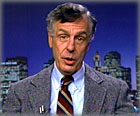 ALFRED
RUBIN: I think it would, and I think it's right to do so. If Hitler
had been given a visa to visit Great Britain to charge him criminally
with things over which British law has nothing to do, it would have
been rather extreme. I don't want to defend Pinochet. He might well
be a villain, but one has to bear in mind that he has not yet been tried.
The issue is not at this moment whether he's a villain or not; it's
who should try him for his alleged villainies. He might well be a horrible
person, but can he defend himself here? Can he call on the cabinet minutes
to show that, for example, if it's possible, that he was threatened
himself with assassination if he didn't simply perform a sign certain
documents or let his name be used in public statements with which he
deeply disagreed, does he have the criminal intent that he's accused
of having? He might. I don't know. But he can't defend himself, and
he can't defend himself in Spain. ALFRED
RUBIN: I think it would, and I think it's right to do so. If Hitler
had been given a visa to visit Great Britain to charge him criminally
with things over which British law has nothing to do, it would have
been rather extreme. I don't want to defend Pinochet. He might well
be a villain, but one has to bear in mind that he has not yet been tried.
The issue is not at this moment whether he's a villain or not; it's
who should try him for his alleged villainies. He might well be a horrible
person, but can he defend himself here? Can he call on the cabinet minutes
to show that, for example, if it's possible, that he was threatened
himself with assassination if he didn't simply perform a sign certain
documents or let his name be used in public statements with which he
deeply disagreed, does he have the criminal intent that he's accused
of having? He might. I don't know. But he can't defend himself, and
he can't defend himself in Spain.
|
|
| |
Protecting
world leaders. |
| |
What it comes down to really is an argument as to whether in international
law there is such a thing as international criminal law that applies
to individuals. Nuremberg, despite Diane Orentlicher's statement, is
hardly a good example. After all, at Nuremberg itself, Admiral Nimitz,
the American admiral, confessed in writing that he had done exactly
what Admiral Doenitz had been convicted, or was about to be convicted
for doing an unrestricted submarine warfare. Nimitz was not only not
tried; he is considered a hero. The Molotov-Ribbentrop pact, in the
background of Ribinchov's conviction – and it was agreed never to mention
the Molotov-Ribbentrop pact because Molotov couldn't possibly be tried;
he was a hero. I think the notion that international criminal law grows
out of the writings of publicists and the tendentious proceedings of
victors'tribunals is a gross exaggeration and is not permitted actually
by the statute of the international court of justice which defines international
law and says these are subsidiary sources, but you've got to look to
the practice of states and the real words of the treaties – not what
you –
PHIL PONCE: Let me get Professor Orentlicher's response to that, Professor.
DIANE F. ORENTLICHER: Again, I think that's really writing off the
last 50 years of international legal development. The arguments that
have just been made simply don't make sense in light of what the international
community has done the last two years to respond to the serious atrocities
that were committed in Bosnia and Rwanda.
 PHIL
PONCE: So you're saying there is a body of international criminal law
that is recognized and people know what the rules are? PHIL
PONCE: So you're saying there is a body of international criminal law
that is recognized and people know what the rules are?
DIANE F. ORENTLICHER: -- being enforced and, in fact, the single greatest
criticism that has been lodged against the Yugoslavia war crimes tribunal
is that it hasn't gone far enough. There was a resolution passed in
Congress – could I just finish – there was a resolution passed in Congress
condemning the tribunal because it hadn't yet indicted President Milosevic,
the single greatest accomplishment by all accounts of the Rwanda tribunal,
is that it accepted a guilty plea of a former prime minister of Rwanda.
Those were considered the greatest – that was considered the greatest
accomplishment of this area of international law. To suggest that we
simply cannot ever hold former heads of state accountable for the most
serious atrocities simply flies in the face of where international law
has been going. The problem, as you suggest, I agree with you, is that
this area of law has not been adequately enforced. And I think that's
a serious problem that we need to focus on. I would like to get back
to one issue that was raised –
PHIL PONCE: Let me get a very quick response from Professor Rabkin
on this area.
JEREMY RABKIN: If I could.
PHIL PONCE: Yes, go ahead, Professor.
|
 |
| |
International
tribunals. |
| |
JEREMY
RABKIN: I think you're missing the point by citing these international
tribunals. It's one thing if countries want to agree – come together
and agree that we will have an international tribunal for these purposes.
As a matter of fact, most of the world did agree last summer on an international
criminal court. That would be one thing. That court didn't have jurisdiction
over Pinochet. It has a number of safeguards, such as there's no retroactivity
so you can't reach back 20 years. It has – it has a territorial principle,
so that at least – one of the – either the victim or the perpetrator
has to be from a country that signed it –
PHIL PONCE: Professor Rabin, I'm really sorry – we're --
JEREMY RABKIN: That's what the world would agree to and what you're
instead –
PHIL PONCE: Sir, I've got to interrupt you. We're out of time. I wish
we had more time, Professors all, thank you very much.
JEREMY RABKIN: Sorry.
|
|