Online NewsHourthe web site of The NewsHour with Jim Lehrer
Online NewsHourThe 1906 San Francisco Earthquake: 100 Years LaterNewsHour Science Reports
Interactive Additional Features:
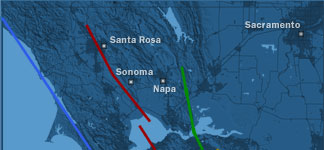
Map: Major Bay Area Faults Posted: March 20, 2006   
Concord-Green Valley FaultHayward-Rodgers Creek FaultSan Andreas FaultGreenville FaultConcord-Green Valley FaultMt. Diablo Thrust FaultCalaveras FaultHayward-Rodgers Creek FaultSan GregorioSan Andreas FaultSan GregorioSan Andreas FaultMt. Diablo Thrust FaultHayward-Rodgers Creek FaultGreenville FaultConcord-Green Valley FaultCalaveras FaultSan GregorioSan Andreas FaultCalaveras Fault
 Mt. Diablo Thrust Fault
Probability for one or more magnitude 6.7 or greater earthquakes from 2003 to 2032: 3 %
The Mt. Diablo fault is considered a thrust fault because the ground on either side of the fault moves up and over the other, unlike a strike-slip fault in which the ground moves horizontally. It is considered a "blind" thrust fault because it ends below the earth's surface. The Mt. Diablo fault is the most active thrust fault in the bay area and lies beneath the East Bay Mountain near San Francisco.
Main: The Science Reports
Main: The 1906 Earthquake
Birth of Earthquake Science
Bay Area Preparedness
P-wave Warnings
Map: Major Bay Area Faults
Slide Show: Deconstructing the 1906 Quake
Interactive: Will This Building Stand?
Lesson Plan: History Through First-Person Accounts