This is an "I-told-you-so" week for many people, as we have answers to two questions that have preoccupied Washington in recent weeks: Will the U.S.-Iran ceasefire hold? And will Graham Platner's campaign survive? Join moderator Jeffrey Goldberg, Peter Baker of The New York Times, Leigh Ann Caldwell of Puck, Susan Glasser of The New Yorker and Adam Harris of The Atlantic to discuss this and more.
Full Episode: Washington Week with The Atlantic full episode, 7/10/26
Jul. 10, 2026 AT 9:15 p.m. EDT
TRANSCRIPT
Notice: Transcripts are machine and human generated and lightly edited for accuracy. They may contain errors.
Jeffrey Goldberg: We have answers to two questions that have preoccupied Washington in recent weeks. Will the U.S.-Iran ceasefire hold and will Graham Platner's campaign survive? But we're waiting for an answer to a third question. What is going on with Senator Mitch McConnell? All this and more next.
Good evening, and welcome to Washington Week.
This is very much an I-told-you-so kind of week for many people in domestic and international politics. On the domestic side, a lot of people have been telling the Democratic Party, maybe you shouldn't pin your Senate hopes on a guy with a Nazi tattoo. It wasn't the Nazi tattoo that did in Graham Platner, of course. It was a rape allegation that caused the left wing of the party to finally give up on their beloved putative oyster man.
The big question for Democrats now is how to salvage Maine, which they pretty much have to win in order to take control of the Senate. It's looking to be a real self-inflicted wound for the party.
On the international front, the I-told-you-sos are coming from people who had no faith in either the Iranian regime's desire to shed its deeply embedded extremism, or in the Trump administration's ability to negotiate a complex and durable deal, a deal that might cause American voters, among others, to think that maybe this war was actually worth it.
Joining me tonight to discuss all of this and more, Peter Baker, the chief White House correspondent at The New York Times, Leigh Ann Caldwell is the chief Washington correspondent at Puck, Susan Glasser is a staff writer at The New Yorker, and Adam Harris is a staff writer and the host of Radio Atlantic.
Welcome, all of you.
Adam, I'll start with you. I guess the Platner story in Maine is about the importance of vetting, among other things. I mean, the Democrats are really in a hole here because of what happened.
Adam Harris, Host, Radio Atlantic: They are, right? And they knew kind of going into this race, kind of over the last several months, that they needed to flip at least four seats, right? In Maine, Michigan, Ohio, Alaska, right? These were the seats that they were sort of looking at as the places where they --
Jeffrey Goldberg: Maine, almost like number one.
Adam Harris: Maine, almost number one, right? But I think that a part of this, it comes out of them over-learning or sort of learning the wrong lesson from 2020 and 2024, sort of looking for the prototypical candidate who can win back, you know, the sort of isolated white male voters that they may have thought that they lost to President Trump, as opposed to sort of understanding a policy preference that voters might be thinking of a dissatisfaction with an establishment that they might be thinking of, as opposed to an identity that they thought that the voters might be interested in.
Jeffrey Goldberg: Remember the Brady Bunch episode when they made Greg a rockstar because he fit the suit?
Leigh Ann Caldwell, Chief Washington Correspondent, Puck: I actually don't.
Jeffrey Goldberg: Because you're younger than I am? Is that what you're trying to imply? You're successfully implying it, but that's what I -- that's what came to mind for me.
Leigh Ann, how did this happen? Like how do you go from a guy no one's ever heard of to becoming the standard bearer for what Adam is talking about this, the white working class, we're going to get them back, to this disaster?
Leigh Ann Caldwell: So, obviously Graham Platner was found by these political operatives, young political operatives who did very little vetting. And he was connected with an agency that focuses on these progressive candidates.
But how he gained so much support is he is charismatic. He is -- was a good messenger, and he had the message that the progressive left, the Bernie Sanders wing of the party is really looking for. It's anti-corporate, anti-AIPAC. There's calling out genocide in Gaza, Medicare for all, all of these economic issues that were really important to this faction of the Democratic Party that really motivated voters in Maine.
Jeffrey Goldberg: Right. But -- well, it's very interesting to look, to sort of do a postmortem of the process, but let's talk about what happens in the next few days as well. Because Maine, Democrats in Maine have to get a candidate to run against a very formidable person.
Leigh Ann Caldwell: Yes.
Jeffrey Goldberg: So, what are they going to do to figure out how to get this going again?
Leigh Ann Caldwell: Yes. So, the Maine Democratic Party is trying to figure out a process in a very quick amount of time. They have to have a process by June 27th -- or July 27th.
Jeffrey Goldberg: There's never been a process before for this?
Leigh Ann Caldwell: No.
Jeffrey Goldberg: Because he's been the -- he is the nominee.
Leigh Ann Caldwell: Yes.
Jeffrey Goldberg: He was the nominee.
Leigh Ann Caldwell: Friday evening, he finally officially withdrew.
Jeffrey Goldberg: Right.
Leigh Ann Caldwell: So, there are candidates who are putting their names forward. They have to get 500 signatures to be officially confirmed or on the ballot.
And then everyone's trying to figure out what this process is. They are still working on it. But what they don't want is they don't want the party-- they don't want their thumbs on the scale by the National Democratic Party. They don't want to be accused, like they are look -- that they are trying to skirt or place someone that they want in the process. They are -- took a lot of lessons from the Kamala Harris, Joe Biden situation two years ago.
So, they're trying to make it look as open and transparent and inclusive for Maine Democrats as possible. But I will say there's this internal battle still of what this candidate is going to look like. Some of the progressives are already getting behind people. There's the more centrist faction of the party who says, we need someone with a pulse who can unite the party.
And so, you know, this is just the beginning of a very complicated way to try to beat the most battle-tested Republican senator on the map right now.
Jeffrey Goldberg: Right. Peter, I want you to watch Senators Elizabeth Warren and Bernie Sanders talk about Platner before the rape allegation surfaced.
Sen. Elizabeth Warren (D-MA): And I said to myself, that's my kind of man. Because that is a man who not only has the values, but a man who believes in accountability.
Sen. Bernie Sanders (I-VT): The guy that I saw up on the stage in Portland, Maine, rather a brilliant guy. I mean, a really, a strong fighter for the working class, very articulate, very smart. And I think as a nation, especially given the fact that we have a president who was convicted of 34 felonies, maybe we have to do a little bit of forgiveness.
Jeffrey Goldberg: So, going to Adam's point, is this desire on the part of the Democrats for the perfect archetype, is that hurting the party? Rather than looking for individuals who might make good senators and who could win their states, this hunt for this archetype, is that what's --
PETER BAKER, Chief White House Correspondent, The New York Times: Yes, the hunt for an archetype, and I think there's a willingness to suspend disbelief about people from your own party that you wouldn't have for people in the other party, right? In other words, they would never have accepted a Republican candidate who had a Nazi tattoo. They would've said, that's outrageous, how could the Republicans nominate somebody like that? But if it's our guy, well, let's talk about redemption. Let's talk about somebody who has overcome his past, to speak out for the values that we endorse.
And I think that, you know, it's a sign of where politics is today, right? We are willing to accept all kinds of things on our side because we don't like the other side so much. And where do you draw that line? And in this case, they were willing to take a guy who had no history in elected politics that they could then, you know, vet.
And if you want to have an outsider, you're going to end up taking a chance. There's a reason why insiders have run again and again, is because they have, for the most part, had some vetting at least. But this is an anti-insider year. You want to run against the insiders. That's the risk.
Jeffrey Goldberg: I have to say I'm a little bit shocked that you're suggesting that tribalized hyper-partisanship makes you stupid. But --
Peter Baker: It's a strong word but I think it certainly changes your viewpoint.
Jeffrey Goldberg: Right. You're not saying --
Adam Harris: And I also like -- right. There's this world, right, where we should be thinking of forgiveness in politics, right? This isn't just Platner, right? This is any generic candidate, right? People should be able to have things in their past that -- it's like I've grown from that.
But our colleague, Liz Bruenig, wrote about a month ago about the idea that he was also obfuscating. He wasn't being completely upfront at the beginning about all of the things that would have shown up, right? It goes to the idea of vetting, right?
Susan Glasser, Staff Writer, The New Yorker: And to be clear, though, I'm not sure that most Americans would agree with the idea that we should forgive someone who's been credibly accused of raping someone that maybe in their personal life or maybe that, you know, they should have a job. But do you really want someone like that in the Senate, even if they say, well, gee, you know, I had a really tough past? I mean, you know, like --
Jeffrey Goldberg: Well, the Democrats had a very stringent attitude about Brett Kavanaugh for something much --
Susan Glasser: Well, and, in fact, of course, Brett Kavanaugh is the main issue that Democrats had hoped to talk about when it comes to defeating Susan Collins.
Jeffrey Goldberg: Right.
Susan Glasser: So, you know, first of all, right, if you're explaining, you're losing. And I haven't heard the word Susan Collins very much at all this week. It was really notable.
If you looked at Graham Platner's very combative video announcing very reluctantly that he was pulling out of the race, he never mentioned Susan Collins. He never mentioned, you know, the need for his party to come together or, you know, the goals that he said he was professing. It was a very -- I thought it was a very angry, narcissistic performance.
And, again, it points to this idea and this question, I think, for Democrats as well as Republicans. Is it the combative style of politics that Democrats now want in their candidates, or is it about an ideological shift? And I think, you know, who didn't have a hangover this week, in many ways, or a reminder of Democrats with Joe Biden and Kamala Harris and a last-minute replacement of a candidate that doesn't tend to work out all that well.
The New York Times did a good job of pulling up all of the Senate races in the last 30 years where this has happened. It's very unusual. Only nine times, and, by the way, only twice did the replacement candidate win.
Jeffrey Goldberg: Right. Going back to what Adam was saying I think that the rape allegation -- I shouldn't say that it's across the board it voids out a candidate's efficacy, because we know some examples, obviously, some pretty large examples.
But I think Adam was talking more about the Nazi tattoo, which, by the way, and we've talked about this on the show in last month or two, I was surprised that the Nazi tattoo by, in and of itself wasn't -- and Peter's exactly right. If a Republican candidate, even a very moderate Republican candidate, a Susan Collins, so it's hard to picture Susan Collins with any tattoo, a moderate Republican who had a Nazi tattoo, the Democrats would come down like a ton of bricks, obviously, on them.
Peter Baker: And yet our politics is such that on the same day that Graham Platner was accused of this, Donald Trump was ordered to pay $5 million to E. Jean Carroll, finally resolving her lawsuit, her successful lawsuit accusing him of sexual abuse. He was found liable by a court of law for having sexually abused E. Jean Carroll, and he's the president of the United States.
Jeffrey Goldberg: Well, for reasons that we'll take up books, we understand generally that there's huge carve-outs in our culture for Donald Trump's behavior, Access Hollywood, going back to that.
Susan Glasser: And his party. I mean, you know, look at Ken Paxton and, you know, where Republicans have not abandoned him. I didn't see a big, resumed call this week for him to drop out of the race despite the many disturbing allegations against him.
Jeffrey Goldberg: Right.
Susan Glasser: Now, the flip side is, and I'm not usually, as you know, Jeff, the person who's like, oh, let's be all optimistic and upbeat here. But from the point of view of Democrats, this was a pretty divisive, damaging, I-told-you-so week. However, it did come before this July 13th deadline for them to get a new candidate who might have a better chance to win.
And I think if you look at the map overall of the Senate, to your point, you know, the fact that it's even in play is a remarkable reminder of what we haven't been talking about, which is that Donald Trump has sunk to alarming low levels with the public.
Jeffrey Goldberg: Right.
Susan Glasser: There's little sign of him recovering. And as a result of that, as well as actually some strong Democratic candidates in places like North Carolina or Ohio or Alaska that might not have otherwise been in play, you're looking at that. You're seeing huge turnout from Democrats in the primaries this year.
Jeffrey Goldberg: Well, Leigh Ann, let's talk about what Susan's referring to the national picture for the -- four seats. They need to pick up four. Are they going to get it?
Leigh Ann Caldwell: Well, actually Washington Democrats think that now that Graham Platner is out of the race, they actually think they have a better chance of beating Susan Collins.
Jeffrey Goldberg: Is that what they think, or is that what they say?
Leigh Ann Caldwell: Well, they were looking at polling leading up -- the New York Times/Siena poll showed that Platner's support was starting to soften, and that was before these rape allegations came out. It was after other allegations. His fundraising had almost completely dried up. His big donors were not giving money to him. And so there was a lot of concerns about the viability of Graham Platner before this story even was released.
And so they are thrilled that this is happening before this deadline so that they at least have an opportunity to try to get someone on the ballot to beat Susan Collins. Now, how it plays out, how the Democratic Party shuffles money around and how they spend money is still TBD. I'm told by sources that they expect to still spend in Maine, which they had announced earlier this week that if Platner was still on the ballot that they were not going to. And so they expect with someone who is a relatively normal Democrat that it will once again be in play again.
But this is a critical seat for them. This is the bluest seat of all the ones that they have to pick up in order to win back the Senate. And so we'll see.
I will just about the so many Democrats who are excusing so many things of Graham Platner, there was this really -- this internal battle that was happening with the -- in the party that the progressive left again, they were excusing all of this because this was part of their plan and so necessary for them to prove to the Democratic Party that they could win with their policies, with their people, with their priorities in a barely blue state to give them legitimacy also heading into other Senate races and into 2028.
And so that's a big reason why so many Democrats on the left were excusing this, because Platner was really their big hope of the -- of what the direction of the party could be.
Jeffrey Goldberg: Right. Adam, correct me if I'm wrong, but in the other states that are possibly in play the Democratic candidates are definitely more to the center. Maybe, well, in Michigan we have to wait and see.
Adam Harris: Yes, Michigan, is still a wait and see. But, yes, and they are more to the center.
I think to the -- but to Leigh Ann's point, right, this was an opportunity for Democrats to say, or the progressive Democrats to say, look, this is our candidate. He has the profile of someone who might draw in moderate voters, might draw in voters who actually don't pay attention that often, but they might understand identity politics a little bit better, or as they see an oysterman, right, who is -- you know, he works with his hands, and that's the sort of image that he --
Jeffrey Goldberg: He wasn't actually that much of an oysterman.
Adam Harris: He wasn't actually that much of an oysterman.
Jeffrey Goldberg: Not the biggest scandal involving this guy, but he was a hobby oysterman.
Leigh Ann Caldwell: Yes.
Adam Harris: But the -- like the little half-truths, right, that they can sort of get away with that an average viewer wouldn't see, but us, you know, kind of paying attention to it pretty often do.
Jeffrey Goldberg: Because we pay so much attention to oyster farming here at Washington Week, generally.
Adam Harris: But it did seem that he had united a sort of base there in Maine, right?
Jeffrey Goldberg: Right.
Adam Harris: And so the Democratic base was energized around his policy, even if they weren't energized around his person.
Jeffrey Goldberg: Right.
Adam Harris: And so it will be interesting seeing going forward if any of the sort of candidates who will surface can energize that base as well as drawing in some voters.
Jeffrey Goldberg: It's going to be a big theme into the fall.
Peter, I want to move to a stickier subject, even than Maine, Iran. The Iranians don't seem to be particularly interested in ceding control of the Strait of Hormuz. Donald Trump is not particularly interested in the historic landmark memorandum of understanding that was signed and almost immediately forgotten. It looks a lot like we're just in perpetual war with Iran.
Peter Baker: Yes.
Jeffrey Goldberg: Is that fair to say?
Peter Baker: Yes. No, I think it's exactly right. It turned out to be a memorandum of misunderstanding. They didn't actually agree on what they actually agreed on. And this wasn't even the hard part, right? This was just the preliminary thing in which we say we stop shooting at each other so then we can talk about the things that are really hard. We couldn't even get through that. So, it does suggest that we're not going to see a decisive agreement of any sort in the near term if we can't even get the short-term thing going.
And, clearly, President Trump doesn't seem eager to re-launch the full-scale war that he had at the very beginning. That's not going to help the Republican candidates in Maine or anywhere else. So, we're in this kind of middle ground, right, this kind of stasis, where a little bit of war and a little bit of peace, a little bit of diplomacy and no actual resolution.
And I'm not sure politically how that plays in the midterms, but that's on the factor at play, both in terms of how the White House looks at it and how the Iranians look at it, because they know our clock just like we do.
Jeffrey Goldberg: Right. But I wonder if -- in terms of the midterms, I wonder if this is now just kind of perpetual background noise in a kind of way. It's just like there's always going to be this Iran problem. Gas prices are going to be elevated. Beef is going to cost a lot. Am I wrong in saying that? Is this a real threat if it continues this way to the Republicans in November?
Susan Glasser: Yes. I mean, Jeff, I was also very struck this week that we've become so inured. It seemed to me that it was really not treated as such a big deal. Remember that, you know, for the previous 15 years, you know, just the mere thought of the United States striking Iran, even in a single bout of airstrikes, was considered to be, you know, one of the major debates that engaged foreign policy over and over again, and yet Donald Trump just sort of casually now goes back to war, and the world just sort of shrugs its shoulders to a certain extent.
And I was really struck by that, that Trump does this thing where he gets people accustomed to the previously unthinkable with remarkable speed. So, he may be baking that into our politics, understanding that an achievable deal is not within sight, and so getting people used to the idea that this is going to continue.
I think it represents a continued misreading on the part of the administration. They don't seem to have had a very good understanding of the dynamics with their Iranian interlocutors.
Jeffrey Goldberg: Right.
Susan Glasser: They seem to have gotten it wrong over and over again about what they were even talking about.
Jeffrey Goldberg: What could Trump or the Iranians do to advertently or inadvertently escalate this out of control?
Susan Glasser: I mean, I think there's any number of scenarios, which is exactly why previous American administrations, Democrats and Republicans, didn't go down this route of opening up an open-ended conflict with Iran because there are so many possibilities, and that was even before the age of drone warfare.
You've seen America's partners in the Gulf extremely and increasingly unhappy, both because of the economic damage to their oil and energy businesses, also the civilian populations. There's the possibility of terrorism.
You know, President Trump flew over to Europe on his new Air Force One gifted to him by Qatar, had to change planes in the middle of the trip to go back to the old Air Force One. Why? It appears from very credible reporting that was because it didn't -- the new Air Force One didn't have enough security precautions for a president --
Jeffrey Goldberg: Air defenses, anti-missile --
Susan Glasser: Exactly. And the Iranians have targeted Donald Trump as well as other senior current and former American officials for credible assassination plots. So, it's a very volatile environment in which we can all imagine any number of things going wrong and leading to a much more serious and genuine full-scale war as opposed to the Trumpian kind of on again, off again war.
Jeffrey Goldberg: By the way, you're exactly right about something. We've already baked into the conversation the fact that Air Force One is a gift of the royal family of Qatar.
Peter Baker: Right. Who -- right.
Jeffrey Goldberg: Imagine if that if President Obama or President Biden, President Bush had taken a gift from an oil emir, a non-democratic oil emirate, essentially, it would've been the scandal to end all scandals. But here we are just talking about it like it's normal.
Something else that's not particularly normal is the -- at the NATO summit. The Turkish president gave all the assembled leaders a gift of a revolver. And we don't know if President Trump has taken the revolver back to Mar-a-Lago. Do we?
Peter Baker: No.
Susan Glasser: But he loves President Erdogan.
Jeffrey Goldberg: He loves Erdogan.
Susan Glasser: He's one of his very, very favorite strongmen.
Jeffrey Goldberg: I want to have that discussion. It's a very interesting discussion. I want to have that discussion on another show about these new Middle Eastern dynamics.
I do want to ask you one question very quickly, Peter, about NATO. It seemed like it went better than it usually goes when President Trump interacts with NATO.
Peter Baker: Yes.
Jeffrey Goldberg: Fair?
Peter Baker: This is -- yes, this is the -- you're beating your head against the brick wall and then you stop, it doesn't feel so bad NATO summit, right? It didn't explode. It wasn't a disaster. So, hey, it's a success.
Jeffrey Goldberg: Right.
Peter Baker: At the end of the day, of course, there's still the President of the United States talking about going after Greenland, in other words, the territory of a NATO ally and so forth.
Jeffrey Goldberg: Right.
Peter Baker: But, yes, it could've been worse, and so they'll take that.
Jeffrey Goldberg: Right. Leigh Ann, question about Mitch McConnell. We don't really know how bad shape he's in. His office isn't saying. We've seen this again and again on Capitol Hill where people don't -- public officials don't tell the public what's going on.
Leigh Ann Caldwell: Yes.
Jeffrey Goldberg: Can you shed any light on this?
Leigh Ann Caldwell: Yes, and there's really no accountability for it. There's nothing they can do. Mitch McConnell is not running for re-election. But the reality is we don't know the state of his condition.
There's been online conspiracy theories that he's dead or that he's brain-dead. He had some phone calls this week with the two leaders, John Thune and John Barrasso, and a former aide of his.
You know, before all of this started coming out, it was about three weeks ago, I do know that John Barrasso talked to him on the phone before there was all the conspiracy theories, so I don't think he's brain-dead. But his office, it doesn't seem to be changing their policy of giving no information.
Jeffrey Goldberg: Right. Adam, this is last word to you. This doesn't seem like a great way to build trust in transparent democratic processes.
Adam Harris: No, and, flatly, no. Right, people have long sort of distrusted that the information they're getting from Congress is true, that their representatives are telling them the truth, and if you're not willing to just sort of be up front. I think if there is a unifying theme of this whole thing, it's be up front and have some character about it.
And but we've seen recently, Tom Kean was gone with depression for a long time, Senator Mitch McConnell. It is a -- there is a tendency to hide as opposed to just being up front with the American people.
Jeffrey Goldberg: Well, I'm going to be up front about it and say that we're out of time, unfortunately. It was a really interesting conversation. We'll be talking about these issues again next week, but we're going to have to leave it there.
I want to thank our guests for joining me, and I want to thank you at home for watching us.
For more on Senator Mitch McConnell's absence from Congress, please visit theatlantic.com.
I'm Jeffrey Goldberg. Good night from Washington.
FROM THIS EPISODE


Clip: Will the Iran conflict spin out of control after Trump says ceasefire is over?
On the international front, "I-told-you-sos" are coming from people who had no faith in either the Iranian regime’s desire to shed its deeply-embedded extremism, or in the Trump administration’s ability to negotiate a complex deal that might cause American voters, among others, to think that maybe this war was worth it.
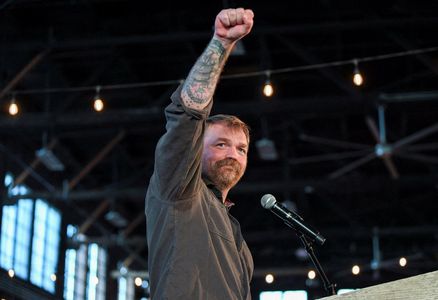
Clip: Can Democrats salvage the Maine Senate race after Platner's exit?
It wasn’t the Nazi tattoo that did in Graham Platner. It was a rape allegation that caused the left-wing of the party to finally give up on their beloved oysterman. The big question for democrats now is how to salvage Maine, which they pretty much have to win to take control of the Senate.


© 1996 - 2026 WETA. All Rights Reserved.
PBS is a 501(c)(3) not-for-profit organization