On the international front, "I-told-you-sos" are coming from people who had no faith in either the Iranian regime’s desire to shed its deeply-embedded extremism, or in the Trump administration’s ability to negotiate a complex deal that might cause American voters, among others, to think that maybe this war was worth it.
Clip: Will the Iran conflict spin out of control after Trump says ceasefire is over?
Jul. 10, 2026 AT 9:01 p.m. EDT
TRANSCRIPT
Notice: Transcripts are machine and human generated and lightly edited for accuracy. They may contain errors.
Jeffrey Goldberg: Peter, I want to move to a stickier subject, even than Maine, Iran. The Iranians don't seem to be particularly interested in ceding control of the Strait of Hormuz. Donald Trump is not particularly interested in the historic landmark memorandum of understanding that was signed and almost immediately forgotten. It looks a lot like we're just in perpetual war with Iran.
Peter Baker: Yes.
Jeffrey Goldberg: Is that fair to say?
Peter Baker: Yes. No, I think it's exactly right. It turned out to be a memorandum of misunderstanding. They didn't actually agree on what they actually agreed on. And this wasn't even the hard part, right? This was just the preliminary thing in which we say we stop shooting at each other so then we can talk about the things that are really hard. We couldn't even get through that. So, it does suggest that we're not going to see a decisive agreement of any sort in the near term if we can't even get the short-term thing going.
And, clearly, President Trump doesn't seem eager to re-launch the full-scale war that he had at the very beginning. That's not going to help the Republican candidates in Maine or anywhere else. So, we're in this kind of middle ground, right, this kind of stasis, where a little bit of war and a little bit of peace, a little bit of diplomacy and no actual resolution.
And I'm not sure politically how that plays in the midterms, but that's on the factor at play, both in terms of how the White House looks at it and how the Iranians look at it, because they know our clock just like we do.
Jeffrey Goldberg: Right. But I wonder if -- in terms of the midterms, I wonder if this is now just kind of perpetual background noise in a kind of way. It's just like there's always going to be this Iran problem. Gas prices are going to be elevated. Beef is going to cost a lot. Am I wrong in saying that? Is this a real threat if it continues this way to the Republicans in November?
Susan Glasser: Yes. I mean, Jeff, I was also very struck this week that we've become so inured. It seemed to me that it was really not treated as such a big deal. Remember that, you know, for the previous 15 years, you know, just the mere thought of the United States striking Iran, even in a single bout of airstrikes, was considered to be, you know, one of the major debates that engaged foreign policy over and over again, and yet Donald Trump just sort of casually now goes back to war, and the world just sort of shrugs its shoulders to a certain extent.
And I was really struck by that, that Trump does this thing where he gets people accustomed to the previously unthinkable with remarkable speed. So, he may be baking that into our politics, understanding that an achievable deal is not within sight, and so getting people used to the idea that this is going to continue.
I think it represents a continued misreading on the part of the administration. They don't seem to have had a very good understanding of the dynamics with their Iranian interlocutors.
Jeffrey Goldberg: Right.
Susan Glasser: They seem to have gotten it wrong over and over again about what they were even talking about.
Jeffrey Goldberg: What could Trump or the Iranians do to advertently or inadvertently escalate this out of control?
Susan Glasser: I mean, I think there's any number of scenarios, which is exactly why previous American administrations, Democrats and Republicans, didn't go down this route of opening up an open-ended conflict with Iran because there are so many possibilities, and that was even before the age of drone warfare.
You've seen America's partners in the Gulf extremely and increasingly unhappy, both because of the economic damage to their oil and energy businesses, also the civilian populations. There's the possibility of terrorism.
You know, President Trump flew over to Europe on his new Air Force One gifted to him by Qatar, had to change planes in the middle of the trip to go back to the old Air Force One. Why? It appears from very credible reporting that was because it didn't -- the new Air Force One didn't have enough security precautions for a president --
Jeffrey Goldberg: Air defenses, anti-missile --
Susan Glasser: Exactly. And the Iranians have targeted Donald Trump as well as other senior current and former American officials for credible assassination plots. So, it's a very volatile environment in which we can all imagine any number of things going wrong and leading to a much more serious and genuine full-scale war as opposed to the Trumpian kind of on again, off again war.
Jeffrey Goldberg: By the way, you're exactly right about something. We've already baked into the conversation the fact that Air Force One is a gift of the royal family of Qatar.
Peter Baker: Right. Who -- right.
Jeffrey Goldberg: Imagine if that if President Obama or President Biden, President Bush had taken a gift from an oil emir, a non-democratic oil emirate, essentially, it would've been the scandal to end all scandals. But here we are just talking about it like it's normal.
Something else that's not particularly normal is the -- at the NATO summit. The Turkish president gave all the assembled leaders a gift of a revolver. And we don't know if President Trump has taken the revolver back to Mar-a-Lago. Do we?
Peter Baker: No.
Susan Glasser: But he loves President Erdogan.
Jeffrey Goldberg: He loves Erdogan.
Susan Glasser: He's one of his very, very favorite strongmen.
Jeffrey Goldberg: I want to have that discussion. It's a very interesting discussion. I want to have that discussion on another show about these new Middle Eastern dynamics.
I do want to ask you one question very quickly, Peter, about NATO. It seemed like it went better than it usually goes when President Trump interacts with NATO.
Peter Baker: Yes.
Jeffrey Goldberg: Fair?
Peter Baker: This is -- yes, this is the -- you're beating your head against the brick wall and then you stop, it doesn't feel so bad NATO summit, right? It didn't explode. It wasn't a disaster. So, hey, it's a success.
Jeffrey Goldberg: Right.
Peter Baker: At the end of the day, of course, there's still the President of the United States talking about going after Greenland, in other words, the territory of a NATO ally and so forth.
Jeffrey Goldberg: Right.
Peter Baker: But, yes, it could've been worse, and so they'll take that.
Jeffrey Goldberg: Right. Leigh Ann, question about Mitch McConnell. We don't really know how bad shape he's in. His office isn't saying. We've seen this again and again on Capitol Hill where people don't -- public officials don't tell the public what's going on.
Leigh Ann Caldwell: Yes.
Jeffrey Goldberg: Can you shed any light on this?
Leigh Ann Caldwell: Yes, and there's really no accountability for it. There's nothing they can do. Mitch McConnell is not running for re-election. But the reality is we don't know the state of his condition.
There's been online conspiracy theories that he's dead or that he's brain-dead. He had some phone calls this week with the two leaders, John Thune and John Barrasso, and a former aide of his.
You know, before all of this started coming out, it was about three weeks ago, I do know that John Barrasso talked to him on the phone before there was all the conspiracy theories, so I don't think he's brain-dead. But his office, it doesn't seem to be changing their policy of giving no information.
Jeffrey Goldberg: Right. Adam, this is last word to you. This doesn't seem like a great way to build trust in transparent democratic processes.
Adam Harris: No, and, flatly, no. Right, people have long sort of distrusted that the information they're getting from Congress is true, that their representatives are telling them the truth, and if you're not willing to just sort of be up front. I think if there is a unifying theme of this whole thing, it's be up front and have some character about it.
And but we've seen recently, Tom Kean was gone with depression for a long time, Senator Mitch McConnell. It is a -- there is a tendency to hide as opposed to just being up front with the American people.
FROM THIS EPISODE

Clip: Can Democrats salvage the Maine Senate race after Platner's exit?
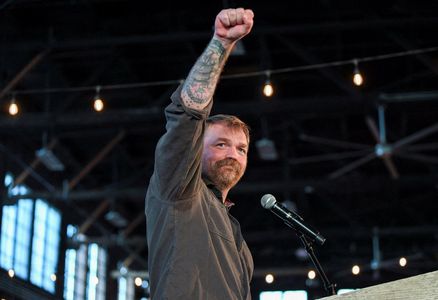
It wasn’t the Nazi tattoo that did in Graham Platner. It was a rape allegation that caused the left-wing of the party to finally give up on their beloved oysterman. The big question for democrats now is how to salvage Maine, which they pretty much have to win to take control of the Senate.
Full Episode: Washington Week with The Atlantic full episode, 7/10/26
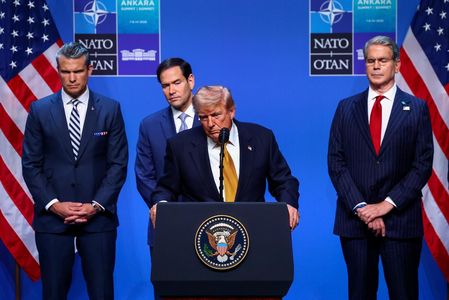
Full Washington Week with the Atlantic broadcast from July 10, 2026.


© 1996 - 2026 WETA. All Rights Reserved.
PBS is a 501(c)(3) not-for-profit organization