The war President Trump said would last just weeks is now in its sixth month and expanding. Why is the U.S. still fighting Iran, and to what end? And why are straight answers hard to come by in Washington? Join moderator Jeffrey Goldberg, Peter Baker of The New York Times, Susan Glasser of The New Yorker, Stephen Hayes of The Dispatch and Nancy Youssef of The Atlantic to discuss this and more.
Full Episode: Washington Week with The Atlantic full episode, 7/31/26
Jul. 31, 2026 AT 9:52 p.m. EDT
TRANSCRIPT
Notice: Transcripts are machine and human generated and lightly edited for accuracy. They may contain errors.
Jeffrey Goldberg: The war President Trump said would last just weeks is now in its sixth month and expanding. Why is the U.S. still fighting Iran, and to what end? Straight answers are hard to come by. The administration won't even provide accurate casualty figures. Trust in government has declined rapidly in recent years, and the consequences of this collapse are everywhere.
Tonight, in an age of poisonous partisanship and social media clip maxing, who can you believe, next.
Good evening, and welcome to Washington Week. Remember Congressman Tom Kean, the one who disappeared from Washington for almost four months with no explanation? It turned out that he was suffering from depression. Everyone should be glad that he sought treatment, but his disappearance without telling his constituents anything? Only in Washington.
And then there's Mitch McConnell, Schrodinger senator, who hasn't leveled with his constituents, or possibly anyone else, about the true state of his health. And the McConnell story reminds me of another politician, Joe Biden, who made believe he had another four years of public life in him even after it became stunningly clear that he didn't.
I raise these incidents because they illustrate a sad fact of political life today. Only a small number of politicians seem capable of leveling with their fellow Americans. The best example, of course, is the most powerful politician of them all, Donald Trump, who can't find it in himself to be transparent with the American people about the state of the war with Iran or about much else.
Maybe my mind is playing tricks on me, but I do believe that we used to hold public servants to a higher standard.
Here to tell me I'm right about that, or wrong, are my guests tonight, Peter Baker, the chief White House correspondent at The New York Times, Susan Glasser is a staff writer for The New Yorker, Stephen Hayes is the editor and CEO of The Dispatch, and Nancy Youssef is a staff writer and Pentagon correspondent at The Atlantic. Thank you for joining me.
Peter, how right am I?
Peter Baker, Chief White House Correspondent, The New York Times: You're right.
Jeffrey Goldberg: How right?
Peter Baker: You're so right, Jeff.
Jeffrey Goldberg: Very right or the most right?
Peter Baker: The most right.
Jeffrey Goldberg: Okay, good. I just wanted to check.
So, let me start with Peter. It's very hard to understand the Iran war at the moment. Both governments think -- seem to think that the other government is escalating. And Trump himself said this week, according to Fox News, that the U.S. would beat the f-ing shit out of them.
And, by the way, I will note for the record that this is a very interesting question about whether on broadcast television we can use words that are banned by the FCC even if they're spoken by the person who oversees and appoints the FCC. That'll be a panel discussion at Columbia Journalism School starting this fall. But he has threatened once again to beat the living daylights out of Iran.
But at a certain point, these threats seem hollow. I mean, he's been making a lot of threats, but then nothing happens. Well, how do you explain this?
Peter Baker: Well, look, he doesn't want to go as -- he doesn't want to get back to the full-scale war that he had at the beginning, right, the 40 days of bombing and strikes that we had at the beginning for a couple reasons. One is it didn't actually change Iran's calculus to begin with. Secondly, of course, it simply threw the world economy into, you know, upheaval. And, thirdly, we're heading into an election season when people don't want to be talking about the Iran war. He doesn't want to remind them about it by having a much more robust, you know, assault. So, he makes these big threats.
He hasn't followed through on them, and it's not clear that anything he can do at this point is going to change Iran's calculation. They've already come to a conclusion about how they think this is going, and it's not the way Donald Trump thinks.
Jeffrey Goldberg: This is the nature, Susan, of deterrence. Deterrence only works if you don't actually do anything. Once you show your enemy what you're capable of doing or not capable of doing, the deterrent threat dissipates?
Susan Glasser, Staff Writer, The New Yorker: Yes, that's exactly right, Jeff. For years, I mean, literally 15 years, I remember great pieces you wrote a long time ago during the presidency of George W. Bush, Barack Obama. It was the threat of American military action against Iran that operated as a constraint, limited though it may have been, against the Iranian government.
Now, not only has that dissipated, but you could argue that while fearing the possible consequences of a future Iranian nuclear bomb, what has emerged is the present day actuality of something that is more geopolitically powerful than the Iranians could have imagined, which is the leveraging of their control over the Strait of Hormuz.
So, put aside the question of a theoretical future nuclear Iran. What they have is nuclear capacity in a way to blow up the global economy at will, and Donald Trump has shown them the path forward to it. So, the idea that they're going to negotiate that away after essentially fighting the world's greatest superpower to a draw, very unrealistic, which is why I think we're seeing this on again, off again conflict with no real prospect of meaningful negotiated end.
Jeffrey Goldberg: Right. Steve, I mean, this is a regional conflagration now, yes?
Stephen Hayes, Editor, The Dispatch: Yes, I mean, it is right now. I think the concern has to be that it grows to something more than that. I mean, we had increasing reports over the past several weeks of Chinese support for Iran providing potentially 400 shoulder-fired missiles to Iran. You've had reporting, credible reporting of the Russians providing more intelligence about the targeting of U.S. intelligence facilities in the region. You have our allies in the region getting involved in a more offensive way.
You know, I think for a long time, it's been as much of a disaster as this has been, it's been comforting to think like he's just going to walk away at some point. Yes, things are likely to be worse than they were before, for the reasons that Susan suggests, but it can end.
Now, you think if you're Russia, if you're China, your interest is in this being elongated as long as you can.
Jeffrey Goldberg: The United States is bogged down in this part of the world.
Stephen Hayes: Absolutely.
Jeffrey Goldberg: As long as they're bogged down, they're not messing with our own interests --
Stephen Hayes: Right, and at the same time --
Jeffrey Goldberg: -- in Europe and Asia.
Stephen Hayes: -- the allies in the region are looking at our sort of incapability of making progress or doing anything to change the trajectory of the war and thinking that they too might have to be more involved.
Jeffrey Goldberg: Right. And there's another aspect of this. There's a merger in some way of two different wars. You have the Ukrainians attacking Iranian ships that are moving weapons to -- explain that. I mean, it really is a merger of different fields of battle.
Stephen Hayes: Yes. I mean, I can't explain it, I can't explain it in any detail. I would defer to Nancy on what exactly it means. But I think the fact that these things are coming together in this way, and seem to have over the past several weeks, even as the president of the United States has very clearly demonstrated that he's just not that interested anymore. He's getting -- there's credible reporting that he's getting bored with what he's seeing. He's frustrated that there are no easy paths to victory for the United States.
Jeffrey Goldberg: Right. Nancy, I will ask you what that means in a moment, but I want to read something that you and Jonathan Lemire wrote the other day. The Trump administration's greatest mistake in the Iran war may be its persistent failure to understand Tehran's priorities and motivations, and how much punishment the regime is willing to absorb to prevail.
Iran's decision Tuesday to launch ballistic missiles at U.S. troops in Jordan was a prime example. It befuddled Washington. U.S. officials had come to expect that their actions would drive the war and Iran would react, but here was Tehran escalating matters just as the United States had suspended its 13-day barrage of strikes against Iranian defenses and infrastructure.
It sounds like you think Iran has the upper hand right now.
Nancy Youssef, Staff Writer, The Atlantic: Well, as we've been discussing here, the administration has been lurching between economic, diplomatic, and military responses to Iran, and they are facing an adversary that sees this war as a very threat to its existence. The Iranian regime is willing to take hits. It is willing to take escalation. It is willing to do whatever it needs to do to survive.
And so that gap between the U.S. aims and the Iranian aims means that Iran is willing to do much more and endure much more than the United States. The fact that the United States was surprised by the Iranian decision to launch ballistic missiles at a base housing U.S. forces tells me that the United States doesn't understand the kind of adversary that they're facing in terms of what they're willing to endure to prevail as they see it, which is, in this case, their very survival.
That's not what the U.S. is trying to do. The U.S. is trying to do just enough such that the strait remains open, and that it can claim some sort of off-ramp to get out of this war ideally before the November election.
Jeffrey Goldberg: In other words, one of the conversations that may not have happened in the White House, February or before, was how much will we escalate? How high on the escalatory ladder will we go versus the Iranians? Is that a fair way of looking at it?
Nancy Youssef: Yes.
Jeffrey Goldberg: The Iranians will go all the way, and President Trump won't even commit troops.
Nancy Youssef: Well -- and you're dealing with an enemy that is now adapting to U.S. tactics. That's why I think we saw the strikes that we saw. You have a regime that operates differently than the one before it. It is willing to take more risks than it was under the previous ayatollah. And we have a government in the United States that doesn't even want to admit that we're back at war.
You know, the secretary of defense and the chairman of Joint Chiefs of Staff went on Capitol Hill asking for billions of dollars for more money to fund the war. In their opening statement, they didn't even use the word Iran. Hegseth described this as an operation. The president has addressed the country in a national address during this period. This was not about the war. This was about election security, and only made a passing reference to the war.
And the fact that we're categorizing the troop deaths since the resumption of these strikes as something other than in support of Operation Epic Fury is all part of this effort to not acknowledge that the United States is back at a military campaign minimally against Iran.
Stephen Hayes: I would add to that.
Jeffrey Goldberg: Yes.
Stephen Hayes: The president has said from the earliest days of the conflict that the United States has already won, and he has said it repeatedly, again and again and again. And then if you remember when he signed the memorandum of understanding to the applause of European leaders in Versailles, he said at the end in a quote that was mostly missed --
Jeffrey Goldberg: I love that part, in Versailles.
Stephen Hayes: Right, in Versailles.
Jeffrey Goldberg: It has such historical echo. That's very rich.
Stephen Hayes: I'm resisting the temptation to go further on that.
Jeffrey Goldberg: I just did resist.
Stephen Hayes: At the very end --
Jeffrey Goldberg: Yes.
Stephen Hayes: At the very end, he says, oil down, stocks up. He's announcing to the Iranians and to the world he's done. He doesn't want this anymore, in addition to all the things that Nancy said.
Jeffrey Goldberg: So, Peter, this goes to this, this point that I was making about trust in leadership. Historical -- give us a little historical context. Can you think of another presidency, going back to Vietnam or earlier, in which the president himself was not leveling with the American people about the consequences of a war in this style? Because I don't feel like he's telling us why he did it, what he will do to win.
Peter Baker: Yes, I mean, look, there are other presidents who've lied to us about war, who have not been fully forthcoming about war. You talk about Vietnam, obviously. Go back and read the Pentagon Papers. You see president after president who was not forthcoming with the American public about what they were doing, what they expected there.
Having said that, this is different in that this was a war that the American public never supported to begin with, and that the president never bothered --
Jeffrey Goldberg: Like Vietnam was popular.
Peter Baker: It was popular. The presidents, both JFK and LBJ, at some point or another, explained to the country why it was important that we go there, what was happening in the world that made that matter. President Trump has never done that. To your point, they just had this -- he just had the Oval Office speech, not about war, but about his own obsession with the 2020 election.
This war started out with more people against it than were for it, which is the only time any war in our history of polling, at least that's happened, and it's only gone down since then. And he's made no effort, it seems like, to win people over by explaining why it's important. He's now narrowed his goals, right, which were kind of scattershot at the beginning, to two things, reopen the strait, no nuclear weapon. Okay, those are pretty straightforward messages. And that works, I think, for the public. You hear -- people interview on the street, they say, I don't want Iran to have a nuclear weapon. That shows part of his message is getting through, but he hasn't done anything to say why is this important, why it had to be done now, and what we're going to do about it in the future if we can't get to where we want to go.
Susan Glasser: Yes. Well -- and also he's not doing anything right now as far as we can tell. And again, they're extremely untransparent about what's happening. But he doesn't seem to be pursuing militarily at the moment or via negotiations anything that would ensure that Iran was denuclearized in the future. So, to point that out is important.
But, you know, again, this reminds me, in this almost sort of Orwellian inversion of language and, you know, the degrading of those service members who did give their lives, you know, for a war that Trump launched on his own with no mandate from the American people, you know, there's another superpower engaged in a asymmetrical conflict right now that's called a special military operation. We're now years into the Russian invasion of Ukraine that was supposed to last a few days, a couple weeks at a maximum. And, you know, Vladimir Putin also refuses to call it a war. He also governs in his own name and not in the name of the Russian people or institutions.
And I think what we've seen from the adaptiveness of the Ukrainians is a playbook for the future of military conflict that's already here. And that's what's so striking to me is that we've seen not just our presidential and you could say our political system that has failed to account for this, but also a national security environment in which the leaders of the Pentagon, even with asking for more than a trillion dollars this year, seem very, very unprepared for this kind of rapid warfare where cheap drones are no match for our Patriot missiles.
Jeffrey Goldberg: It's interesting because what we're talking about here is escalatory capability or willingness as the key variable for all of these conflicts, which is to say Ukraine is in a fight for its existence. They will do whatever they have to do to exist. The Iranian regime, whether we like it or not, and we don't generally like it for all the obvious reasons, the Iranian regime wants to save itself.
Here in America, we're worried about gas prices. Ukrainians would love to be able to have the luxury of worrying about price of gasoline at the pump. But -- you know, and there's another aspect of the, another variable that I find really fascinating at this moment, which is the lack of planning in war fighting.
And one of the most surprising aspects of everything, Steve, that I've been seeing is that we went to -- we had a war of choice. We've picked the timing of this war. And we didn't plan for the reduction the reduction that would come in munition stockpiles. And now we're a little bit naked before the world and other adversaries because we simply don't have enough, especially of defensive missiles, we don't have enough to protect America and its allies from other adversaries.
Stephen Hayes: Yes. I mean, on the path to being alarmingly naked if this were to continue for a long period of time. Look, I mean, this is part of the problem when you have a president of the United States who makes these decisions not out of strategic considerations, but out of emotional impulse, right? I mean, I think he wanted to be strong. He wanted to do in Iran what he had done in Venezuela. He liked the adulation that he got after the June 2025 strikes when he, you know, hit the, the nuclear facilities in Iran, and that's the reason he makes these decisions.
I think it's -- there are people who did planning in advance of this, very serious people, patriots who did this planning. Unfortunately, it was just disregarded by the person who matters most, and that's the commander-in-chief.
Jeffrey Goldberg: Right. Nancy, very difficult question, but what would the United States have to do to win in Iran?
Nancy Youssef: How are you defining winning?
Jeffrey Goldberg: You define it. That's why you get paid the moderate bucks.
Nancy Youssef: Well, put it to you this way, there aren't great options for the president. If the -- one option would be to declare victory again, say that the ayatollah is dead, Iran doesn't have a nuclear weapon, and the U.S. will come back at Iran should they try to get a nuclear weapon again, in his estimation. The question becomes will the stock market embrace that thinking, particularly when Iran now retains control of the Strait of Hormuz?
He could continue to escalate such that he believes he reaches a point, and he signaled, by the way, in his comments earlier today at the cabinet meeting that this is what he's thinking, that he can keep escalating to the point that either the regime -- it sort of tips the regime out of power, or it becomes an intolerable level of destruction for them that they start to capitulate.
He could continue to do economic sanctions, or he could try to come back to the negotiation table, but in doing so, he would have to make some kind of concession to the Iranians in terms of how they read that memorandum of understanding vis-a-vis the Strait of Hormuz.
And so I think I don't know what winning is, but I also don't know what is a viable option that gives -- that creates an exit ramp or an off-ramp for him to declare some kind of victory.
Jeffrey Goldberg: Let me give you a traditional definition of winning in this context, which would be defeating the Iranian regime, seeing its replacement or its overthrow by western-minded Iranian, small D, democrats. Could that be done without large numbers of troops on the ground?
Nancy Youssef: No.
Jeffrey Goldberg: Could it be done with troops on the ground?
Nancy Yousssef: Maybe. It's uncertain. We're talking about a country of 90 million people that, as long as the United States has been discussing or preparing for war with Iran, the Iranians have been preparing and discussing the possibility of coming under threat from the United States.
So, it would be a formidable task. It would require hundreds of thousands of troops, a major U.S. military commitment, and politically, a commitment from the United States to endure economic costs through that time for something that may take months or years, if that's the end state.
Jeffrey Goldberg: Right. Let me switch topics and go to another war in Washington, a minor war by comparison. But it's also an example of something that's where politicians and everybody -- nobody seems to be on the level, and that's the Rand Paul, Anthony Fauci death match.
There are a couple of issues to unpack here. The Fauci diary, which is excruciating to read and the actual reasons that Fauci was brought before the Senate. Here's what Fauci said about the hearing the other day. Watch this.
Dr. Anthony Fauci, Former Director, National Institute Of Allergy And Infectious Diseases: Given Senator Paul's obvious obsession with calling for my prosecution, his repeated slanderous comments about me, and recently his publicly releasing my unredacted personal diary aimed at embarrassing and intimidating me, the only conclusion I can reach is that the sole reason he is calling me before this committee is to get me to say something, anything, that could vindicate his repeated public pledges that I end up, in his words, quote, behind bars.
Jeffrey Goldberg: Steve, in the few minutes that we have left, take us inside this. What is the motivation of Senator Paul, and how do you judge Anthony Fauci's response to these attacks that are made on him?
Stephen Hayes: Yes, I mean, the, the hearing was such a perfect encapsulation of Washington at this moment, with a lot of raised voices and a lot of yelling, and virtually no new information, and nothing that gets us any closer to the truth.
Look, I think Anthony Fauci's right that Senator Paul has been obsessed. I think Senator Paul is right that Anthony Fauci took shortcuts and lied about things that he shouldn't have lied about. In a better -- with a more serious government, we would've gotten closer to answers through that hearing.
I do want to point out one person. We probably don't do this very often enough. Senator James Lankford from Oklahoma, he wasn't going to get answers to the questions. Anthony Fauci had already said that he wasn't going to answer questions. But he walked through in a calm and dispassionate way a series of questions that if we got answers to them, we'd be a lot better prepared for the next one of these. He was, unfortunately, the person who stood out, because he was really the only one who did this. Everybody else was yelling and shouting.
Jeffrey Goldberg: Right, right. Susan, in the old days, in a less dysfunctional Washington, maybe people would gather to do a postmortem of a tragic event and try to figure out better government response. This is a little bit of a show right now. How do you -- what does it say about where we are politically in partisanship?
Susan Glasser: Yes. I mean, look, the historical analogy that leaps to mind is not a reasonable bipartisan commission to look at lessons learned from a national tragedy. It's a witch hunt. It's McCarthyism. You know, we do, unfortunately, have a long history of that as well. And to see an 85-year-old public servant who spent 50 years of his life combating terrible diseases in this country and around the world, you know, it was a painful sight. You know, especially to see a bunch of senators accuse Fauci of the best they could come up with, you know, was a diary in which he was dazzled, you know, to meet celebrities and, you know, admitted that he butt-dialed Barbra Streisand.
You know, if Josh Hawley is saying, you know, oh, my goodness, you're a peacock who's seeking attention, and a narcissist, right, like, you know, I don't -- I think it doesn't --
Jeffrey Goldberg: Are you saying that no one in the Senate should accuse anyone of being a peacock?
Susan Glasser: You know, Jeff, what I'm saying is I found it very painful to watch, as I'm sure many people did. The person who was accountable ultimately for America's failed initial handling of the pandemic in 2020 was someone named Donald Trump.
Jeffrey Goldberg: Right. But, Peter, let me ask you this, though. You know, in the diary, Fauci talks with nuance, writes with nuance and uncertainty about the origin story of COVID-19. In public, especially in the beginning, he was more declarative. I mean, there -- this is not the Pentagon Papers, but it seems like there's a little bit of space between what he would tell the public and what he would tell himself.
Peter Baker: Yes. Yes and no. I mean, I think they're making an awful lot out of, you know, what would be pretty normal in those early days when we did not know a lot, right? Scientists were of multiple opinions about the origin of it, they were of multiple opinions about how it was transmitted, and there were multiple opinions about what the best course of action was. And, yes, he probably projected more certainty than he might have felt.
But if you actually -- you can find statements he said in the diary and see that he said something pretty similar in public in an interview several weeks later or in some other public setting.
So, I think they're trying to slice and dice it in a way that is making uncertainty in the beginning of a pandemic into a crime. It's not just that he was wrong, it's that he is evil, and that he, you know, should go to jail. I mean, he's literally compared to Hitler and Mengele. This isn't a scientist who just got things wrong, and maybe he did get something wrong. This, in this case, in Rand Paul's world, it's good and evil.
Jeffrey Goldberg: Well, very interesting conversation. That's all the time we have tonight, alas. But I do want to thank our guests for joining me. I want to thank you at home for watching us.
I'm Jeffrey Goldberg. Good night from Washington.
FROM THIS EPISODE

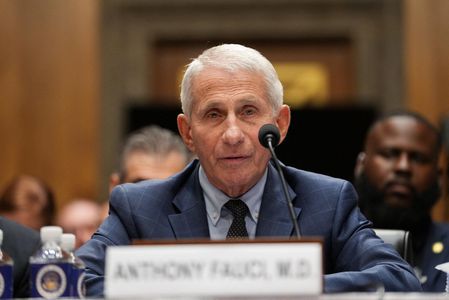
Clip: What the Fauci hearing says about where we are politically
Anthony Fauci returned to Capitol Hill this week for a Senate hearing and faced attacks from Republican lawmakers. The panel discusses Sen. Rand Paul's motivation for the hearing and Fauci's response.
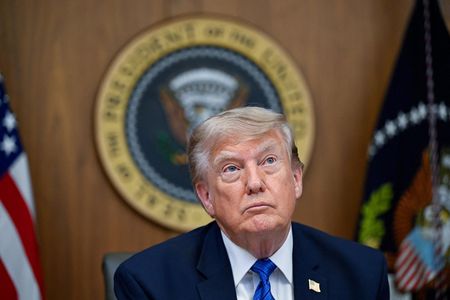
Clip: Why is the U.S. still fighting Iran?
Trust in government has declined rapidly in recent years, and the consequences of this collapse are everywhere. Donald Trump can't find it in himself to be transparent with the American people about the state of the war with Iran, or about much else. The panel discusses the state of the war and the lack of answers.


© 1996 - 2026 WETA. All Rights Reserved.
PBS is a 501(c)(3) not-for-profit organization