Anthony Fauci returned to Capitol Hill this week for a Senate hearing and faced attacks from Republican lawmakers. The panel discusses Sen. Rand Paul's motivation for the hearing and Fauci's response.
Clip: What the Fauci hearing says about where we are politically
Jul. 31, 2026 AT 9:45 p.m. EDT
TRANSCRIPT
Notice: Transcripts are machine and human generated and lightly edited for accuracy. They may contain errors.
Jeffrey Goldberg: Let me switch topics and go to another war in Washington, a minor war by comparison. But it's also an example of something that's where politicians and everybody -- nobody seems to be on the level, and that's the Rand Paul, Anthony Fauci death match.
There are a couple of issues to unpack here. The Fauci diary, which is excruciating to read and the actual reasons that Fauci was brought before the Senate. Here's what Fauci said about the hearing the other day. Watch this.
Dr. Anthony Fauci, Former Director, National Institute Of Allergy And Infectious Diseases: Given Senator Paul's obvious obsession with calling for my prosecution, his repeated slanderous comments about me, and recently his publicly releasing my unredacted personal diary aimed at embarrassing and intimidating me, the only conclusion I can reach is that the sole reason he is calling me before this committee is to get me to say something, anything, that could vindicate his repeated public pledges that I end up, in his words, quote, behind bars.
Jeffrey Goldberg: Steve, in the few minutes that we have left, take us inside this. What is the motivation of Senator Paul, and how do you judge Anthony Fauci's response to these attacks that are made on him?
Stephen Hayes: Yes, I mean, the, the hearing was such a perfect encapsulation of Washington at this moment, with a lot of raised voices and a lot of yelling, and virtually no new information, and nothing that gets us any closer to the truth.
Look, I think Anthony Fauci's right that Senator Paul has been obsessed. I think Senator Paul is right that Anthony Fauci took shortcuts and lied about things that he shouldn't have lied about. In a better -- with a more serious government, we would've gotten closer to answers through that hearing.
I do want to point out one person. We probably don't do this very often enough. Senator James Lankford from Oklahoma, he wasn't going to get answers to the questions. Anthony Fauci had already said that he wasn't going to answer questions. But he walked through in a calm and dispassionate way a series of questions that if we got answers to them, we'd be a lot better prepared for the next one of these. He was, unfortunately, the person who stood out, because he was really the only one who did this. Everybody else was yelling and shouting.
Jeffrey Goldberg: Right, right. Susan, in the old days, in a less dysfunctional Washington, maybe people would gather to do a postmortem of a tragic event and try to figure out better government response. This is a little bit of a show right now. How do you -- what does it say about where we are politically in partisanship?
Susan Glasser: Yes. I mean, look, the historical analogy that leaps to mind is not a reasonable bipartisan commission to look at lessons learned from a national tragedy. It's a witch hunt. It's McCarthyism. You know, we do, unfortunately, have a long history of that as well. And to see an 85-year-old public servant who spent 50 years of his life combating terrible diseases in this country and around the world, you know, it was a painful sight. You know, especially to see a bunch of senators accuse Fauci of the best they could come up with, you know, was a diary in which he was dazzled, you know, to meet celebrities and, you know, admitted that he butt-dialed Barbra Streisand.
You know, if Josh Hawley is saying, you know, oh, my goodness, you're a peacock who's seeking attention, and a narcissist, right, like, you know, I don't -- I think it doesn't --
Jeffrey Goldberg: Are you saying that no one in the Senate should accuse anyone of being a peacock?
Susan Glasser: You know, Jeff, what I'm saying is I found it very painful to watch, as I'm sure many people did. The person who was accountable ultimately for America's failed initial handling of the pandemic in 2020 was someone named Donald Trump.
Jeffrey Goldberg: Right. But, Peter, let me ask you this, though. You know, in the diary, Fauci talks with nuance, writes with nuance and uncertainty about the origin story of COVID-19. In public, especially in the beginning, he was more declarative. I mean, there -- this is not the Pentagon Papers, but it seems like there's a little bit of space between what he would tell the public and what he would tell himself.
Peter Baker: Yes. Yes and no. I mean, I think they're making an awful lot out of, you know, what would be pretty normal in those early days when we did not know a lot, right? Scientists were of multiple opinions about the origin of it, they were of multiple opinions about how it was transmitted, and there were multiple opinions about what the best course of action was. And, yes, he probably projected more certainty than he might have felt.
But if you actually -- you can find statements he said in the diary and see that he said something pretty similar in public in an interview several weeks later or in some other public setting.
So, I think they're trying to slice and dice it in a way that is making uncertainty in the beginning of a pandemic into a crime. It's not just that he was wrong, it's that he is evil, and that he, you know, should go to jail. I mean, he's literally compared to Hitler and Mengele. This isn't a scientist who just got things wrong, and maybe he did get something wrong. This, in this case, in Rand Paul's world, it's good and evil.
Jeffrey Goldberg: Well, very interesting conversation. That's all the time we have tonight, alas. But I do want to thank our guests for joining me. I want to thank you at home for watching us.
I'm Jeffrey Goldberg. Good night from Washington.
FROM THIS EPISODE

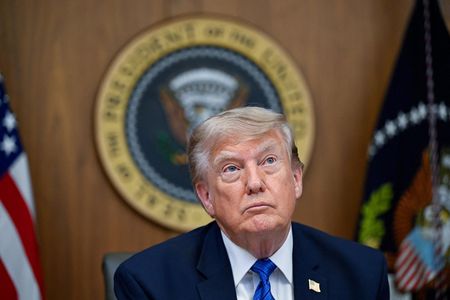
Clip: Why is the U.S. still fighting Iran?
Trust in government has declined rapidly in recent years, and the consequences of this collapse are everywhere. Donald Trump can't find it in himself to be transparent with the American people about the state of the war with Iran, or about much else. The panel discusses the state of the war and the lack of answers.
Full Episode: Washington Week with The Atlantic full episode, 7/31/26
Full Washington Week with the Atlantic broadcast from July 31, 2026.


© 1996 - 2026 WETA. All Rights Reserved.
PBS is a 501(c)(3) not-for-profit organization