“Contaminated”: New Documentary Investigates the Carpet Industry’s Toxic PFAS Legacy in the South
February 2, 2026
Share
Contaminated: The Carpet Industry’s Toxic Legacy
Watch the documentary at pbs.org/frontline and in the PBS App starting Feb. 3, 2026, at 7/6c, or on PBS stations (check local listings) and on FRONTLINE’s YouTube channel that night at 10/9c. It will also be available on PBS Documentaries on Prime Video.
For decades, PFAS, a group of manmade forever chemicals prized for their water- and stain-resistance, were ubiquitous in everything from nonstick pans to raincoats to shoes.
But accumulating research has linked some kinds of PFAS to serious health problems.
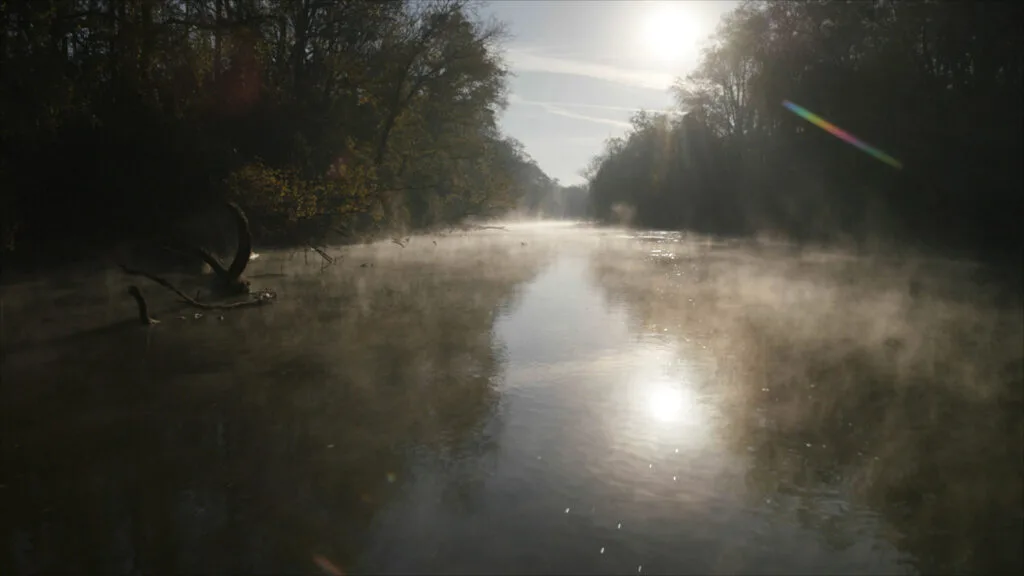
In few places is this issue more pronounced than northwest Georgia, home to some of the world’s largest carpet companies, and now grappling with an environmental crisis.
A documentary premiering Feb. 3 investigates how PFAS chemicals once used in manufacturing popular stain-resistant carpets ended up in the environment and the drinking water in parts of Georgia and Alabama, and the ongoing health impacts.
Contaminated: The Carpet Industry’s Toxic Legacy is part of a groundbreaking multiplatform investigative collaboration among local and national news organizations: FRONTLINE, The Associated Press, The Atlanta Journal-Constitution, The Post and Courier and AL.com. Over much of the past year, the consortium of journalists reviewed thousands of pages of documents and court depositions and interviewed former regulators and industry insiders, as well as doctors, scientists and people who have the kinds of illnesses that researchers have linked to PFAS contamination.
What the team found unfolds in Contaminated: The Carpet Industry’s Toxic Legacy and related reporting from The Atlanta Journal-Constitution, The Post and Courier, AL.com and the AP. The carpet industry has long insisted it’s not to blame for PFAS getting into the environment and noted that chemical companies obscured the risks and assured them the products they were supplying were safe. But the recently reviewed records also show that executives from two of the largest carpet companies received warnings dating back decades about potential harms of some types of PFAS. And with little regulation until recently, the team found that for years both the companies and their suppliers were able to legally switch among stain-resistant products that contained different PFAS compounds.
The companies say they stopped using any kind of PFAS in 2019. But since PFAS takes so long to break down, communities fear that decades of use of these forever chemicals have made their drinking water unsafe — and local governments say the problem is too vast for them to fix alone.
For the full story, watch Contaminated: The Carpet Industry’s Toxic Legacy and explore related reporting from the AP, The Atlanta Journal-Constitution, The Post and Courier and AL.com. This unique investigative collaboration is supported by FRONTLINE’s Local Journalism Initiative, a program that supports and amplifies investigative reporting in local newsrooms around the country, and the AP’s Local Investigative Reporting Program. Currently funded by the John S. and James L. Knight Foundation and the Heinz Endowments, FRONTLINE’s Local Journalism Initiative has previously helped produce major investigative projects including Breakdown, a Peabody and Emmy Award-nominated multiplatform investigation into Maine’s deadliest shooting with Portland Press Herald and Maine Public Radio; Fractured, an 11-part WFAE radio series and FRONTLINE documentary on North Carolina inmates living with mental illness; and stories about a polluting lead smelter in The Tampa Bay Times that won a George Polk Award and a Pulitzer Prize.
Contaminated: The Carpet Industry’s Toxic Legacy will be available to watch starting Feb. 3, 2026. Watch at 10/9c on FRONTLINE’s YouTube channel and on PBS stations (check local listings), or stream at pbs.org/frontline and in the PBS App starting at 7/6c. Contaminated will also be available on PBS Documentaries on Prime Video. Subscribe to FRONTLINE’s newsletter to get updates on events, podcasts and additional reporting related to Contaminated.
Credits
Contaminated: The Carpet Industry’s Toxic Legacy is a FRONTLINE production with Five O’Clock Films in association with the AP, The Atlanta Journal-Constitution, AL.com and The Post and Courier. The writer, director and producer is Jonathan Schienberg. The producers are Kate McCormick and Dana Miller Ervin. The reporters are Jason Dearen of the AP, Dylan Jackson and Justin Price of The Atlanta Journal-Constitution and Margaret Kates of AL.com. The editors of the AP’s Local Investigative Reporting Program are Ron Nixon and Justin Pritchard. The investigative editor of The Atlanta Journal-Constitution is Brad Schrade. The senior editor of FRONTLINE’s Local Journalism Initiative is Erin Texeira. The senior producer is Frank Koughan. The managing editor of FRONTLINE is Andrew Metz. The editor-in-chief and executive producer of FRONTLINE is Raney Aronson-Rath.
About FRONTLINE FRONTLINE, U.S. television’s longest running investigative documentary series, explores the issues of our times through powerful storytelling. FRONTLINE has won an Academy Award® as well as every major journalism and broadcasting award, including 110 Emmy Awards and 34 Peabody Awards. Visit pbs.org/frontline and follow us on Facebook, Instagram and YouTube to learn more. FRONTLINE is produced at GBH in Boston and is broadcast nationwide on PBS. Funding for FRONTLINE is provided through the support of PBS viewers and by the Corporation for Public Broadcasting, with major support from Ford Foundation. Additional support for FRONTLINE is provided by the Abrams Foundation, Park Foundation, John D. and Catherine T. MacArthur Foundation, Heising-Simons Foundation, and the FRONTLINE Trust, with major support from Jon and Jo Ann Hagler on behalf of the Jon L. Hagler Foundation, and additional support from Koo and Patricia Yuen. Additional support for Contaminated: The Carpet Industry’s Toxic Legacy is provided by the John S. and James L. Knight Foundation, the AP’s Local Investigative Reporting Program and the GBH Climate and Environment Fund.
About The Associated Press
The Associated Press is an independent global news organization dedicated to factual reporting. Founded in 1846, AP today remains the most trusted source of fast, accurate, unbiased news in all formats and the essential provider of the technology and services vital to the news business. More than half the world’s population sees AP journalism every day. Online: www.ap.org
About The Atlanta Journal-Constitution
For over 157 years, The Atlanta Journal-Constitution has been the South’s source for culture, community, and news for curious minds. Today, the AJC tells stories across platforms that empower its audience to understand and engage with their world. With a commitment to accuracy, accountability, and innovation, the AJC is building on its legacy to redefine what a local news brand can be. Learn more about us here and explore the AJC’s essential and engaging reporting, newsletters, podcasts, videos and more at AJC.com and the AJC app.
About The Post and Courier
The Post and Courier, the South’s oldest daily newspaper, traces its roots to The Courier, founded in 1803, and The Evening Post, founded in 1894. In 1991, the two Charleston papers merged to become The Post and Courier. Today, The Post and Courier is South Carolina’s largest newspaper, with bureaus across the state staffed with local reporters. The Post and Courier has received two Pulitzer prizes, including the 2015 award for public service journalism, and has been a finalist six times since 2011. Find us at postandcourier.com and in the app store.
About AL.com
AL.com is Alabama’s largest news site, providing up-to-the minute coverage of the news from around the state. Our journalists cover breaking news as it happens and dig into the state’s most pressing issues through investigative reporting and smart commentary. Since 2018, our newsroom has earned four Pulitzer Prizes and been a finalist for another. We deliver up close analysis on college football, basketball and more and bring the state together with stories that highlight what we all love about Alabama. Find us at AL.com, in the app store and on social media platforms.
Press Contacts:
FRONTLINE | frontlinemedia@wgbh.org
The Associated Press | nmeir@ap.org
The Atlanta Journal-Constitution | press@ajc.com
The Post and Courier | gsmith@postandcourier.com
Coming Soon to FRONTLINE
Latest Documentaries










Explore
Policies
Teacher Center

Jon and Jo Ann Hagler on behalf of the Jon L. Hagler Foundation
Corey David Sauer
Koo and Patricia Yuen
FRONTLINE is a registered trademark of WGBH Educational Foundation. Web Site Copyright ©1995-2025 WGBH Educational Foundation. PBS is a 501(c)(3) not-for-profit organization.
Funding for FRONTLINE is provided through the support of PBS viewers and by the Corporation for Public Broadcasting, with major support from Ford Foundation, and The Fialkow Family Foundation, as part of the Plum Bush Foundation. Additional funding is provided the Abrams Foundation, Park Foundation, John D. and Catherine T. MacArthur Foundation, Heising-Simons Foundation, and the FRONTLINE Trust, with major support from Jon and Jo Ann Hagler on behalf of the Jon L. Hagler Foundation, and Corey David Sauer, and additional support from Koo and Patricia Yuen. FRONTLINE is a registered trademark of WGBH Educational Foundation. Web Site Copyright ©1995-2025 WGBH Educational Foundation. PBS is a 501(c)(3) not-for-profit organization.