Meet The Christian Philosopher Who Shaped Michele Bachmann’s Views
August 10, 2011
Share
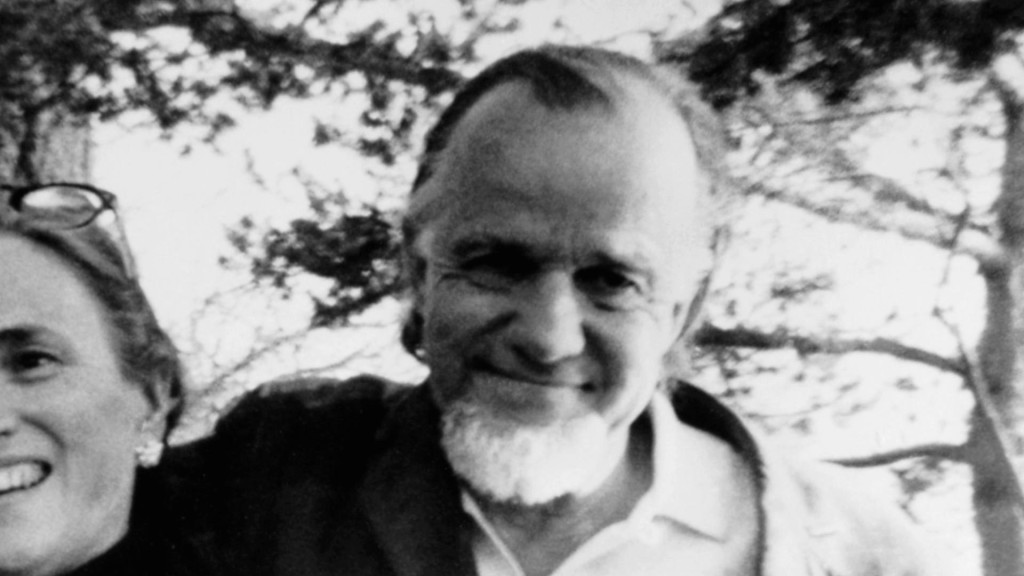
In his lengthy profile of Republican presidential candidate Michele Bachmann in this week’s New Yorker, Ryan Lizza examines how her religious beliefs have shaped her political philosophy. A key figure is Francis Schaeffer, whom Bachmann described as “a tremendous philosopher” and “very inspirational.”
Who is this influential man, not widely known outside of the conservative evangelical community?
FRONTLINE profiled Schaeffer in episode six of God in America, our co-production with American Experience. The above clip explores his role as a catalyst who inspired evangelicals’ re-entry into American politics in 1970s, including that:
• He provided an “intellectual ballast” to a community tarred with an anti-intellectual reputation after Scopes Trial: “He was confrontational. He was willing to say ‘Modernity has gone wrong’ … He gave a way to hang onto the Biblical narrative and yet be a modern, intelligent person,” explained religion scholar Stephen Prothero.
• He was “an embodiment of the counterculture”: With his long hair, goatee, knickers and knee socks, Schaeffer cut a striking figure. L’Abri (“the shelter”), the spiritual community he founded in the Swiss Alps, attracted “lots of long-haired hippies, coming through with backpacks,” his son Frank, who remembers Timothy Leary coming to L’Abri on a pilgrimage, told us.
• His documentary films inspired thousands of evangelicals — including Bachmann — to enter the political arena: His first series, How Should We Then Live (watch here) targeted what Schaeffer saw as the culture’s great evil — secular humanism. “Humanism is man putting himself at the center of all things, rather than the creator God,” Schaeffer explains in the film. He goes on to argue that surrendering to humanism would lead to the moral decay of society.
• He persuaded Jerry Falwell that evangelicals needed to take up the cause of abortion: Falwell and other evangelicals initially viewed Roe v. Wade as “a Catholic issue.” Even Schaeffer himself initially didn’t see abortion as a political cause. He was persuaded to the cause by his son Frank (who, after impregnating his girlfriend at age 17, became a passionate abortion foe) and his good friend Dr. C. Everett Koop. Schaeffer’s second film series Whatever Happened to the Human Race (watch here) is a powerful indictment of abortion, euthanasia and indifference to life: “If in these last decades of the 20th century, the Christian community does not make a determined stand on the issue of each individual to have a right to live and a right to be treated as made in the image of God, rather than a machine, I believe we have failed in the greatest moral challenge of this century. The choice is yours to make.”

Latest Documentaries








Explore
Policies
Teacher Center

Jon and Jo Ann Hagler on behalf of the Jon L. Hagler Foundation
Koo and Patricia Yuen
FRONTLINE is a registered trademark of WGBH Educational Foundation. Web Site Copyright ©1995-2025 WGBH Educational Foundation. PBS is a 501(c)(3) not-for-profit organization.
Funding for FRONTLINE is provided through the support of PBS viewers and by the Corporation for Public Broadcasting, with major support from Ford Foundation. Additional funding is provided the Abrams Foundation, Park Foundation, John D. and Catherine T. MacArthur Foundation, Heising-Simons Foundation, and the FRONTLINE Trust, with major support from Jon and Jo Ann Hagler on behalf of the Jon L. Hagler Foundation, and additional support from Koo and Patricia Yuen. FRONTLINE is a registered trademark of WGBH Educational Foundation. Web Site Copyright ©1995-2025 WGBH Educational Foundation. PBS is a 501(c)(3) not-for-profit organization.