What To Know About Forever Chemicals
A consumer guide to understanding PFAS and the steps you can take to reduce exposure.
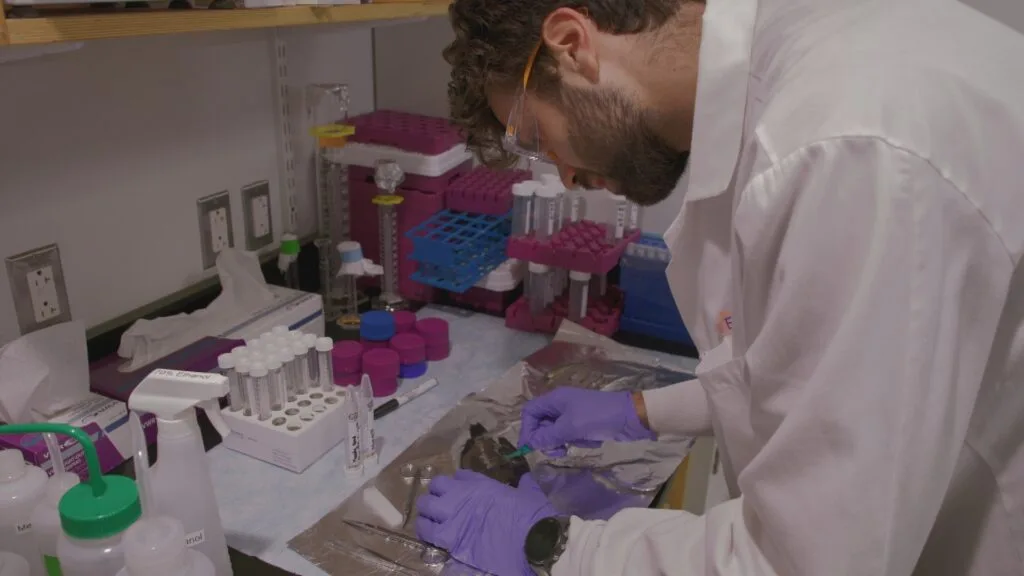
February 2, 2026
Share
Nearly everyone in the United States has forever chemicals in their blood. Companies have long used these chemicals to make products that withstand water, oil and heat, including non-stick pans and waterproof gear. For decades, they were also used to make stain-resistant carpet.
But their use comes at a cost. Research links these man-made chemicals to an increased risk of certain cancers, thyroid dysfunction and diabetes among other health problems.
Why are they called forever chemicals?
They can take decades or more to break down in the environment and linger in our bodies. Their scientific name is per- and polyfluoroalkyl substances — or PFAS.

There are thousands of PFAS compounds. Companies have used PFAS since the 1940s, and industry researchers began to understand the chemicals’ potential health risks in the 1960s.
How do these chemicals get into our bodies?
PFAS can enter our bodies in many ways, including through the food we eat and the water we drink.
Many industrial and manufacturing processes use PFAS. Those processes produce waste that is sent to landfills, wastewater treatment plants and incinerators. The chemicals can then be emitted into the air and seep into soil, waterways and drinking water sources.
Water supplies in communities of color are more likely to have harmful levels of PFAS. Studies have also found higher levels of the chemicals in neighborhoods near military bases, airports and industrial sites.
Dairy and beef products may contain PFAS if cows consume contaminated water, grass or feed. Researchers have found high levels of the chemicals in freshwater fish across the U.S. and Europe.
PFAS are often used in food packaging to keep grease and water from soaking through fast food containers, pizza boxes and candy wrappers.
And PFAS can be found in a wide range of everyday products including personal care items such cosmetics, dental floss, feminine hygiene products and waterproof sunscreen.
What are the human health risks?
PFAS bind to a protein in human blood and can accumulate in organs over time. Scientists have studied the chemicals for decades, but don’t yet fully understand their health effects. Research shows that exposure to some PFAS is linked to:
- an increased risk of certain cancers, including kidney cancer
- higher cholesterol levels
- increased risk of developing obesity and diabetes
- weaker response to some vaccines
- disruption in thyroid function
- increased risk of endometriosis and adverse birth outcomes like miscarriage, decreased birth weight and preterm birth
How do I know if PFAS is in my drinking water and soil?
The U.S. Geological Survey estimates that at least 45% of U.S. tap water contains one or more types of PFAS.
The Environmental Protection Agency (EPA) rules say the amount of two common types of PFAS in drinking water cannot exceed four parts per trillion. That’s less than one drop of water in an Olympic-sized swimming pool.
In 2024, the EPA announced it will require local water systems to inform users of the levels of some PFAS in their drinking water by 2027.
Some public utilities already test for PFAS. To find out more, you can check with your local water provider. The Environmental Working Group, an advocacy organization, also maintains a searchable database that lists PFAS and other chemicals often found in local tap water.
Federal regulations don’t apply to the nearly 40 million people in the U.S. whose drinking water comes from private wells. Where high levels of PFAS are known to be a problem, the EPA recommends regular testing through a certified laboratory. Tests can cost around $400, but some states, including Colorado, New Hampshire and North Carolina offer financial assistance.
PFAS soil testing is available through commercial labs; A test for a single soil sample can cost up to $500.
To better understand your own level of exposure, you can ask your doctor to test your blood for PFAS. The federal Agency for Toxic Substances and Disease Registry also offers a PFAS Blood Level Estimation Tool.
How can I avoid PFAS?
PFAS are difficult to detect. They are odorless, colorless and tasteless.
There is no way to fully avoid exposure, but you can familiarize yourself with potential risks in what you eat and drink and the products you use.
When purchasing household products, you can’t always rely on the “green” label, but some states have published guides to help consumers identify products labeled as PFAS-free.
The American Academy of Pediatrics recommends replacing cracked or flaking nonstick cookware with stainless steel or iron pots and pans. They also suggest regularly removing household dust, which may contain PFAS. If you eat locally sourced foods, check your local agencies for environmental health advisories on fish, wildlife and dairy.
For added protection at home, you can install PFAS drinking water filters, which range from $20 to $1,000.
What is being done to fix this?
In recent years, the EPA has issued regulations for some PFAS in drinking water, though the Trump Administration has rolled back or delayed enforcement of some of those rules.
California, Maine and New Mexico have also passed laws restricting PFAS in certain consumer products. According to the National Caucus of Environmental Legislators, last year, at least 37 states introduced bills to curb PFAS use and contamination. Some local water districts that have high levels of PFAS are installing new water treatment systems, but these upgrades can be very expensive.
Environmental advocacy groups such as the National Resource Defense Council, Food and Water Watch, Clean Water Action and Earthjustice are pushing for state and federal policies aimed at decreasing exposure to and eliminating the use of PFAS.

Tow Journalism Fellow, FRONTLINE/Columbia Journalism School Fellowship, FRONTLINE
Email:
jala_everett@wgbh.orgRelated Documentaries









Latest Documentaries










Related Stories

Following the Chemicals: Documenting PFAS Contamination in Southern Communities
Contaminated: The Carpet Industry’s Toxic Legacy
Related Stories
Following the Chemicals: Documenting PFAS Contamination in Southern Communities
Contaminated: The Carpet Industry’s Toxic Legacy
Explore
Policies
Teacher Center

Jon and Jo Ann Hagler on behalf of the Jon L. Hagler Foundation
Corey David Sauer
Koo and Patricia Yuen
FRONTLINE is a registered trademark of WGBH Educational Foundation. Web Site Copyright ©1995-2025 WGBH Educational Foundation. PBS is a 501(c)(3) not-for-profit organization.
Funding for FRONTLINE is provided through the support of PBS viewers and by the Corporation for Public Broadcasting, with major support from Ford Foundation, and The Fialkow Family Foundation, as part of the Plum Bush Foundation. Additional funding is provided the Abrams Foundation, Park Foundation, John D. and Catherine T. MacArthur Foundation, Heising-Simons Foundation, and the FRONTLINE Trust, with major support from Jon and Jo Ann Hagler on behalf of the Jon L. Hagler Foundation, and Corey David Sauer, and additional support from Koo and Patricia Yuen. FRONTLINE is a registered trademark of WGBH Educational Foundation. Web Site Copyright ©1995-2025 WGBH Educational Foundation. PBS is a 501(c)(3) not-for-profit organization.