Crisis in Venezuela
February 10, 2026
54m
What’s next for Venezuela after the dramatic fall of Nicolás Maduro?
Crisis in Venezuela
February 10, 2026
54m
Share
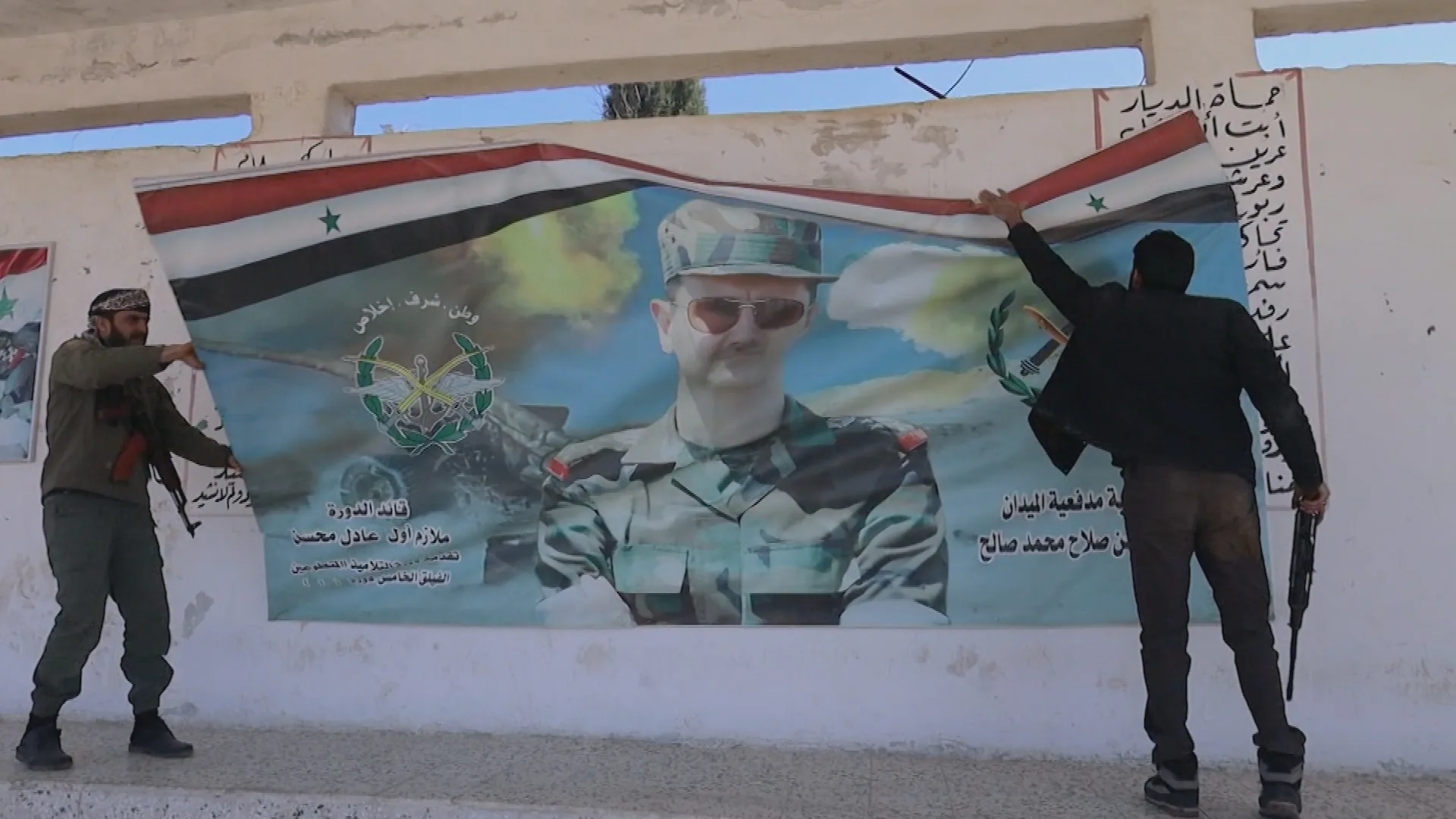
What’s next for Venezuela after the dramatic fall of Nicolás Maduro? In a documentary from the filmmakers behind A Dangerous Assignment, FRONTLINE and The Associated Press investigate the legacy of corruption in Venezuela, the challenges to democracy, the conflict with the U.S., and the fight over who will control the oil-rich country.
Directed by
Produced by
Written by
In partnership with:

Transcript
Credits
Journalistic Standards
Support provided by:
Learn More
Most Watched
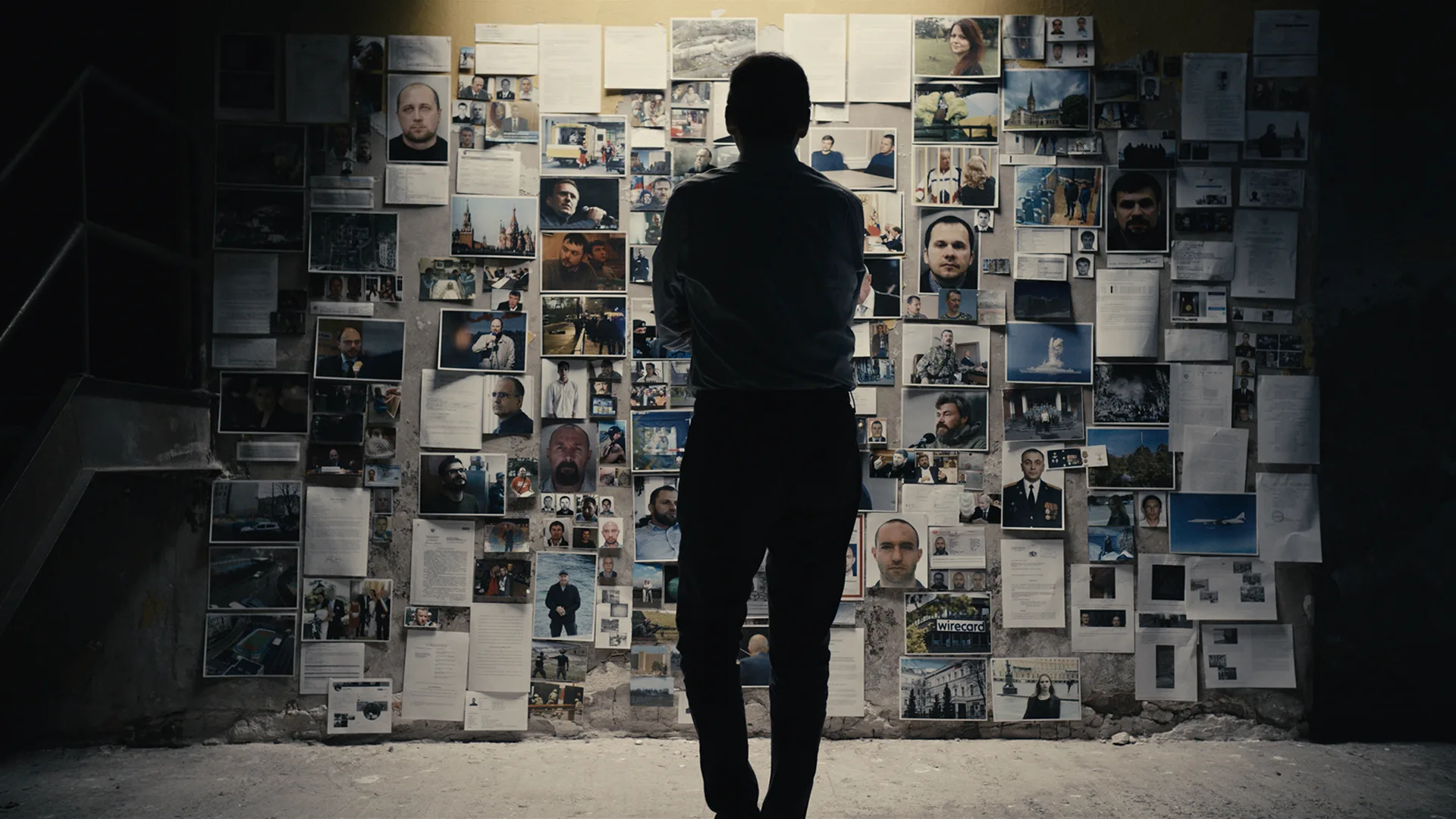
The FRONTLINE Newsletter
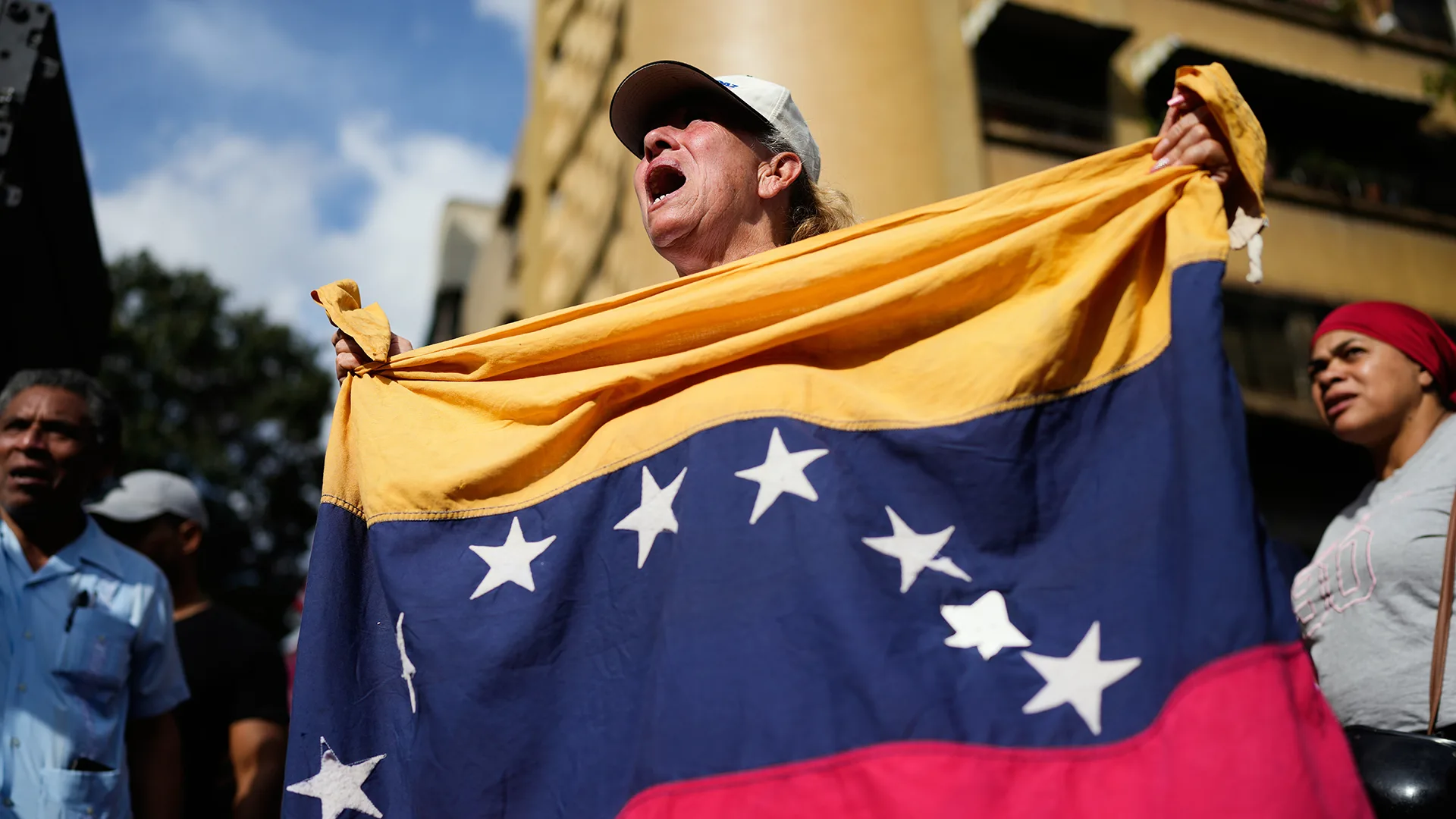
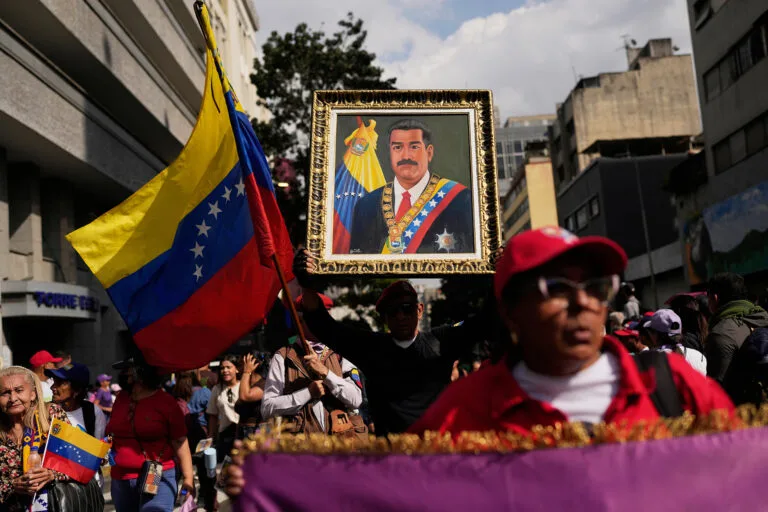
A Mix of Hope and Fear Settles Over Venezuela After US-Imposed Government Change
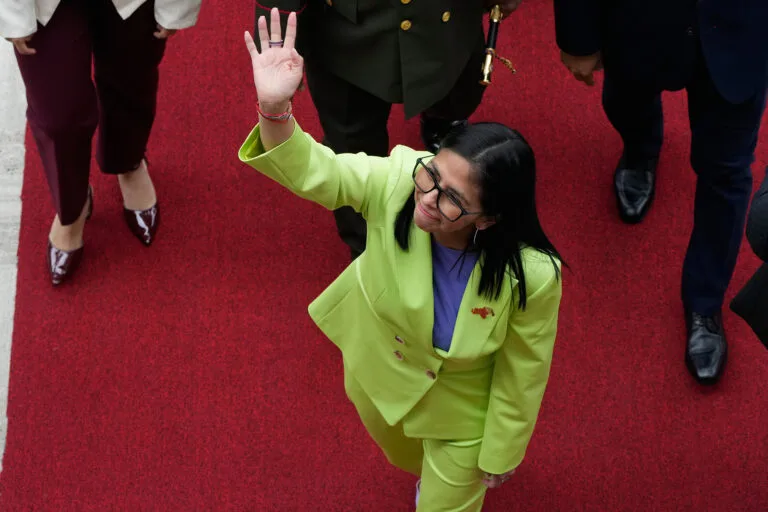
AP Obtains Documents Showing Venezuelan Leader Delcy Rodríguez Has Been on DEA’s Radar for Years
A Dangerous Assignment
Related Stories
A Mix of Hope and Fear Settles Over Venezuela After US-Imposed Government Change
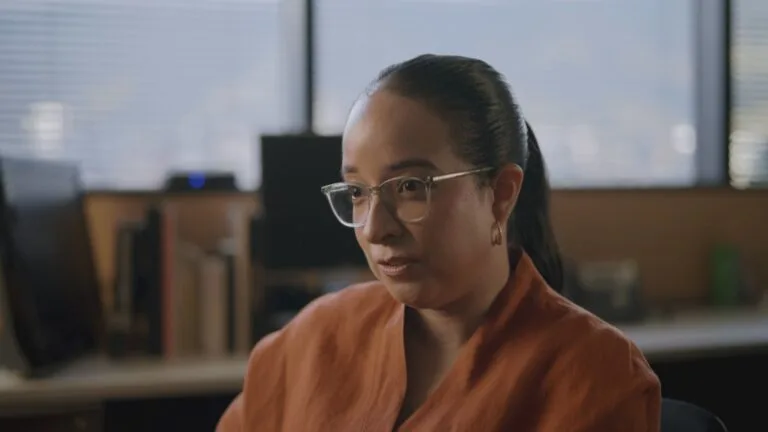
‘I Think We’re Under Attack’: Inside Caracas the Night the U.S. Captured Nicolás Maduro
AP Obtains Documents Showing Venezuelan Leader Delcy Rodríguez Has Been on DEA’s Radar for Years
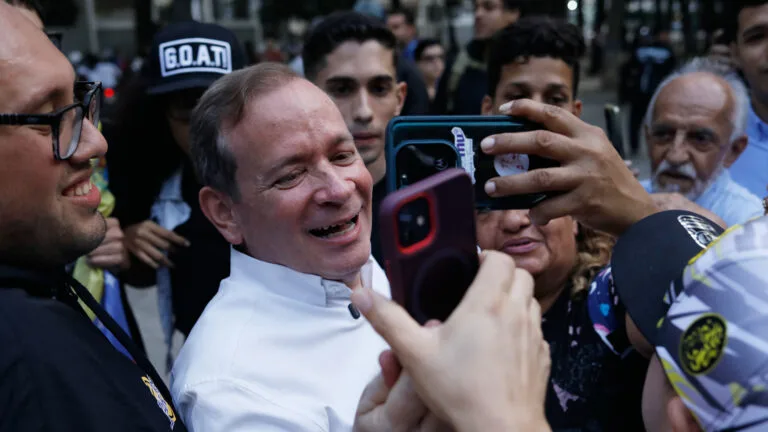
Venezuela Frees Several Opposition Members After Lengthy Politically Motivated Detentions
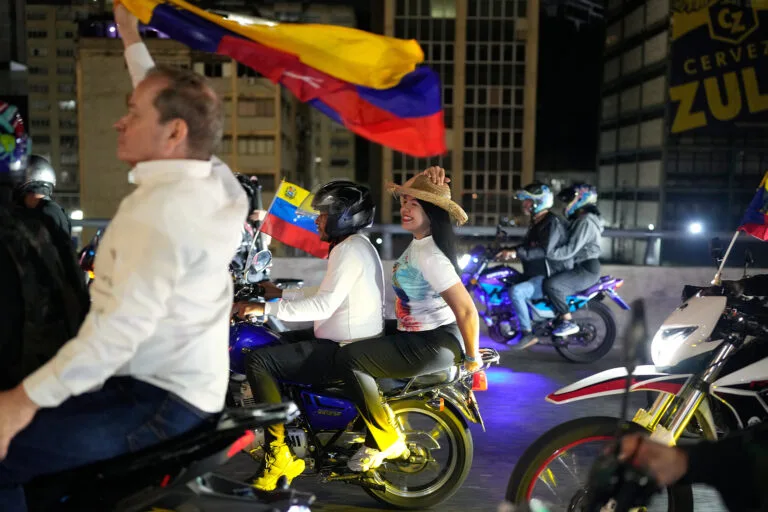
Venezuela’s Top Prosecutor Orders the Arrest of Opposition Leader’s Ally, Hours After His Release

Venezuela Coverage From The Associated Press
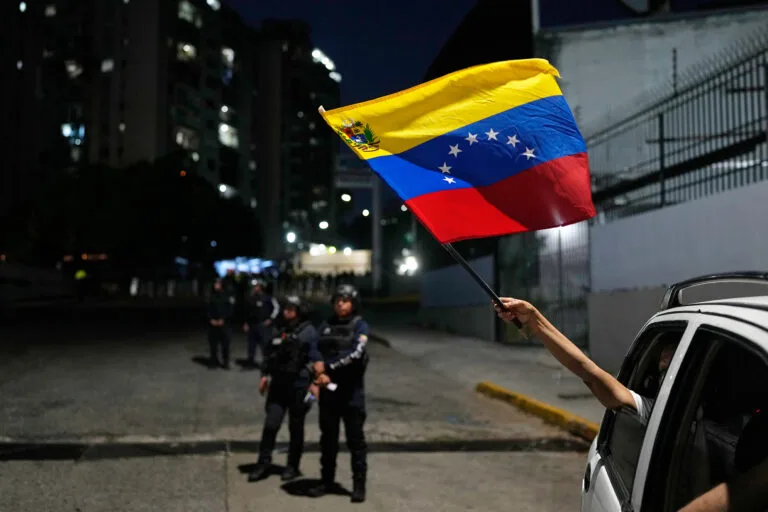
Venezuelan Opposition Politician Placed Under House Arrest After Release From Jail, Son Says
A Dangerous Assignment
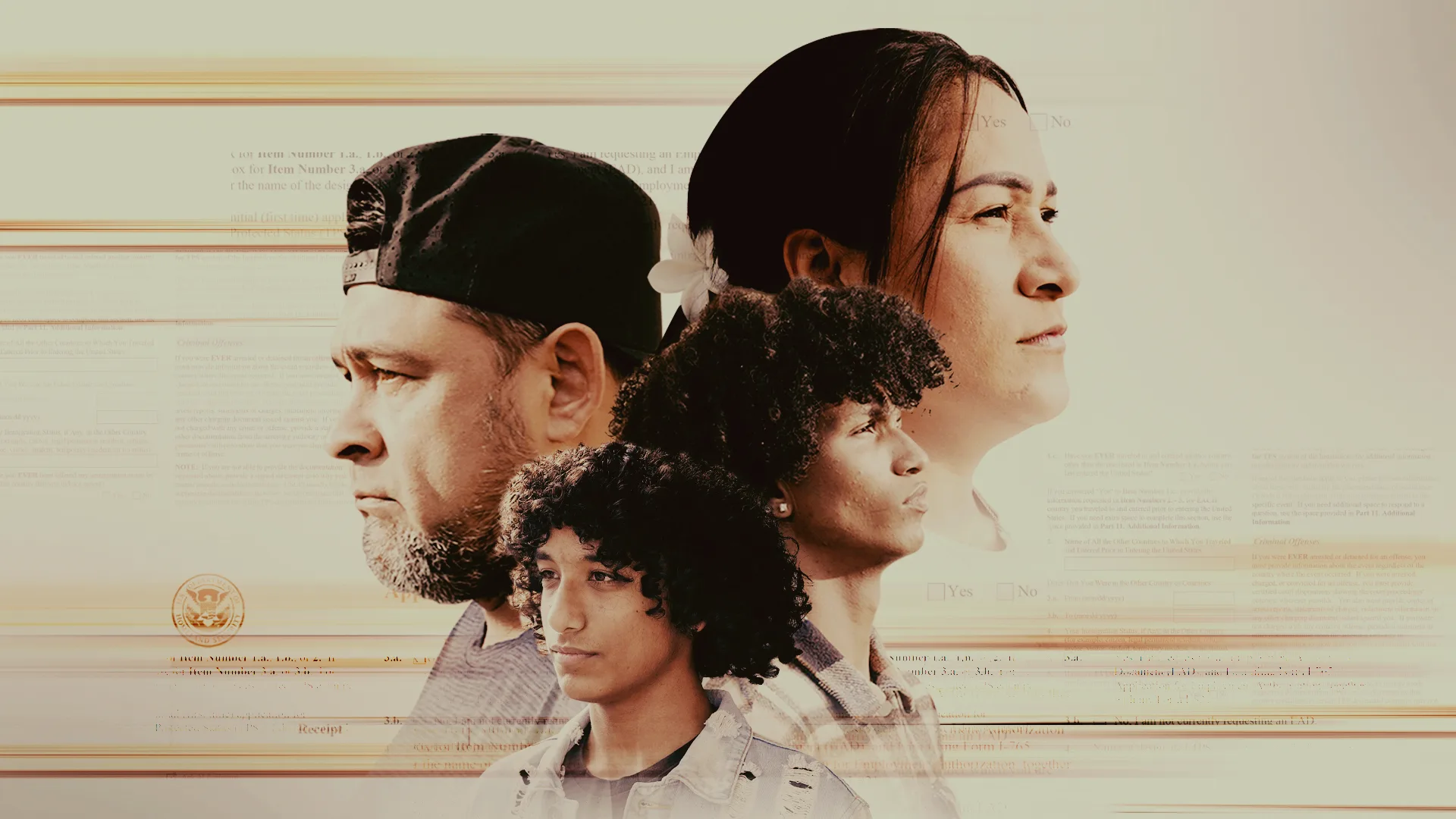
Status: Venezuelan
Related Stories
A Mix of Hope and Fear Settles Over Venezuela After US-Imposed Government Change
‘I Think We’re Under Attack’: Inside Caracas the Night the U.S. Captured Nicolás Maduro
AP Obtains Documents Showing Venezuelan Leader Delcy Rodríguez Has Been on DEA’s Radar for Years
Venezuela Frees Several Opposition Members After Lengthy Politically Motivated Detentions
Venezuela’s Top Prosecutor Orders the Arrest of Opposition Leader’s Ally, Hours After His Release
Venezuela Coverage From The Associated Press
Venezuelan Opposition Politician Placed Under House Arrest After Release From Jail, Son Says
A Dangerous Assignment
Status: Venezuelan
MALE NEWSREADER:
It’s 9 a.m. on the East Coast, and if you’re just joining us this morning, we have major breaking news. Venezuelan dictator Nicolás Maduro has been captured by U.S. forces.
MAN CELEBRATING IN CROWD:
[Speaking Spanish] Long live a free Venezuela! Long live!
NARRATOR:
Within hours of the raid in Caracas, Venezuelan exiles celebrated in Miami.
MAN CELEBRATING IN CROWD:
[Singing in Spanish] And it’s fallen. It’s fallen. This government has fallen.
NARRATOR:
Around 8 million Venezuelans fled abroad during the rule of Nicolás Maduro—more than 700,000 to the United States.
MALE SPEAKER:
[Speaking Spanish] I’ve waited my whole life to see this.
FEMALE SPEAKER:
[Speaking Spanish] Now justice has been served. I tell you, I cried tears of joy this morning.
PRESIDENT DONALD TRUMP:
Late last night and early today, at my direction, the United States Armed Forces conducted an extraordinary military operation in the capital of Venezuela. It was a force against a heavily fortified military fortress in the heart of Caracas to bring outlaw dictator Nicolás Maduro to justice. This was one of the most stunning—
NARRATOR:
AP reporter Joshua Goodman is based in Miami and has been reporting on Venezuela for over a decade.
JOSHUA GOODMAN, The Associated Press:
Initially after the capture of Maduro, I was focused on who was in power in Caracas. Maduro ran the country so ruthlessly that his absence was going to immediately create a void. It was nominally filled by Delcy Rodríguez, his vice president and loyal aide during many, many years.
DONALD TRUMP:
She’s I guess the president. She was sworn in as president just a little while ago. She had a long conversation with Marco, and she said, “We’ll do whatever you need.” I think she was quite gracious, but she really doesn’t have a choice.
DELCY RODRÍGUEZ:
[Speaking Spanish] We demand the immediate release of President Nicolás Maduro and his wife, Cilia Flores.
JOSHUA GOODMAN:
Delcy Rodríguez’s reaction to Maduro’s capture kind of followed the script that you would expect. She denounced it as a kidnapping, a violation of the United Nations Charter.
DELCY RODRÍGUEZ:
[Speaking Spanish] We will never be slaves again, and we will never again be a colony of any empire, of whatever stripe.
JOSHUA GOODMAN:
But within a matter of hours, she sort of switched her discourse a little bit. And even though she continued to denounce Maduro’s, quote, “kidnapping,” she also very clearly extended an olive branch to the Trump administration.
FEMALE NEWSREADER:
Delcy Rodríguez has been officially sworn in as interim president. She’s indicated she’ll cooperate with Washington, but described Maduro and his wife as hostages.
Caracas, Venezuela
FEMALE NEWSREADER:
[Speaking Spanish] It happened in just a few hours, from a lightning-fast U.S. operation in the early morning to the capture of Nicolás Maduro and his wife … At this time, we have more questions than answers.
FEMALE NEWSREADER:
[Speaking Spanish] … the toll has now risen to over 90 wounded and 80 dead among civilians and military personnel.
NARRATOR:
In Caracas, AP’s Venezuela correspondent Regina García Cano was covering the impact and reactions on the ground.
REGINA GARCÍA CANO, The Associated Press:
As the sun went up, the city remained in absolute silence. Slowly we started to see some businesses open, and people began to line up outside. People looked stunned. There were no celebrations—at least not publicly.
MAN ON THE STREET:
[Speaking Spanish] There’s a lot of uncertainty all over the country right now. What will happen tomorrow? What will happen within the next half hour? Nobody knows what’s happening. We’re living through an enigma right now.
MALE NEWSREADER:
[Speaking Spanish] This military operation, described as a large-scale strike, marks the end of a turbulent chapter in Venezuela’s history, but opens an uncertain one.
REGINA GARCÍA CANO:
With Delcy becoming acting president, many, many questions were left unanswered. How long is she going to be acting president? Will there be elections soon, or in a year, or in two years? Venezuelans want answers to those questions. What’s going to happen next?
MARCO RUBIO:
Well, there’s a lot of operational details that can’t be discussed publicly, obviously, for obvious reasons. So, as we move forward we’ll describe our process.
NARRATOR:
Secretary of State Marco Rubio was quickly promoting a three-phase plan for Venezuela.
MARCO RUBIO:
Step one is the stabilization of the country. We don’t want it descending into chaos. …
The second phase will be a phase that we call recovery, and that is ensuring that American, Western and other companies have access to the Venezuelan market in a way that’s fair. Also, at the same time, begin to create the process of reconciliation nationally within Venezuela, so that the opposition forces can be amnestied and released from prisons or brought back to the country and begin to rebuild civil society. And then the third phase, of course, will be one of transition. Some of this will overlap.
FEMALE REPORTER:
The people of Venezuela are waking up to the same regime. Do you not worry about that?
MARCO RUBIO:
Well, first of all, the bottom line is that there is a process now in place where we have tremendous control and leverage over what those interim authorities are doing and are able to do.
JOSHUA GOODMAN:
I remember this.
NARRATOR:
The origins of the U.S. effort to topple Nicolás Maduro go back more than a decade.
JOSHUA GOODMAN:
This is it. This is it. This is the moment that Nicolás Maduro became president.
NARRATOR:
In 2012, Maduro was anointed by his predecessor, Hugo Chávez, on live television.
JOSHUA GOODMAN:
Chávez is dying of cancer, and he anoints his successor. Watch.
HUGO CHÁVEZ:
[Speaking Spanish] If something were to happen, I repeat, that would somehow incapacitate me … I ask that you elect Nicolás Maduro as president of the Bolivarian Republic of Venezuela. I ask you from the bottom of my heart.
JOSHUA GOODMAN:
Maduro shows no expression, but it was the moment that set him up to become president.
NARRATOR:
Chávez saw the U.S. as his archenemy and had clashed with it over control of Venezuela’s vast oil reserves. He’d seized the assets of American oil companies doing business there.
JOSHUA GOODMAN:
Venezuela is a petrostate. It depends exclusively on the sale of oil for income.
Hugo Chávez renegotiated oil contracts in Venezuela, and a lot of the companies didn’t like the deal he was offering and they sued. And they, to this day, are owed billions of dollars from that expropriation.
NARRATOR:
When Maduro came to power after Chávez’s death, the oil industry was in disarray, and the economy was collapsing.
At the time, Juan Gonzalez was coordinating U.S. policy on Venezuela for the Obama administration.
JUAN GONZALEZ, Dep. Asst. Secretary of State, 2009-17:
Nicolás Maduro was incredibly unpopular at the very beginning, and there were questions about whether he could endure and survive politically. The time that Hugo Chávez left coincided with a collapse in oil and gas prices. So Nicolás Maduro no longer had this pocketbook.
I think Maduro found himself in a position where he had to use increasing crackdowns, even manipulation of elections.
NICOLÁS MADURO:
[Speaking Spanish] If you want to overthrow me, come after me. Here I am, with a people and an armed force. Here I am, ready.
JUAN GONZALEZ:
The closure of the democratic space was characterized by increased corruption inside of the government, basically just to stay in power. I think he had to keep a lot of people happy, so he had to give a lot of money out. And yes, people started disappearing.
NARRATOR:
Maduro banned political opponents and arrested and detained thousands of political prisoners.
FEMALE PROTESTER:
[Speaking Spanish] I want democracy! I want freedom! I want to raise my children!
MALE PROTESTER:
[Speaking Spanish] They are taking me away without a warrant!
NARRATOR:
Many would end up incarcerated at Helicoide, the notorious headquarters of Venezuelan intelligence.
By 2017, a mass exodus from Venezuela was underway that would continue through Maduro’s rule.
August 11, 2017
DONALD TRUMP:
We have many options for Venezuela. And by the way, I’m not going to rule out a military option. We have many options for Venezuela.
NARRATOR:
In his first term, President Trump already had Maduro in his sights.
DONALD TRUMP:
The people are suffering, and they’re dying. We have many options for Venezuela, including a possible military option, if necessary.
NARRATOR:
Elliott Abrams served as Trump’s special representative for Venezuela.
ELLIOTT ABRAMS, U.S. Special Rep. for Venezuela, 2019-21:
We said approximately 5 million times “all options are on the table.”
DONALD TRUMP:
All options, always. All options are on the table.
I think of all possibilities. All options are open.
ELLIOTT ABRAMS:
And that was true in the sense that it’s always true. But there was no real military plan to do anything like this. Partly, I think, because I don’t think at that point there would have been much support in the Pentagon, and there certainly wouldn’t have been at CIA.
NARRATOR:
Initially, President Trump imposed sanctions targeting the regime and its oil sector, part of a strategy known as “maximum pressure.”
DONALD TRUMP:
Today, we are announcing additional sanctions against the repressive regime, targeting Maduro’s inner circle and close advisers.
ELLIOTT ABRAMS:
We had sanctions. We isolated the regime diplomatically. But it didn’t work.
NICOLÁS MADURO:
[Speaking Spanish] Donald Trump, don’t mess with Venezuela. Hands off Venezuela.
JOSHUA GOODMAN:
I think one of the pernicious effects of the maximum pressure campaign is that it actually fueled more corruption.
When Venezuela was restricted, for all intents and purposes, from trading with the rest of the world, they had to rely on these shadowy networks of oil tankers, relations with other countries like Iran, which were under sanctions. And when you’re dealing outside of traditional markets, the opportunity for graft, for corruption, for inflating prices on government contracts just grows exponentially.
NARRATOR:
Maduro used a parallel economy to try to get around the sanctions. Central to the effort was his vice president, Delcy Rodríguez.
DELCY RODRÍGUEZ:
[Speaking Spanish] I speak on behalf of the true Venezuela. Of the dignified Venezuela, the valiant, the one that does not kneel before any imperialist power.
JOSHUA GOODMAN:
Delcy Rodríguez makes herself indispensable to Maduro. She’s sort of the chief operating officer who is coordinating oil sales despite U.S. sanctions. She is attracting investment from around the world. She is traveling the world as well to cement relations with places like Russia. And during this period, her power expands immensely. She’s also given control over the intelligence services—the SEBIN, the feared political police, report to her as vice president.
NARRATOR:
Maduro also relied on another powerful player: a Colombian businessman named Alex Saab.
ROBERTO DENIZ, Armando.info:
[Speaking Spanish] Alex Saab became a type of personal emissary for Nicolás Maduro. A sort of minister in the shadows.
NARRATOR:
Roberto Deniz is an exiled Venezuelan journalist whose reporting uncovered how Saab used a network of companies to get around U.S. sanctions, as well as cheat the state oil company, PDVSA.
ROBERTO DENIZ:
[Speaking Spanish] The businesses’ goal was to sell oil without anyone knowing it was from Venezuela. … But there was a much bigger scandal behind this operation. They never actually paid Venezuela the money for those oil exports. … These businesses owed Venezuela $1.5 billion.
MARSHALL BILLINGSLEA, Asst. Sec., U.S. Dept. of Treasury, 2017-21:
He’s stolen enormous amounts of money for Maduro and his cronies. Alex Saab was prolific in the way that he created shell companies around the world.
NARRATOR:
Marshall Billingslea was at the U.S. Treasury Department and helped lead an effort to investigate Alex Saab.
MARSHALL BILLINGSLEA:
It was my role in the Treasury to do everything that I could to help protect the U.S. financial system and to support our friends and our allies. In the case of Alex Saab, this is an individual who was abusing the international financial system, and the things he was doing on behalf of Maduro were unconscionable.
NARRATOR:
In 2020, Saab was arrested while on a business trip and eventually extradited to the U.S. on money laundering charges.
He pleaded not guilty and was held in federal custody awaiting trial.
FEMALE NEWSREADER:
[Speaking Spanish] Arrested and handcuffed. That’s how the alleged front man for the Venezuelan president set foot on U.S. soil.
NARRATOR:
At the same time, the Trump administration was stepping up the pressure on Maduro, charging him and members of his government with crimes, including corruption and drug trafficking.
FEMALE NEWSREADER:
The U.S. Justice Department announced indictments of Venezuela’s President Nicolás Maduro and his top allies on charges of narco-terrorism. Attorney General William Barr said they conspired to flood the U.S. with cocaine and to loot their own country of billions of dollars.
NARRATOR:
Sandy Gonzalez was one of the key investigators on the case.
SANDY GONZALEZ, DEA agent, 1999-2024:
I was assigned to a special unit of DEA whose sole focus is to investigate international drug traffickers, money launderers, narco-terrorists and corrupt officials.
Venezuela has become, at least during the time that I worked there and was investigating the drug trafficking activity there, a really strategic location for cocaine trafficking organizations.
All of these organizations essentially had a paradise where they could operate freely if they paid the right people.
MALE NEWSREADER:
Prosecutors say for more than 20 years Maduro led the Cartel of the Suns, using Venezuela’s military, legislature and courts to traffic cocaine into the U.S.
SANDY GONZALEZ:
The Cartel de los Soles is a name we did not come up with. It was a name that we heard while we were working in Venezuela. So it’s a little bit complicated. Certain people have different ways of describing it. It could be described as a mafia of sorts, but it’s definitely a group of individuals in Venezuela, involved in the government, that participate in the drug trade, facilitate the drug trade, profit from the drug trade and allow the drug trade to flourish in their country.
U.S. military footage
NARRATOR:
In the summer of 2025, the Trump administration began referring to the Cartel de los Soles as narco-terrorists and launched a wave of controversial strikes against alleged “drug boats” that would kill more than 100 people.
MALE NEWSREADER:
Today in the Caribbean another boat incinerated by a U.S missile. The 10th U.S. strike since early September on what the administration calls “drug boats,” including three strikes this week alone.
MALE NEWSREADER:
The U.S. military killed two people clinging to wreckage in the sea after they survived an initial air strike on their boat.
REGINA GARCÍA CANO:
The U.S. government offered little to no information about those strikes. They claimed those on board were narco-terrorists.
PETE HEGSETH, Secretary of Defense:
A foreign terrorist organization poisoning your people with drugs, coming from a drug cartel, is no different than Al-Qaeda.
REGINA GARCÍA CANO:
They offered no evidence to back up those claims.
U.S. military footage
NICOLÁS MADURO:
[Speaking Spanish] Venezuela is facing the greatest threat … our continent has seen in the last 100 years.
JOSHUA GOODMAN:
It was very apparent early on that the goal here was to pressure Maduro into resigning. It was a fig leaf, the idea that this was a counter-narcotics mission, and it was really about forcing regime change in Venezuela.
ELLIOTT ABRAMS:
We had reached the point at which there was too big a buildup in the Caribbean for the president to back off. It was clear to me there’s going to be a winner and a loser. Is it going to be Trump or is it going to be Maduro?
NARRATOR:
Once in U.S. custody, prosecutors unsealed a new indictment against Maduro. They accused him of involvement in a vast drug trafficking conspiracy with the Venezuelan military.
SANDY GONZALEZ:
As it states in the indictment, it is a conspiracy. So he had a role in that conspiracy. And according to our laws, everyone involved in a conspiracy is essentially as culpable as the next.
JOSHUA GOODMAN:
The country is now being led by Delcy Rodríguez. In your view, is she someone who can dismantle those criminal networks that have blossomed under Maduro?
SANDY GONZALEZ:
That’s going to be interesting to see. I don’t think that you could just remove Nicolás Maduro from that equation and leave everything else status quo and expect things to change.
NARRATOR:
Within days of Maduro’s capture, the AP got a tip about Delcy Rodríguez’s own connections to drug trafficking allegations.
JOSHUA GOODMAN:
F—. Wow. My colleague Jim Mustian from New York got some information about possible criminal investigations in the United States into Delcy Rodríguez. Let me take a look. OK, let’s see what this is.
What’s this mean? Oh, she’s got a NADIS number. F—. A NADIS number is a big deal. I have to understand this better. We got to call Jim. We got to find out what all this means. Oh my God. That’s a huge—OK. Wow. OK. I mean, this—11 cases. … Great work. Great work.
OK, let’s find a place to work. I need to work. Thanks.
I’m going to call my editor. Hey, can I patch in Jim?
Voice of:
JIM MUSTIAN
The Associated Press
JIM MUSTIAN [on phone]:
Good afternoon. Her entry in the DOJ’s and the DEA’s file on her says, quote, “Involved in drug trafficking and gold smuggling projects.” The language this source described Delcy as a priority target. But the quote that we could probably use if we needed to, I mean, I’m just going through my messages with the source, is listed as a priority target.
JOSHUA GOODMAN:
That doesn’t mean that—for example, Jim mentioned earlier, drug trafficking and gold. That doesn’t mean that she herself was doing that. It could just mean that she was mentioned in connection to that drug trafficking and gold trafficking investigation. Now, what her role is, if any, would be something that you would only learn in an indictment, and she has not been indicted as far as we know.
This is a major surprise because even though I think Venezuela has long been a target-rich environment for the DEA and other agencies, she somehow, somewhat uniquely, had escaped being criminally charged herself.
FEMALE NEWSREADER:
The AP obtains documents claiming, quote, “The DEA has amassed a detailed intelligence file on Rodríguez cataloging her known associates and allegations ranging from drug trafficking to gold smuggling.”
FEMALE NEWSREADER:
[Speaking Spanish] Venezuela’s interim leader, Delcy Rodríguez, has been on the DEA’s radar for years. According to AP, Rodríguez was even designated a priority target in 2022.
NARRATOR:
The Venezuelan government dismissed the story as “fake.”
Nobody from the Trump administration would agree to an interview.
But Secretary of State Rubio was questioned about the allegations in a Senate hearing.
SEN. JEANNE SHAHEEN (D-NH):
The DEA has reportedly identified Delcy Rodríguez as a significant actor in the drug trade. Do you agree with that?
MARCO RUBIO:
Well, first of all, on the first point, I would say she’s not indicted the way Maduro and his wife were. So I’m not going to speculate about newspaper articles and what law enforcement is working on. If in fact there were such an investigation, you know, I mean, that’s something that we would speculate on. Suffice it to say that this was not a normal system. We all should stipulate to that, OK? That regime, as everyone understood, was held together by corruption. The glue that kept people together was not loyalty to Maduro. It was the fact that these five guys had five separate oil fields that were assigned to them. These people are drug runners.
JEANNE SHAHEEN:
I understand that. And I’m not defending the regime. In fact, I’m concerned that we haven’t really changed the regime enough.
MARCO RUBIO:
I acknowledge that we are dealing with, I told you, with individuals that have been involved in things that in our system would not be acceptable to us in the long term. By no means is our policy to leave in place something permanent that’s as corrupt as you’ve described. We are in the transition and stabilization phase. We are just acknowledging reality. And that is you have to work with the people that are in charge of the elements of government.
NARRATOR:
One of those people was Venezuelan Interior Minister Diosdado Cabello, who was charged with drug trafficking in the same indictment as Maduro.
ELLIOTT ABRAMS:
Diosdado Cabello, who is the minister of the interior, control of police, secret police, intelligence, is a criminal. He’s under indictment for drug trafficking. He’s the chief thug of the regime. He’s the guy who’s really in charge of these prisons and their torture chambers.
DIOSDADO CABELLO:
[Speaking Spanish] Long live the Bolivarian Revolution!
ELLIOTT ABRAMS:
And if there is a democratic Venezuela, he will have no place in it, except maybe in prison. So he could be a spoiler. He could be a break.
NARRATOR:
Despite Cabello still being in place, Venezuelans were looking for signs the regime would ease its repressive rule and take steps towards democracy.
Five days after Maduro’s capture, the government made a dramatic announcement.
MALE NEWSREADER:
The Venezuelan regime announced Thursday it would release a significant number of political prisoners in the coming hours.
FEMALE NEWSREADER:
Caracas announced it would release a large number of detainees in what officials refer to as a goodwill gesture.
NARRATOR:
But on the ground, there was no sign of a large number of releases.
WOMAN AT VIGIL:
[Speaking Spanish] Freedom, freedom!
NARRATOR:
On the night of the announcement, relatives gathered outside El Rodeo prison.
REGINA GARCÍA CANO:
El Rodeo, which is outside Caracas, is significant because it holds the largest number of prisoners considered to be detained for their political beliefs.
NARRATOR:
Just four prisoners had been freed so far. The families were praying for more.
WOMAN AT VIGIL:
[Speaking Spanish] We are going to begin this prayer because we have great faith that everyone who is in there will be freed.
CROWD:
Amen.
WOMAN AT VIGIL:
[Speaking Spanish] Everyone who is in there will be freed in the mighty name of Jesus.
CROWD:
Amen.
REGINA GARCÍA CANO [on phone]:
Hey there. We’re outside of Rodeo. We know that they I’ve been moving political prisoners from one facility to another, to another, to another. So at this point, it’s a bit of a guess who’s where.
JOSHUA GOODMAN:
Well, I mean, it seems well short of hundreds of people, right? This doesn’t seem, at least for now, much of a gesture of reconciliation.
REGINA GARCÍA CANO [on phone]:
It is possible that more people than we know of have been released, we just haven’t seen them.
ALFREDO ROMERO:
[Speaking Spanish] Hello? Good, how are you?
NARRATOR:
Venezuelan lawyer Alfredo Romero, who works from a secret location, was also monitoring the releases.
ALFREDO ROMERO:
[Speaking Spanish] There are expectations that they’re going to release people, you’ll see. But it would be at night, if at all. … Again, it’s a number that they won’t disclose, a list they won’t disclose, so we don’t know who they’re going to release.
NARRATOR:
His human rights group tracks the numbers of political prisoners.
ALFREDO ROMERO:
Something that worries me is that in the past, they have released like 100 political prisoners, and then in one month or two months, they have actually incarcerated other 100 political prisoners. That’s what I’ve been calling the revolving door effect of—the revolving door of repression, using political prisoners as a way to intimidate the population.
[Speaking Spanish] The release of political prisoners is like a step before the first step, because the real first step is dismantling the repressive system. That’s the first step.
NARRATOR:
From the start, President Trump was pressed on the issue of Venezuela’s political prisoners.
January 4, 2026
MALE REPORTER:
Are you going to demand that Delcy Rodríguez let opposition figures return or free any political prisoners?
DONALD TRUMP:
We haven’t gotten to that yet. Right now what we want to do is fix up the oil, fix up the country, bring the country back and then have elections.
NARRATOR:
In those early days, the president’s focus was on oil.
FRANCISCO MONALDI, Rice University:
President Trump invited a group of oil businessmen to the White House, a variety of profiles. The large players like Exxon, Conoco and Chevron were there.
DONALD TRUMP:
So we’re going to discuss how these great American companies can help rapidly rebuild Venezuela’s dilapidated oil industry and bring millions of barrels of oil production to benefit the United States, the people of Venezuela and the entire world.
FRANCISCO MONALDI:
If you’re talking about the massive projects that need to be invested in to rebuild the Venezuelan oil industry, we’re talking about $100 billion in investment in a decade. These type of investors, they want long-term horizons.
NARRATOR:
Francisco Monaldi is an expert on the Venezuelan oil industry.
FRANCISCO MONALDI:
Exxon was not enthusiastic at all and basically said that the country was uninvestable under the current circumstances.
DARREN WOODS, CEO, ExxonMobil:
We first got into Venezuela back in 1940s. We’ve had our assets seized there twice. And so you can imagine to reenter a third time would require some pretty significant changes from what we’ve historically seen here and what is currently the state.
FRANCISCO MONALDI:
Companies do not care if a country is democratic or not. They care about the rule of law and respect over their contracts and its stability. The issue in the case of Venezuela is that I think it’s unlikely that they will get all those conditions without democracy.
NARRATOR:
Trump pushed Delcy Rodríguez to relax state control over the oil sector and make it more attractive to U.S. investment. She signaled a willingness to comply.
DELCY RODRÍGUEZ:
[Speaking Spanish] I want to announce that we have introduced the bill for a partial reform of the Organic Law of Hydrocarbons. … I ask this legislative body to approve this partial reform.
JOSHUA GOODMAN:
Delcy Rodríguez has been portrayed as someone eager, for example, to work with American oil companies. So what, in your view, is her long game?
ELLIOTT ABRAMS:
I think we should ask ourselves, what would I do or you do if you were Delcy Rodríguez? What can I get away with? Do the Americans want me out immediately? No. What do they seem to want, most of all? Oil. OK, I can deal with that. That doesn’t undermine my staying power in office. They want some prisoners out. We can start doing that. We’ll do it slowly.
Maybe we can get away with that. Maybe we survive all of this.
January 10, 2026
NARRATOR:
A week after the capture of Maduro, the vast majority of political prisoners remained behind bars.
Regina García Cano and AP photojournalist Ariana Cubillos were heading to a prison in San Francisco de Yare, an hour south of Caracas.
REGINA GARCÍA CANO:
So we are waiting for the third day in a row outside a prison. But so far, they’ve released no more than 20.
MALE VOICE:
[Speaking Spanish] What do you do most in journalism, wait or take pictures?
ARIANA CUBILLOS, AP photographer:
[Speaking Spanish] Keep calm and be prudent.
NARRATOR:
After hours of waiting, a car pulls out of the prison gates.
REGINA GARCÍA CANO:
They were honking their horn. People were applauding. So we follow the car.
[Speaking Spanish] Look at the family. How can we get to them?
[Speaking English] The car stopped about a half a mile away from the prison.
And we found Diogenes and three relatives, including his mother, right at the intersection.
[Speaking Spanish] How are you feeling at this moment?
DIOGENES ANGULO:
[Speaking Spanish] Excited, happy, thank God. Time to enjoy my family again.
REGINA GARCÍA CANO:
His family believes he was detained because he shared a video on social media. He was 17 at the time.
[Speaking Spanish] What did the video show?
DIOGENES ANGULO:
[Speaking Spanish] It was about an opposition march.
REGINA GARCÍA CANO:
[Speaking Spanish] Before the election?
DIOGENES ANGULO:
[Speaking Spanish] Before the election.
REGINA GARCÍA CANO:
[Speaking Spanish] Ma’am, tell me how you feel.
FEMALE RELATIVE 1:
[Speaking Spanish] Excited. We didn’t expect it. But as they say, it was a total success. His release, which we were longing for the most, happened.
NARRATOR:
The news about Maduro’s capture hadn’t yet reached Diogenes and his fellow inmates.
REGINA GARCÍA CANO:
[Speaking Spanish] Did you know Maduro is no longer president?
DIOGENES ANGULO:
[Speaking Spanish] Really? [Laughter] Excited, happy.
MALE VOICE:
[Speaking Spanish] You didn’t know anything about that?
DIOGENES ANGULO:
No.
REGINA GARCÍA CANO:
[Speaking Spanish] He was captured by the United States here, inside the country.
FEMALE RELATIVE 2:
[Speaking Spanish] A week ago.
REGINA GARCÍA CANO:
[Speaking Spanish] In an operation. He’s in a U.S. court.
DIOGENES ANGULO:
[Speaking Spanish] Happy, happy.
NARRATOR:
Diogenes had been arrested in 2024, along with many others from the political opposition. Maduro had been under pressure from the Biden administration to allow free and fair elections.
JOSHUA GOODMAN:
I think what Biden saw was an opportunity to try something new in Venezuela, to reengage with Maduro, to talk about elections, to talk about sanctions, talk about immigration.
NARRATOR:
Both sides would make concessions. Maduro agreed to release Americans being held in Venezuelan jails and promised to hold democratic elections.
JUAN GONZALEZ:
Our focus was on getting the Americans out to create an opening for us to have a dialog, but making clear that U.S.-Venezuela relations will only improve after there was actually a free and fair election.
NARRATOR:
Biden promised to ease sanctions, and even agreed to free the indicted Maduro money man, Alex Saab.
FEMALE NEWSREADER:
[Speaking Spanish] And there we see it, greeting him, followed by a warm and fraternal embrace of the president …
ALEX SAAB:
[Speaking Spanish] I thought you were going to leave me there.
NICOLÁS MADURO:
[Speaking Spanish] Never. Not in this life or in all the lives that come after this one.
JUAN GONZALEZ:
It was a hard decision. The Department of Justice did not like the release of Alex Saab. I wish that we hadn’t had to release Alex Saab, but I think the president of the United States has to make really tough calls, and his number one priority is the safety of Americans.
ELLIOTT ABRAMS:
You know, one of the things that happened in the Biden administration that I was unhappiest with was the release of Alex Saab. Now, that’s an example of taking pressure off the regime.
MALE REPORTER:
Has Maduro committed to you that he will allow all candidates to run in the next presidential election?
PRESIDENT JOE BIDEN:
I’ve not spoken to Maduro. He’s committed to our—We’ve laid down specific requirements for a democratic election and he’s agreed to all of them. Thank you.
NARRATOR:
Maduro’s commitment would quickly be put to the test. In the election, he was being challenged by the popular opposition leader, María Corina Machado.
MARÍA CORINA MACHADO:
[Speaking Spanish] We are not afraid. We are not afraid.
FEMALE NEWSREADER:
In Venezuela, voters took to the polls Sunday for a presidential primary election to decide who will challenge President Nicolás Maduro next year.
DAVID SMOLANSKY, Machado senior adviser:
María Corina Machado decided to run for the democratic opposition primary. Almost 2 million went to vote. María Corina Machado got 92% of the vote.
NARRATOR:
David Smolansky is one of Machado’s advisers.
DAVID SMOLANSKY:
People were not only electing a candidate, people were electing a leader.
NARRATOR:
But Maduro’s government banned her from running in the presidential election, so she endorsed someone else as her proxy.
DAVID SMOLANSKY:
Edmundo González was a diplomat during the democratic years of Venezuela, but he was not known. When María Corina Machado did the rally with the Edmundo González poster, everyone knew in that moment who Edmundo González was. That happened in a matter of weeks.
FEMALE NEWSREADER:
The authoritarian regime of Nicolás Maduro is facing one of its toughest challenges in years.
FEMALE NEWSREADER:
If the polls are correct, the vote could mark the end of President Nicolás Maduro’s 11-year grip on power of the crisis-stricken country.
MARÍA CORINA MACHADO:
[Speaking Spanish] We are going to win! We are going to win!
Election day
ROBERTO DENIZ:
[Speaking Spanish] On July 28, 2024, a sort of silent hope was emerging. A sense that this was the defining decisive day to bring about political change in Venezuela. That was evident from the very first minute of the day. Those images of people arriving at polling stations in the early hours of the morning were an indication of where things were heading.
At midnight on July 28, the president of the National Electoral Council announced a result and declared Nicolás Maduro the winner.
PRESIDENT OF THE NATIONAL ELECTORAL COUNCIL:
[Speaking Spanish] Nicolás Maduro Moros, 51.20%.
ROBERTO DENIZ:
[Speaking Spanish] This result did not align with the evidence gathered by the opposition from the voting machine records used that day.
There were protests almost all over the country.
DAVID SMOLANSKY:
Hugo Chávez’s statues were taken down by the people.
Maduro knew he lost. They reacted with the most brutal repression. More than 2,000 innocent Venezuelans were kidnapped, illegally detained, disappeared.
NARRATOR:
Some of Machado’s allies were arrested and would end up in Helicoide prison.
JUAN GONZALEZ:
I think Maduro did cross the Rubicon after the election because nobody could argue that he was a legitimate leader at that point.
ELLIOTT ABRAMS:
What you’re learning from this is there is no possible way through peaceful protests or through elections to get rid of this criminal gang.
NARRATOR:
María Corina Machado went into hiding.
In late 2025, she was awarded the Nobel Peace Prize and escaped from Venezuela.
FEMALE NEWSREADER:
The Nobel Committee says that they awarded the prize based on Machado’s leadership and promotion of democratic rights for Venezuelans. This is a blow for President Trump. He’s been pressuring leaders in Norway to award him the prize.
NARRATOR:
Hours after Maduro was captured, President Trump was asked about Machado.
FEMALE REPORTER:
Is the U.S. aware of the location of opposition leader Machado, and have you been in contact with her?
DONALD TRUMP:
No, we haven’t.
I think it would be very tough for her to be the leader. She doesn’t have the support within or the respect within the country. She’s a very nice woman, but she doesn’t have the respect to be president.
DAVID SMOLANSKY:
I thought in that moment that when transitions begins, they are complicated. And again, especially the beginning could be messy.
January 15, 2026
PROTESTERS OUTSIDE THE WHITE HOUSE:
[Chanting in Spanish] Who are we? Venezuela! What do we want? Freedom! Freedom! Freedom! Freedom! Freedom!
NARRATOR:
Twelve days later, María Corina Machado came to Washington.
JOSHUA GOODMAN:
We’re at the White House, where right now, María Corina Machado, the opposition leader, is meeting with President Trump. It’s a hugely important meeting for her and the Venezuelan opposition. They are completely marginalized from the negotiations over Venezuela’s future.
DAVID SMOLANSKY:
I think no one has any doubt that the legitimacy, the credibility and the popularity is on María Corina Machado. If you had elections right now in Venezuela, she would win overwhelmingly.
NARRATOR:
After a private meeting with the president, Machado emerged to crowds of supporters.
MARÍA CORINA MACHADO:
I presented the president of the United States the medal of the Nobel Peace Prize.
MALE NEWSREADER:
Machado calling the gesture a recognition for his unique commitment with Venezuela’s freedom.
NARRATOR:
The next morning, she met with reporters.
MALE REPORTER:
What’s your message to the president and to the United States when U.S. policy is still to support the Chavismo government that still exists in Caracas?
MARÍA CORINA MACHADO:
This has nothing to do with a tension or decision between Delcy Rodríguez and myself.
This is about a criminal structure that is the regime and the mandate of the Venezuelan people.
I have no doubt that President Trump, his administration and the people of the United States support democracy, justice, freedom and the mandate of the people of Venezuela.
January 16, 2026
FEMALE REPORTER:
Why align with with Delcy Rodríguez and the remnants of the Maduro regime and not with Machado, who has the support of the Venezuelan people?
DONALD TRUMP:
Well, if you ever remember a place called Iraq, where everybody was fired, every single person—the police, the generals, everybody was fired—and they ended up being ISIS. Instead of just getting down to business, they ended up being ISIS. So I remember that. But I tell you, I had a great meeting yesterday by a person who I have a lot of respect for. And she has respect obviously for me and our country. And she gave me her Nobel Prize. But I’ll tell you what, I got to know her. I never met her before, and I was very, very impressed. She’s a really—This is a fine woman.
NARRATOR:
But for now, Trump would leave Machado on the sidelines, without a commitment about a future role for her in Venezuela.
MALE VOICE:
[Singing in Spanish] It was 3 a.m. on January 3. Caracas was sleeping …
FEMALE VOICE:
[Speaking Spanish] Free Maduro!
NARRATOR:
Meanwhile, on the ground in Caracas, Delcy Rodríguez continued trying to shore up her own precarious position.
REGINA GARCÍA CANO:
Delcy Rodríguez is walking a tightrope. On one hand, she needs to rally her base.
MALE VOICE:
[Singing in Spanish] Free Nicolás!
REGINA GARCÍA CANO:
Remind them that they’re still trying to bring Maduro back. On the other, she’s facing the U.S., and she knows that she must meet many demands. She’s in a tough position for sure.
NARRATOR:
In late January, she signed a law giving foreign oil companies greater freedom to operate in Venezuela. President Trump quickly eased sanctions on the country’s oil sector.
DELCY RODRÍGUEZ:
[Speaking Spanish] This law carries the mark of Comandante Chávez. It affirms our sovereignty over our energy resources.
FRANCISCO MONALDI:
This is an absolute betrayal of what Hugo Chávez wanted for the Venezuelan oil sector. He would be absolutely shocked. This is absolutely dismantling all the oil framework that he created that gave full control over the oil sector to the government.
DELCY RODRÍGUEZ:
[Speaking Spanish] Long live a sovereign and independent Venezuela!
NARRATOR:
It was a win for the Trump administration.
ELLIOTT ABRAMS:
The thing I worry about most regarding Venezuela is, today, us. I think that if American policy is to push in a reasonable, sensible manner toward a restoration of democracy, they will be able to do it. And what I really fear is some kind of deal in Washington that leaves this regime in place permanently, as long as they’re willing to do what we want on oil.
January 28, 2026
FEMALE NEWSREADER:
This hour, Secretary of State Marco Rubio is set to answer questions from senators on the Foreign Relations Committee.
NARRATOR:
Testifying in the Senate, Marco Rubio acknowledged the regime’s actions.
MARCO RUBIO:
The authorities there deserve some credit. They have passed a new hydrocarbon law that basically eradicates many of the Chávez-era restrictions on private investment in the oil industry. It probably doesn’t go far enough to attract sufficient investment, but it’s a big step from where they were three weeks ago. So that’s a major change.
NARRATOR:
He continued to urge patience with the transition.
MARCO RUBIO:
One of the parts of the transition phase or the recovery phase is beginning to create space for different voices inside of Venezuelan politics to have an ability to speak out. Part of that is the release of political prisoners. They are releasing them probably slower than I would like them to, but they are releasing them.
JUAN GONZALEZ:
I think there’s a chance that Marco Rubio pulls this off. I want to recognize that. That he may be able to actually get this to where a year from now there’s a democratic transition. But I think there are also many more scenarios in which this can go horribly sideways.
MARCO RUBIO:
The end state here is we want to reach a phase of transition where we are left with a friendly, stable, prosperous Venezuela—and democratic—in which all elements of society are represented in free and fair elections. … We’re not going to get there in three weeks. It’s going to take some time.
NARRATOR:
As of now, Nicolás Maduro and his wife have pleaded not guilty and remain in U.S. custody, awaiting trial. And there are reports that his former operative Alex Saab may be joining them.
FEMALE NEWSREADER:
[Speaking Spanish] In the last hours it has been said that Alex Saab has been detained in Venezuela.
FEMALE NEWSREADER:
[Speaking Spanish] … the news has not been officially confirmed by the Venezuelan government.
FEMALE NEWSREADER:
[Speaking Spanish] … there might be an extradition request for him.
FEMALE NEWSREADER:
And this does mark a new level of collaboration between President Trump and interim President Delcy Rodríguez.
ROBERTO DENIZ:
[Speaking Spanish] That Delcy Rodríguez would end up extraditing Alex Saab to the United States strikes me as a very strong signal that she is willing to do many things to preserve power amid these negotiations with the United States.
NARRATOR:
At the same time, there is growing hope for Venezuela’s political prisoners. Around 400 have been released so far, and at the end of January, Delcy Rodríguez made an historic promise.
DELCY RODRÍGUEZ:
[Speaking Spanish] Good afternoon to everyone present … who has guaranteed the stability of the Venezuelan state in the midst of adversity.
NARRATOR:
Outside Helicoide, the regime’s notorious prison, friends and relatives of those detained listened in.
DELCY RODRÍGUEZ:
[Speaking Spanish] I want to make an announcement to Venezuela that we have decided to advance a general amnesty law covering the entire period of political violence from 1999 to the present …
CROWD:
[Chanting in Spanish] Freedom! Freedom!
NARRATOR:
Delcy Rodríguez had once helped Maduro suppress and imprison opponents. Now she was promising a general amnesty that could free opposition leaders, journalists and activists.
FEMALE PROTESTER:
[Speaking Spanish] God is great. God heard us.
NARRATOR:
And to close Helicoide.
FEMALE PROTESTER:
[Speaking Spanish] It was worth it, it was all worth it. They’re all going to be free. Free Venezuela!
NARRATOR:
Just this week, more than 30 political prisoners were released, including allies of María Corina Machado.
CROWD:
[Chanting in Spanish] Not just one or two, free them all!
NARRATOR:
But one was quickly rearrested, and many are still being held. It remains to be seen how far the remnants of Maduro’s regime will go.
CROWD:
[Chanting in Spanish] We’re not afraid! We’re not afraid!
DIRECTED BY Juan Ravell
WRITTEN BY Jeff Arak & Juan Ravell
PRODUCED BY Jeff Arak
REPORTED BY Regina García Cano Joshua Goodman
CO-PRODUCERS Pedro Álvarez Gales Juan Pablo Arraez Christina Avalos
SENIOR PRODUCERS Dan Edge Eamonn Matthews
EDITED BY Pedro Álvarez Gales Moses David Naranjo Raphael Pereira
STORY EDITOR Katherine Griwert
SENIOR EDITOR Lauren Prestileo
ASSOCIATE PRODUCER Coral C. Salomón Bartolomei
DIRECTORS OF PHOTOGRAPHY Juan Pablo Arraez James Ball Yann Decaumont Joel Hinrichs Isaac Mead-Long Carlos Rabe
SENIOR ARCHIVAL PRODUCER Claudia Lopez
ARCHIVAL PRODUCERS Izze Gibson Megan Robertson
RESEARCHERS Kristina Abovyan Kelsey Belrose Refael Cheulkar-Kubersky Skye Lucas
STILL PHOTOGRAPHERS Ariana Cubillos Matías Delacroix Cristian Hernández
ADDITIONAL CAMERA Brayan Antequero Jeff Arak Nicole Kolster Juan Ravell Andry Rincon
ASSISTANT CAMERA Wilmer Acosta Henry Alfredo Castro Jairo Montes Burk Finley William Somero Corey Thompson
SOUND Joey McKeel
ASSOCIATE EDITOR Yankee Victor
ASSISTANT EDITORS Christine Giordano Julia McCarthy
NARRATED BY Will Lyman
PRODUCTION MANAGER Belinda Morrison
ORIGINAL MUSIC Elias Serpa and Saúl Guanipa
ONLINE EDITOR/COLORIST Jim Ferguson
SOUND MIX Jim Sullivan
GRAPHICS David Ahuja, Amoebalabs
ADDITIONAL TRANSLATION Cynthia Rodríguez
ARCHIVAL MATERIAL AP Archive/Press Association CNN Getty Images Getty Images / BBC Motion Gallery Francis Balza Pond5 Screenocean/Reuters Shutterstock Yann Decaumont
ADDITIONAL MATERIAL ABC News Al Jazeera BBC News C-SPAN CBS News Deidades Democracy Now! DW News FOX News France24 Global News GloboVision The Heritage Foundation Inside Edition Maria Machado MSNow National Desk N+ © The Norwegian Nobel Committee Noticias Uno PBS News PBS Newshour Telemundo United Nations Voice of America WHAM-TV
FOR THE ASSOCIATED PRESS
ARCHIVE RESEARCHER Erika Yeomans
DEPUTY NEWS DIRECTORS, LATIN AMERICA Paul Byrne Ricardo Mazalan
INVESTIGATIONS EDITOR Tom Berman
GLOBAL INVESTIGATIONS EDITORS Jeannie Ohm Mary Rajkumar
VICE PRESIDENT, GLOBAL NEWS GATHERING Paul Haven
SENIOR VICE PRESIDENT AND EXECUTIVE EDITOR Julie Pace
PRODUCTION FUNDING PROVIDED BY Ford Foundation, Abrams Foundation, John D. and Catherine T. MacArthur Foundation, Park Foundation, Heising-Simons Foundation, FRONTLINE Trust with major support from Jon and Jo Ann Hagler through the Jon L. Hagler Foundation, additional support from Koo & Patricia Yuen and from Laura DeBonis and Scott Nathan. Support for FRONTLINE and this program from the Corporation for Public Broadcasting.
FOR FRONTLINE
POST PRODUCTION MANAGER Tim Meagher
SENIOR EDITOR Barry Clegg
EDITOR Brenna Verre
EDITORS Christine Giordano Joey Mullin
ASSISTANT EDITORS Hinako Barnes Thomas Crosby Julia McCarthy
FOR GBH OUTPOST
SENIOR POST PRODUCTION MANAGER Beth Godlin Lillis
SENIOR DIRECTOR OF PRODUCTION TECHNOLOGY Tim Mangini
INTERNS Maeve Brennan Nicholas Doyle Hayley Jones Aidan Sadovi Muhammad Sall Katrina Cheng-Slater
SERIES MUSIC Mason Daring Martin Brody
EXECUTIVE ASSISTANT Ellen O’Neill
DIRECTOR OF IMPACT AND EXTERNAL RELATIONS Erika Howard
SENIOR DIGITAL WRITER Patrice Taddonio
PUBLICITY & AUDIENCE ENGAGEMENT COORDINATOR Julia Heffernan
ASSISTANT DIGITAL EDITOR Ambika Kandasamy
ASSOCIATE DIGITAL EDITOR Mackenzie Wright
DIGITAL PRODUCER / EDITOR Tessa Maguire
DIRECTOR OF MARKETING & COMMUNICATIONS Anne Husted Blatt
ARCHIVES & RIGHTS MANAGER John Campopiano
SENIOR BUSINESS ASSOCIATE Sean Gigliotti
FOR GBH LEGAL Eric Brass Suzy Carrington Jay Fialkov
SENIOR CONTRACTS MANAGER Gianna DeGiulio
BUSINESS DIRECTOR Sue Tufts
SENIOR DIRECTOR, BUSINESS & OPERATIONS Mary Sullivan
SENIOR DEVELOPER Anthony DeLorenzo
LEAD, DIGITAL DESIGN & INTERACTIVE Dan Nolan
FRONTLINE/COLUMBIA JOURNALISM SCHOOL FELLOWSHIP TOW JOURNALISM FELLOW Jala Everett
FRONTLINE/NEWMARK JOURNALISM SCHOOL AT CUNY FELLOWSHIP TOW JOURNALISM FELLOWS Leo Miranda Sunny Nagpaul
FRONTLINE/MISSOURI SCHOOL OF JOURNALISM FELLOWSHIP MURRAY JOURNALISM FELLOW Skye Lucas
PBS CREATIVE VOICES FELLOWSHIP DIGITAL PRODUCER Tasnia Choudhury
AUDIO STRATEGY DIRECTOR Joel Patterson
ARCHIVAL PRODUCER Coral C. Salomón Bartolomei
SENIOR DIGITAL PRODUCER / EDITOR Miles Alvord
SENIOR DOCUMENTARY EDITOR & PRODUCER Michelle Mizner
DIGITAL EDITOR Priyanka Boghani
STORY EDITOR & COORDINATING PRODUCER Katherine Griwert
POST COORDINATING PRODUCER Robin Parmelee
SENIOR EDITOR AT LARGE Louis Wiley Jr.
FOUNDER David Fanning
SPECIAL COUNSEL Dale Cohen
SENIOR PRODUCER, DIGITAL AND AUDIENCE Nicki DeMarco
SENIOR PRODUCERS Dan Edge Frank Koughan
SENIOR EDITOR & DIRECTOR, LOCAL JOURNALISM Erin Texeira
SENIOR EDITOR, INVESTIGATIONS Lauren Ezell Kinlaw
MANAGING EDITOR Andrew Metz
EXECUTIVE PRODUCER & EDITOR-IN-CHIEF Raney Aronson-Rath
A FRONTLINE Production with Mongoose Pictures and Documento Films in association with The Associated Press
© 2026 WGBH Educational Foundation All Rights Reserved
FRONTLINE is a production of GBH which is solely responsible for its content.
Explore
Policies
Teacher Center

Jon and Jo Ann Hagler on behalf of the Jon L. Hagler Foundation
Corey David Sauer
Koo and Patricia Yuen
FRONTLINE is a registered trademark of WGBH Educational Foundation. Web Site Copyright ©1995-2025 WGBH Educational Foundation. PBS is a 501(c)(3) not-for-profit organization.
Funding for FRONTLINE is provided through the support of PBS viewers and by the Corporation for Public Broadcasting, with major support from Ford Foundation, and The Fialkow Family Foundation, as part of the Plum Bush Foundation. Additional funding is provided the Abrams Foundation, Park Foundation, John D. and Catherine T. MacArthur Foundation, Heising-Simons Foundation, and the FRONTLINE Trust, with major support from Jon and Jo Ann Hagler on behalf of the Jon L. Hagler Foundation, and Corey David Sauer, and additional support from Koo and Patricia Yuen. FRONTLINE is a registered trademark of WGBH Educational Foundation. Web Site Copyright ©1995-2025 WGBH Educational Foundation. PBS is a 501(c)(3) not-for-profit organization.