JUAN JOSÉ RAMOS RAMOS:
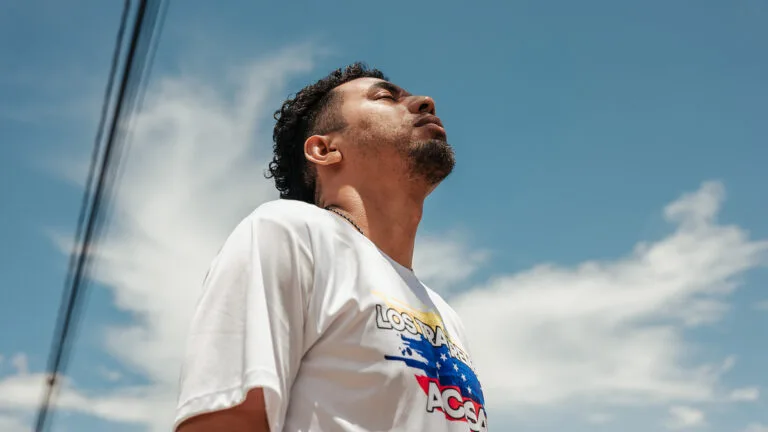
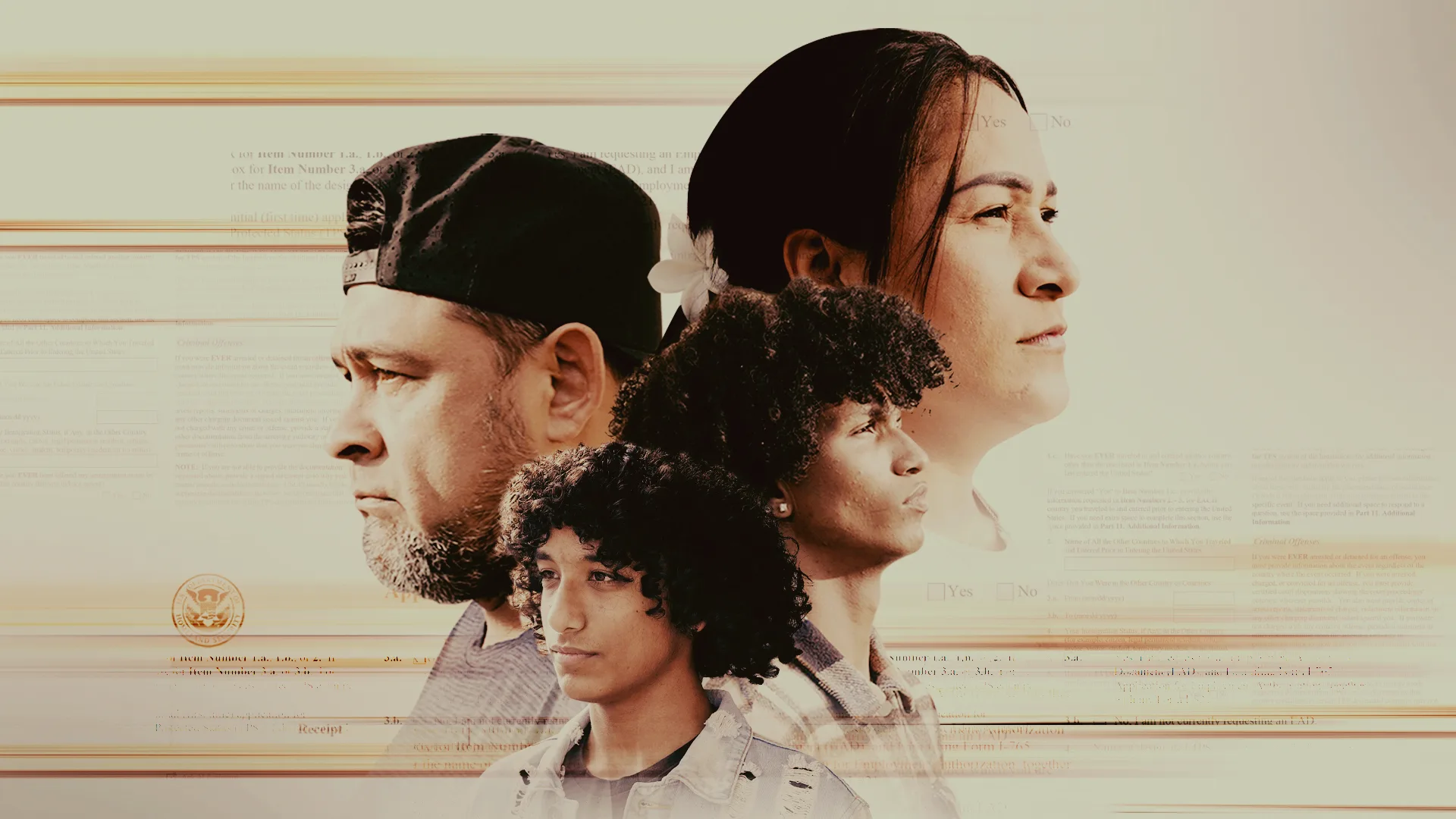
[Speaking Spanish] My name is Juan José Ramos Ramos. I do a bit of everything. I’m an electrician. I’m a phone repair technician and also I’m a painter.
LINA MARGARITA RAMOS HIDALGO:
[Speaking Spanish] My name is Lina Margarita Ramos Hidalgo. I’m his mother.
WILMER JOSÉ VEGA SANDIA:
[Speaking Spanish] My name is Wilmer José Vega Sandia. My mom has cancer and that’s why I decided to go to the United States.
ANDRY OMAR BLANCO BONILLA:
[Speaking Spanish] My name is Andry Omar Blanco Bonilla. I’m 40 years old. I’m a professional, an industrial engineer.
CARMEN BONILLA:
[Speaking Spanish] My name is Carmen Bonilla. I’m the mother of Andry Omar Blanco Bonilla.
My son Andry got arrested at the moment he was leaving the immigration office. An officer saw his tattoo and asked if he had any others, and he said yes. They told him to take off his clothes.
ANDRY OMAR BLANCO BONILLA:
[Speaking Spanish] He said to me, “You belong to the Tren de Aragua gang.”
LINA MARGARITA RAMOS HIDALGO:
[Speaking Spanish] Juan José had only been in Utah for seven days and was going to a job interview with his cousin when ICE detained him.
They claimed he is a member of Tren de Aragua because of the tattoos he had.
JUAN JOSÉ RAMOS RAMOS:
[Speaking Spanish] I have a spotless record. I’ve never been in any jail cell.
They said, “Well, you’re here because ICE decided you’re a danger to society.” And they pointed at me, pointed at me like, “One more down! We got another one!”
WILMER JOSÉ VEGA SANDIA:
[Speaking Spanish] I had three jobs and very little time to rest. It was all work, work, work,
Then on Oct. 1, they arrested me. We went to an immigration office and there they told me I was an active member of the Tren de Aragua. They said their proof was my tattoos of a rose and a clock. They sent me to an immigration center in Louisiana. I was there for six months until I was taken to El Salvador.
That’s when the horror movie began.
March 2025
FEMALE NEWSREADER:
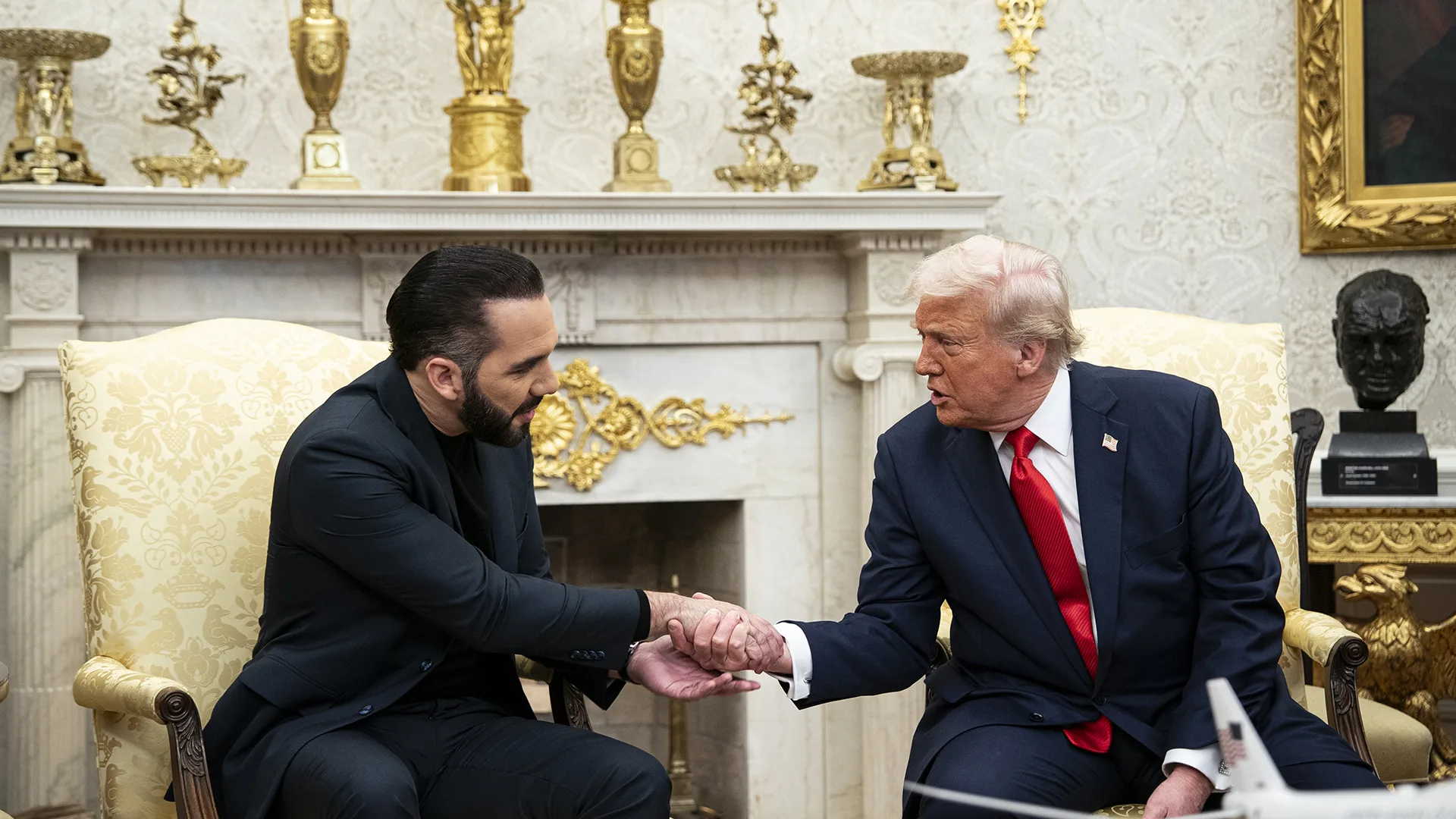
The Trump administration deported hundreds of Venezuelans it says are members of a notorious gang, sending them to a prison in El Salvador.
MALE NEWSREADER:
The Trump administration says they’re members of a Venezuelan gang called Tren de Aragua.
FEMALE NEWSREADER:
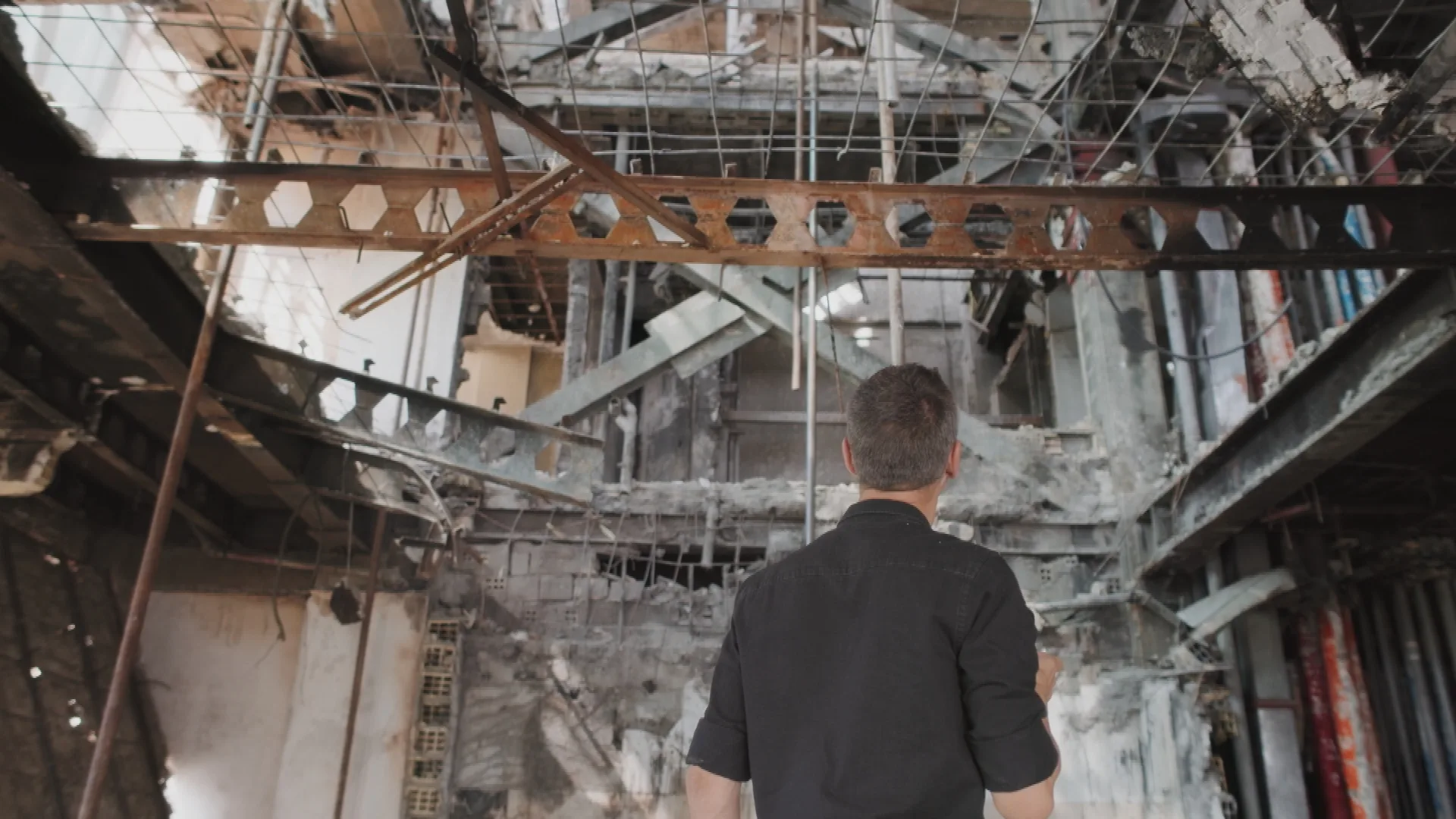
El Salvador’s Center for Terrorism Confinement, known as CECOT, is the largest prison in the Americas and is infamous for its harsh conditions.
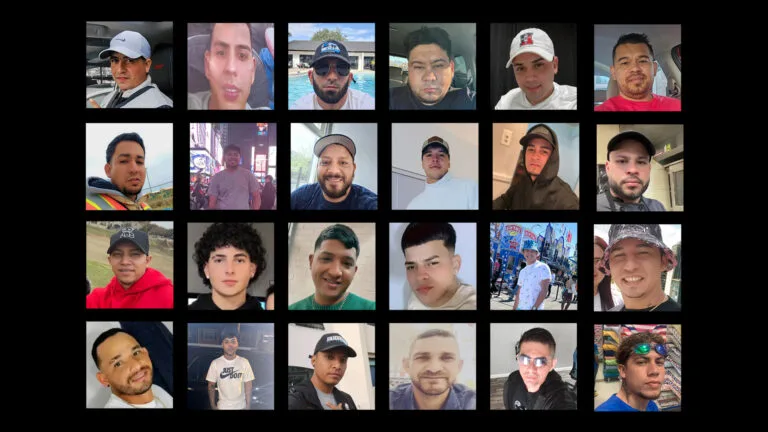
Juan José Ramos, Andry Blanco and Wilmer Vega were among more than 230 Venezuelans sent to CECOT.
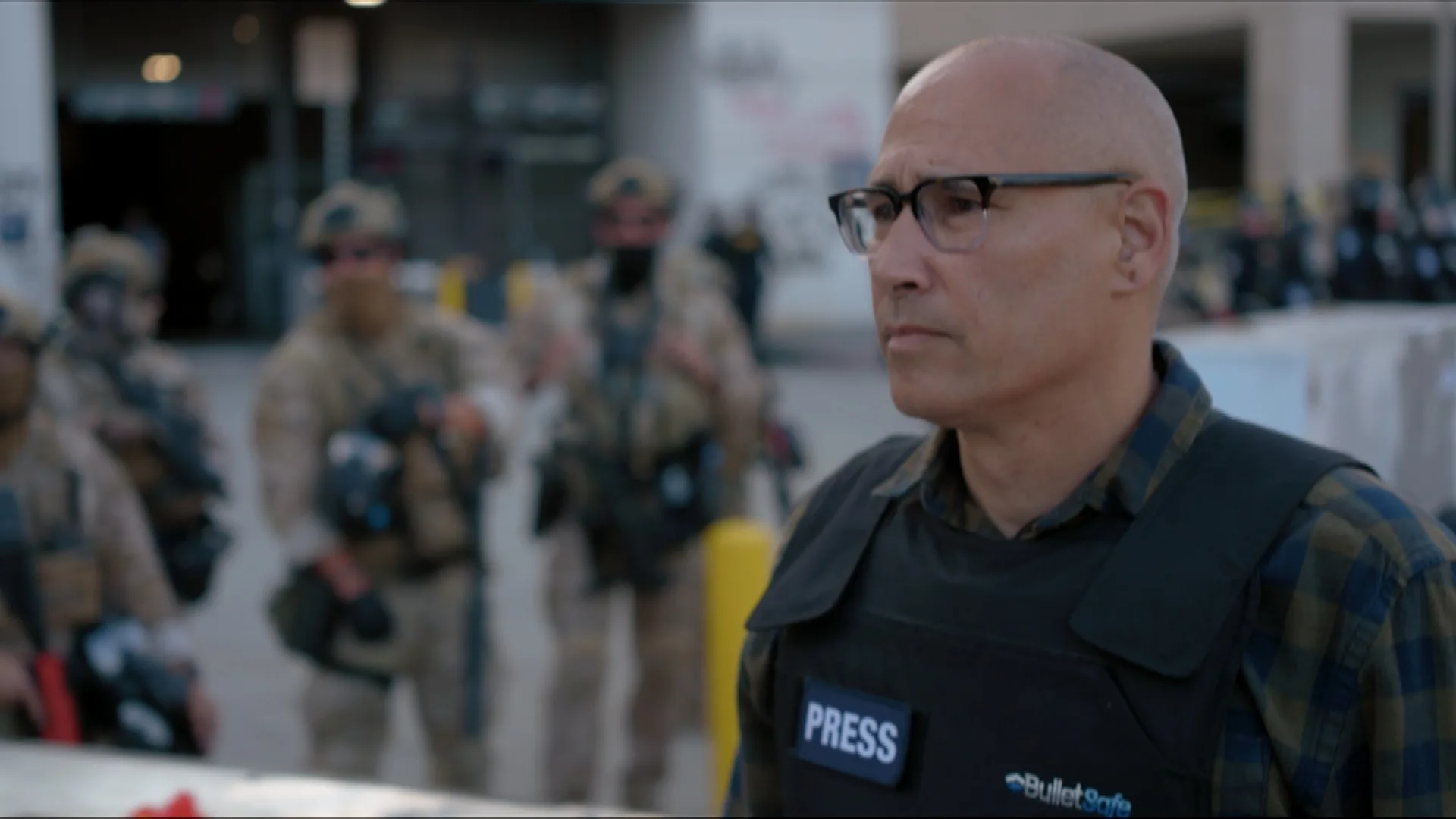
ProPublica, The Texas Tribune, Alianza Rebelde Investiga and Cazadores de Fake News obtained U.S. government data about the deported men.
It showed that the vast majority of the men, including Ramos, Blanco and Vega, had no criminal convictions in the U.S.
Most only had immigration violations.
The U.S. government relied in part on tattoos to tie them to the violent gang Tren de Aragua.
ANDRY OMAR BLANCO BONILLA:
[Speaking Spanish] I have a tattoo of a father standing on a train track hugging his son. But I got that tattoo for my son’s sake.
Nearly half were sent to CECOT in the middle of their immigration cases, including Juan José Ramos.
JUAN JOSÉ RAMOS RAMOS:
[Speaking Spanish] An officer from El Salvador got on board. And he said: “Either you get off the easy way or the hard way. How will you get off?” “We’re not getting off.” “Oh, the hard way then.” And they started hitting us with batons.
They told us, “Welcome to CECOT Terrorist Confinement Center. You’re going to die here.”
WILMER JOSÉ VEGA SANDIA:
[Speaking Spanish] Fear. Fear. Fear. Fear. Fear. Terror. I knew what was coming wasn’t going to be easy.
ANDRY OMAR BLANCO BONILLA:
[Speaking Spanish] They forced us to kneel against our will, beating us. There were many people screaming, asking for help, for mercy. The shackles were so tight that they injured our ankles. Many were even bleeding because the shackles were cutting into us.
They would say to us crudely, “Walk, you piece of s—.” I remember telling an officer, “I can’t walk. If you loosen the shackles, I can cooperate. But I can’t walk.” I was beaten to the point of fainting. They dragged me until we got to the cell block, then threw me down. My head hit the floor. I woke up and asked God, “Why am I here?”
Their families would not hear from them for months.
CARMEN BONILLA:
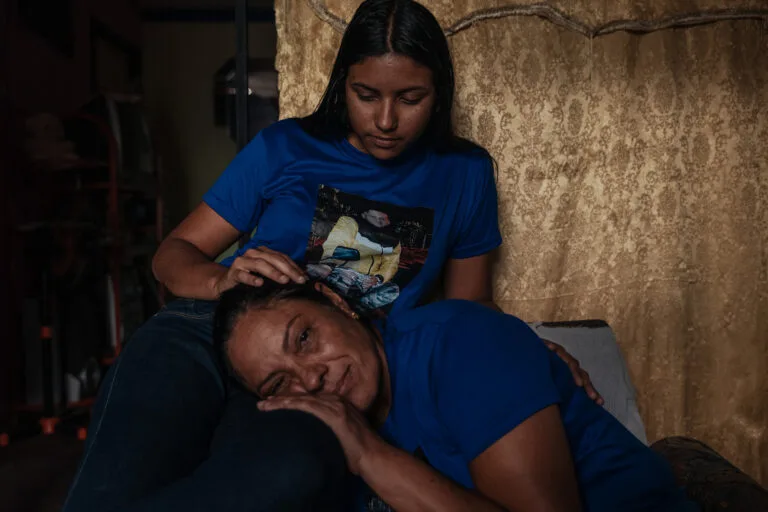
[Speaking Spanish] When I saw the Sunday news from El Salvador, it upset me. I already had a feeling he was there. I started looking at the photo published from El Salvador and I recognized him. [Cries]
LINA MARGARITA RAMOS HIDALGO:
[Speaking Spanish] As a mother, it was very painful for me to see them all there asking for help.
JUAN JOSÉ RAMOS RAMOS:
[Speaking Spanish] I felt like my world had collapsed. They started putting 10 to 15 people in each cell.
WILMER JOSÉ VEGA SANDIA:
[Speaking Spanish] The food tasted like soap. It was shocking. The bathrooms were disgusting. They used the same water we had to use to shower.
ANDRY OMAR BLANCO BONILLA:
[Speaking Spanish] Sewage, open sewer pipes ran through the cells. Some people developed respiratory illnesses because of that. The walls were full of mold.
WILMER JOSÉ VEGA SANDIA:
[Speaking Spanish] Sleeping on metal, because the beds were iron. I said, “How long are we going to survive this? How long are we going to endure it?”
ANDRY OMAR BLANCO BONILLA:
[Speaking Spanish] The price of good hygiene was a beating.
JUAN JOSÉ RAMOS RAMOS:
[Speaking Spanish] I tried to bathe secretly, and they saw me. They dragged me to the well, the island, and started beating me. And one officer kept hitting me on the ears as if to disorient me and then on the temple, right here. They beat me for nearly two hours. Every guard on duty would take turns hitting you. Even the prison director hit us many times. I couldn’t see well out of one eye because of the beatings to the head.
WILMER JOSÉ VEGA SANDIA:
[Speaking Spanish] They took us to solitary confinement. They called it the hole. It’s a cell that’s completely sealed. It only has a small hole through which a tiny ray of light enters, nothing more.
You could be there for 12, 24 hours, 16 hours in the hole. You would stay there for as long as they wanted.
I got hit in my private parts, you could say, from a kick I received, and I’m still suffering from it.
JUAN JOSÉ RAMOS RAMOS:
[Speaking Spanish] We said, “I’d rather die or kill myself than keep living through this experience.” Waking every day at 4 a.m. to insults and beatings. Listening to the clanging of the metal bars. Hearing your brothers getting beaten, crying for help. They’d plead, “Please stop hitting me. I’d rather you kill me.”
FEMALE NEWSREADER:
Hundreds of men accused of belonging to a Venezuelan criminal gang have been released from a high-security prison in El Salvador.
In July 2025, after four months, the men were released with little explanation.
FEMALE NEWSREADER:
Now they’ve been sent to Venezuela in a prisoner swap between Caracas and Washington.
El Salvador denied they were mistreated and has said they were under U.S. jurisdiction while there.
The Trump administration said the U.S. was not responsible for the conditions at CECOT.
CARMEN BONILLA:
[Speaking Spanish] Suddenly they say to me, “Turn on the TV. They’re talking about the arriving flight.” And right then I knew for sure, my son was coming home. My nightmare was over. It was like holding my son in my arms again, like the day he was born.
JUAN JOSÉ RAMOS RAMOS:
[Speaking Spanish] When we finally landed in Maiquetía I could see my mom was waiting for me, my family, my siblings, my kids, my grandma. That was the best welcome we could’ve had.
WILMER JOSÉ VEGA SANDIA:
[Speaking Spanish] I still haven’t fully processed that I’m free. It won’t be easy to forget the nightmare we went through.
Now I’m going to my mother. I’ll be with her, take care of her, protect her, and dedicate to her whatever time God will allow.
CARMEN BONILLA:
[Speaking Spanish] I think Trump made the decision to send those boys to CECOT so that people would see what could happen to them if they chose to migrate now to the United States.
FEMALE VOICE:
[Speaking Spanish] Thank you, God. Thank you!
CARMEN BONILLA:
[Speaking Spanish] It wasn’t just those boys who suffered. There are mothers, fathers, wives, children—many, many people who suffered.
The Trump administration insists the men were “all members of the vicious Tren de Aragua gang.”
A White House spokesperson said, “America is safer with them out of our country.”