WRITTEN BY
Frank Koughan & Mary Robertson
PRODUCED AND DIRECTED BY
Mary Robertson
Twitter #FrontlinePBS
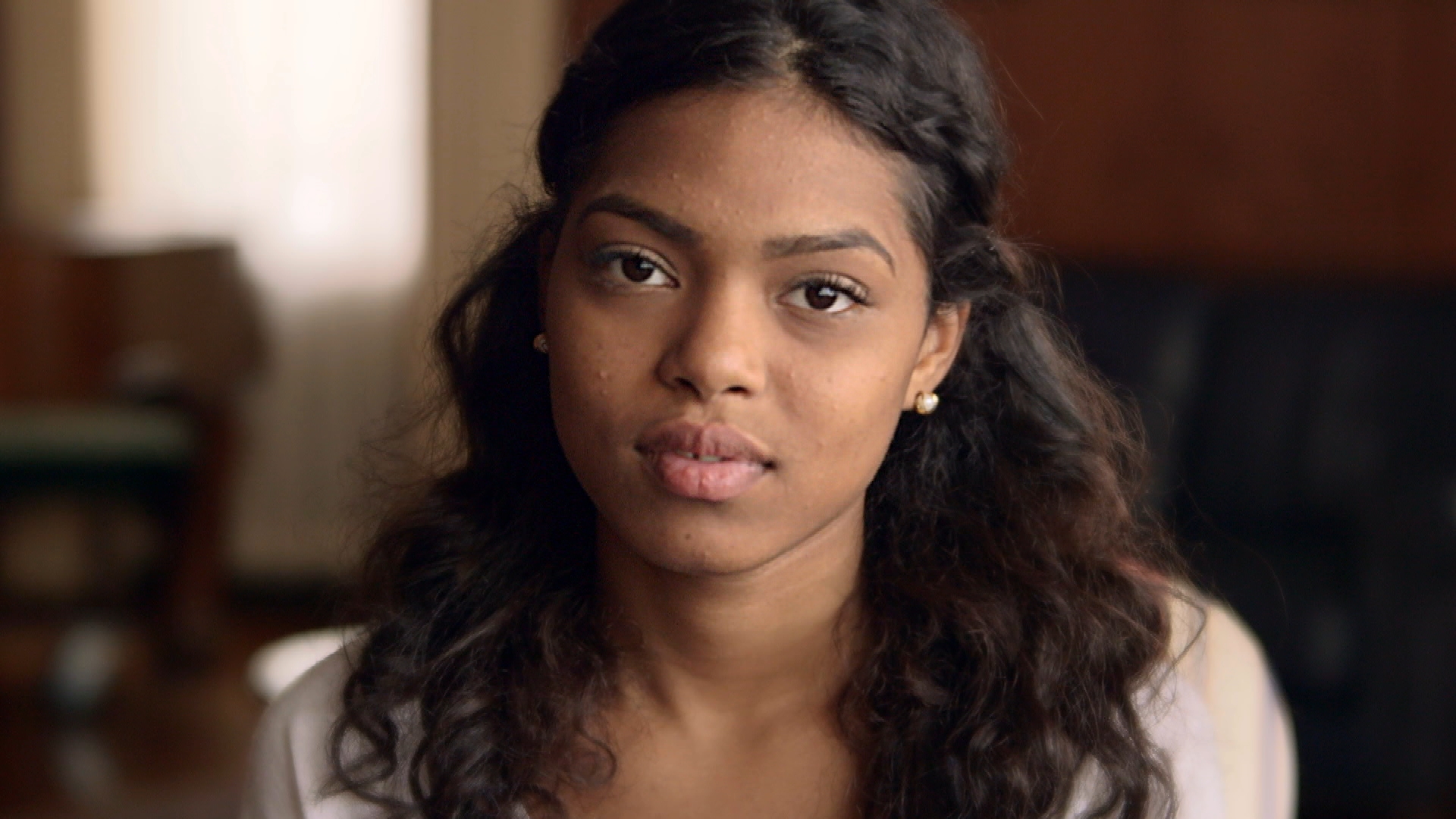
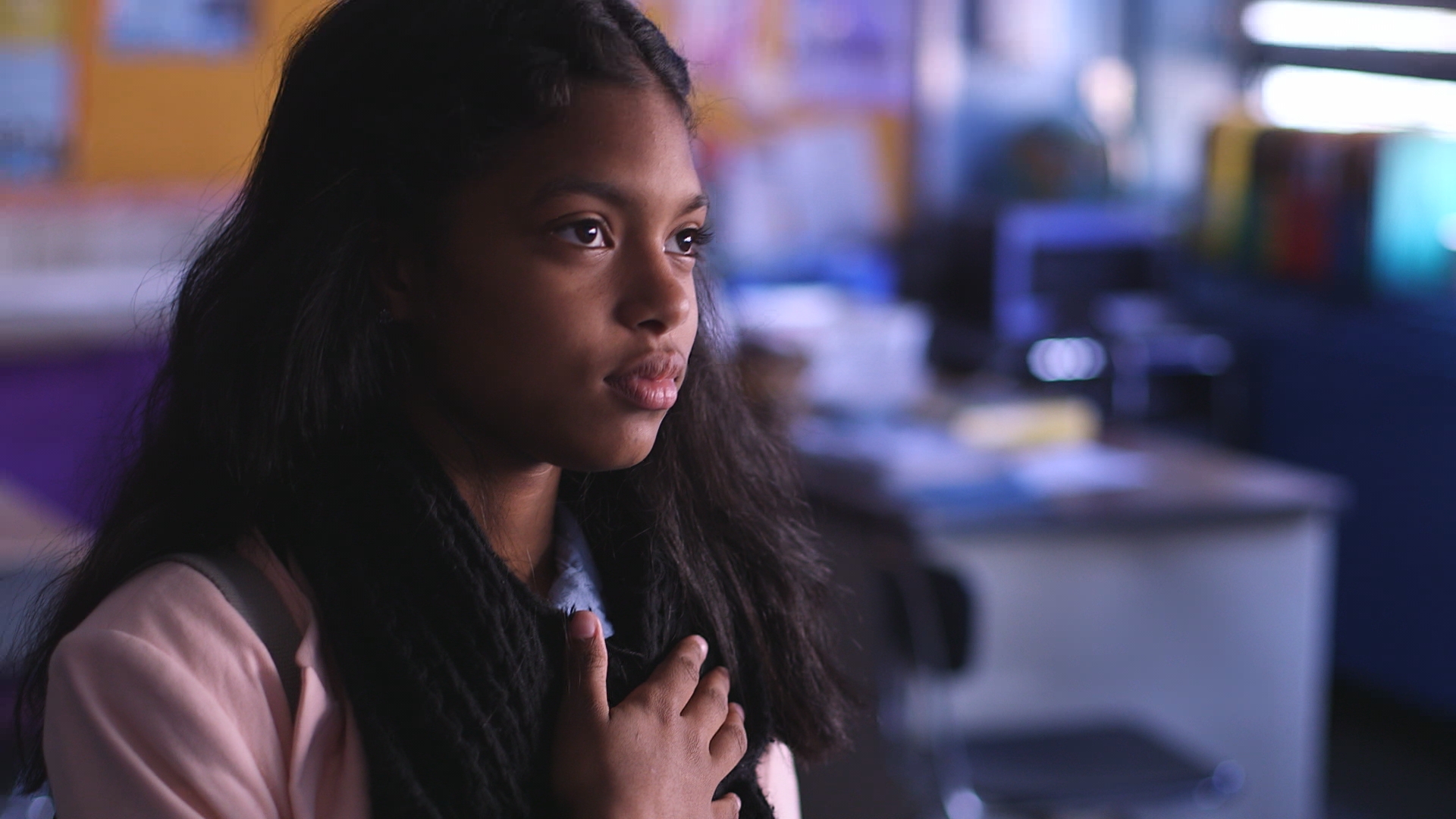
NARRATOR: It’s the last day of the semester at the Brooks School, an exclusive private academy in North Andover, Massachusetts. Omarina Cabrera is halfway through her sophomore year.
OMARINA CABRERA: I remember first getting here, it definitely was an adjustment. A lot of kids here are very wealthy and well off, and their parents are very important people. And I go back to an apartment, a two-bedroom apartment in the middle of the Bronx. And then I come here. The environment was definitely a shock.
NARRATOR: That she made it here at all is surprising. Without the help of a ground-breaking program in middle school, she probably wouldn’t have.
We’ve been following Omarina since 2012, when we began examining the dropout crisis in America’s high-poverty schools. At that time, she was a student at Middle School 244 in the Bronx, and she had been struggling.
OMARINA CABRERA: My first year here, me and my mom got evicted. I felt shattered. That was the home that I had for my whole life and I grew up there. I didn’t know what was going to happen next. That period of not knowing wasn’t something that I felt comfortable with. I felt this inkling in me that I would never want my children or anyone else to experience this.
NARRATOR: Shuffled between relatives’ apartments, some without even electricity, Omarina suffered another loss.
OMARINA CABRERA: When I was really young, my father walked out for whatever reason. I finally got in touch with him. Just before we were about to talk and I was about to go see him, he had a stroke. And I had to leave to the Dominican Republic and see my father for the first time, and it was in a casket.
NARRATOR: With her home life in chaos, Omarina’s school life began to suffer. She didn’t know it, but she was starting down a path that so many other young people take. Every year, over a million students fail to finish high school. But Omarina was lucky. Her school had recently implemented an experimental program designed to catch faltering students like her.
ROBERT BALFANZ, Johns Hopkins University: Even kids in the most dire circumstances really want a future. They just need to have a path to it.
NARRATOR: Robert Balfanz, one of the nations’s top education researchers, had been searching for that path for 15 years by studying kids who were dropping out of high school. Then he realized that the key moment when kids begin to go off track was actually in middle school.
TEACHER: What does that refer to? Stephanie?
STEPHANIE: When 9 divides the parabola into two equal parts.
ROBERT BALFANZ: If in the middle grades, you’ve develop habits of not coming to school regularly, of getting in trouble or failing your courses, you bring that with you to high school. And the schools aren’t designed to help them succeed.
NARRATOR: In search of the warning signs that could help schools identify their most at-risk students, Balfanz and his team harvested data from dozens of high-poverty schools, schools where at least 40 percent of the kids qualify for government-subsidized lunch.
ROBERT BALFANZ: We looked at about 40 different variables, and we put that into a big statistical analysis and said we want factors that are highly reliable and also yield a large number of kids in trouble.
NARRATOR: And within this chaotic tangle of data, several important indicators stood out.
ROBERT BALFANZ: And basically, out of this mix, four came out really strong. And that was our sort of Eureka moment. I saw kids waving their hands saying, “Help. Help me stay on track.”
NARRATOR: The data showed that if a 6th grade child in a high-poverty school is absent more than 20 percent of the time, or fails math or English, or receives an unsatisfactory behavior grade in a core course, there is a 75 percent chance that they will drop out of high school unless there is decisive intervention.
ROBERT BALFANZ: It may seem far less than rocket science, but it’s something that, in fact, schools by and large have not paid attention to.
NARRATOR: But Middle School 244 did. At the direction of principal Dolores Peterson, it became one of the first schools in the nation to put Balfanz’s theories into action.
DOLORES PETERSON, Principal, Middle School 244: The Balfanz research was so interesting to us because we looked at it and we said, “This is a great way to identify our students at a very early stage.”
NARRATOR: Students like Omarina, who had been showing up late or not at all.
OMARINA CABRERA: At the beginning, I felt alone and I felt ashamed, and I didn’t want to speak to anyone about it. I just isolated myself from everything and everyone.
NARRATOR: But the data spoke for Omarina. Every week at Middle School 244, statistics are collected and reviewed by a team of counselors and teachers.
DOLORES PETERSON: Attendance— everyone’s with me?
COUNSELOR: Yes.
DOLORES PETERSON: Let’s go to 802, Omarina. How is Omarina doing?
NARRATOR: The students most in need are flagged.
COUNSELOR: Currently, her mother’s not even in the United States right now. They were in a shelter not that long ago. Then they were evicted, so she’s having to go between relatives.
NARRATOR: A counselor is assigned and an intervention is organized.
COUNSELOR: I took her home one day, and it’s, like, a— it’s a double commute. It’s a bus to a train. It’s on the other side of the world, you can say.
DOLORES PETERSON: I can’t tell you how much I worry every time she leaves this building.
COUNSELOR: When she leaves this building, you know, she’s on her own.
[www.pbs.org: More on the “Middle School Moment”]
DOLORES PETERSON: Our students face challenges sometimes that young children shouldn’t have to face. And they need that support of the adult to help them through it.
CATHERINE MILLER: It’s all going to work out. And it’s just—
NARRATOR: Catherine Miller was Omarina’s homeroom teacher.
CATHERINE MILLER: So once Omarina was identified, it was imperative on my part as a homeroom teacher, in consultation with the guidance counselor and administration, to discuss why she was coming in late so many times.
OMARINA CABRERA: They came to me and they asked me, “What’s wrong? You’ve been late a lot. Something has to be wrong.” And that’s when I told Ms. Miller that I was evicted.
CATHERINE MILLER: Your mother needs to feel safe, or she needs to feel good about where you are, as do you. And the best we can do right now-
We can compile thousands of numbers about who’s failing this or who’s passing that, but if— if there’s no response to that data, if there’s no initiative taken to understand that data, it’s all for naught.
NARRATOR: It became clear that a chaotic home life was the source of Omarina’s problems at school and she needed targeted, practical support.
COUNSELOR: So you’re going to take this one today—
NARRATOR: The team helped her figure out routes to school from ever-changing addresses, got her a bus pass, and books.
OMARINA CABRERA: Ms. Miller told me that I can break through it, that I’m strong enough, that I have the courage to do it. And the fact that she believed in me, I believed in me. And that’s something that— that a lot of people go through.
ROBERT BALFANZ: They need an adult counterforce, someone to say, “Did you get your work done? Let me make sure you understand it,” and also deal with, like, “I know you’re having trouble with this teacher or that teacher or these kids. Let’s work it out. Let’s solve it now.”
It’s that sense of shepherding is what the kids need, to know that an adult not only cares, but the adult can actually help them.
DOLORES PATTERSON, Principal, Middle School 244: How’s it going at home?
OMARINA CABRERA: It’s good. It’s not completely settled because of my mom, but I think it’s calmer than before.
My first year here, I had a lot of different things going on. I had my brother, who was so smart, and he was just like— he’s my twin. My brother began to be exposed to a lot of the things that were out there. And not only him, but a lot of us were. Not a lot of kids make the right choice, and that is happening a lot of times in the Bronx for a lot of people.
NARRATOR: In the summer after 6th grade, Omarina’s twin brother, Omarlin, started hanging out on the streets and getting in trouble. His mother had him moved to another school, thinking he’d be safer in a different neighborhood. But when we met him at the end of 8th grade, Omarlin was rarely attending school and his high school plans were uncertain.
OMARLIN CABRERA: Where am I going to go to high school? I don’t know. I haven’t gotten a letter yet of acceptance.
OMARINA CABRERA: The fact that he got involved with the streets and the fact that he let the neighborhood influence him— he just began slipping off the mountain, slipping off, slipping off, slipping off.
It really was a difficult time for me. However, I think the only reason I got through it was because of support people brang to me, Ms. Miller and my guidance counselor. The fact that they told me, “You’re bright and you’re special,” and drove me and encouraged me, told me never to quit and never let your dreams end at the corner of Sedgwick Avenue, I don’t think I would be where I am today. And I wish my brother could have gone on the journey with me, as well.
NARRATOR: Soon, Omarina had achieved near perfect attendance and had an average in the 90s.
TEACHER: —is not a quadratic. Who agrees and why? Omarina.
OMARINA CABRERA: Because when you solve negative B over 2A to get the vertex—
NARRATOR: And her teachers encouraged her to apply to some of the nation’s best high schools.
CATHERINE MILLER: That was your best essay. Read it to me again. I love it!
OMARINA CABRERA: “Typically, young adults look upon a political figure or someone in their life for guidance and support. I, on the other hand, seem to find this inspiration within a black-and-white street sign. Imprinted on the signs are the words, ‘One way.’ It taunts me with another reminder that coming in is not the obstacle, but making it out.”
[www.pbs.org: Read Omarina’s essay]
I don’t think that me and my brother are on the same road. And I think he fell off, and it’s really sad. The way you take school is important. He didn’t, and that’s why we’re going on different paths, I guess.
ROBERT BALFANZ: Any school can use this system to keep kids on track. And what’s going to vary from school to school is the extent they’re going to need to recruit an outside second shift of adults to help. And that’s going to always depend on the sheer number of kids.
NARRATOR: There are now more schools with intervention programs like Middle School 244’s than when we filmed there two years ago, but they are still very rare in America’s high-poverty communities.
OMARINA CABRERA: That’s what makes it so interesting with my brother. I think that’s what I would be. I would be not in the school, and I think I would be— I wouldn’t care. And the fact that I would get into a college wouldn’t be that big of a deal. And the fact that I go on to high school, that wouldn’t matter to me. I can get my GED later, that’s what I would say.
NARRATOR: As middle school was coming to an end, Omarina learned she’d been accepted at nine competitive high schools.
DOLORES PETERSON: Omarina, I’m so excited for you. So what did you decide? Which school did you choose?
OMARINA CABRERA: After giving it a lot of thought, I went with Brooks.
DOLORES PETERSON: So are you excited?
OMARINA CABRERA: Yeah.
DOLORES PETERSON: I know I am!
How does it feel, Ms. Miller?
CATHERINE MILLER: It’s very humbling. And I’m incredibly proud of your accomplishments.
OMARINA CABRERA: Oh, Ms. Miller! You’re going to make me cry!
NARRATOR: It was a momentous achievement for a girl who was at risk of becoming one of Balfanz’s statistics just two years earlier. Now it was off to the elite learning environment of Brooks, where both the students and the expectations would be very different than what she was used to. The question was, would all the work in middle school pay off here?
So we’ve been keeping track of how Omarina, and by comparison, her brother Omarlin, have been doing.
OMARINA CABRERA: When I first came here, I was nervous that I was way too different to fit in here.
There was a senior who greeted us at the door. She smelled like strawberries. Everyone is really well off, and there’s people— on their vacation, they travel to Argentina and they travel to China.
So yeah, there’s times when you notice little subtle comments, or little subtle, like, things that aren’t really even meant for— people don’t even mean to say them or do them, but they just happen, they just come out because people aren’t aware or people haven’t been exposed to certain things.
I think they are genuinely curious and they genuinely want to know how I do my hair in the morning, or do I think in Spanish, or, I don’t know, was I born here.
TAYLOR WARE, Counselor, Brooks School: Brooks School is not the same school that she came from in New York. It certainly does not have the same kind of ethnic makeup as what she’s used to. So she has, I think, felt out of place at times here.
OMARINA CABRERA: It might be hard at times and it might feel impossible to change everyone’s mind about what a girl from the Bronx should look like or should act like. I feel like it’s important to try so that they don’t make others feel as uncomfortable as they made me.
NARRATOR: In this new environment, the pressure on Omarina isn’t just social. In the beginning, she says, she struggled to keep up in class.
OMARINA CABRERA: For the first half of the semester I kept getting these horrible grades, and I didn’t understand why.
TEACHER: Look at the last digit—
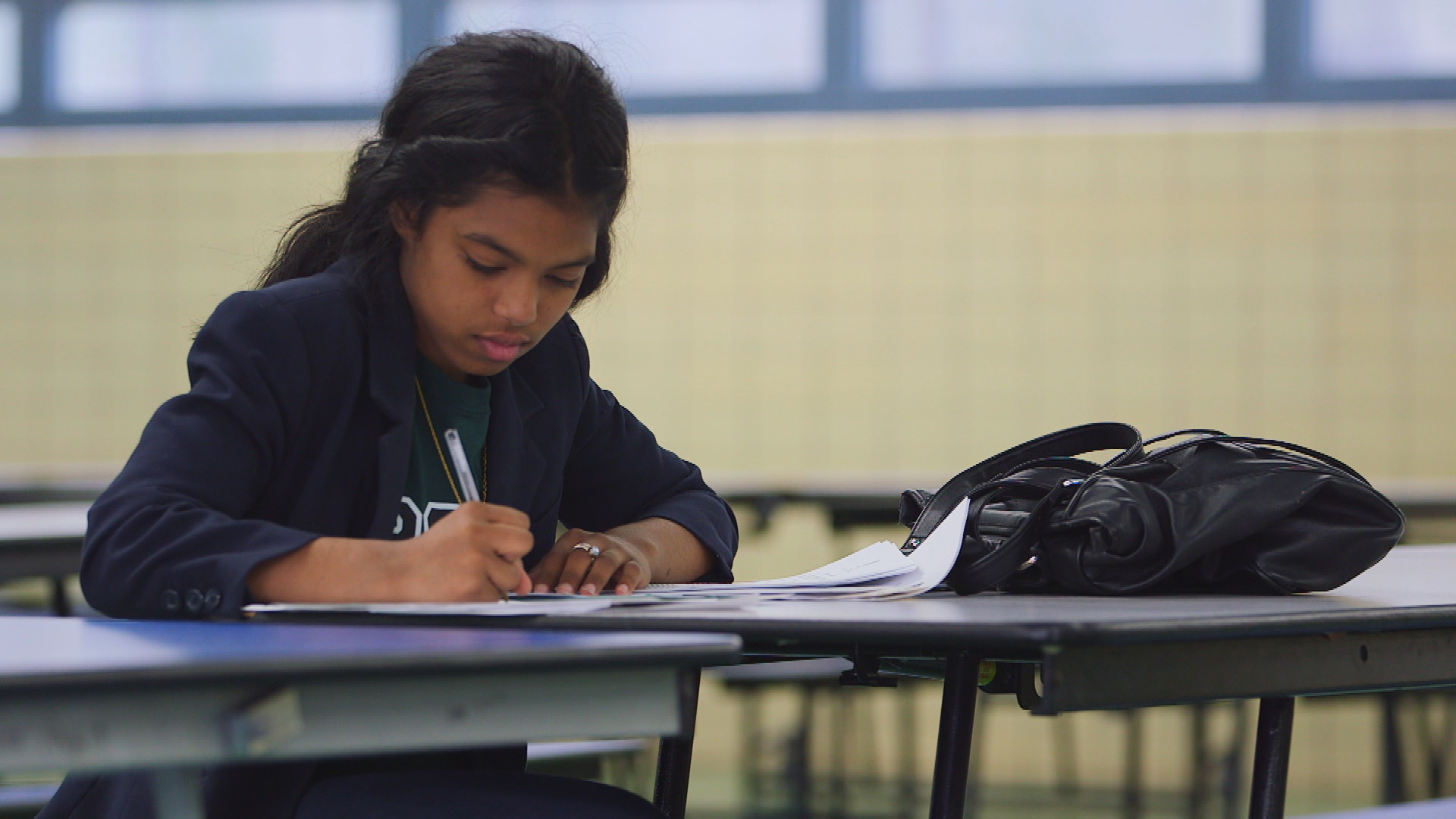
OMARINA CABRERA: I remember getting my first quiz back and almost throwing up because I had a 60 percent. And I think that was the moment when I realized, yeah, I’m not getting by if I don’t work really, really, really hard.
During those times when, you know, it feels like a little bit too much, not even just socially but academically, as well— and there are those times at Brooks. There are those meltdowns. I feel like I do have a strong faculty to support me. I have the help of Mrs. Ware, I have Ms. Miller, who is always with me regardless of where I am.
Ms. Miller— I call her Mama Miller.
CATHERINE MILLER: Good morning!
OMARINA CABRERA: Good morning.
CATHERINE MILLER: What classes do you have this morning?
OMARINA CABRERA: I have Algebra II and—
OMARINA CABRERA: She’s seen me grow up and—
CATHERINE MILLER: How did you study for the chem test?
OMARINA CABRERA: Just went over my notes.
I’m very, very, very, very fortunate to have her.
CATHERINE MILLER:: I felt as though it was really imperative to keep very constant contact just to make sure that the adjustment was going well, but also knowing that, you know, many people were rooting for her to be successful here in the Bronx.
OMARINA CABRERA: Don’t take away [inaudible] that I have. Don’t you dare do that to me!
NARRATOR: She was determined to succeed, and the teachers at Brooks saw her potential.
TEACHER: What do you need to do to get better?
OMARINA CABRERA: Memorize my lines.
TEACHER: OK. That’s the nuts and bolts, yeah.
TEACHER: Come back later today and—
OMARINA CABRERA: I had four dorm parents. I had my adviser. I had all my teachers always making sure I was OK, always constantly there.
TAYLOR WARE: Omarina is not the kind of kid that lets mediocrity rule. She’s not happy with that at all. And so she gets kind of feisty and angry and wants to fix it. And so it’s been great to kind of watch that growth in her and watch her kind of come into her own that way.
OMARINA CABRERA: I feel like I’ve widened that perspective so much being here. I’ve seen so much. I’ve seen too much almost to go back to how I was talking and living and acting. And if you see me on the street, I don’t think you’d recognize me.
TEACHER: So what if I asked you to graph this thing that’s changing over time?
OMARINA CABRERA: Well, zero is there, so it would go away from it, so it wouldn’t be negative.
TEACHER: It doesn’t start negative, zero, positive, zero, negative—
OMARINA CABRERA: I caught up and I got good midterm grades. I’m excited about that and I’m proud.
TEACHER: Blessed be God, blessed be our life together. Blessed be our food this night and our fellowship. And we ask these things in God’s name. Amen.
TAYLOR WARE: Have a great time tonight at the dance. You look amazing.
OMARINA CABRERA: After my freshman year, my sophomore year— now, this is a good year. You’re kind of just floating. I just need to keep looking ahead and just keep going, keep moving a step at a time.
NARRATOR: But just as Omarina was getting on track at Brooks, she received a disturbing call.
OMARINA CABRERA: It was a Tuesday morning. I feel like you know when something’s wrong. I couldn’t ignore the feeling I had in my stomach.
TEACHER: Why are we so powerless to save the people we love?
NARRATOR: There was news of her twin brother, Omarlin.
OMARINA CABRERA: I maybe thought, “Is he dead? Just tell me if he’s dead.”
STUDENT: I want to tell you why I did it.
NARRATOR: Omarlin had been shot.
NARRATOR: Police said the shooter fled the scene. Her brother survived and was recovering at home.
OMARINA CABRERA: I was scared inside and disappointed and worried, but I can’t show that to him. And I feel like— and it is hard sometimes, but I can’t show him that I’m scared. I can’t show him that I’m sad or I’m disappointed because he doesn’t need that. He needs someone there to be strong for him.
NARRATOR: That someone most often has to be Omarina herself because their mother is frequently not at home.
TAYLOR WARE: There was no question that she was going to go down and be with her family. Omarina really struggles with the opportunities she has at Brooks, and kind of this path that’s been laid out for her.
You really saw the disparities in the worlds that she balances in that moment, where she was so concerned about his safety and his family, and making sure someone was going to be there for him because her mother was out of town. And she knows that her brother’s kind of stuck at home in this world that’s full of vices and difficulty. I think that with that guilt comes feeling more responsible and feeling like she wants to do everything she can to help.
NARRATOR: So Omarina makes regular trips home to the Bronx, juggling the competing demands of her schoolwork and her sense of responsibility to her brother.
OMARINA CABRERA: I try very hard not to ever cry in front of him. I hope he does realize that I do care and that’s why I do the things I do and that’s why I always nag him.
So did you get transferred or are you still in the process? Whatever happened with that?
OMARLIN CABRERA: I’m just waiting.
OMARINA CABRERA: It’s not going to take long, right?
OMARLIN CABRERA: No. Hope not.
OMARINA CABRERA: When it first started was 7th grade, when his education got hurt because he began, you know, getting involved with something he did involved. It made me uncertain and it made me worried because I know where this is headed. I mean, I don’t think— I think everyone knows where this is headed. And people can be ignorant to it, but I know where this is headed, and what he needs is intervention.
NARRATOR: Omarlin is reluctant to talk about what’s going on in his life or about the bullet that could have ended it.
OMARLIN CABRERA: It came from this way into my arms and then under my upper ribs on the left side, close to my heart. I don’t know, I could have died, so I thank God that I’m not dead and I can still be here so I just have fun.
I know she’s going to have a bright future, too, because she goes to school. She got her scholarship. So that’s good. I don’t know. I have to have a good life and a good job and kids and be married. That’s it.
NARRATOR: So while Omarina is finishing her sophomore year at Brooks, Omarlin, who is 16 years old, is still in the 9th grade. At the time of filming, he had only shown up for school five times all year.
ROBERT BALFANZ, Johns Hopkins University: We actually know that kids are resilient, and so it still makes sense to have strong recovery efforts in high school and strong high school reform efforts and you’ll still be able to turn kids around, put them back on track. But it gets much harder.
NARRATOR: In late February, 2014, Omarlin was charged with carrying a knife. Two weeks later, he was charged with possession of ecstasy and marijuana. The cases are pending.
OMARINA CABRERA: I handle stress in different ways. When I get to Brooks, I use it as almost my getaway. I can’t just think and think and think and think about all the things that are going wrong. I just think about the things that might be going right, you know?