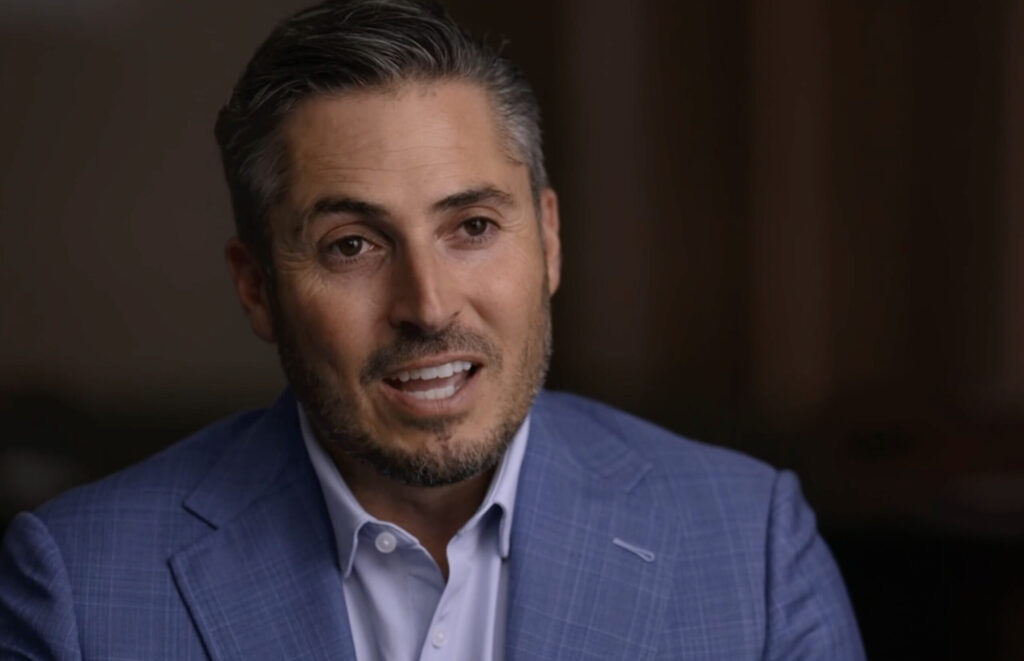
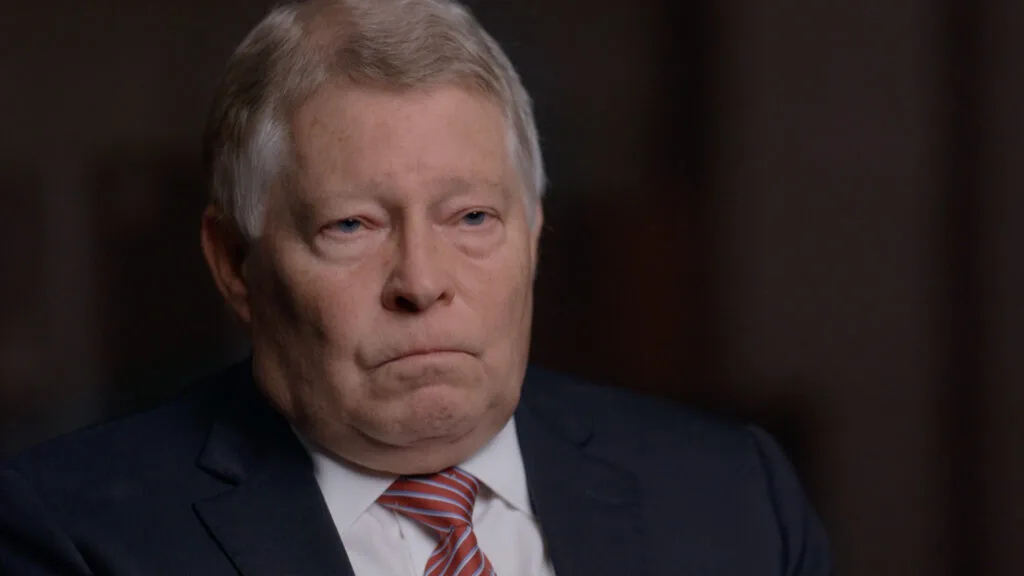
Brian Brokaw served as manager for Kamala Harris’ campaigns for California attorney general, and for her United States Senate campaign. Brokaw also ran a super PAC supporting Harris' first presidential campaign.
The following interview was conducted by the Kirk Documentary Group’s Mike Wiser for FRONTLINE on July 23, 2024. It has been edited for clarity and length.
So, let’s just start at the beginning, with your story.When do you first come across Kamala Harris?
The first time I saw her in person and met her was in, I believe, early 2004, maybe even 2003, and a candidate for United States Senate from Illinois was in San Francisco, and she was hosting a fundraiser for him.And a friend of mine invited me.And I had heard a few things about the guy from Illinois and I went to go see him.But the newly elected district attorney of San Francisco happened to be there and I met her briefly as well.But that was the first time I ever met Kamala Harris.
And you said the politician from Illinois, is that Barack Obama?
Yeah.It was state senator from Illinois who I had heard a lot of good things about who became a household name, at least in some circles, by the end of the next year.Yeah.
Yeah.I’ve heard of him.
Yeah.
And who was she then?
So, she, you know, she had just been elected district attorney in San Francisco.Another young guy by the name of Gavin Newsom had just been elected mayor on the same ballot.And, you know, I didn’t know much about her at the time.I had read a bit about her because I had gone to school at Berkeley and read the San Francisco Chronicle every day.And I knew it was a really exciting election where you had two of these, you know, young, intelligent, exciting candidates who had both been elected to office at the same time.
And yeah, she was a young sort of upstart politician in a city that has produced countless leaders who have gone on to do great things at the statewide and national level over the years.
How did you get to know her?How did you develop more than just somebody who was at the party?
Yeah.You know, I didn’t actually get to know her for another five or six years after the fact.I had gone and worked on several other campaigns around the country and ended up back in California.And in early 2009 got a call, somewhat out of the blue from somebody who had been advising Kamala informally for a few years as she was looking at what her next steps were going to be, and he asked me if I would be interested in interviewing to be campaign manager for her run for attorney general.…
Why did you end up joining the campaign?
I recognized in her a very special set of traits.You know, she is somebody who in sports you would probably call a five-tool player.You know, just very intelligent, hardworking, accomplished, just kind of a badass.I mean I read a lot about her, not only as DA but her time prior to being in elective office as a prosecutor, someone who took on some of the most challenging difficult cases, had seen some really difficult things and tried some very difficult cases successfully.
And to me,I’m always looking for somebody who can be a star and go on to do wonderful things.And I like to support people like that.And so, if anything, I was intrigued.I didn’t know if I was going to get the job.But I figured, if anything, it was worth meeting her, and pursuing it and seeing what happened.
Kamala Harris the Prosecutor
What is the story that she tells about becoming a prosecutor?… And how does she explain that decision to go down that life path?
Well, I mean to use her words that I’ve heard a thousand times plus, she had to defend that decision like one would have to defend a thesis.And again, she came up in the shadows of the Civil Rights Movement.But from her vantage point, the real, unspoken heroes in many cases, the heroes who were honored were the attorneys who formed the backbone of a lot of the landmark civil rights cases that really helped propel the Civil Rights Movement forward.And those were the people she idolized.
You know, you would have to speak probably to some of her friends from Howard or from law school to know really sort of how that progression took place.But she ultimately made that decision because, you know, I think from her vantage point, being a voice for the voiceless has always been an incredibly important part of the work she does.And you know, if you’re looking at children who are being exploited, you know, sexually abused, for example, or families who’ve lost a loved one to a horrific murder, I mean she was somebody who would be their advocate, who could be there, relate to them on a person-to-person level and, on behalf of the state, seek justice for them.And I think that is really what’s in her bones.
And so, if I had to guess what led her to that decision, I mean, I think it was really, she felt that was her path.
She said that when she looked at protests, there was inside the building and there was outside the building, and there was something about Kamala Harris that is the person that wants to be inside the building.Is that what you observed in her?
Absolutely.And I think if you look at the body of the work that she did, particularly in her times as the district attorney, both as the elected DA and as prosecutor and as attorney general, yes, she was the one seeking tough sentences for people when they had committed egregious crimes.
She was also the one who was innovative, well ahead of her time when it came to programs designed [to lower] the reoffense rate, and focus on low-level offenders who maybe had been arrested for drug possession or other crimes that weren’t necessarily the types of crimes that warranted sentences of dozens of years in state prison—people who would benefit from job training programs and rehabilitation.
And that’s why she created a program like Back on Track in San Francisco that identified who those ideal candidates where, instead of pushing them into a cycle that would just make them more and more hardened criminals and keep them locked up for years for small crimes, instead focus on making them better neighbors for when they got out.And I think a lot of those programs that she created and devised were ones that became a model throughout the country later on into her career.
You said that before you took the job, you went back and looked at her time as DA and running as DA.And she has an historic election in the sense that it had been a string of white men before her.
Yeah.Yeah.
And what do you see in her as you looked at those years of running for DA and being district attorney in San Francisco?
Yeah.And, you know, the campaign I managed was the attorney general race.
Yes.
But it was the same deal.And I distinctly remember a moment where, when she was a candidate for attorney general, and we had a meeting in the AG’s office with the leadership team of the current attorney general.This was a courtesy that they had also extended to the Republican at the time.It was essentially a pre-transition for whomever was going to win.And we were on the top floor of the, you know, executive level of the Department of Justice in Sacramento.
And they have, the aisles are lined with the portraits of the previous AGs of the state.And every single one of them, as you walk down, person after person was a white guy.And I remember the look that she gave me.She raised her eyebrows like that.She was somebody who didn’t look like most of her predecessors.But not just in a physical way.I mean she had a different approach to the job than a lot of them had.
And the attorney general, rightly or wrongly is viewed as the top cop in the state.Now, there is also a huge civil component of the job as well and that was a huge part of her success in the role.But she was somebody who, yes, was a prosecutor and, yes, had wonderful experience and strong credentials as a line prosecutor and as an elected DA.But again, she was somebody who was also introducing and advocating for very innovative approaches to law enforcement and recidivism reduction and reform-minded as well at a time well before criminal justice reform had become a buzzword.
What does it mean for her to come into politics from being a prosecutor?I mean different politicians come from different backgrounds and different places.What does it mean for her to have started as a line prosecutor to have worked her way up in elected politics as a prosecutor?How does that shape her?
I think in many ways it hardened her just by virtue of the kind of work that she did, the types of crimes that she prosecuted, the evidence that she had to review.I’ve heard her talk about having to review autopsy photos from victims of gun crime, and those experiences stick with you and they change you and they shape who you are.And so I think, you know, the impact of that work, she will always carry with her and does to this day.
I think from a job experience standpoint, it’s different from perhaps coming up as a city council member and a county supervisor in a legislative role.You know, she had to be an executive once she became the elected DA.But the other thing I would emphasize is any attorney, for any successful attorney preparation and attention to detail are critical.And she is someone who probably found out early on that misplaced comma could cost her a case.And so, to her, detail is incredibly important.And that was something that was impressed upon me my very first day on the job as campaign manager, that attention to details is something that I should probably prioritize.
And that was something that I woke up with every day and I wasn’t always perfect in that respect.I don’t think anybody is.But it is something that she expects of people.And I think that really comes from her training as an attorney, as a prosecutor.And she asks the tough questions.And I think, you know, ask Jeff Sessions, or ask Bill Barr or ask anybody who has ever worked for her or briefed her, she will ask tough questions to get the answers that she needs to hear.And it is sometimes uncomfortable but the end result is a product that I think has helped propel her to where she is today.
Some people say she likes to be so prepared that it sometimes hinders her, she doesn’t feel as comfortable just speaking up extemporaneously about something she doesn’t fully know about.Is that a quality of Kamala Harris?
Quality.Attribute.She is somebody who recognizes the importance of words and recognizes that words matter.And she is not one to make bull pronouncements that don’t have any substance behind them.So, is she going to go out there and speak off the cuff for an hour and a half like some wonderful, skilled politicians that we could all probably name?That’s not really her style because again, words matter and have consequence.And I think, you know, the contrast with her opponent could not be any more clear in that respect.She’s antithetical to her current opponent in that she is not going to have open mic night and just say whatever comes to her mind.
The Attorney General Years
What’s she like as a candidate, as you get going and running for attorney general?… I mean, as you get to know her and working with her and running with her in that race, who is the politician that you see and how does she operate?Because I assume it is different from other politicians.
Once she makes a decision she is all in, and goes and goes fast.And if you look at every campaign that she has run, while there is some deliberation on the frontend, once she makes that decision and the go-switch is flipped, she goes and she goes fast.And in that particular race, in the attorney general’s race, you know, after the period of time in which she was helping with her mother and then grieving after her mother’s passing, she really started to hit the campaign trail in early spring of 2009, so about a year and change out from the primary.
And it was a daunting landscape to say the least.There were six other Democrats who were going to be seeking the nomination, including some very credible, tough opponents.And she had a lot of doubters from the get-go.She had to raise money.California is an incredibly expensive state in which to run statewide.We thought we’d have to raise about, anywhere between $5 and $10 million in chunks of $6,500 or so at the time.
She is somebody who, while pretty well known in the Bay area, and that’s a very important attribute to have in a Democratic primary, was largely unknown outside of the San Francisco Bay area.So, she would have to raise money and introduce herself in Southern California, which, in a general election, is where all the votes come from.And there were several well-known elected officials from LA who were also running in the Democratic primary.So, it was daunting.
And that meant a lot of travel up and down the state, meeting with everyone from elected officials to donors to community leaders.And that meant a lot of time in cars and on airplanes.And I remember driving a rental car in San Bernardino County with her riding shotgun, and she was making calls to the mayor of LA and a few other people.It was a hustle.It was grind.And she was able to build some momentum early on.But a lot of the feedback that we heard, that I heard particularly from even people in Democratic Party leadership was, “She’s incredibly talented.She’s got a bright future.And she ain’t going to win this.”
Why did they say that, that she wasn’t going to win it?
Because of who she was.Her profile did not fit that of the stereotypical attorney general.And a lot of people focus on her opposition to the death penalty.They thought that would be an issue that was used against her.And of course, it was.And I think they just underestimated her.And I think that has been a strange calling card for her entire career, where she has been counted out early on by people who like her but just don’t think that she can win.While I think for most people that would be something that would impact your feelings and your ego, she manages to thrive off of that.And I think it fuels her.And she eats doubt for breakfast.And I think that’s an attribute for her.Some people just can’t stand that and she manages to harness that for good.
Were there issues of race and gender out there and the way that they are at this moment, probably a lot more when you’re running against Donald Trump.But were there issues of race and gender in those races for attorney general?
Yeah, of course.And, you know, as blue as California is today and as it was in 2010, it was less so in 2010—at the time we had a Republican governor for example.But again, it was the office itself that she was seeking.If she had been running for secretary of state or lieutenant governor or another office, perhaps we wouldn’t have heard a lot of the same things.But here she was a Black Indian woman from San Francisco, running to be California’s top cop.And those parts just didn’t add up to that office in the eyes of most people.…
How did you position her?How did she position herself?What is it you are selling of a Kamala Harris in an election?
Yeah.I mean that was right around the time that she put forth this vision that she had for the criminal justice system in a book that she had written called Smart on Crime.And it really was an encapsulation of how she viewed how we had approached criminal justice in the State of California up until that point in time.And you know, what are some things that we do right, but more importantly, what are some things that we are getting wrong?And she would talk about how in the 2008 presidential election she really wanted to hear this robust debate about our views on the future of criminal justice in the nation and it really was nonexistent.
And so, it helps that we actually had a literal platform on which she could run on these ideas that, at the time, were so innovative and new that a lot of people would have thought they were pie in the sky or laughable, and ten years later are mainstream ideas that are, in many cases, celebrated both on the left and the right.A more reform, rehabilitation, redemption-focused approach to criminal justice in many respects.
What was it like to win?Did it feel like an historic moment?
It was anticlimactic.… Because she was, she went from winning that Democratic primary to having the reward of facing an incredibly popular, three-term district attorney in LA County.And she went from being the victor on primary night to the immediate underdog.And there was never a public poll between the primary and the November election that showed her defeating her Republican opponent.And in fact there was only one poll, and it happened to be our internal polling that showed her narrowly ahead.
So, we knew that there was a pathway but it depended on us, it depended on everything going right and her outworking her opponent, which she did.Now, that said, on the morning of the election, November 2010, we had a call within the campaign team.We put her pollster on the spot to ask him what was going to happen.And he said, “Best I can say it’s the jump ball.” And you never love to hear that from your pollster but it was helpful for expectation purposes.
And so, that night, we gathered as a campaign where she had held her election night celebrations, all of her prior elections.And the first returns came in after the polls closed and she was down by quite a decent margin.But we knew that as election nights always go in California, completely depends on which counties have reported, which haven’t.Usually the Democratic strongholds report later in the night and they hadn’t reported their numbers yet.
And sure enough, around 10:00 we got word that our Republican opponent was declaring victory.And I started getting calls from reporters, and I said, “Well, based on what?We’re looking at the exact same numbers.I’m not sure how he can be confident enough.” And sure enough, he went out there probably because he wanted to be on the 10 o’clock news, and went out and declared victory.And it was like the Dewey-beats-Truman moment.There were newspaper headlines that said, “Steve Cooley beats Kamala Harris for attorney general.”
And our job was to reassure the candidate and her family and the team that the night was too young.And around 3:00 or 4:00 in the morning we decided that there probably weren’t going to be any more reports from the counties at that point so we go home with a plan to regroup at 9:00 a.m.with a team of lawyers who would monitor the ongoing count over the coming weeks.So, for the next three weeks, every single day there was an up and down roller coaster of emotions and vote counts.And so, literally by the time it became mathematically impossible for her opponent to make up the gap that she had won, it was almost Thanksgiving.At that point we were too tired or even emotionally drained to be excited about it.
And on top of that, she then had just a few weeks to prepare for the office that she was about to assume, and that included the holidays.So, yeah, it was anticlimactic to be honest.
As you said, she is who she is.And I just saw part of a speech that she gave today, talking about her time as attorney general and what she had done as attorney general, and obviously contrasting it with Donald Trump.How important was that period as attorney general, being a prosecutor, to her political identity, to who she is, who she is offering the American people?
I mean politically speaking it’s a great job.It’s a statewide platform.There are criminal aspects but there’s also civil aspects.And you can essentially pick your bad guys, who you want to focus on and use the powers of the state to pursue justice on behalf of the people.She happened to be coming into that office in the wake of a historic mortgage crisis that had hit California harder than anywhere else in the country.The moment really chose her and the path that she would take.
And one of those big fights that she took on was the fight against the big banks.And it even required her to be at odds with her very good friend the then-president of the United States, Barack Obama, who had reached the settlement along with the Department of Justice with the big banks.And she said it wasn’t enough for California.And she had to reject that settlement that the president and his administration had reached in order to hold out for more for California.And that was a very uncomfortable political decision for her but it was the right decision.And California ended up benefitting because of that.
She was even willing to take on her friend, someone who had been a mentor and a supporter of hers when it meant Californians were going to benefit.That was a huge moment for her as attorney general.She wanted to make sure that she could implement reforms that would prevent that type of situation from occurring again.So, she put all of her muscle into passing what became the Homeowners Bill of Rights in California.And the banking lobby in Sacramento, incredibly powerful, had a lot of friends in the legislature including many powerful Democrats.
And it was an uncomfortable fight for her.And it was one where she had to build a coalition like she had never had to do before in order to get it across the finish line.And it narrowly passed and it became the law of the state.And to this day, the Homeowners Bill of Rights is protecting people in California because of the work that she did.
I mean, as you said, as you at least hinted towards, there was also criticism, not criticism but description of her as somebody who doesn’t weigh into the prominent positions and where she stands on it and those things.… But I mean is it part of how she operates?And how did she see that type of criticism?
She didn’t let it get to her.It definitely got to us because that became an ongoing criticism that I think was unfair to her, that she was risk averse or that she wouldn’t take tough stances.And we could point to every instance in her career where she had taken on tough fights, tough positions.But it was somehow the fact that she wouldn’t take positions on state ballot measures, political positions when, mind you, the job of the California Attorney General is to write an impartial title and summary for those ballot measures.Yet somehow, that became an example of how she was risk averse.
And I don’t think she let that get to her.It certainly became something that her staff and campaign team had to fight on a regular basis.But yeah, I think it was an unfair criticism of her rooted in probably an aspect of what is true.And that is the fact that she is not one to make just bold, political pronouncements and exploit things for political gain when she takes the job duties and responsibilities themselves very seriously.And I think a lot of that is the attorney in her.
Did you ever have a sense of ambition for the presidency, for things beyond the attorney general as you were dealing with her in those years, especially in those early years?
No.I knew she was someone with unlimited potential.She’s also somebody who is very superstitious.And it was just an unspoken rule that you didn’t talk about anything aside from what was directly ahead of you.And never once was there a conversation about, okay, DA then AG, then AG, then what?That was not something that she would allow for.And that actually made it complicated at times when the next possible move presented itself.
And I’ll give you a perfect example.You know, she was just reelected attorney general 2014.It was another sort of anticlimactic race because she was viewed as the most vulnerable of the statewide office holders going into the reelection cycle.But we essentially cleared the field by enlisting as supporters the very same people and organizations who had opposed her in the 2010 race, namely law enforcement.So, we spent the first couple of years of her tenure as attorney general, at least on the political side, engaging with the very people and organizations and unions who had spent millions of dollars trying to defeat her.
And she had an open-door policy.She met with her former opponents.And not all of them became supporters.Many of them did.But even a lot of her opponents became people who respected her and realized they had a working relationship with her.And so, by the time the filing deadline came around in the 2014 race, there were not credible opponents who were lining up to fight her.So, she ends up winning handily in 2014.She takes the oath of office to begin her second term.
And then, within a matter of days, Senator Barbara Boxer announces that she would not be seeking reelection in 2016.We always knew that that was a possibility.I mean it’s our job as political consultants to think about the future, even if the candidate herself is not part of those conversations.We also knew that there would be a governor’s race in 2018.But again, we had never asked her, “What do you want to do next?” because that was just not a conversation she would have.
Harris Runs for the Senate
But yeah.I mean but I’m interested in the decision to run for Senate.It’s interesting because we’ve been talking about Joe Biden who, when he is seven, says he wants to be president and tells people all along the way.It’s interesting that that’s not part of the story that people have about Kamala Harris.
So, the news breaks that Barbara Boxer will not be seeking reelection.And I hop in my car thinking we are going to all huddle in a room and map out the strategy and the plans.And I get to the office that we use in San Francisco for our political meetings and she didn’t come.So, we had a meeting amongst ourselves as the campaign team about what we thought she should do, but we didn’t hear from her that day.In fact, we didn’t hear from her for several days.You know, I came to learn that she was having some conversations with her immediate family about what she wanted to do.But it was probably a week or two before she decided that she would run for Senate.
Once she got in, it was full speed ahead.But it was, she was not calling around and taking the temperature of everybody.It was a very internal, deliberative process.And there is a method to how she comes to these decisions.And it’s not quickly and it’s not rash.It is thoughtful and internal.
Is it hard for her to adjust to the politics of not being a prosecutor, not running as a prosecutor, as she moves into the national stage?
I might even dispute the premise of your question because I think you still, to this day—I mean sure, she is not trying cases, but if you look at her tenure in the Senate, you ask anybody who was sitting 20 feet apart from her, with her looking down from the dais making you sweat and shake, you tell me that’s not a prosecutor.I think that is part of what propelled her to national recognition during her time in the Senate.It wasn’t necessarily because she passed some landmark legislation or was known for her floor speeches.I mean she wasn’t there long enough to do a lot of that kind of work.It was those moments that she had where she was Kamala the prosecutor asking the tough questions, knocking you off balance, you know, cutting you off before you can filibuster your way through.That’s her at her best.
And in the context of this campaign, she said it best.I mean she’s a candidate who could best prosecute the case against Donald Trump, in this case, the political case against him.But this is the context in which her skills really can shine.
That year is 2016, which is the year of Hillary Clinton as well. I mean was there a feeling that she is part of an historic campaign year, I mean before we know the results of the election?
That election night was fascinating because she was elected to the United States Senate in a landslide over a Democratic opponent, at that same time as Donald Trump was elected to the presidency.So, there was some elation and then it was , “Oh, wow.Okay.This is what kind of tenure this is going to be.” … And, you know, she was prescient.A lot of worst fears and doubt about him very quickly came to fruition.
Did that election night—I mean she couldn’t, I assume she didn’t expect that that’s what would happen.I mean but it really did scramble her future and her political career and who she would be in the Senate.I mean how impactful was that, that she was coming in at the same time as Donald Trump.
Hugely impactful to her career.Again, to look back on what it would have been like had there been a President Hillary Clinton administration, Kamala Harris would have been a wonderful, helpful ally, you know, the junior Senator from California.But all of a sudden we were in this existential moment as a country, particularly for Democrats.And she became one of the leading voices of the resistance to Trump and the policies that he was pushing forward.
And instantly she was a leading voice in the national conversation.And that probably wouldn’t have been the case had it not been for Donald Trump’s election.But it was a point for her to stand up and actually fill the void and have a position of leadership and use her voice.And I think that’s what so quickly propelled her onto the national stage.
I mean she is out of just California politics at this point.And she’s in a highly polarized Washington.… I mean as you look at the way that she becomes a figure that is returned to, that has images of her, that depicts her, how much of it is related to race and gender?And is she dealing with more than another Democratic senator might?
Without a doubt.And I think she recognizes that she is often treated differently than politicians who don’t necessarily have the same background that she does.She’s not one to necessarily call that out herself.I mean she will speak out against that sort of treatment for other people.But she is never going to use that to defend herself or to say, “They’re just coming after me because of how I look or because of who I am.” But that doesn’t make it not true.It is absolutely true.And yeah, I think women politicians generally are held to a different standard than male politicians.I think that’s not a surprise to anybody on the right or left.
I think if you are a woman of color, there is an extra level of unfairness that you often see, particularly in the right wing media atmosphere that she’s been subjected to.And it is just a reality.And it doesn’t make it right.It’s definitely not right.It doesn’t make it fair but it’s a reality that she’s had to contend with and I think she uses that as one of the things that fuels her, that propels her to keep winning.
I mean but what is it about her because I mean she is now running against a man who every slight he responds to in a very, you know, direct, angry sort of way.And what is it about her that people making fun of her laugh or just how she looks—why doesn’t it trigger that type of response?
She’s tough.And I think, while of course she’s human—I have no doubt that it’s not fun to be treated in that way—I think she has an ability to put on a shield that stops it from really impacting her viscerally.And I think she is somewhat impervious to that.And it’s a sort of super human quality that you have to possess in order to let that kind of noise wash over you and not impact you and not make you want to reply to every social media post where somebody calls you a name.She always said, “I don’t read the clips.I never read the news clips.” I don't know if that’s true or not.
You can’t bury your head in the sand.But there is a difference between that and obsessing over everything that is said about you.And I think she is somebody who has the ability to put on blinders to that outside, unhelpful noise, and not let it impact her and how she does her business.
Harris’ 2019 Presidential Run
I know you were involved in running the super PAC.Were you surprised having known her that she would make that decision to run for president after only having been in the Senate for such a short time?
No.Because I think that moment called for it.And she is somebody who, like I said, was not somebody who had plotted out every step of her career and every office that she wanted to run for at every point along the line.And any politician who tries that, it just doesn’t work out because life has unanticipated events that will always throw you off.Had Hillary Clinton been elected in 2016, there is no chance that she would have been running president.But you know, that window of opportunity opens, and you have to decide that if that window opens, do you jump through it because those windows often close very quickly.
And while she was deliberative about that process as she is with any, once she decided that she was in, she was in.And while ultimately it didn’t work out at the time, you know, it was the right decision at the right time because you never know when that opportunity is going to rise again.
How is she selling herself, you know, “Kamala Harris for the people”?Who is Kamala Harris running for president that year?
I mean she was running as Kamala Harris who had spent her career taking on the tough fights against the bad guys.And in that case there was an obvious villain in Donald Trump.But she was running as “Kamala Harris for the people,” which was of course an allusion to what a prosecutor says when presenting herself to the court.And so it was building on her life story as a career prosecutor.That is what “Kamala Harris for the people” was.
I mean was that a tough year to be running as that?
I mean that was a tough year for many reasons.I mean that was a very crowded field with a lot of excitement on the Democratic aisle, from the far, progressive left to the more centrist, sort of Joe Biden, Kamala Harris wing of the party.But yeah, I mean that ended up a difficult time to have that prosecutor label because of what had been happening, particularly in the wake of George Floyd and, you know, with a lot of what was happening around the country.It was not the best time to be Kamala, the prosecutor.That’s where the “Kamala is a cop” meme became a thing.And so, yeah, at the time her background was not politically advantageous but it’s who she was.
It’s interesting because we talk about her reticence to talk about her life story.I mean but the moment that it cuts through is that debate, you know, where she says, “That little girl was me.” What is she doing in that moment?Why is that a moment that stands out in her political career?
That moment stood out because that was actually Kamala Harris opening up in a way that I think she has been largely reticent to do.I mean that was a personal moment that was rooted in feelings.And it was directed at the guy who would eventually become the president of the United States—someone who, by the way, she had and has deep affection for.You know, she got to know Joe Biden because of her relationship with Beau Biden.You know, she had and has tremendous respect for Joe Biden.And so, in order to share that feeling with somebody and do it in a pointed way, that’s a pretty big thing to do.And I think it became such a kind of watershed moment, at least at that point in the campaign.
What do you think ends up dooming, not getting it over the finish line or even into the caucuses?
Well, most people who run for president don’t win.In fact, everybody in every election cycle that runs for president except for one is going to lose.And any number of reasons go into that.I think early on she was a very popular, exciting candidate and there was so much enthusiasm in that race that each time another voice entered the fray, they became a very popular and exciting candidate.And so there was a sort of cumulative effect, that while she was the candidate in early 2019, as others got into the race across the spectrum, enthusiasm was spread throughout.
And ultimately, we ended up with the candidate who was basically the safe candidate.And I think elections are always a referendum on the previous four years.And we had just come through a hellacious four years of Donald Trump’s presidency.And the guy for the moment was somebody who projected experience and wisdom and more likely to beat Donald Trump.And that is ultimately where the Democratic electorate settled.And you know, you can get into all other factors, you know, ranging from, you know, where—because she doesn’t fall necessarily in any one area of the political ideology spectrum.In certain aspects, you know, she was perhaps to the left of candidates like Bernie Sanders or Elizabeth Warren.In other aspects, she was much more centrist.
And so, I think that speaks to the fact that she’s not easy to pigeonhole ideologically.But that also, perhaps, made it harder for her to have a hold on any one area of the Democratic constituency.So, that was probably a challenge for her electorally.But ultimately the primaries went with what was the safest bet and that was with Joe Biden.
Vice President Harris
I mean they went with the safest bet but he chose her, too, to be his running mate.When you saw her on the ticket and you saw her running as vice president, what was she bringing to that team?
Yeah.I mean she brought an excitement level that was desperately needed at the time.And I say this with great respect and admiration for Joe Biden.But he’s Joe Biden.He’s not a young, you know, Barack Obama candidate that was necessarily going to appeal to younger voters or to the party electorate that we really needed to turn out.She was somebody who was a fresh face, who was new, a woman, a woman of color who could relate, I think to particularly younger voters in a way that maybe wasn’t as much of a strength as the top of the ticket.And I think, without a doubt, she helped propel Joe Biden to victory in November.
As you watch her as she becomes the vice president, she’s got a lot of expectations on her in some ways as the first woman of color in that position.But she is also vice president, so she is second tier.I mean what are the challenges she faces going into the White House as the vice president?
She’s somebody who, at that point, just ten years before had been the district attorney in San Francisco.Her trajectory, her rise was meteoric.And part of that speaks to her strength.But at that same time, we all face a learning curve.And every step along the way, it was a big jump in the ladder.And so, she had been in the United States Senate, of course.But she was barely there for, you know, two-plus years before the presidential campaign cycle began.So, here you are assuming office as vice president where, you know, you’re not very far removed from local government.So, I think there was a steep learning curve both in terms of the subject matter, you know, the issues but also the spotlight that is on you.
When you are in that office, you are under a microscope like never before.I mean the only thing bigger than that is the job directly above you.And one could make the argument that she received a lot more attention than the president in the early days because, you know, with all due respect—and I say this actually as a strength—the Biden presidency itself was not must-see TV.It was not the reality show that the previous four years had been.So, a lot of the media attention focused on her because she was just a more exciting subject.So, she faced probably more scrutiny and more attention than almost any of her predecessors that I can think of.
It’s a big adjustment for her.And what I’m trying to figure out is how it changes her and does being vice president prepare her for this moment that she’s at and being under that kind of a spotlight
And being vice president, you know, you have to follow the playbook that your boss leads.And it’s not the job of the vice president to overshadow or to be far more visible than the principal.So, you’re the lead supporting role in that respect.And I think she did a very good job in that respect.But you know, President Biden was not out crisscrossing the country every single day.And you can name all sorts of reasons, including where we were at that point in time with COVID, and public events were not really a thing that were taking place on any sort of regular basis.
And yeah, then it became a point of criticism that she was not out there enough.And I think, in large part, that was just a reflection of where we were at that moment in time and what the president was doing.And I’m sure she would also point out that she did all sorts of things that just didn’t get the level of attention that perhaps other moments got, maybe higher-profile blunders or something.You know, she’s traveled the world, traveled the country, represented the president on the global stage, doesn’t always get the level of attention that the misspeak might on the nightly news.
Do you think that the Dobbs decision was a turning point in her vice presidency, or at least in how she was seen?
I don't know if the decision itself was the turning point.I think it happened to come at a point where she was really coming into her own in that role.And it happened to be an issue where she could very effectively and powerfully communicate on behalf of the administration.And so, I think she stepped into that moment that was presented to her and did so incredibly effectively.And when she is at her strongest is when she is advocating on behalf of an issue that she feels deeply and in her bones.And in that particular instance, especially, she was the best messenger from the White House on that topic.And so that’s why you are going to see moving forward that the threats to abortion rights will be something that is front and center in the campaign because she is such a forceful advocate for women and women’s rights.
PresidentBiden is stumbling.People point to her appearance after the debate, when she is making the argument against Donald Trump on the same night that Biden is.… How does her role change as people come to question Biden’s age and competence and she’s out there?
Yeah.You know, when you’re serving a president at that age, inevitably there will be the conversation, crass or not, that we may end up having a situation where the vice president needs to assume the top role.And in recent months, as that became more and more of a conversation, particularly in the wake of the debate, there was more of a spotlight than has ever been on her and her preparation for the office, and whether she was somebody who could assume that role.
I think the way that she defended the president after that debate was her at her best.And she did so in a way that was honest and open and wasn’t Orwellian, trying to convince us that we hadn’t seen what we just saw.I think it was honest and fair.But she was able to shift the conversation away from that particular performance and more about the record of the administration as a whole.And that, of course, is going to be the record that she will also be running on, to build upon as she now becomes a candidate herself.
I mean it’s interesting because at that same time there is all of this talk about, you know, some of the Biden allies saying, “Well, he can’t step out because Harris isn’t electable.” And there is no sense of her people sending messages or pushing Joe Biden out.And that doesn’t surprise you from the Kamala Harris that you know.
Not in the least.And she is somebody who has incredible respect for the president, for the role that he asked her to serve.And loyalty, to her, is one of the most important attributes that anyone can possess.And she is nothing if not loyal.And I think the way that, you know, the sequence of events ended up leading to her is a direct result of that loyalty.She went from being viewed as a potential liability to, within a matter of weeks, the answer that we needed at that time.
And she didn’t change.I mean she is the same person today as she was two months ago.I just think the public perception of her very quickly shifted in a way that propelled her to where she is right now.
Harris as the Democratic Presidential Nominee
I mean it is sort of remarkable because you said of 2020 it’s about different moments and different people for different moments.And here she is, again, running as the prosecutor and contrasting herself with Donald Trump in a different election.I mean who is she at this moment, you know, stepping into a Democratic Party in crisis with just months to go before election day?
She is somebody who is incredibly cool in times of crisis.And I think that is one of her greatest strengths.And without doubt, this is one of the most challenging moments that the Democratic Party has faced as long as I’ve been doing this work.And we’re in both a sprint—you know, the time between now and the election is rapidly closing.But at the same time you have to get this right.And you can’t make brash decisions that are going to end up costing you in a couple of months.
So, I think she is somebody who can be incredibly cool and composed under pressure.And she just needs to be who she is and be true to herself, share her story, share her vision.You know, she, better than anybody can articulate the successes of the last four years of her administration.And she’ll also need to find a way to talk about the future as well.Because elections really are not about the past but about where we are going.
And who else is she, she is somebody who is a contrast from her opponent in countless ways.And I think we are already seeing how that is going to be used to her advantage in an offensive way—you know, somebody who knows Donald Trump’s type because she has prosecuted people like him.And she is in the best position to make the case against him to the electorate.
How high does she see the stakes in this election?
I mean every presidential election I’ve lived through, you hear about how this is the most important election of our lifetime.Maybe they are all the most important elections of our lifetime.However, I personally would argue that the stakes in this one are pretty damn high and I think she knows that.I don’t think she needs to say that.I don’t think we need to be reminded of what’s at stake in this election.We’ve seen what happens in Donald Trump’s presidency.
I think she will convey the seriousness of the moment in a way that doesn’t have to necessarily beat it into everybody that is the most important election of our lifetime.I think we actually know that, that is pretty big and the stakes are high.
When everybody says, you know, maybe America is not ready for a woman of color to be president, and here is a woman who was a girl bused into public, segregated schools—so, in her lifetime has seen that.What gives her confidence that she could win, that America is ready?
Because she has defied skeptics throughout her career.You know, she’s been doubted and counted out multiple times throughout her life.And up until the 2020 race she hadn’t actually lost before, which is incredible.But even after that really bruising defeat, she picked herself up and is where she is today.And so, she is somebody who thrives when she is an underdog.Some people can’t deal with that but she is at her best when her back is against the wall and in times of crisis, both, you know, crisis as a country and crisis politically and operationally.You know, she is going to be at her best at a time like this.And also just confidence in the voters and the American people.
And I think as long as she can clearly make the case—I mean this is, without a doubt, going to be a close election.But I think she is going to surprise a lot of people.
Last question that we ask everybody is, what is the choice on the ballot in November?What’s the choice that voters are facing?
I think it’s a choice between the future and the past, and in particular, a past that was one of the most destabilizing periods that any of us have lived through.And, you know, she is somebody who is the first of so many different respects.But that isn’t reason enough to vote for someone to become president.But she is somebody who is a good person.She is a serious, thoughtful person who takes elective office very seriously and carries herself in that respect and will perpetuate at least, or build on the work that this president has accomplished of restoring respect for the country, you know, on the global stage and also stabilizing the country from the prior four years of chaos and instability.
And I think the real question is, do we want to go back to those years of 2016 to 2020.I don’t think people do.But that’s really the question I think that is at stake in November.