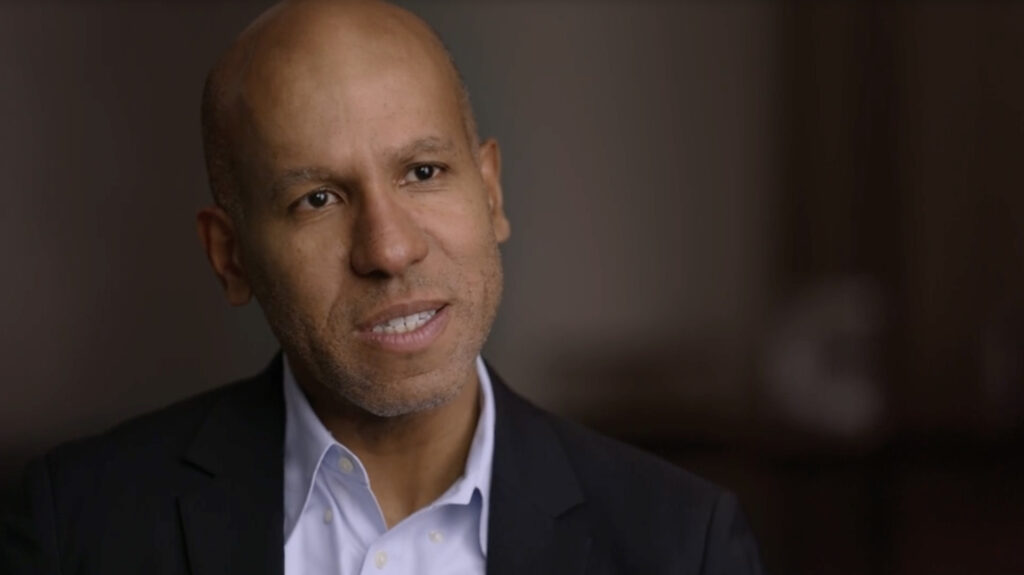
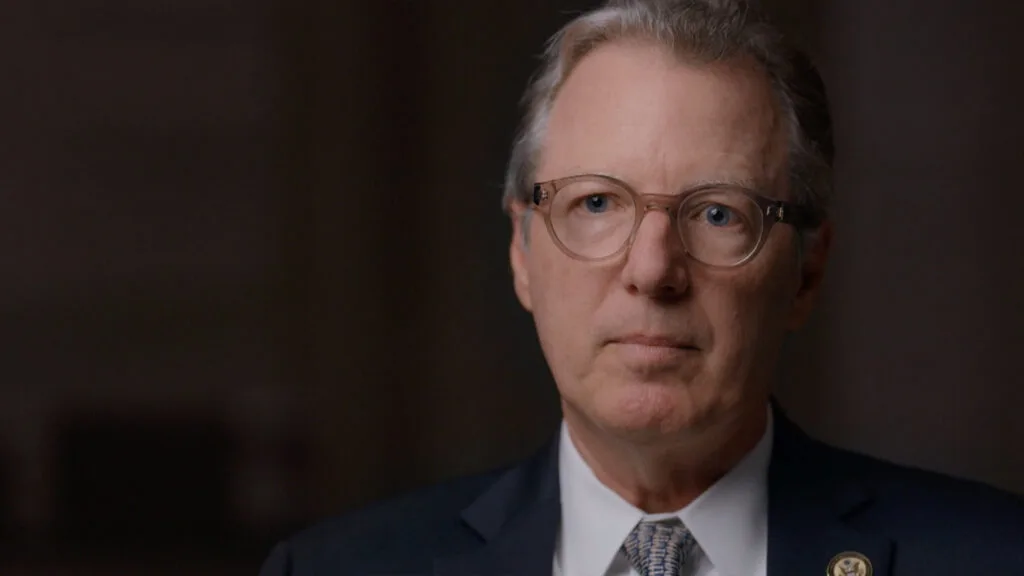
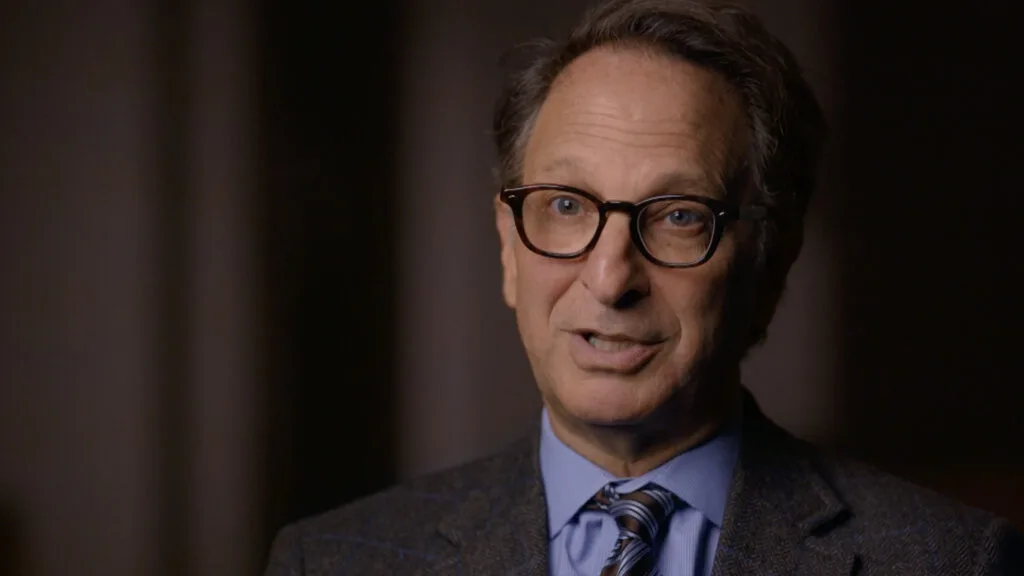
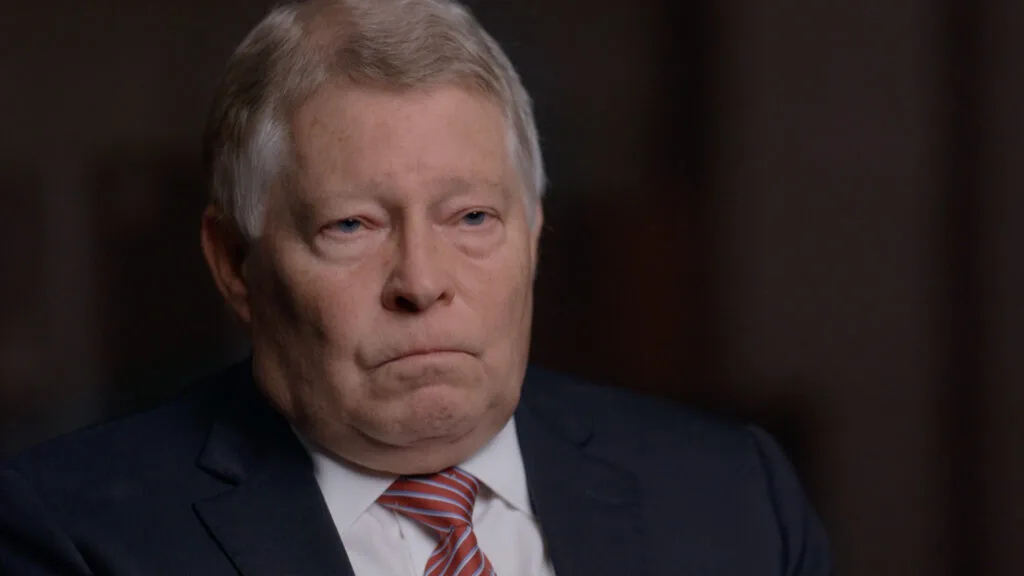
Brian Nelson is a senior adviser for Kamala Harris’ 2024 presidential campaign. He previously worked with Harris during her tenure as California attorney general. From 2021-2024, Nelson served as the Treasury Department’s Under Secretary for Terrorism and Financial Intelligence.
The following interview was conducted by the Kirk Documentary Group’s Mike Wiser for FRONTLINE on August 8, 2024. It has been edited for clarity and length.
Let me just start at the beginning.When do you first come across Kamala Harris?
I became aware of Kamala when she ran for attorney general of the state of California.I knew she was district attorney of San Francisco, but I didn't know that much about her.I was working in Washington, D.C., but I'm from California, so I was planning to move back to California.I was looking for an opportunity to work in an office where I would get to do law and policy like I was doing at the U.S.Department of Justice, and it was recommended that I go speak to her, and learn more about her vision as attorney general.And she very graciously agreed to let me interview to help run her LA office.
And the first time I met her, her dynamic sort of nature really struck me.I knew she was someone who was perceived to be a bold leader, that she had had a successful run in the San Francisco district attorney's office.And she, I think in that first interview, she was sizing me up, doing her very incredibly accomplished interrogation of me, who I was, what my value set was, what my capacity was.But at some point, she said, you know, “I eat ‘no’ for breakfast,” to suggest that we were going to really lean, and do big and bold things. And I was just deeply impressed by sort of her, both vision for the office, and what the attorney general can do on behalf of the residents of California.But just her presence, and again, sort of like a really dynamic energy about her.
And was that right at the beginning of her time as attorney general?
I think I met her for the first time in the middle of 2011, so she had been attorney general for five or six months.And then, I came onboard about a month after that.
What was it that she wanted to do?You said that she sort of had ambitious plans.What does that mean?
She was thinking, for me, originally, she was thinking about a couple things.One, consumer protection writ large, and certainly, that was top of mind because of the foreclosure crisis that the state of California was facing at the time, coming out of, of course, the financial crisis in 2007-2008, and the recovery, as well as thinking about climate policies and ways that California could be a leader on dealing with climate change.She was thinking about ways in which we can really broaden the frame around criminal justice, and rooting our criminal justice philosophy, and the importance and sort of the shared desire for safe communities.And everyone wants a safe neighborhood.But also making sure that we were doing that in a way that was reflective of the idea that everyone deserves to have an experience of a fair criminal justice system.
So she had big ideas in that space.And particularly in the context at that moment, unfortunately—because the budget situation in California was so poor, she and the AG's office, and particularly the Division of Law Enforcement had just experienced a $71 million dollar cut—and she was going around the state, trying to fight for that budget back for her law enforcement officers.And also, in that context, also thinking about, well we're going to have to do things a little different.We're going to have to become more efficient.We're going to have to become better, because we have fewer resources to do our work.
So it was criminal justice reform.It was consumer protection, where we can move in civil rights, and certainly, what she had done as district attorney of San Francisco, and was a focus of mine, was the ways we can get after transnational criminal organizations.I had done national security work in Washington.She had thought about sort of the challenge around transnational gangs operating in San Francisco and throughout the state of California, what that does to public safety.And then also, the trafficking of drugs, and people, and guns into the state of California.So she was very focused on developing policy that would help us get after and disrupt and dismantle those TCOs operating in California.
Harris’ Background as a Prosecutor
She talked about her decision to become a prosecutor, and the fact that there was some skepticism from her mom.
Of course.Yeah.
Do you have a sense of why she made that decision, and why she wanted to be attorney general, and district attorney, and be in those roles?
Yeah.I mean, I think from her, and what I perceive from her, is there are a couple of things she really doesn't like.She doesn't like predators.She really doesn't like those who take advantage of populations that aren't well postured to protect themselves.She, I think, had experiences in her early life where she was helping those in her neighborhood that really were being victimized in various ways.And I think that that experience informed her decision to become a prosecutor.
I think she also is just someone who deeply believes that our justice system can help people.I think she recognizes, and has recognized, historically, that it hasn't been perfect, but there is a lot of good you can do in the context of performing the role as a prosecutor, and then attorney general, and that capacity to really assure that there is accountability and consequence for bad acts, rapists, and child abusers, and all the like.That's an important role in our society.And I think it goes back to the reflection of, you know, sort of her distaste—maybe I'll put it mildly—for bullies, and predators, and those who would really take advantage of individuals that they perceive don't have the capacity to push back against that behavior.And I think for her, getting to represent the people, and really reflect that, sort of the role of our society in protecting and effectuating justice through prosecutors, and law enforcement, is a profound one, and one that should be performed by all demographics of our society.
Harris Breaks Barriers
Do you have a sense of what it was like for her?She breaks barriers at each point along the way, when she becomes a district attorney, as far as being the first woman, being the first Black woman, biracial woman in that position,and again, when she's attorney general.Do you have a sense of what it's like for her to walk into a position like that?
I mean, I think she was raised to walk into those rooms, you know, sort of head held high.And I think she really tried to communicate as a mentor, to her office team, to do the same.I think she always would say to me, in those moments where I was walking into rooms that were big, and you know, sort of maybe not hostile, but you know, there was sort of a diversity of opinions about whatever the topic is, and just to make the point that you're in that room to communicate something that you know, on behalf of the people of California.And you should take strength in that fact.I mean, that's an incredibly important role that we play.So, it's not just you walking into the room, but you're sort of bringing all of those voices with you.And you have a job to do in that context.
So I think for me at least, that was helpful advice in approaching either a hard meeting, or a big meeting, or a hearing, or any of the public engagements that we would do.And certainly, going into rooms that I, and maybe she didn't know all the actors that were the one of something in that room.She was always, always, always emphasizing that, “We belong here.We have a job to do.And let's approach this moment in that context.”
And did you see situations where she might be with other law enforcement people, and there's a feeling of, “What are you doing here”?Or, “You don't belong here”?
I mean, I think she would always say, “You can't control what other people think.You just have to know, for yourself, that you belong here.” And belong in the sense of expectation.Your expectation can't be that the room is going to look a certain way.The only expectation you can bring is that you do belong, and that you have a job to do.And again, that will carry you through basically any situation that you find yourself in.
Do you have a sense of where that confidence in her, that she has in herself, comes from?
You know, I know she has talked so much about her mother, and her sister, and all of the people in her neighborhood, including Ms.Shelton, who ran the nursery, and that they all played a role in sort of building Kamala Harris to have that level of confidence in her life.And particularly, I think the experience she often talked about with me, and other colleagues, about how formative her time at an HBCU was.And I think all of those experiences have led to really a sort of the leader, the confident leader that we've seen, and certainly, in her capacity of vice presidency, and all around the world, in a lot of really difficult situations, and I think expressing that type of confidence that goes back to the days that I worked with her as attorney general.
What is it about Howard that she would say gave her some of that confidence?
Again, I think she expressed that there was just an opportunity to be whatever type of student or person you wanted to be, without sort of any expectations, necessarily, within their community.And I think that was probably very freeing for her, and confidence-building.And then, as I've gotten to meet some of the people who have been close to her from that period, just the depth and sort of richness of those friendships—you want to have life partners supporting you, and she's got a big crew, not only of those from that era, but honestly, from sort of all of the eras that I've seen her professionally.She's got a huge crew of folks that are cheering her on, and want to be supportive, any way we can.
One of the things that she's credited her mom with saying is, you know, “You might be the first, but make sure you're not the last.” Had you heard that from her?And what does that mean?
Yeah, she'd say it frequently in private and in public.I think just recognizing that there are still a lot of spaces, including the president of the United States, that have not experienced a woman, or some, a woman of color.And the work that we do, and that she does, and sort of a role of leadership, and example, will open doors for others behind her.And the important thing in that context is that you approach leadership, you approach those experiences in the way that creates that space for others to come up behind you.And that includes sort of the incredible mentorship that she does for colleagues, and even beyond colleagues, just people that have come into her life.And I think it reflects that spirit of trying to create space for people to see themselves in her success, and her leadership, from all walks of life.And not even just Black, the first Black woman, or the first Asian American woman to do X, Y, or Z, but really, just that reflection that anything is possible when you look at her journey.
Harris and the Mortgage Crisis
Help me understand the mortgage case.Let me just start with California and the situation, and how much of a crisis it was for the state and for the office.
So, going into 2011, we were at a moment where there were a number of California homeowners, and reflected across the country, that were unable to pay their mortgage payments, because they had entered into mortgages that were not fixed rates.So they became much more expensive over time.And they didn't have the capacity to pay monthly mortgage payments that are two, three, four times what they initially were.And the result of that is you saw thousands, tens of thousands, hundreds of thousands of people moving into a foreclosure process, and then being foreclosed upon in their homes.…
So for us, it was really trying to understand exactly the dynamics happening in California, as best we could.And then doing the work of negotiating those dynamics, and the context of a multi-state negotiation, with the largest financial institutions in the country, to try to reach a settlement that would meaningfully impact and help those that were currently stuck in that process.
And then, there were a number of federal government agencies, including the Department of Justice, that were also participating in those negotiations.So when I came onto the scene, they were sort of in the middle of that.The attorney general had just come back from New York.She had met with some of the biggest banks, and she had gone with the hope that they can move the negotiations forward, because they had been mired for a while.
And, you know, as is her style, she went with all of the facts and figures that we could gather about sort of how many houses are near foreclosure, because the families had missed a number of payments, how many houses are in the foreclosure process, and then, how many houses have been foreclosed upon.
And I think what she found on the other side, disappointingly, is none of the financial institutions were prepared with anywhere near that type of information or appreciation of the scale and the scope of the foreclosure crisis that Californians were experiencing.And after that meeting, she reflected, like, “I just don't think this settlement process is going to result in anything that will be meaningful for the state of California.” I think, at the time, it was like $2 or $4 billion dollars being discussed.And so, we sat together with a couple other people in the office, and we wrote a letter to her fellow attorneys general, and some of our U.S.federal government counterparts, saying, we were going to remove ourselves from the settlement negotiations and begin a process to sort of build cases to litigate against these banks.
Let me just go back to that decision, maybe just to, in a way, simplify it or sharpen it.I mean, what was the choice that she faced at that moment, when you go into that room?What's the decision that Attorney General Kamala Harris faces?
So I think there were a couple of things that were at play.One, obviously, 49 other attorneys general were working to try to negotiate a resolution, but California had most of the foreclosed households in the state.So her participation was critical, so she knew that going into the room.You had a sort of U.S.government partners who were thinking about the entire country, also hopeful to reach a resolution.So she had that piece going into the room.You had these financial institutions, these banks on the other side of the table, saying, “This is our last and best offer.So if you don't take this, then you know, you're going to get nothing.And we're going to beat you in court.” So she had that going into the room.And then you, most importantly, I think you have a dynamic of these households, these families, that were losing their houses in real time, and recognizing that litigation, as everyone in this country knows, takes a long time.So not being able to address their very pressing and existential needs quickly, and speeding relief to them, she had that dynamic going into the room.But, at the end of the day, you know, she, I think rightly, thought that the relief being offered by these financial institutions was inadequate in a number of ways.…
So the uncertainty of the future, the inability to speed relief to those households that were sort of teetering, if you will, into the foreclosure process, weighed very heavily on her, and all of us, the whole office.But we thought two things.One, we could win in court.That, given that California, by far, is the largest state attorneys general's office, we were really the only ones that had the resources to bring a credible case against these large financial institutions.And so we were going to start to build it, and do it, and devote all of the resources, and create a war room, with white boards, and strategies, and figures.We did that.And we took over a conference room for a number of months.
But also recognizing that, in having the capacity to build a credible case, that the financial institutions posture about whether settlement makes sense or not, might shift over time.… And then, of course, after a period of about five months, they substantially revised the offer, such that California homeowners were able to get $20 billion dollars in relief through the settlement.
As I understand it, it also brings you into conflict, not just with the banks, but with the Obama administration, a president who she'd supported.Is that right?
I wouldn't say it was conflict.I would say the Obama administration had a strategic posture, appropriately, that was trying to think about all 50 states and our country, and the capacity for the White House, and the president to advance other important domestic agenda items, where you sort of had this negotiation open, or sort of uncertainty around what we were going to ultimately do.But for her, she only had one set of people to focus on, and that was California homeowners.And, you know, everyone was sort of playing their position, as I think she thought you should.Like totally understand the president's equities are different from her equities.But at the same time, she was going to do what she thought best for California homeowners, with Californians.
Harris Defies Labels
Why do you think it's so hard when people look back at her career as a prosecutor, to understand who she is?There's a debate about, is she progressive?Is she hard on crime?Who is she?Why is it so hard for America to—
Categorize her?Put her in a box?You know, I don't think she's boxable.No.Look,I think she's just really pragmatic about solving problems.And she always has been.And it goes back to, at least my perception, of somewhat of a north star for her is, we have a problem to solve.This person is going to lose their house.Or they've been defrauded.Or, you know, sort of their community is no longer safe.Like how are we going to make that community safe?How are we going to keep this person in their house?And really, I think that approach has allowed her to build relationships across all spectrums, however defined, and be really oriented towards problem-solving, more than anything else.
But also I think, to your point earlier, I think this is a real opportunity for people to get to know the Kamala Harris that I've gotten to see up close and personal, for a long time.So I think when people see her in action, and really see her approach to policy making in the context of people's lives, then sort of the need to put her in a box will dissipate somewhat.
It's interesting, just because it's a little bit different than other politicians.And she writes the book Smart on Crime.
Smart on Crime, yeah, of course.
And it sounds, from what you were saying, that there's data, and what are the real world results.And it feels a little different than other politicians.
Yeah, she's very data-driven.She's very interested in using data to make sort of more evidence-based decisions.But also, using data to invite people closer to government, data, and technology.And I think, again, it just goes back to that basic expression of like, the things that we're doing are doing for them.So like let's do everything we can to make it work, both in the effects, but also sort of the experience.
Do you know where that approach comes from?Do you have a sense?
Well, her mom was a scientist.And I think that's where it came from.In my first interview with her, one of the things she asked me is, “Do you play chess?” Because a lot of this work involves that sort of quality of logic, and sort of thinking steps ahead.So I think that scientific upbringing probably, she would say, is reflected in how she approaches policymaking and leadership.
Does she play chess?
She does, yes, yes, yes.I think she learned, if my memory serves, I think she played and learned with her grandfather.
Have you played her?
I have not played her in chess, no.The most funny thing about that initial interview is, I was literally terrified that she was going to whip out a chess board, and challenge me to a game of chess.Because I was pretty clear that I was not going to win.
What do you think of the criticism that she gets from people who say, “She's too indecisive.She won't weigh in on issues from legalizing marijuana, to other ballot issues.” That criticism that she gets, what do you make of that?
Yeah.I mean, look,I think from getting to watch the sort of the quality of her thinking, and leadership, it’s misplaced criticism.I think she is someone who is appropriately deliberate.She, as I experienced directly, in the context of the mortgage negotiations with these banks, she doesn't do things lightly, because she recognizes their import.So I reject the notion that she's indecisive.And I've just seen her, in every iteration of her professional career, since the attorney general's office, take decisive action.So yeah.I think people should be excited about the quality of her decision-making.
Harris Becomes a U.S. Senator
Do you know why she moves from being a prosecutor into running for Senate, into moving onto the national stage?
I don't know why she decided on the Senate versus any other job.But I'm not surprised by the move, because she was such a successful attorney general.And I think—I think she was someone who has always wanted to try to do things that will meaningfully shape policy, that is going to have a big effect.And obviously, the U.S. Senate is sort of the ultimate, in some ways, expression of that work.So I certainly wasn't surprised.And I wasn't surprised by how successful her transition to the Senate was, so when she left the AG's office.
I mean that transition to the Senate is the same transition as Donald Trump is coming in as President.When you watch her, in that environment, in Donald Trump's Washington, and she's arriving, what do you see?
You know, I'll tell you, on the night of the election, the emotion that I had was so much like, thank goodness she's going to be in the U.S.Senate, fighting for us.She seemed sort of uniquely postured to be able to prosecute the case against Donald Trump then, and sort of all of those who would facilitate his transgressions.And I think we saw that.And I think that's where America really got to know a little bit more about Kamala Harris in that context.But from my perspective, that night she gave a rousing speech to staff, like, “You know, now we're in it.And we got to fight.” And the staff was having dinner, and it became apparent that she was going to have to rewrite her speech.So the speechwriters kind of peeled off from dinner first.In the matter of an hour and a half, they totally rewrote that speech, to really posture us, so we have to fight for those hard won rights.
And she would frequently quote Coretta Scott King, who has said, every generation has to fight to preserve and expand civil rights.Nothing is permanent.Nothing is won forever.And having a leader who I knew was going to bring that energy to Washington, D.C., helped me sleep that night much better.
So you were there that election night.
I was, yep.
What was the mood?It's such a remarkable moment.And in some ways, it's a pivot point in her career.
Yeah.The mood was pretty low for that room.I have always perceived that in times of real crisis, and hard moments, that's sort of when she is at her absolute best.She really—like she knew the assignment, as I think the kids like to say, of like, she knew that she was walking into a room that needed a leader.And needed to, like, I think she said, “Don't lose heart.Show heart.” I mean, it was really like an expression of, “We got a fight ahead of us.But also, it's within our capacity to win that fight.”
And what's the mood as she delivers that speech?
You know, it was low at the beginning, and it was pretty raucous at the end.I was there with another friend who had never met her.And he made that sort of same reflection, that for weeks and months, he would reflect back to that speech, and take comfort from it, because it was so rousing, and she brought so much energy into what was perceived at the time of a tremendously dark moment in our country.
It's remarkable, as a freshman Senator, in her first year, that she becomes the icon and a figure of people sending clips around.When you see that, as somebody who worked with her, and the prosecutor, what did you see coming to the fore?
I think it's all of those sort of prosecutorial talents of going after the cabinet nominees and the Supreme Court nominees.And I think really reflecting some commonsense approach to trying to uncover the truth of people, the truth of whatever the issue is, that they were discussing.And she was just incredibly talented at helping to expose those things.So, I knew she was going to be good at that.I knew she was going to be really good at that.And again, I think, just in that moment where people were really looking to that type of leadership, and confidence, it was no surprise to me that she was able to step into that role.
Harris as Vice President
Do you think that it was an adjustment for her to go into the vice presidency?She had been AG.She had been somebody who could make decisions.And I've heard her talk about how much she relished making decisions.Do you think that was a hard adjustment?
Not that it was hard.I mean, I think anyone being vice president is an extraordinary thing.And I think she had been in D.C., but was not a creature of D.C.Not that there's anything wrong with being a creature of D.C.But no, I wouldn't call it hard.I think she, as I got to witness a little bit, knew she had a great partner in President Biden, and that they were going to be good governing partners together.And I think that's been reflected over the course of the last three and a half years.But I'm sure it was definitely a change.
When I was nominated and confirmed to be a Treasury undersecretary in the administration, she swore me in.And she had my son, who was, at the time, maybe seven, and he was unhappy that he had been moved from California.So she says to him, she pulls him over, and he expresses that he's unhappy that he has been moved from California.But they've known each other, obviously, since he was born.So she expressed, like, California is pretty great.She also loves California.So let's make a plan together, to make D.C.a really extraordinary experience for both of them.And then that's just the person she is.She really meets people where they are.And I think to the point that we said, at the beginning of this conversation, she can enter any room with confidence, and appropriately so, because she's been prepared.
Harris Becomes the Democratic Presidential Nominee
Talking about that, the moments of crisis after the debate.She's on cable television.And in some ways, it feels like people are seeing her, and paying more attention to her for the first time.Who do you see in vice president Harris in those moments, as the president wound up making a decision to pull out of the race?
I think this race, for me, has been, and certainly in the context of vice president Harris' candidacy for president, is about the future, and the future that we can all see ourselves in, versus something that reflects the past, and sort of sense of scarcity, and lack of opportunity.And I think for her, she has always created space for people, not just in her life, but in the way she leads.And I think that's what I see as sort of the choice facing Americans this next election.
I mean she's in a moment of crisis for the Democratic Party, for the country, in that period, after Biden leaves.
And now you see great energy and excitement.And again, I think it's my hope that some of that energy just reflects that more people have gotten to see the Kamala Harris that I've known for a long time.
What is it about her that lets her seize that moment, in the way you're describing?
Well, I think it's helpful to have been vice president and done that, done that role well, I think.But I think it goes back to, she's sort of stepped into every new role and every new challenge with a sense of purpose.And she knows why she's here.And she knows what she's fighting for.And I think that that vision, and that quality of leadership is infectious in a way.And I think that's been reflected over the last, I guess, now, three weeks since it's been when she formally entered this race.
You sort of answered the last question we ask everybody, which is, in your opinion, what is the choice that voters face in November?
You know, for me, and for my family, and certainly for my son, it really is, are we creating a future that everyone can see themselves in?