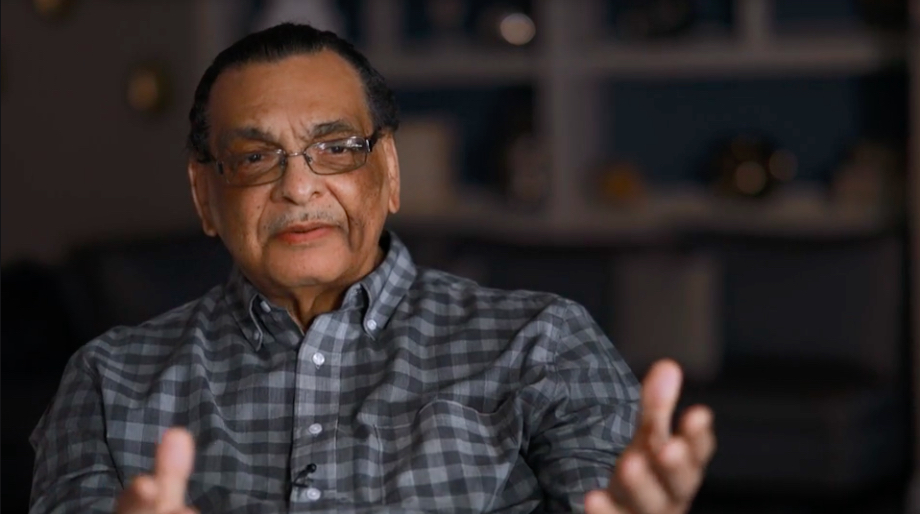
OK, here we go, Mr. Mayor.The first time you ever laid eyes on Joe Biden, do you remember what the occasion was?
Not really, because I met him when he was more like the county council, and he was, I think, doing public defender’s work.Or he was in one of the legalese things.But he was very much involved with young people at the time, especially on the east side of Wilmington.He had a belief that there needed to be more interaction between people if we were really going to stop the gang[s].At that time, we had gangs that were banging on each other, and we were trying to stop that.And he was very much involved at that level with young people.So that’s when I first met him.
I didn’t really understand his energy and his intellect until I ran for city council in ’72 and he was running for the Senate.And they asked me, would I go downtown with him and introduce him to people and get him to be known.And so I said, sure, fine.So we picked a nice Saturday.It was a beautiful day.We met.“Thanks for doing this.”I said, “Fine, let’s go.”And we started walking.And he took off like a firecracker.I mean, he was all over, just everywhere, shaking hands and talking to people and all like that.And I said, you know, they didn’t need me for this, because I'm not like him.I'm not that [gregarious].To me, I want people to feel that they know me more than just this glad-handing.But they liked him.He had a way about him that, just, people took to him right away.
What was the way?What do you think it was?
I call it charm.I don’t know what else to call it.But he had a great smile, and introductory—and the way he came across to people was sincere.And he seemed like that—this guy is not just another politician trying to get to know me.
Let’s go back a little bit.Tell me what happened in Wilmington in 1968.Tell me about the protests and the National Guard and all of it.What blew there?
Well, in ’68, we had—what a lot of people don’t know, we had a disturbance in ’67, year before.And it was minor in nature.We didn’t have the fires.We had some window-breaking and things like that, and some rock-throwing at police and fire.But it wasn’t really serious in that sense.But in ’68, when Martin Luther King was shot and killed, you sort of knew something was going to happen.So it was just a matter of how it would happen.
And all of a sudden, it just blew apart.The young people were not only breaking and throwing; they were burning, really severe burning in the West Center City, a part of the city.And you could see the smoke rising.So I went over there because, at that time, I had moved out of West Center City.I had lived there for a while, but I had moved out.And I came back, and there was absolutely nobody hardly on the street at all.
So, as I was walking down the main, which is Madison Street, down Madison, I got to 7th and Madison, and there was a young police officer standing on the corner.And he came up, and he said, “Sir, can I ask you why you’re here?”And I said, “Well, I heard about the disturbance, and I’m down here to talk to the young people, because I know most of them.”And he said: “I don’t think that you should be down here.I think you ought to go the other way, back where you came from.”
So I did.I didn’t want to argue with him about it.So I did.But later on, it just got worse.It kept getting worse and worse, more destruction, more arrests.There was like 400 arrests during that time.The police had cordoned off West Center City, so it wasn’t like people could roam all over the city.They were really trapped within the area of West Center City.But that’s where all the damage was done in terms of the fire, the breaking in and all like that.
Now, these young people did not see this as rioting.They saw themselves as rebelling against the [powers that be].And a lot of people don’t know it, but the looting actually was done by older folks.It wasn’t being done by the young people.They did the breaking and all that other stuff.But later on, the older people came in and took the meats and the foods and the clothing and all that kind of stuff.So it’s sort of interesting, the dynamics of that.
But trying to calm it down, eventually really was calmed down.But the governor was being told that there was this Black army ready to take over the city, and so he put the Guard in place.And he was kept—people were telling him the wrong thing, that there was this army ready to take over.And so he kept the Guard on the streets for nine months, and they would patrol with the state police or with city police.And finally the business community began to say, “Governor, you need to remove the Guard, because it’s hurting our businesses.”And people began to feel uneasy.
But there was a great number of people that felt scared and afraid.So they loved having the Guard on the street, because they felt safer.Later on, when we did a study, we found out that crime actually went up while they were out there, because these guys were not trained to be police officers.They were trained to fight in a war, which is a different kind of thing.
Yeah.
So anyway, there was a lot of group meetings, a lot of people—the ministers, the politicians, the leaders of different organizations were getting together, trying to talk about: “But what do we do?How do we keep this from growing or from happening again?” ...So as things calmed down, eventually, the Guard was removed. ...
But of course, Wilmington had a scar, probably a lot of white flight, probably a lot of other tension.
Oh, it was terrible what happened.The flight was not just white flight; it was African Americans who could afford to get out also left.So you lost your middle class, basically.And the upper class had already gone, for the most part.There was a few, but most had gone.But the middle class who had the resources, they left the city in droves.And then you had—you already had suburban development; and you had mall development, which really, really killed the downtown, which was the main economic center there for a long while.And the little stores owned mainly by people who lived in Wilmington, began to close.And pretty soon, you had almost a desolate downtown.
So when Joe Biden moves back, fresh out of law school, married with already a couple of kids, or one kid and another one on the way, what does he walk into?And how ready do you think Joe Biden was to—eventually, he will run for the Senate at 29 years of age.
You say “ready.”He just had a natural ability to get to know people.But he also, in talking to you, he wasn’t like: “I’ve got all the answers. Let me tell you.We’re going to do—dadadada, and we’ll straighten out the world,” and all that.He really would talk in the way of, like: “What do you see?Jim, what do you think?What do you see?Tell me.”And he would do the exploratory method first before he would try to deal with any specifics.
Because Sen. [Caleb] Boggs was not a bad senator.He was a—he was a good senator.But Joe just was overwhelming as a personality.He was an immediate fixture of personality.People liked him from the very beginning.He had dynamic speech capability, and he did use it very well.And I think that that won him the Senate.
Biden and Busing
He’s, of course, been criticized for being against busing, for coming out against busing.And I know you have a strong opinion about that as well.
Well, I wasn’t pro-busing at all.
Yeah.Tell me what Biden’s position was and how he arrived at it.
Well, I’m not sure how he arrived at it, but it was similar to mine, which was that busing was not the answer to this problem of educating children.And I think he had talked to enough African Americans and others about this whole thing.Our position was, until you deal with the housing segregation, until you deal with the economics, until you deal with all of these issues that are outstanding, you will not have an integrated society.And if you just take a kid and put him on a bus and say, “Go over here and make people feel good, and you sit down beside this white child,” and ipso facto, we’ve answered the question of education, well, that’s ludicrous.Not that busing wouldn’t have been necessary at some—without—whatever you’re talking about.But there wasn’t any real look at, we’re integrating two very strangely different people, and we’re just putting them in the room, and we’re dealing with a teacher who has not had to deal with this before in their career.And now we’re just saying, “Make it work.”It can't without something in between all of that, because here are these kids [who], on one side, have very little resources.Most of these kids do not have books in their homes or all those kind of accesses to the world, and we’re throwing them in with people who do.
… So I think that what we saw was, yes, there were—there were successes in the busing process.There were young people who went to college, which they never would have without some of this kind of integrated education.So there were some successes.But it didn’t change society in the real sense of the word.It didn’t change racism.In other words, it didn’t change it at all.It just caused whites who didn’t want to be involved with this at all to create their own schools, so they pulled their kids out.So it was just, to me, it was a quick fix, but it didn’t answer the problem.
Were you helpful to Joe Biden to learn about this, and learn about these things?
Oh, yeah, we talked about it.We talked about most of the problems at some point.I mean, he—Joe was very good about asking you what you thought about any particular issue that was bothering him at the time.So we would talk about all kind of issues—the housing issue, the youth issues, the education, all this kind of stuff.So it wasn’t like he adapted what I believed.He just would listen to what I felt.And I’m quite sure he did this with a lot of different people before he took position.
He was not what you’d call a civil rights activist, or was he?Where would you put him on that scale in those tumultuous years?
I didn’t really see him as an activist.I saw him as one who was really kind of very strongly trying to understand the issues and the problems so that he could do a better job at being a senator.And if you ever check the record with the NAACP, he did very well with the NAACP rating, because I used to get The Crisis magazine, and they would rate senators and representatives on the issues that they would vote on, and he usually got 100 percent.
So he was good at taking his job seriously.And of course he got criticized for hobnobbing with the Dixiecrats and the segregationists, who came out of the—out of the former slave states.But he came out of a slave state, which is sort of interesting.The other is, he worked his institution called the Senate.He had to know and get along with these guys.They had power.They got elected over and over and over and over again, and they were the chairs of committees, and they could pigeonhole your legislation.They could do all kinds of things, and he understood that.
He told me one time, he said: “Jim, I don’t know what you think, but let me tell you something. Don’t get into that social service committees and stuff like that.Go wherever the money is.”He’s right.If you don’t control the money, you don’t control anything.
But did he have what you’d call a sophisticated political policy perspective?Was he one of those guys that you kind of—you thought, well, he’s a real smart, kind of political guy?
I always thought he was smart, but I didn’t feel that he—I never thought of him, really, as a politician, which is sort of funny, because that—even though he was a senator and he was there for a long while, but I really never looked upon him that way.Intellectually, he seemed to be very, very sound to me about the willingness to learn, which a lot of people, that’s hard for them to do, because we all grew up with our attitudes and our belief systems.And sometimes it’s very hard to change, because this is the way you were brought up; this is the way you lived; this is what you believed.
But he seemed to be willing, the family—I don’t know how the family was raised, but they seemed to be such a unique group of people.They were very close to one another, and they worked together more so than most families that I've known of.There didn’t seem to be this big gulf between father, mother and children.There seemed to be this—this sort of tightness between all of them.
What would the effect of that be?
Well, it really did make a difference as to how well he could campaign, because they all worked together.And his sister was a firebrand.She was an organizer, very bright.So you put them all together and you had this—sort of, like, a—machine within itself that could operate politically far better than most, because I know I didn’t have that kind of connection.
Biden and the Black Vote
I think of him as this kind of preppy white guy, and I wonder how he won the Black vote so effectively in the ’72 senatorial race.
Well, he was very present with people.He wasn’t afraid to come into the African American community, wasn’t afraid to go into the churches.He would go into meetings where there was maybe 10 people talking about whatever issue.He had no problems with that.He was not aloof in that sense that, “I’m me, and you’re you, and you stay where you’re at, and I’ll stay where I’m at,” I don’t think.
So people—like I say, he was likable, and they liked him.I remember African Americans who said, “Well, he didn’t change the world for us, but he was always for us.”Just a sort of interesting look at how Joe Biden was considered.
Yeah, I’ll say.But his wife died.
… His sister took over the home and the boys, and he took the train home every night, the Amtrak train.
I mean, he didn’t seem to want to live in Washington, D.C. And he liked the idea—and, you know, I guess, if you think about it, it was a great way to communicate with people.The people on the train, you see them.Probably there was a lot of people you saw every day getting on the train, going to Washington, D.C., or wherever they might be going.But I think he deliberately understood that he had to be connected to his community, to his state.Plus, he lived in Wilmington.He didn’t live in suburbia of Wilmington; he lived in Wilmington.
Do you know why?
I just think that that was part of him.I never asked him why or anything like that.But I just think he made good decisions about people.And I think people paid him back by saying, “I like you, and I’ll vote for you.”
Biden as Vice President
How would you characterize Joe Biden and yourself as a relationship?Are you friends?
Friends.It was interesting, because when he was proposed for vice president, I got calls from people that I didn’t know, African Americans from all over the country, saying, “He’s got to be the vice president.”And it was sort of interesting, because I never expected that.And when he did get selected, of all people calling me around, I think, 5:00 or 6:00 in the morning, it was my mother saying, “Hi, your friend got—Joe got selected as vice president.”I said, “Oh, thanks, Mom.”But I thought that was very interesting, the way she said it.She said: “Your friend got selected for vice president.Joe Biden is going to be the vice president.”
What did you think of that, Mayor?
What, his being selected?
Yeah.When you heard that he was under consideration, and maybe he’d be selected.
I thought it was great, because he had experience, which Obama didn’t have.He had also international credentials, which Obama didn’t have.So I thought that the two would make a great team, actually.And they did, if you really look at the facts of when some of the Republican leaders came out and told him about Obama, from the very beginning, “Our job is to defeat you for reelection; we’re not going to work with you,” which was amazing.I was really upset over that, that you would do that before—not looking at the country, you’re looking at your politic[s].That bothered me a great deal.
Surprise you that he could form a close bond to a Black man?
No, because he had already friends in Wilmington that were African American and that he dealt with.I don’t know if you’ve ever talked to him or heard the name Mouse.
Yes.
Well, Mouse was just a guy, he was at the Port of Wilmington.He worked at the Port of Wilmington, and he was very much involved in the community on the East Side.And they were very good friends.And there were others who were very good friends, African American, that he—like I say, he did not seem to have the problem about being around you over issues of color.He just didn’t seem to have those kind of hang-ups that you—you can always tell.I mean, I can tell when politicians were just being nice, and you knew they had no intentions of doing what you were talking about in the first place.But you go through the process anyway.
One of the jobs he takes on for Obama is race, because he can’t.You know, he’s not the president—
He can't be the Black president, no.He’s got to be president of the United States.
But Joe had to do it.And especially funerals and after shootings—Michael Brown, Trayvon Martin, all those things.That becomes Joe’s job.
Yeah.It was fascinating, because I was invited to a Christmas party at the vice president’s residence.But I went, and it was just staggering, the number of African Americans from all over, especially Southern states, but from all over.He had just tons of people who were getting to know Joe Biden.And I think it paid its gold when—when you came to this election, the primary, it showed up that his connections and his relationships worked.
Yeah.I mean, it’s a very interesting difference between the two candidates for president, this go-around.I mean, fundamental difference between the two of them.
Right.
Biden’s Record on Race
Certainly seems that way.I think—well, there was a story I forgot to ask you about.He talks sometimes about the importance of being a lifeguard at a swimming pool in the African American—
Yeah, the East Side.
Nineteen years old or something, right?
Yeah.He was on the East Side. There's a big park, which had a pool there.And it was basically African Americans would go to that pool, and he was a lifeguard there.That’s how he got to know some of the guys who were in the gangs.And people that were really working in the particular neighborhood, they would gather in the parks, and they would—you know, he was there, so he talked, and he got to know them.
It seems so odd that a white, 19-year-old guy would want to do a job like that and take to it in the way that he took to it, according to the people who know him.
Like I say, it’s not that he’s easy to understand, because he was different than most that I knew.He just seemed to have a natural instinct for getting to know people, getting to understand them, but not being afraid to be around them, because a lot of white politicians, for example, don’t mind coming to the churches, don’t mind coming to the big affairs and all of that, but when it comes time for the smaller things that go on in the community, the little talks, which we get into very—we used to, anyway, more so than now, but we used to get into the debates about Black Power and all the different stuff that was going on at the time, where we stood on things ...and I think that Biden didn’t mind being around people who had all these different thoughts.
When you’re watching this time around, when he’s getting criticism from Kamala Harris and others, and they’re looking back at his record about dealing with segregationists and busing and the crime bill, what are you thinking as you’re watching sort of that criticism from today, from 2019, from 2020?
Well, I understand it.And it’s easy to do.But it’s very difficult when—I always look, because I was elected for 40 years.And I know that you’ve got people who always have the answers and can criticize you for not doing this and not doing that and not saying this or speaking up on this particular issue or not being at a particular meeting or whatever.You always have that.
I disregard it.I just think that it—I am not a fan of debates, because I think debates—I took debating, and I know what you’re supposed to do.You kill the other guy.You don’t give him a break.The minute he makes a mistake, you cut his throat.That’s what debate is about.It’s got nothing to do with my intellectual capability, but it does have a lot to do with my killer instincts.
Yeah, I’ve just got two things, Mayor.One thing, you’re telling me, late ᾽60s–early ’70s, during civil rights debate and Vietnam debate, Joe seemed to have a talent of always being on the right side, you said.
Yeah, right.
He could deal with radicals; he could deal with conservatives.What was that about him?What was that talent?
I think he was just being himself.I think after he spoke to a lot of different people, and probably his family, and made up his mind on his points of view, I think he expressed them, and that was it.I don’t think he really looked at conservatism versus liberal.See, I don’t believe in either one of them.I think they’re both full of crap.But conservatism is nothing more than saying: “I want to stay the way things are.I like the old ways, OK?If you’re an old fuddy-duddy, you don’t need to be around me.”
Liberals want to do everything all at once and change everything.And you can’t do that.So I just find both positions to be irresponsible when it comes to governing.You cannot govern from a liberal point of view, and you cannot govern from a conservative point of view.You have to govern from a pragmatic point of view.And I think that that’s pretty much the way I looked at Joe, is that he had his own opinions; he gave them.It doesn’t mean that you would agree with everything that Joe Biden ever said or would say.It means that you knew him, because in Delaware, people accepted—like, they always said that he would gaffe and make a mistake here or there.That was commonplace here in Delaware.OK, he made a mistake.No big deal.
So I just don’t see that that made any difference.Harris attacking over—over busing.Well, she could have attacked me over busing, because I had the same belief system.I didn’t see it as a workable solution to the problems that we were facing as a nation.