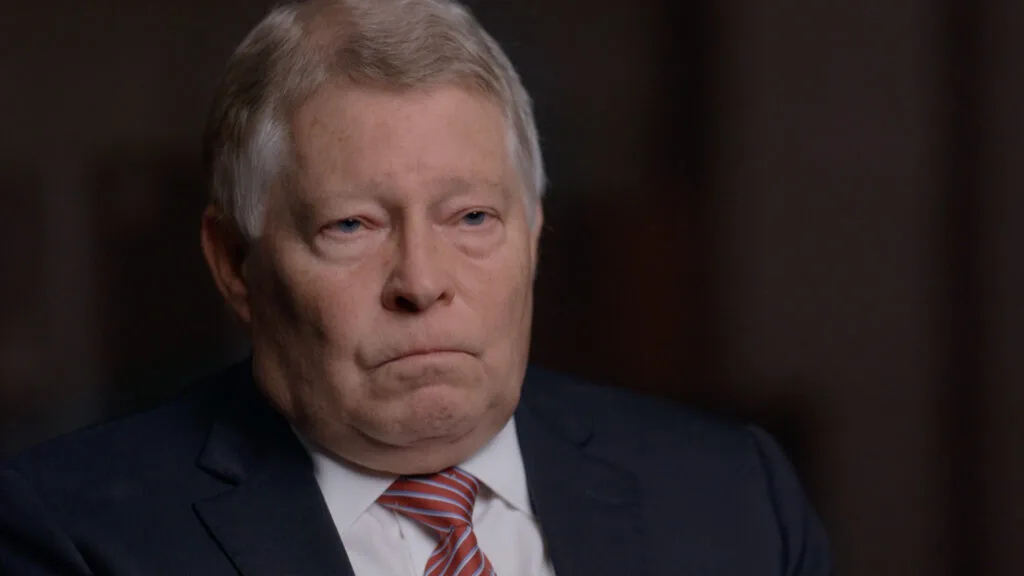
Jason Zengerle is a political journalist for The New York Times Magazine. He previously wrote for GQ and has reported extensively on the U.S. Supreme Court.
The following interview was conducted by FRONTLINE’s Michael Kirk on June 10, 2020. It has been edited for clarity and length.
Let’s start with 2008.The fundamental question everybody had at the time, and maybe anybody who’s looking back, and certainly people who are making a film called The Choice, would look closely at is, why do you think Barack Obama chose Joe Biden as his running mate?
I think Obama chose Biden for a couple of reasons.I think one was a political reason.He wanted to be able to appeal and reassure white moderate voters in the Rust Belt and places like Pennsylvania, Ohio that he was going to look out for their interests, and Biden was a choice that definitely did that.
I think the second reason he picked him was for governing reasons.You know, Obama had only been in Washington for four years at that point; he really didn’t know the city very well.Biden had spent his entire adult life in the Senate, and I think [Obama] viewed Biden as someone who would help him understand Washington, help him understand Capitol Hill, and give him the kind of experienced knowledge that he would really need to make the government work.
Tell me—express for me, during the primary in that year, the gaffe articulated by Joe Biden about Barack Obama.
On the day Biden announced his candidacy, he was doing an interview with Jason Horowitz from the New York Observer, and [Biden] was talking about the other candidates and he referenced—he referenced Obama, and he talked about what a great candidate Obama was, a young, clean and articulate Black male.And obviously those are code words.I don’t think he was trying to insult Obama, but he really stepped in it when he said that.It set off alarm bells for everyone.I think Obama himself was offended by it.And Biden just—even before he’d really gotten his campaign going, he’d already basically ended it with that gaffe.
At the same time, Obama did not attack him for it, didn’t, you know, didn’t sort of go after him publicly.And I think when they discussed it privately, Biden was very apologetic; Obama was fairly gracious in accepting the apology.And I think for both men, it turned out to be a fairly important moment, because I think it, in a strange way, it started their relationship.They’d known each other a little bit on Capitol Hill, but neither one of them liked each other that much.I think Obama thought Biden was a blowhard, kind of, you know, the worst of the Senate, a guy who would just talk and talk to hear himself speak.And I think Biden looked at Obama very skeptically.He was a guy—he was a young man in a hurry, too much of a hurry.Biden was someone who had paid his dues, had been up there for a long time.I think he was skeptical of Obama and just how quickly he was running for president.
So that incident, in a weird way, it allowed them to form—it was the beginning of a personal relationship.And in a strange way, I think maybe Obama would not have picked Biden, were it not for that, in the end. …
There was a moment before that in the Senate, when Biden is chairing a historic hearing with Condoleezza Rice.And it’s Obama’s basically first moment attending such an august proceeding; it’s historic for him, too.And you’ve got a Black United States senator and a Black woman being confirmed.Tell me the story of what Obama writes and what his perception of Biden in that moment was.
Biden was just going on and on during his remarks.Chairmen can go on for as long as they want during these hearings, and Biden always took full advantage of that. …
And Obama wrote down on some notebook paper and showed it to his aides: “Shoot, period, Me, period, Now, period.”
The vast difference between Obama then, at that moment, and who he becomes, to most of political America’s amazement, and the sort of crash of Joe Biden—1% in Iowa is all he gets.How do you square that?What happened?
Obama was a remarkable candidate and a remarkable politician.And I think even at the beginning of that campaign, although he was still very young and inexperienced and a new figure on the national stage, I think journalists and other politicians recognized his extraordinary talent.
Biden was someone who had been around for a long time.He was a known quantity, a known entity.And while he had a lot of experience, he had not necessarily demonstrated the ability to run a national campaign.
So Biden obviously entered the race with name recognition.Activists knew him across the country.Democratic leaders knew him across the country.But he wasn’t someone who had people excited.Obama was someone who, despite his newness, or maybe because of his newness, people paid attention to him; people were excited about him.It fairly quickly developed that the top-tier candidates were him, Hillary Clinton and John Edwards.Biden, in part because of the gaffe at the start of his campaign, but also just because of larger forces—you know, his support of the Iraq War—he was just someone who was not going to get a lot of traction in 2008.His candidacy in many ways was doomed from the start.
How surprised was the establishment, the Democratic establishment, and maybe even the people in America, that Obama chose Biden to be his running mate?
I think Democrats were a little bit surprised at first that Obama would tap Biden.But once they thought about it, I think it made sense.I think Biden was a reassuring choice.I think Obama was looking to reassure voters, reassure members of the Democratic establishment that he was someone they could work with, and also that he would have people around him who were familiar figures, who knew Washington and would have connections to the establishment.
And Obama was not a rebel; he was not an outsider.There were plenty of establishment figures who were supporting Obama and encouraging him to run who were skeptical of Hillary Clinton and wanted Obama to challenge Hillary.But at the same time, I think there were people who were a little bit worried that Obama was someone they didn’t know; they didn’t have relationships with him.They did have those relationships with Biden; they did know Biden; and Biden was someone whose presence on the ticket and presence in the administration was a reassuring gesture to them.
Yeah, a lot of people talk about Obama being the introvert, which seemed surprising, and Biden being definitely the extrovert.
Yeah.I mean, there was, in addition to just kind of the political factors, there was a personal factor there as well.Biden, you never know what he—you never wonder what he’s thinking.He will tell you.He is out there all the time.Obama was a little bit more inscrutable sometimes.I think he kept more to himself.And I think Biden, his presence there was in some ways just a reassuring gesture because it was a more familiar political kind of presence.He’s more of a backslapping politician.That’s something obviously Obama does not do as well.And Biden brought that to the table as well.
Biden’s Role on Race in the Obama Administration
There is, of course, the ongoing issue of Obama’s biggest public problem, which was race and how to deal with it.Did Joe have any skill to bring to the table on civil rights and relationships with the African American Black community?
Biden had very good, long-standing relationships with Black Democratic leaders, Black civil rights activists.I don’t know if Obama necessarily needed any help with those people, but Biden certainly didn’t hurt, in that respect.Biden was someone who had long-standing ties to them.And although he might sometimes exaggerate his ties to them and exaggerate his civil rights activism and his support, and he did pass—he was involved in some legislation that ultimately became sources of conflict or disagreement with civil rights veterans, like the crime bill, for instance, he was not someone that they looked down upon or were necessarily hostile to.So in some ways, it was a bit of a wash.
When you go back and look at just that relationship around race and when you look at the times, and you think about things like [Eric] Garner and Trayvon Martin and all the Ferguson problems, it is often Biden who gets sent into the breach.I mean, vice presidents do that anyway, but in a way he’s like the grief counselor for a lot of Black America during that time, I gather.
Yeah.And Biden was—one of his greatest political strengths is his empathy.And his own experience with personal tragedies has given him an ability and, in some ways, an authority to deal with people and deal with communities who are grieving and to make them feel like he understands what they’re going through.And whether it was Black communities, white communities, any community, any community going through some sort of trauma, Biden was quite good at going into that community, listening to people, making them feel as if they’d been heard, and, you know, really performing a service; that they could come away understanding and feeling that someone in power or someone in government was looking after them and was trying to help them and trying to listen to what they needed.
Do you know where that comes from?
I think it comes from his own—I think it obviously comes from just, you know, it is his personality, but he has had so many personal tragedies over the years, you know, beginning with his wife dying and there’s the baby daughter, to his son dying while he was vice president.He’s just—he’s just been through so much, and he has been someone who, I think—he looks for opportunities and he looks for people who are suffering and who have been through something hard.And he believes that he has something to offer those people.
I think, you know, some of his greatest speeches have been at events for the families of police officers who have been killed or at military funerals.He just—he has this capacity to be a shoulder to cry on and be a shoulder to lean on.And I think some of it is just inborn; it’s just kind of who he is.But he obviously has had many opportunities to develop it through his own—his own history of personal tragedy.
Biden as Grief Counselor
You mentioned the police.He begins the book about Beau, Beau’s death, with a story of the NYPD, two officers who were killed after Ferguson.
Yeah, he visits the home, I think, of one of their parents, right?
Right. ...
And he performs that function that you’ve just talked about.
Yeah, he, you know—and I think with the father of one of the slain officers, he doesn’t even speak English, or doesn’t speak English well, and Biden is just able to connect with him on a purely tactile level; they just hug each other.And I think there are a lot of politicians who I think would be uncomfortable; they would be afraid to go into that house.Biden, you know, he strides in there; he wants to be there.And I think his desire to be there conveys something to the people who he’s going to comfort, that they can sense that he wants to be with them and he wants to help them.And it’s a powerful enough force that it can overcome language barriers, even.
It happens in the aftermath of Ferguson.And of course you would think that the Black president of the United States would come to those funerals and be there, but he was not only, I think—he was warned not to come, and Joe found himself going in there, I don’t think reluctantly.But what were the circumstances that prevented Obama from going and made Biden attend, do you know?
Obama was always walking a tightrope when it came to race, especially for the first part of his presidency.I think he was very reluctant to wade into any situation that had a racial component for fear of the backlash.He saw this very early on in his presidency when he made a somewhat off-the-cuff remark about a white Cambridge police officer who had arrested a Black Harvard professor outside his home when the Black Harvard professor, Henry Louis Gates, was trying to get into his home.Obama just off the cuff made a remark that was, you know, it made sense.He said it was a boneheaded move by the cop; the cop should not be arresting someone trying to get into their house.But because it was a Black Harvard professor and a white police officer, and it was a Black president saying this, there were howls of outrage from conservative politicians, Republican leaders.And Obama, I think, from that experience, believed that he should not be putting himself in situations where people might interpret anything he does as racially divisive.
So the Ferguson funeral, he, I think, did not—it was such a—it was such a—Ferguson was such a searing experience for Black Americans and for white Americans, as well, who were afraid, I think, many of them were, about what was happening in Ferguson.And Obama, it would be the kind of situation that a president would try to go into and try to calm things.But I think Obama was concerned that because he was a Black president, if he went there, white Americans, Republicans, conservatives might criticize him for it and might further inflame the situation.
So sending someone like Biden was a safer choice, not only because Biden was this empathetic figure, but he was white.And I think that in some ways, it was a safer choice for the administration to make.
Biden as Vice President
So we’ve talked a little bit about race.When you look at Biden in 2008 to 2016, what did he actually do as vice president of the United States under Barack Obama?
He was a—he was a voice that—when Obama offered Biden the spot on the ticket, Biden—one of Biden’s conditions was he wanted to be in every meeting; he wanted to have influence.And I think one thing he particularly wanted was, he wanted to be the last person Obama talked to.There would be these big meetings of advisers, principals, Cabinet meetings.They’d hash these ideas out, and then everybody would leave, and Biden would still be in the room, so Biden could get the last word with Obama.And he didn’t always—his last word didn’t always carry the day, but he at least knew that he had Obama’s undivided attention, and Obama would listen to him.And he might not win the argument, but he would never doubt that Obama hadn’t taken his concerns, his arguments seriously.
So on all sorts of policy issues, particularly when it came to foreign policy, Biden was quite outspoken.He oftentimes lost—he oftentimes lost the debates when it came to Afghanistan, when it came to Iraq.He clashed famously with Bob Gates, the secretary of defense, over Afghanistan policy.But he was an important voice.Obama relied on Biden to strike deals on Capitol Hill.If they needed to get the debt ceiling lifted, if they needed to pass a budget deal, Senate Republicans, House Republicans were so intransigent, oftentimes the deal would come down to the last minute, and it would basically just be Biden and Mitch McConnell hashing it out because they had a relationship.And Obama could not stand McConnell; McConnell couldn’t stand Obama.But McConnell and Biden could deal with each other, and Biden was deputized to handle that.
So those were sort of the more tangible things that Biden did as vice president.But beyond that, there is an intangible that I think has really come to benefit him in his current run, where, you know, Biden was an older white man, and he was serving as the No. 2 to a young Black man, and he was completely comfortable with that.He never—he never showed any discomfort.He never showed any disloyalty.He was—he was Obama’s No. 2.And as an older white man serving as the No. 2 to a younger Black man, I think that gave [Biden] almost a halo in some respects with Black Americans who saw him as someone who was comfortable being in a deputy position to a younger Black man.
And I think that ended up really benefiting Biden down the road. …
Beau Biden’s Death
During this time, his son Beau, his beloved son, No. 1 son in so many ways, is dying of cancer and then eventually succumbs.Biden writes a lot about his great friendship with Obama during the time.Kept it from Obama in lots of ways.I’m not sure why.But at one moment, the way the story goes, Obama offers him—says: “Don’t take out a second mortgage on your house.I’ve got some money; borrow it from me.”How close was their personal relationship, especially during this time, from what you can tell, Jason?
I think Beau’s illness and death really brought Biden much closer to Obama and vice versa.I think they’d had a good relationship.I think they were unusually close as a president and a vice president.There was a certain kind of buddy-cop kind of movie quality to them.They’d go out to lunch together to get hamburgers with their shirtsleeves rolled up.You know, Biden would be joking; Obama would be joking.I think there was that quality to him.But during Beau’s illness, I think it really—it deepened behind the scenes.They would have a weekly lunch in the White House; I think that was one of the conditions that Biden required for him taking the spot on the ticket.And you know, typically they would talk about policy; they would talk about politics.But during—during Beau’s illness, a lot of times they would talk about family things, about personal matters, and especially about Beau.And it was during one of those lunches when Obama, I believe, had heard that the Bidens were considering taking out a second mortgage so that they could pay for Beau’s health care.And Obama told Biden that, you know, “You don’t need to do that; we’ll help you; we’ll pay for it.”And it was, you know, it’s a moment that really stuck with Biden. …
And they try to decide, should he run?They do some polling; they do some planning; they do lots of other things.And apparently Beau says to him: “You’ve got to run, Dad.You’ve got to run.”And it’s 2015-2016; it’s time to decide.And Hillary’s out there, sucking up all the money she can get. ...Obama, for reasons that he articulates at times, tells Joe not to do it.It’s, I think, a fundamental blow to Biden at the time.Can you talk at all about what you know about that?
Obama was very careful about how he approached Biden on the topic of Biden running in 2016.I think that he did not want to outright tell Biden not to do it, so he tried to talk around the subject and tiptoe around it.And when he was talking to Biden about it, I think in the end he was trying to express his concern on a personal level, that Biden was not ready personally to run, and the experience so soon after Beau’s death would just be too painful for him, too traumatic.It wouldn’t be good for Biden and his family as people.
At the same time, I think Obama had made a political judgment that Hillary was a better candidate.He thought Hillary would be a better presidential candidate than Biden.And when he was thinking about the person who would inherit his legacy, would carry on the work of his administration, I think he had more confidence that Hillary would win and be able to do that.
And while he was very careful in talking to Biden about the campaign and trying to convince him not to run, by putting it to—by putting it to Biden in personal terms, that, “As a friend, I’m trying to—I’m—don’t—I’m looking out for you.I don’t want you to embark on this incredibly difficult process, which will be painful for you, which will hurt you, which will hurt your family, because I care about you as a person.” You know, Obama, at the end of the day, he’s a politician.He was the president.He wanted to see the work of his administration live on.He wanted to see his—he wanted to see someone inherit his legacy and carry it on, and he thought that Hillary was a better bet.
And it turned out to be one of the gravest miscalculations of his—of his political career.
How did Biden take it?
I think Biden—I think if Biden thought about it personally and thought about his relationship with Obama on a personal level, he understood what Obama was saying, and I think he probably appreciated it.But I think politically, he recognized that—he believed that he was a better candidate than Hillary Clinton and he would have a better shot.I think he felt that in his bones.And I think it was frustrating for him and in some ways painful for him that people around him, people in the Democratic Party, up to and including the president, didn’t agree with him.
And I think it wound up fueling him.And after Trump had won, I think it gave him the conviction that he should run in 2020 because he had believed in 2016 that he was the best candidate, and people had doubted him, and in hindsight he’d been proven right; he was a better candidate than Hillary Clinton.And I think that gave him the confidence and the drive to run in 2020, even though by most, you know, political calculations, he was too old.
The Medal of Freedom award to Biden, which had been kept a secret during the day and suddenly it’s dropped on him, what is that, Jason?Is that the Miss Congeniality Award or the consolation prize?What is it?
It’s—well, it’s an award that definitely has been debased during the Trump years now that Rush Limbaugh has it.But it’s an award that the president can give to any American citizen, and it’s a bit of a lifetime achievement award for Americans who have, you know, been significant in our public life.And it was the kind of award that Biden—it made sense that Biden was going to get it.It was—it was a bit of a consolation prize as he was heading out the door.But the way in which the White House gave it to him, the way in which Obama gave it to him, doing it by surprise, to capture Biden’s emotion was—it was a stroke of genius the way they stage-managed that entire affair.
Biden’s 2020 Presidential Run
Now we’ll move to 2020, to the current campaign and maybe ’19 and ’20, as we talk about it.You’ve already sort of articulated why he would run, even despite his age.Some of it, of course, is attributed to Beau’s insistence that his father run and keeping a promise to his dead son, and some of it was, I suppose, fueled by President Obama’s decision to choose Hillary, and Biden’s, I’m sure, certain conviction that she was not—that he could have beaten her in 2016, whether that’s true or not.When you think about it, when you talk to others about it, what do they tell you about why he ran?
I think if you want to be president, it’s very difficult.If at any point in your life you’ve wanted to be president, it’s extremely difficult to give up on that ambition.So I think Biden, who was thinking about running for the presidency since, you know, it’s been about 40 years now since he first started thinking about running for president.It was very tough for him to give up on that.But I think the experience of 2016 and what he saw as an election that Democrats should have won and would have won if he were at the top of the ticket, I think that gave him the desire to run again in 2020.
I think the—the Trump administration and what was happening with President Trump, it hit all of Biden’s hot zones.I mean, they couldn’t be more different in terms of their personalities.And I think Biden saw what Trump was doing to the government, saw what he was doing to the office of the presidency, and he really had a belief that he was the person who could fix that, that he was the temperamental opposite to Trump and in some ways would be the kind of person who could restore all the things that Trump was tearing down.
… Just as in 2016, he believed he was better than Hillary and because Hillary was the Democratic nominee, that’s what led to Trump, I think Biden had similar concerns in 2020, that despite all these young and exciting new candidates and people who had risen to the top of the party in the intervening years, he wasn’t convinced that any of them could beat Trump.And I think he felt, in addition to his own personal ambition, I think he felt sort of a public responsibility to get Trump out of office and bring a sense of normalcy back to government.
One of the things that I remember Tom Daschle told us for The Choice 2008 film, he said that he had said to young Obama: “Go now from the Senate.If you’ve got a window, go out the window now, because you don’t have a record that’s going to haunt you.”And certainly in Joe Biden’s case, he had a record that could haunt him.The first real indication was at that debate where Kamala Harris just dismembered him, and there he lay on the floor, arms akimbo after she was done with him.What did she say?What was that attack like, and do you think he was ready for it?
I think Biden was so rusty when he began this campaign and I think had—the thing that was so striking about Biden at the start of this campaign was, if you had seen him in 2016 when he was leaving the Obama administration, I mean, he seemed like an older politician, but he was still pretty with it.The Biden you saw in 2019 and 2020 looked like someone who had aged a lot more than three years in the intervening years.He just seemed to be out of it.
And that debate moment with Harris where, you know, she went after him on busing, I think it caught him—I think he was shocked by it.I mean, he wasn’t—he wasn’t prepared for that kind of attack.And then he wasn’t prepared for that attack from her.He—she was someone that I think he’d had a fairly cordial relationship with.She had been very close to Beau.When she had been California attorney general, Beau had been Delaware attorney general; they were quite close.And I think Biden did not think—because of that relationship, I think he thought that Harris would take it easy on him.And he just—he wasn’t ready for the rough-and-tumble.And he walked right into it.He had no response.He did the worst thing you can do as a politician.He didn’t even fill up his allotted time to respond.He ended up saying: “That’s it.I don’t have anything else to say.”And it was the lowest—it was the lowest point of his campaign.
Probably also because it’s about race, which I think he really—it sounds to me from your and my conversation and our looking at the record all the way back to Wilmington, when Wilmington was burning, and he was a young man about to be city council commissioner, whatever it was, candidate, I think he felt he had a pretty darn good record on it. ...
Yeah, Biden had—his time in Washington, he really bridged a number of different eras.And he was, when he started in the Senate, there were still these segregationists who were giants of the Senate and who a young senator had to have a good relationship with.And he needed to be friendly with those people so he could get things done.And I think at the same time he was someone who grew up in the Senate, so he saw them as more than segregationists; he saw them as humans, and he saw them as people.And I think the Senate—the Senate as an institution took care of him.After his wife and daughter died, he was a broken man, and he was able to find comfort and in some ways a second family in the Senate.
So his relationships with these senators were more than just political.They were personal.And I think that he—it was a real blind spot for him in terms of the way those relationships would be interpreted by other people outside the Senate, especially by younger Black politicians.
And then along comes Tara Reade. …
Yeah, he—I mean, the Tara Reade situation, I think, was an interesting test for his campaign in terms of how to deal with a controversy, a controversy and an attack that they were—I think they were sorely tempted to just ignore and dismiss, but I think that they—I think Biden and his campaign initially just wanted to just pretend it didn’t exist and ignore it.
But as it gained momentum, as it got traction, especially with, you know, liberal and conservative outlets, I think they realized that it was something they were going to have to address.And I think especially in light of what happened with Hillary in 2016, the Biden campaign I think smartly recognized that you can’t ignore this sort of thing anymore.These things maybe once upon a time would exist on the periphery, and you could just not see fit to even give them the time of day or legitimatize them by responding.But in the current media environment, the current political environment, nothing stays on the periphery for long.It will always—it will always work its way into the center.
And the Biden campaign made the decision that it was better to address this now and address this early and address it in a very forthright and definitive manner, to just take it head-on.And after a little bit of wavering, that’s what they did.And I think it looks like it was a smart judgment on their part.
The question that’s on everybody’s lips but nobody’s really asking publicly is—is this one: Has Joe Biden lost his mind?Is he losing his mind?As you say, he looks older.He may even act a step slower or two.And in the face of that onslaught—you know, he couldn’t defuse it with a joke like Jack Kennedy might have once upon a time to a forgiving press corps.He was—there are many things about the way he talks and responds in the debates and other things that make people wonder.How much of that is worth worrying about, about candidate Biden, as we head into the presidential election?
He’s an older—he’s an older candidate, but I don’t think he’s shown any signs of—any signs of real slippage.He’s still quite capable of giving a speech.He, you know, he’s—Biden’s someone who’s been making gaffes since he was 27.He’s stepped in it forever.He’s probably stepping in it just as much now as he did back then.He’s definitely older.He’s—you know, his hair is whiter; he’ll occasionally lose track of his train of thought.But I think that he’s not someone that—given who the president is right now and his own—his own sort of uneven performance publicly, I don’t think Biden’s is any worse than Trump’s.
The difference between 2008 Joe Biden and 2020 Joe Biden?
In what, politically or personally?
Yeah, any dimension you’d like.
Joe Biden in 2008, he was just Joe Biden.2020 Joe Biden, he’s Barack Obama’s vice president.He is now the natural heir to Obama.He has the Obama halo.And he also—in 2008, Joe Biden was kind of a boring figure.He was someone from the past, especially compared to Obama, and even to Hillary Clinton.He wasn’t exactly a dynamic presence.But right now, all those things about Biden in 2008 that were handicaps or strikes against him in some ways are advantages now.I think they’re—I think Biden is promising—the premise of Biden’s candidacy is a return to normalcy; that after the last four years of Trump in the White House, Americans want a boring president.They want a president who they don’t have to think about every day.And so in 2008, that was—that wasn’t a very good sales pitch.But in 2020, after what we’ve been through the last four years, I think Biden thinks that that’s a pretty compelling reason to vote for him.
Trump and the Power of 'The Apprentice'
Let’s talk just a little bit about Trump.We think a lot about The Apprentice as a petri dish of the creation of President Trump.I realize there were years before that.But from what you can tell and what you know, how important was The Apprentice to the development of Donald Trump, the national political figure?
I don’t think Donald Trump is president without The Apprentice.Before The Apprentice, Donald Trump was a somewhat unsuccessful businessman, an unsuccessful real estate developer.He had his name on a lot of things, but within the business community, he was—he was viewed as a buffoon and not a very safe bet.
The Apprentice portrayed Donald Trump as a tycoon and as a master businessman and as someone who really did know the art of the deal.And while businesspeople who dealt with Trump knew all those things weren’t true, the average viewer or the person just watching the TV show, Trump in their mind became probably the most successful businessman in America and someone who could handle any situation, solve any problem.
He was the embodiment of kind of American capitalism and a can-do businessman, and he was therefore someone who could credibly say, “I can fix the government because look at all my wild success in business.”Even though it was all a fiction, you know, it was all done on a sound stage, the people watching didn’t know that.And so they thought that Trump was the most successful businessman in America.
I know he used to read the ratings every week and want to know everything about it.What did he learn about America and Americans in the 14 years he was the face of that program?
I think he learned that they want a good show, that Americans desire a show.They need to keep on having their interests refreshed; they need to have suspense, and that they want to be—they want to be entertained, and they, you know, they want to see someone who seems like he’s doing a lot, who seems like a man of action.They appreciate bluster; they appreciate, you know, seeming decisiveness.And that more than anything, they just want to see action, and they want, they want to be—and that Americans need to be continually—that Americans get bored easily, and they always need a new story line.They need something—something to hold their interest, and I think The Apprentice, you know—I think he probably knew that already, but The Apprentice certainly like, reaffirmed that in his mind.
… Here’s a guy who rebrands himself in front of them and works on the brand and what the values of the brand are, and you see it coming.He is an actor playing a businessman on The Apprentice, and he’s an actor playing a president in the presidency, in lots of ways.
You know, I think it convinced him of the—it made him think that there is no—there is no benefit or no value to long-term planning; that basically, you know, it’s all about the short game.It’s all about getting to the next day.And you basically try to win, you know—he views the presidency as a reality-TV show, and each day is an episode, and he just wants to get ratings—good ratings for that day.And then the next day he wants to get good ratings.He doesn’t want to do anything that might benefit him weeks or months or even years from now, because there’s no benefit in the [long] term for him.And as a—as a television star, that’s actually a pretty smart way to behave, especially as a reality television star, where you don’t have long plot lines, long arcs.But as the president, that’s disastrous.
The 'Access Hollywood' Tape
So apply that to Access Hollywood, for example.
The Access Hollywood tape, I think, was one of the rare moments during the 2016—during the 2016 campaign where for a brief moment even I think he was shaken by that.I think he was—he was initially ready to brush it off; he thought it would be like every other controversy of that campaign, and he didn’t think it would impact him.But I think when he went around—he was surprised when his aides told him that this was bad, that he was going to have to deal with this.And I think he was a little taken aback that they took it as seriously as they were.
At the same time, he had some aides who were telling him, someone like Steve Bannon was saying, you know: “You just need to counterpunch.This is just like everything else.”And I think after a moment of hesitation, after a moment of self-doubt, he fell back on his, you know, his tried-and-true tactic of counterpunching.So he gave a very stiff apology, that, you know—I think he tried to show contrition; it wasn’t very convincing.But at the end of that apology, he took a shot at Bill Clinton for his own episodes of, you know, sexual impropriety.
And then he doubled down on that by going to the debate in St. Louis and bringing Bill Clinton’s accusers with him.I mean, it was such an audacious maneuver on his part.And it worked.I think it rattled Hillary Clinton, I think, during that debate.And I think it’s the kind of thing that no—no normal politician would do something like that.But Trump wasn’t a normal politician; he was a showman.And for a moment, I think he acted like a normal politician, and he went by the rules that, you know, a politician would typically follow in that situation by apologizing, but then he threw those aside, and he behaved the way he always does.And it turned out to be a very smart political decision.
Trump and the COVID Crisis
A lot of being a reality-TV star and even a presidential candidate under those circumstances is you kind of control the narrative by putting shocks and jolts and twists and turns and cliffhangers, build them into every one of the events.But then along comes a pandemic, a virus, and you can’t exactly control the arc of the virus.How does he respond?Bring that Donald Trump to the January-February-March moment in the nation’s dealing with and the president’s dealing with COVID-19.
The COVID-19 pandemic, in some ways, it’s perfectly designed to exacerbate every one of Trump’s weaknesses.It calls for a leader who—it calls for a president who can be empathetic, who can understand the grief that, you know, so many Americans are going through from losing loved ones, can try to reassure them, calm them in this moment of panic and fear.That’s something Trump is just not personally capable of doing.
It exacerbates his inability to think long-term.The way public health officials want to deal with this pandemic, it’s a long, very boring game that you have to play in terms of containing it.And that’s just not something that Trump is good at.Trump is looking for silver bullets.He thinks that, you know, you’re going to find a magical drug that will cure it in one day.He thinks that you can just sort of wish this thing away, or you can bluster this thing away.And in so much of Trump’s career, he’s been able to do that.He’s been able to change the subject.You can’t change the subject when it comes to something like this.And he has just proven to be singularly incapable of dealing with this in a responsible way, in a way you would expect a president to deal with it.
The Death of George Floyd
Then George Floyd.On top of all of that, along comes a resurgence of Black Lives Matter and race and his own relationships to race.What do we see there, Jason?
So much of Trump’s success as a politician has been through dividing, dividing Americans.He’s the first president we’ve had in modern history who has not tried to unify the country.I mean, traditionally, typically, when a president wins, they extend an olive branch to the people who didn’t vote for them and to the political opposition.And, you know, oftentimes it’s a bit of a fiction and it’s a formality, but they at least do it.
Trump has never had any interest in being the president for Americans who didn’t vote for him.He writes off states that didn’t vote for him.He writes off segments of the population.And to a certain degree that’s included writing off Black Americans.… Before the pandemic, he talked about the Black unemployment rate.He did criminal justice reform.He did some things that might appeal to Black voters.But I think at a certain level he understood that he was never going to do well with Black voters, and any attempts he made to appeal to Black voters were in many ways designed to win over white moderates.But he was not someone who had any real interest in being a president that Black Americans could look to and think that he had their best interests at heart.
So when George Floyd is killed, Trump’s immediate instinct is to be divisive and to exacerbate the tensions that Floyd’s death and all sort of instances of police brutality have inflamed.His way out of this crisis—he believes his way out of this crisis is to rile up and further—and further inflame his supporters, his white supporters.And he wants that conflict, which is an unusual—an unusual stance for a president to take.
… It’s as if George Wallace was in the White House.We just—it’s—people complain that Trump is not presidential and that he does all sorts of things that aren’t presidential, and I think that is part of his appeal.I think there are people who got tired of the artificiality and the hypocrisy of presidents.But in this instance, Trump not being presidential is truly—it’s dangerous for the country, and it’s beyond the pale.It’s something that we haven’t seen before.
The Lafayette Park Photo Op
What does it tell you about him and us, the Lafayette Park clearing and him walking across the street to the photo op?What does it say, Jason?If ever there was a moment that might justify or that might symbolize where he is, that was the moment.
Yeah, no.That, yeah, I think when the histories of the Trump administration are written, that day is going to be at the top.I mean, it just—it captured so many things about this administration.I mean, one, it just captured its rank incompetence, that anyone in that White House thought it was a good idea.You know, they had this—they had this notion that he would show strength by strolling out of the White House and going across Lafayette Square and standing in front of the church, but they didn’t—they didn’t bother to actually think about what he would say in front of the church.They never—they never planned that far ahead.They just did it without thinking what it would actually look like.So you had him standing in front of the church holding this Bible that he looked supremely uncomfortable with.He didn’t have anything to say.
So just as a pure—as a pure practical matter, it was just so ineptly handled.But then on top of that, the idea that you would clear out peaceful demonstrators with flash grenades, with tear gas, with riot cop—you know, riot police hitting them with batons and shields, I mean, it was—it was as authoritarian a moment as we’ve seen in the United States in the past 50 years.It was—it was gobsmacking.
Biden’s Response to the 2020 Crises
So as the saying goes, going back to Joe Biden, talk about a luck-of-the-Irish moment, the pandemic and the resurgence of racial unrest in the United States.How does he—how does Biden, by your lights, respond?
The pandemic in some ways was—it was—it was helpful to Biden in two respects.For one thing, it obviously damaged Trump politically.I mean, the economy going into a recession, over 100,000 Americans dying, that obviously is going to damage the incumbent.But it also helped Biden in the sense that there were a lot of people who were concerned that Biden was in his basement; he’d disappeared; he wasn’t out there enough.“Where’s Joe Biden?”There were all these Democrats worrying about it.I think in hindsight that was actually quite good for Biden.Biden receding from the public stage, letting Trump stand up there at the White House podium every day and be himself and really, I think, show voters that he was not necessarily equipped to handle what was going on, it focused the attention on Trump.It took attention off of Biden.And Biden didn’t really—Biden did not have to do anything.
I think there are—there are now Democrats, I think, who are worried about Biden emerging from his basement.They want him to stay there because, you know, out of sight, out of mind, it’s helpful to the Biden campaign.
But I think in addition to all that, I think it—the pandemic strengthens Biden’s argument that he will bring just a return to normalcy, a return to a baseline level of competence that has not been displayed by the Trump administration.And in a sense, Biden’s—his boringness becomes a power in and of itself, and a calling card for him to use against Trump, that you—if the economy is in free fall, if you have six—if you have 100,000 Americans dying, Biden, by dint of his experience, is someone you want in there, who will be able to focus on the task at hand and who knows how to use the leverage of government to achieve things.
… Voters picked Trump because they wanted to disrupt things.I think now some voters are seeing the downside of that disruption.And Biden, in some ways, he promises a continuity and a return to the way things were before.And the longer the pandemic goes on, that becomes more and more appealing to voters.
And add to that the national grief counselor component of who he is.
Yeah.Biden—so many Americans are looking for reassurance from leaders and just a sense that their leaders care about them and are focused on things that matter to them, and are focused on their own struggles and their own grief.And that’s something that Biden has done his entire career.In some ways, he couldn’t be—you couldn’t ask for a president or a candidate better equipped to deal with that part of the job right now.Just—you saw it when he went to George Floyd’s—when he went to Houston to meet with George Floyd’s family.It was the kind of thing that he’s been doing his whole career, going in to meet with people who had just suffered a tragedy and suffered a loss.And he did it with confidence and comfort.
And I think that that’s a tough thing for a politician to do.That’s something that a lot of politicians are not good at it.They’re awkward; they feel—they feel strange about it.Biden has none of that.He just—it’s natural to him.And I think that at a moment in this country where people are feeling, are feeling their own forms of grief, they’re nervous, they’re anxious about what’s going on, there’s a—Biden has a real reassuring quality that Trump does not.
The Choice Between Biden and Trump
So here’s the final question we ask everybody at the end of the film.We’ve already answered it, but let’s see if we can answer it in shorthand or bullet points.What’s the choice?What’s the difference between these two men?What are we choosing between here, Jason?
That’s a good question.I actually hadn’t thought about it that way.At one level, you’re choosing between just different—you’re choosing between different styles of leadership.You’re choosing between someone who is a more traditional politician and someone who would view the presidency in a more traditional light, who would try to be a president for the entire country, who wouldn’t threaten retribution against, you know, governors from another party, who wouldn’t threaten to withhold disaster aid because he didn’t agree with that state’s politics, versus someone who views the office of the presidency as a cudgel and something to use for his own personal gain.
You’re choosing between—you’re choosing between boring and exciting, in some ways.You’re choosing between someone who would return the presidency to its place in American life, where it’s important but it’s not the end-all be-all, and it’s not something that voters and just average Americans have to think about every day.
You’re choosing between someone who would not be on the front page every day versus someone who will always be on the front page, who will always be at the front of voters’ minds, for good and bad reasons, oftentimes for bad reasons.
Biden would be a president very much within the American tradition, and Trump is someone who exists outside that tradition.And I think the question for voters will be, do they want to try to extend this new tradition that Trump has been creating in the past four years, or is it—or was it a one-off experiment that went disastrously wrong and they now want to go back to the way things were before? …
Biden’s Struggle to be Taken Seriously
During those years with Obama and Biden, there’s an image of Biden that sometimes Obama even uses of Biden sort of as a gaffe-prone, bloviating politician, “Uncle Joe.”Does Biden struggle to be taken seriously during those years while he is vice president?
Yeah, I think to the extent that Biden ever showed frustration during his time as vice president, it would be at Obama—Obama advisers and Obama aides who thought he was, you know, a kind of doddering old man and prone to mistakes, and you know, Uncle Joe.I think Biden’s a very proud guy, and that’s not how he views himself.And I think it really—it got under his skin sometimes, especially when these, you know, Obama advisers in their 20s and 30s would kind of dismiss him or, you know, laugh at him.I think those were some of the only instances where you saw—where you saw Biden bristle.I think he thought it was disrespectful.