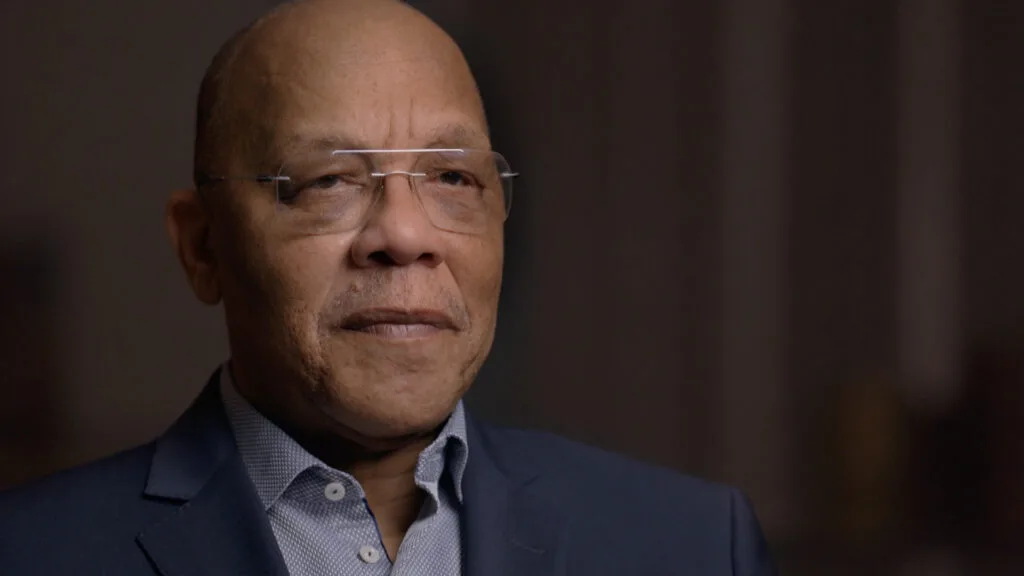
Jonathan Blitzer is an immigration reporter for The New Yorker. His reporting and writing has also appeared in The New York Times, The Atlantic and The Wall Street Journal. Blitzer received the 2018 Immigration Journalism Prize from the French-American Foundation.
This is a transcript of an interview with FRONTLINE’s Gabrielle Schonder conducted on June 21, 2019. It has been edited for clarity and length.
So, Jon, let’s go back for a moment to Sen. Sessions, who he is in the Senate, what his vision is for immigration.
Jeff Sessions, when he was in the Senate, was always on the outer fringes of the Republican Party, never even entirely taken seriously, even by the hard-liners within the Republican Party.This was someone who wanted to completely retool the legal immigration system, is described aptly as a restrictionist, someone who very much had an ideological vision for limiting who and how many people came to the U.S.And for the most part, his role in the Senate was more as scuttler of deals and of immigration bills and of consensus, less as a dealmaker himself, because he was really just so out on the fringes.
His protagonism in the Senate, as it were, very much revolved around kind of key moments in legislative negotiations on comprehensive immigration reform.And he would surface kind of just at the key moment in which to scuttle a deal, to attack it, to kind of rally the conservative base at a time when the Republican Party was very much susceptible to getting spooked by elements of their right-wing base.
So in 2013, you have comprehensive immigration reform.It actually passes out of the Senate, despite Sessions’ best efforts to stop it.It makes it into the House, and there are a majority of congressmen who would actually support that bill, but the Republican speaker at the time, John Boehner, won’t bring that bill to a vote.
But very much Sessions’ role in all of that was to continue to press on the party’s right-wing base to really egg on some of the right-wing Republican congressmen in the House to get everyone aligned in opposition to that immigration reform bill.
Stephen Miller in Sessions’ Office
And he’s got some help.Stephen Miller is somebody that he’s working with at the time.Can you give us Stephen Miller’s story?
I mean, Stephen Miller, in Jeff Sessions’ Senate years, Miller is a totally obscure figure.I mean, he’s obviously a young guy.He’s young now; he was even younger then.Stephen Miller was Jeff Sessions’ communications man.So he wrote speeches; he worked on messaging.He, to some degree, was helping shape policy, but more than anything else, was just trying to be a mouthpiece for this Sessions vision on immigration.
In 2015, it is worth pointing out, in January of 2015, Jeff Sessions puts together a document, presumably with the help of Stephen Miller, called the “Immigration Handbook for a New Republican Majority.”And so at that moment in time, the Republicans have just retaken the Senate.And Jeff Sessions’ view, and the view of his office on immigration and how immigration kind of plays into national politics, was that in 2012, the key mistake that Republicans had made, the key mistake of Mitt Romney’s presidential campaign, was, in the view of Jeff Sessions and his acolytes, that Romney and the GOP hadn’t gone far enough to the right on immigration, which is a significant position to stake out, even in 2015, because the general read among Republican operatives, media pundits, everyone—I mean, it really was a pretty widely shared view—that the Republicans had erred in 2012 by already going too far to the right.
So the lesson everyone took from 2012, from the 2012 election, was the Republicans really have a problem in no longer appealing to a broad enough swath of the American electorate.And the only person who did not see sort of eye to eye with most establishment thinkers on that was Sessions.
So Sessions puts together this document that basically outlines, more or less, in rough form, a lot of what we’ve seen the Trump administration pursue: you know, changing the legal immigration system, increasing enforcement in different ways, trying to retool aspects of the asylum system.Some of the rhetoric that we see now, some of the legal justifications and rationales for major policies, like the cancellation of DACA [Deferred Action for Childhood Arrivals] for “Dreamers,” things like that, are all outlined in this policy document in 2015.
And the reason I bring it up in relation to Stephen Miller—and I actually have to say, I don’t know specifically how involved Miller was in the creation of that document; I always just associated it with Sessions, who kind of peddled it on the Hill at the time.The reason I associate it with Miller is, as much as it is a policy document, because the ideas are so much in the wilderness in terms of what was ever considered even remotely feasible in Washington, that document was also a messaging memo for the party, kind of saying to everyone: “Look, this is how we can kind of reclaim the national debate.We can use immigration actually to kind of burnish our credentials with key parts of the electorate.”
So it’s a very interesting moment.Sort of the party itself is at a crossroads.Everyone in the party looks at what’s happened over the last few years—President Obama’s success, the party’s kind of inability to field a serious candidate for a general election—and there’s Sessions, who’s kind of out on his own plotting that course, which, quite amazingly, ends up being the course that the president now takes.
Who is Gene Hamilton?
Let me ask you about Gene Hamilton around this time, because you’re one of the few people that can sort of tell us about who Gene Hamilton is.But really, at this moment…
Well, Gene Hamilton is the chief counsel to Jeff Sessions at that time.And so what you begin to have in Jeff Sessions’ office is a kind of breeding ground for these young ideologues who will end up having now an outsize role in the current administration’s policies.
So Gene Hamilton is someone who tends to be overshadowed by Stephen Miller.In fact, I have never seen, met, heard from Hamilton at all.For much of the time I’ve spent reporting on Hamilton, until I learned some of the more particular details about him, I always assumed he was an older guy.In fact, he’s young, a little bit older than Miller, and is someone who is sort of much more mild-mannered by comparison to Miller, but is someone who is invested as a lawyer in figuring out which levers to pull to generate the policy outcomes that Jeff Sessions wants.
Miller is sort of this white-paper guy.He’s got the messaging down.He’s a communications flak at his core.But ultimately Hamilton brings an understanding of how ICE [Immigration and Customs Enforcement] works, an understanding of how the immigrations court works, an understanding that together they are able to sort of elevate their strategy.
You know, it’s actually a really interesting question.I’ve always wondered—even now I’m still not entirely clear on how people with such limited experience in government have been able to drive policy on such a massive scale as they are now.I mean, there—certainly in the Trump orbit now, people like Stephen Miller, people like Gene Hamilton are considered the experts.They’re considered the seasoned legislative experts and policy experts, which says something about the administration’s general level of expertise, that these guys in their mid-30s who have very limited experience on the national stage and are very—they’re very much expert at specific kind of slivers of the immigration conversation.
And so for a while Stephen Miller was known as the walking—within the White House, that is—was known as the walking encyclopedia on immigration policy.And to some degree, that’s right.Miller is extremely fluent in a certain line of argumentation around immigration.Whether he’s talking about refugee resettlement, whether he’s talking about asylum practice, whether he’s talking about ICE enforcement, he is extremely fluent and steeped in those sorts of details.He’ll quote reports.He can drop numbers and figures.Oftentimes it’s head-spinning to hear or to see because, in fact, the body of information he’s drawing from is a fairly unique body of information in the broader literature on immigration policy.So he’s getting white papers and information and sort of policy leads from places like the Center for Immigration Studies, which is a think tank that’s been very influential in the Trump administration, that has put forward all sorts of ideas to restrict legal immigration, to increase enforcement, to retool asylum policy.
So these guys, what they bring is a deep knowledge of those kinds of conversations.And those kinds of conversations, for years, didn’t even intersect with the mainstream discourse on this policy.And so for years, it sort of didn’t matter that they had all of this random know-how.But suddenly it becomes very important when the Trump administration takes office.Even in the transition, Gene Hamilton was actually presiding over a team of about a dozen people who were thinking through who was going to staff the different departments and agencies in order to prosecute this broader immigration agenda.
So these guys suddenly have a great deal of influence over the current administration.And one thing that I think actually gets lost—and this became a source of fascination for me reporting on Gene Hamilton—is what his influence looked like at the Department of Homeland Security in his early days.
So what happens to Gene Hamilton is, the administration takes over.He begins at DHS as a senior policy adviser.And what that ends up looking like in practice is that he travels around with the secretary, John Kelly at the time, and kind of primes him on what the key sort of policy priorities are.And immigration policy is very wonky; it’s really esoteric.And that’s, I think, something that’s often forgotten in all of this, because we all, as general public, tend to understand immigration policy through a kind of values debate that plays out in the political sphere.But the actual policy, the nuts-and-bolts policy, is extremely specific and extremely hard to kind of master fully.
And so one of the things that I always wondered was, OK, how does a four-star general like John Kelly effectively take orders from or defer to, you know, a kind of untested, unknown, 30-something-year-old lawyer?And this is a question I asked a lot of people—at DHS, at the White House, in the administration: You know, what was that dynamic like, even interpersonally?And what I heard, on the whole, was that Kelly would increasingly defer to Hamilton when technical questions would come up.So maybe they’d be traveling together, they’d be in Texas at the border, and a local official would ask the secretary a question, and Kelly would sound out an answer and kind of suddenly look to Hamilton to make sure he had the details down.
And so these guys who really, again, were fairly untested, but who were so ready to be on the scene with their ideas and with their agenda, were able to supply those answers on the fly.And it’s obviously well known now that the early days of the Trump administration, particularly at DHS, were chaotic and confused.And so the idea that there was a core group of people who had answers on the ready and who were eager to help fill in John Kelly as he was navigating this massive federal department explains how some of those ideas quickly took hold.
Stephen Miller and the Trump Campaign
Really quickly, let’s go to the campaign for a moment.Stephen Miller is warming up crowds before Trump’s speeches.Do you remember seeing this?
Yeah.I mean, Miller—it’s funny; I recently asked an administration official how Miller—how Miller’s managed to stay on all of this time.I mean, everyone else kind of—who seems to fly too close to the sun burns out and is no longer in the administration, Steve Bannon being one example.I’ve always wondered, OK, Miller has actually become increasingly prominent in the public eye.How has he managed not to upset a president who’s known for wanting to, you know, sort of hog the spotlight for himself?
A lot of it, I’ve been told, has to do with Miller’s experience on the campaign, writing those speeches for the president.Tonally, it was right in the president’s wheelhouse.I mean, for anyone who went to any of those rallies, I mean, even just—one thing that I don’t think is mentioned enough is just the physical feat of some of those barn-burning speeches from the president.I mean, he’s going on for 75 minutes, 80 minutes, I mean, at effectively a shouting kind of pitch.And obviously a lot of the language of that is coming from Miller.And that’s where I think he proves his importance to the administration, his loyalty to the president.And that’s very much stuck with everyone around the president, that Miller is a guy who has been around Trump more or less from day one, and who has been giving Trump the script that has helped him transform himself into this figure.
DHS Leadership
Let’s go actually to those early days at DHS and DOJ [Department of Justice] and the White House.These are moments in which I think you’ve written Miller is taking advantage of the disarray and is taking advantage of sort of these power vacuums that have kind of now opened up.Can you describe what’s happening?
Yeah. There are a few different ways of looking at it.And again, this is where immigration policy becomes this sort of sprawling topic that has different applications in different departments.
At DHS, I think some of the key things that began to happen in the early days were obviously the travel ban, which was rolled out extremely quickly, and I think definitely against the better judgment of some of the top brass at DHS.And so it’s fair to say that Miller, Hamilton, all of those guys have their fingerprints on the initial rollout of the travel ban, which I think was widely seen to be a failure.And that, I do think, speaks to their inexperience and their ideological zeal, that they are so quick to want to get out of the gate with some big kind of banner policy that, you know, there are kind of obvious policy questions that a more seasoned administrator would think to ask and think to iron out beforehand, and these guys don’t.
So in the early days, the idea that a policy like that could sail through the upper echelons of the Department of Homeland Security is quite a remarkable thing, quite unprecedented, as far as I know.And I do think it reflects the fact that in the general chaos of the new administration, these guys saw an opportunity to press their advantage.
And I think it’s fairly widely known, as aggressive as John Kelly was in his role as secretary of homeland security, I do think, on the whole, he was blindsided by how the travel ban played out.
But then, moving into different areas, again, immigration policy is wonky, and it’s esoteric.And so these guys knew, more or less from day one, what it was they wanted to do.And, you know, where do they get these ideas from?Some of it is from their time in Jeff Sessions’ office.So I think back to “Immigration Handbook for a New Republican Majority.”Some of these ideas come out of that document.Other documents and kind of white papers that are influencing their thinking in this atmosphere of generalized chaos are coming from the Center for Immigration Studies, other so-called restrictionist, far-right, anti-immigration think tanks.
At DHS, a key policy that actually has major, major implications for how immigration enforcement works is an executive order signed in February of 2017 that basically overhauls the priorities for how ICE enforces immigration law.And so what you had by the end of the Obama administration was actually a sense almost of sort of tiers of priorities for how ICE goes about its business—who does it go after; who does it consider such a low priority as to basically leave alone and be able to say, OK, just live your life; you can even, in some cases, get authorization to work because you’re such a low priority for us; you’ve lived in the community for a long time; you’ve never committed a crime, you know, this sort of thing.
One of the first things the Trump administration does a month after the president takes office is it guts those priorities and basically says, OK, we can go after whoever we want.And that speaks very much to what the vision is of these guys in Sessions’ orbit—wanting to unleash, I think, on the whole, a sense of fear, a sense of a kind of sea change from what previous administrations had done.Obviously there was a component—where ICE is concerned, there was a component of the rank and file bristling under the Obama-era priorities, and so, feeling like, OK, finally we’re unfettered; we’ve been waiting for this moment.
So you have that at DHS.You also have, importantly, for me—and this is a kind of, I think, a key window into how Miller begins to get his sea legs in the administration—the annual refugee cap.So every year the federal government decides more or less a kind of notional ceiling for how many refugees it wants to resettle in the U.S.The number can come in below that; it can even come in slightly above that.But it’s more or less the target.And that target is important because it helps funding for resettlement agencies.It sends a major message to American allies in conflict zones across the world, that, OK, we have a commitment to resettling refugees.Sometimes that means resettling people who have helped the American military in war zones.It is a policy that really reflects a consensus among national security agencies, the State Department.So the decision-making process is built out of the NSC [National Security Council] within the White House in conjunction with the State Department.
And so, in the late summer of 2017, you have an atmosphere, again, of chaos, of uncertainty.At the State Department, you have Rex Tillerson, who’s sort of been at odds with the president and seems to sort of be floating around without a kind of clear definition of what it is he expects and wants to be doing in that position.At the NSC, you’ve had all sorts of chaos—you know, [Michael] Flynn gets knocked out almost immediately.There’s kind of been this quick churn of other people presiding over that apparatus in the White House.And Miller sees an opportunity to slowly insinuate himself into this process.
Now, at the time, Miller is the head of the White House Domestic Policy Council, which is not typically a body within the White House that concerns itself with the refugee ceiling, which is largely seen as an element of an administration’s foreign policy.But Stephen Miller slowly starts to insinuate himself into this process, and he does it in small, measured, technical ways that actually suggests that he really, within a limited amount of time, has learned how to begin to prosecute his agenda by using the federal bureaucracy sort of against itself.
And so what does he do?He edits policy documents that come out of the working groups at NSC and at the State Department… He wants to lower the number of refugees who are resettled in the U.S., and he’s basically determined to limit any evidence that suggests that there are some benefits to that.
And so, for example, the Department of Health and Human Services is commissioned to look at the costs and benefits of resettling refugees in the U.S.So what does Miller do?When the report comes in and it shows that overwhelmingly the benefits of resettling refugees outweighs the costs, he suppresses what the benefits are.And so that report gets kind of rewritten and edited, and what comes out of it, rather than this cost-benefit analysis, are just the costs of resettling refugees.
And that’s how he kind of works his way into this process—quietly, actually thoughtfully.Gene Hamilton is also working with him at this stage.DHS has input into the process.
So that’s how these guys start to take advantage of this landscape that’s been upended by the Trump transition in the early days of the Trump administration.
What you describe is Sessions staffers who are populating several different agencies that are all sort of in collaboration with one another to advance some of these earlier immigration plans that they had back in the Senate.
That’s right.I mean, you’ve got Sessions people in key posts at DHS, key posts obviously at the White House.You increasingly have Sessions’ influence at DOJ; he’s obviously as attorney general at the time presiding over the Department of Justice.Even, you know—and then you can go into any of these federal departments, and there are subagencies.So you take the Department of Homeland Security, and you’ve got DHS leadership, policy advisers, but then you get to, for example, USCIS, which is Citizenship and Immigration Services, actually a hugely important agency in terms of doing work on the legal immigration system.And people also start to populate that agency who have a vision that’s very much aligned with Sessions’.
And so you get to a point where this kind of cabal of anti-immigration ideologues kind of has its hand in enough of the key agencies to really be shaping and guiding policy.
So it’s not that different than a new administration coming in and bringing in friends from the Hill and advisers that have worked closely with the heads of agencies.But this a little bit different, because certainly the amount of experience associated with a lot of these guys is pretty—it’s pretty limited.
Yes.And also it’s important to say, people who are at cross-purposes with them at this time, I mean career guys, people who have spent a lot of time at these agencies, who are seen as respectable career officials that don’t have a particular party affiliation, they’re marginalized.If they speak up, they’re forced out.They’re often humiliated inside these offices.
And so it’s not just that, OK, we have a kind of new vision washing into these agencies.It is a completely radical vision that’s coming into these agencies, and anytime people are trying to pump the brakes, they’re getting overridden and completely cut out of the process.
The Dreamers and DACA
... Dreamers to these guys was something that early in the administration and really during the transition was something they wanted to act on pretty quickly.
That’s right. That’s right.
Tell me a little bit about that.
These guys came into their positions in the Trump administration, and in fact even during the transition, very much with their sights set on ending DACA and ending the Obama-era special protections for Dreamers.As early as—I mean, again, the conversation came up during the transition, but some of the policy conversations began even in February of 2017, which is notable, because DACA is not canceled.And we can go through the actual timeline of it, but DACA isn’t canceled until—officially until September 2017.
And there’s a key moment in the narrative of how DACA gets wound down, and the administration really tries to hew to this narrative for as long as it can.And the narrative is this: The narrative is, in June of 2017, the attorney general of Texas, Ken Paxton, leading nine other state attorney generals [sic] from deep red Republican states, writes a letter to the Trump administration—specifically to Jeff Sessions—and says, if you don’t work to cancel DACA as you promised you would on the campaign, we are going to sue the federal government on the grounds that DACA represents an overreach of executive authority, because it was brought into existence by executive action; it wasn’t ever brought into existence by congressional action, by law.And you’re going to have to deal with our lawsuit.
And so the Trump administration says, well, what choice do we have?We have to fend off this lawsuit.We’re going to consult with our advisers, our legal counsel.What our lawyers tell us is, we probably couldn’t win in court if we wanted to defend DACA.So the administration is trying to create this image of a kind of conflicted, sober-minded policy entity at a time when, sure, the Dreamers pull at the heartstrings, but we have to think about rule of law; we have to think about kind of what the legal implications are of the DACA program.
That’s the narrative.But of course, then you go back in time and you think, OK, so these guys come into office already knowing that DACA is something they want to put an end to.Sessions, Hamilton, Miller, these guys have explicitly talked amongst themselves about it, and in many cases have been on the record and were known to be opposed to DACA.
And so then the question becomes, OK, to what extent were they in on this scheme among these Republican attorneys general to kind of create this elaborate pretext for ending DACA…
And then what happens, too, is, once that letter is publicly announced, obviously it causes a major uproar in Washington and across the country.The Dreamers are overwhelmingly supported by politicians in both parties.And so you then have 20-something Democratic attorneys general who write a letter, similar letter, to the White House and say, look, we are going to sue the administration if it ends DACA.And you think, OK, what’s the White House and DHS and the DOJ, what’s their posture going to be in light of this other lawsuit threat?If they’re so concerned about lawsuits, you know, now you have lawsuits threatened by both sides.
What adds context to this is, after the Republican attorneys general issue their first letter in June of 2017, Gene Hamilton has a number of follow-up conversations with people in Ken Paxton’s office in Texas.And when asked about it later, he says, “Well, look, I’m just doing due diligence here; I’m following up.We received a letter threatening a lawsuit.I wanted to understand kind of what the broad parameters were of that threat; I wanted to get a sense of the contours of their legal case.”
It maybe strains credulity a bit to think that that was the nature of those phone calls.But then, when you have 20—which is to say, more—attorneys general from Democratic states threatening a lawsuit, one month later in July, there is no conversation at all.There’s no communication between Gene Hamilton or other members of the administration and these Democratic attorneys general.
So you have a sense that this was a kind of prefabricated plan for ending DACA.
I think [Sen. Dick] Durbin asked Sessions in a hearing at one point, “Did you collaborate and have you been in touch with the attorney general of Texas on plans to roll back the DACA program?”And Sessions—I don’t know if you’re familiar with this, but Sessions sort of shies away and says, “I can’t answer that question; it’s attorney-client privilege.”
I mean, I’ll say one extremely telling thing for everyone following this at the time was, the day the Trump administration officially cancels DACA, September 5, 2017, the person who comes out to give the speech is Jeff Sessions.Now, for a thing of this magnitude, you’d think the president would do it himself.The president at this point had sort of cowered from this particular policy debate.He wanted to create the impression that he was someone who had, in his words, “heart”; that he found the Dreamers to be a very meaningful constituency in the U.S., regardless of partisan kind of tilt or associations.
The president can’t stomach that particular announcement.But the person who typically would come out and give a statement on the cancellation of DACA would be someone from the Department of Homeland Security.It would be the acting head of the Department of Homeland Security at the time.That person does not come out and make the speech.The person who comes out and makes the speech to announce the cancellation of DACA is Jeff Sessions.And to everyone who’s following this drama, it reads very much as Jeff Sessions taking a kind of victory lap and claiming ownership over this particular cancellation.
And the speech itself is actually a radical speech.I mean, it was a radical policy to cancel DACA, but the actual argumentation that Sessions lays out in his announcement is really so far beyond the pale of what the conversation has ever consisted of with regard to DACA that is itself striking and says a lot about his intentions all along.
So rather than saying, “Look, we really support these people; we want there to be a legislative fix so that we can regularize their status in this country, but unfortunately we just don’t find the legal rationale to be tenable under the threat of a lawsuit,” I mean, they’ve created this whole elaborate pretext precisely so that he could come out, or someone in the administration could come out in September, and say that.
Sessions instead opts for a different tack entirely and says—first of all, refers to them as “illegal aliens,” does not refer to them as “Dreamers”; makes a number of points that are widely seen to be completely unsubstantiated: that DACA recipients contribute to crime, which is demonstrably untrue, and in fact built into the program is the fact that you can’t have a criminal conviction if you qualify for DACA.But he says this, thereby linking the Dreamer population to this broader kind of mass of undifferentiated immigrant that the administration is trying to paint as kind of criminal and dangerous.He also says that the DACA program incentivized illegal immigration to the U.S., something that has also been widely disproven.
But the reason I lay these things out is to just say that, you know, here was an opportunity for the administration to sort of keep its cards relatively close to its vest and try to at least maintain this fiction that they themselves had invested in setting up over the previous several months.And Sessions cannot resist, and so comes right out of the gate with all of these big, dramatic arguments, ideological arguments, for why DACA couldn’t remain in place.
Jeff Sessions’ Role at the White House
We kind of flew through this, but we’re pretty far past the point in which Sessions has recused himself because of the Russia investigation.His influence within the White House and with the president has kind of diminished.The president has publicly criticized him.And yet, what’s he doing at Justice?It’s not as though his power has decreased.In fact, he’s pretty hard at work throughout ’17.Can you tell us a little bit about Justice and just the flurry of activity happening there?
I mean, Jeff Sessions is the nerve center of the Trump administration’s anti-immigration agenda, then and frankly now, because the legacy of what he’s done is quite far-reaching.So it’s true.I mean, the president is kind of trashing him because of his recusal from the Russia investigation.That actually makes hard-line anti-immigration conservatives uncomfortable, because for them, Trump was untested on the immigration stuff.Trump was sort of all hard and bravado and rhetoric on those issues but didn’t necessarily have a track record, certainly didn’t demonstrate a kind of policy, any familiarity with policy.So Sessions, for all of those guys, was the kind of guarantee, the proof that Trump actually would do the things they wanted on immigration.
And Sessions wastes no time once he takes over at DOJ.I mean, he’s involved, again, in the travel ban and retooling the travel ban to make it sort of legally passable in light of challenges.He’s obviously behind the DACA cancellation.He is pretty systematically retooling the asylum system.One expert said to me that Jeff Sessions, through a combination of his actions, had effectively in his time at DOJ eliminated 60% to 70% of asylum jurisprudence built up over decades.
And so he’s doing that through a number of different ways.He’s referring some cases back to himself, so there’s a kind of a technical authority that the attorney general has as head of DOJ to refer cases that are before a board, called the Board of Immigration Appeals, back to himself for review.So he takes a disproportionate number of these cases to review for himself, much more historically than any other attorney general has ever claimed for himself for adjudication.And in these rulings, he does things like limit the terms on which people can seek asylum.Major decisions.I mean, talking, for example, about how people can’t qualify for asylum if they’re the victims of domestic abuse or gang violence, which a huge proportion of people in, particularly in Central America, would claim if they were seeking asylum.
And the jurisprudence over the years has expanded to include a broader array of justifications for seeking asylum.So Sessions does his best to stamp those out and to really restrict the cases that people can make for why they need asylum.
But he’s also working to put pressure on immigration judges, limiting their discretion in deciding some of these cases; making them decide cases faster; doing other things like limiting their ability to administratively close cases.So actually he does even more than that: He forces immigration judges to reopen cases that had been closed.
So Sessions—what matters with Sessions is that he has a vision that Trump doesn’t.Trump goes out on the stump and says, “I want to deport record numbers of people,” and anyone who knows the kind of policy side of this realizes that, OK, that sounds tough, and that sounds dramatic, but it’s actually quite hard to deport that many people because there are administrative and bureaucratic hurdles.
And so what Sessions is doing simultaneously is he is starting to pull all of the relevant levers to make sure that there are no impediments to mass deportation, so, you know, assigning more immigration judges to hearing these cases; increasing the number of cases they have to hear; restricting their ability to exercise discretion on removal orders.All of these things, he is attacking this issue from every side.And he’s, in fact, wildly successful in doing this.
And now a lot of these measures that he’s put in place continue to be operational, even as he’s left the Department of Justice.
Ending DACA
Something that we danced around a little bit with Trump on DACA is that the president doesn’t actually want to do this.He is actually opposed to rescinding DACA at certain points.And Sessions knows he has to sort of push him to do that.And so the attorney generals’ suit, kind of working as a tool for Sessions to force the president’s hand?
Absolutely.That attorney generals’ suit arises in response to the fact that the president, despite his vows on the campaign to cancel DACA, seems to be waffling in the early days of his administration.So the president on something like DACA—I mean, President Trump does not have a particularly ideological vision on immigration.From a policy standpoint, he does not have things that he particularly understands or wants to see effectuated.It’s Sessions, and in this case those attorneys general who recognize that, OK, if the president is waffling, we’re going to have to hold him to account.And that’s what they do with that lawsuit. …
… I don’t know if we talked about Gene Hamilton specifically writing the memo on DACA.
Yeah.
Do you know that story?
Yeah.So the memo that ends up getting signed by the acting head of DHS and becoming the kind of official justification for the end of DACA is actually a memo that is drafted by Gene Hamilton, which just kind of brings us full circle.These are the guys who are kind of quietly doing their work, and the actual document that is kind of held up as the kind of administration’s stance on DACA is something that has been kind of workshopped, crafted and honed by Hamilton.
John Kelly
Let me ask you about [John] Kelly right here for a moment.We’ve had some trouble sort of understanding who Kelly is on immigration at this early stage.And maybe it’s clear to you who he is at that point. But early on—
… So in the early days, because the message of the Trump administration on immigration was so uniformly dark, I think there was a broad interest in whether or not any of the incoming Cabinet secretaries would show some sign of moderation.And so Kelly seemed to show those signs in the early days.
How did he show them?For one thing, it was widely suspected that the president and kind of his key allies in the Sessions orbit would want Kris Kobach, this notorious anti-immigration hard-liner from Kansas, to be a deputy to John Kelly at DHS, and Kelly said: “Absolutely not.I will not have that guy being my deputy.”
And so when news got out about that particular decision that he made, it was—it seemed somewhat heartening, that, OK, maybe that means that there’s a kind of deeper vision here.And there were times, too, when John Kelly would communicate a healthy skepticism of the wall as a solution to immigration problems in the U.S.He is someone whose experience led some people to believe that, you know, perhaps he would think through some of the deeper causes of immigration.You know, he used to be the head of the military’s Southern Command, which is to say he had experience in Central America during the Obama administration.So there was the thought that maybe given that experience, he would have a worldlier view where immigration policy was concerned.
But I think through it all, Kelly has always been a very tough-minded, conservative thinker on immigration enforcement.And from day one, that is the secretary that he was.Again, as I mentioned earlier, one of the first things he does at DHS is he guts the enforcement priorities and guidelines that were created during the Obama administration.He comes to the defense of rank-and-file immigration officers saying that they’re just doing their jobs; they’re patriots; they’ve been kind of muzzled before; they’ve been restricted in how they do their work.Finally we’re going to let them do what they do best.
He shows a real willingness to go right into the fray on immigration stuff.And I actually think that’s very much been his legacy.I mean, he will go down as one of the harsher, tougher-minded secretaries in recent memory.And I don’t know that I ever saw the moderation that we all hoped he might show in his time there.
Zero Tolerance and Family Separation
Let’s go to “zero tolerance” and family separation.I’m curious if the increase in numbers is the reason why that announcement is made then.Why don’t we talk about the announcement first and then we can kind of go into how it happens?
Well, so the fundamental sort of underpinning of zero tolerance, there are sort of two lines of thinking that feed into it.The first is a kind of classic Jeff Sessions line of thinking, which is, we need to get tougher at the border by prosecuting as many people as we can who cross the border illegally.
And so Sessions actually, even before the official announcement of zero tolerance, had actually publicly spoken about increasing the criminal prosecution of border crossers.And that ultimately was the kind of ostensible rationale of what zero tolerance was.The idea of zero tolerance was we—anyone who crosses the border illegally is going to get criminally charged.
So that’s one line of thinking that feeds into the ultimate announcement in April of 2018.
The other thing that’s happening simultaneously to all of that is key departments and agencies within the Trump administration are thinking about how they can toughen enforcement at the border.And this gets to your point.In the early months of the Trump administration, apprehensions at the southern border, which are generally taken to be an indication of immigration flows to the U.S., seems to dip.And people talk, I think actually fairly, about there being a kind of Trump effect in the early months of his administration; that smugglers and migrants themselves are kind of waiting to see what this new administration is going to do.Here was a president who campaigned on an unprecedented sort of anti-immigration platform; how tough is he going to actually be?
And so in the early months, there is a dip in the number of border crossers, and the president I think is sort of quite satisfied and thinks that he single-handedly has completely changed immigration patterns in the region.
No one who knows anything about this thinks that those—that slight dip will hold.And so everyone knows it’s only a matter of time before those numbers creep back up… And when they do, the president really gets upset.And so he starts to thunder increasingly against members of his administration, publicly, about the need to curb immigration flows at the border.And so in response to all of that, you start to have policy conversations in these different agencies, at DHS primarily, about, OK, how can we toughen our enforcement mainly to try to deter other immigrants from coming north to the U.S. to seek asylum?
Now, the idea of deterrence is not new by any stretch of the imagination to the Trump administration.Every U.S. administration has always thought about immigration enforcement in terms of deterrence, in terms of sending a message to people coming to the U.S., that, OK, there actually—there are—there are going to be consequences if you cross illegally, if you don’t go through the appropriate legal channels.
Where different administrations have varied in their actual enforcement agendas has been kind of where they draw some of those lines, to what degree they’re willing to see toughness as a means to the end of deterrence.And so, for instance, the idea of separating families at the border is an idea that had come up before, but was always seen in past administrations as being just far too harsh and, frankly, un-American.And what you begin to get in the Trump administration is all of these ideas that in the past were kind of floated as part of sort of a general brainstorm, the things that were really on the absolute outer fringes of the conversation that people were historically uncomfortable with even imagining, those ideas get dusted off and pursued more actively.
And so, in the summer of 2017, there is a meeting in August at DHS that is presided over by Gene Hamilton in which he has gathered together all of the different agencies of the department—ICE, Customs and Border Protection, policy advisers, people from across the kind of spectrum of what DHS’s responsibilities include—and he basically says to them, “Look, we want to come up with a raft of new policies that can toughen enforcement at the border and drive down some of these immigration flows that seem to be creeping up.”
And one of the ideas that comes up in that meeting is family separation.And people who were present in the meeting say: “We were very uncomfortable with the tenor of the conversation, with the way in which family separation was brought up.It seemed like it was brought up as a kind of preordained policy.It was brought up as though we needed to come up with a kind of post hoc rationalization for why family separation would be appropriate.”
And the people who attended that meeting are tasked with drafting a handful of memos, 10 memos, laying out some of these different policy options.One of them, of course, is family separation.That idea itself kind of gets held up for a while because it is just so beyond the pale of what U.S. policy can consist of.And in fact, earlier that year, in March of 2017, John Kelly himself, in a public appearance on CNN, floats the idea of possibly separating families at the border as a way of deterring future immigration, and the blowback is immediate, and it’s fierce, and John Kelly immediately walks back that potential proposal.
And so there is a sense that, OK, this is going to be a controversial idea; there is going to be pushback.But in March of 2017, when John Kelly first floats the idea and is kind of chastened by how—by how furious the response is, and August of 2017, there’s obviously been enough of a change that members of the administration think, OK, we can actually seriously pursue this.And that is what people like Gene Hamilton and others are pressing the administration to do in the summer of 2017.
Kirstjen Nielsen
Trump also at this point is furious with [Kirstjen] Nielsen.We haven’t talked about her, but in this moment can you plant her in the story?
The president’s frustration with Nielsen has always been kind of a head-scratcher for people following this stuff, because Nielsen from the start proved herself to be a willing and able enforcer of the president’s immigration agenda.And it’s all the more striking that she was not an ideologue coming in to that position…
So she is doing pretty much everything the president asks.She’s enthusiastically championing his lines, sometimes to an unseemly degree, sometimes seeming to politicize the post of DHS secretary which past secretaries have always avoided.You know, it’s a relatively young department.DHS only comes into existence in 2003.
And so there is always a sense among DHS secretaries that, OK, we don’t just have a particular policy agenda and we don’t just serve a president, but we have to create a sense of institutional inevitability around this department.We have to communicate a certain apolitical gravitas.
And so, historically, DHS secretaries, however much they are just executing the agendas of the sitting president, have avoided seeming to be too political.They’ve tried to sort of stay a little bit away from the political fray.She doesn’t.
So she does all of these things to prove her loyalty, but the president associates her leadership of the department with the increase in immigration numbers at the border.And I don’t know what to say other than it’s just a kind of unfortunate, for her, issue of timing.She takes over at DHS around the time that the numbers creep up at the border.And so the president kind of has from the start this feeling that she’s not tough enough.
The real core group of deeply pro-Trump advisers in the administration, the people who came up with Trump, who were part of his campaign, who were part of the transition, they’ve always been distrustful of Nielsen.They’re distrustful of Nielsen because she represents to them the kind of establishment Republican position that is so antithetical, not only to what they’re about, but to kind of their whole ethos and mission.And they feel very much judged and kind of mocked and ridiculed by that establishment Republicanism.To them, Nielsen is an example of the “Never Trumper” kind of mentality.
Now, she never herself came out and was so explicit against Trump when Trump was a candidate, but some of the people who she—who had mentored her over the years were outspoken Never Trumpers in the early stage of the Republican primaries.And so the Miller types in the administration see Nielsen as someone who is possibly going to be shifty on executing the president’s agenda.They distrust her from the start…
So she does have—she does have this kind of drama that predates her as she comes into the role.And then, of course, she comes in; the immigration numbers start to tick up.Those immigration numbers ticking up at the border have, of course, nothing to do with Kirstjen Nielsen assuming the post of DHS secretary, but it all kind of ends up being part of the case against her.
Backlash to Family Separation
So right here Sessions, though, is defending family separation publicly.He’s quoting the Bible in his defense.He’s about to lose the president on this because the president is hearing from moderate voices that—and seeing the coverage of this—that there is a different reality playing out in the public sphere, and he in turn decides to end this.The rebuke that that is to Sessions and to Miller and to that camp?
It’s an interesting question.I never actually thought of it as such a rebuke to them and to their vision.You know, it’s true that—it’s true that their public representation of zero tolerance was disingenuous in the extreme.I mean, they would say—and Nielsen, for that matter, continues to say—that they never had a family separation policy; their only policy was to prosecute illegal border crossers.
Now, that’s manifestly false.And the consequence of prosecuting people who cross the border, prosecuting them with criminal penalties, is that they are separated from their children.And the idea that they’re going kind of try to be legalistic and say, “Well, we never actually had a family separation policy; we had a zero tolerance policy,” is absolutely absurd.No one had any illusions about it.
But I do think that there obviously, there was a moment at which the kind of general-public discussion caught up to those lies, and it became manifestly clear that zero tolerance equaled family separation.
The president—I mean, you’re right that the president is a rebuke to those guys and their vision insofar as he’s forced to back down.I don’t know that the president really kind of came around on the moral case against family separation.I think he wanted to, you know, lower some of the political pressure that was brought to bear on him and his administration.There were legal challenges that were also moving quickly through the courts and, in fact, more or less simultaneously to the president’s announcement that family separation was, as such, was going to end.A federal judge in California halts the family separation policy.
So yeah, I think, you know, it was an attempt that the president makes to kind of try to change the optics. …
I think what was significant about the president coming out and publicly saying, ”OK, OK, we’re going to reverse course,” is more the fact, as you say, that the president had to briefly recalibrate.And I think this is a trend that you do see around Sessions that I think is important, which is Sessions is so far beyond the mainstream conversation on anything related to immigration that pretty much any time you pursue a Sessions-type policy, the response is going to be absolutely furious.
The problem is, a lot of the policies that Sessions has pursued have not been as visible.They’re technical things.They’re things that immigration reporters are following or advocates are following; immigration lawyers are following—obviously immigrant families are feeling.But they’re not things that have that much broad public or mainstream traction because they’re technical.
The family separation is an example of something that actually—it was kind of the right sort of vector to reach public consciousness.But I do think it’s a trend that you have with anything associated with the true believers, the real ideologues in the Trump administration, that they overreach.What they want is so far beyond not only what is morally acceptable, but what is legally possible, that they’re going to hit roadblocks.
And so actually, if you kind of, if you look back over the things that Sessions and the administration have pursued in their time in the Trump administration, if you look back at all of that kind of through the lens of that moment of Trump having to momentarily reverse course on family separation, or at least publicly say, OK, we’re no longer going to separate families, you start to see all of the kind of wreckage of Sessions’ extremism on these issues.The travel bans, which get held up in court for a while—now, they end up passing legal muster, but have to be substantially retooled. …
DACA ends up getting held up in the courts because the administration has kind of jumped the gun on their cancellation of the program and a federal—several federal judges say, look, you guys didn’t do the relevant analysis to prove that ending a federal program for close to 800,000 people will not have an oversized public harm.
You know, if these guys were more methodical, if these guys did think in more acceptable ways, legally and morally, I think there might have been a kind of more careful agenda that could be built up quietly over time that would withstand legal scrutiny.But what you see is that these guys get so ahead of themselves because they have such ideological visions for how this policy should play out that there ends up being massive controversy.
And I think the family separation policy, you know, remains the kind of, sort of defining moment for this administration’s immigration policies and the public consciousness and, finally, the broader public thinking, wait a second; this is just absolutely beyond the pale.
I expected the DACA response to generate this kind of level of public outcry.But again, because the DACA cancellation was just by administrative necessity kind of a slow, rolling process, it wasn’t something that happened immediately—the administration said there would be six months for Congress to come up with a solution; then there was this congressional negotiation over it—it kind of didn’t land in as visceral a way, obviously, as family separation did.And obviously family separation is unlike anything we’ve ever seen in terms of just the absolute human horror of it.
But this is—this is, you know, this is the stuff—this is what ends up catching up with the administration on immigration policy.
The Caravan
Let me quickly, because we just have a few more minutes, ask you about the caravan, the feedback loop that is also the caravan with conservative media and Fox coverage of it.
Well, you know, the caravans are an interesting thing, because, you know, it is a feedback loop, and what happens with the president and the caravans is he sees footage of them on Fox News and starts to fulminate against them, and it becomes to him this image of a border being overrun, even though, of course, the footage he’s seeing of the caravans is happening hundreds, if not thousands of miles south of the U.S. border.I do think it is an important dynamic in revving the president up further on the question of the border.It certainly further frustrates him where Nielsen is concerned in her leadership of DHS.
I do think that one of the initial reports of the caravan in the spring of 2018 does hasten the announcement of zero tolerance.I mean, I do think zero tolerance was in play since before that caravan, but I do think it changes a little bit of the political calculus for someone like Kirstjen Nielsen at DHS vis-à-vis zero tolerance, because at that point she’s getting further heat from the president about these caravans.
Obviously, of course, the caravan from the fall of 2018, the president uses that to drum up his, you know, his sort of election push for the midterms and calls that election the Election of the Caravan.I think, you know, the thing that’s very striking to anyone who pays attention is over and above just the obvious and base kind of fear-mongering associated with all of the caravan talking points in the Trump administration.
One obvious read of all of these caravans is, wait a second, there is a serious problem in the region.This is a kind of exodus.Interestingly—and this is sadly something that often gets lost—the caravans all originate—the main caravans that we hear about here all originate in Honduras.And in late 2017, there’s a presidential election in Honduras.The president of Honduras, widely seen as a kind of authoritarian figure in the country, who cracks down on opposition, who’s accused of serious corruption, he is a U.S. ally.In December of 2017, he wins a presidential race that was marred by very credible allegations of fraud.It’s not such a surprise that several months after that, there is a caravan of people leaving Honduras because they’re convinced there’s no future for them there.
So, you know, one potential line of interpretation on seeing the caravans is, wow, OK, we have to invest more thoughtfully in this region.We have to think, what is it that’s driving people away in such large numbers?But of course, the administration doesn’t want to act or think along those lines, and so it takes the caravans kind of out of context and immediately uses them to try to paint pictures of the border being overrun by criminals.And obviously it plays to all the president’s favorite talking points—that all immigrants are criminals, which is obviously offensive, absurd, misleading.And that’s very much how the administration kind of weaponizes the caravans.
But troops are sent to the border.It’s treated as a real thing.Does it sound like Miller’s work to you?Does it sound like—certainly Nielsen takes a lot of the criticism about it.
… I think the caravans are an example, I do think, of the president kind of freelancing a little.The caravans get broadcast on right-wing media.The president obviously consumes right-wing media.And that’s, I think, what puts it in his mind and becomes such a point of obsession with him.
So my understanding of the caravans in that context has always been that they’re, in terms of how they get weaponized in the American political context, how it ends up driving the administration to send troops to the border, all of this stuff I think is the president kind of just demanding action in response to a thing that he has kind of cooked up as this major threat.
I don’t necessarily know that the ideologues ever had much of a vision of kind of what the caravans mean, but of course, sure, it’s a great opportunity for them to further kind of execute the agenda they have for the border.And that, I think, is a bigger, more important ideological point.
The ideologues within the Trump administration stand to benefit from a sense of crisis at the border.The problem is, there is a crisis at the border.There is an asylum crisis at the border.There’s a humanitarian crisis there.But the more the administration kind of in political and rhetorical terms can play up the idea that what’s happening at the border is a disaster, chaotic, that people are kind of overwhelming U.S. authorities there, the more of a pretext the ideologues have for retooling and overhauling the asylum system as a whole.
So that’s something that the administration has always tried to do.And I actually think in some ways the early days of zero tolerance was also calibrated to further create a sense of crisis and opportunity at the border.And so one of the things that will happen, of course, that’s not such a surprise, if you’re going to prosecute more and more people for illegal entry, you’re going to have to detain them, and that’s going to strain the resources of detention space.
And so then the administration can say, well, look, we have to bus these people deeper into California because we don’t have enough space to hold them along the border.And that further fuels the idea that, OK, if we don’t do something to seal up the border, to, quote/unquote “close these loopholes,” then we’re going to have a serious problem on our hands.
So some of the enforcement push has always been about creating and feeding this sense of crisis at the border.And sadly, tragically, it’s extremely easy to do that, because there is an actual crisis at the border.It’s just not the crisis that the administration is describing.
Stephen Miller’s Staying Power
…Miller’s now the only one standing in the group that we’ve sort of talked about.I mean, he’s figured out a way to burrow in.He’s figured out what Sessions and maybe [Steve] Bannon have not been able to.Can you take us there a little bit?
I mean, the president’s kind of mercurial style, his unpredictability, that’s not something that the immigration ideologues love, because they have an actual agenda they want to see enforced.
And so Trump serves a certain utility for them.You know, we tend to think of Trump as the prime mover in all of this.From their standpoint, he isn’t.They always saw Trump—and frankly Bannon even always saw Trump—as the mouthpiece for Sessions, which is actually I think quite a revealing thing, because in the public consciousness, just based on how the president acts and how he has humiliated Sessions when Sessions was his attorney general, you really get the sense that Trump sort of got the better of Sessions somehow.I’m not sure that that’s true.
But on a personal level, yes, Sessions gets peeled off because of his position on the Russia recusal.Bannon obviously runs afoul of the president because he becomes too much of a protagonist in his own right.
… But you know, Miller’s always been very careful and very savvy about playing to the president, about picking his spots.He does make these high-profile media appearances.He’s always sure to kind of be clear on his audience of one during those media appearances.But he also is very conscious of working behind the scenes.
I think there’s a whole way of reading news accounts about immigration policy and White House policy with an eye toward Miller’s role in all of it.There are a lot of instances in which an unnamed White House official is Stephen Miller, who is kind of trying to do his best to drive the conversation and to participate without seeming to be too front and center in how these negotiations play out.The president obviously has to continue to be the kind of face and brain and heart of everything that comes out of the administration.
So I think you do see, by the time Sessions leaves, the highest profile anti-immigration people are gone, with the exception of Miller.But by then, that legacy has already kind of been established within the Trump administration.And so you have at all of the key agencies now—you have two things happening.You have some of the Sessions acolytes already in these positions—at DHS, at DOJ, at this point the State Department, obviously the White House.
But you also have another thing happening simultaneously, and I think it’s important to think of the two kind of in tandem.The other thing that’s happening is, more and more career people have been forced out by now.And so you do have a kind of growing sense of extremism within these agencies.The checks that used to exist don’t really exist anymore to the same degree.People who have tried to hold the line have gotten forced out.Some have just tired of the fight and have resigned.
But some are hard-liners, and so Miller pushing out some of these guys during the DHS purge is kind of surprising, because these are pretty intense enforcers of these policies.But it’s just not happening fast enough for them?
You’re right to flag—there is one case that I think remains one of the more baffling moments in the kind of Miller story.I guess baffling only if you think Miller is operating always from a rational, calculated perspective.Last month, Miller forces—effectively forces out Francis Cissna, who was the head of USCIS.Now, Francis Cissna is a true believer.He doesn’t come up exactly through the Jeff Sessions pipeline, although there’s overlap.He actually comes up through [Sen.] Chuck Grassley’s office.
Cissna is a by-the-book, restrictionist-minded lawyer who is in charge of an extremely important but little-understood kind of publicly seen agency, USCIS, that presides over a huge swath of immigration policy, particularly in the legal immigration space.And his MO is that he is going to do everything by the book.So he is a guy who does have a very aggressive vision for restricting legal immigration, but he’s going to do it kind of in calibrated legalistic ways, and he’s always going to say that he’s just doing what the law empowers him to do.
I just want to insert that there’s a few other people in this group… They seem to be sort of pumping the brakes, and I’m curious to know if you can kind of set up that dynamic with folks like Miller.
It’s funny.I mean, Miller does succeed in making people with pretty hard-line records look more moderate.I think—right, the way to understand the recent purge at DHS is to kind of look at basically the three kinds of different categories of people who have been forced out.I mean, the Cissna thing is very curious, because Cissna is actually doing what the administration has always said it wanted to do.He’s being extremely efficient about it.He is a real player in the kind of, in what this administration has begun to do to legal immigration.And he basically clashes with Miller because Miller is impatient to just completely throw away asylum law as we know it, and Cissna’s MO is very much that, OK, he wants to chip away at existing law, but he can’t take big cuts at law without facing legal consequences.And so he’s someone who does tap the brakes, not from an ideological standpoint but from sort of an operational standpoint, and that leads to a personal clash between the two of them.He’s out.
Then moving over to, you know, Nielsen’s ouster, that I think was widely expected to happen.I don’t think it makes much sense in terms of what her record was.Again, she did everything the president asked, and then some. …
I do think, too, some of the zeal to keep shaking up these agencies is about creating a sense of motion and a sense of activity.But it does hit a point where it becomes counterproductive.And I think that’s [what] the DHS purge really brings into view, I think for the first time, is the administration now maybe seeming to hurt its own agenda because of its absolute zeal to dismantle institutions as we know them, because I actually think that with someone like Vitiello, with someone like Nielsen, certainly with someone like Cissna, you have pretty faithful exponents of this administration’s agenda on immigration.Now, by sacking those people, you actually slow down the prosecution of that agenda.And I think—I actually think it will hurt the cause, the cause that Stephen Miller and others have in the White House, and so, I think is a really interesting inflection point in that sense.It does seem to be a moment in which passions get the better of these otherwise fairly calculating personalities.
The El Paso Pilot
… With family separation, the trial family separation thing that took place in Texas, in El Paso, where does that fit into the story that you just laid down?Do you see significance to that? ...
In the summer of 2017, the Trump administration tries out a kind of test version of the family separation policy, and they pick a particular stretch of the border to do it.It’s in West Texas.And they begin to separate families there, very much under the radar of, for that matter, everyone.I mean, there was very little national understanding of what was going on.There were local attorneys, public defenders, immigration advocates who were trying to piece together what it was that was actually happening.They were starting to accumulate stories, just anecdotes of families that had been separated that didn’t seem to comport with any past policy or any officially stated policy.
And so it started to—people in the area along that stretch of the border started to pick up on what was going on.And there were some reports—there was one out of the Houston Chronicle that was kind of out ahead of everyone else in recognizing that, wait a second, there was a strange pattern here.
That was very much a pilot program put forward by the administration.That was not a group of border patrol agents freelancing.That was not a group of especially aggressive, you know, line, rank-and-file officers kind of taking matters into their own hands.That was in fact part of the broader plan.
What the administration ends up doing with the results of that particular test policy is actually, I think, quite revealing.The idea was, we’re going to see; we’re going to try out this family separation policy in West—along the West Texas border, and we’re going to see if that effectively lowers the number of people who try to cross, if we create a deterrent effect by separating families…
…Following up on that, the White House claims that they didn’t start family separation; Obama people started family separation.Clarify that for us from your reporting.
… This has never been done before, never on a massive scale like this, never as a matter of concerted policy.The Trump administration is the only administration that has ever proactively separated families as a means of trying to deter future immigration.
So there’s no truth in Trump or any member of his administration claiming that this was a concerted policy under any past administration.