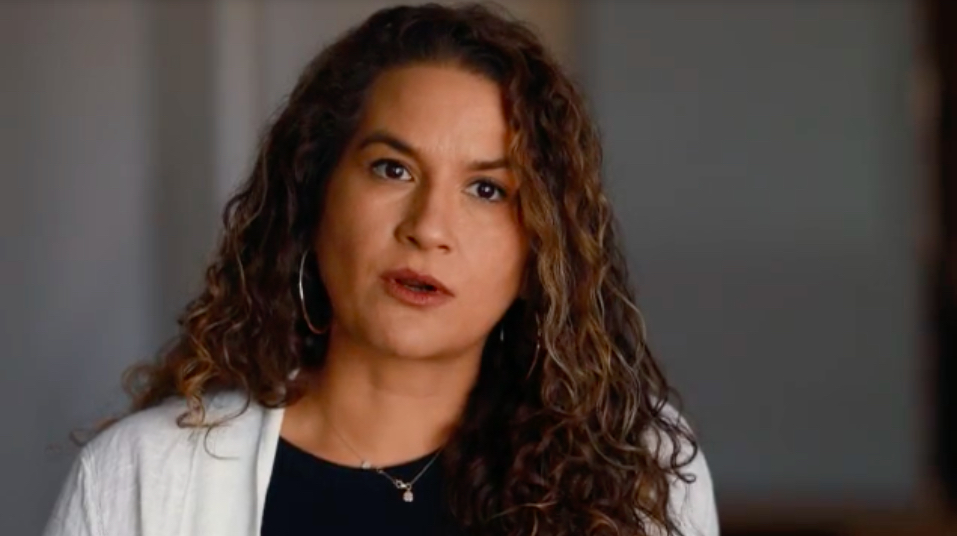
Leila Fadel is a national correspondent for NPR, where she covered the fall of Mosul to ISIS in 2014. Prior to joining NPR, Fadel wrote about the Middle East and the Iraq War for The Washington Post and for Knight Ridder and McClatchy newspapers.
The following interview was conducted by FRONTLINE’s Jim Gilmore on June 15, 2021. It has been edited for clarity and length.
I did an interview with Gen. [Colin] Powell in an earlier film, talking about the decision that he made to sell the WMD story and the need to go into Iraq before the United Nations.The question I have, looking back at that, his decision to do that, how does it sort of define where we were post-9/11, that he would do it, and damage the way people saw him in years to come?
Yeah.I mean, ultimately, that was this sort of iconic speech, right, to sell a war to the world, and that not only domestically but to the global audience, to say, “We’re going to go in there.” And ultimately, as we saw reported out, those WMDs didn’t exist.And so ultimately, a war was launched on the premise of what appeared to be a lie.And so when you look back at that, is it also about the sort of trust in top-level officials in the U.S. administration to the world, when they make such a strategic and important decision that is still impacting Iraqi lives and the world, in ways that that speech ultimately led to, that domino effect after and everything that came after it, it was all on the pretext of this supposed evidence?
And in that time, a lot of that was being bought without extreme questioning, when it came to media institutions.Other than Knight Ridder, at the time, was really the only one, saying, “Actually, is there evidence to support these claims or not?” And so really, you had an entire nation domestically buying into something that did not actually have evidence, and the credibility of the U.S. administration saying to the world, “We have evidence of this,” and there wasn’t any.
Why do you think that was possible?
Because of 9/11, because there was this attack on the U.S., and all of these lives gone, and this sort of idea that "Ok, well, we will support you in your endeavors."And so domestically, it was a much easier sell.And I think a lot less people were willing to question in a moment of extreme nationalism and extreme unity, in the face of what was a horrific attack, something the U.S. could never have imagined, and saying, “OK, we will support”—now, not to discount the many protests that were going on around the country, saying, “We don’t want to go to war,” of course.You know, Saddam Hussein was not a sympathetic figure globally, right?He wasn’t a democratic leader.He wasn’t even a quote/unquote "benign" dictator, right, or a "benevolent" dictator.
And so those two things created what I think is a dangerous combination of not questioning authority, not holding power to account.And so ultimately, there was this support for the wars that we saw at the time, in the beginning.
Invading Iraq
Your impression of the certitude that they had about the fact that everything would go wonderfully, what does that say about the administration?
I mean, in the most generous terms, complete naiveté, if we were to give them the benefit of the doubt, because every expert on this country, on this region, would tell you this would not be a simple endeavor.
Almost immediately after the invasion, looting starts breaking out.The ministries are attacked, and you’ve got less than two U.S. brigades that are in a city of more than 5 million people without an idea of what’s to come next.Talk a little bit about that moment and sort of how you see it.
Well, the very beginning of the war, I wasn’t there.So in that first sort of "shock and awe," I was watching shock and awe on television with the rest of America.And there, you know, at first, you had these brigades not in these huge armored vehicles that we ultimately see, then have down the line, and I guess not prepared for the type of opposition that would come later on.And so in those early days, there was a lot of celebration of Saddam Hussein being gone, right?But then, you now own the country.The U.S. now owns the country, now runs the country now.And so you’ll see these complications begin to build away from these first scenes of happiness and celebration to be away from a repressive regime.
And talk a little bit about what we all know took place on the streets because of the video that we've all watched.What was going on in the streets?
Well, you saw celebrations.There's that iconic moment where you see Iraqis pull down Saddam Hussein’s statue, which was unheard of.You know, Iraqis would never say a word against Saddam in the streets of Baghdad.Families spoke about how you didn’t even talk about it at home, in case your child accidentally said something at school that was said at home, because it meant you might be disappeared.You might be taken for opposing Saddam Hussein.He was, in many ways, this egalitarian oppressor, if I put it that way.There was, if you speak up against us, me, we will come after you.And that was understood.And so there was this sigh of relief.There was this exhale.He’s gone, and now we can speak.But that was very short-lived.
And then what happened next?I mean, when the looting happens, and the ministries are stripped bare, and the Americans don’t quite know what to do, nor do they seem to have much of a plan, I mean, when it turned, what did that look like?
Well, I mean, I think the first thing we need to look at are the very first decisions that were being made by the CPA [Coalition Provisional Authority] at the time, right?The first decisions were to disband the Iraqi military and to do the process of de-Baathification.But you're in a country in which, to be employed and to have any type of future, you have to be part of the Baath Party, the Saddam—Saddam Hussein’s party.
And to disband the entire Iraqi military, now you have no institution to protect the borders and the nation, right?And so now you are fully in charge of everything, because the entire government institutions is—and you set the—you lay the groundwork for what would become the insurgency, because now you have all of these sort of out-of-work people who are seen as the "enemy," but, you know, not every single person in these parties.
And so when you look back, a lot of people see that as the strategic mistake that created the ground for the ultimate insurgency.And so that, I think, was the misstep that set the tone for the country that becomes Iraq.
… When they bring in Bremer, number one, why him?And who was he?
I mean, Paul Bremer wasn’t a Middle East expert.He wasn’t seen as an Arabist.He wasn’t a person who was an expert in post-conflict rebuilding.And so a lot of people look at that as a sign of sort of cronyism, or, you know, he was friends with the right people, so he’s appointed.And then he becomes the sort of de facto ruler of Iraq.
... And amongst the Iraqi people, the reputation that Bremer had was what?
I mean, he was the on-the-ground guy with all the power.His reputation among sort of other Arabists and Middle East experts was somebody who didn’t necessarily know what he was doing on the ground.But I also didn’t deal with him very much.But there was just sort of this iconic image of this guy in the boots on the ground, making decisions in Iraq without extreme consultation.
And so Iraqis, I didn’t really talk to them much about Paul Bremer, because at this point, they were talking about the figures that sort of came.What they would say was, "These leaders that came on the backs of U.S. tanks."And those are the Iraqi figures that a lot of them still in powerful positions today.
And their attitude towards them was what?
So you know, I don’t want to discount the sort of elation of Iraqis being able to go to the polls and the elation of certain segments of Iraqi society for the first time getting to express who they were, whether it was Shia Arab or Kurdish or Turkmen.But also, in this period, the society started dividing between people who were perceived as pro-invasion and occupation and people who were perceived as among those who opposed it.And so we started seeing, pretty quickly, attacks on Shia Arab Muslims.We started seeing the Kurds create their region up in the north.We started seeing the country sort of divide on sectarian lines that really came from who is with and against the Americans.
And then we also started to see—and I think this was redefining for a lot of media institutions—was the targeting of journalists as part of the conflict versus observers of the conflict.And so it went from, as you mentioned, a couple brigades in a city of 5 million to more and more U.S. soldiers, more and more armed and divided from the country that they were supposed to be rebuilding, and building quote/unquote "democracy" in.And you saw the same with journalists, who started to build walls around their own compounds to protect themselves, to cover the country that they were covering, and neighborhoods, and these walls going up across the country as people protected themselves against each other.
And so for me, when I look back at Iraq and my time in Iraq, it was a time of walls and barriers and a bunch of people trying to move towards democracy.But how do you do that when everything is walled off from you, including the people that you elect?
Abu Ghraib
Let’s talk about Abu Ghraib.When the pictures of Abu Ghraib came out, when you saw those pictures yourself, what did you think?
I was shocked and disgusted.The exposing of Abu Ghraib happened just before I really started covering Iraq in earnest.And I talked to my fellow colleagues who’d heard rumors of people discussing what was happening in Abu Ghraib, and much of it was dismissed as impossible, impossible, that this is the type of treatment that is happening in these prisons.
But I also felt extreme fear of when you treat people like this, what comes from that except extreme anger and a thirst for revenge and hate for a country that did this to you, right?So I remember—this is a little bit of an aside, but, you know, I remember speaking to a child that was born on the day of the invasion, and he was 6 years old.And his definition of what an American was was a person with a gun who could kill whoever they wanted, and who wore the uniform and the bulletproof vest.And he said, “I want to grow up to be an American so that I can also be powerful and not afraid.” And so what comes from torture in U.S. prisons but a creation of a lot of people who have a vendetta and anger over what happened to them in U.S. prisons or U.S. detention?
So the president sold this war as defining American values to help this region of the world to have the same democratic values and freedoms that we could bring them.So this happens.And so how does that make people view American values, and what is the long-term effect of that?
Well, I mean, again, it exposes what many people saw as the hypocrisy of American foreign policy.You know, American foreign policy in the Middle East is long, and for many Iraqis, it was seen as sordid, right?You come into this country professing a better future after what was a really repressive regime, and here is this force that is supposedly here to build democracy and Western democratic values.And people were excited about this.This means better infrastructure; this means a better future; this means stability.And, you know, most people, that’s what they want.They want stability, the ability to provide for their family, a pursuit of happiness, all of these things.
But here you are, exposed as an occupying force, yes.But also, that was violence and humiliation.And so people—you always heard Iraqis say, “Were they here for us?Are they here for the oil?Are they here for the stake in the region?What is this about?,” right?“Western values or American imperialism?” And so Abu Ghraib was a real defining moment of what was the U.S.’ role in Iraq.You don’t forget when somebody in your family is hauled off in the middle of the night and comes back.
… And so there was Abu Ghraib, but also the forces that were being built up, and the way they treated the local population, the Iraqi forces treating the population that they were policing.And so yeah, when Iraqis talk about Western values, and we’re here to bring freedom and democracy, for a lot of Iraqis that sounds completely farcical for them based on what they’ve felt and watched on the ground.
But it was also a turning point in the United States.Talk a little bit about how this affected Americans as well as seeing these pictures, and in some ways, increased the number of people in America questioning the reasons for this war that they were sold, about weapons of mass destruction, by the way, which was by now also known to probably be a farce.
Well, I think you went from this position where so many people didn’t want to question the evidence behind the Iraq War and the reasons to go into Iraq and this real unity behind any decision that was about the security of the United States, to people questioning, “Wait, why are we there?And why are our young people being sent over there and killed over there?Where are these WMDs?What is happening?Why are we spending so much money in Iraq?” So you started to see a dwindling of support for the actual war.
And that isn't just one thing.I don’t know that it was just Abu Ghraib.There were also thousands of U.S. soldiers that were ultimately killed by the end of the U.S. presence there, and those are people’s children.And then there were people coming back with lasting trauma, and, as we've seen, the many suicides among veterans.And so all of that combined was creating a different reality on the ground in the United States for, “Wait.Why are we there?,” you know.And ultimately, my understanding, what I saw in the post-Abu Ghraib period, was inside Iraq and the way people sort of viewed the U.S. presence in Iraq.
The Obama Years
So let’s switch over to the Obama years.And one of the questions I had for you is, is when [Nouri al-Maliki] was making these decisions and sending in his men into Sunni areas, and basically trying to rule with an iron fist, why do you think Obama refused to use his influence on Maliki to stop some of the moves that he was making and cracking down on the Sunnis?
I think the Obama administration’s approach, in a lot of situations that we saw, was this hands-off approach. "I'm not going to get involved.I'm not going to go in and tell the Iraqi government what to do."And we didn’t see that just in Iraq, you know.We saw that in Syria, where there was this extreme push for some type of intervention to help Syrian civilians and an unwillingness by the Obama administration to do that.And prior to that, they had been involved, ultimately, with the no-fly zone in Libya that led to the ouster and ultimately killing of Muammar Qaddafi, which, in the aftermath, now that we look back, looked really like a regime change.
And so I do wonder if that colored a lot of the decisions of the Obama administration following Libya, but also the Iraq War itself, right, going in, thinking, oh, we’re going to take over, and then there’ll be democracy, and then we’ll leave.And then we see, over a decade later, none of that has happened.And so I think that really colored a lot of the decision-making at that point.And ultimately the only time we saw involvement, then, was after ISIS fully takes over Mosul.They had already taken over Fallujah.
And prior to their takeover of these areas, Maliki was employing a lot of the tactics we see that Bashar Assad was employing against his people, barrel bombs and weaponry that was awful, and killing lots of civilians, and these humanitarian corridors, where people are begging for humanitarian corridors to get out, and human rights organizations saying, “There's a huge problem here.” So it seemed like the administration just didn’t want to get pulled and sucked back in.But then you see a lot of people saying, “But you created this situation.The United States created this situation.” So you have to come back in here and deal with what they saw as an extremely sectarian figure, using that mindset to govern these areas that were rebelling against him.And so these areas that were not seen as friendly towards him, I’ll say.
And you know, a lot of people will say there was personal animosity between Maliki and certain figures, and so he would focus in certain areas.And so only after ISIS takes over certain parts of the country do you see more pressure for Maliki to be removed and ultimately a new pathway for a new Iraqi prime minister.
And the fact that Obama didn’t attempt to intervene, that he politically had washed his hands, as well as militarily, what was the message that Maliki received by those actions?
I think a lot of people saw that Maliki was, in some ways, given a green light, like, "Nobody’s going to stop me.Nobody’s going to stop me from doing this, so I'm going to govern the way I see fit."And he had sort of asserted himself as a figure that wouldn’t take orders from the Americans during the status of forces agreement’s [SOFA] negotiations, right?He was saying, “OK, you can stay.But we’re not going to give you any immunity for your soldiers.” And, of course, the United States is not going to stay with no immunity for its soldiers.
And so ultimately, that paves the way for the Americans to leave.And so for many Iraqis, they saw it as the U.S. just washed their hands of Iraq, after quote/unquote "breaking it."And so Iraqis really blamed the United States for these figures that were in power, and certain parts of the country being treated terribly by the Maliki government.
Underestimating ISIS
Why did Obama underestimate ISIS so badly?
That’s a good question.I mean, I feel like the writing was on the wall in Iraq, right?We saw a different approach by Al Qaeda in Iraq than we saw in other places.There were no red lines for Al Qaeda in Iraq, right, and so this idea that you kill [Abu Musab al-Zarqawi] and Al Qaeda is dead, that’s not what we saw.We saw a sort of subdued time, less violence, and a rearing of an even scarier organization that had even less red lines than the organization that came before them.
And so this idea that we’ll just bomb them out of existence, or we’ll build walls—and it didn’t work like that.And the other thing that was happening that many warned the Americans about was, again, these Shia militias that were incorporated into the Iraqi forces, and ultimately we saw being part of the fights in Mosul and Fallujah and other places to oust ISIS from those areas.
And so the—wait.I lost my train of thought.
So ultimately, this game of balance and counterbalance—"Oh, there's Shia militias here; we’ll bring in the Awakening forces"—and it wasn’t working.And like I said, in areas of extreme repression or a security vacuum, you see space for people to be accepting of an organization like the extremists, the terrorist organization Islamic State.So when they first came into Mosul, a lot of people that were living in Mosul that I spoke to at the time weren’t saying, “Oh, my God, I can't believe the Islamic State is here.” They were kind of relieved that the Iraqi forces, who many of them said were treating the local population as all-potential terrorists, as—they described them almost like an occupying force themselves from other parts of Iraq, treating everybody like they were terrorists and suspects.And they started seeing the walls come down in their neighborhoods.
And so in the first 10 to 20 days, there were a lot of people that were saying, “Well, maybe it’s not so bad.They're giving out cooking gas, and they're giving out—” So they were winning sort of hearts and minds in a time that so many people felt abused by the Iraqi forces.And then the cruelty and the killings and the reality of what this organization actually was started showing itself in Mosul, and you saw the population turn against it.
So I think the Iraq War was sort of predicated on a lot of underestimation and assumptions, that you can just put a couple people there, put a couple people there and solve a problem.You can't do that.You can't—you know.And so that’s—I think for the Obama administration, they just—they didn’t want to get involved.They kept trying to shift away in many ways from the Middle East and were never able to.And for Iraqis, they just felt you need to be involved, because you are the reason we’re here.
And Mosul was sort of a rude awakening, it seems, for the Obama folks, because they had expected, "Well, you know, at least we've trained the Afghani [sic] forces; they will take care of it," which is one of the excuses they gave for not getting involved quicker.But Mosul, what was the lesson of Mosul?
The lesson of Mosul—I mean, ultimately, it dragged the Americans back into Iraq, right?They had to come back in, because as I had mentioned before, the extreme repression that was being ignored led straight to this pathway and created bases and areas where ISIS could flourish because of the dissatisfaction and anger among the local population.And so it dragged the U.S. back in, even though they didn’t want to.
And so for some, experts and Iraqis, they would have wanted involvement earlier so it didn’t get to that point, because in the moments that Fallujah felt they were under attack by the Maliki administration, nobody came to them, and then ISIS took that over, and then ISIS took Mosul over.
The Trump Years
Let’s go through a few things with Trump.Talk a little bit about the use of fear that he used and turning the fear inwards rather than out towards the world, with the Muslim ban and the talking about the Jersey City celebrants, and all the stories about all aliens.And I know one of the things that you had said was that he really fed off of bad decisions that were made before as well.But talk about that as a remnant also of 9/11 and sort of how Trump was able to use that.
You know, after 9/11, there were these two major foreign policy decisions on Afghanistan and Iraq, to go into these countries.But there were domestic policies that impacted American Muslim communities in a very different way than any other communities, where people were afraid of having any type of political opinion, where the Patriot Act created situations where many American Muslims ended up on no-fly lists and other lists that flagged them.And there were these depictions of Muslims abroad as some type of extremely scary figures who hate us, who hate the United States and hate American freedom.Oversimplifying decades of foreign policy decisions in this region, that created situations where yes, a lot of people didn’t love the U.S. administrations and the policy decisions in their region.
And so I remember moving back to the U.S. just as Trump got elected.And already, in the over a decade that I had been gone covering the Middle East, there was this sort of palpable fear of Muslims, hatred toward Muslims, as if they just hated Americans, and they wanted to kill Americans.And this was detrimental.[They] were in the sense of prejudice, but also in policies that impacted Arab and Muslim Americans and Arab and Muslims generally.
And so Trump really came in and articulated a lot of the things that were already whispered or said in the policies that were passed, and said, “Oh, we’re going to just ban them.” And that was a really popular decision among a lot of Americans who thought, OK, yeah, Muslims are a problem; we just ban them.And so he kind of articulated and solidified policies we’d seen before, under the Obama administration.I remember covering visa restrictions on Europeans who had traveled to specific places or who were of certain ethnic descent, Iranians and others, who no longer could come into the U.S. on ESTAs [Electronic System for Travel Authorization].They had to go—the waiver, the travel waivers that Europeans use.And they would have to go apply for a visa.That ultimately was the underpinning of the countries that were chosen for the first travel ban, referred to as the Muslim ban.That was largely targeting Muslim-majority countries.
And so yeah, he sort of rode this wave of fear that had been building since 2001 and been being written into policy.So you speak to immigration attorneys that were working with American Muslims on situations where they were targeted by the security apparatus, FBI and others, and they would say a lot of this idea of a quote/unquote "Muslim ban" was in the works for over a decade in the policy decisions that the administration was making.
How successful were those tactics for Trump in getting him elected?
I mean, he was elected.I mean, ultimately the message was, "America’s not great anymore."And the campaign promises were predicated on this idea of keeping quote/unquote "dangerous people" out, whether it’s what, you know, they referred to people coming over the border or Muslims, and this idea we’re going to close our borders and make America great again.
And that seemed to be a pretty popular message.It resonated with a lot of people who felt like things were changing, because domestically, a lot of people were and are suffering in this country economically.And so people who are dealing with a drug epidemic and a lack of jobs and loss of jobs in their communities, these were—these were resounding messages for them.But they were also racist messages.And they led us to a point where it was OK to talk about entire groups of people as bad and not OK in our society.And that’s where we've gotten.
… And Afghanistan and Iraq, what were his goals when he came in?And he seemed to have some of the same goals as Obama: We want to get the hell out.But he was also not able to accomplish that.And how successful or unsuccessful was he in dealing with these wars that had been a huge problem for Obama and for Bush?
Both of them came in with a legacy of wars that didn’t really have smart, strategic planning going in.They just went in.And so both really did have the intention, very different approaches in the language that was used, but the intention of getting out, because they're expensive, they cost lives, and so Americans didn’t like them anymore.They didn’t want that anymore.With the Trump administration, … we saw, you know, the negotiations with the Taliban for the first time.
And for a lot of people watching that, it did feel very full circle, like weren’t these the enemy, and now there's negotiations?But ultimately, the idea of just fully exiting it, for both administrations, was very difficult, because there was constantly being sucked back in, because of the security vacuums or repression that were created by the dynamics of these wars. …
But one of the other things that Trump did was he did continue the "kill list" strategy.And in fact, he got [Abu Bakr al-Baghdadi].Even though he said that he was trying to get out, he was very involved in upping the number of drone attacks and the killing off of leadership.
Which followed the same sort of policies that the Obama administration followed.So he expanded on a few Obama policies.I mean, Obama was seen—I think people called him the deporter-in-chief, but also drone use under his leadership was extremely high.The use of secret evidence under his leadership was extremely high.And this extrajudicial killing, I mean, these killings, the first American killed in a drone strike was under the Obama administration.And so Trump really expanded on that policy to the level of killing a sitting general, a sitting Iranian general in Iraq.
So yeah, I mean, there was continually these dragging back in, but really policies that again, were questionable for many people, when it came to Western values and Western democracy, and then this idea of killing people from the sky.
Right.Well, why?Why is that?What did it say about American values?And was it successful?
Again, I mean, it’s difficult to say what is and isn't success when looking at these things.It’s hard to say what has and hasn’t prevented attacks that have not happened.But what you can see on the ground, in places that these things do happen, is that there is resentment breeded, because the kill list doesn’t always only kill the person on the list.
... And that each administration does not quite understand totally the quagmire that these regions are, because of getting yourselves involved as deeply as we got ourselves involved.And it’s very difficult to get out.
Disentangle, yeah.How do you disentangle?And really, how do you walk away?I mean, for so many Iraqis, there was this feeling of like, how can you wash your hands of this responsibility?I mean, it’s very different than the calls for intervention in Syria or in Libya or in other places.I mean, ultimately, the U.S. invaded and occupied these nations, and so on the ground, when people ask, I mean, "How can you walk away when there's all of these problems that really go back to your intervention?" is the big question.And so what is the moral responsibility of the United States when it comes to the situations that these countries are in, and the instability that they breed regionally as a result of the situations that they're in?
And so that is a big question.And I think it’s a very difficult question for every administration of, what do we do?Or what do we do?And because it is so broken in many ways.And that isn't to say that, in the future, these might not be thriving democracies, but right now, it’s messy and ugly and fatal for so many people.
The 2020 Election
A couple more things on Trump.When the 2020 elections were coming up, he rebrands the threat to make the existential enemy no longer foreign but domestic.Antifa becomes the enemy; Black Lives Matter becomes the enemy; Socialist Democrats becomes the enemy, but not just an enemy, an existential threat.Talk about that first, this sort of technique that he used turning Americans against Americans, again, through the use of fear.
Yeah.These are tactics that really—I saw a lot of in the Middle East.I'm not comparing the Trump administration to these regimes that I saw in the Middle East, but this sort of bogeyman, domestic bogeyman, if you will, of, if, you know, if we allow this to flourish, then it’s going to be dangerous for all of us.And meanwhile, there is a domestic threat that is growing when you look at FBI assessments.The biggest domestic threat, really, was coming from these nationalists and white supremacist groups, and that wasn’t being addressed.Antifa and Black Lives Matter were both not seen as like—at least antifa is not seen as an organization.And they were blamed for much less violence than these other groups.
But they become the existential threat.It creates a situation of an us-and-them politics of the country.That was already happening under the Obama administration to a lesser extent.We saw—we started to see the death of bipartisanship, and it really crystallized this us-and-them mentality in the United States, where when we were looking at issues of social justice or systemic injustice, it became a political question rather than a question of, are our systems fair?
And so this tactic led, I think, to the real schism that we’re seeing in society now and the successful political game of us and them, because fear politics, it really works.It’s why we see the sort of civil wars that we've seen in different countries and how we end up with ethnic cleansing or genocide in certain places, because you have fully convinced a portion of your population that another portion of your population is dangerous and less human than you.
And the irony or whatever of using the tools against terrorism against your people, where the DHS forces were used against demonstrators, where the military was used, the National Guard being brought into Washington and such, having helicopters fly over the city, to use those tactics, what does that say?And what’s the danger of that?
I mean, I think this is also a path that the United States has been going on for a long time.Since 2001, you were seeing the militarization of police in all parts of the United States using funding to get all sorts of equipment that are supposed to be about counterterrorism, in the wake of 9/11, now coming to bear on domestic issues.And so these images everybody was talking about, really not imagining them in the United States—tanks on the street in the United States for protesters, and rubber bullets, and in some cases, live ammunition and tear gas, and all of these things that we saw.
But again, it’s not like that wasn’t the case in Ferguson years prior.But here, the language, the incendiary language [is] coming from the top-level officials about who protesters were and this sort of idea that there's an enemy of the people among them instead of really recognizing where a lot of the emotion and anger was coming from, images of Black people being killed over and over again by police, unarmed people being killed by police.
Meanwhile, this other threat that’s growing, and also a source of discontent, ignored.But I would say, in any situation, domestically employing a lot of these black-and-white approaches that we have put on American Muslims are now sort of starting to be applied in other facets of American society, and so for the first time, the questioning of civil liberties around after, you know, after Jan. 6.
But basically, it’s a successful thing that we've seen in other countries, where you take apart a portion of the society and you say they're dangerous, and so we have to treat them differently.We have to bring in tanks, and here is why.But that’s really, the facts don’t bear that out, you know.I mean, we did see, ultimately, some violence and some looting.But the large majority of Black Lives Matter protests across this country were largely peaceful.
And so using this excuse as they're trying to destroy America and burn our cities down, it’s a successful tactic we've seen in some parts of the country, and everywhere else.
The Jan. 6 attack, let’s talk about that for a second.Why does it happen?And do you see connections between the fact that 20 years of these unsuccessful wars post-9/11 had some effect on the creation of this?How do you see that?
I mean, I don’t think that anybody won't draw a direct link between the incendiary language that was coming out of the administration, the Trump administration, and the Jan. 6 attack, you know.There was a huge section of the population that believes that the election was stolen, based on no evidence, even though it’s been debunked.Everybody’s moved into their echo chambers of sort of confirming their own ideas of what will happen, and so we see a Jan. 6 attack on the Capitol.
But there's also these organizations that have been festering for a long time and have been getting support in local communities in the same way, you know.These organizations are using social media and other places to foment this idea of anger towards their elected officials, this us and them.“America’s in danger.No compromise on our guns.No compromise on this.” And so there's a lot of really angry people at the government, and it’s being channeled this way.
And you tell them all, “The election has been stolen.” And so ultimately, on Jan. 6, you see a bunch of people who are willing to storm the Capitol, and many of them not understanding that there will be probably legal ramifications for this, because they’ve never dealt with those before, because for so long, it hasn’t been seen as a domestic threat.
Twenty Years Later
… I mean, what's the connection to the past 20 years that got us to this place?
Yeah.I mean, I think that that’s a really hard question, you know, and in the past 20 years of American wars, that every administration has unsuccessfully really exited in a meaningful way.I do think that there's obviously a chipping away globally at these administrations’ reputations.I also think that there's a lot of people that have been angry at leadership on both sides for lack of effectiveness, because people ultimately, when they're talking about their lives, they want to be able to work, feel safe, feel that they can pursue happiness, and feel that their government has their best interests at heart.
And for a lot of people, I think what the 2016 election showed, in the rise of Trump, but also the rise of people like Bernie Sanders and others, who were saying, “OK, something’s not working here.We’re not fulfilling what our citizens need.” And both of those messages resonated in a very real way, and very differently.But the channeling of the anger with the Trump administration took a dangerous turn.And it took, in some ways, I think, maybe a predictable turn, because when you take language that have largely targeted communities of color to make them dangerous, from Muslims to others, Latinos and others, it’s easy, instead of looking at a solution of, “OK, what are we going to do about the fact that there's so much joblessness?” and blaming a lot of people for everything that’s wrong, yeah, does it lead to a situation like Jan. 6?Yes.I wouldn’t link it all just back to policy decisions over the last 20 years.We've also had the rise of the internet and the echo chambers and Facebook and all these places that have led to things, when you look at Rohingya, for example, with Myanmar, that was a genocide that many can look to Facebook for misinformation campaigns on to blame, right?
And so we’re dealing with those same things in the United States, a real discontent over the way the country is going, from infrastructure to joblessness to drug epidemics, and a feeling of hopelessness in parts of America, and echo chambers on social media that allow for you to confirm why it’s happening to you like this.And on top of that, you have the repetition of this type of thing coming from the top official in the country.
And so on Jan. 6, I think all of that came to a head, and people went to protests, and they were angry over a lie, over a lie that was repeated from the halls of power, but also on every social media platform, with very little filtering.And that’s what we saw.
… One of the things you already talked about is the significance, 20 years on, that now policy is focused on domestic terrorism.What is the significance?
I mean, I think, obviously, Jan. 6 was a seminal moment in this country, but Americans watching images that we really never thought we would see at the Capitol, and depending on who you are in America, and your life experience, seeing very, very different things on that day.So for some people, watching a largely white group of people storm the Capitol with very little interference was something they never thought that would happen if, for example, they were Black, or they were Muslim.It would have been a very different outcome.
But we’re also treading into territory that has a lot of significant possible ramifications, depending on what the administration decides to do going forward about domestic terrorism when it comes to law and policy.What we saw in the aftermath of 9/11 were a lot of rapid policy decisions that led to the spying on a lot of American citizens, largely communities of color, and a lot of those ramifications have ripped families apart, have created situations where you cannot even look at evidence that you were supposedly accused of.And now this is coming to bear on organizations that are largely, but not only, in white American communities.
And so the question here, too, I really think that everybody should be looking at is also our civil liberty.The American civil liberties going forward, and the policy-making decisions that came after 9/11, that have had large-scale implications on certain parts of American society, and these new decisions on foreign or international terrorist organizations, and these new decisions that may be being made under the question of domestic terrorism.These are difficult questions to grapple with. …
And which leads to the question of, all right, 20 years on.When you look at, as we've been doing, looking back at Afghanistan and Iraq, what has really been accomplished?
That’s a very good question.I mean, it’s a very good question, and it’s a very difficult question to answer, for you know, in 2021, basically every single Iraqi reporter that I worked with in Iraq is no longer there.The brain-drain effect of Iraq is very real.Everybody who could leave got out, and those who stayed behind have to deal with the realities on the ground.So what was accomplished?I don’t know.I don’t know the answer to that, because there was so much money poured into these wars, so many lives lost—Iraqi obviously, Iraqi and Afghani [sic], much more than American, but lives on all sides lost—so hundreds of thousands of people no longer here, trillions of dollars.
And the question is, what was accomplished?What was accomplished?And I think that’s a very hard answer, because you don’t—you don’t look at Iraq and think, wow, it’s a—it’s a thriving democracy, or Afghanistan and think, wow, it’s a thriving democracy.And that’s not because, oh, you know, you’ll hear people dismiss, “Oh, these people, they just can't have democracy.” That’s not the case.That’s not the case for anyone, really.But it’s—these are hard questions and hard answers, and there's a long history in both of these places that was ignored when making the decision to go in.And so the future is very unclear.But in 2021, are they better than they were in 2001 and 2003?I think for many people, the answer is no.