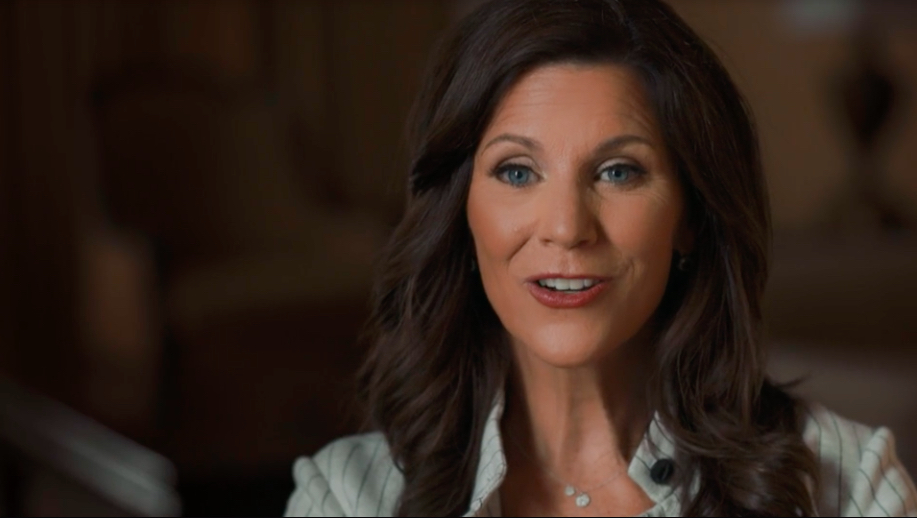
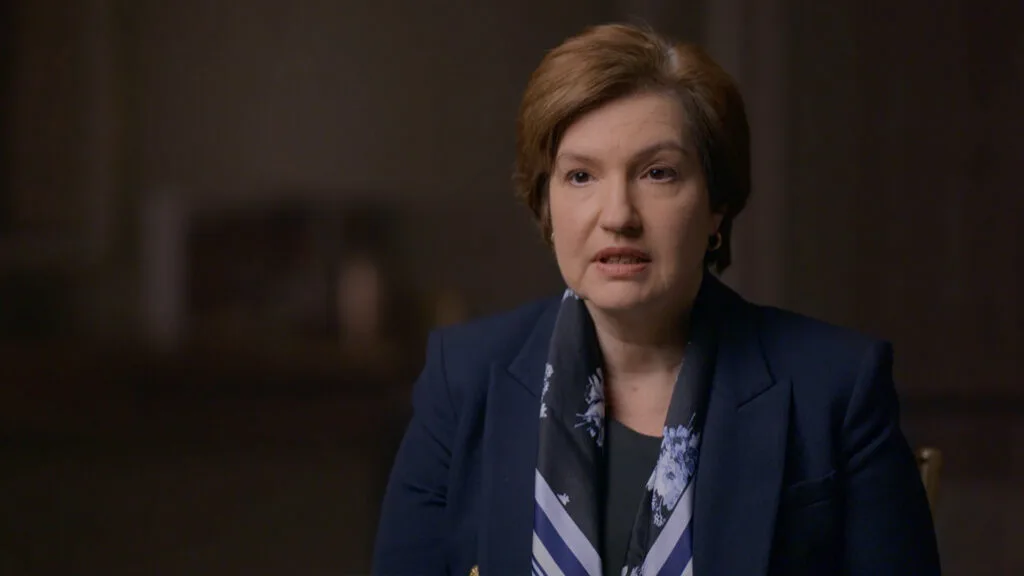
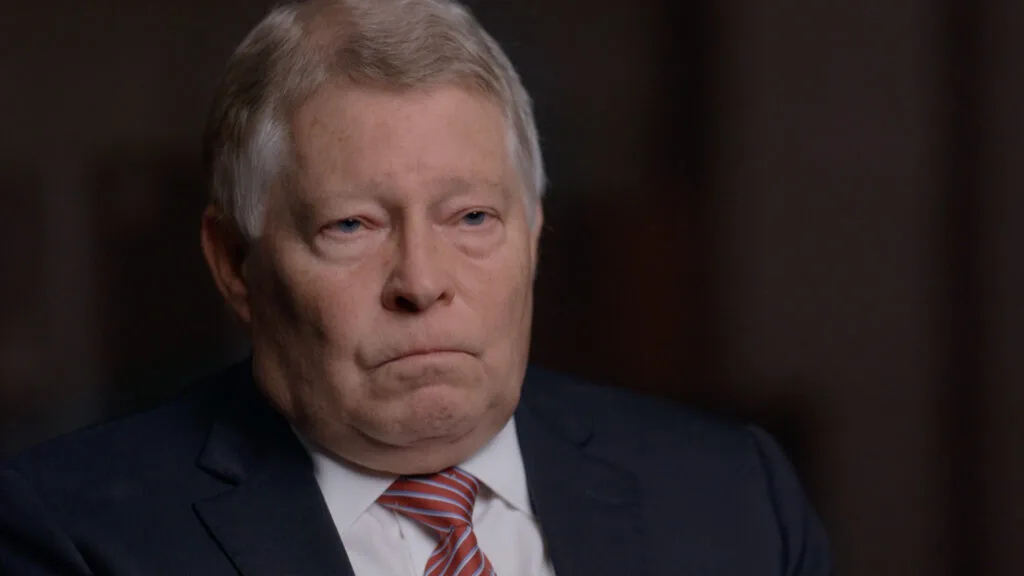
Margaret Aitken served as press secretary for Joe Biden from 1997 to 2008. She is founder and principal member at Aitken Communications in Wilmington, Delaware.
The following interview was conducted by FRONTLINE’s Jim Gilmore on July 21, 2020. It has been edited for clarity and length.
I was in the same grade in high school as Beau.We were in a small high school.Our lockers were right near each other—Aitken, I think there was one person in between us, and then Biden.So he, to me, was like every other parent of every other kid at that school.I have a very clear image of walking to probably cross-country practice, and I remember seeing him sprinting across the parking lot to make it to the last half of Beau’s soccer game.
So to me, that was my first experience with him, just as Beau’s dad.And he was a very involved father.He was at the school a lot, as much as he could be.I think probably the only difference between parents is after that sprint and watching half the game, he probably got back on a train and went back to D.C. to finish voting.I volunteered for the ’96 campaign before I started working for him.And when I say volunteer, I wasn’t doing policy; I was literally doing lit drops.And his sister, Valerie, was the campaign manager, and I think like a lot of people, I came for the vice president, but I stayed because of Valerie.She just was this force of nature and ran his campaigns, and his whole family was involved in them.And Beau and Hunter were, and Ashley and Jill.So it really, truly was a family affair.
So you know, the Bidens, when—it’s almost a cliché to say that when you work for them for as long as I did, you become part of the family.But I really felt like I did.I mean, Valerie had my bridal shower.
Biden’s Family Tragedy
I assume everybody knew of the tragedy that they had dealt with and the loss of his wife and baby girl.How do you think that affected the family, the dynamics of how they operated?
They’re an incredibly close family.I come from a really large family; I have seven brothers and sisters.And the bond that that family had was, it was unlike any that I’ve seen.I mean, they just—I think it was probably formed through the tragedy.They were very, very, very close.There was many times where he would be in the middle of something and someone from his family would call, in the middle of a hearing, and he would stop what he was doing and take the call from his family.It was incredibly close.
I think he was just constantly surrounded by this really big presence of his family, starting with his parents.I think they were massive influences on his life.When you hear him talk, he often references his parents, his mother, his father.And I think they really instilled in him that really strong sense of: this is family, and the family’s most important.And I think they all kind of share that.
So Valerie and I were at this viewing, and it was a really long line that sort of snaked outside of the church and went around the corner, and we had been there for a good, long time.And this man walked up to me and said—we’re chatting and he said, “Do you still work for Joe Biden?”And I said: “Yes, I do.As a matter of fact, this is his sister, Valerie.”And he said, “Oh, good thing I didn’t say anything bad about him.”And without skipping a beat she said, “Yeah, good thing, because I would hate to have to punch you in front of church.”
So they just had this really—I mean, she was his protector.He was her protector.They just had this really incredibly close relationship.And she ran all of his campaigns.So it wasn’t like you were working for Joe Biden; you were working with the Biden family.
Biden’s Parents
But you bring up the parents.Do you know anything more about the parents?Tell me anything you know about the relationship of the parents to their kids and what they taught them, what kind of people they were.
Joe Biden’s got this home, and right up from his home at the top of the hill there’s a smaller, little home that he actually constructed himself.I actually remember being on the train with him, and he was drawing out plans.And it was a home for his mom.His mom didn’t want to move in with him, but he wanted her close after his father had passed away.They just were—they just were an incredibly close family.His parents, I don’t think I’ve heard him give a serious speech without referencing one of them at some point.I think the lessons that they taught him were about loyalty and faith and just being there for each other.
His mom was a really strong lady.His father was a very sweet, kind, genteel man.They were always very involved in all of his campaigns.And even later in life I would—I remember being in a meeting, and it was a staff meeting, and his father was older and retired, and his father would come in and sit there during the staff meeting.And I remember one time his dad was taking notes, and I just thought it was such a sweet thing, like he involved his dad in a lot of that stuff.
And I think everything that he does, a lot of decisions were informed by how he grew up.He tells this great story about being a monitor on the bus.And you know, they went to this Catholic school, and Valerie was maybe not as well behaved on the bus as she should have been, and he kind of comes home, and he tells his parents about this, and he says to his dad, “You know, I’m going to have to write her up.”And he said his dad said, “That’s not your only choice.”So the other choice was to quit, which is what he actually ended up doing.So instead of writing Valerie up, he quit the position.
So they just have this really incredibly tight family.The boys are incredibly tight; Hunter and Beau were incredibly tight, and Ashley, and they are all really a big unit.And it’s strong, and it’s deep, and it’s real.
Biden’s Marriage to Jill
Let’s bring one other person into the party here, the importance of him finding Jill, Dr. Biden.Again, you weren’t there at that point, but—
Right.
From what you know about him and his life, how important was his meeting his second wife?
Well, when you meet Jill, she is an incredibly competent person.She is incredibly well-spoken.She is like a wonderful advocate for him.But that’s not her natural state.She is—I think she’s much shyer than her public persona.And I think Jill really grounded him in a lot of ways.I think she was very supportive of what he did, but not necessarily wanting to—I don’t think being the first lady would have been her first choice.I think she’ll make a great first lady, but she’s a teacher, and I think that was a very grounding thing.
He supported her throughout all of her academic endeavors.She got her—a couple master’s degrees, I think.She got her doctorate degree.I remember he had a big party for her when she got her doctorate degree, and there were signs that he had made, leading up into the house, and it said, “Dr. Biden and Joe live here,” or something like that.And it was a really lovely party, and he was so proud of her.And the boys, I mean, that’s their mom.I think they called their mother, Neilia, they called her Mommy, but Jill was their mom.And I think she really put that family back together and allowed him to do the things that he was able to do.
Working for Biden
So you become his press secretary.How does that come about?And what’s it like working for Sen. Joe Biden?
So I’m a lifelong Delawarean, right, so I knew of him and knew him as the father of a friend of mine, and become his press secretary.And it’s this really incredible opportunity for me.I always say I have an undergraduate degree and a master’s degree, and I learned more on the train than I did in any of those institutions combined.Just, I spent 10 years going back and forth to D.C. with him, three days a week, on the train.I mean, I spent every Sunday with him when we did the Sunday shows.I just learned an incredible amount.It was intimidating in a lot of ways because I mean, it’s—he had a pretty important job back then, chairman of the Foreign Relations Committee.He was a senior member of [the] Judiciary Committee.
I remember my very first week working there, and I was a press secretary, so my job was to work with reporters, and there was a Senate Foreign Relations Committee hearing, which he was chairing, and I believe the topic was Afghanistan or something like that.And I was sitting in the gallery and just kind of observing and trying to get to know the lay of the land and understand the language.And at the time, the chief of staff of Foreign Relations came up to me, and he said, “Margaret, the boss would like you to sit behind him on the dais.”And I was like, “No.”
And that place, just so you know, is reserved for the people who know the most about the subject matter.So if you’re doing a Supreme Court hearing nomination, it’s the constitutional scholar.And in this case it happened to be our person who lived in Afghanistan for a period of time.And this was a live, televised hearing.And I was like, “No, no, I’m not going to do that.”And he said, “No, he really wants you to just sit behind him.”
So I get up, and I take the seat behind him.And my heart is racing, and I’m literally saying prayers, like, “Please don’t turn around and ask me a question.”And I’m sitting there, my first week in the job; I’m 28 years old.And all of a sudden the chair starts to turn, and it literally to me felt like it was turning in slow motion, and my heart just leapt into my throat.And he leaned down, and I leaned down, and he said to me, “I just want your parents to make sure—they know you’re working.”And he just smiled at me.
And then the guy who was supposed to sit there took the seat, and I went back and sat in.And I thought it was a kind thing for somebody to do.And I’ll tell you what.My father talked about that for like six months at the YMCA with his swim buddies.It was just something that he got a huge kick out of.
So he was the kind of boss—he was tough; he was—he had high expectations.But he was also a kind person, and he thought about other people.
Amtrak Joe
Let’s talk about Amtrak Joe and a little bit of the history of it and some personal experiences that you had later on.So the accident happens, and he becomes, quote-unquote, “Amtrak Joe.”Why does he do that?
Well, I think he wanted to come back every night to make sure that his kids were OK.And there’s a very famous story of him being sworn in at the hospital bed of Beau and Hunter, and he said: “I can be a good senator, but I’m going to be a good father.And if I can only do one, I’m going to be a good father.”So I think he was—that was his priority then.So he was coming home.
And again, the family—Valerie moved in with him at that point.And she really helped raise those boys.And so he just started coming home every night.So he would take the train in the morning and take the train at night.And back then there wasn’t high-speed Acelas, and it was sometimes two hours each way on the train.And it got quicker, but it’s a big commitment.And he did it all—every day, for years and years.
I remember we had a reporter on the train with us once, and he did a calculation.And this was years ago.But he figured out how much time he had spent on the train, and it had been like two years on the train.So it was just an incredible amount of time.
For me, it was great because, as a press secretary, with senators, especially this one, every day his schedule was like trying to put 10 pounds into a five-pound bag.So there just wasn’t a whole lot of time.And I had a whole lot of reporters that wanted to talk to him about a whole lot of stuff, and I would often say to them, “I will call you between 7:15 and 8:17 at night.”I knew I had that time on the train.So it was great because I had him kind of confined at that time, and we got a lot of work done then.
In the morning he would get on the train, and he would often put his stuff down and say: “I’m going to grab a cup of coffee.Do you want a cup of coffee?”And sometimes I’d say yes, and he would go, and we would pull into the train station in Washington an hour and 20 minutes later, and he’s still standing in the café car with two cups of coffee that are freezing cold because he was talking to somebody who stopped him, and they were having a conversation about whatever.
And so it was interesting to watch.I really—I enjoyed it.It was—I got a lot of time with him, and for me it was a really, really valuable, valuable time.
Talk a little bit more about being on that train.He seems to know everybody.He’s talking to the conductor; he’s talking to people, voters.He’s taking in problems that people might have.What was he doing on that train during those years?
There were times literally where I would sit—I would have him sit in a seat by the window and then I would sit here, almost—if he had a hearing that he had to read through all of the briefing material, because otherwise people would just stop and have conversations.And one thing about Joe Biden is, he doesn’t stop talking when he’s done … he stops talking when they’re done talking to him.So it could be a half-an-hour conversation with somebody whose son was deployed or whose father was dying.He just had this unbelievable ability to connect with people on a very, very intimate level.And I saw it happen time and time and time again.
And as a staff person, to be really honest, sometimes that was tough.I remember many, many times where there was an event that was over.It was an event that he’d spoken at, a rally or something, and it’s 10:30 at night, and everybody’s getting ready to leave, and the guy who’s breaking up the stage, his mom volunteered for one of [Biden's] campaigns, and Joe Biden would get the mom on the phone and spend a half an hour on the phone with her.
And none of that was done for the cameras.That guy was already voting for him, and so was his mom; she worked on his campaign.It was just this really strong connection he had with people.And I honestly—I have a master’s degree in communication, and I’ve not seen that ability to connect with people in very many people.He just—it’s very authentic, and I think it’s really real.And I think people gravitate towards him, and he’s very responsive.
Biden’s Decision-Making Process
You talked about his decision-making process.Tell me a little bit about that.
So one of the things that I loved about working in the Senate environment is, he would just find the best and the brightest in whatever subject matter it was and bring them in and hire them or bring them in for certain circumstances.Like, if there was a Supreme Court hearing for a nominee, he would bring in the five top constitutional scholars.And he didn’t bring people in who agreed with him necessarily; he brought people in who would be able to expand his viewpoint on something.And he listened to them, and he debated with them.
So it was just an incredible experience to watch.I felt that he was very curious.He wanted to know all different sides of an issue before he actually made a decision.He listened to the folks that were the experts in this.It did not surprise me that he said if he was elected, his first call would be to Dr. [Anthony] Fauci.I think that he sort of defaults to people.He’s not afraid to not—to be the person in the room that doesn’t know the most about that particular matter.But he’ll find that person and bring them in the room.
Biden as Misunderstood
Jeanne Marie Laskas did a piece on him back in 2014 or something, a long time ago.She brought up a point that I always thought was very interesting, which was—the article was called something like, “The Most Misunderstood Politician in Washington.”And she tells a couple stories in it which are fascinating, about the fact that he doesn’t always get the respect of people in a weird way because of some of his very human sides and some of his gifts, really, which are like the idea that he makes gaffes.He says stuff that he actually thinks, or he talks a lot; he’s loquacious, and he’ll talk about that, admitting it.Did you ever find that to be true, that in some ways some people in Washington didn’t get him?
Interestingly, I think a lot of his colleagues got him, and I think that’s why he was so easily able to reach across the aisle.I mean, there’s been a lot said about his friendships with Republicans and the fact that he’s done eulogies for some folks, and he was very good friends with John McCain.I think they got him.I think the people outside—maybe the media maybe didn’t understand that that was part of his gift, is his ability to relate to people that were completely polar opposite of him in terms of their ideology.
So he could have conversations with somebody and disagree with them, but he wasn’t going to diminish them or demean them.He’s a—he was a bridge builder.So I think that his colleagues certainly know that, and I think that’s why they called him when they needed to get through an impasse, or they needed something to get done, because he does have that ability to do that.I think he can reach across the aisle.
I think about the country now.I think about my own family.I mean, the thing that’s baffling to me is that there was criticism of him for having friends that were Republicans.I have family members that are Republicans.And to me, honestly, it’s the only way that we’re going to get things done, is if you have somebody who has the ability to have a conversation with someone.And just because you disagree with someone, it doesn’t make them your enemy.And I think that he has this really unbelievable gift for doing that, and he can find common ground with someone that he might vehemently—might disagree with about an issue and bring them closer to where he is.
Biden’s Catholic Faith
The church was important, the Catholic Church.His religion was important to him.You tell a great story about in the 2000s, he was on a lot of the Sunday morning shows, and you would have to keep a list of the closest churches within a 20-mile radius on a Sunday, and he didn’t want to take a break, and there was a reason for that.Explain that.
Yeah.So for one year, I think he probably did close to 50 Sunday shows in a year.This was right after 9/11, and we were engaged in multiple wars in different places, and he was chairman of Foreign Relations.And those Sunday shows, sometimes you do a longer segment; sometimes you do a shorter one.There’s so many different ones.
So whatever time we were finished, he would want to go to a Mass after that.It was Sunday.And I remember him asking me—it was 11:10—“What’s the closest Mass?”And I jokingly said, “Is it a holy day of obligation?”And he said, “Yes, we call that Sunday.”
And I got smart, so the next week I gathered together probably about 20 different church bulletins from 20 different churches in a 20-mile radius.And so when we were done I could say, “Next Mass is at St. Mary Magdalene,” or wherever.And I was driving him there.And I remember, I’m like a 30-year-old woman at the time, and I was tired.And I thought, boy, I wish this guy could just get one day off, you know.And I remember saying to him: “Why don’t you just take the day off?Like, finish your day out, just go home, don’t go to church.”And he looked at me really sincerely, and he said, “Margaret, something’s going to happen to you someday,” and he said, “it’s going to just—it’s going to drop you to your knees, it’s going to knock you down.And you have a choice at that time.”And he said, “You could either blame God or you could turn towards God for help.”And he said, “And I chose to turn towards God for help.”
And he just quietly got out of the car, and he went into Mass.And I believe that’s what happened.I think there have been many things that would have demolished people and knocked him down.And I think he turned to his faith to get through that.It’s a very private thing to him; it’s a very personal thing to him.It’s not something he wears on his sleeve.He doesn’t preach about it; he doesn’t wave it around in front of other people.But it’s a very deep part of him, and I think it has gotten him through some very, very difficult times.
Biden’s Relationship with Women
… Recently he’s gotten grief for being too touchy-feely.Explain what your understanding of him and where that comes from and what that is.
Look, I think Joe Biden is the kind of person that really connects with people on an emotional level, and not just women, but men as well.I think people gravitate towards him for that reason.A lot of times they gravitate towards him for comfort, for sympathy, for empathy.I have seen firemen, big, burly men, kind of collapse into his arms after telling him that their wife had breast cancer.So I think he’s got this ability to really connect with people, and he’s a tactile person, so he would give them a hug.
I respect the fact that times have changed and the norms have changed.And I love the fact that he acknowledged that and also promised to change himself.And I think that says a lot about him as a leader.He is who he is, and I think that he has always had that connection, and probably now he’s doing it in a different way.
The ability to learn from things.The Thomas hearings and Anita Hill was probably one of the harder things he went through during those early years, ’91.But he reacts to it, and he’s seen as in the spotlight during that thing.Then afterwards he makes some decisions about bringing women onto the judiciary and realizing that things had to change.Talk a little bit about that, that episode and perhaps what he learned from that.
Well, I wasn’t there during the Anita Hill hearings, but I can tell you what the culture of the office was like when I was there.There was a lot of really powerful, strong-minded women in very important positions.We had—our legislative director was a woman.His chief counsel was a woman.The state director was a woman.He had women all over the Judiciary Committee, on Foreign Relations.So I think he really recognizes that different people bring different perspectives, and he wanted to hear those perspectives.He didn’t want a whole bunch of people that looked exactly alike talking about a subject.He wanted to hear different opinions and different perspectives.
And like I said, he was raised by a very strong woman, and he married a really strong woman, and his sister is a strong woman, and his daughter is a strong woman.So it seemed like a very natural thing.
Biden’s 2008 Presidential Bid
Why he runs in 2008 for the presidency for a second time: What was his message, and why it doesn’t take fire, do you think?Your overview of the 2008 race.
Yeah, that’s a great question, why it doesn’t take fire.I don’t know.I mean, I think there were so many people in the race at the time, and you know, he got out after Iowa.So I don’t think that he necessarily had the platform for as long as he needed it.It was a different time.I think people were really looking for a change, and I think Obama’s message of change really resonated with a lot of folks.We were coming off of an eight-year Bush term, and I think people were really looking for something very different, and maybe a guy that had been in Congress for that long, in the Senate for that long, wasn’t what they were looking for.
So luckily President Obama saw the skill that he had, the breadth of experience that he had, and brought him along.And he often says that was one of the best decisions that he ever made.
Obama Selects Biden as His Running Mate
Talk about that decision.So lo and behold, Obama picks him as vice president to run with him.There’s lots of people who say Joe had never had a boss before.
Yeah.
And here he is going to go work as the other guy, the guy who’s there just in case.How do you think he felt about that, and why did he accept the job?
I’m only relaying what I have heard him say, so I wasn’t involved in any of those conversations, but I think he had a very serious conversation with President Obama about what type of vice president he wanted to be.He didn’t want to be just the person that’s cutting the ribbons or doing the fluffy type of policy stuff that’s not any of consequence.And I think part of the reason Obama picked him is because he had such gravitas.
So I think he was able to assume that role because it was an elevated role.I think he had a lot of responsibility.He always said he wanted to be the last person in the room, and I believe he was.And I think he was a very good complement to that administration.I think they balanced each other out well in a lot of ways.I saw—watched how they interacted and worked together.I saw President Obama at Beau’s funeral.There was a great and very genuine affection between the two of them.And I think they worked really well together.
Biden’s Relationship with Beau
You mentioned Beau.Talk a little bit about their relationship.Beau was a fascinating, talented man, politician as well.A lot of people say, and the vice president more or less says it as well, that Beau was going to be his political heir.Talk about their relationship a little bit.
They were just incredibly close.Beau was—and Joe often describes him as Joe 2.0. And he looked like his dad; he had a lot of the same skill sets as his father.He was very charismatic; he was charming; he was funny.Beau was a—he was just a really great guy.I remember from high school, he had a nickname, and they used to call him “the sheriff,” because he was just such a straight arrow.And I think he carried the burden of the Biden name, which of course there’s a lot of doors that are opened, but there’s an extra burden from that, and Beau was always very sensitive to that.
I remember being in the car with Beau after a campaign event, years and years ago, and both of us were starving, and we stopped to get cheeseburgers.And because Beau was who he was, he said, “I’ll run in and get them.”And he ran in to get our dinner, which was like 10:00 at night, and he—I could see him through the window, and he had the bags, and somebody stopped him and started talking to him, just a constituent, and he talked to him for 40 minutes.And here I am, starving in the car.And he comes out; the burgers are inedible.But I think he felt part of a responsibility of being Joe Biden’s son.
And I think as much as he loved his dad, his dad loved him and was so proud of him, and they just had this really unique bond and this relationship.They would talk to each other a lot, and literally every time they got off the phone, whether I was with Joe or I was with Beau, the last thing they would say is, “OK, I love you.”And that was the end of the conversation.Both of them—all of them do that, you know, Hunter as well.
So they just were incredibly close, and I just—as a mom, I honestly, I don’t even want to think about what he had gone through as a father.I can’t even fathom it.And I know Beau, that was just a really, really tough, tough thing for their entire family.And I think that is part of the reason why people come up to him and try to engage him and ask him questions.They’re looking for hope.He did it, and I think the fact that he did it gives them hope that they can get what—get through what they’re going through.
Biden as Vice President
One other thing about the vice presidency.Again, I know you weren’t there, but you know enough from Beau and from your relationships with the family.What does he bring to the job, and what do you think he sees as his largest successes, the things he’s proudest of that he did as vice president?
So there’s a lot of things.I think he was given some of the more difficult challenges that they faced, some of the more difficult projects and pieces of legislation to get passed through.So I think he used his relationships with the Republican friends of his, people across the aisle.I think he was able to get a lot of things done that someone who didn’t have this skill set wouldn’t have been able to get done.I think he brings with him just this wealth of experience and knowledge.
He’s probably on a first-name basis with almost every leader in the world, and he’s very well-respected.I think right now we’re going to need somebody like that, that has developed those very positive relationships with people and can sort of repair some of the damage that’s been done.
Beau Biden’s Illness and Death
So Beau becomes ill while he’s vice president in 2015, or before that.How does that affect him?I know the stories were told that he was by his son’s bed whenever he could be.Here’s a family that has gone through so much.These are the kids that survived the ridiculous disaster back in ’72.How do you think that affected the vice president at that point, and the family?
Yeah, so the family’s very private also.So they’re—and when things, big things tend to happen, they kind of tend to close in on a—in that tight circle.So I think Beau’s illness, while people knew that he was ill, I think the majority of people didn’t know how sick he was.And I think they kept that very close to themselves and their family, and for good reason.I mean, Beau had young children at the time, and I think he wanted to live as normal a life as he could.I can imagine that it was just something that was completely taxing for the vice president.I mean, he, to me, he looked different.He looked tired.He looked worried.He looked like any concerned parent would.
I knew that Beau—I knew that Beau had brain cancer, and so I would call him every once in a while to check in, and I had this kind of rule that every third call he didn’t return, I would call Hunter and say: “I haven’t heard from Beau.Is he doing OK?”And then five minutes later Beau would call me.
And they really protected each other at that time.They kind of closed in and protected Beau.And I just can imagine, knowing the vice president the way I do, I can imagine every moment that he could have possibly spent with Beau, he did.
How does someone like him or especially who is him keep going in that situation?
I think it goes back to that concept of being dropped to your knees and really digging down and finding the faith to get through it.He often said his mother told him after his first wife was killed that if you look hard enough, you can find something positive in every situation.And he—I remember he would say he thought she was crazy when she said that.And I think that he has really tried to hold onto that message and to look for the positive things in really terrible situations.
So I think he has gone through probably the stages of grief that everybody goes through.I’m sure there were times where he was very, very angry.I’m sure there was times that he was just despondent.But I also think that he got back up.And I think that he not only went through the acceptance part, but, beyond that, to find purpose.
And I think that’s probably a part of why he’s running today, is because he’s got grandkids.And I think he really—when he talks about the soul of the nation being at stake, I think he—that is, that is the truth for him.And I think that he believes that he is in a position where he can help get us back on track.I think he feels an obligation to do that.
When Beau passes away, tell me a little bit about how that affected him, but also how he rallied and the story of at the funeral standing there for hours and hours and hours, greeting people and consoling them.
So Delaware’s a small state, and literally, I mean, there was so many people that turned out for Beau’s viewing and funeral.And there was hours and hours and hours and hours of people standing in line.And he stood up there and literally greeted and talked to every single person.He didn’t take a break.He didn’t stop.I think it was important to him for a lot of reasons.I think he loved hearing from people that loved Beau.And I’m sure that gave him some comfort, but I think it also sort of bolstered him.
It was an incredible thing to watch.It was heartbreaking, I mean, utterly heartbreaking to just see him see his family, see Beau’s children up there.And I remember after the funeral, it was kind of a—it was, everything kind of went by in a blur for me, and one of Beau’s good friends and I, we were helping the family out with a little reception that they were having for people that kind of traveled from all over the place and needed to go someplace after the funeral.They had a private burial after with just the family, and Beau’s best friend Rob and I sort of were helping host this event.
And it was long.It was a long day.And I came home, and I remember wanting to rewatch it, because I was there, but I didn’t catch everything, and I wanted to hear every word.And while I was watching it on my computer upstairs, my phone rang, and it just said, “unknown number.”And honestly, I assumed it was a reporter that was calling because I was sort of helping back then with handling some of the press, so I let it go right to voicemail.
And I listened to it afterwards, and it was a call from the vice president.And it was a very—he had a very quiet voice, and he just said: “Margaret, it’s Joe.I just want to thank you for all you’ve done for my boy.”And you know, I was just like, who would have the presence of mind to do that on the day that they buried their child?And I’m sure he made a couple of those calls to Beau’s friends.
And you know, it was incredible, his ability to get back up.And I know he talks about that a lot.It’s amazing to me, and it’s real.And that stuff is not—it’s not—he didn’t do that for any other reason besides he just wanted to say thanks to one of Beau’s friends.And that was it.And it’s a really incredible testament to him and his family and who they are and how they rally and how they kind of help each other get back up.
Biden’s Empathy
It’s also a very good story about his empathy.Where does that come from?
I think it comes from loss.I think it comes from understanding true loss and what that is.And he talks about people that helped him through that period, and I think he wants to be that person for other people.I really do believe he gives people hope.If somebody can go through the tragedies that he’s gone through and get back up and function, and not only function but run for president and do it in the way that he’s done it, with such grace and dignity, I really think that it’s something that people need to be able to see.
I remember being in the car with him years ago, and we were driving downstate to do an event, and we had the radio on.And it was a local radio station.And it was a talk show, one of those call-in talk shows.And the guy who happened to be doing this show, he was their most liberal radio guy, and he was just eviscerating Joe Biden.I mean, just—he—I don’t even remember what the issue was.It was a vote that he had taken or a legislation he had sponsored, and the guy didn’t like it.It wasn’t far left enough for him.And he was—to me, it bordered on personal and awful.
And not only did I try to change the subject, I tried to change the station.And he said, “Keep the station on.”And I remember during a commercial break I said to him, about this particular guy, I said: “You know what?I heard his wife had an aneurysm a couple weeks ago.”And he said: “Really?How’s she doing?”And I said: “I heard she’s fine, doing better.She’s recovering.”And then the show comes back on, and it’s another half an hour of just brutality.
And at the very end of the show he says to me, “Can you get this guy on the phone?”And I said, “No.”I said, “No, I don’t want to get the guy on the phone.”And he said, “Seriously, get him on the phone.”So I dial up, and I get this guy on the phone, and I’m sure this guy was thinking what I was thinking.He had spent a good two hours just ripping this man, and now he’s on the phone.And the first question he asked him was, “How’s your wife doing?”And they proceeded to have a half-an-hour conversation about this guy’s wife.And: “I had an aneurysm, and this is probably what she’s going to be feeling like, and this is what you should expect.And how’s her doctor?Do you want to talk to my doctor?”And it was just unbelievable to watch.I was fuming, and it was true, and it was authentic.And he hung up the phone, and that was that.And there was not a conversation about what he said about him or anything like that.
So I think what we can expect is for him to do this job.And I don’t think he’s going to be lashing out at people that disagree with him or demeaning people that disagree with him.He’s a bridge builder, and I think he's going to try to find some commonality with people, and he’s going to—that’s just the way he is.
Biden Doesn’t Run in 2016
In 2016 he doesn’t run for president.You know him for many years of being with him, and you know a lot of the family members.So what’s your overview on this?How do you think he thinks about that, not running?
I think he thinks it was the right thing to do.I would bet that he thinks it was the right thing to do.I saw that press conference in the Rose Garden, as did the rest of the nation.I saw Valerie and Ted Kaufman sitting in the front row, and I know it was something that he really spent a lot of time thinking about.I mean, to run for the presidency, it takes everything you have.It takes all of your time, all of your energy, all of the energy of your family.It is an enormous undertaking.And I don’t think that they, as a family, were ready for that at that point.I think they were still really in the midst of the grief process, and I think he knew that he couldn’t give what it took.
So whether or not whatever happened in 2016, I think it was the right decision for him.
Do you think he blames himself for not living up to the responsibility of getting up and fighting back and it led to the reality that they never dreamed possible?
No, I don’t think he blames himself.I think that’s the reason he’s running now.You know, whereas I think he feels an obligation, you know—the point of this, I’m sure, is to—like, why is Joe Biden the right person at the right moment? ...
So I think all of his experience, all of what he has been through, I think being knocked down, getting back up, I think he comes from a family that had to—that knows what it’s like to struggle economically.His family moved from a home into an apartment because they couldn’t make the mortgage when he was a kid.He knows what it’s like to deal with aging parents.He knows what it’s like to have a child sick and navigate the health care system.
So I think he understands what people are going through, and I think he can empathize.And I think that he is the right guy for right now.We are hurting, and we need a healer, and he is a healer.
Biden’s 2020 Presidential Run
Which was going to be my next question, is, here you have a guy that we’ve defined as being empathetic towards people and having certain abilities from way back, of being the victim himself when he was a kid and a stutterer, to the point of losing his wife and child at the most happiest moment of their lives, having just won the Senate, to losing his son.This is a country that’s grieving.We’re losing people.We’re—
Hurting, yeah.
So explain a little bit more about why that fit is so perfect.
You brought up the stuttering, and he has faced a lot of adversity in his life.He has faced a lot of challenges.He’s faced things that people just haven’t had to face.Ted Kaufman has this thing that if you ask him who the luckiest person he knows is, he’ll say Joe Biden.And if you ask him the unluckiest person, he says Joe Biden.So I think that he has this unique ability to understand what people are going through and bring people together.I think the fact that he is that bridge builder, he’s the kind of person that will reach out.There is not going to be this division anymore.
One of his claims to fame is he was always the conciliator, as you talked about, when he was in the Senate.He was the guy who could reach across the aisle.But we’re living in an America and a Washington at this point which is very broken, which is partisan beyond belief, which is not just Washington, but is the entire country, it seems, that the president who’s been in office for the past four years has just made worse.Can Joe Biden in 2020, can he still be that conciliator?What kind of choice is Joe Biden in that regard?
Yeah, I think he can.I don’t think it’s going to be easy.This country’s fractured like I’ve never seen before.You’ve got—you can’t even turn on the television or social media without just the vitriol and experiencing it all.
So I think his nature is very different than the nature of the current president.He is not a divider.Like I said, he often said, “You can question someone’s—you can question someone’s decision, but not their judgment.”He doesn’t make it personal.And I think right now politics has become so personal and so nasty.And that’s just not his style.He’s been criticized for being friends with Republicans and working across the aisle.I think that’s exactly what we need.Nothing is going to get done if we completely stay siloed like we are right now.
He also knows that he’s fighting a very ugly battle because of the man that he’s running against and that Hunter will be part of the fight. ...How do you think he thought about that as being a consequence of running this time around?
I’m sure it’s daunting.I can’t imagine someone attacking my child like I’m sure Hunter’s going to be attacked.I think they’re ready for it.They’ve seen the playbook, and it’s been playing out for a while.I’m sure it’s going to get worse, but I’m also certain that as a family they’re going to do what they’ve always done and kind of come together.I think he’s proud of Hunter.Hunter has struggled.He’s been very open with his struggles.The vice president loves him unconditionally.
The Choice Between Biden and Trump
So the title of this two-hour special is The Choice 2020.So the last question I always tend to ask is, what is the choice between Joe Biden and Donald Trump?
So I think it’s a cliché to say that we’re living in these unprecedented times, right?It’s just a complete cliché.But I think right now, we don’t have anything analogous to compare this to.There’s a global pandemic.There’s an economic downturn, a significant economic downturn.People are losing their jobs.There’s people rioting in the streets.There’s civil unrest.
So we really have no basis from which to envision a future.So I think the future has to be what these two people offer us, right?So I think the choice in my opinion has never been more stark.I think if you decide to vote for Donald Trump, you’re going to get four more years of what we’ve gotten in the last couple years.It’s going to be a lot of division, and there’s going to be a lot of tweeting; there’s going to be a lot of chaos.If you vote for Joe Biden, what you’re going to get is what you’ve gotten in the last 30 years, and it’s going to be somebody that’s trying to bring this country together, somebody that might not agree with you but is not going to disrespect you.I think it’s going to be somebody who’s trying to heal and understand and listen to the experts.
So to me, that’s the decision.Is it three more years of what we—four more years of the last three years, or is it going to be something different?And to figure out what our future’s going to look like, look at the two folks that are running and who they are and how they behave and believe that that’s how they’re going to be and behave in the four coming years.