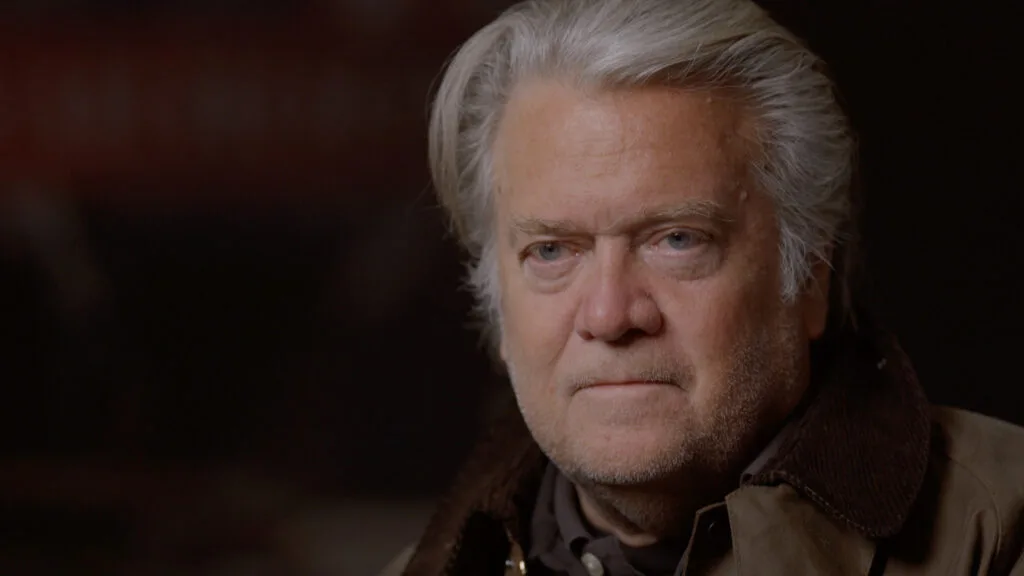
Steven Levingston is the nonfiction book editor at The Washington Post and previously wrote for The Wall Street Journal and International Herald Tribune. He is the author of Barack and Joe: The Making of an Extraordinary Partnership.
The following interview was conducted by FRONTLINE’s Michael Kirk on June 12, 2020. It has been edited for clarity and length.
Let’s begin at the early years.Place Joe Biden, young Joey, in his place, in his home, in his family, in his neighborhood when he was 10 years old or so.
Well, when Joe, or Joey as they called him back then, was growing up, he grew up in Scranton in pretty much a working-class area.And he, you know, he was a kid who kind of had to fight against adversity all his life, and particularly when he was young.He had a pretty bad stutter when he was young.He got teased for it.He was made fun of at school.And he had to fight really hard to get past that.And he worked hard.
It was something he really devoted himself to.He, you know, tried to make himself into a very good athlete so that people would focus on what he could do on the football field or the baseball field, rather than make fun of him as a stutterer.And his parents tried to lift him up most of the time while he was going through this difficult period.
It’s sort—I think his early life, his stuttering, his life in Scranton where his father fell upon some hard times when Scranton when into economic downturn, really helped define Joe Biden’s life throughout his career.
How?
Well, he was—he became a fighter.He learned how to fight for himself.He learned how to stand up for himself.And he also had—he developed a good sense of what you might call courage, in a way.Sometimes when he was a young boy, the courage took him a little bit too far.He was a little foolhardy sometimes.He, at times, would take up dares from his buddies just to prove what a tough guy he was.There was one instance where somebody dared him to climb to the top of a waste mine mountain from the mines, and he took it up.It was a very dangerous thing to do because these mountains were hot and pockmarked, and anybody who climbed up there could easily fall in, get burned, get seriously injured.
But Joe saw that he had to take on this challenge.He ran up, and he ran down, and he succeeded.But this is the kind of challenge he liked to take on in the face of his adversity, and a lot of times he succeeded.
Biden’s Struggle with Stuttering
Let’s talk more about the stuttering.How bad was it, Steven?
It was pretty bad.I mean, they used to call him [Dash] Biden because he really couldn’t get any sentences out without stuttering.So he spent a lot of time in front of the mirror trying to corral his mind and his mouth to work for him.And he had a lot of encouragement, as I said, from his parents in this.
And I think also what this developed in him, he understood what it meant to suffer and to be bullied.And this developed in him a sense of true empathy which he also carried throughout his life.He knows what it means to suffer, even from the early days of his childhood and through the rest of his life with, you know, the trauma of various deaths that he had to confront.And it helped define his personality as a person who has compassion and empathy.
You mean you sit in front of a mirror, and what, you just practice words over and over?Do you try to read something?What do you do?How do you beat it?
Well, I think one thing that Joe really wanted to do, as we know, when he got older, was to talk.He loves to talk.And it was kind of ironic that he was a stutterer and couldn’t really talk the way he wanted to.So he stood there and he just worked and worked and worked to make sure his mouth worked for him so that he could say all the things that were in his mind that he wanted to get out.
Also the economic circumstances.It’s interesting to us, of course, because he’s running against the son of a multimillionaire who is himself a millionaire.Joe never made much money, as I understand it, in his life, and he certainly doesn’t come from money.What do you replace money with when you look for an ambition for a young guy like Joe Biden?
Well, I think you replace it with perhaps power.He, from a very early age, wanted to get into politics and wanted to become powerful.You know, he ran for the Senate when he was just 29 years old, which is too young to actually sit as a senator.He got elected, but had to wait for his birthday to pass before they could swear him in.So I think from early on, he had an ambition to do big things in a powerful way to make up perhaps for the fact that he was made to feel small when he was younger.Yeah.
Biden’s Early Experiences with the Black Community
He gets a job at 19 at the Black swimming pool as a lifeguard.Tell me about that.What was up with that?Why did he do that, and what did he get from it?
I think that was a formative experience for him because he had never really been sort of on the other side of the tracks and seen how people less fortunate than him lived.And he took this job as a lifeguard, and it was—a lot of his friends there were African Americans, and he sat and listened to them, and they talked with him, and he got an insight into what a culture was that he had no idea—he had no idea about before.
He told the story of having listened to one of the guys who was going off to visit a relative in another state, and he had to drive a long distance.And so he asked Joe if he had a gas can that he could possibly borrow.And Joe didn’t understand: Why would you need a gas can?And the kid told him, “Well, because driving through the states, we can’t really stop at the gas stations, and so we need to fill a gas can in order to pull over and refill the tank so we can keep going.”
This was an enlightenment to Joe.And it sort of started him, I think, on the path, again, of being empathetic to the ways that other people have to live and putting himself in their position.And it was a very early time when he first began to understand the plight of African Americans.
He comes to Wilmington after law school.It’s burned out in places.There’s been racial strife, economic hardship.What does he see?It reads like this is perfect preparation, especially after the lifeguard story, to think about civil rights, to get involved in civil rights back at a time when that was front-page news and in the minds of almost everybody, certainly in any large city in the Northeast.
What was interesting about Joe is that when the civil rights movement got going, he didn’t really jump in from a protest point of view.He was a pretty straight-and-narrow guy.He wanted to do it from the inside.And so he tried to do it as a lawyer for a little while, and then he found that lawyering wasn’t the way for him.So he decided to get into politics, and perhaps from an inside position as a politician, he could help change the country into a better path on civil rights.
Was he a lousy lawyer or just wasn’t able to get to the things he wanted to get to?
I don’t really know what kind of a lawyer he was, but I think it probably didn’t feed his personality the way that politics did.I mean, we all know that he was a very traditional, Old World kind of politician who loved to walk the corridors and hug and meet and chat with people.I mean, that seemed to fit his personality perhaps more than poring over books and going into court and trying to be, you know, the hardcore lawyer.
Biden’s First Senate Run
All right.So it’s time to run for the Senate, 29-year-old Joe Biden.As I understand it, Delaware’s pretty divided.There’s a sort of southern Delaware, which is almost the South, and northern Delaware, which is much more of the North.And there is Joe running against a very experienced senator, [J. Caleb] Boggs.How does he thread the needle?How does he win?
Well, it’s pretty amazing that he actually won, because nobody knew him.He was a complete unknown.He was a young kid.And this guy he was running against was an institution; everybody seemed to love him.But he’d been around for a while, and Joe brought kind of a fresh face, fresh ideas.And I think he was just very energetic, and he had the help of his family, who helped run his campaign.And he managed to pull off an amazing feat, really, in defeating this incumbent.
The family worked on the campaign?
Oh, yeah, his sister was his campaign manager.His wife, his first wife, was deeply involved in helping him get elected, you know, and he had his beautiful young children, who were probably put out there as well as good props.
It looked like the perfect family.
Oh, absolutely.I mean, Joe, at that time, was at the top of the world.He had this wonderful wife.He had this beautiful family.And he beat an incumbent and was on his way to become a U.S. senator, the youngest ever.… And soon after he was elected, he headed off to D.C. to start, you know, hiring staff and getting his office set up.And it was around Christmastime.His wife was home with the children.They were out shopping; they were buying a Christmas tree.They were getting all ready for the beautiful holiday.And tragedy struck.
She was driving on one of the streets in the town, and she started to go through an intersection, and a giant truck came through the intersection and plowed into the car.Drove down the road and against a tree.Joe’s wife was killed.His baby daughter, his infant daughter was killed.His two sons were badly injured; it was unclear whether they would survive.And Joe got the phone call in his office in D.C. and was absolutely devastated.
… What did it do to him?
It basically put a hole in his life, put a hole in his heart.It made him reconsider everything he was doing.He was considering giving up his Senate seat before he even sat down in it.He didn’t know what to do, really.He railed against God, which was an amazing thing for a guy who was so Catholic and such a believer.He really began to doubt his God, that God could allow such a horrible thing to happen to such wonderful people—not himself, but his wife and his kid.
And so he came home with this enormous grief and tried to figure out what he really should do.And what he decided was that he wanted to be the best father he could be, and he—if he continued to stay in the Senate, he would come home every night.He would take a train ride every day to come home and be there for his sons.His sister would be staying with them at home during the rest of the time.But he wanted to be there to put them to bed every night.And he did that.You know, he became “Amtrak Joe.”
… I have this sense that he did it—that he may have even said this—he did it more for himself than the boys in lots of ways.They were his anchor.They were his reason to keep going.
Oh, absolutely.I mean, the boys were everything to him.I think it was a symbiotic relationship at that point.The boys really needed him, but he really needed those boys.And you know, Beau, I remember, was quoted saying that he has such distinct memories as a young boy when his dad would come home and jump into bed with them, and they would have these few minutes with him, with their father before they fell asleep.And it really meant the world to them.And it meant the world to Joe.
How important was it, the way the Senate embraced him, the older guys?He was the youngest guy there.How did they react to young Joe Biden coming in?
Well, the Senate and the senators who embraced him basically became his family.And this explains why Joe was such a man of the Senate, why he loved the institutions, why he loved the idea of being a senator, because after his wife and daughter died, senators like [Edward M.] Kennedy came to his aid.They nurtured him; they wanted to help him.They also wanted him to stay in the Senate.And they talked him through it.They said: “Joe, you can be here.You could do it for six months, maybe, see how you feel.”But they were a huge shoulder for Joe to cry on and for him to decide what he should do with his life.And I think it really influenced how he viewed the Senate for the rest of his life.
Biden’s 1987 Presidential Bid
Let’s talk a little bit about the 1987 decision to run for the presidency.He’s bright; he’s young at a time when there has been a youth movement in America itself.All the movers are moving up through corporations and the media and politics.And Joe seems like, especially once Gary Hart has fallen out, Joe seems like a likely bright, young, shiny thing.But what happens to him in his presidential run?
Well, Joe never really got much traction on that, in that political run, in that presidential run.And it’s something that sort of has haunted him in other runs as well.Again, I’m not that well read on it, but I believe that it was, he—he had a bit of a gaffe, one of his early gaffes, where he relied on the words of a British politician in one of his speeches.And when that was discovered, it was publicized.In those days you couldn’t just glide past that sort of thing.It basically did Joe in.
Biden’s Role on Race in the Obama Administration
… I think you say in the book that he becomes the “Blackest” guy in the Obama administration.Tell me what you mean by that.
Well, that was very interesting.I mean, you know, in some ways, when Barack Obama became president, he had to walk a very fine line on how far he could go in speaking out on race, racial issues, how he could lead the country on race.And having Joe Biden at his side was kind of a help because Joe was known as a friend to African Americans.He had spent a lot of time concerned with civil rights, and so he was able to carry a bit of Barack’s water, I think, on civil rights.
But most importantly, in a way, just the relationship between the two of them—Black president, white vice president—sent a message to the nation on racial harmony: This is how the nation could move forward.And in some ways, they flipped the script.We had a Black president who was the leader on top, and we had a white vice president who had to follow the bidding of the Black president.And Joe did that; Joe understood the hierarchy of what needed to be done.And he became Obama’s wingman.And as we saw, they became terrific friends, which sent a further message to the nation, that this is what we should all aim for; these are the aspirations we should have for racial relations.
Biden as Vice President
… But how did it work for Joe Biden, who’d never had a boss, suddenly to have a boss, and that boss is a much younger man who hadn’t really been a senator with much experience in Washington?What was that like for Joe Biden to navigate that territory?
Well, when Joe was first considered for the vice presidency, he wondered if he could actually do it because he had never had a boss in the Senate; he was his own man.And so it would require him to be second in command and have a boss and do the bidding of the president.But I think he reached into his soul.One of his advisers told me that he kind of thought about it in terms of his own Catholicism.He was a very religious man, and he knew that in the Catholic faith, there was a great sense of hierarchy.And he respected hierarchy, and he was able to submit himself to that.And he knew that as vice president, yes, he would be under the president and he could do what the president asked him to do, as long as he believed in the president’s policies.And he really believed in everything that Obama was about.
He had established a precedent that he would have lunch with Obama once a week and that he would be the last guy in the meeting when everybody else had left.Did it work out that way?
Yeah.When he was being vetted for the vice presidency, he laid out what kind of vice president he wanted to be, and he wanted to be a vice president unlike any other before him.He wanted to be the president’s chief counselor.He wanted to be involved in every meeting.He wanted his voice to be heard.He wanted to be the last guy in the room whispering in the president’s ear after everyone left so that he would have an impact on the way that policy went.
And to Obama’s credit, he agreed to it all because he knew that Joe had the credentials.He needed Joe’s experience.Obama was a young guy.He was still a junior senator before he became president.You know, Biden brought a deep understanding of legislation and the Senate and how to work across the aisle.He brought an understanding of foreign policy that Obama didn’t really have.
So Obama, in his wisdom, was happy to lean on Joe for lots of counsel.
Give me a sense of the personal relationship between this much older man and Barack Obama.
Well, it wasn’t love at first sight, that’s for sure.They were two very distinctly different people.First you had, you know, a cerebral, young African American who spoke very precisely, and you had an older, chummy white guy who shot words out of his mouth in all directions.And when they first met each other in the Senate, they sort of circled warily around each other.Obama had come in as the new hotshot Democratic star, and he was a man in a hurry.He kind of looked a little bit down on the processes of the Senate.He thought things moved too slowly; there was too much bloviating.And Joe was a perfect example of the man of the Senate who bloviated.
So, you know, they weren’t immediately made for each other.They had to go through a period where they sort of learned to have respect and admiration for each other.And that came even after they both started to run for the presidency in 2008.You know, Joe was running at the same time Obama was, so at first they were competitors.So that’s not a fertile ground for friendship either.They had to get past that.But then after Joe fell out of that race as well, fairly early on, things changed.
So we’ve got them in the White House together.How does it work?How do they get close?How does it become a sort of bromance, if that’s in fact what it actually becomes?
Well, it started off pretty rocky, actually.You know, in some ways, the—their relationship was a political marriage at its heart, and it took time for it become a true friendship.When they first got together, Joe was still the Joe we all know, the man given to gaffes, and this bothered Obama, because Obama was not a man who was—who spoke unclearly or off the cuff.So they had to get past a lot of that.
But after a while, as you—if you look at the kind of gaffes that Joe—if you look at the kinds of gaffes that Joe had, none of them really were detrimental to the administration.It was Joe being authentic.It was Joe just speaking his mind.There were no policies that were impaired.There was no state secrets that were revealed.Nothing really changed because of Joe’s gaffes.And Obama came to realize that in a way that—as one of his advisers told me, he liked to play the long game.He didn’t think about the day-to-day affairs that were going on in the White House, but he always had his eye down the road.And if you could get past these bumps in the road, everything would be fine.
… He was on [Meet the Press], and he essentially says, “I’ve got no problem with gay marriage.”
Well, actually, yeah, it was—the day, the weekend that Obama had decided to launch his reelection campaign in 2012, Joe Biden went on [Meet the Press], and he was asked his opinion of gay marriage: Should it be legal?Should people who are gay be allowed to marry each other?And Joe, being Joe, just spoke from his heart and said, yes, he believes in gay marriage.The problem with that was that Barack Obama, as president, had never said that.
So he stirred the nest a little bit in terms of administration policy.Obama agreed with him but hadn’t really come out and said it yet.It was perhaps a plan to have him come out and say that down the road as the campaign progressed, but Joe beat him to the—beat him to the punch.
That caused a lot of consternation within the White House among Obama’s aides.They were really upset with Joe.But again, I don’t know that Obama was as upset as his aides were.Usually I found, in doing the research, that the presidential aides were always the ones who flew off the handle much quicker than the president, simply because this was their job.They felt they were protecting the president and his policies, whereas Obama, as we know, is a much more restrained and thoughtful person who tried to understand what was going on.
So after that, after Joe had made what became—what was called a gaffe, the Obama administration began to consider what they should do.And after several days of controversy, Obama realized he couldn’t let this go on, and he went on television and basically admitted the same thing that Joe did, that he was in favor of gay marriage.
Well, that actually turned out to be a great positive for Obama, because the polls showed that most Americans agreed with him.He won kudos from all the media for doing that, and Obama suddenly owned the issue of gay marriage, and it pushed him forward in his campaign.
So this actually, again, represents a gaffe where, on Joe’s part—it represents a gaffe on Joe’s part that turned out to be not detrimental, but actually positive to Obama.
Beau Biden’s Illness and Death
It’s at this exact time or around this time that, I suppose after reelection and on into ’15, where Beau is getting sick.How does Biden handle Beau’s sickness in terms of what the president knows, what the White House staff knows, what America knows?
Well, I think as his son Beau got sicker and sicker, he didn’t really want to have it become part of the problem of the administration.He wanted it to be his problem, and he was going to deal with it.But he knew he had to let the president know.And when he did, Obama was amazingly sympathetic.This is the time when their relationship really crystallized.Obama was shown to be a man of incredible compassion.He was a shoulder for Joe, and Joe really appreciated how Obama responded to his crisis.
And in fact, when Beau dies, talk a little bit about the memorial service for Beau, Obama’s speech and Biden’s reaction.
Yeah.At the funeral for Beau, President Obama gave the eulogy, which was a beautiful remembrance of Beau and the Biden family and how father and son were alike.And then, afterwards, he left the altar, came down into the pews, and Joe popped up out of his seat.And we’ve all seen the image of the two men, the president and the vice president, really embracing, and even kissing each other on their cheeks.
This was a real moment, I think, in presidential history, where a president and a vice president showed so much emotion and friendship toward each other.We’ve never seen that before.And it was really genuine.
And the impact of that, do you think, between them and for the rest of the Obama administration?
It was a turning point, I think, in how much they cared for each other.They found something deep within themselves in the other guy, and they really rode that through to the end of the administration.
Of course, on Joe’s mind, on Vice President Biden’s mind, starting probably earlier than ’14, he’s thinking about running.It’s a natural thing to do, finish the vice presidency.… What is Obama’s response to Joe’s efforts to signal that he might be running for president?
Well, this is where the relationship gets a little delicate and complicated, and you see that it is not just a friendship but a political marriage.And in any kind of political marriage like that, each side has their own ambitions, their own desires and their views for what the future should be.Biden, of course, his future, he hoped, would be president of the United States.Obama?He had different—he had a different idea.He saw his legacy being put forward and carried forward by Hillary Clinton, and not by Joe Biden.
Obama had made this decision early on as they were discussing what would happen in the 2016 campaign.At that time, everyone thought Hillary was pretty much a shoo-in, not only for the nomination, but for winning the presidency.So it would be a very tough climb for Joe to try to unseat her from that position.And I think President Obama realized that, and that’s one of the reasons why he discouraged Joe from going forward.
He also was sensitive to the fact that Joe was still in deep mourning over Beau and Joe was grappling with whether he would have the strength for a full-fledged campaign in light of the loss of his son.
Biden Doesn’t Run in 2016
… So President Obama ultimately makes it very clear to Joe Biden that he’s not going to support Joe and he doesn’t think Joe should run.How painful do you think that was to Joe Biden?
I think it hurt Joe.I think Joe would have liked to have Obama’s support for that run.But I think in the end he probably understood it, and he saw the political strategy behind it.But at the same time, Joe also knew that there were numbers out there at the time that showed that he was a pretty viable candidate.His favorability numbers were better than any candidate out there.He was looking strong in those Midwestern states where Hillary was not terribly strong, in Pennsylvania and the like.So there was an opportunity to make that move, to take that run, if he could get over the grief of his son.
… How much did he need Obama at that moment, do you think?
Well, anybody who runs for president on the Democratic ticket needs Obama, and needs Obama very much.And Biden in particular needed Obama because he was, and had been, his wingman, his vice president, and he needed to have that affirmation from Obama that he still was his number one guy.
Maybe I should also just say one other thing about, when he was—going back to the 2016 period, when Joe was thinking about running and Obama was not terribly receptive.It seemed that Obama was more in favor of Hillary Clinton as the Democratic candidate not only because he felt that she could win and that she was perhaps the better candidate, the more—the stronger candidate, but she was also the one who could carry forth his legacy in a way that Joe couldn’t.
Hillary Clinton, if she became president, would be the first female president of the United States, following on the heels of the first Black president.That would be huge.And that would also show that Barack Obama had truly revolutionized politics in America.We had broken through many ceilings with him as the leader.That would have cemented his role as a political titan for all of history.So I think that’s what put him on Hillary’s side in many respects, rather than Joe’s, in the 2016 campaign.
However, we also saw how that played out.And in the end, a lot of Obama’s legacy became challenged after Trump won the presidency, and he’s had to reckon with that since then.
Biden’s 2020 Presidential Bid
As Joe enters the [2020] race, there are obstacles to his candidacy.His age is obviously one; his long record across the Senate the people can take potshots at him for, busing and the policing stuff; the Tara Reade moment, example, that comes up; and Hunter, the problems with Hunter.Joe Biden facing those obstacles, those are even more formidable, or at least as formidable, as stuttering, yes, and all the other things that we’ve talked about, that have crossed his field of vision.What do you think about him facing all of those obstacles?
Well, yeah, he got thrown a lot of criticism when he came out as a candidate, and he will continue to get that from all quarters.Now that you are the main target, all groups are going to come after you in different ways.
… But as the person who is the apparent nominee, or the nominee, he’s going to face a lot of fire, and he needs to fight back.
What are your thoughts about, from all your reading and research interviewing, on the Tara Reade story?
I think the Tara Reade story is something that seems out of character for Joe Biden.I think that while we all want to hear any complaints that a woman might have of any man’s aggression, I believe that we haven’t heard these kind of complaints against Joe in the past.And he’s been in public life for almost 40 years.It seems to come from a place that people haven’t gone before, especially with the vividness of it and the way that she describes the attack.And I know that the media has looked into a lot of this and the case seems to be fading a little bit.
I mean, I think it’s representative of the fact that Joe is a very much hands-on kind of person.It’s gotten him into trouble before with women being uncomfortable with how much of a hands-on guy he was, but they never complained in the way that Tara Reade has complained.He gets too close; he gets into people’s faces; he’s very affectionate.And that’s troubling to people who aren’t used to that kind of thing.
But as part of Joe’s character, there’s a thing that some people who have known him and who first meet him say you get Bidened.And getting Bidened is getting overwhelmed by his affection.If he can get close to you and he can embrace you, he likes that.But not everybody does.
This is now the 2020 presidential election.We think of it in some ways as Biden’s luck-of-the-Irish moment.The coronavirus locks him in the basement.He doesn’t have to go out and shout in arenas like Trump does.And Trump can’t either.And also, the aftermath of the George Floyd events and protests.There’s some power to sitting back, I guess, which is part of this strategy, just letting Trump, I suppose, appear to implode.Talk a little bit about Joe Biden in the basement for me, will you?And from what you know about him, is that hard to do?And how is he as a candidate for these times?
Well, I think in some ways the times make the man or make the candidate or make the leader.And in some ways, this moment is pretty much made for Joe because there’s no greater contrast between Joe Biden and Donald Trump than in the empathy that they are able to show.Right now, America’s suffering through the coronavirus and suffering through the protests against police violence.It needs, America needs a person who can empathize and show compassion for all of the suffering that’s out there.This is Joe’s calling card.Donald Trump hasn’t been able to show that, and every time he tries, he sort of messes it up.
So if there were ever a time for Joe Biden and his character—his character of compassion and empathy—this may be it.And he may just be a man who’s very lucky and got the luck of the Irish on this one.
Biden’s Vice Presidential Accomplishments
When you look back at Biden, and you talked about the symbolism of him being a white vice president to a Black president, when you look over his years as vice president, in addition to that, or maybe just that, what is his legacy as vice president?What can he point to and say that he accomplished in that time?
Well, I think that Biden pretty much remade the vice presidency.He had a model that he wanted going in based on something that Vice President Mondale came up with when he was vice president for Jimmy Carter, that said that you really need a strong vice president, a vice president who isn’t afraid to speak truth to the president.That was really what Biden tried to do as the vice president, and Obama welcomed that.He wanted to hear all voices and all opinions, and even in some of the—of some of the meetings, policy meetings that were held in the White House, Biden’s role was to play the devil’s advocate, to get people talking, to make them put forward their ideas so that Obama wouldn’t have to show his hand.Biden led the way and got people to offer viewpoints that they might not otherwise offer because they thought that it would go contrary to what the president wanted to hear.
But he was able to be a strong voice and bring truth to the president.