
I Am Not a Monster
Episode 5: “We had a great life”
December 21, 2020
Share
Listen & subscribe
Josh is face-to-face with Sam after a year trying to track her down. On a military base in Syria, she begins to tell her side of the story. According to Sam it all started as a family holiday…
JOSH BAKER: Before we go any further, there are some descriptions of violence and some upsetting moments involving children in this episode.
SAM SALLY: My story, oh yeah absolutely, it is very difficult to believe, it is very hard to believe.
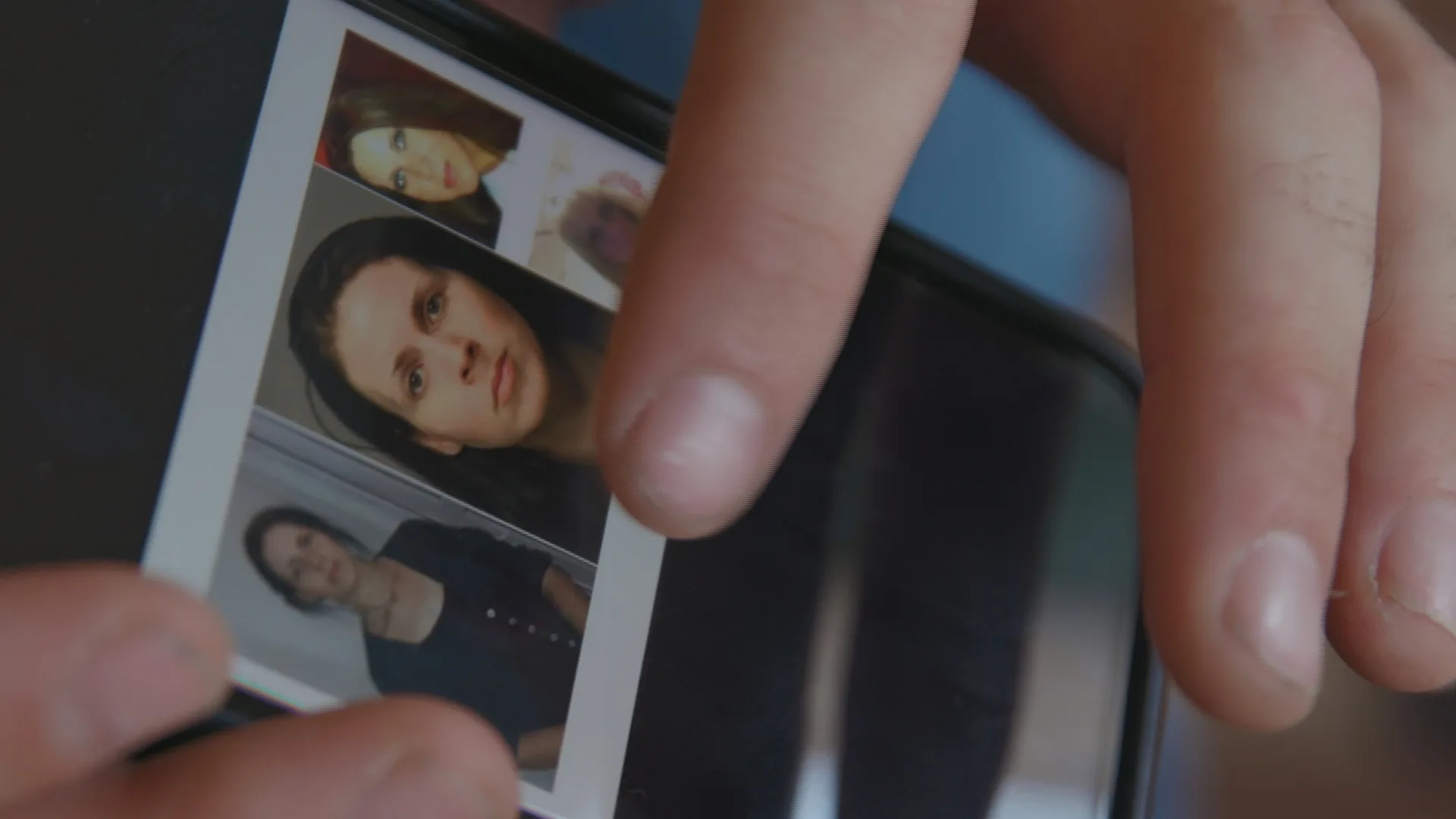
BAKER: Josh to Mau? I’m in an office with a man who has pictures of Sam and the kids on his phone.
LORI SALLY: Anytime you don’t hear from them for an amount of time you think they are dead. You think the worst everytime.
AYHAM: One banana two banana three banana four…
BAKER: Where did you learn this song?
AYHAM: From this family American.
BAKER: From the American family?
AYHAM: Yeah.
SAM: I’m not a bad person, I’m not a monster.
BAKER: I’m Josh Baker. From BBC Panorama and FRONTLINE PBS, this is “I’m Not A Monster.”
Episode 5: “We had a great life”
BAKER: I just found Matthew, Sam and all the kids together. I had the kids climbing all over me and it’s the weirdest experience. I feel quite emotional myself and I don’t really know how to explain this.
BAKER: I’m standing by the side of the road trying to explain to my colleague Mau what’s just
happened.
BAKER: Is any of this making sense?
BAKER: It’s December 2017. Sam and her children are being held by a Kurdish militia in northeastern Syria.
BAKER: So essentially, I walked into a room, and I sat down and I had all of my items taken off me; my tracker, my medkit, my knife, my phones, everything, you name it. Then I had to write a note to Sam saying who I was, and what I wanted and they said, ‘Look, we’ll give her this note and if she wants to see you, she’ll see you and if she doesn’t — goodbye.’
The note goes away. Then the door opens and Sam isn’t there but three children run through.
BAKER: My jaw drops, I’m completely stunned. Matthew comes in first and he’s got this big smile on his face. His younger sister is next, she walks up to me and gives me this massive hug. She’s followed by a toddler and then Sam who’s carrying a baby. These are her two youngest children — born in Raqqa. Sam’s wearing a black abaya, a long loose-fitting gown, and a headscarf. She looks tired.
BAKER: I tried to explain who I was as clearly as I can. If you can imagine this is a lady who knows nothing about who I am and I know an awful lot about her. And that was very confusing for her and very emotional. And for me personally this is an incredibly weird moment because I’ve been looking for these people for a year and there was a point where I thought the children had all been killed. And they are alive.
What’s really hard is how innocent the kids seem. There’s a real innocence there and a real childlike naivety which is beautiful but it’s also, it’s quite saddening because of the environment they are in.
BAKER: I’m meeting the family in a military commander’s office. In one corner there’s this old ISIS rocket that’s been converted into a plant pot. And in another, a guard sits next to a cat calendar — he’s watching and listening to our every word. When Sam first starts to talk, her English is kind of broken, like it’s her second language. But after a while she eases into the conversation.
The reason you’re not hearing this is because they’ve taken away my recording equipment. But, I do convince them to let me use my phone briefly, there’s a voice message for Sam from her sister Lori.
LORI: Sam this is a message for you. I just want you to know I never gave up on you. I never thought, even for a minute it would be easier if I didn’t do anything. You know I love you, you’re my sister, you were my only friend growing up and it would just kill me to lose you. I would really like for you to come home. I would really like to see the kids. I would really like to get to meet my new niece and nephew. And I’d like to be a family.
BAKER: The guards let me record Sam’s response.
SAM: Thank you so much for doing this Lori, you have no idea how I’ve been waiting for this. We’re doing ok but we’ll be doing much better once all of this is over with. I love you and I can’t wait to tell everyone everything we’ve been through and tell everyone all about what’s been going on. Thank you so much…
BAKER: Sam and I talk for about 45 minutes. She cries a lot and wants to know how her mom and dad are doing. As she tells me about her life with the Islamic State Group, the guard in the corner barely moves. As soon as I say the words ‘people smuggler’ though, he jumps up. I want to know about the man she told her sister could help the family escape Raqqa. But our conversation is cut short — the guard leads Sam out of the room.
There’s no explanation. The meeting is over.
I get a call from a Kurdish contact who tells me why I was kicked out of the room. When I’d said the words ‘people smuggler,’ the guard who was listening in thought I wanted to smuggle Sam out of Syria. He suspected I was British intelligence.
My contact warns me that I need to leave the country — now. Syria is not a place you want to be accused of being a spy. So, on Christmas Eve, 2017, I start my journey back to the U.K. — all because one Kurdish guard misunderstood a question.
ARCHIVE: Just when you thought the war in Syria could not get any more complicated, well here we are. We have come to….
BAKER: Over the next few months the situation in Syria changes. Turkey launches an offensive against the Kurdish militia.
ARCHIVE: Fears are growing that the fighting will escalate and push east where the U.S….
BAKER: It’s just not safe to return.
LORI: Hello?
SAM: Do not contact…
BAKER: Sam has somehow managed to get hold of a phone and calls her sister Lori back in Indiana.
SAM: I’m sorry, I don’t know what the time difference is I’m calling you right now…
LORI: Are the kids ok?
SAM: Yeah everybody’s ok but I just, I don’t trust these people at all… Josh is coming back right?
LORI: Yes.
SAM: Ok, alright. I’ll try and call you back as soon as I can ok.
LORI: Ok. Alright I love you.
SAM: I love you too.
LORI: Bye bye.
BAKER: It’s not a great phone line, but Sam asks Lori if I’m coming back. I’ve no idea why — but I do want to see her again. There are so many questions I didn’t get a chance to ask her.
The fighting dies down, and after convincing the Kurds through several phone calls and texts that I’m neither a people smuggler nor a secret agent, I return to Syria in March 2018. And there, in the same Kurdish commander’s office where I’d first met Sam — I finally record her story.
SAM: Ok. Hello, can you hear me? You hear this one ok? Hello?
BAKER: Yep.
SAM: Mic check. Should I bust out with some like Eminem mic check.
JOSH: Yeah come on just rap for me.
SAM: You know I can’t remember any of the words, if it was a couple of years before maybe I would remember but I don’t remember now.
BAKER: Last time I was here, Sam was dressed in all black and speaking broken English. Now she’s offering to rap Eminem, wearing a baseball cap, a pale green sweater and jeans. Her hair’s neatly braided into two long plaits. There’s makeup, tattoos on show, a nose ring and silver earrings — three in each ear. This is a very different Sam.
BAKER: Do you want to keep your cap on?
SAM: Yeah I kind of do. I know this sounds stupid but I did like this oil treatment on my hair last night so it looks like I haven’t showered in a week but it’s only because I did the oil treatment on my hair last night
BAKER: Whatever makes you most comfortable. Are you happy for me to start?
SAM: Yeah let’s do this.
BAKER: I’m about to hear Sam’s version of events. And this is not going to be an ordinary interview — we’re on a military base, there are guards watching and listening. If I say the wrong thing, I might have to leave the country again. If Sam says the wrong thing, it could put her and the children in danger. So, for now, this is Sam’s story. And later I will scrutinize every part of it.
BAKER: One of the questions that sort of been really in my head is: how did an American lady who grew up as a Jehovah’s Witness end up in Syria with ISIS?
SAM: I don’t even know where to start answering that question… Um, you know I met Moussa. About a year after we met each other, we got married. We’d been seeing each other and we were living together but we weren’t married, which shows you, he was not a strict Muslim, it was not like what you would think with the Islamic State. For five years we had a great life. We worked together, we did everything together. He was very relaxed. He bought me nice things. I drove a BMW, he drove a Porsche. After a while he, he became bored, I think, of his life, with the same thing every day, so he made the proposal to me, to go to Morocco with his family.
BAKER: So he was from Morocco?
SAM: Yeah. Yeah he’s from Morocco. And we get busy. He’s got expensive watches — he is selling his expensive watches, he sold the Porsche, he sold the BMW, he sold everything. Every little thing we could sell.
MOUSSA: Hi, I’ll be doing a walk around this beautiful BMW Z3 coupe. As you can see it’s pretty clean for its age.
BAKER: I’d already seen videos online of Moussa doing this.
MOUSSA: This car is a good buy.
SAM: Basically we want to turn our whole life into cash so we can start a new life in Morocco is what we’re trying to do. So from there, my husband bought plane tickets for all of us and we had a five-hour layover in Istanbul, which at this point I didn’t think too much of that ‘cause we’re always looking at cheap flights and it was a cheap flight.
BAKER: When they landed in Turkey, Sam says Moussa announced they’d stay for a while. A kind of surprise holiday. Moussa’s brother, a guy called Abdelhadi, was there too.
SAM: There was not one dollar he would not spend on us. My husband took us to the nicest restaurants, great shopping malls, he paid taxis to take us sightseeing around the city, like he was really romantic like this. It wasn’t until Sanliurfa that things started getting a little weird…
BAKER: Sanliurfa is a city 800 miles from Istanbul. It’s a tourist destination, but it’s also close to the Syrian border. And once there, Sam says they barely left the hotel.
SAM: My husband said we were getting in the car and we were going to the airport and it was finished, our vacation was finished, we’re going to Morocco. I said okay. After about 45 minutes in the car, I started asking my husband questions. He was like, ‘You have to be quiet. No one should hear you speaking English; just be quiet.’ In my bag I had all of our cash, all of my jewelry, all of our passports, and my husband turned around and he said to me, ‘Give me your bag.’ I didn’t argue with him, I gave it to him.
BAKER: Sam says she was taken to a house and locked in a room. Inside were two other women — neither of whom spoke English.
BAKER: You’ve been taken somewhere you don’t know, you’ve been locked in a room with women you don’t know. Did you not think, ‘God, I need to get out of here? Something is up.’
SAM: Yeah, yeah, yeah, but, my first thought process is, my bag — my bag has all of our passports, has everything; what am I, am I just going to walk out of here?
BAKER: Hmm.
SAM: I don’t know what to do, you know, we’re in the middle of nowhere — do I just start walking down the road and my husband grabs me, you know, and, and then what? We get into another car and the driver pulls up between two houses. My husband, phew, out, grabs my daughter just goes; he knows, he knows I’m going to follow him; what am I going to do? It’s like dark now, so I take my son by the hand and we’re walking, we’re walking really slow and the guy that drives the car, he’s like trying to push us along and I see my husband cross through a fence — my heart was just beating so fast; I know, I know, I know what’s happening now and I’m thinking, this is such an American mindset of me, I’m thinking, ‘Okay, I’ll just make it to the other side, take my bag and my kid and walk back across again, you know, it’s just that simple.’ But it wasn’t that simple. I followed him. I’m thinking if I could just speak, if I could just speak, maybe something — but I can’t, I can’t make any sounds come out.
BAKER: What she says started with Moussa’s promise of a new life in Morocco, ended in the dead of night on the border. And that’s how Sam says she was tricked into entering Syria.
SAM: So, once we crossed the border, once we crossed over the wall, there’s like a ladder there, there’s like this bridge over this ditch. We go up over this ladder and then there’s this big highway,
BAKER: Did you know you were in Syria at this point?
SAM: Yeah, yeah, I knew I was in Syria.
BAKER: And did you know who you were with?
SAM: Yeah.
BAKER: How did you first come to know that you were with ISIS?
SAM: Well when you walk up and you see a bunch of guys with beards and guns, what, what do you, what else do you think? You know, and everybody’s super secret, you know, and everybody’s like, they’re wearing these uniforms and… I felt about this big; I felt very small. I felt like the world was happening around me, that I didn’t exist, everything was just happening.
BAKER: I’ve reported on other people who ended up with ISIS — their stories and their routes into Syria were often similar to Sam’s. The porous border between Syria and Turkey that had long been exploited to smuggle cigarettes and fuel, was now being used to move people instead.
So Sam’s description of how she ended up there sounds plausible. But as for her claim that she was deceived by her husband — I’m really not sure.
SAM: Once we get up there, they immediately put me into a van, and my husband into another van.
BAKER: After crossing the border, Sam says she and her kids were taken to a house for women who had just arrived. The next time she saw Moussa was weeks later in the capital of the ISIS caliphate.
SAM: The first time I see him is in the middle of Raqqa on the side of the street with a huge beard and carrying a gun and he’s got a big smile on his face, and I tell him — the first thing I say to him is, ‘You’re crazy and I’m leaving,’ and he was like, he said, with a big smile on his face, ‘Go ahead, you can try but you won’t make it.’
BAKER: How did you feel then?
SAM: I knew it was true, I knew it was true and I felt stupid for thinking that I could just walk back again.
BAKER: So then you’re in Raqqa, you’ve just been reunited with your husband. What is life like, I mean, what’s life like for you and what’s life like for the kids? What’s life like for him?
SAM: He was trying really hard, honestly he was trying really hard to make me happy; he really wanted me to be okay there. But how, how do you accept a life like this you know? How do you accept a life that’s a lie? It wasn’t too long after he made it back from training camp…
BAKER: Sam says they moved into a house on the edge of Raqqa next to the Euphrates river, and that Moussa was sent away to fight — leaving her with the kids.
BAKER: How was Matthew reacting to that environment?
SAM: Well, you have to understand, they’re kids, you know, they, they have me; they don’t understand what’s happening; they don’t understand. They just know that they’ve got this cool house that they can play in and we eat good food and you know, we just stay at the house all day; we play in the water all day, summers are hot, you know, try to make it as, as fun as possible. I spend all my time with them, all my time is focused on them. I didn’t go out that much and whenever I did, I walked to the market, down the road. I didn’t want to drive, I didn’t want to, because you have to wear like the full niqab, how do you, how do you drive like this?
BAKER: ISIS enforced a strict dress code. Women had to cover every inch of their skin. Faces would be covered by a niqab, and a piece of cloth would hide their eyes. The shape of the body was concealed by a loose fitting gown that ran all the way to the ground — it’s known as an abaya. Feet were covered by socks, and hands hidden by gloves. And Sam tells me she hated it.
SAM: You know, like if you’re in the supermarket and you take off your glove, so you can feel the texture of a fabric for your baby and then men start yelling at you, or you uncover your eyes, there’s like this fabric that goes over you, you uncover your eyes so you can read the ingredients or read the price of something and men start yelling at you; how are you, how do you do anything? Hisbah, their police became very violent, like if you wear your bag the wrong way, they hit you in the street. You’re walking around; they’re not going to warn you, they just whack you, you know, it — I don’t understand the rules like that, so I just kept it safe and stayed at home most of the time.
BAKER: When Sam arrived in April 2015, ISIS controlled an area roughly the size of Britain — with almost 10 million people under its rule. It wanted to give the impression of a legitimate state. There was an education system, people were paid salaries. There were even traffic wardens. But behind it all was extreme violence and persecution. Public beheadings and crucifixions were taking place. And ISIS was inspiring attacks around the world. Sam was there when Paris became a target.
ARCHIVE: [people shouting] Reports are coming in of an attack or quite possibly several attacks in Paris. Reports of a shooting in a restaurant… Some people in cars opened fire on the bar… A masked gunmen… Hostages were taken… Kalashnikov shots… Multiple coordinated terrorist attacks. More than 100 people have been killed… [sirens]
BAKER: I want to know what Sam thought about it.
SAM: I sat and watched it on the news. I had satellite at the time. I think my husband was actually not even there, he was fighting. And it happened. I was like, wow, I remember I stayed up all night watching the TV.
ARCHIVE: Then three suicide bombers blew themselves up outside the Stade du France stadium… An outrageous attempt to terrorise innocent civilians… And the most horrifying attack of all at the Bataclan concert hall… This is an attack not just on the people of France but all of humanity and the universal values that we share.
SAM: You know, it’s — I couldn’t even go out because it was embarrassing, it was embarrassing how people were so excited and people were celebrating and I’m like, this is embarrassing for me, if I go out I’m wearing full niqab but I still want to put my head down like this, you know, it’s embarrassing. It’s, like I don’t want anybody to see that I’m there, I don’t want to be any part of this at all.
BAKER: Sam talks about the attack in such a strange way — ‘embarrassing.’ It’s embarrassing when a child misbehaves, or you walk into a post. Not when a terror group you claim to want nothing to do with celebrates murder. So far she’s been painting a picture of herself as someone who didn’t want to be there. Not an extremist.
SAM: My husband was not the same. He wasn’t my husband anymore. Like before he had sometimes he had crazy ideas and we would laugh, but now it’s all about weapons and it’s all about killing and it’s watching videos of people’s heads getting cut off and laughing about it and…
BAKER: Did he ever try to show that to any of the kids?
SAM: All the time, all the time. Like there’s these, what they call media points where you can go, you can take a flash card and you can go and you take all the new videos. He would come home, put them in the TV and he would sit down and I would serve food; it was like theatre.
BAKER: What sort of things would you watch on the TV?
SAM: Well, before, we had satellite, we watched cartoons, we watched Disney, we watched news, we watched everything. After that, it’s only Islamic State videos. Music before was not a problem, now it’s only Islamic State music. It was combat, executions, just a lot of killing.
BAKER: Do you feel there’s anything you could have done to stop the kids seeing those videos, to stop Moussa doing that?
SAM: There are things that I fought harder for and when I fought harder I got bones broken, so you pick your battles.
BAKER: Sam says Matthew was also the target of Moussa’s abuse. And I’ve seen some of what he forced his stepson to do.
MOUSSA: Ok, abu jihad. Without a single mistake, take apart this loaded AK, in less than a minute and put it back together in less than a minute. Loaded, ready to fire.
BAKER: The videos of Matthew being made to assemble a suicide bomb and take apart a loaded gun. The videos that had been emailed to Sam’s sister Lori.
SAM: Like you have to understand before that he didn’t know anything about this stuff. Like he doesn’t know anything about weapons… Like he learned it as fast as he could and every time he messed up it was like punishment.
MOUSSA: Watch out might be loaded. Was it loaded?
MATTHEW: Yes.
MOUSSA: Now put it back together, go ahead. Good job. Put it with force. Like a man. Good job.
SAM: If Matthew wasn’t doing something proper, he was like, I saw him with my own eyes, punch him straight in the face like a man.
MOUSSA: I’m going to go get you your explosive belt ok?
MATTHEW: Yeah.
MOUSSA: This explosive belt is going to be yours all the time.
MATTHEW: Ok.
MOUSSA: Ok you can go to bed with it, to the bathroom with it. No one takes it from you ok?
BAKER: Sam tells me Moussa made the videos to try to get money from her family back in the U.S.
SAM: He was trying to sell me back to my family, and he did a video with Matthew, with weapons and this explosive belt and things like this, Matthew thought we were going home. I was being told the same thing. We were being sold back to my family and I thought it was it.
BAKER: Lori spent weeks exchanging messages with what she thought was a people smuggler…
FLORIAN: Hello…
BAKER: Who’d asked for a hundred thousand dollars to get the family to safety.
FLORIAN: Don’t worry inshallah all will become good and I will help her inshallah…
BAKER: Now Sam says the entire thing had been set up by Moussa.
SAM: We believed we were going home. But then later we found out that that wasn’t the case.
BAKER: How did you feel watching Matthew do that? Were you watching Matthew do that?
SAM: Yeah. I was, it didn’t really matter to me, it didn’t really matter because I thought that was the end of it. You know, if he could just be strong this little bit, if he could just be strong this little bit we would go home, that would be it.
BAKER: I’m stunned to hear Sam say that Matthew being forced to make these videos, ‘didn’t really matter.’ That their situation was so bad, that if Matthew had to suffer in order for the family to have a chance to get to safety — it was a necessary evil.
Sam has blamed Moussa for everything that happened. But I’m cautious — I don’t know if that’s right. But whatever the truth, Sam insists she was looking for a way out.
SAM: You know, I spent a lot of time with the neighbors, they’re all really nice. They started to understand, they started to help me. It was kind of my fault, not kind of, it was my fault. I was looking for smugglers and I think I talked to the wrong one maybe; I ended up in a torture prison in Raqqa.
BAKER: Sam say she was taken to the Black Stadium — an infamous ISIS torture prison.
SAM: I was extremely scared. They kept telling me, ‘We know you’re a spy.’ I knew I was going to die, I was ready to die. I was just ready for it to be finished.
END

Sign up for FRONTLINE Dispatch Newsletter
Related Documentary
Return From ISIS
The story of an American mother who takes her son to the ISIS-controlled city of Raqqa
Related Stories
Return From ISIS
I’m Not A Monster
Related Stories
Return From ISIS
I’m Not A Monster
Explore
Policies
Teacher Center

Jon and Jo Ann Hagler on behalf of the Jon L. Hagler Foundation
Corey David Sauer
Koo and Patricia Yuen
FRONTLINE is a registered trademark of WGBH Educational Foundation. Web Site Copyright ©1995-2025 WGBH Educational Foundation. PBS is a 501(c)(3) not-for-profit organization.
Funding for FRONTLINE is provided through the support of PBS viewers and by the Corporation for Public Broadcasting, with major support from Ford Foundation, and The Fialkow Family Foundation, as part of the Plum Bush Foundation. Additional funding is provided the Abrams Foundation, Park Foundation, John D. and Catherine T. MacArthur Foundation, Heising-Simons Foundation, and the FRONTLINE Trust, with major support from Jon and Jo Ann Hagler on behalf of the Jon L. Hagler Foundation, and Corey David Sauer, and additional support from Koo and Patricia Yuen. FRONTLINE is a registered trademark of WGBH Educational Foundation. Web Site Copyright ©1995-2025 WGBH Educational Foundation. PBS is a 501(c)(3) not-for-profit organization.