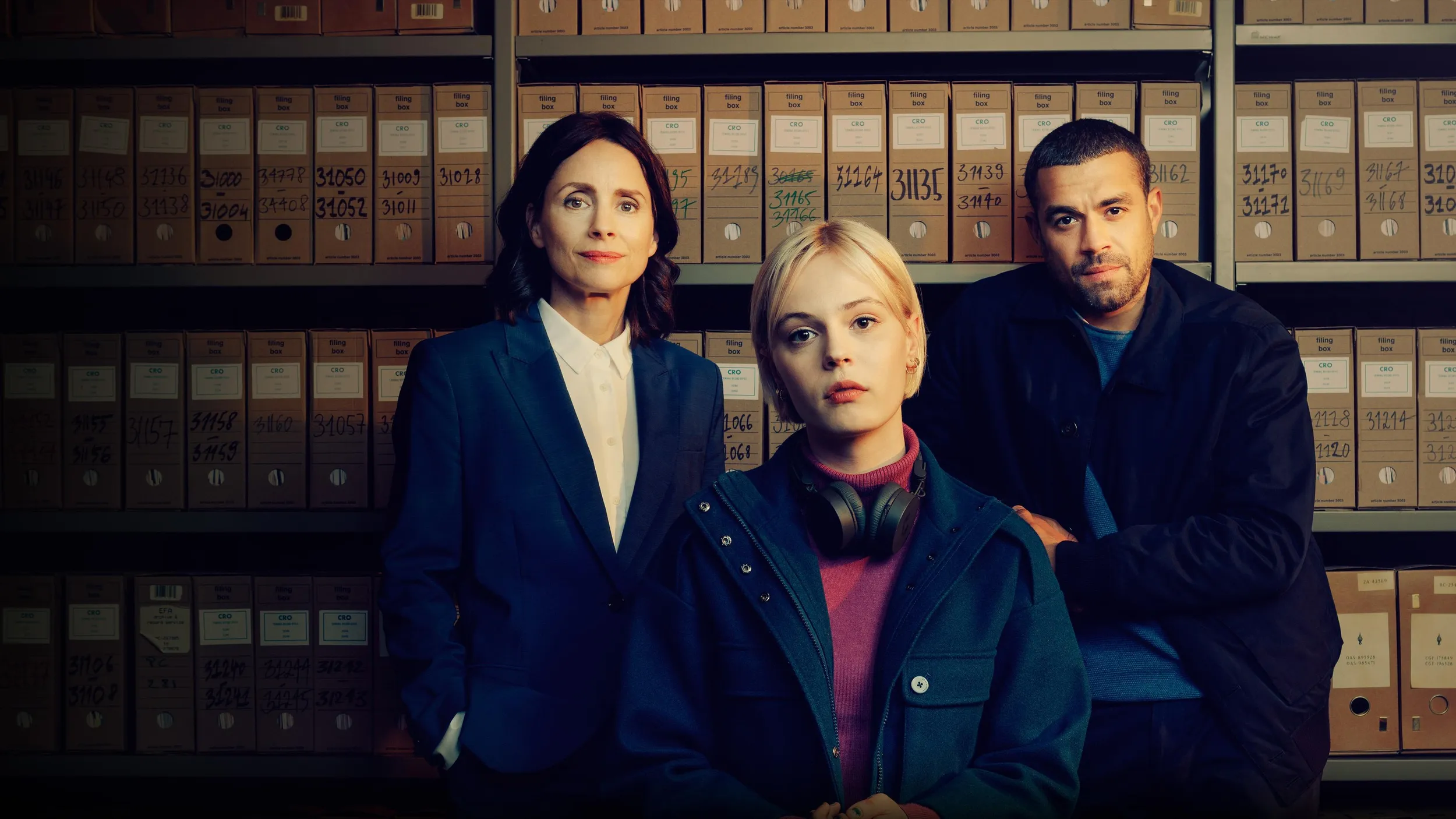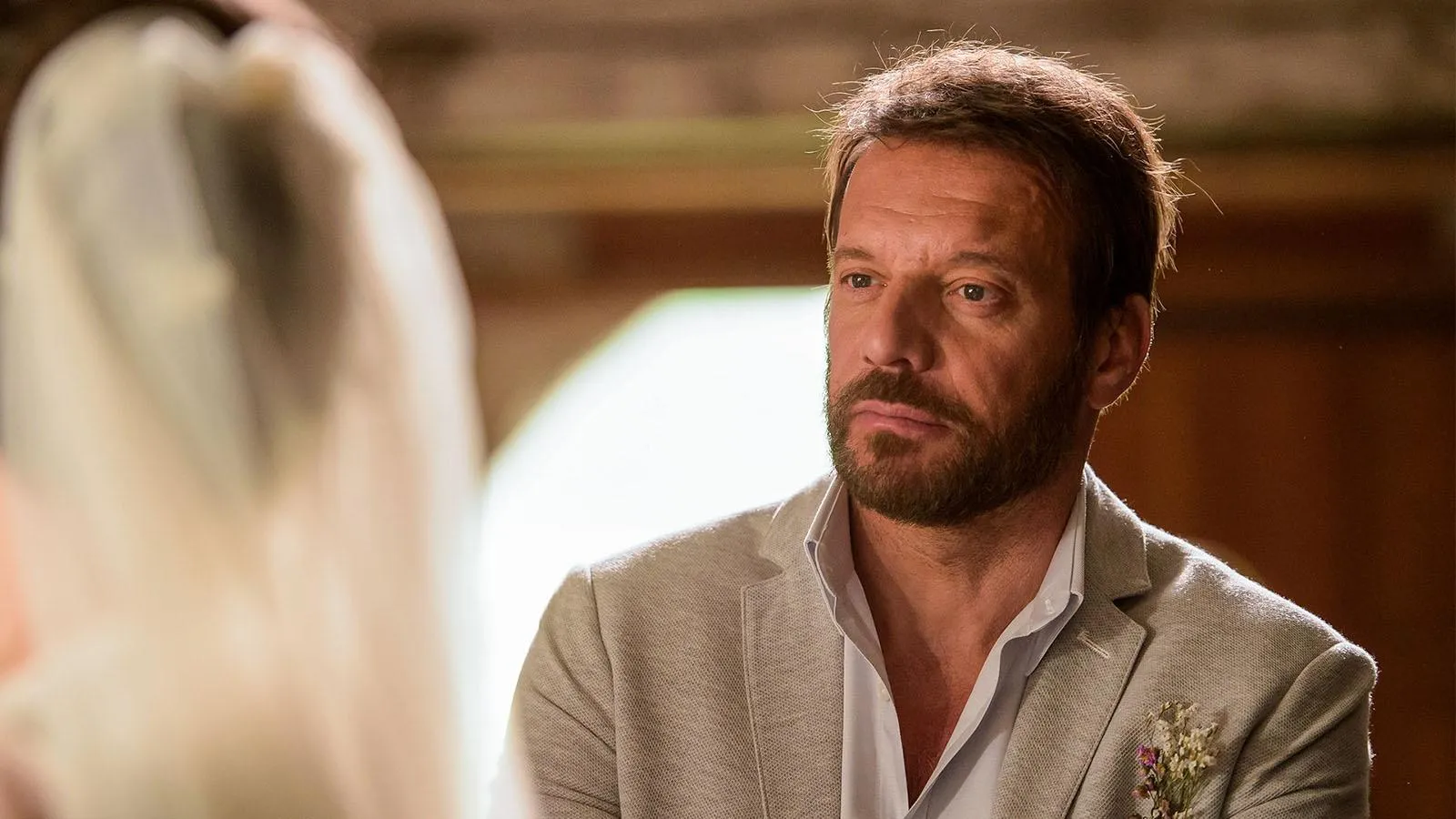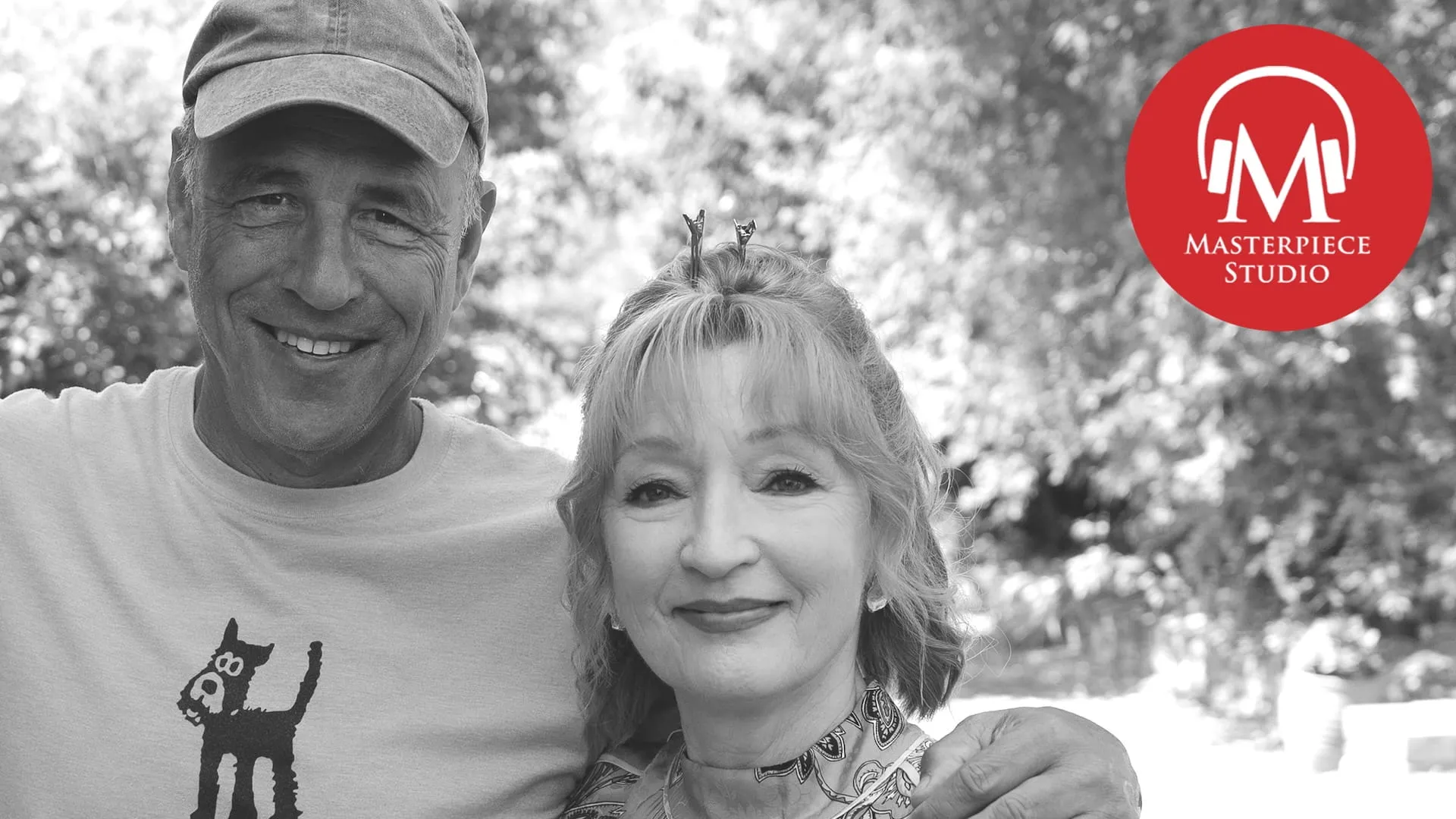
Anthony Horowitz & Lesley Manville Episode 6, Marble Hall Murders
Released October 11, 2026 34:57
WARNING: This episode contains spoilers for Marble Hall Murders.
Author, screenwriter, and executive producer Anthony Horowitz and lead actor Lesley Manville join us once again to bring Marble Hall Murders to a close. In this episode, Anthony and Lesley reflect on character motives, filming fight scenes, and how in the end, Susan Ryeland manages to come out on top.
This script has been lightly edited for clarity.
Jace Lacob: I’m Jace Lacob and you’re listening to MASTERPIECE Studio.
We’ve now reached the final episode of Marble Hall Murders, the episode where all will be revealed. But before Susan Ryeland and Atticus Pünd bring these three mysteries to a close, and before you begin counting all of the Anthony Horowitz Easter eggs you may have gathered along the way, we need to carefully examine all of the clues, all of the motives, and all of the evidence.
CLIP
Roland: I had nothing to do with the death of my grandmother.
Emma: Are you denying that the three of you planned to kill her?
Roland: We talked about it, but we were children. We talked about lots of things.
Emma: You also concocted some kind of poison.
Roland: It wasn’t poison, it was stuff from the house. It was stuff from the garden. It was chopped up leaves, cough mixture my brother stole from the family doctor.
Ian: Whatever it was, your brother, Eliot, saw you carrying it towards your grandmother’s bedroom.
Emma: The very same night she died.
Roland: That is rubbish. That is ridiculous, I… Oh my God.
Back in Corfu, we last saw Pünd and Detective Vassilikos’ world dissolve into nothingness as they were left standing in the liminal world of the empty page, following original writer Eliot Crace’s murder. But as Detective Ian Blakeney heeds the call of the pen and continues this continuation novel, our fictional world springs back to life. And Pünd springs back into action.
CLIP
Pünd: Everyone in this family, with the exception of Mr. Waysmith, who is independently wealthy, had need of the money which might have been left in the late Lady Chalfont’s will.
Six months after the truth of Miriam Crace’s death and Eliot Crace’s murder are revealed, we check in with Susan Ryeland, who is enjoying a fresh start.
CLIP
Susan: Hello, thank you for coming. This evening, we are celebrating the first book published by my own imprint, Redlayn Books. And for those of you who haven’t noticed, Redlayn is an anagram. I’ll leave you to work that one out. Anyway, here it is, Pünd’s Last Case, and this time I really do think it will be.
Today, we’re joined first by author, screenwriter, and executive producer Anthony Horowitz, followed by lead actor Lesley Manville to discuss the conclusion of these three beautifully crafted whodunits. And perhaps untangle some hidden anagrams along the way.
Jace Lacob: And this week we are joined once again by Marble Hall Murders author, screenwriter, and executive producer Anthony Horowitz. Welcome.
Anthony Horowitz: Thank you very much, it's a pleasure to talk to you.
Jace Lacob: So before we get to the finale, I do want to discuss the incredible cat-and-mouse scene in Episode 5 between Susan and Charles in prison, which is a sensational two-hander between Lesley Manville and Michael Maloney. They are both, to me, at the top of their game, as is director Rebecca Gatward. How important was it to you that Susan, facing her attacker, get the final word in here?
Anthony Horowitz: When you're writing what has become almost a long-running series—we now have done three seasons of it—you're always looking to do something new, something different, something you haven't done before, something that will make the whole show stand out. And for me, it was that scene. First of all, the fact that Michael Maloney agreed to come back for one day's filming, which is how long it took to shoot, incredibly, because the whole scene I think goes on for about 18 minutes, that they managed to do it in one day, which is all he had the time for, was itself remarkable.
But to have actors of that caliber, and as you say, a brilliant director, too, creating a scene which is all words—it's all dialogue, it's just all down to performance. For me, watching it, it was like watching a masterclass in acting. There are so many levels to it of anger and hostility and a coldness and a mocking quality. I'm talking here about Michael's performance, particularly. There's an element of Hannibal Lecter to it all, really. I mean, it's a meeting of pure evil in a way, and yet she has to defend herself, which I think she does in a fantastic way.
So I think just as a piece of drama, it's wonderful. But also—and I may have said this to you the last time we spoke—for me, the pleasure of being able to explore a killer after his identity has been revealed in a murder mystery story was hugely appealing. Because normally, you get to, "It was so-and-so. He or she is the killer. The end." And you never hear about them again. This time, I was able to actually explore—we've had the crime, let's look at the punishment. Let's look at what it means to this man to be locked up in a prison for pretty much the rest of his life, to be guilty of having taken another person's life. Does he feel remorse? Does he feel any sadness? Is he just upset that he was found out? To be able to explore that at length with two wonderful actors was a joy.
Jace Lacob: How does Charles's notion that because Alan was dying his murder didn't matter echo the murder of Margaret Chalfont? She, too, is dying, and her family kills her because she's dying anyway.
Anthony Horowitz: There is a difference, I think, here because the motive for the murder of Miriam Crace is one of she deserves to die a painful death, not just to slip away quietly. "I am going to kill her because of the evil she has done to me." I am, of course, talking about Frederick, Frederick Turner. The motive for him is that she must live to be punished. I think what is done to Frederick Turner in the course of his life by Miriam Crace, the lies she tells him, the things she takes from him, I completely understand why he would want her to live simply so that he could kill her.
Jace Lacob: On the note of Frederick Turner, so he is unmasked as the killer of both of his biological, turned-adoptive mother, Miriam Crace, and also Eliot Crace. Eliot died believing that his brother Roland had killed their grandmother, but the truth is somehow worse—that the son Miriam despised kills both her and her grandson, even though Eliot had no idea Frederick had done it, leading Leila to say, "Some family." Is Miriam's murder a case of hurt people hurting people, or again, generational trauma revisited?
Anthony Horowitz: I think Eliot Crace is generational trauma, not Miriam's. Miriam Crace is a monster, and she enjoys inflicting pain on people. She trashes Eliot throughout his life. She has behaved unbelievably cruelly to her adopted son, as he turns out to be, or her real son, I should say, Frederick Turner.
Look, I won't go so far as to say she deserves to die. Nobody deserves to die. But the job of the crime writer is not to talk about moral deserving or whatever. It is to provide human reasons for someone to kill someone else—a reason you can look at and say, "I understand why they did it." If you don't have an understanding of the motive, and even an empathy for it, which doesn't mean you necessarily have to support murder or believe that the murderer should go free, if you don't have an empathy, I don't think you have a satisfactory mystery.
And when I'm writing my mysteries, I always start with that thought: One person is going to kill another, and I feel sorry for that person. I don't hate them. I might hate what they do, I may hate aspects of their character. I've created—I mean, look at Harriet Throsby, who gets murdered in one of my books, a dire theater critic if ever there was one—I speak as someone who has suffered at the hands of theater critics. But even she, I remind my readers, had a husband and she had a family. So I never condone murder, but occasionally I do try to understand it.
Jace Lacob: While Susan is at prison, her flat is trashed, "KILLER" scrawled on her wall. But the true crime is the stabbing of poor Hugo, her cat. It was that element that to me screamed that this was deeply personal, that the perpetrator truly had it in for Susan. Where did the idea for stabbing Hugo come from, and why was it an important escalation?
Anthony Horowitz: I wanted something really horrible to be done to Susan, and there is, to my mind, nothing more crassly cruel than hurting an animal. I have a dog myself who is my absolute, my faithful companion and when I'm writing, my best company that I have, the only company that I have. And cruelty to animals of any sort is anathema to me. I'm at the moment in the Camargue area of the South of France where bullfights are being advertised all over different towns, and there is nothing on this planet that would get me to go to a bullfight.
So, therefore, to stab a cat absolutely brings out the cruelty of the killer. At the same time, I am very, very aware that people watching television shows will not countenance an animal being hurt. It's one of the strange things about human beings, I suppose, and good people, that you can kill, I don't know, the Duchess in the library, or you can kill the famous writer, or you can kill Eliot Crace or whoever you want, but touch the hair of a dog or a cat and all hell will break loose!
So it is very important to remind those listening to this conversation now that the cat recovers. The cat not only recovers, but is in many ways better than it was before because it finds a new friendship with Susan Ryeland. She realizes that she loves this cat, which she's been trying to get rid of for five episodes and wanted to look after it, and so it has a happy ending. The cat does not die.
Jace Lacob: Hugo's fine. The perpetrator, of course, is unmasked as Elaine Clover, and Amelia Bullmore plays Elaine so deftly, her soft kindness slipping away as her true rage at Susan emerges. Elaine Clover takes advantage of Frederick running over Eliot Crace to frame Susan for the hit-and-run. Given that this was an unexpected twist that Elaine didn't anticipate, what do you believe Elaine's plan for revenge against Susan would have entailed had Eliot not been struck? Was this just a fortunate coincidence for her?
Anthony Horowitz: She was looking, that was the point. She ingratiates herself into Susan's life, she is watching and waiting for something to happen, and what that something is, is the best thing in the world, which is that Eliot flounces out of a party at which he has just fired Susan Ryeland and has said some bad things about her, and you can almost imagine her grasping the nettle and the opportunity that this presents, jumping into her car, waiting, killing Eliot, and then going further, taking samples of his blood to plant on Susan and overseeing the whole thing. The pleasure not only just of framing her, but of being her best friend while this is all going on.
I love the scene where she says to Susan, "Look, I've been here before with Charles. This is what's going to happen to you: You're going to be arrested, you're going to go to a vile prison, you are going to have a life of utter humiliation and misery, you're going to lose all your friends. Kill yourself. Do it now." That's what she's really doing. Her revenge is not to frame Susan, her revenge is to get Susan to kill herself, which is even worse. And actually, what she does to Hugo the cat is only another indication of this extraordinary malice and evil buried inside, although I have said this before, I'll say it again, a malice and an evil that I sort of get.
Jace Lacob: Susan and Pünd never meet in the books, but the television adaptation brings them into a beautiful partnership. I love the final scene between Susan and Pünd in the fictional world of the Villa Belmar, where she tells him that Redlayn will be publishing Pünd's book, The Landscape of Criminal Investigation, before he fades away. How should viewers read that scene? Has Susan moved beyond her need for Pünd? Is she now her own detective?
Anthony Horowitz: I adored the moment at the book signing at the end when Susan sees Pünd at the back not looking too happy, and follows him out of the bookshop, and because of the magic of this show, into Corfu and the garden at the villa. And I loved writing the scene between them where Susan says, "It's not over. You don't need to worry and disappear," because, of course, somewhere in Pünd’s mind is a feeling that if he isn't being written about, he doesn't exist, because he is only a character in a book. So there is already that sort of sadness there. But she says to him, "We're going to work together because I'm now going to publish The Landscape of Criminal Investigation."
And when I had that idea, I cannot tell you how happy it made me. And it makes Pünd happy, and it makes her happy. And this time when they part, he's lost for words. He's left sitting in a chair by himself, she goes back into the house. And you know, my favorite moment in the whole script, for me the most joyous moment in that script, was where Susan sees the teapot, which had the poisoned tea in it, and puts the lid back on it again. In other words, actually, undermining the entire story, because that is the biggest clue and is the only indication, really, that Lady Chalfont has been poisoned.
Jace Lacob: There is a beautiful symmetry at play in the ending. Susan is an editor who becomes a detective, and she ends up falling in love with a detective who becomes a writer. Was that always important to you, that Susan ultimately finds someone who lives in her world, a world of books and mystery?
Anthony Horowitz: It was very important to me. I knew that this would be the third and final season of the show, and I just wanted people who had followed Susan Ryeland through all these adventures and all these upsets and these near-deaths, and things falling on her, and cars nearly running her over, and all the rest of it, that at the end of it, she would have a happy ending. To me, that is the most important thing in my work.
We live in a world where there is so much misery and fear and darkness, and I think one of the pleasures of a murder mystery is that it is a refuge from that, whether it's reading it in a book or watching it on television. And it seems to me that the writer has almost a duty to finish the series with something that just makes you feel that the world is okay and that our characters are going to have a happy life, and that was what I wanted for Susan.
Jace Lacob: Marble Hall Murders ends with Susan proclaiming that she has finally put Atticus Pünd and Alan Conway behind her and makes a promise, "Never, never again." And yet, you've dropped hints about a fourth Susan Ryeland novel tentatively titled Mile End Murders. Is that still in the works, and what can you say about the possibility of returning to Susan Ryeland?
Anthony Horowitz: Well, very much so, it is in the works. My publishers want me to do it, and it has got an idea in it. I am a long-distance writer. I’ve been writing for 40 years professionally, pretty much, and I have—actually more than 40 years, and I have written something in the area of 62, 63 novels now, or certainly books, some of them are collections of short stories. And I'm always looking for something new, something different, something that hasn't been done before. That is the biggest motivator for me.
And I do have just such an idea—a way of solving a crime and a murder mystery that nobody has ever done. And the only way to do it is in a Susan Ryeland book. And so, as you correctly say, Mile End Murders will arrive in a couple of years' time. I have other books that I'm writing before that, but I'm already beginning to think about it.
The only thing about it is, and this sort of worries me, is that Atticus Pünd is not at this moment a character in it. But at the same time, I think I'm not interested in doing another pastiche of 1950s Golden Age detective fiction. I've done it three times, I've loved it, I think it looks great. But this time I want something a little bit harder, a little bit more tough. So Mile End, for those of you who don't know it, is a rather rough part of London, or it used to be, particularly in the '50s, there were a lot of gangs there and it was quite a violent area. And I quite like contrasting that sort of gangland this time, rather than Golden Age, with a modern story about Susan Ryeland, now in a relationship, now with her own publishing company, but still not out of danger.
Jace Lacob: Well, I can't wait. Anthony Horowitz, thank you so very much.
Anthony Horowitz: As always, it's been a real pleasure talking to you.
MIDROLL
Jace Lacob: And we are back once again this week with Marble Hall Murders star Lesley Manville. Welcome.
Lesley Manville: Thank you.
Jace Lacob: So before we discuss Episode Six, I want to backtrack to discuss the scene between Susan and Charles Clover in prison. And this is a monumental, pivotal scene, and you and Michael Maloney deliver a taut two-hander that twists and turns gorgeously. You had one day to shoot this. What sort of direction did Rebecca Gatward give you and Michael?
Lesley Manville: A scene like that, it's like doing a one-act play. I think it's a 15-minute scene. Because Rebecca is such a fine director, and she understands actors crucially—and that might sound obvious for somebody who directs actors and directs television, but it's not always the case. But Rebecca has worked a lot in theater, and so therefore, is used to the whole premise of having five weeks where you and a group of actors are in a room and you're making a play, however long that play is—one hour, two hours, three hours—you rehearse for that time, and you refine it and you make that piece of theater work. She understands how to navigate that and how to help.
And of course, the great thing she does at first is she gives you space. We just did a line run, basic line run at the beginning. And then she just let us do it. We knew the scene was not going to be—nobody was doing cartwheels. It's in a prison, we're sitting at a table opposite each other, so no mystery with how you stage it. So it's a psychological scene. It's about two very smart people trying to outwit each other, trying to outsmart each other. So all of those little nuances that came up in the running of the scene, we discussed them as we got to them. And obviously Michael and I were working out the best ways to portray those particular sets of emotions or tactics that they're using against each other's character.
So it was a wonderful day's filming. Really wonderful. And I think the crew really enjoyed it as well, and they were very pleased to see Charles come back, and I think the audience will be very pleased to see that he returns, because it was a big part of the story of Magpie Murders.
So for him to come back when Susan says to Elaine, "Will you talk to him? I have to go and speak to him." And I'm sure the audience will be thinking, "No! No, surely not! No, we're not going to see that, are we?" And then you do. And Susan obviously was thinking, "How do I play this with him? How do I play this scene with Charles to get out of him the information that I want without rattling him, putting his back up so much that he doesn't answer anything?" And she does handle it very well. I think she outsmarts him.
Jace Lacob: We'll talk about that final moment in a second. He begins the scene in control. He's very calm, he's even erudite, he talks about his life as a prisoner. But by the end of the scene, his mask slips, and he is revealed to be the monster that Pünd warns Susan about. I love the fact she gives him the chocolate bar, and he's eating it. And then he hands her this square, and Susan throws it on the table. And she throws this chocolate square, and she gets the final word.
CLIP
Charles: I’m the only person that knows that Roland killed his grandmother, and I’m not saying anything. He may have run his brother over too, but he’s not the main suspect. You are. And guess what? You’re going to be arrested. You’re going to go through exactly the same thing that I have, except that they’re probably going to send you to Bronzefield. That’s where they send the worst women offenders. Thank you for the snacks. Now, go to hell.
Susan: No, Charles. I’m leaving hell. You’re the one who’s staying.
Lesley Manville: Oh, she's good, isn't she? She's good!
Jace Lacob: Oh, the best. The best. How significant is this moment for Susan, this reclamation of her power?
Lesley Manville: It's cathartic. It's cathartic, and only adds to her—not self-belief in an egotistical way, but her realization that, "Yeah, do you know what? I'm all right. I know I've been all right all along." She's been hounded through all of the series in some capacity by people telling her that she's not right, that she's doing things wrong. I mean, even in a very loving and passive way, criticism from her sister. She's been battered from every angle, really, except from Pünd, who is in a way her emotional sanctuary, which is maybe why she conjures him, because he's her emotional safe place. Because yes, they spark, and they bite at each other a bit, but it's done with a very different brushstroke.
And there are so many other people around her who've absolutely tried to destroy her, and not just destroy her literally, but just to destroy her beliefs and her character and her goodness. So that final hurrah that she can say to Charles, yeah, that's right, it was a great line, wasn't it? Although throwing the chocolate was my idea.
Jace Lacob: I love it. So she is a murder suspect and then a crime victim. And in an act of compassion, DI Ian Blakeney takes her out to dinner after the break-in. And I love Danny Sapani, your former Harlots co-star, as would-be crime writer Blakely. And his chemistry with you during the dinner date that Ian and Susan share at the Italian restaurant, is palpable. How did you and Danny work to establish that rapport between Susan and Ian?
Lesley Manville: That's the million-dollar question that gets asked practically every job I do, “How do you create that rapport? How do you this, how do you that?” And you know what? I think a lot of it is not up for scrutiny. You can't analyze it. It's just two instinctive actors knowing what the scene needs to achieve, knowing how to achieve it, and then having the ability to turn that on when the camera's rolling and get the twinkles going. That's it, and that's it.
There's no deep discussion, there's no naval-gazing, there's no going to a dark place. It's like, here it is, it's on the page. These two people, yes, she's a murder suspect, yes, he doesn't really believe that she's the murderer. Her flat's been ransacked, she's got to eat, they go out for something to eat, and clearly, under a very professional umbrella, you start to see that these two people have got something going for each other. You just play the scene. And if I've got a great actor to play opposite, like Danny, you just do it. You just do it, and the camera catches it, and there you go, it's done.
Jace Lacob: Twinkles ensue.
Lesley Manville: The twinkles, yeah. And she needed a bit of twinkle.
Jace Lacob: She did. So the perpetrator behind the destruction of Susan's flat and the person who framed her for Elliot's murder is unmasked as Elaine Clover. Her kindness earlier on toward Susan just completely evaporates, and reveals this sort of hatred and simmering rage that she's been carrying around. And she attacks Susan with a kitchen knife.
CLIP
Elaine: The police still think it’s you. You’re still going to prison.
Susan: The police don’t think anything of the sort. If the police thought that, they’d have arrested me.
Elaine: Well, then maybe I should give them something to think about.
Susan: Come on Elaine, you’re not serious. You’re not going to use this.
Elaine: Why not? You’ve left me with nothing. I’m on my own. My friends have abandoned me, Charles is in jail, I’ve got nothing to live for.
Susan: Just stop this Elaine, this is crazy!
Elaine: I don’t care! I don’t care! You’ve ruined my life.
Jace Lacob: How did you and the brilliant Amelia Bullmore, who plays Elaine, choreograph this fight sequence in which Susan is slashed and nearly stabbed?
Lesley Manville: We loved it. We put on our tracksuit bottoms and our sweatshirts, and we had a fight coordinator. And yeah, we just went into battle. I mean, obviously, very carefully choreographed. And then once we'd sort of worked out the shape of what the actual fight would be, then you start working it through with Rebecca and the cameras.
And then just working out how you're going to best tell the story of that choreography with the furniture that you've got to trip over, fall onto, and how the camera's going to catch it. It's a whole deal. You start getting into fight scenes, it's—yeah, you've got to just put in the time and work it all out. There was never any danger. If we had tripped or fallen on top of each other, there's no problem because we had fake, retractable knives. It was not going to ever be the case of a Daily Mail headline being, "Lesley Manville Stabbed In Freak Accident."
Jace Lacob: Freak onset accident.
Lesley Manville: Freak onset accident, "Lesley Manville Killed by Amelia Bullmore on Set." So no, all of that, but it was kind of fun doing it as well. I don't often get to do a lot of fight scenes like that, for sure. I get to do a lot of other kinds of scenes that are a challenge, but not so much the fight scenes.
Jace Lacob: So like Pünd or Poirot, Susan gathers all the suspects together to reveal the killer of both Miriam and Elliot Crate: it's adopted son Frederick Turner, who is treated as little more than a servant by his mother, who refused to acknowledge him. Do you find it fun or pressurized when filming one of these sort of grand, Poirot-like set piece tropes with all of the suspects assembled in one place, and you are leading them, and thereby the audience, through the crime and its solution?
Lesley Manville: I actually quite like it because in the same way that I enjoyed the scene in the prison, I like anything that allows you to do more than half a page at a time. It becomes quite theatrical, and the whole scene has an arc within itself as opposed to it being a whole episode that has an arc.
So I love it. You have to put in the work, and I seem to remember, certainly on Moonflower Murders as well, that dénouement was quite complex, and you're learning lines every night and every weekend. I like to really use my Saturdays and Sundays to get familiar and ahead of the game with the whole week of filming that I have ahead. And then obviously every night before the filming, when you've come home from filming, you're polishing up on what the next day is. But then you get something like the dénouement, you've got to really be learning that for—or I have—you've got to be learning it for two or three weeks consistently.
Jace Lacob: Susan, an editor who becomes a detective, falls in love with a detective who becomes a writer. What do you make of Susan and Ian as a couple who exist in the same worlds of crime fiction together?
Lesley Manville: Well, I think it's perfect, really. And he kind of just throws it in quite casually early on in their friendship, that he's written a book. Because she thinks, "Oh, well, he's a detective" which is new territory for her. And then he says he's written a book, and it's kind of, "Oh! Oh, right, okay, so you can do that as well, can you?" So it's sort of almost perfect. If he'd have been just presented to her as a writer that she fell in love with, you could just think, "Oh, yeah, yeah. Yeah, yeah, of course, it's a writer that's who she meets." But she meets this detective, and it's not supposed to happen, and it's an unlikely thing because he thinks she's a murderer, and all of that.
So I think that if we're going to project and think about the future for Susan, I think she's going to be all right with him. I think they're a good couple. I think that he's got a dryness and a sense of humor that her relationship with Andreas didn't quite give her. So I think he's good, and I like to think that Susan has found somebody who will absolutely allow her her life, her autonomy, her privacy, her own decisions, but be the relationship, the big relationship that she has as well. Freedom, but coming from a safe place.
Jace Lacob: We now turn to the other man in Susan's life. We get the final scene between Susan and Pünd which finds them in Hatchards for the book launch party before they exit to the fictional world of the Villa Belmar. And we find out that Redlayn, Susan's new company, will be publishing Pünd's landmark book, The Landscape of Criminal Investigation. And she tells Pünd, "Don't be long," before he fades away. And she places the lid on Lady Chalfont's teapot and then exits from the imaginary to the real world. How did you read this moment between them, and that final image with the teapot?
Lesley Manville: I think it needs to be sentimental. I think it needs to be everything that the audience has probably wanted from the two of them. They kind of want Pünd and Susan to be the romantic couple, but of course they're not, and they can't be, because he doesn't exist. So I think we pushed it to its highest possible level of affection and warmth. And even though it's unreal, you see that they both have an enormous place in each other's hearts for each other. And I think it's beautiful. It's beautiful. I think it's how everyone will want it to end.
Jace Lacob: And you and Tim are both so fantastic in that scene. There's this bittersweet note of farewell between them, this beautiful rapport that they've shared, and this sense of finality that—he says to Susan, "You have your own detective now," that maybe she's outgrown him.
Lesley Manville: Yes.
Jace Lacob: I love it. Lesley Manville remains the busiest actor on either side of the Atlantic. You wrapped a legendary run of Oedipus on Broadway. You have the Joel Coen-directed Jack of Spades coming up, an Amazon comedy series, a narrative podcast version of Bram Stoker's Dracula. When do you find time to sleep, and what is next for you?
Lesley Manville: Well, I get enough sleep, I guess. I get as much as I need. Yes, well, I am currently filming in New York a new series with Brett Goldstein for Amazon called Escorted. And then I will be doing another play, I know, Oedipus, Les Liaisons Dangereuses, and now I'm going to be taking on, in the West End in London, August: Osage County. So yeah, I like to keep things light and comedic. So, that's my immediate, and then Jack of Spades will be opening in I imagine autumn 2027, I hope.
Jace Lacob: I can't wait. Lesley Manville, thank you so very much.
Lesley Manville: Thank you. Lovely to talk to you. Thank you for having me.
Next time, we follow the golden thread all the way back to 1983 to find the second half of the infamous Brink’s-Mat gold.
CLIP
News Report: A major armed robbery took place this morning at a trading estate near Heathrow Airport. Six men broke into the Brink’s-Mat storage depot and made off with what has just been confirmed as £26m worth of gold bullion.
Be sure to tune in on Sunday, October 18th for the Season 2 premiere of Maigret at 9pm Eastern 8pm Central, followed by the Season 2 premiere of The Gold at 10pm Eastern, 9pm Central on MASTERPIECE on PBS.
Marble Hall Murders Podcasts
2 More Podcasts

MASTERPIECE Newsletter
Sign up to get the latest news on your favorite dramas and mysteries, as well as exclusive content, video, sweepstakes and more.