Anthony Horowitz, Marble Hall Murders
Released September 6, 2026 29:26
WARNING: This episode contains spoilers for Episode One of Marble Hall Murders.
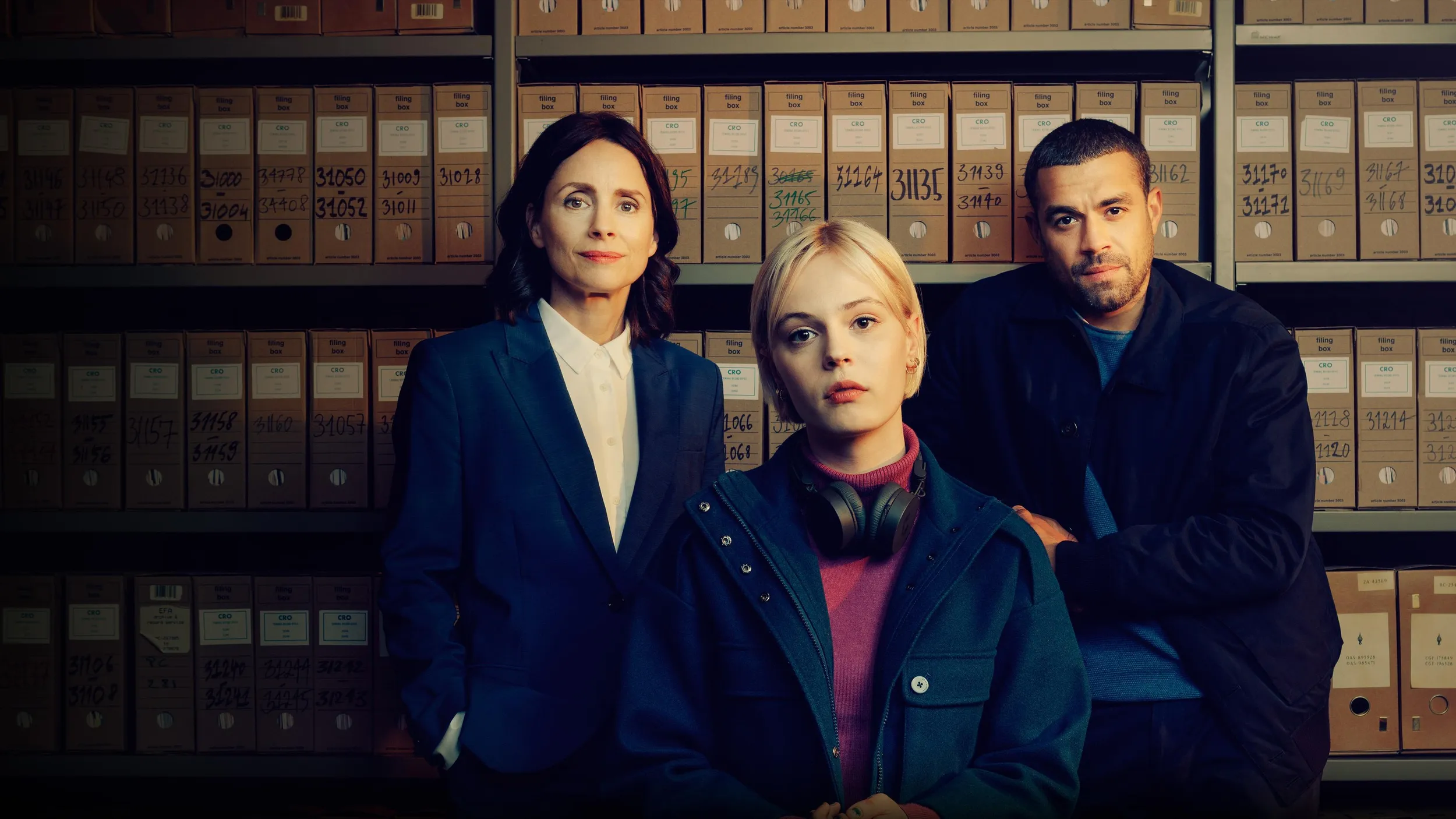
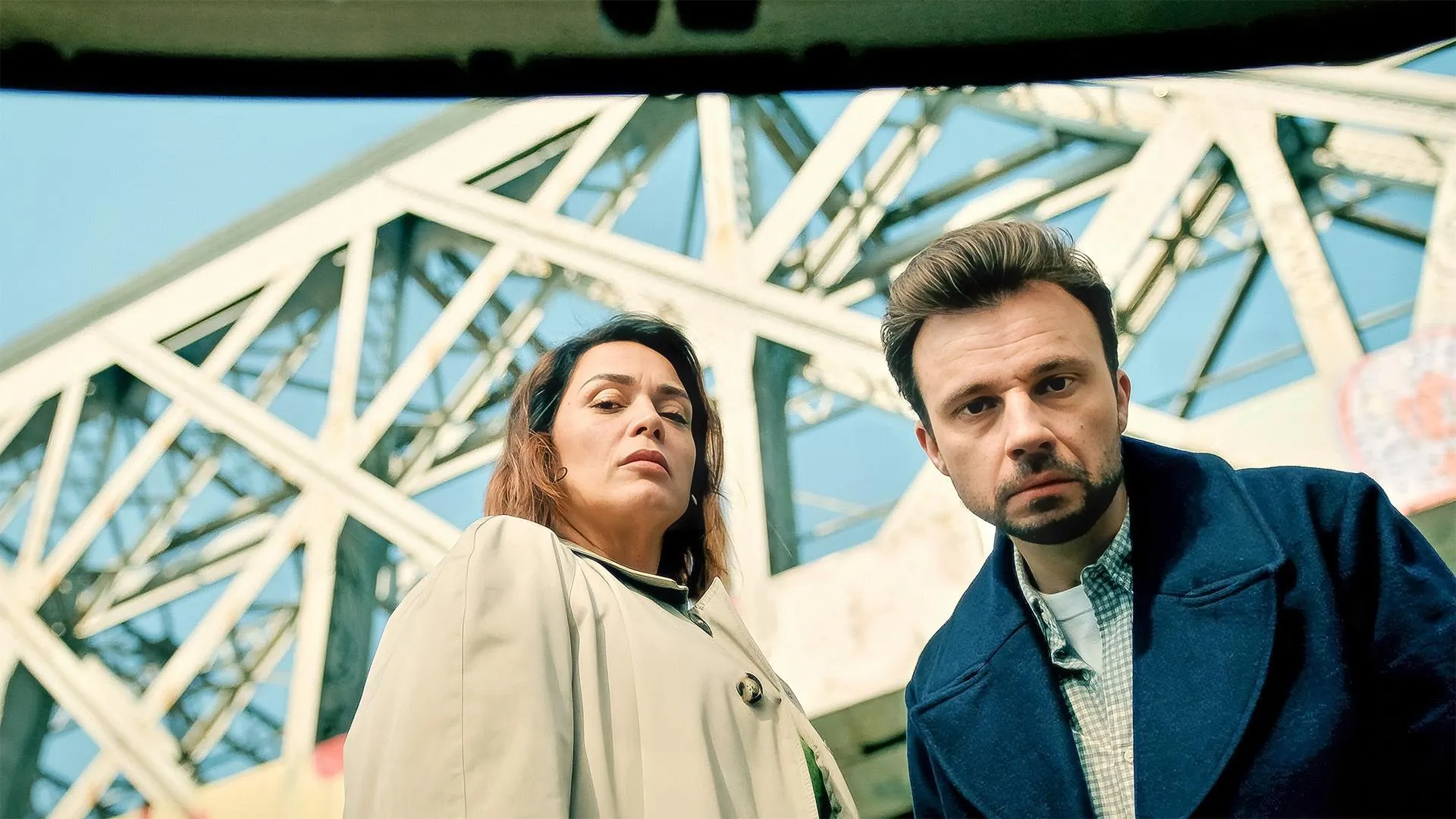
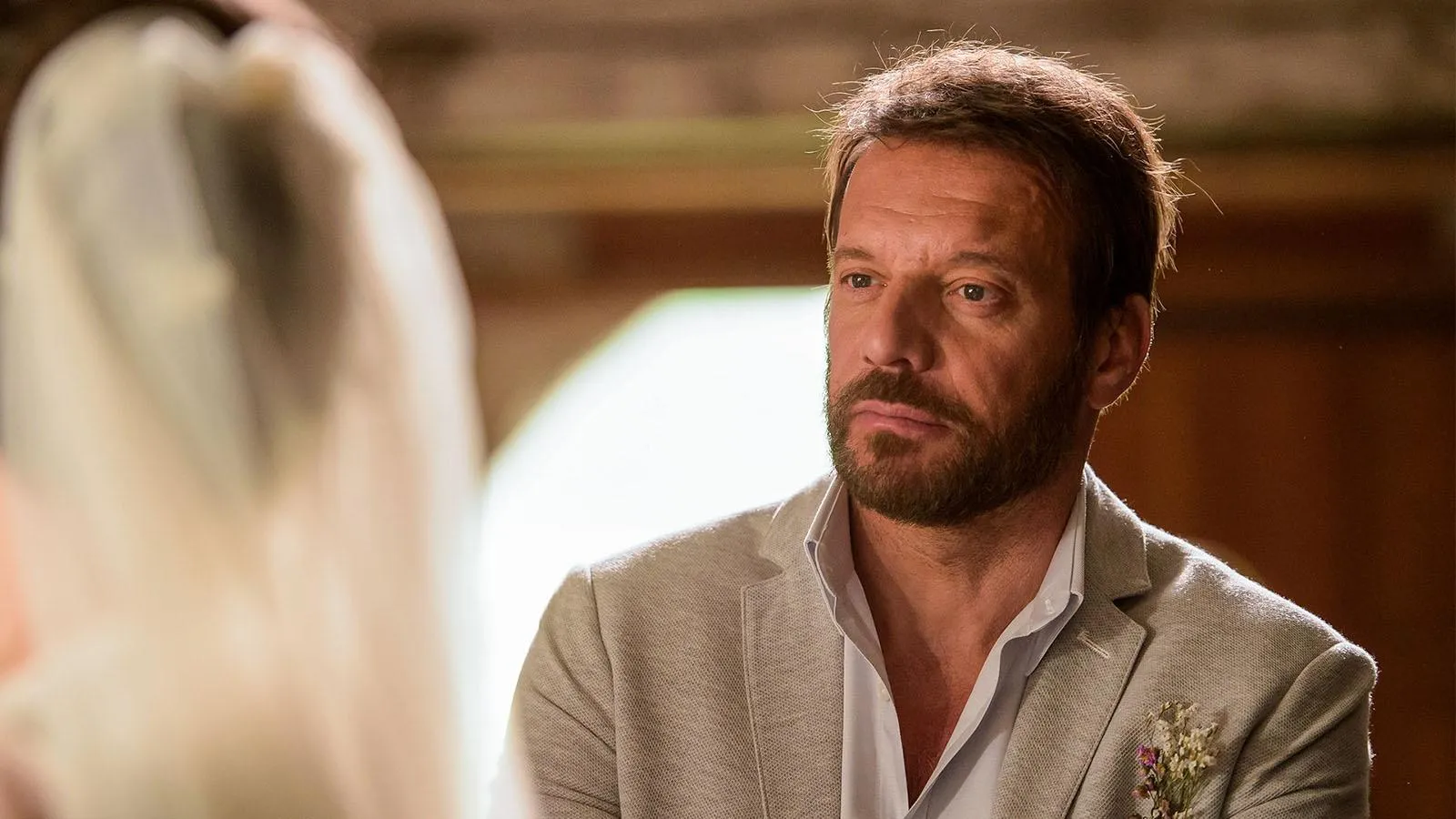
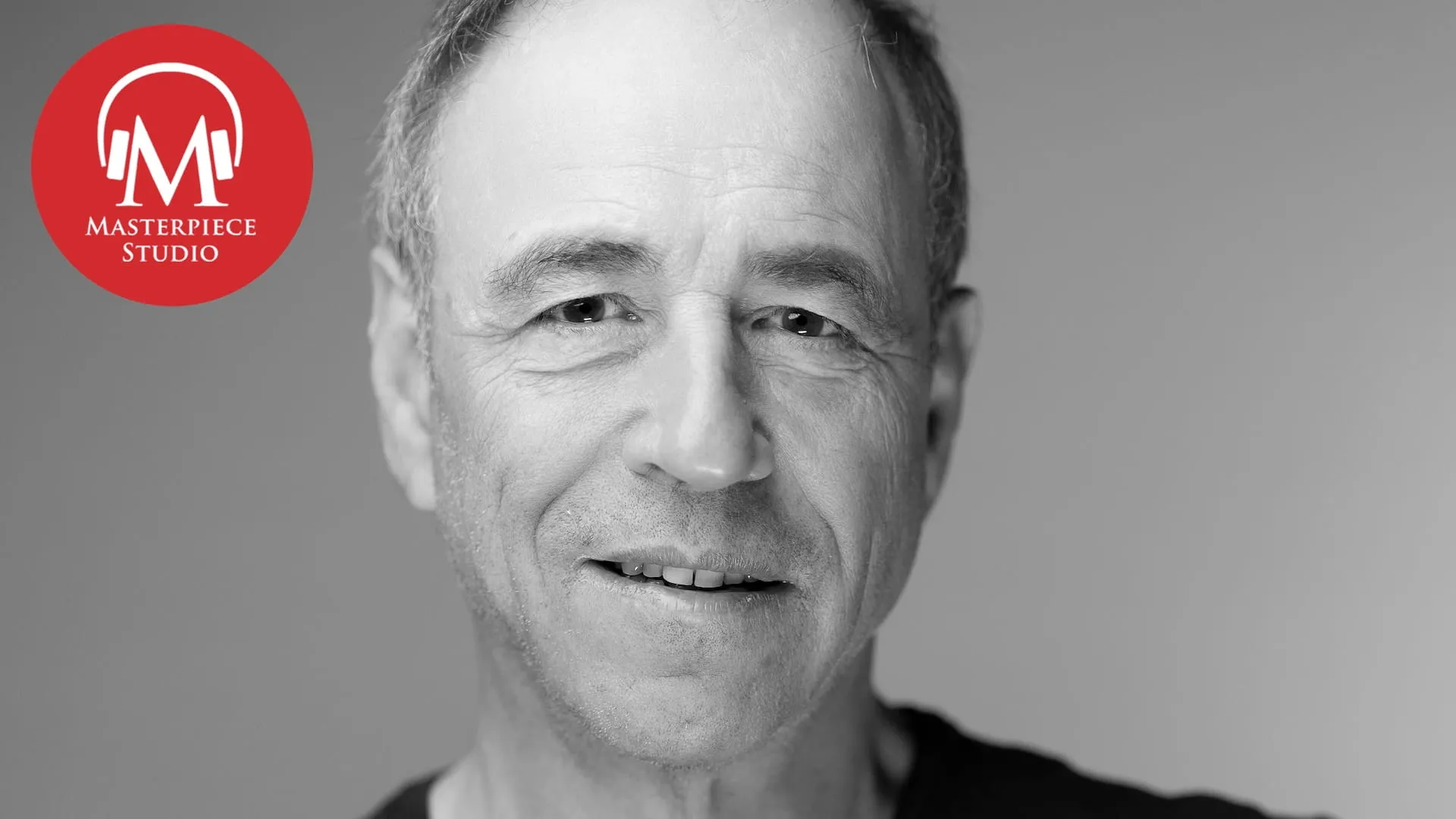
Author, screenwriter, and executive producer Anthony Horowitz joins us to discuss the first episode of the final installment of the Susan Ryeland trilogy, Marble Hall Murders. In this episode, Anthony also shares his views on the appeal of murder mysteries, human nature, and how his past influences his work.
This script has been lightly edited for clarity
Jace Lacob: I’m Jace Lacob and you’re listening to MASTERPIECE Studio.
Pale moonlight streaks across a country house garden, lighting up gnarled trees. It's here, in the dead of night, that three young children gather over an ancient stone mortar, issuing an incantation. Their voices, echoing between thunderclaps, call out some of nature’s most potent poisons. As they combine these toxins into a concoction most lethal, we’re left wondering, who could this be for?
CLIP
Young Roland: Wolfsbane, aconitum napellus. Picked at the time of the full moon.
Young Julia: Funeral bell mushrooms. So poisonous you can’t even touch them.
Young Eliot: Morphine, stolen from Dr. Lambert. Have one teaspoon and you’ll sleep all day. Have any more and you’ll never wake up.
Fast forward 20 years, and we find ourselves in the present day, catching up with book-editor-turned-sleuth, Susan Ryeland. Having left her partner Andreas, and his hotel behind in Crete, Susan is back in England and looking to re-enter the world of publishing. She’s been tasked with editing a continuation novel of the Atticus Pünd franchise called, Pünd’s Last Case. The author is a young man named Eliot Crace, grandson of beloved children’s author Miriam Crace.
CLIP
Susan: So who else has read it?
Eliot: No one. No, just Gillian.
Susan: Well, look. Why don’t I read what you’ve written, take a few notes, and then we can meet up again in a day or so’s time. Does that work for you?
Eliot: Yeah, that would be brilliant.
Susan: Great.
Set on the Greek island of Corfu, Eliot’s story picks up with the terminally ill Atticus Pünd after we last saw him in Magpie Murders. But before Susan can begin reading Eliot’s manuscript, she’s visited by Pünd who offers an ominous word of warning.
CLIP
Pünd: There is something that exists which I call ‘the inevitability of crime’. It’s when two people meet, they may be friends, they may have the best of intentions, but there is something in the chemistry of these people which when it comes together, it takes them to places that they do not want to go. To violence, even to murder.
Susan: Then that’s you and me?
Pünd: That is how it has always proved.
Today, we’re joined by author, screenwriter, and executive producer Anthony Horowitz to discuss this brilliant first episode of the third installment of the Susan Ryeland line, Marble Hall Murders.
Jace Lacob: This week we are joined by Marble Hall Murders author, screenwriter, and executive producer Anthony Horowitz. Welcome.
Anthony Horowitz: Thank you very much.
Jace Lacob: Moonflower Murders posits a happy ending for Susan Ryeland. She's left Britain to be with Andreas and run their hotel, The Trifilli, which means clover, perhaps indicating she hasn't entirely left her trauma behind. In the acknowledgments for Marble Hall Murders, which you then adapted for television, you credit actor Lesley Manville for inspiring you to bring Susan Ryeland and Atticus Pünd back. How much did Lesley shape your decision to write this third Susan Ryeland book?
Anthony Horowitz: Well, let me say straight away that we were enormously lucky to have Lesley Manville from the very start. She was a supporter of the show long before we raised the finance for the first season, Magpie Murders, and she lent her name to it and allowed us to use her name to help raise the finance. And then we made that show, and she was wonderful to work with—a real team leader and part of a team, too. I can't say enough good things about her.
She is, however, the busiest actor in the world, and it was very unlikely we were going to do more than one to start with, but we managed to get a second script together for Moonflower Murders. It was actually at the end of the shooting of Moonflower Murders in Crete that Lesley Manville approached me and said she'd had so much fun doing the show, why shouldn't we do a third and make it a trilogy?
And at that moment, every green light on the planet lit up, and we had a production immediately. I mean, PBS, BBC, all the producers, everybody who had worked on this show jumped at the chance of doing a third one with only one slight problem, which is, there was no third book. I hadn't even given the thought of writing a third book. And because she had said next year and had the tiniest of windows in which to shoot, I had to write, first of all, a novel in less than five months. And I should remind you, the first book had taken me five years to write. I had to write a new novel and then adapt it for the screen, all within the space of one year. But that said, inspired by Lesley and by Tim McMullan, who plays, of course, Atticus Pünd, I got to work, an idea fell into my head, I began writing it, and everything went according to plan.
Jace Lacob: Marble Hall finds Susan Ryeland back in Britain, where she's tasked with working with troubled author Eliot Crace, the grandson of renowned author Miriam Crace, on a new Pünd continuation novel entitled Pünd's Last Case. Susan is aware of Eliot's temperament. The last time they met years earlier, he was covered in blood, claiming to have fallen off a bus. Does she feel like she's being set up by Matthew Flynn to be both Eliot's editor as well as his therapist here?
Anthony Horowitz: Well, it is unusual to actually have a living writer working with her because in the first two books, or the first two TV series, the writer had sadly passed away, Alan Conway, and we miss having him. But this time she's got a young writer who does indeed need a nanny as much as an editor, who is a very troubled character, partly because of his upbringing in a family which includes the really quite hideous Miriam Crace, played in this show by Patricia Hodge. And his whole life had just been one mess after another after another. And of course, Susan Ryeland realizes very quickly that working with this young man is going to lead to disaster, which it very quickly does.
Jace Lacob: We open the television adaptation with three children performing a ritual at night, adding various poisons to a stone pot. It's all very "double, double, toil and trouble, fire burn and cauldron bubble," the three witches from Macbeth, as they plan to kill their grandmother Miriam Crace. This troubling image hovers over the action—three murderous siblings with homemade poison. Where did the idea for this dark sequence come from?
Anthony Horowitz: It was the first thought that really came into my head. There is something about children—we have some very, very good child actors in this show, both in the main plot, which is set in the present day, and in the historical plot, which is set in the 1950s, this time in Corfu. And I like the sort of creepy quality of children and their imagination. The inspiration, if you really want to know, came from Roald Dahl, George's Marvellous Medicine, in which a child concocts some kind of deadly poison to kill his wicked grandmother. And that's what the children are doing here. And it just allows you to open the show with something which is both sort of off-beam, out of kilter, disturbing, and yet at the same time wholly innocent.
Jace Lacob: We're told that Miriam Crace's Tiny People are beloved by millions, but to Eliot and his siblings, as you say, Miriam is a monster. And Miriam herself seems like a pastiche of Enid Blyton or The Borrowers author Mary Norton, or even Roald Dahl, who you just invoked. What were you looking to say about the nature of art and the artist, or an author's public persona versus a private one?
Anthony Horowitz: Well, I mentioned to you earlier that I had a great deal of difficulty thinking up a story for this third outing, Marble Hall Murders. And for me, that's the most important part of a story, of a dramatization like this, is not so much who is going to be killed or how is the murder going to happen, how is it going to be solved, but what is the milieu, what is the world of this story going to be?
And that was what I was having difficulty finding until I suddenly realized, in my time, I have worked with no fewer than five literary families. You mentioned just now Roald Dahl, and that was certainly one of them. But of course, Ian Fleming, I've written three James Bond novels and worked with the family of Ian Fleming. Agatha Christie, working on Agatha Christie's Poirot for television, I got to know the Agatha Christie estate. And then there was—Tintin was certainly one of them. I got to know that estate because of my long love of Tintin books.
And it occurred to me that there is something very strange and awkward about being the great-grandson, the great-granddaughter, the great-niece, the great-nephew of somebody who is famous, whose talent and whose genius has waved a wand over your own life, made you perhaps a lot of money, but nevertheless, you live your whole life in the shadow of that person. I should add hastily they were all thoroughly decent people and looked after me very, very well. But nonetheless, that was the inspiration for the book. It is Eliot Crace's problem that Miriam Crace was so ghastly. But he has a whole family of people who have suffered under her rule, and that to me was the entry into a delicious world to explore how it could lead to murder.
Jace Lacob: As you say, you've worked with a number of literary estates, and they do feature prominently in Marble Hall, between Alan Conway's estate and Miriam Crace. And with Alan Conway dead, the new Pünd book, Pünd's Last Case, is a continuation novel. As an author familiar with continuation novels, having written for, as you say, Bond and Sherlock Holmes, what are the format's risks and its rewards?
Anthony Horowitz: To answer your broad question about the dangers of it, it is that I think, anyway—and others may disagree—but I think that when you take on the mantle of a writer who is better than yourself, and unquestionably, Ian Fleming and Sir Arthur Conan Doyle were both geniuses, you are risking showing up your own shortcomings.
At the same time, it is very easy, I think, to upset and annoy a whole world of fans. You have no idea how passionate people are about James Bond, about Conan Doyle, about Dahl, about Tintin, about all of them. And so when you're treading on the toes of a famous writer, the job is both to write an original piece of work, because there's no point in writing something that is just a slavish imitation—it's got to have originality, it's got to have verve, it's got to have excitement, and it's got to be fun to read—but at the same time, I don't think you can tear the envelope too much. You can't do things that will upset the readership. And I think it's also disrespectful to the authors you're dealing with.
I'll give you a very good example. Sir Arthur Conan Doyle says in one of the early Sherlock Holmes short stories that for him, for Sherlock, there was only one woman. He fell in love very briefly, and that was his only known love affair. So to create a love interest would have been, I think, insulting. It would have been wrong. It would have torn the envelope. So in other words, the challenge, to put it very simply, is to be original and different whilst not doing anything that would upset or spoil the original.
Jace Lacob: A very fine line to walk, I'd imagine. So, Moonflower Murders ends with Susan and Andreas together in Crete. When you were devising Marble Hall Murders, how did you approach Susan's goals for herself post-Crete? Does London represent a new start for her?
Anthony Horowitz: Well, not really, because she's lived her whole life in London, and her whole career has been in London. It is a new start in that after the first book and TV series, Magpie Murders, she lost everything. She was on her own, basically, and so she went to Crete as a freelance editor, and she did try to make a job of running a hotel, although the second season, Moonflower Murders, showed how disastrous that was, and how also she missed her vocation in life, which is books. She is, in her heart and in her soul, in her life, and in her mind, an editor. That's all she loves doing, and not being able to edit books is, for her, not living a full life.
So her return to England is an attempt to try and rebuild the life that she has lost, and this time she does go to a publishing house that offers her a job, but unfortunately, the job, which doesn't turn out to be anything like what she imagines, is looking after this young writer and writing this new continuation novel with once again Atticus Pünd, a character coming back to haunt her. It does seem to her that she can never escape him. She can go to Crete, she can go to Corfu, she can go anywhere in the world, but he will always somehow track her down.
Jace Lacob: The publisher, of course, being Causton Books, Matthew Flynn, who introduces her to Eliot Crace. Is that an Easter egg given that Causton is the town where Tom and John Barnaby live in Midsomer Murders, for which you wrote?
Anthony Horowitz: Do you know, I've never even noticed that before! It is an Easter egg as it happens, but it's not the correct Easter egg. What you've just described is a much better Easter egg than the one I built into it. I called it Causton Books because Causton Road is just behind my real publisher in London. So I was actually making a reference to Penguin Random House, who publishes all my books now. But actually, I had quite forgotten that Causton had ever appeared in Midsomer Murders. It's an Easter egg even I hadn't noticed.
MIDROLL
Jace Lacob: And we’re back with Anthony Horowitz. The television adaptation of Marble Hall Murders transposes the action within Eliot's novel from the South of France to the Greek island of Corfu. To quote the question Susan herself poses to Eliot regarding his choice of setting within Pünd's Last Case, “Why Corfu?”
Anthony Horowitz: Well, there is a story behind that, and it's to do with my wife, Jill Green, who produces all my shows and does a wonderful job at it, I have to say. I originally set the book in the South of France. I was very interested in having a subplot to do with Nazi theft of art throughout the Second World War. Now, this has been the subject of a film with George Clooney, The Monuments Men. The Monuments Men really existed, and they were sort of American professors-turned-detectives, and art historians-turned-detectives, who tried to track down the enormous amounts of art stolen largely from the Jews, but from museums and from all over the place across Europe during the war. Hitler had planned to create an enormous museum full of the work that he considered worth having, which incidentally excluded people like Picasso and Surrealists and anybody that he thought of as degenerate artists.
Nonetheless, they stole a great many masterpieces, and Goering was himself a hugely fanatical collector of art. And I wanted this to be the subplot of the book. But unfortunately, Jill Green, whom I began by mentioning, was unable to shoot the series in France. I knew that all along. It's very, very expensive to shoot on the South Coast of France, or indeed anywhere in France. There are no tax breaks, and as I'm sure you're aware, an awful lot of television these days depends on going to countries that will give you some kind of help with the production.
So I knew it was going to happen, and had already planned Corfu as a Plan B. I love Greece. I go to Greece a great deal, I speak Greek. And as it happens, the Nazis were just as aggressive in their acquisition of art and antiquities, particularly antiquities all over Greece throughout the war. Don't forget that Greece was occupied. So they raided museums, and they were looking curiously for something that would unite Hellenic art, the earliest art that we can think of, with Aryanism. That's what they were trying to prove, that Aryans were on the same level as Hellenic culture. And so they were basically stealing sculptures and friezes and pieces of pottery and all the rest of it. So if you read the book, it is very different from the TV, but I think that's no bad thing. I like the fact that an adaptation often goes a different way and has different themes, different characters, different things to enjoy. And I think this is very much one of them.
Jace Lacob: That's interesting to me because that Corfu shift means, as you say, altering details. A Cézanne painting becomes a kylix krater, that two-handed wine vessel, and names and places obviously have to change as well. But as a writer making a major setting change, how do you track all of those changes while remaining true to your innate story, and because it's a Golden Age murder mystery you're telling, those clues, both big and small?
Anthony Horowitz: Well, it's not the clues that were the problem, really. It's more the characters and the language and the themes of it. So, for example, in the book, the main detective is called Frederick Voltaire, which, because it's the South of France, he's a Frenchman. In the Greek one, he becomes a detective called Achilles, who is now in uniform and is Greek. And that's a whole different character, and his story has to be different, too, because his ethnicity plays a very large role in the book and gives him a lot of his motivation. But that ethnicity has now changed, so that has a sort of an echo effect down that character.
Now, we were very, very lucky to have an absolutely wonderful Zubin Varla, who could do it perfectly, who looks the part and who brought to it everything I wanted. And I think he is much, much better as a Greek uniformed detective than he would have been as a Frenchman. One thinks too much of The Pink Panther or other detectives that are played for laughs. So I think what is great about making changes in an adaptation, even quite big changes, is that if you look at them the right way, they are always an opportunity—an opportunity to find new things, to enjoy myself in a different way, and to give readers a surprise.
Jace Lacob: Likewise to that statement, Pünd's well-intentioned puppy-dog assistant James Fraser does not make the leap from the Marble Hall novel to the television adaptation. So as a writer adapting your own work for the screen, does that then necessitate having to kill your darlings or sacrifice a character or a story thread in service of a new medium?
Anthony Horowitz: I very, very much missed his assistant. I love the banter they have in the book and the fun of it, and Matthew Beard, who played him so well, had appeared in two seasons, and I was very sorry to say goodbye to him. Although that said, you lose characters along the way, but that again is an opportunity because new characters come in. And in this case, because we had such a strong performer with Zubin, I didn't think it would work to have, as it were, too many detectives, too much of a pecking order between who's asking the questions and who's doing what. And so I made the decision that this time I would have Pünd on his own.
And also, of course, there is this story that he is ill in this season. He is ill. The book that has been written about him is called Pünd's Last Case, and I didn't think that a comedy banter would work quite so well given the the heat of Corfu, that sense of tristesse that follows Atticus Pünd around, and the sense that this really is his last outing. And this is down as well to Tim McMullan, who I think is just so right for the part. He is so excellent as Pünd and brings that same strange sort of unworldliness. Is he a character in a book? Is he a ghost? Is he part of Susan's imagination? What exactly is he? I think he's all three of those things in the way Tim does it, and that I think did in this instance leave no room for an assistant.
Jace Lacob: Elaine Clover, played by the always amazing writer-actor Amelia Bullmore, is the wife of Susan's former friend and would-be killer, Charles Clover. She reaches out to Susan, having heard from Eliot, and wants to make amends. Charles took everything from her, too. What does Susan feel scoffing at Elaine saying Charles tried to hurt her? Is she conflicted at all about accepting Elaine back into her life?
Anthony Horowitz: We had never yet met Charles's wife, Elaine—she has a very, very important role in this one because she is effectively Susan's best friend. And again, the scenes between the two women—I love writing for strong women. By that I mean strong women characters and strong women performers, actors. And to have this quality of people together, often just the two of them in one room, and for everything to rely not on murder, not on chases, not on suspense, but just on dialogue and character, is both the greatest challenge I have in my writing and also the greatest pleasure. And incidentally, I should say that the greater the actor—this year we do have some really wonderful names in our cast—the greater and the more renowned the actor, the greater the challenge for the writer, and also the greater the reward when the scenes are played.
Jace Lacob: Episode 1 is bookended by the Crace siblings' poisoning ritual and a 12-year-old Eliot seeing someone enter Miriam's room with the poison in hand. What role does generational trauma play within Marble Hall Murders?
Anthony Horowitz: It has a huge part to play. Everybody is damaged by their childhood. And I should say that's also true to an extent of the writer. I had a peculiar and difficult childhood. I had a father who was in many ways unloving and authoritarian. I had a schooling that was very dark and cruel. Back in the day in England, schools had children in their complete power and could do more or less what they liked, and what they liked was often very cruel and shocking. And I am very, very well aware of the dark shadows in my life.
And I think when I was writing Marble Hall Murders, I was looking particularly at the young three children. The daughter is particularly bullied and humiliated by Miriam Crace, but then so is the author, the little boy who wants to write. And that to me, that's part of my life. I remember showing my father one of my stories and hearing him mock it to my face, and that stays with you for life. I think children are strong, children survive, children come through it, but the scars and the hurt never goes away.
Jace Lacob: In previous interviews, we've talked about secret rooms and secret doors, escape hatches from life. And your name is inexorably linked with mystery. In an old interview in The Telegraph, you discuss a personal mystery involving your father and his finances. Do you think that had the mystery of what happened been resolved, you might have gone down a different path in life? Or was mystery always going to be in your blood?
Anthony Horowitz: It's a very good question. And so you might also ask, would I have preferred it that way, to have had a happier and more ordinary childhood, and perhaps to have been gainfully employed, I don't know, as a doctor, a teacher, something other than a writer?
The answer is, I think I was born to be a writer. I think that unhappiness was a spark in igniting—unhappiness drove me to the library so that I could escape from my world at school. I read books, and reading books introduced me to the world of story and adventure and excitement and empathy and foreign travel, and all the things you find in adventure stories. And that persuaded me at a very, very early age that I wanted to be a writer. It was when I was given the works of Sir Arthur Conan Doyle, the short stories of Sherlock Holmes, that I realized I was going to be a crime writer.
So if things had worked out better for me and I hadn't had that unhappiness, would I have still found my way to becoming a writer? Looking at myself and looking at the child I was, which was a child with, I think, a lot of imagination, but not an enormous amount of talent, I think that that was the inevitable end for me. I found myself in my writing, and I found my life in writing, and I think I would have, no matter what had happened to me in those years.
Jace Lacob: Susan has a theory about the appeal of murder mysteries. In the Marble Hall Murders novel, you write, "Given the right circumstances, are we all potential killers? Was that the ultimate appeal of murder stories, that they reveal not just the facts of a particular crime, but the truth about all of humanity? That civilization and decency are only skin-deep, and beneath the surface, we are all potentially monsters?" Is that your belief as well, that murder mystery stories can hold up the ultimate mirror for humanity?
Anthony Horowitz: I don't believe we're all monsters at heart. I think most people are good. Monsters do exist, and monsters do terrible harm to the world. But actually, I don't think it is possible to be a writer and to believe that all human beings are basically just psychopathic murderers pretending to be decent. I think the exact opposite is true. Most people are decent and good and kind if you give them the opportunity to be.
That said, people can commit murder and do commit murder. And the point I would make is really the opposite of what you've said, which is that, yes, we are all capable of committing murder, but there are only a few who, given the right circumstances and the right sort of prompt, the right anger, the right emotion, will go ahead and commit murder. But that said, when they do commit murder, I don't think they're necessarily monsters. They are people who are behaving briefly like monsters and doing monstrous things.
And what is interesting, I think, about a murder mystery is not murder. We don't read murder mysteries because we're interested in finding out what it's like to be stabbed or shot or strangled or whatever the murder method is going to be. Murder is an excuse to explore humanity, and that humanity is largely good. If you look at my books, a lot of the people in the books, especially the detectives and some of their friends and even some of the family members, are at heart decent. And I think that is the joy of the murder mystery, is at the end of the day, evil is vanquished. And the community that they belong to—the family, the world of theirs—heals. And that without that moment of violence as part of life, life can continue in an orderly and civilized way. So I don't think all people are bad. Some people do bad things, but even when they do bad things, I can find it in my heart to have sympathy.
Jace Lacob: In your 2026 novel A Deadly Episode, you write, "It wasn't even a memory. It felt more like a story I'd heard from someone else. But that's what murder does. It strips everything away from real life." Meanwhile, Pünd tells Susan, "A murderer takes one life, but destroys so many more." Is that what you looked to demonstrate with the character of Elaine Clover or others in this book—the collateral damage aspect of murder, that web?
Anthony Horowitz: Absolutely. In another of my books, I forget which one now, I describe murder as—I think Pünd says it, maybe in Magpie Murders—murder is like dropping a stone into the sea. And it's not just the stone hitting the water that you have to think about, but the ripples that it makes that embrace all of life. And I think that that is absolutely the case, as you've just said with Elaine Clover, that she makes Susan think about the aftermath of murder.
Murder stories normally finish with, "It was him. He's the killer. Off he goes. The end." But what happens to the killer's wife, or to his friends, or to his children, or to anybody who loved him? What happens to the victims, and the families of the victims who now have to learn to live without their wife, their husband, their father, their mother, whoever it may have been who has been killed? We don't actually ever think about a murderer after that person's identity has been revealed, and that is not the case for the first time in my writing in Marble Hall Murders, where we do meet a killer from a former novel where he has a very large role, or she has a very large role to play—I'm doing my best here not to give any spoilers for those of people who have not read the book or yet seen the TV show.
Jace Lacob: So, while Marble Hall Murders has just begun, what can viewers expect from this final series with Susan Ryeland?
Anthony Horowitz: I think it is our best season so far. I think there is a humor to it. There's a dream that Susan has in one episode which I particularly love, and there are some characters knocking about, particularly that one played by Patricia Hodge, who are, without being funny, are on the edge of something which is very darkly humorous, and I like that.
I think that the Corfu settings work wonderfully. In fact, the Corfu tourist board should be sending us flowers to thank us for making their island look so very lovely, although that is very largely down to our wonderful director, Rebecca Gatward, and the cinematography, too. I think it has the best ending of all the three. And I think that people will really enjoy Episode 6, because it brings something very special and very fresh to the mix, and I know it made me very happy writing it.
Jace Lacob: Anthony Horowitz, thank you so very much.
Anthony Horowitz: Thank you.
Next time, despite his intentions for some R&R, Pünd is roped into a case by the Greek police. And in the present day, Susan makes sure Eliot’s story has continuity.
CLIP
Susan: Achilles Vasilikos. He’s a police officer from Athens. Why does he speak English?
Eliot: Uh, I don’t know.
Susan: You’re writing this, Eliot. I think you need an answer.
Join us next week as we talk with actor Lesley Manville about whether her character, Susan Ryeland, is aware of what she might be signing up for.
Marble Hall Murders Podcasts
2 More Podcasts
MASTERPIECE Newsletter
Sign up to get the latest news on your favorite dramas and mysteries, as well as exclusive content, video, sweepstakes and more.