
|

|

|
How are tree rings made?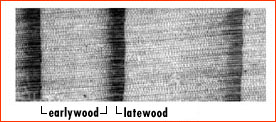 A tree grows mostly during the springtime, when there is
plenty of rain and sun to nourish it. It starts its spring
growth by dividing a layer of cells known as the cambium that
lay between the old wood and the tree's bark. This first
growth, called earlywood, is light colored. As the growth rate
slows and stops during fall the cells laid down are smaller
and denser (and therefore appear darker). This layer, called
latewood, marks the end of the growing season. The area from
the beginning of the earlywood and end of the latewood periods
represent one year of growth.
A tree grows mostly during the springtime, when there is
plenty of rain and sun to nourish it. It starts its spring
growth by dividing a layer of cells known as the cambium that
lay between the old wood and the tree's bark. This first
growth, called earlywood, is light colored. As the growth rate
slows and stops during fall the cells laid down are smaller
and denser (and therefore appear darker). This layer, called
latewood, marks the end of the growing season. The area from
the beginning of the earlywood and end of the latewood periods
represent one year of growth.Not all trees form rings—they only occur in trees that have a down time when they do not grow, such as fall and winter. Trees in the tropics that grow year-round do not form annual rings. Back Photo: ©P.R. Sheppard Anatomy of El Niño | Chasing El Niño | El Niño's Reach Dispatches | Resources | Mail | Site Map | El Niño Home Editor's Picks | Previous Sites | Join Us/E-mail | TV/Web Schedule About NOVA | Teachers | Site Map | Shop | Jobs | Search | To print PBS Online | NOVA Online | WGBH © | Updated November 2000 |