Ayn Rand-inscribed Family Associated Books
GUEST: We have three Ayn Rand books. My great-grandmother Sarah was Ayn Rand's first cousin.
APPRAISER: Wow.
GUEST: And Sarah was Ayn's sponsor to the United States in the 1920s. Ayn was very intelligent,
APPRAISER: Uh-huh.
GUEST: And was able to exit Russia to study film in America.
APPRAISER: Mm-hmm.
GUEST: And Sarah's husband at the time was an owner of movie theaters. So the Russian government allowed her to have a visa to come and study film.
APPRAISER: To Chicago?
GUEST: Correct.
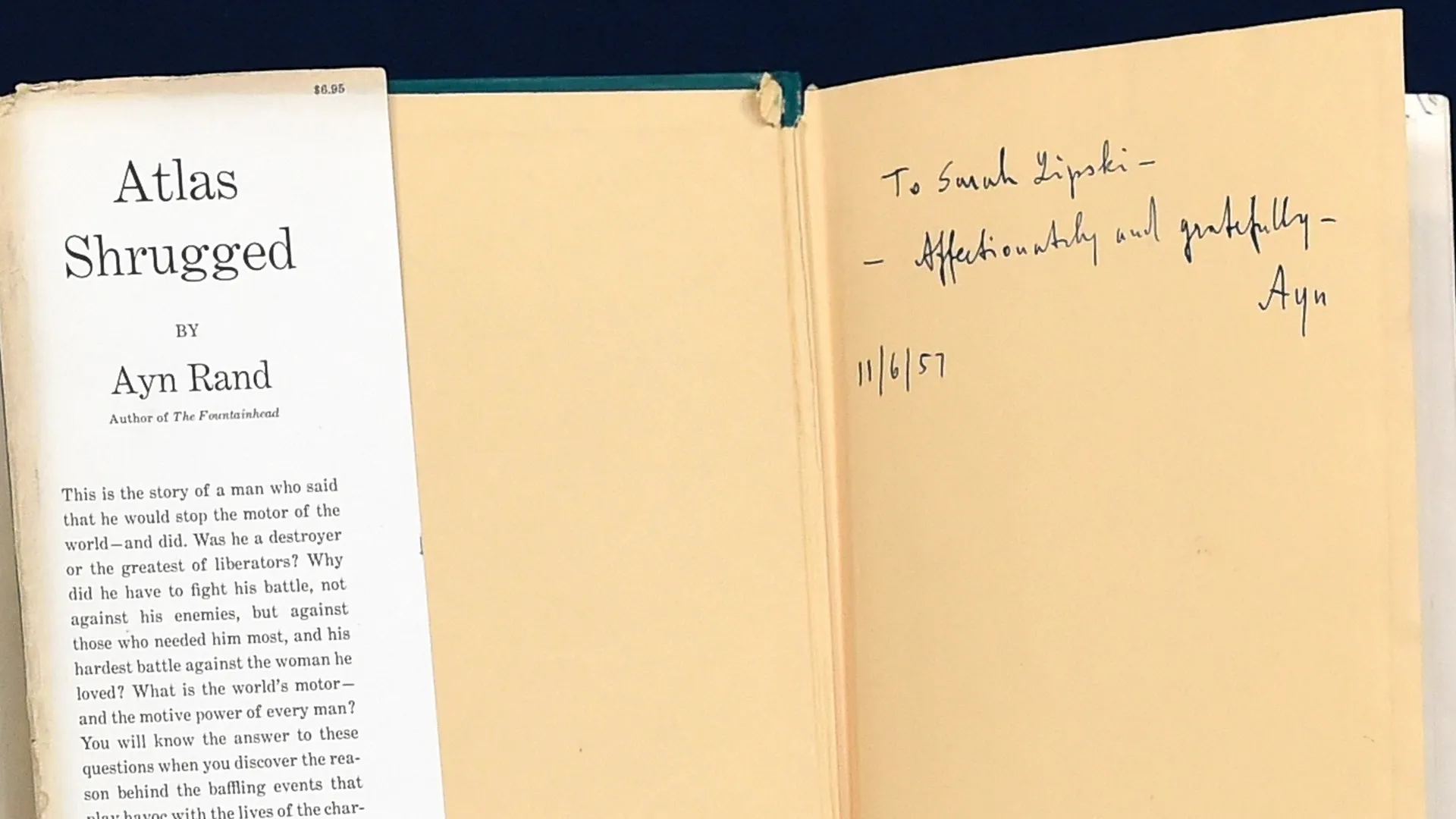
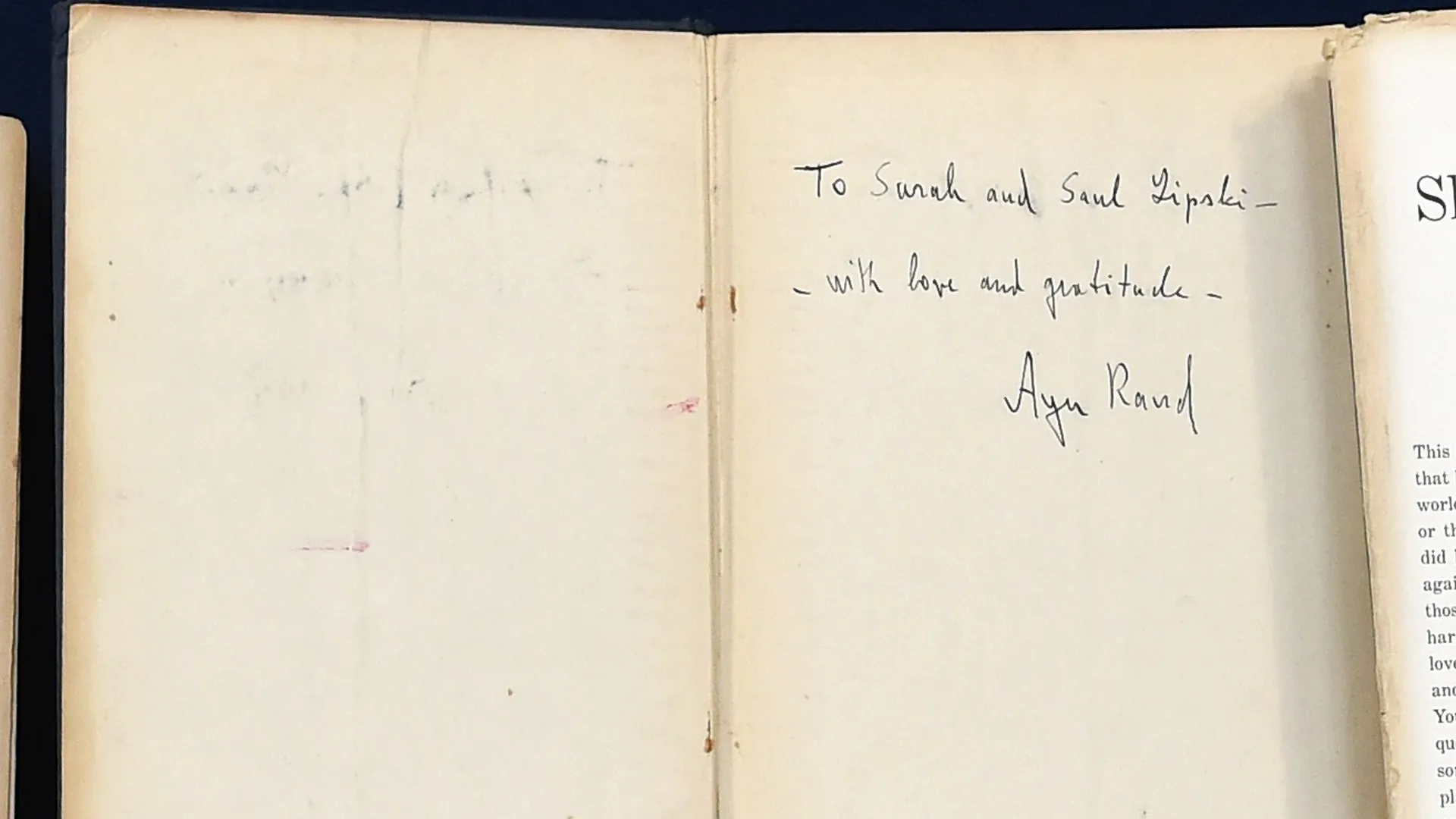
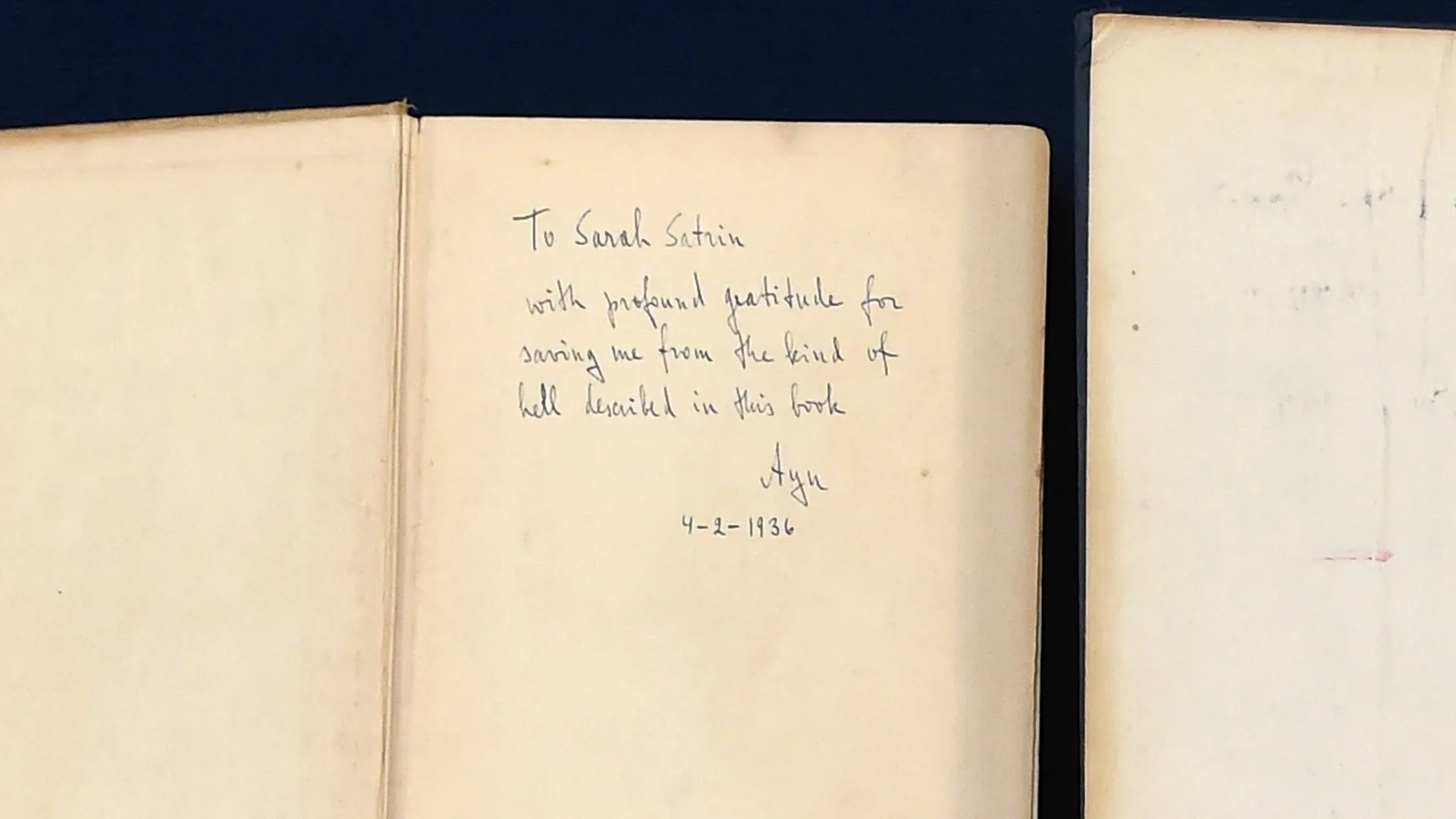
APPRAISER: Right, well, they're terrific examples. We have her first published book in the United States, We the Living, and The Fountainhead, and Atlas Shrugged. And of course, what's wonderful about them is that they're all inscribed. Rand did not like to sign books frequently. And so, it's lovely to have these inscriptions that were not only written to someone in particular, but a family member who was instrumental to bringing her to the United States. It's what we call an association copy. So, in this particular case, she says, "With profound gratitude for saving me from the kind of hell described in this book." We the Living, she had a lot of difficulty finding a publisher. Nobody really wanted to publish the book, being sort of against Soviet communism, and Macmillan agreed to publish it, and at 3,000 copies, it eventually went out of print. The book was released on April 7, 1936. This inscription is dated April 2. So, a full five days before it actually went out to publishers. So it's what you would kind of call a pre-publication association copy. So obviously, she must have kept in touch with the family. This was inscribed November 30, 1943. This is the fifth printing of the book.
GUEST: Right.
APPRAISER: And then, of course, back to the tour de force, Atlas Shrugged, also inscribed, on November 6, 1957, about three weeks after the book was published. There's always a premium to a book with an association to somebody important to the author. The names are different, but you mentioned to me that your great-grandmother remarried, is that right?
GUEST (laughs): Four husbands, yes.
APPRAISER: Four husbands, right. These two are first editions, this is a fifth printing. These two books, with just a general association, might have a auction estimate somewhere in the range of $4,000 to $6,000, $5,000 to $7,000. This one, since it's a later printing, would be more to $2,000 to $3,000. But because there are associations with the family, and they were so important in regard to the events in her life and bringing her out of Russia, I would describe the whole group at auction to have a global estimate of $20,000 to $30,000.
GUEST (chuckles)
APPRAISER: Thank you so much for bringing it in.
GUEST: Thank you-- thank you.

$15,000 - $20,000 Auction
$20,000 - $30,000 Auction
Photos
Featured In

episode
Chicago, IL, Hour 3
Ayn Rand signed books, an Edward Borein painting, and a Carnegie hero medal!
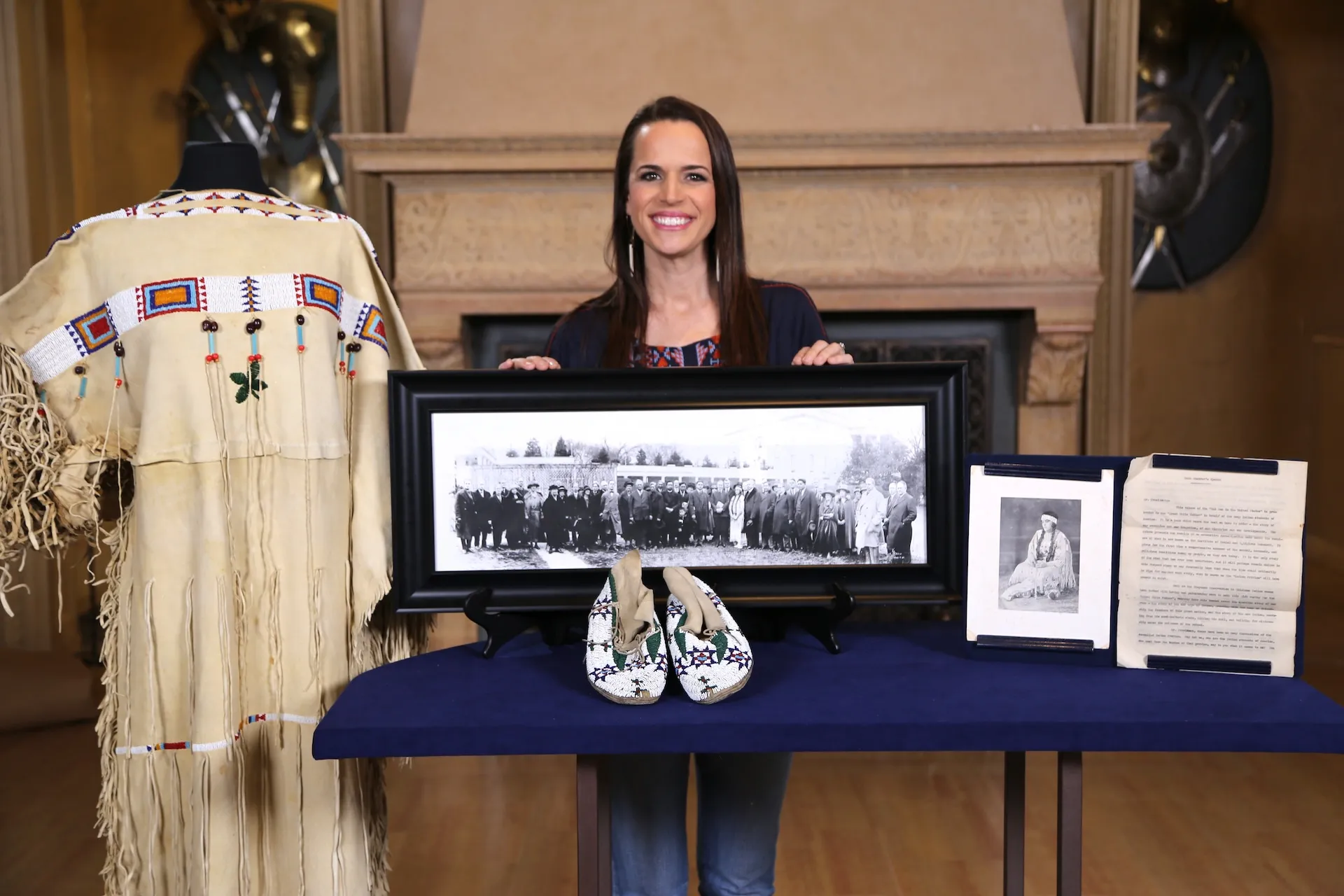
episode
20th Century
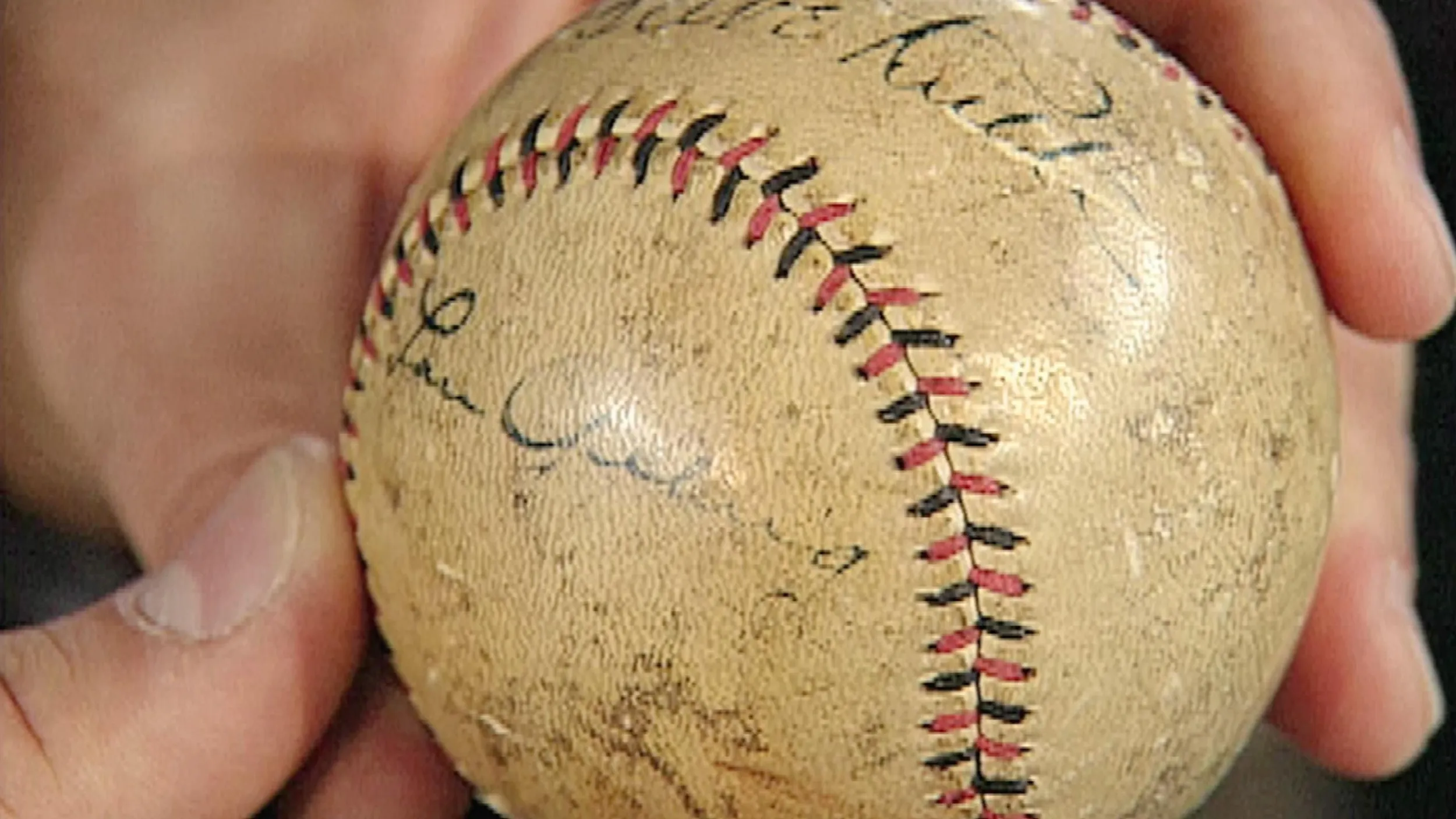
appraisal
1927 Babe Ruth & Lou Gehrig-signed Baseball
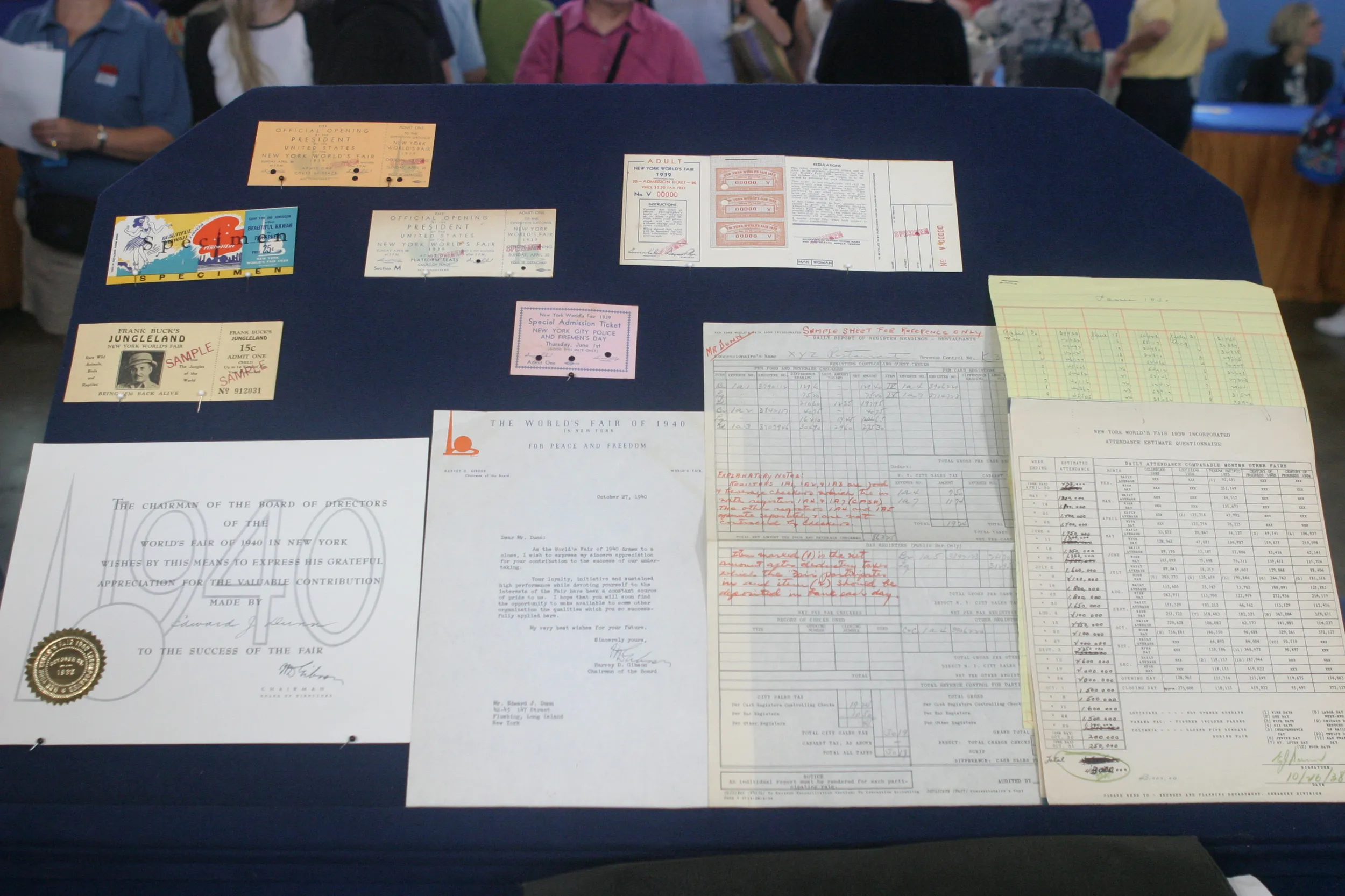
appraisal
1939-40 World's Fair Ephemera

appraisal
Zeenut Baseball Cards, ca. 1915
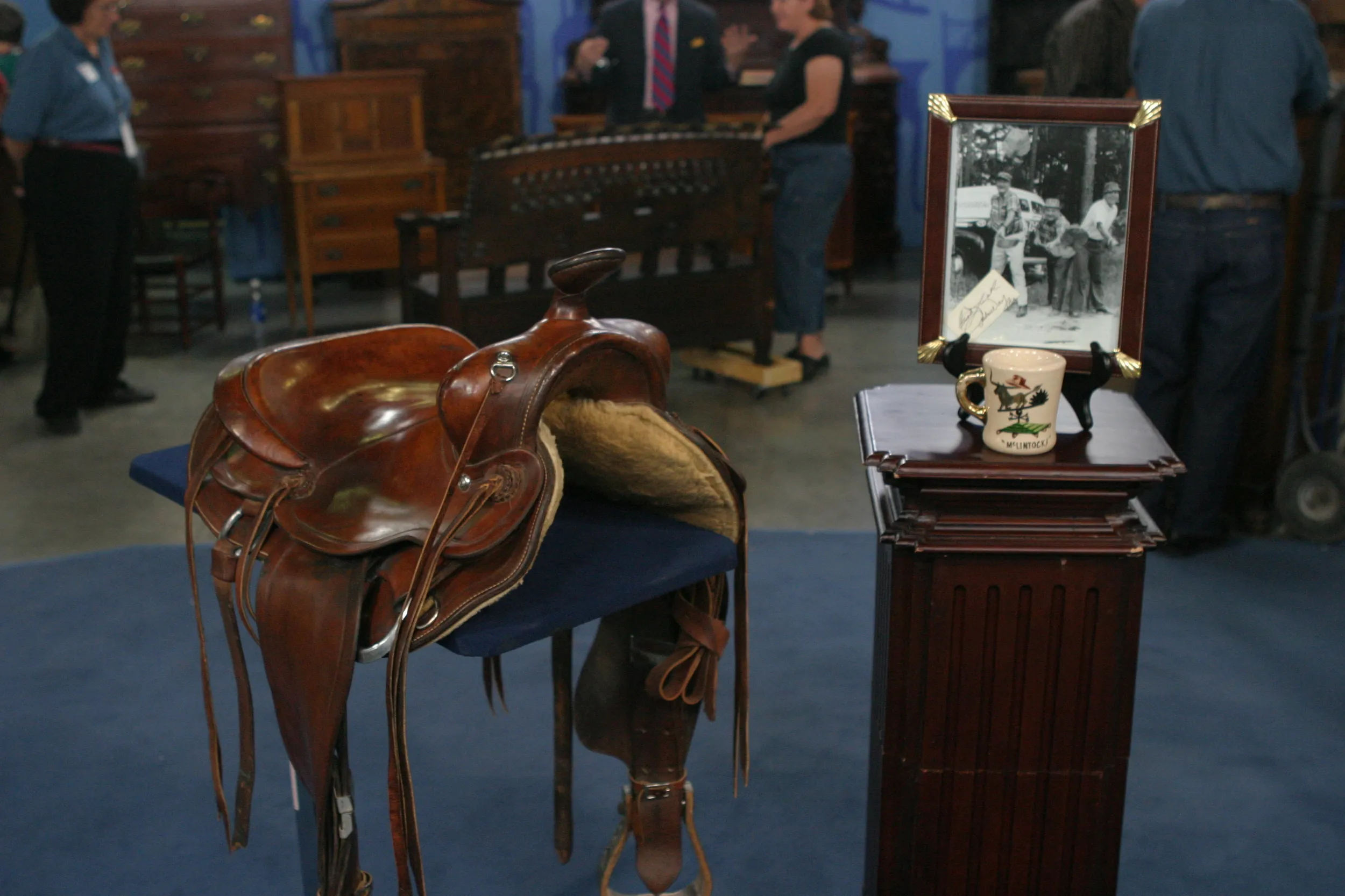
appraisal
John Wayne Memorabilia, ca. 1950
Understanding Our Appraisals
Executive producer Marsha Bemko shares her tips for getting the most out of ANTIQUES ROADSHOW.
Value can change: The value of an item is dependent upon many things, including the condition of the object itself, trends in the market for that kind of object, and the location where the item will be sold. These are just some of the reasons why the answer to the question "What's it worth?" is so often "It depends."
Note the date: Take note of the date the appraisal was recorded. This information appears in the upper left corner of the page, with the label "Appraised On." Values change over time according to market forces, so the current value of the item could be higher, lower, or the same as when our expert first appraised it.
Context is key: Listen carefully. Most of our experts will give appraisal values in context. For example, you'll often hear them say what an item is worth "at auction," or "retail," or "for insurance purposes" (replacement value). Retail prices are different from wholesale prices. Often an auctioneer will talk about what she knows best: the auction market. A shop owner will usually talk about what he knows best: the retail price he'd place on the object in his shop. And though there are no hard and fast rules, an object's auction price can often be half its retail value; yet for other objects, an auction price could be higher than retail. As a rule, however, retail and insurance/replacement values are about the same.
Verbal approximations: The values given by the experts on ANTIQUES ROADSHOW are considered "verbal approximations of value." Technically, an "appraisal" is a legal document, generally for insurance purposes, written by a qualified expert and paid for by the owner of the item. An appraisal usually involves an extensive amount of research to establish authenticity, provenance, composition, method of construction, and other important attributes of a particular object.
Opinion of value: As with all appraisals, the verbal approximations of value given at ROADSHOW events are our experts' opinions formed from their knowledge of antiques and collectibles, market trends, and other factors. Although our valuations are based on research and experience, opinions can, and sometimes do, vary among experts.
Appraiser affiliations: Finally, the affiliation of the appraiser may have changed since the appraisal was recorded. To see current contact information for an appraiser in the ROADSHOW Archive, click on the link below the appraiser's picture. Our Appraiser Index also contains a complete list of active ROADSHOW appraisers and their contact details and biographies.