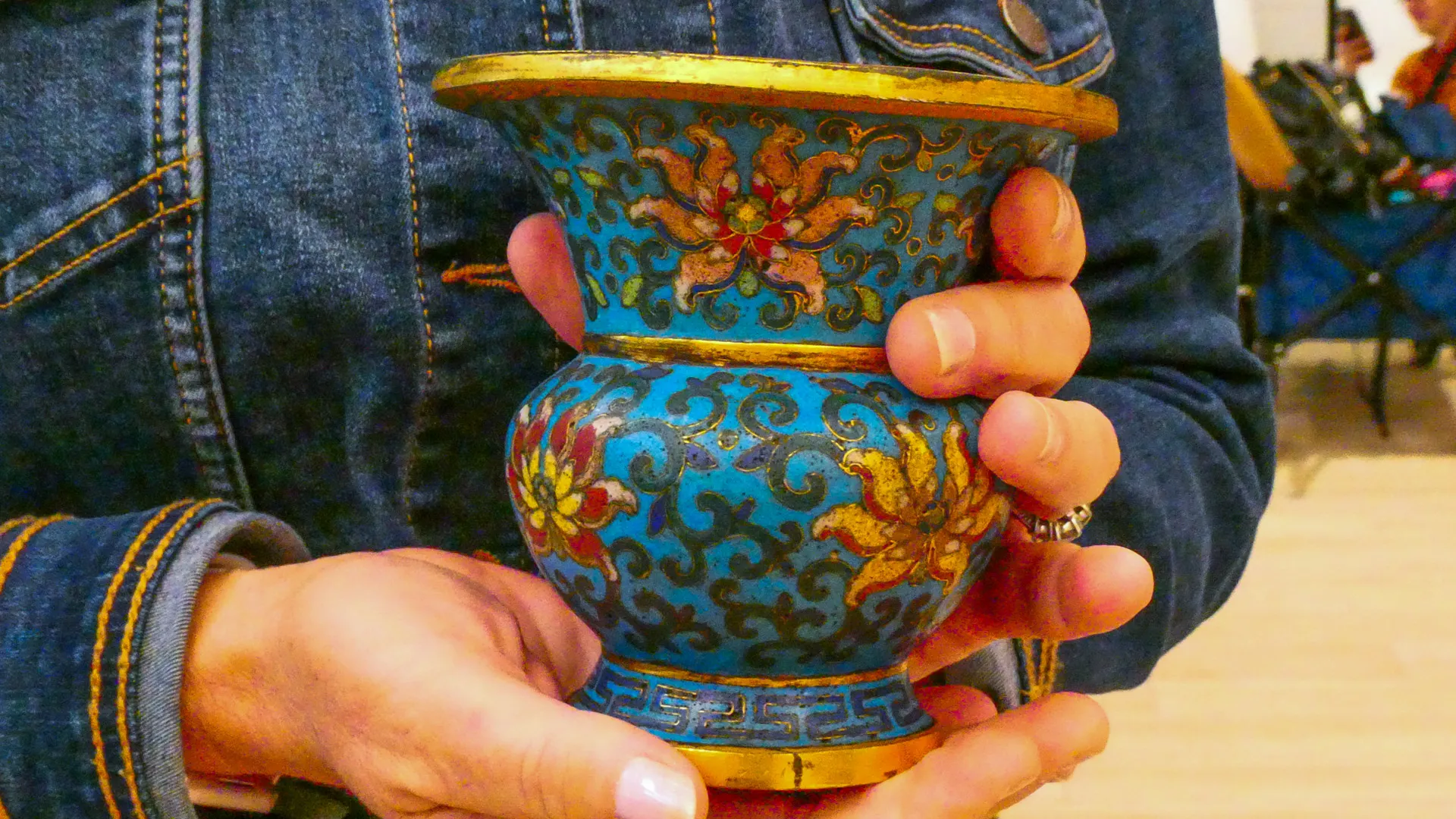
Chinese Cloisonné Enamel Waste Bowl, ca. 1750
GUEST: When I was a little girl, about five years old, my parents had a really huge fight that I can remember, and it was due to this little vase. Somebody owed my dad some money, and didn't have... money to pay him back, so he offered my dad this vase, which my father accepted. And my mother was not happy, because a vase will not pay the mortgage. And then my mom gave it to me right after I got married. So, probably 35 years ago, because she knew how much I loved this little vase.
APPRAISER: This is an 18th century waste bowl, called a "zhadou." Zhadou means essentially waste bowl...
GUEST: Like chamber pot.
APPRAISER: Well, it's a very small chamber pot. (laughs) It was used for the remnants of tea or the remnants of food on a table.
GUEST: Mm-hmm.
APPRAISER: It's made of cloisonné enamel. It's a Ming dynasty form...
GUEST: Mm-hmm...
APPRAISER:...um, that actually had its history in an archaic bronze vessel, which was called a "zun," or a wine vessel. "Zun" means respect. That form started in the Shang Dynasty, a millennium before the birth of Christ, okay.
GUEST: Oh, whoa.
APPRAISER: And then that form evolved, and some scholars think that, that it evolved into this form. There's some dispute about that. Ming Dynasty form, however, what makes this a later piece-- that is, a Qing Dynasty...
GUEST: Oh.
APPRAISER: ...imperial Qianlong piece, is the use of this pink enamel
GUEST: Oh.
APPRAISER: ...which was brought into China by the Jesuits in around 1720, 1740, resulting in a piece that was made by the imperial workshops. But, in the Qianlong era, between 1735 and 1795.
GUEST: Wow.
APPRAISER: At auction, a piece like this would bring you between $6,000 and $9,000.
GUEST: Wow. (laughing) I guess it would have paid the mortgage. Wow. Thank you so much.

$6,000 - $9,000 Auction
Photos
Featured In
episode
Junk in the Trunk 15
Revisit all five cities from ROADSHOW’s celebratory Season 30 for never-before-seen finds!
Things to Use or Wear
appraisal
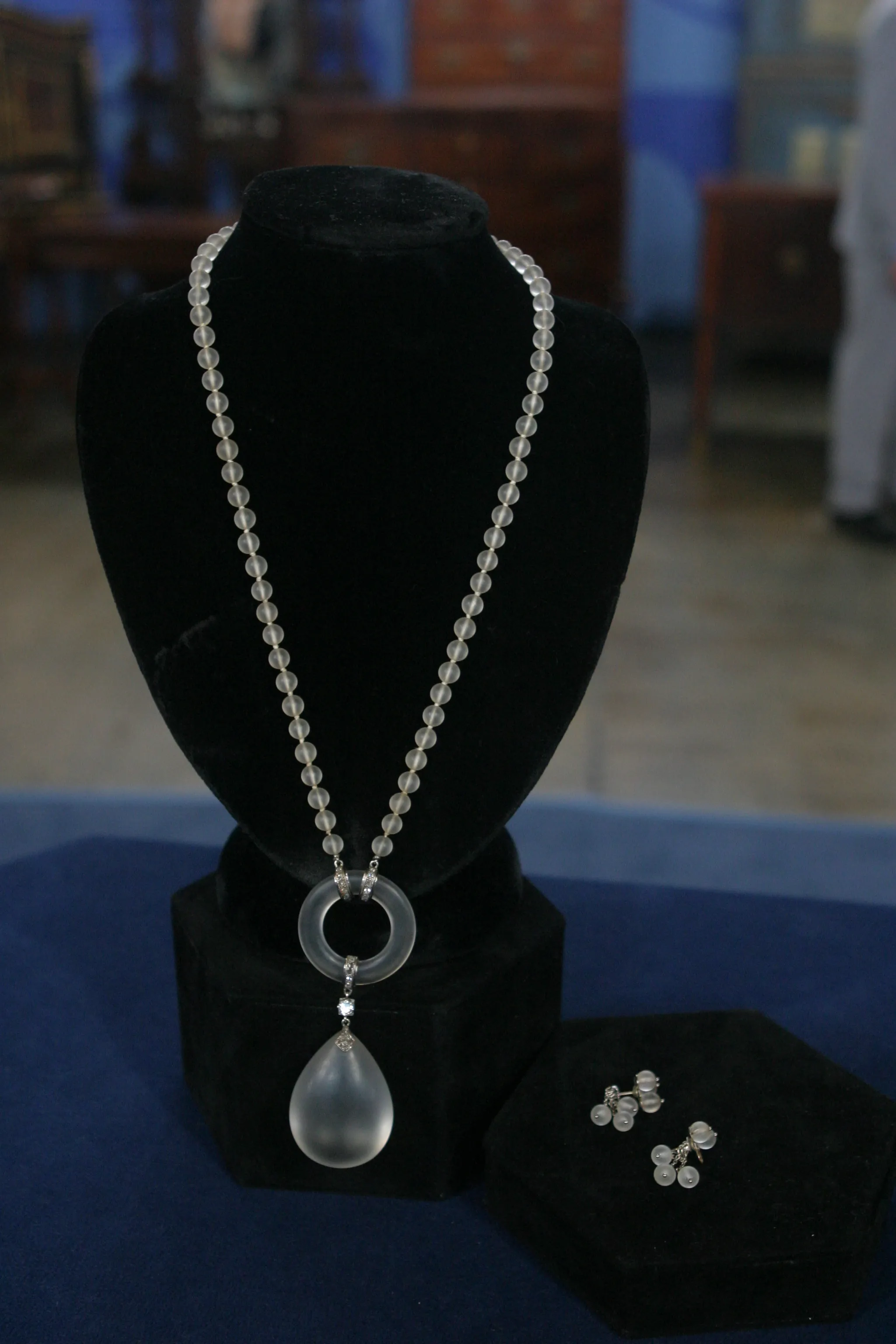
Georges Fouquet Glass Necklace, ca. 1930
appraisal
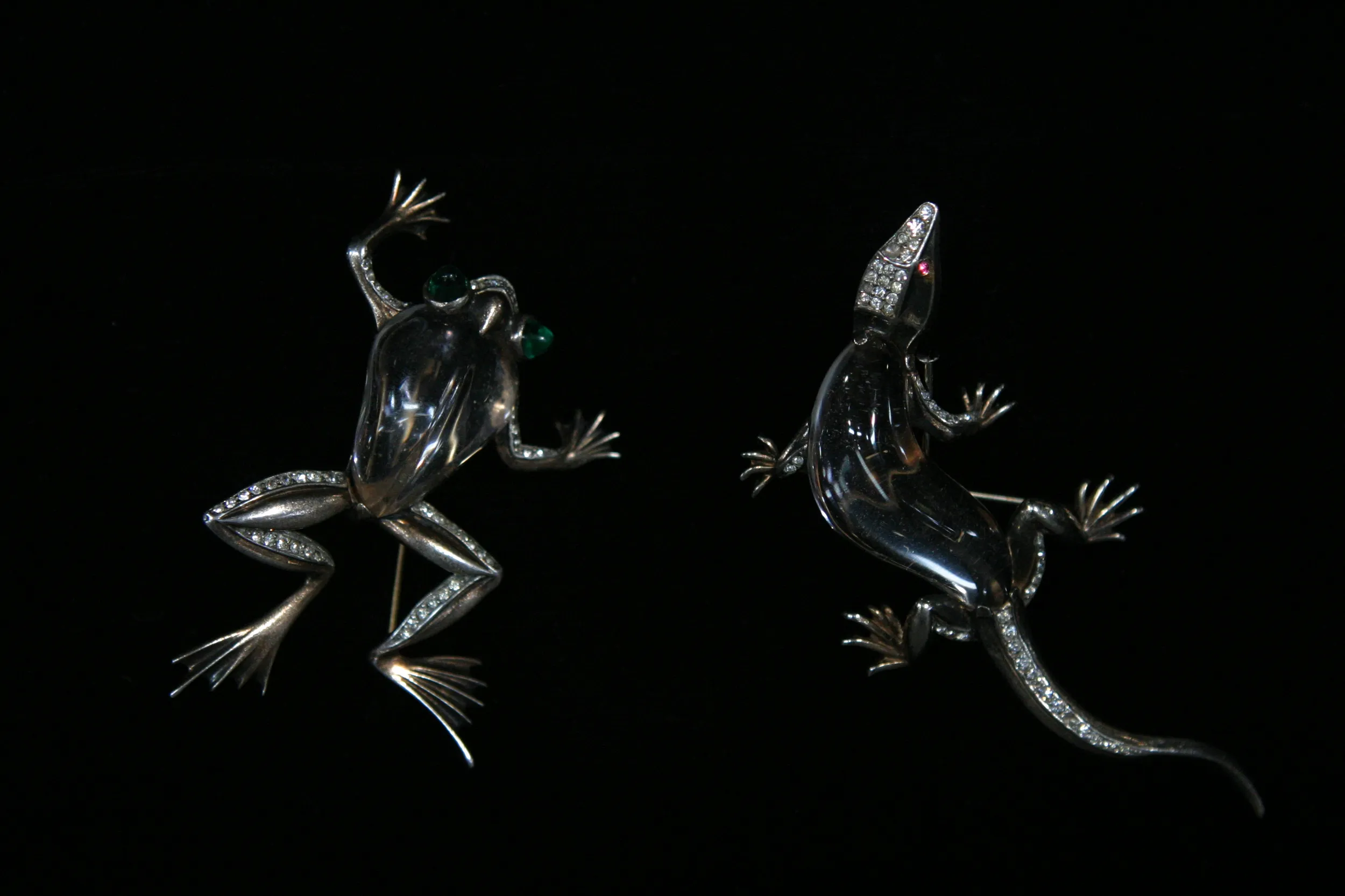
Trifari "Jelly Belly" Pins, ca. 1945
appraisal
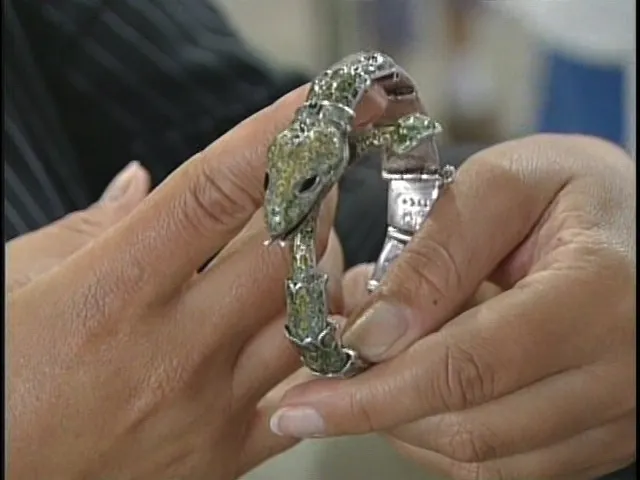
Margot de Taxco Snake Bracelet, ca. 1950
appraisal
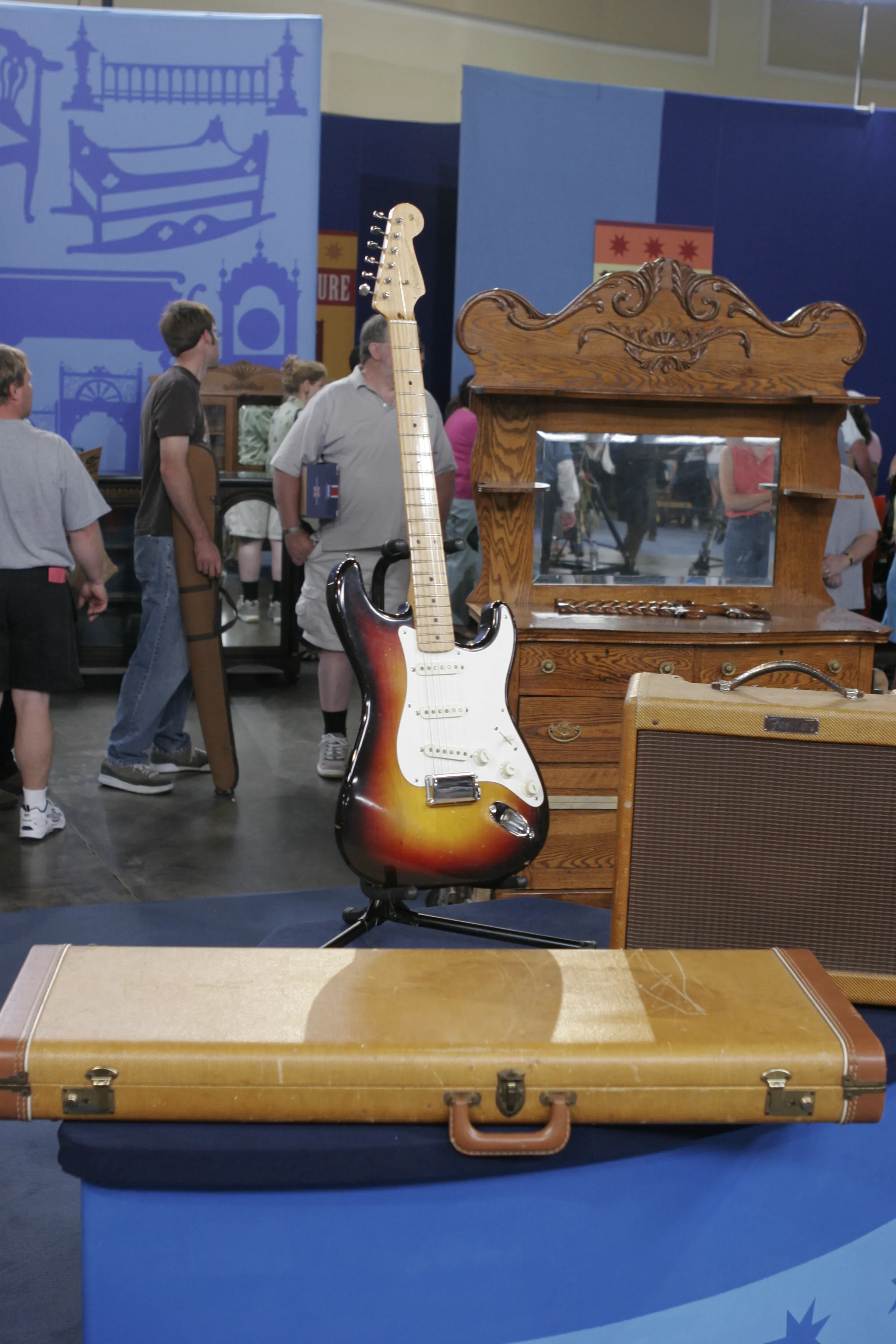
1959 Fender Stratocaster & Amp
Understanding Our Appraisals
Executive producer Marsha Bemko shares her tips for getting the most out of ANTIQUES ROADSHOW.
Value can change: The value of an item is dependent upon many things, including the condition of the object itself, trends in the market for that kind of object, and the location where the item will be sold. These are just some of the reasons why the answer to the question "What's it worth?" is so often "It depends."
Note the date: Take note of the date the appraisal was recorded. This information appears in the upper left corner of the page, with the label "Appraised On." Values change over time according to market forces, so the current value of the item could be higher, lower, or the same as when our expert first appraised it.
Context is key: Listen carefully. Most of our experts will give appraisal values in context. For example, you'll often hear them say what an item is worth "at auction," or "retail," or "for insurance purposes" (replacement value). Retail prices are different from wholesale prices. Often an auctioneer will talk about what she knows best: the auction market. A shop owner will usually talk about what he knows best: the retail price he'd place on the object in his shop. And though there are no hard and fast rules, an object's auction price can often be half its retail value; yet for other objects, an auction price could be higher than retail. As a rule, however, retail and insurance/replacement values are about the same.
Verbal approximations: The values given by the experts on ANTIQUES ROADSHOW are considered "verbal approximations of value." Technically, an "appraisal" is a legal document, generally for insurance purposes, written by a qualified expert and paid for by the owner of the item. An appraisal usually involves an extensive amount of research to establish authenticity, provenance, composition, method of construction, and other important attributes of a particular object.
Opinion of value: As with all appraisals, the verbal approximations of value given at ROADSHOW events are our experts' opinions formed from their knowledge of antiques and collectibles, market trends, and other factors. Although our valuations are based on research and experience, opinions can, and sometimes do, vary among experts.
Appraiser affiliations: Finally, the affiliation of the appraiser may have changed since the appraisal was recorded. To see current contact information for an appraiser in the ROADSHOW Archive, click on the link below the appraiser's picture. Our Appraiser Index also contains a complete list of active ROADSHOW appraisers and their contact details and biographies.