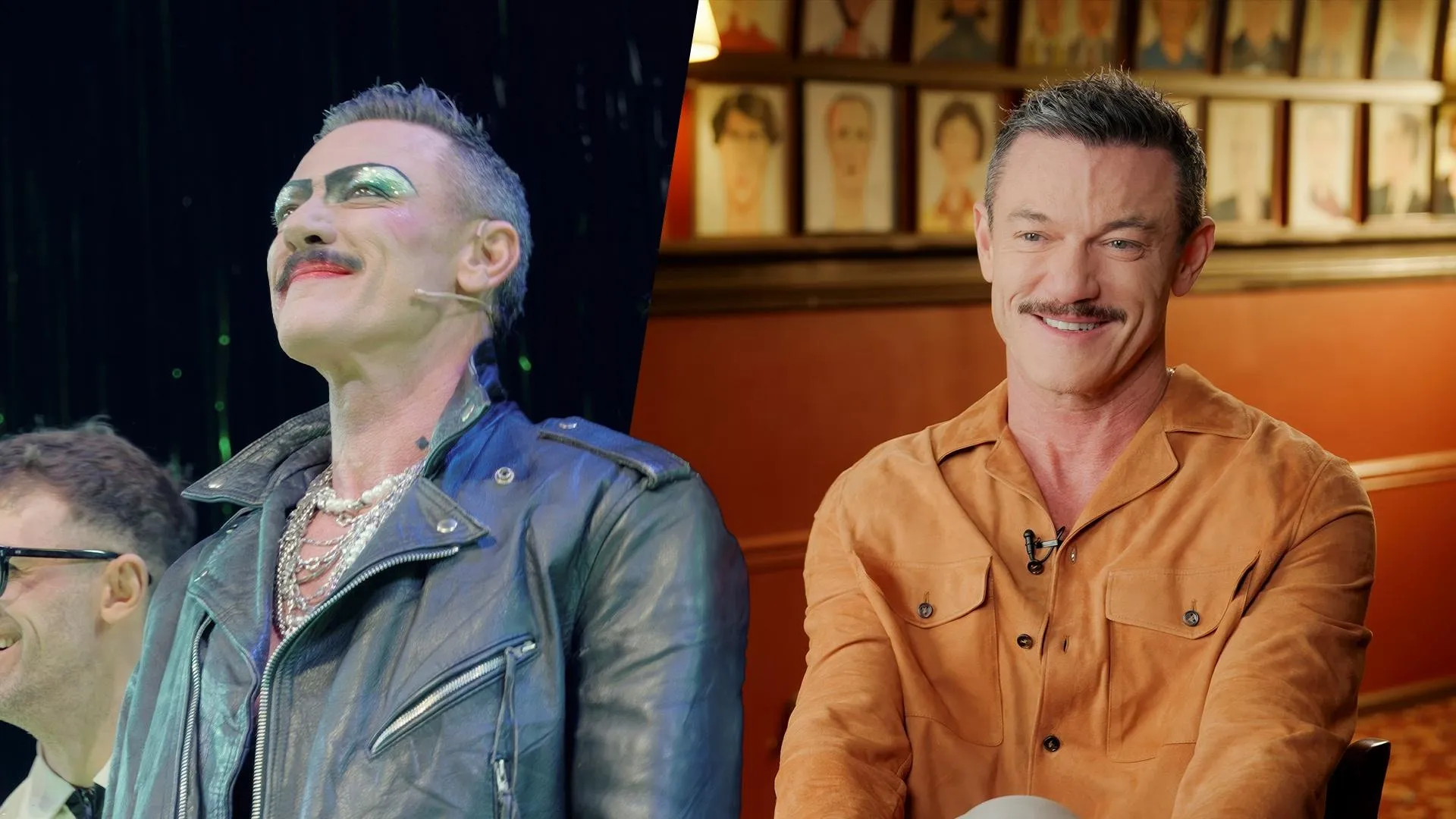
Citrine Brooch & Ring, ca. 1915
GUEST: My great aunt lived in North Hollywood, California, and she had a friend there who gave these to her.
Uh, that woman, when she was very young, married a European count or some royal personage and when he died, they were childless.
The state was en... the estate was entailed.
This jewelry is all she had.
It is my understanding that this originally contained either emeralds or sapphires, and including the family crest on the ring.
She fell on hard times.
She sold the stones and replaced it with these stones and had the crest carved into the stone on the ring.
APPRAISER: And didn't you tell me as well that she worked on films in Hollywood?
She was a historical advisor to the films?
GUEST: That's right.
Fo-- they went through a period in the '40s with, um, Essex and Elizabeth and, and those kinds of films, and she gave them court protocol and stuff from... APPRAISER: So she really knew... GUEST: ...yes.
APPRAISER: ...what she was doing... GUEST: Right.
APPRAISER: ...when she was, um, putting the costumes together or the jewelry together for a show.
GUEST: Right.
Right.
APPRAISER: Well, she showed her knowledge in terms of these pieces of jewelry, because when she replaced the stones, um, she copied the crest that was on the original stone, as you had originally indicated, and she kept the integrity of the piece by replicating the crest that would have been on the original piece.
Sideways you see the, uh, beautiful openwork gallery.
That was done at the beginning of the 19th century.
And this was done by hand, and it's beautifully crafted.
Uh, this was obviously made, uh, by someone who was a fine jeweler because the workmanship is so good, and it would have been in keeping with the stone and the valuable stone that you were talking about that was in here originally.
And when you look at the brooch, if you hold the brooch up, you will see that the motifs that are in the ring, the little floral motifs, are repeated in the brooch, and the geometric quality, uh, is repeated in the brooch again, so that everything about this shows that the pieces were made at the same time.
Do you have any idea of how much this is worth?
GUEST: No, I know that the stones are not valuable.
APPRAISER: Well, they're a pretty color for a citrine.
They're a, a nicer color than is usually on the market.
What do you think that they're worth?
GUEST: Maybe $500 for the pair.
APPRAISER: $500 for the pair, well, it's, it's my, uh, pleasure to tell you that a pair, uh, this ring and this brooch together are probably worth about $3,000.
GUEST: No kidding?
APPRAISER: Yeah.
Because of this beautiful workmanship that I pointed out to you, because of how finely crafted this is, the integrity of the piece, and how uncommon it is to find jewelry that hasn't been damaged.
So you're very lucky to have this set.
GUEST: Yes, I am.
APPRAISER: And I'm so pleased that you brought this today to show it to me and to share it with me.
GUEST: Me too.
(laughs) APPRAISER: Uh, because I've seen a little bit of history.

$5,000
$3,000
Photos
Featured In
episode
Vintage First Finds, Hour 5
Discover today’s values for ROADSHOW’s first finds, including one with a whopping update! — Premiered Mon, Oct 19, 2026
Ring
appraisal
Carved Emerald & Ruby Ring, ca. 1925
appraisal
Scarab Vinaigrette Ring, ca. 1880
appraisal
Marsh Steel, Jade & Diamond Ring, ca. 1950

appraisal
English Memorial Jewelry Collection
Understanding Our Appraisals
Executive producer Marsha Bemko shares her tips for getting the most out of ANTIQUES ROADSHOW.
Value can change: The value of an item is dependent upon many things, including the condition of the object itself, trends in the market for that kind of object, and the location where the item will be sold. These are just some of the reasons why the answer to the question "What's it worth?" is so often "It depends."
Note the date: Take note of the date the appraisal was recorded. This information appears in the upper left corner of the page, with the label "Appraised On." Values change over time according to market forces, so the current value of the item could be higher, lower, or the same as when our expert first appraised it.
Context is key: Listen carefully. Most of our experts will give appraisal values in context. For example, you'll often hear them say what an item is worth "at auction," or "retail," or "for insurance purposes" (replacement value). Retail prices are different from wholesale prices. Often an auctioneer will talk about what she knows best: the auction market. A shop owner will usually talk about what he knows best: the retail price he'd place on the object in his shop. And though there are no hard and fast rules, an object's auction price can often be half its retail value; yet for other objects, an auction price could be higher than retail. As a rule, however, retail and insurance/replacement values are about the same.
Verbal approximations: The values given by the experts on ANTIQUES ROADSHOW are considered "verbal approximations of value." Technically, an "appraisal" is a legal document, generally for insurance purposes, written by a qualified expert and paid for by the owner of the item. An appraisal usually involves an extensive amount of research to establish authenticity, provenance, composition, method of construction, and other important attributes of a particular object.
Opinion of value: As with all appraisals, the verbal approximations of value given at ROADSHOW events are our experts' opinions formed from their knowledge of antiques and collectibles, market trends, and other factors. Although our valuations are based on research and experience, opinions can, and sometimes do, vary among experts.
Appraiser affiliations: Finally, the affiliation of the appraiser may have changed since the appraisal was recorded. To see current contact information for an appraiser in the ROADSHOW Archive, click on the link below the appraiser's picture. Our Appraiser Index also contains a complete list of active ROADSHOW appraisers and their contact details and biographies.