Edwardian Diamond & Platinum Ring, ca. 1920
GUEST: I acquired that ring some years ago, back in the '70s, from a friend of mine.
APPRAISER: Why did your friend give it to you?
GUEST: Well, it wasn't actually a gift. He kind of got in a little bit of trouble, and called me, and I told him I needed a little collateral. So I went by his house and picked up the ring, and told him when he gave me the money back, he could have his ring. And that was in 1972, and...
APPRAISER: Now, when you say he got in a little bit of trouble...
GUEST: Well, it was a phone call from the jailhouse.
APPRAISER: Oh, my!
GUEST: Yeah, yeah. He was one of those people who enjoyed life kind of illegally, they say.
APPRAISER: Ah-hah! I see.
GUEST: So he needed a little bail money, and the $500, what I had to get for the bail money.
APPRAISER: It's a great old ring, and it's an early-20th-century ring. It's an Edwardian ring. It's got some old mine-cut diamonds in there. There's a couple of them that are about three-quarters of a carat. A couple of them, they're about a half a carat each. Have you ever had anybody else take a look at that ring for you?
GUEST: Well, we took it to a jewelry store in Charlotte, North Carolina. Weren't too happy with what the lady told us.
APPRAISER: Can you tell me what she said that didn't make you so happy?
GUEST: Well, it was actually the money.
APPRAISER: (laughing) Oh, yeah. That's, that's always the story, isn't it?
GUEST: Yeah. She was telling us the weight of it. Then she was telling me what kind of metal the ring was, which I'm not sure what she said it was. But she offered to purchase it for $1,200.
APPRAISER: Ah-hah! It sounds a little bit unethical to me.
GUEST: Exactly.
APPRAISER: A ring like this is, it's pretty desirable in today's market. We see these from that era pretty regularly. It's platinum, which is commonly what they used to make jewelry back then. That was kind of the new metal in town.
GUEST: Right.
APPRAISER: This ring is probably made in America, would be my guess. I see a lot of rings like this made from people who emigrated to the U.S. who had the craft of making jewelry like this. And it's in great shape. So, so nobody wears it now?
GUEST: My wife, uh, she says it's too big for her.
APPRAISER: Oh.
GUEST: She's got little hands.
APPRAISER: I see, okay.
GUEST: So she says it's too big for her hands, so she doesn't wear it, so it just kind of just...
APPRAISER: So, so it's not hers now? It's still yours?
GUEST: It's hers.
APPRAISER: Okay, all right.
GUEST: I give, I 'fess, it's hers.
APPRAISER: Okay, all right. I think in today's market, an auction value on something like that would probably in, be in about the $3,000 to $5,000 range.
GUEST: Whoa!
APPRAISER: Yeah. So a little different than what you had originally heard at your jeweler there.
GUEST: Yeah.
APPRAISER: Yeah. So hopefully that's a little bit, a better number that sits with you better.
GUEST: That's, that's good news.

$4,000 - $6,000 Auction
$3,000 - $5,000 Auction
Featured In
episode
episode
American Stories
Celebrate the history of our country through personal accounts behind standout treasures.
Traditional Crafts
appraisal
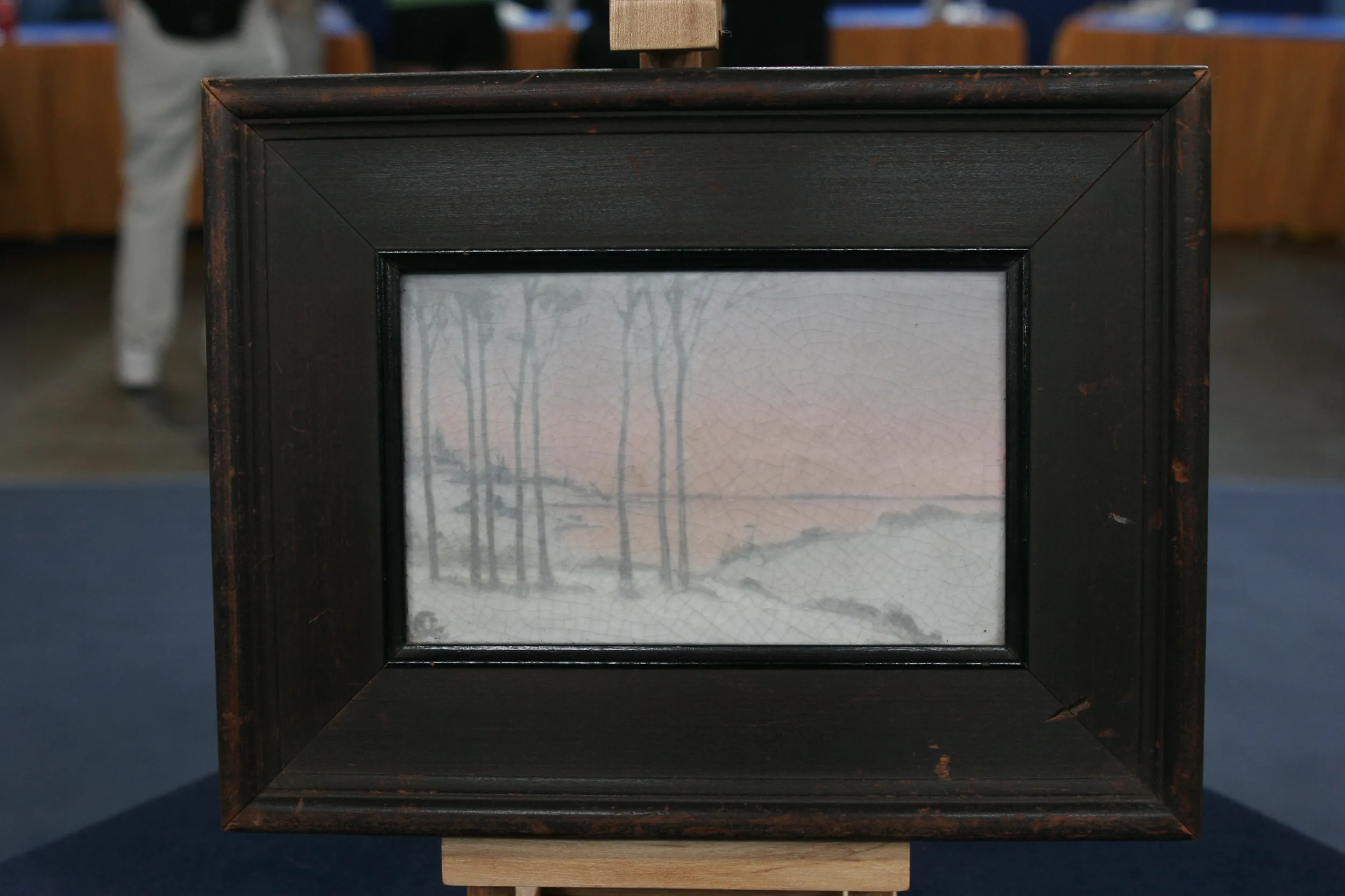
1918 Sallie Coyne Rookwood Vellum Plaque
appraisal
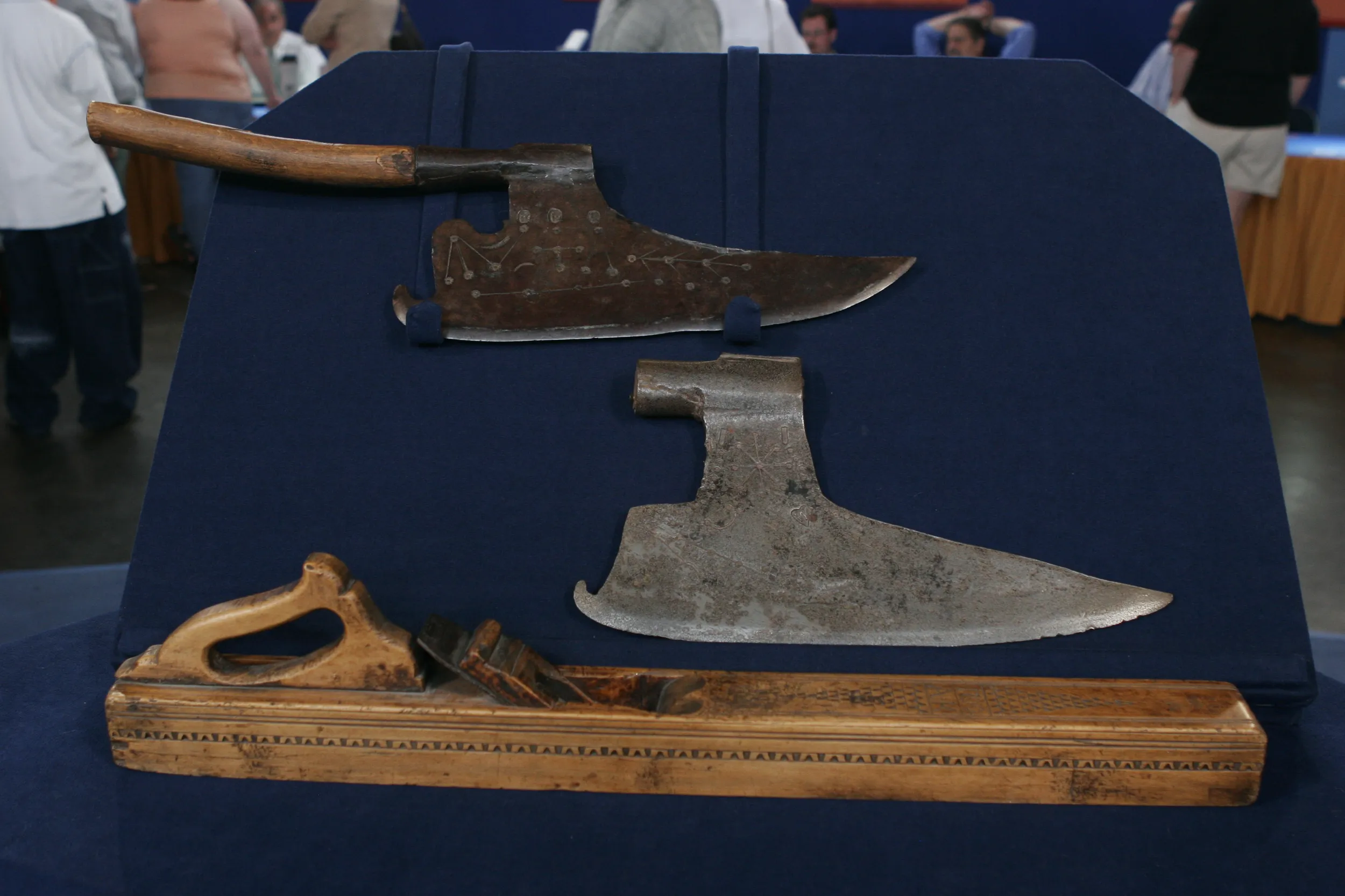
18th-Century Austrian Tools
appraisal
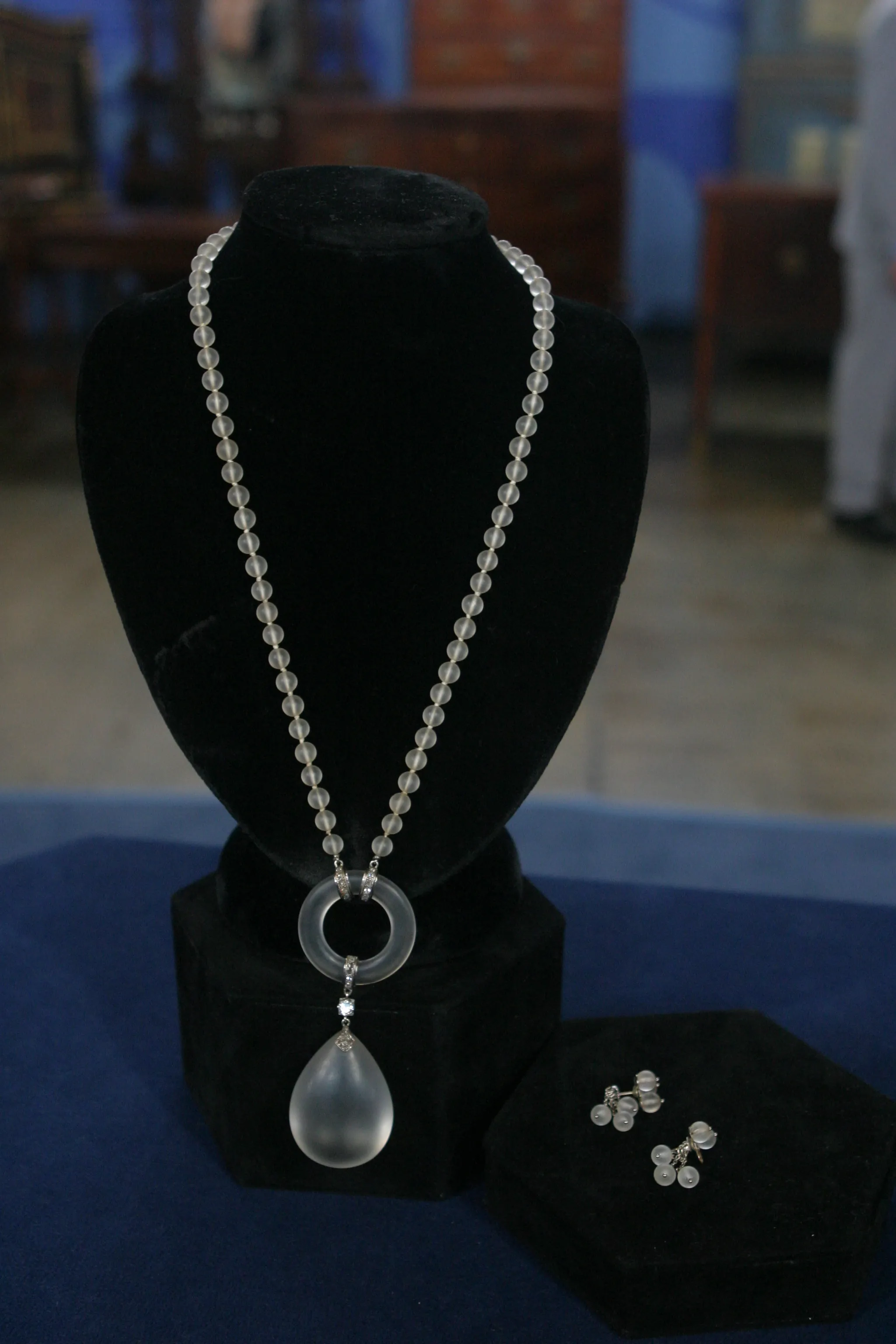
Georges Fouquet Glass Necklace, ca. 1930
appraisal
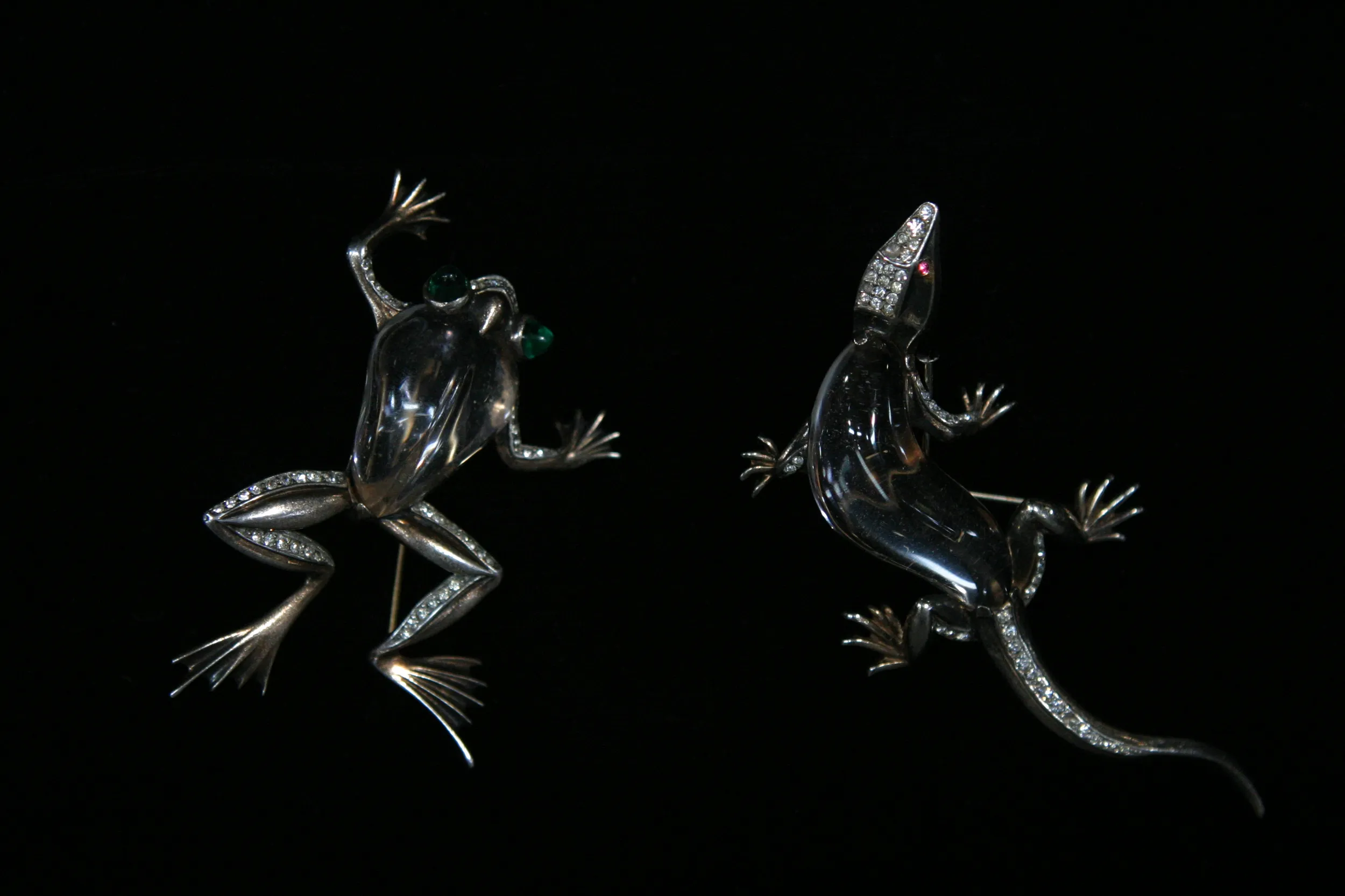
Trifari "Jelly Belly" Pins, ca. 1945
Understanding Our Appraisals
Executive producer Marsha Bemko shares her tips for getting the most out of ANTIQUES ROADSHOW.
Value can change: The value of an item is dependent upon many things, including the condition of the object itself, trends in the market for that kind of object, and the location where the item will be sold. These are just some of the reasons why the answer to the question "What's it worth?" is so often "It depends."
Note the date: Take note of the date the appraisal was recorded. This information appears in the upper left corner of the page, with the label "Appraised On." Values change over time according to market forces, so the current value of the item could be higher, lower, or the same as when our expert first appraised it.
Context is key: Listen carefully. Most of our experts will give appraisal values in context. For example, you'll often hear them say what an item is worth "at auction," or "retail," or "for insurance purposes" (replacement value). Retail prices are different from wholesale prices. Often an auctioneer will talk about what she knows best: the auction market. A shop owner will usually talk about what he knows best: the retail price he'd place on the object in his shop. And though there are no hard and fast rules, an object's auction price can often be half its retail value; yet for other objects, an auction price could be higher than retail. As a rule, however, retail and insurance/replacement values are about the same.
Verbal approximations: The values given by the experts on ANTIQUES ROADSHOW are considered "verbal approximations of value." Technically, an "appraisal" is a legal document, generally for insurance purposes, written by a qualified expert and paid for by the owner of the item. An appraisal usually involves an extensive amount of research to establish authenticity, provenance, composition, method of construction, and other important attributes of a particular object.
Opinion of value: As with all appraisals, the verbal approximations of value given at ROADSHOW events are our experts' opinions formed from their knowledge of antiques and collectibles, market trends, and other factors. Although our valuations are based on research and experience, opinions can, and sometimes do, vary among experts.
Appraiser affiliations: Finally, the affiliation of the appraiser may have changed since the appraisal was recorded. To see current contact information for an appraiser in the ROADSHOW Archive, click on the link below the appraiser's picture. Our Appraiser Index also contains a complete list of active ROADSHOW appraisers and their contact details and biographies.