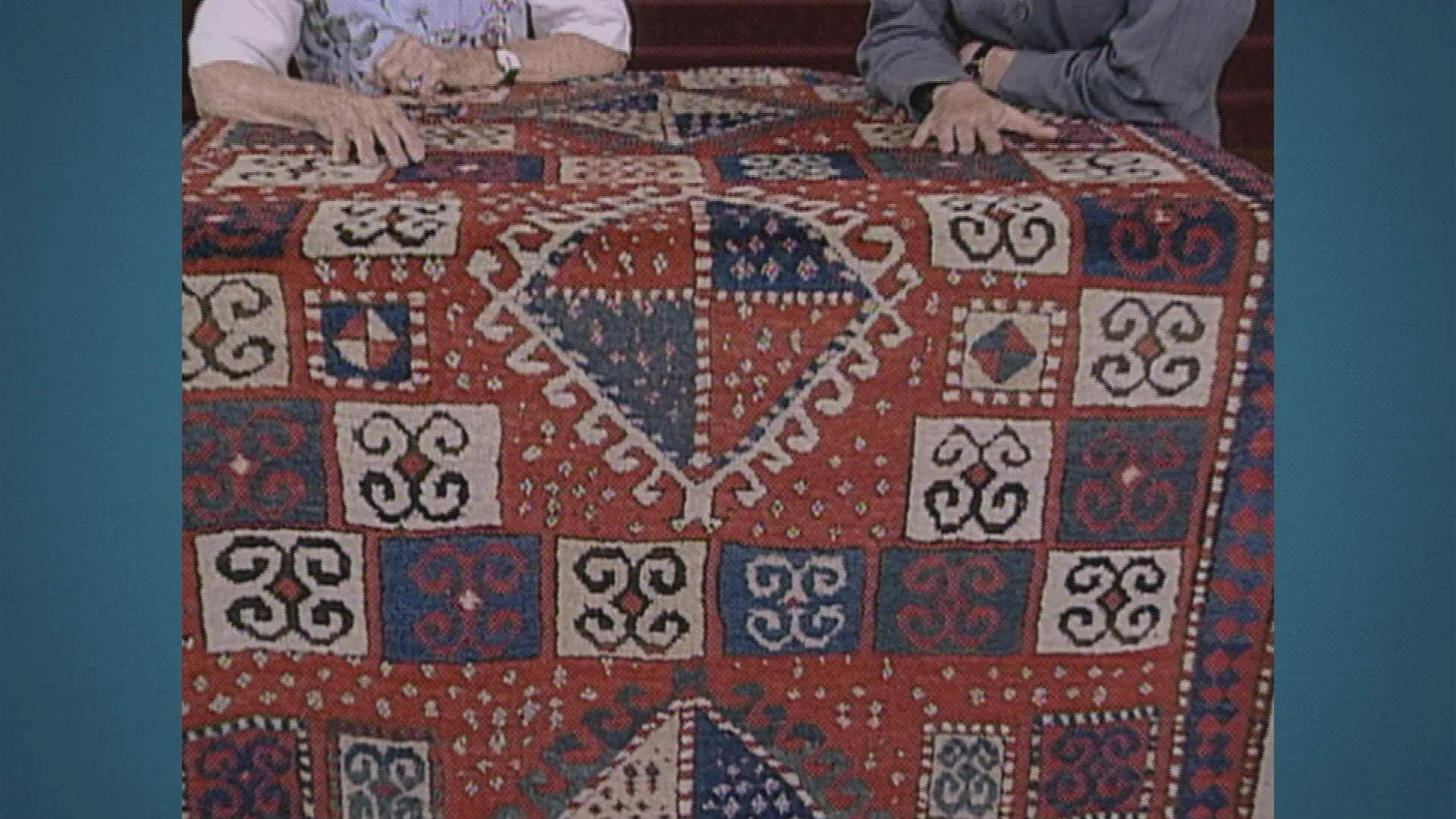
Kazak Rug, ca. 1885
GUEST: This is wonderful.
APPRAISER: Yeah.
GUEST: To come over here, and someone educate me as to what I have. (laughs)
APPRAISER: Okay, so you don't know anything about this?
GUEST: I know almost nothing, other than that I like it very, very much.
APPRAISER: Yeah? Can you tell me about where you, you got it?
GUEST: Yes, um, this was bought in Oklahoma, of all places. (laughing)
APPRAISER: Yeah?
GUEST: Okay. A lot of wealth came into Oklahoma in a hurry in the oil boom. And those people wanted to furnish their homes with Oriental rugs and, and other...
APPRAISER: Antiques, yeah.
GUEST: Other beautiful things.
APPRAISER: Well, it's a Kazak rug from the Southern Caucasus, made by nomadic people who roamed around the mountains, in the Caucasus Mountains. They are rugs which are very thick. They have very thick pile, long pile...
GUEST: Uh-huh.
APPRAISER: ...um, probably for warmth.
GUEST: For, for cover.
APPRAISER: They would use them as, on, on, on divans, on beds, and also on the floor. Okay?
GUEST: Oh.
APPRAISER: Um, they're not particularly finely knotted...
GUEST: Uh-huh.
APPRAISER: ...and they have thick, thick wool. The colors are generally a primary color palette, and they have very geometric designs. This rug is probably from the 1880s.
GUEST: 1880s.
APPRAISER: And it's-- yeah. It's been very well-preserved. It's in wonderful condition.
GUEST: Uh-huh.
APPRAISER: And... You were about to tell me a story about how someone's been hounding you to buy it, right?
GUEST: No, um, a dealer has wanted to buy this for a number of years, but he's always been very pleasant about it. But he would drop by my house...
APPRAISER: Yeah.
GUEST: ...and we would talk about it.
APPRAISER: Yeah.
GUEST: And so finally, he decided that he had to have it. So he called on me. (laughs)
APPRAISER: Yeah.
GUEST: And, and offered me, um, money for it. He said, "How much longer are you gonna tease me with this rug?"
APPRAISER: Uh-huh.
GUEST: And I said, "I'm not teasing you at all, "'cause I've never called you. You are the one that's pursuing me."
APPRAISER: Right.
GUEST: And that was a very interesting, interesting thing to see.
APPRAISER: Are you interested in knowing what this rug is worth?
GUEST: I would like to know the...
APPRAISER: Yeah?
GUEST: ...the value of it, uh-huh.
APPRAISER: It's a good Kazak, in wonderful condition. So you're probably looking at $8,000 to $12,000.
GUEST: $8,000 to $12,000?
APPRAISER: Yeah. Uh-huh.
GUEST: Well, I'll be sure to tell him.
(both laugh)
APPRAISER: Has he offered you more or less than that?
GUEST: No, much less.
APPRAISER: Ah, okay. See? There, you're s...
GUEST: Much less.
APPRAISER: You're very shrewd.
GUEST: Uh-huh.
APPRAISER: Very smart of you not to sell it outright.
GUEST: Well, I, I wasn't ready to sell it.
$6,000 - $9,000
$8,000 - $12,000
Photos
Featured In
episode
Vintage First Finds, Hour 4
See fabulous finds from ROADSHOW’s first season updated with today’s values! — Premiered Mon, Oct 12, 2026
Cultural Art & Objects
appraisal
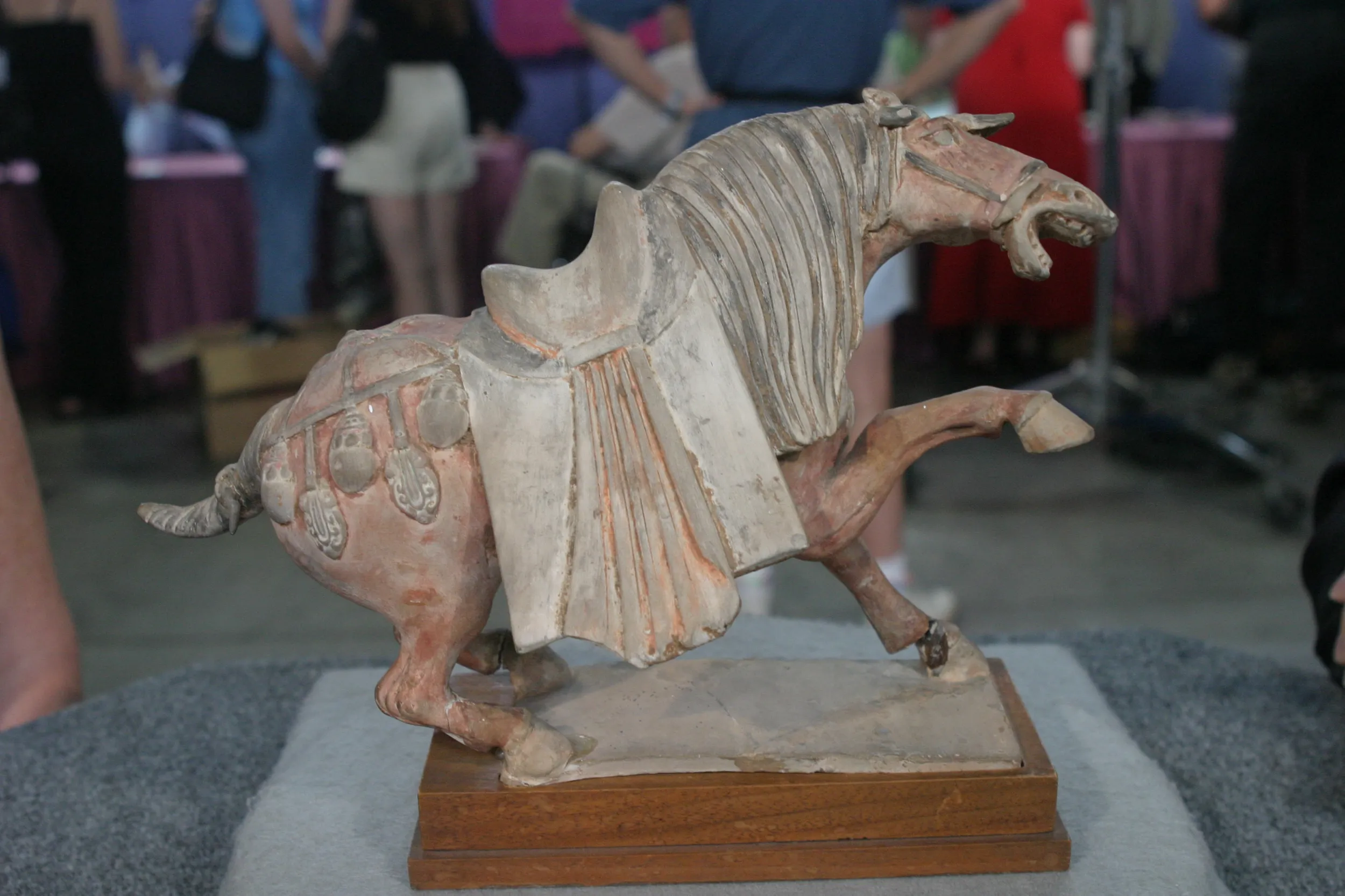
Fake Tang-style Horse, ca. 1920
appraisal
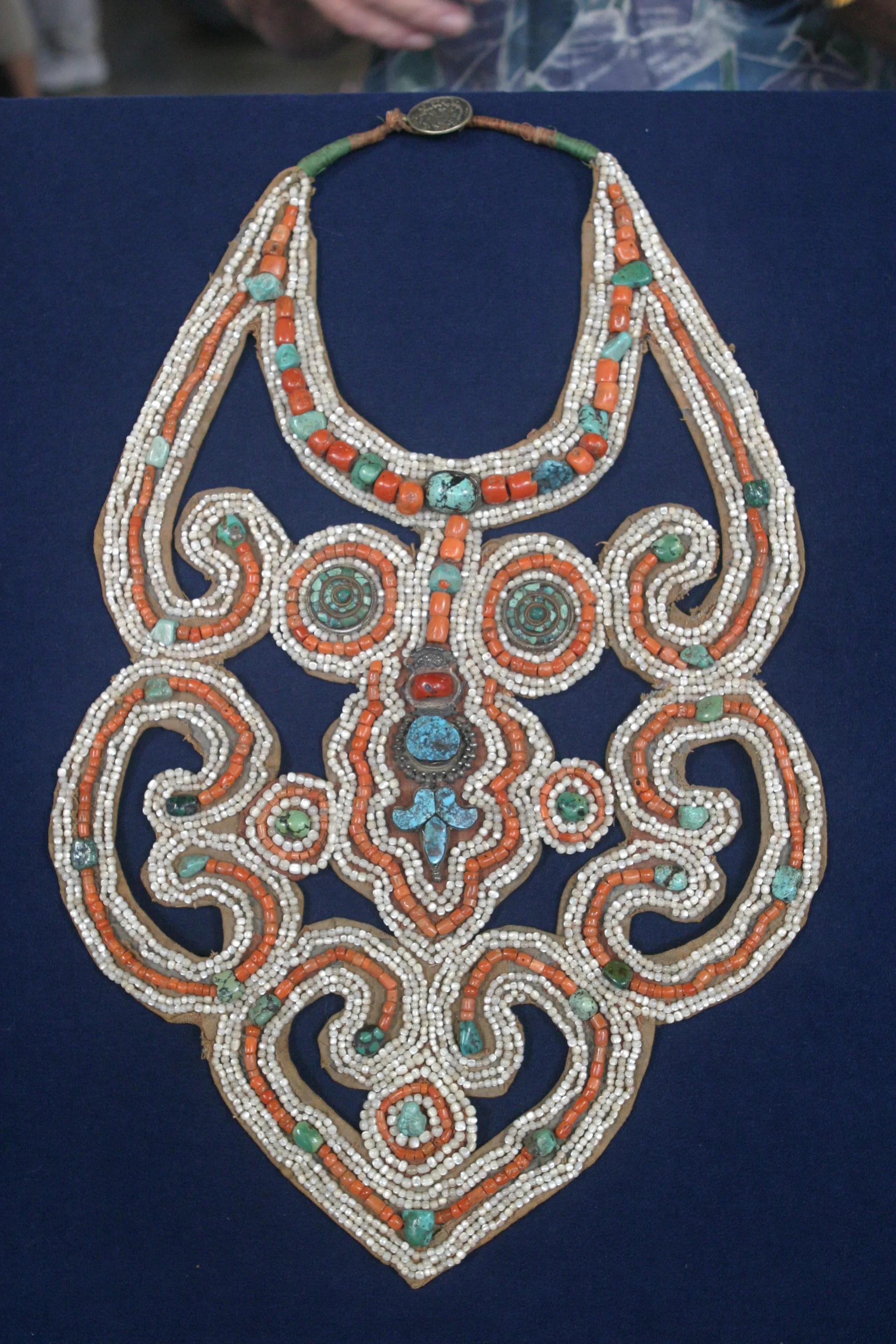
Late 19th-Century Tibetan Wedding Necklace
appraisal
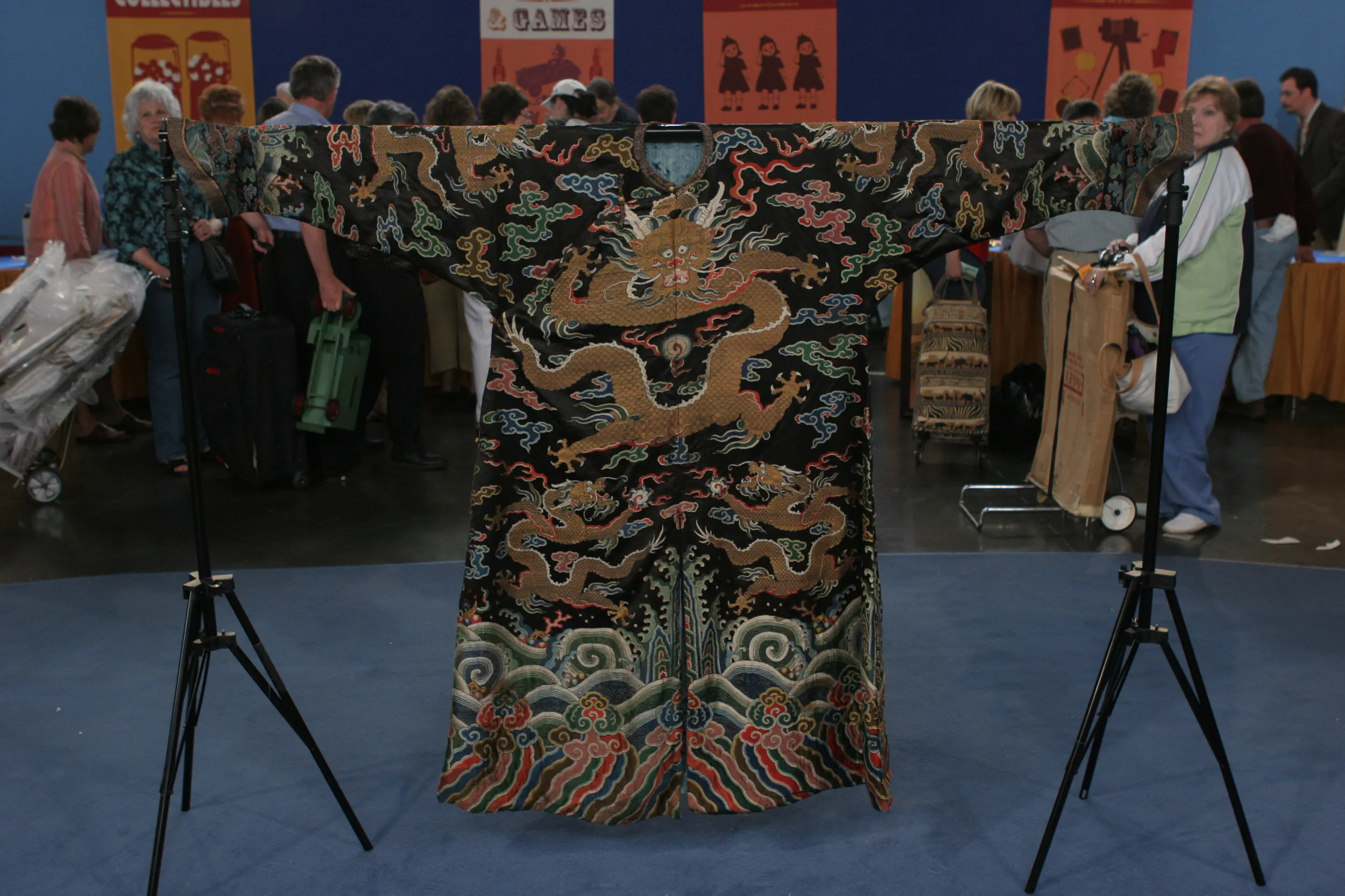
Chinese Silk Robe, ca. 1662
appraisal
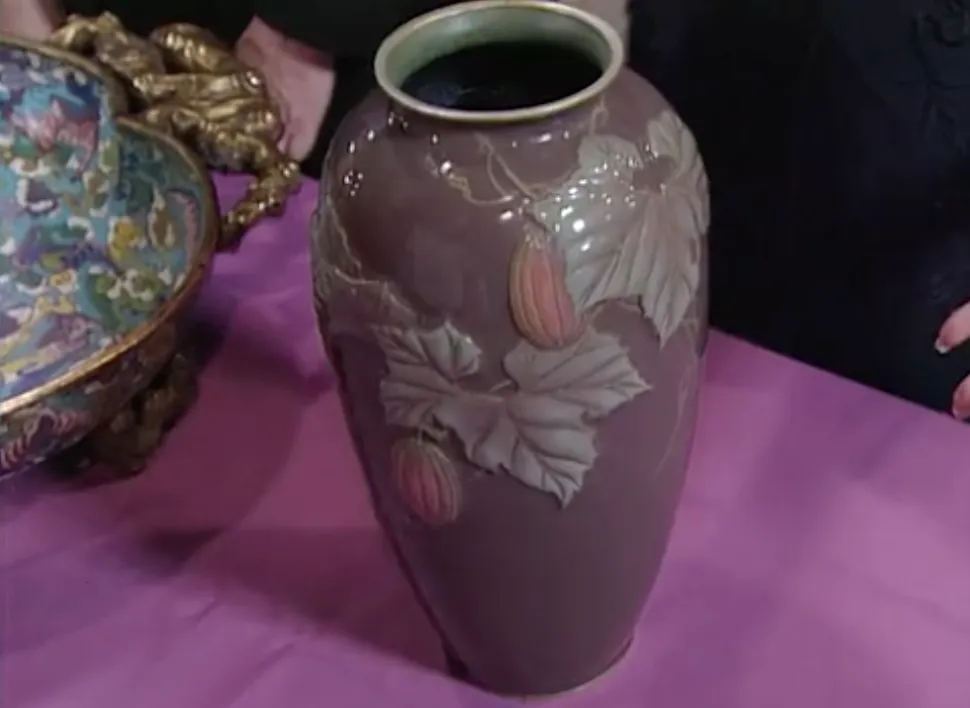
Japanese Meiji Period Vase
Understanding Our Appraisals
Executive producer Marsha Bemko shares her tips for getting the most out of ANTIQUES ROADSHOW.
Value can change: The value of an item is dependent upon many things, including the condition of the object itself, trends in the market for that kind of object, and the location where the item will be sold. These are just some of the reasons why the answer to the question "What's it worth?" is so often "It depends."
Note the date: Take note of the date the appraisal was recorded. This information appears in the upper left corner of the page, with the label "Appraised On." Values change over time according to market forces, so the current value of the item could be higher, lower, or the same as when our expert first appraised it.
Context is key: Listen carefully. Most of our experts will give appraisal values in context. For example, you'll often hear them say what an item is worth "at auction," or "retail," or "for insurance purposes" (replacement value). Retail prices are different from wholesale prices. Often an auctioneer will talk about what she knows best: the auction market. A shop owner will usually talk about what he knows best: the retail price he'd place on the object in his shop. And though there are no hard and fast rules, an object's auction price can often be half its retail value; yet for other objects, an auction price could be higher than retail. As a rule, however, retail and insurance/replacement values are about the same.
Verbal approximations: The values given by the experts on ANTIQUES ROADSHOW are considered "verbal approximations of value." Technically, an "appraisal" is a legal document, generally for insurance purposes, written by a qualified expert and paid for by the owner of the item. An appraisal usually involves an extensive amount of research to establish authenticity, provenance, composition, method of construction, and other important attributes of a particular object.
Opinion of value: As with all appraisals, the verbal approximations of value given at ROADSHOW events are our experts' opinions formed from their knowledge of antiques and collectibles, market trends, and other factors. Although our valuations are based on research and experience, opinions can, and sometimes do, vary among experts.
Appraiser affiliations: Finally, the affiliation of the appraiser may have changed since the appraisal was recorded. To see current contact information for an appraiser in the ROADSHOW Archive, click on the link below the appraiser's picture. Our Appraiser Index also contains a complete list of active ROADSHOW appraisers and their contact details and biographies.