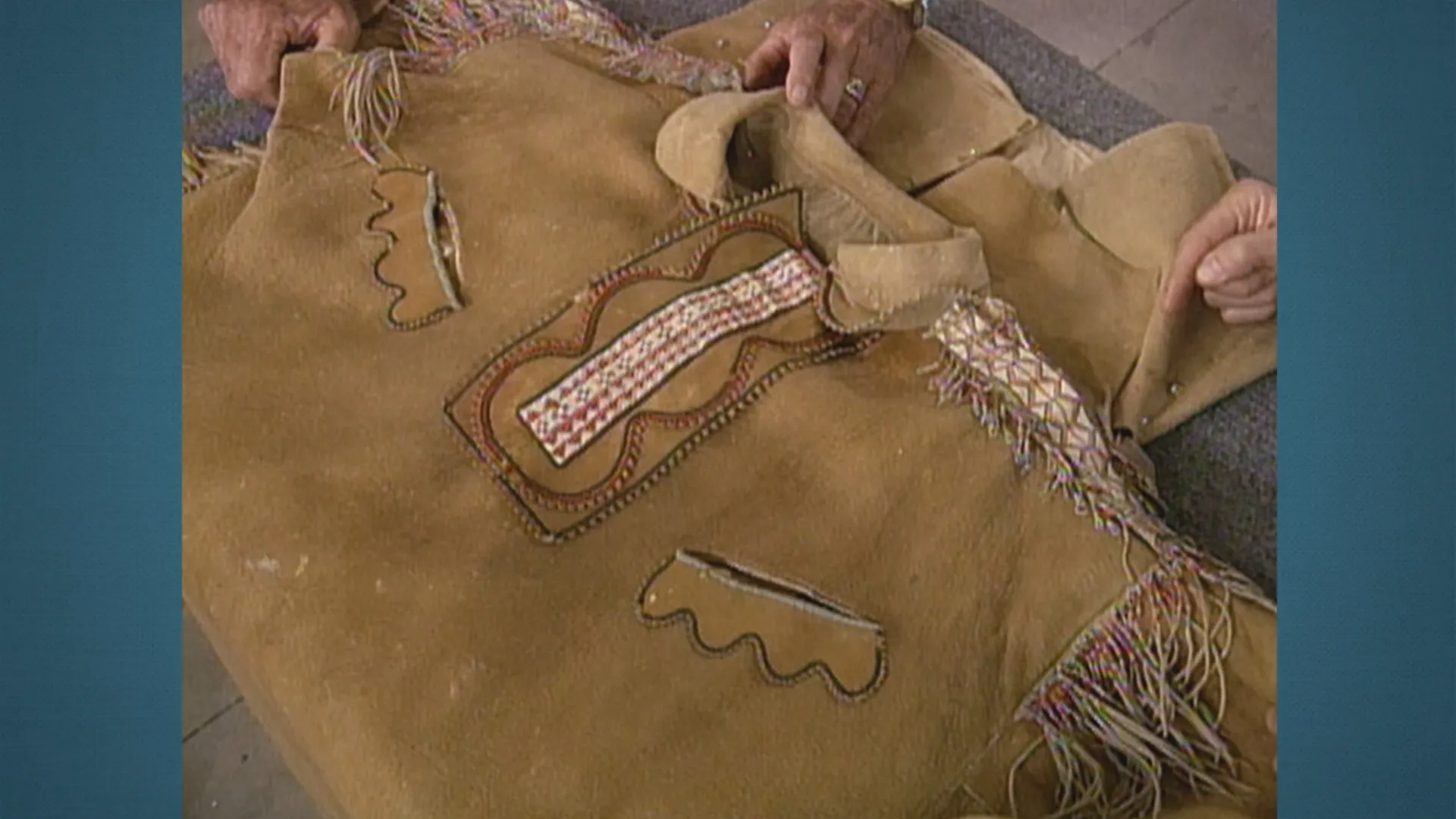
Late 19th C. Cree Moose Hide Suit
GUEST: Well, this has, uh, has been in my family for quite a few years. And it was in a family before that that we, we were closely associated with, in friendship. And, uh, I've taken care of it for, uh, 65, 70 years now-- I've been...
APPRAISER: So it actually belonged to your grandfather.
GUEST: That's right.
APPRAISER: And where was he living at the time that...
GUEST: Uh, Kaufman, Texas.
APPRAISER: In Kaufman, Texas.
GUEST: Uh-huh, yeah, that's right.
APPRAISER: And your f, and your feeling was that it was, uh, it was maybe Cherokee from Oklahoma?
GUEST: Yes, that's, that is correct, uh-huh. It's-- buffalo hide is one of the main, uh, features of it. And the fine quillwork that's on it has, uh... I've had a, uh, Blackfoot Indian check this very carefully, and they said they've never seen a finer quillwork than this, on this piece here.
APPRAISER: It's not buffalo hide. It's moose hide.
GUEST: Moose hide.
APPRAISER: It's moose hide.
GUEST: Oh, all right.
APPRAISER: And it is not actually, uh, Cherokee from Oklahoma.
GUEST: Uh-huh.
APPRAISER: It's actually either Cree or Athabascan from the Can, interior of Canada.
GUEST: Oh, for goodness sake.
APPRAISER: This particular type of, of what we call loom quillwork...
GUEST: Uh-huh.
APPRAISER: ...is especially fine.
GUEST: Oh, for goodness sake.
APPRAISER: Um, these, these panels, which we, we find starting to be made in the earlier part, uh, of the 18th century...
GUEST: Mm-hmm.
APPRAISER: ...continued that tradition, and continued all the way up into the 19th century.
GUEST: Oh, yes, uh-huh.
APPRAISER: As you know, to gather these individual porcupine quills and flatten them between your teeth...
GUEST: Uh-huh.
APPRAISER: ...uh, and then to, to get the dyes and dye all the individual porcupine quills...
GUEST: Right, oh, yes.
APPRAISER: ...was an enormous job.
GUEST: Oh, I'll bet.
APPRAISER: And so, these particular geometric panels here are, are exquisitely done.
GUEST: Mm-hmm.
APPRAISER: As you can notice, the, the epaulets are actually f, somewhat finer than the central panel.
GUEST: Oh, yes, hm.
APPRAISER: So, this took many, many hours of work.
GUEST: Uh-huh.
APPRAISER: Uh, I judge this to be, uh, late 19th century.
GUEST: Uh-huh.
APPRAISER: Have you any idea yourself in terms of value?
GUEST: No, I haven't. I've never had it appraised before-- never...
APPRAISER: Well, I judge this to be around, uh, $15,000 to $20,000. So, is that a surprise?
GUEST: That's a-- it certainly is. I'd say it is, but, uh...
APPRAISER: (laughs)
GUEST: Well, I knew it was valuable, or I wouldn't have packed it around all these years.
APPRAISER: That, that's right.
$10,000 - $12,000
$15,000 - $20,000
Photos
Featured In
episode
Vintage First Finds, Hour 4
See fabulous finds from ROADSHOW’s first season updated with today’s values! — Premiered Mon, Oct 12, 2026
Traditional Crafts
appraisal
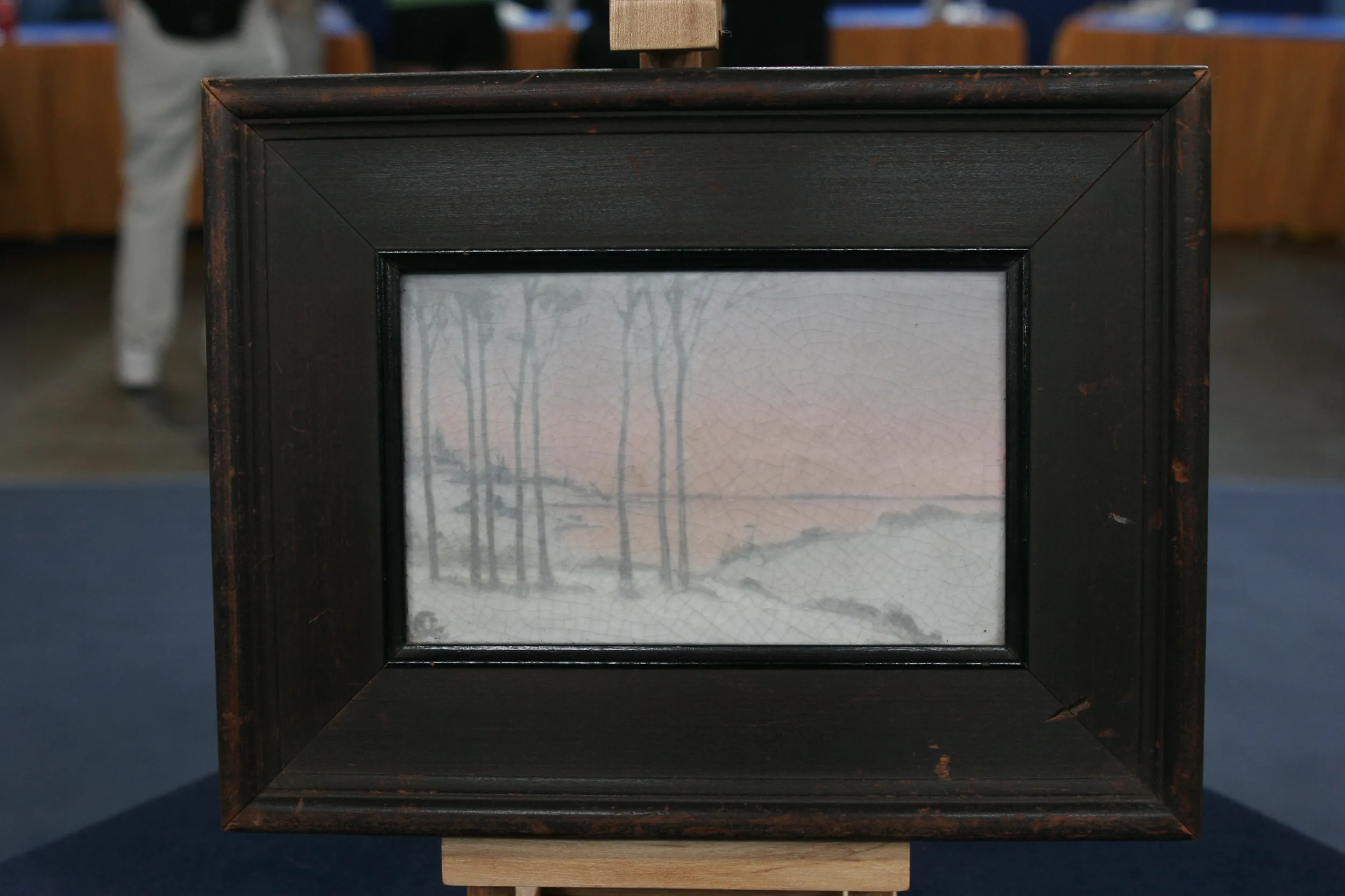
1918 Sallie Coyne Rookwood Vellum Plaque
appraisal
18th-Century Austrian Tools
appraisal
Georges Fouquet Glass Necklace, ca. 1930
appraisal
Trifari "Jelly Belly" Pins, ca. 1945
Understanding Our Appraisals
Executive producer Marsha Bemko shares her tips for getting the most out of ANTIQUES ROADSHOW.
Value can change: The value of an item is dependent upon many things, including the condition of the object itself, trends in the market for that kind of object, and the location where the item will be sold. These are just some of the reasons why the answer to the question "What's it worth?" is so often "It depends."
Note the date: Take note of the date the appraisal was recorded. This information appears in the upper left corner of the page, with the label "Appraised On." Values change over time according to market forces, so the current value of the item could be higher, lower, or the same as when our expert first appraised it.
Context is key: Listen carefully. Most of our experts will give appraisal values in context. For example, you'll often hear them say what an item is worth "at auction," or "retail," or "for insurance purposes" (replacement value). Retail prices are different from wholesale prices. Often an auctioneer will talk about what she knows best: the auction market. A shop owner will usually talk about what he knows best: the retail price he'd place on the object in his shop. And though there are no hard and fast rules, an object's auction price can often be half its retail value; yet for other objects, an auction price could be higher than retail. As a rule, however, retail and insurance/replacement values are about the same.
Verbal approximations: The values given by the experts on ANTIQUES ROADSHOW are considered "verbal approximations of value." Technically, an "appraisal" is a legal document, generally for insurance purposes, written by a qualified expert and paid for by the owner of the item. An appraisal usually involves an extensive amount of research to establish authenticity, provenance, composition, method of construction, and other important attributes of a particular object.
Opinion of value: As with all appraisals, the verbal approximations of value given at ROADSHOW events are our experts' opinions formed from their knowledge of antiques and collectibles, market trends, and other factors. Although our valuations are based on research and experience, opinions can, and sometimes do, vary among experts.
Appraiser affiliations: Finally, the affiliation of the appraiser may have changed since the appraisal was recorded. To see current contact information for an appraiser in the ROADSHOW Archive, click on the link below the appraiser's picture. Our Appraiser Index also contains a complete list of active ROADSHOW appraisers and their contact details and biographies.