Navajo Belt, Bracelet & Basket, ca. 1940
GUEST: This belonged to my father-in-law, who was a medicine man. And that was about the turn of the century, so this could have been maybe 100 or more years old.
APPRAISER: Yeah.
GUEST: Rex, my husband, is very much involved in presenting Indian programs, and so he's enjoying them for about 20 years. Now he's wearing them special occasions.
APPRAISER: Yeah.
GUEST: Yes.
APPRAISER: So this is his dress clothes...
GUEST: Right, uh-huh.
APPRAISER: When he does formal things and important things...
GUEST: Right.
APPRAISER: ...he wears all this Navajo silver.
GUEST: Right, uh-huh.
APPRAISER: And, and does this basket, does he use that?
GUEST: Yes.
APPRAISER: In important things?
GUEST: He uses that for wedding ceremonies for those that want to be married in the Indian way.
APPRAISER: Does this have cornmeal in it when it's used?
GUEST: Cornmeal mush and... yeah. Bridegroom and the bride, they put their finger there one at a time and feed each other with it.
APPRAISER: That's great.
GUEST: Yeah.
APPRAISER: I didn't know that part of it.
GUEST (laughs)
APPRAISER: Well, I've seen a lot of these baskets, but they're never used. They're things people bought at tourist places or trading posts.
GUEST: Yes, yeah.
APPRAISER: And, you know, they're worth $50 or $75. This one, because of your family story, it's a very important thing.
GUEST: Yes, right.
APPRAISER: It's more important to your family than money.
GUEST: Yeah. Yeah.
APPRAISER: And the same with the jewelry. It's hard to put a dollar amount on something that's this important to your family.
GUEST: Yeah.
APPRAISER: The, the basket, I would say $250 to $350.
GUEST: Right.
APPRAISER: With your family story, I would never sell it.
GUEST: No.
APPRAISER: There's no price enough to have this. I really like the bracelet. It's traditional Navajo, it's set with turquoise. It's made out of hammered silver. With tools-- it's not cast, it's not made with machines. It's all handmade.
GUEST: Right, yeah.
APPRAISER: If I found a bracelet like this, I would say... $800 to $1,000.
GUEST: Oh, wow!
APPRAISER: Uh, the, it's, very beautiful bracelet.
GUEST: Yeah. We won't part with it, yeah.
APPRAISER: It's well done, and, again, you don't want to sell it.
GUEST: No, no.
APPRAISER: But that's... the belt, again, $1,500, $1,800. Possibly more.
GUEST: Yes.
APPRAISER: But the family history is so important to this.
GUEST: Yeah.
APPRAISER: And I really appreciate you coming in.
GUEST: Oh!
APPRAISER: It's, it's been great to talk with you, meet you...
GUEST (laughs)
APPRAISER: ...and see somebody using their traditional heritage in their life.
GUEST: Thank you very much.

$2,550 - $3,150 Retail
$3,750 - $5,050 Retail
$2,550 - $3,150 Retail
Featured In
episode
American Stories
Celebrate the history of our country through personal accounts behind standout treasures.
Sandstone
appraisal
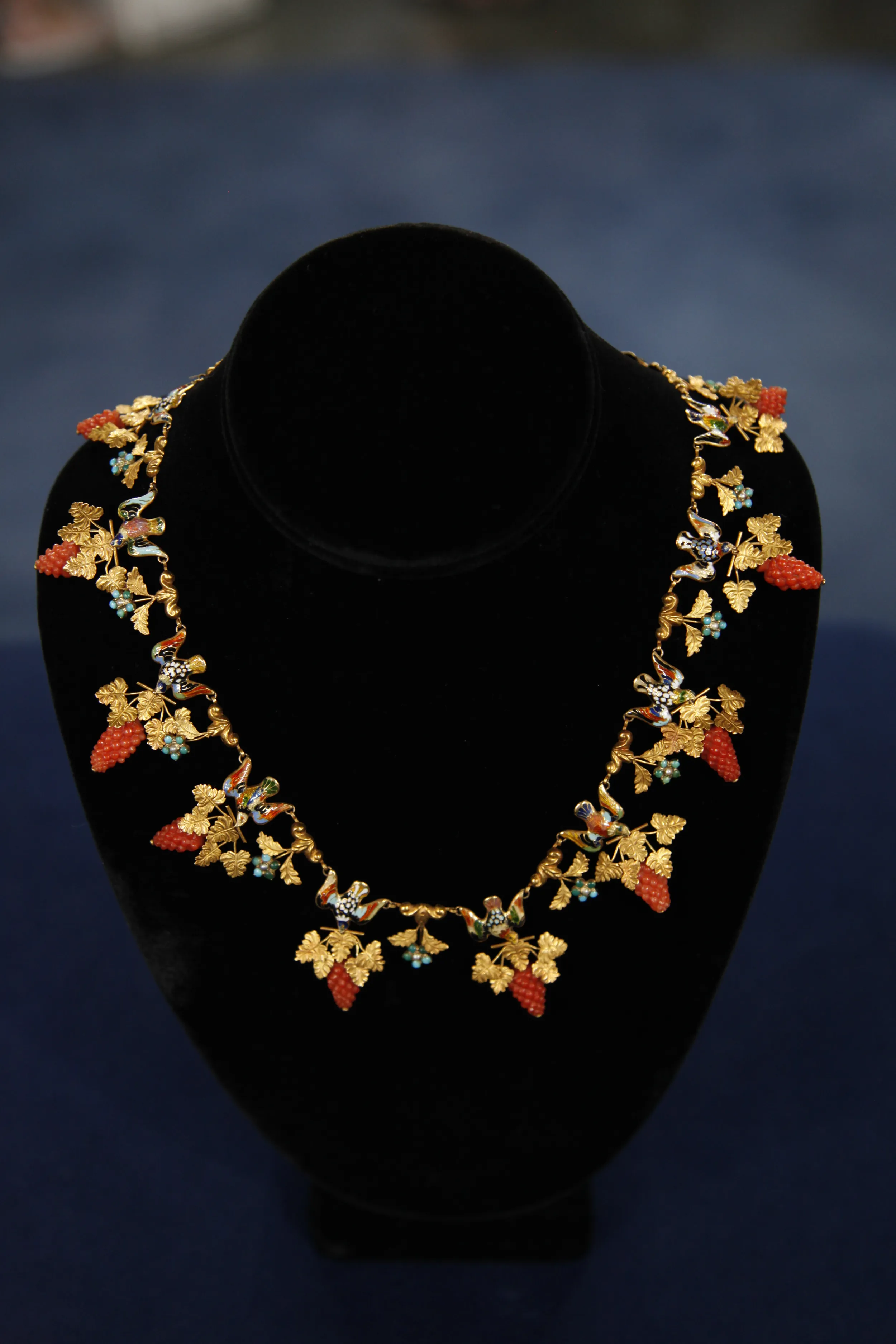
Victorian Enamel, Coral, Turquoise & Pearl Necklace, ca. 1855
appraisal
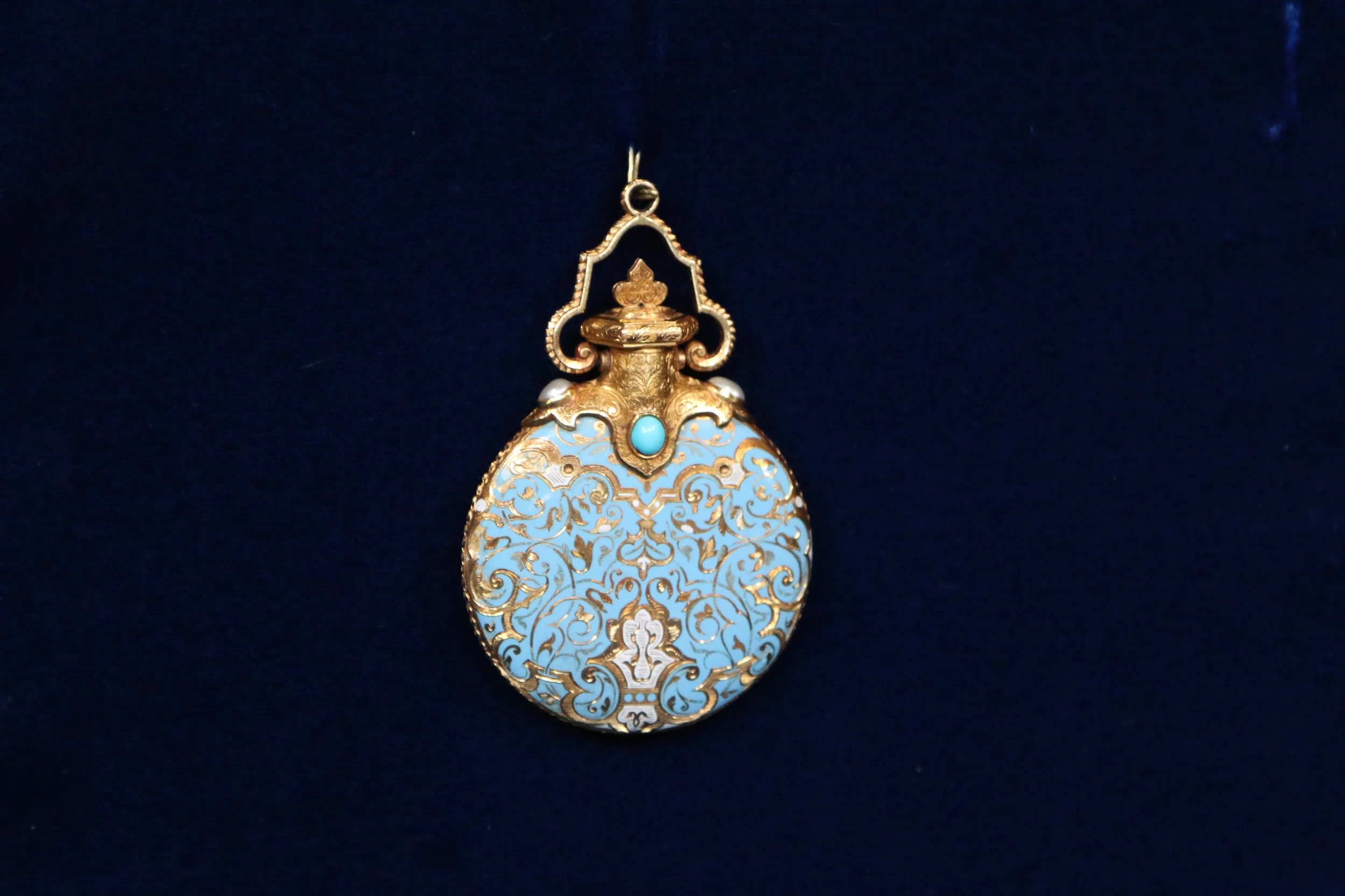
Perfume Flask Pendant with Brooch, ca. 1850
appraisal
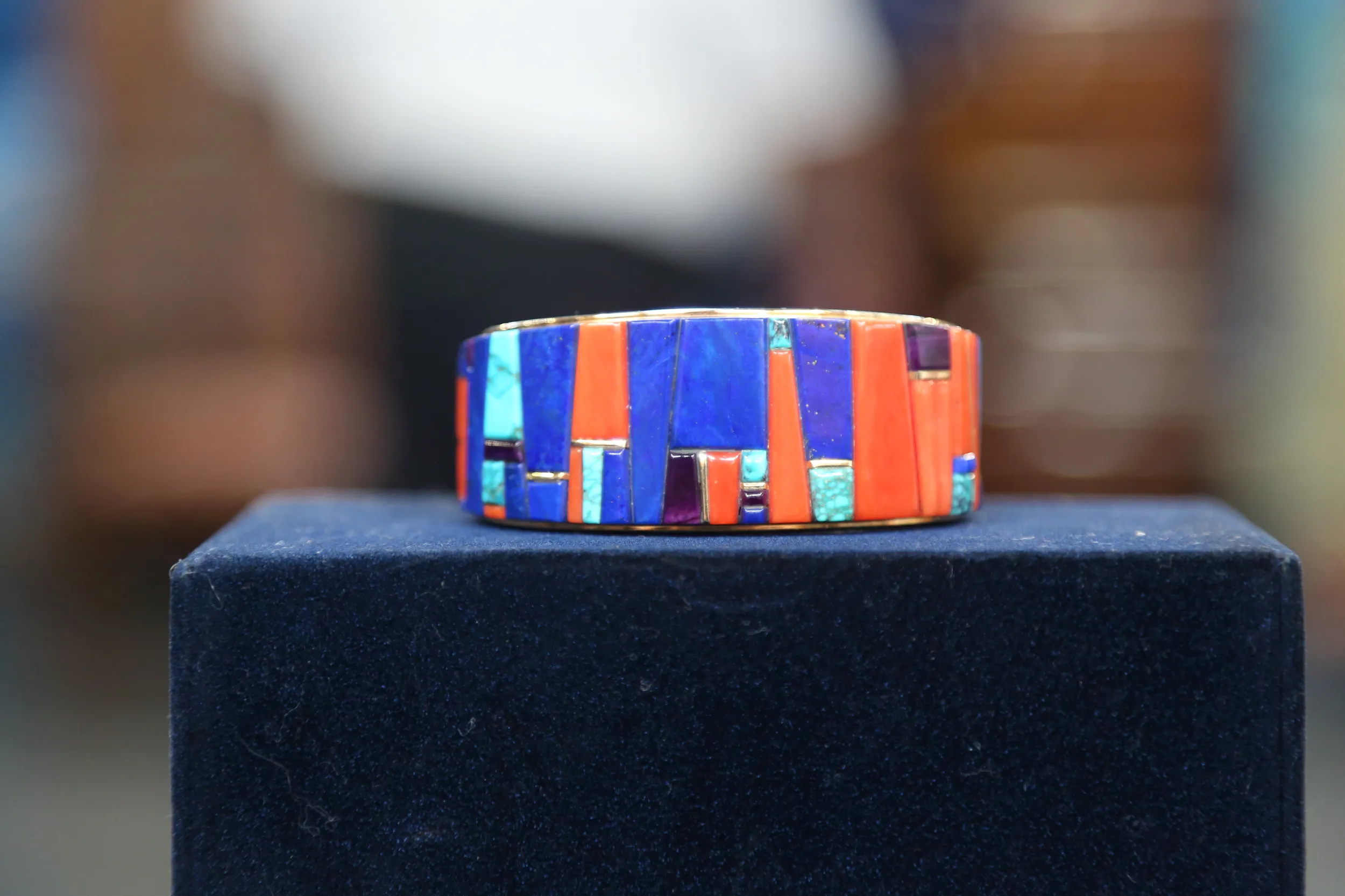
Charles Loloma Bracelet, ca.1985
appraisal
Understanding Our Appraisals
Executive producer Marsha Bemko shares her tips for getting the most out of ANTIQUES ROADSHOW.
Value can change: The value of an item is dependent upon many things, including the condition of the object itself, trends in the market for that kind of object, and the location where the item will be sold. These are just some of the reasons why the answer to the question "What's it worth?" is so often "It depends."
Note the date: Take note of the date the appraisal was recorded. This information appears in the upper left corner of the page, with the label "Appraised On." Values change over time according to market forces, so the current value of the item could be higher, lower, or the same as when our expert first appraised it.
Context is key: Listen carefully. Most of our experts will give appraisal values in context. For example, you'll often hear them say what an item is worth "at auction," or "retail," or "for insurance purposes" (replacement value). Retail prices are different from wholesale prices. Often an auctioneer will talk about what she knows best: the auction market. A shop owner will usually talk about what he knows best: the retail price he'd place on the object in his shop. And though there are no hard and fast rules, an object's auction price can often be half its retail value; yet for other objects, an auction price could be higher than retail. As a rule, however, retail and insurance/replacement values are about the same.
Verbal approximations: The values given by the experts on ANTIQUES ROADSHOW are considered "verbal approximations of value." Technically, an "appraisal" is a legal document, generally for insurance purposes, written by a qualified expert and paid for by the owner of the item. An appraisal usually involves an extensive amount of research to establish authenticity, provenance, composition, method of construction, and other important attributes of a particular object.
Opinion of value: As with all appraisals, the verbal approximations of value given at ROADSHOW events are our experts' opinions formed from their knowledge of antiques and collectibles, market trends, and other factors. Although our valuations are based on research and experience, opinions can, and sometimes do, vary among experts.
Appraiser affiliations: Finally, the affiliation of the appraiser may have changed since the appraisal was recorded. To see current contact information for an appraiser in the ROADSHOW Archive, click on the link below the appraiser's picture. Our Appraiser Index also contains a complete list of active ROADSHOW appraisers and their contact details and biographies.