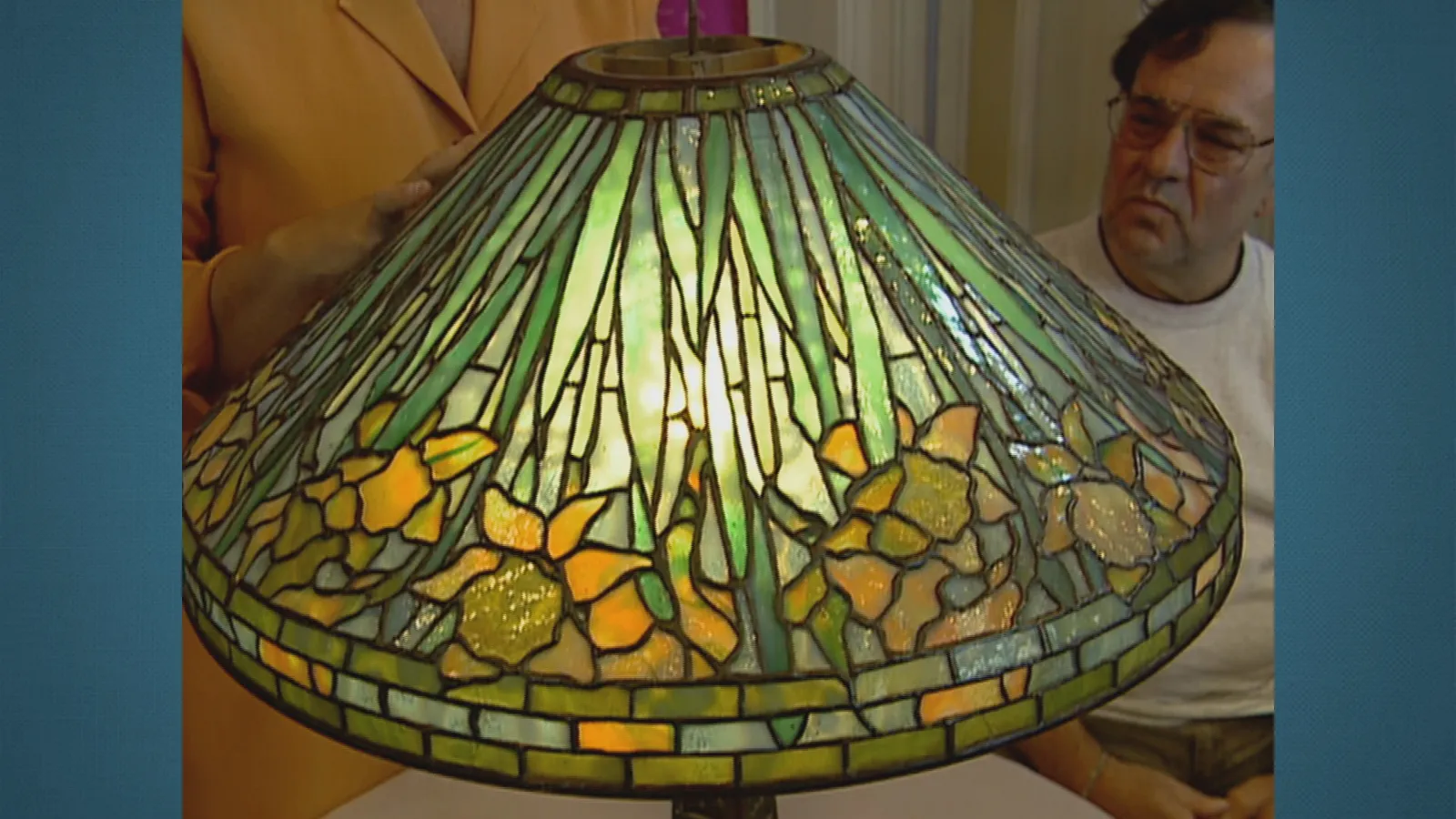
Tiffany Studios Daffodil Lamp, ca. 1906
GUEST: My father was an attorney, and it was given to him in lieu of payment from a client.
APPRAISER: Fantastic.
GUEST: And it stayed on his desk for many, many years. And when he passed away, my mother passed it down to us.
APPRAISER: Well, that's a great story. Well, as you probably already know, it is in fact a Tiffany lamp, made in this country by Louis Comfort Tiffany sometime between 1899 and around 1910. Tiffany was the son of Charles Tiffany, who started the, the um... uh, silversmiths in New York. And had very-- they had little interaction until after his father's death where he took over some of the work at Tiffany & Co. This is a signed lamp. There are very few lamps that have integral bases and shades. This is a-- called a "Four Virtues" base, and it's a highly desirable Tiffany base. This is called the daffodil pattern. All the Tiffany daffodil lamps in this pattern, in this style, are identical. Same amount of pieces of glass, same lead lines. The only thing that makes different-- one better than the other-- is the quality of glass. And the selector of the glass was very important in the manufacture of this lamp. This happens to be a great selection of, of glass. You've got many different types of, of glass in here. You've got mottled glass, which makes it look like different colors in one tile. Mottling here, mottling here. You've got striated glass, where you have the green just coming down in a line. It's a-- it's a splendid example. I would think, at auction, we would estimate this at somewhere between $25,000 and $40,000. It's a great, great lamp.
$50,000 - $80,000 Auction
$25,000 - $40,000 Auction
Photos
Featured In
episode
Vintage First Finds, Hour 2
Premier vintage finds from ROADSHOW’s first season! Do values hold up in today’s market? — Premiered Mon, Sept 28, 2026
Things to Use or Wear
appraisal
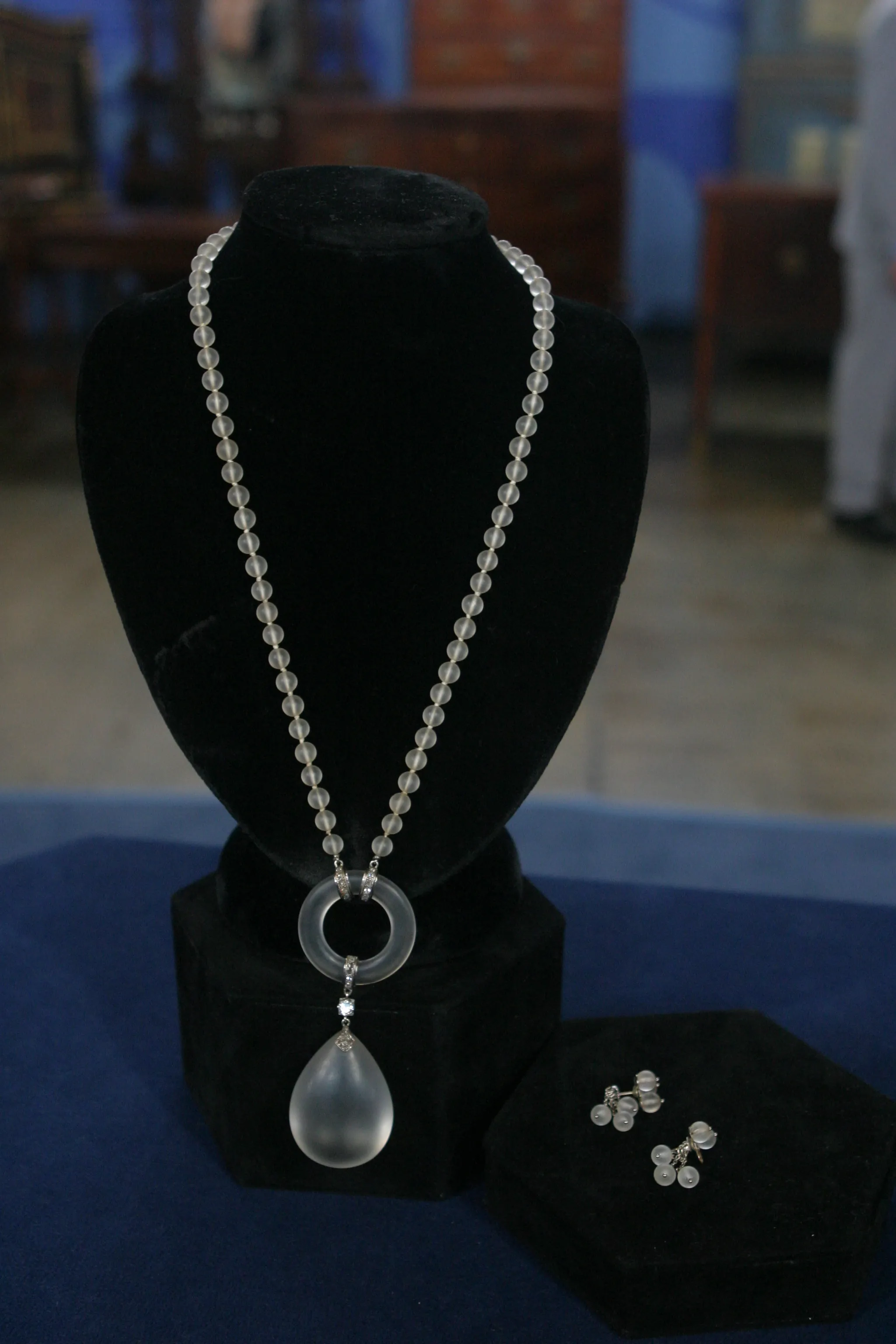
Georges Fouquet Glass Necklace, ca. 1930
appraisal
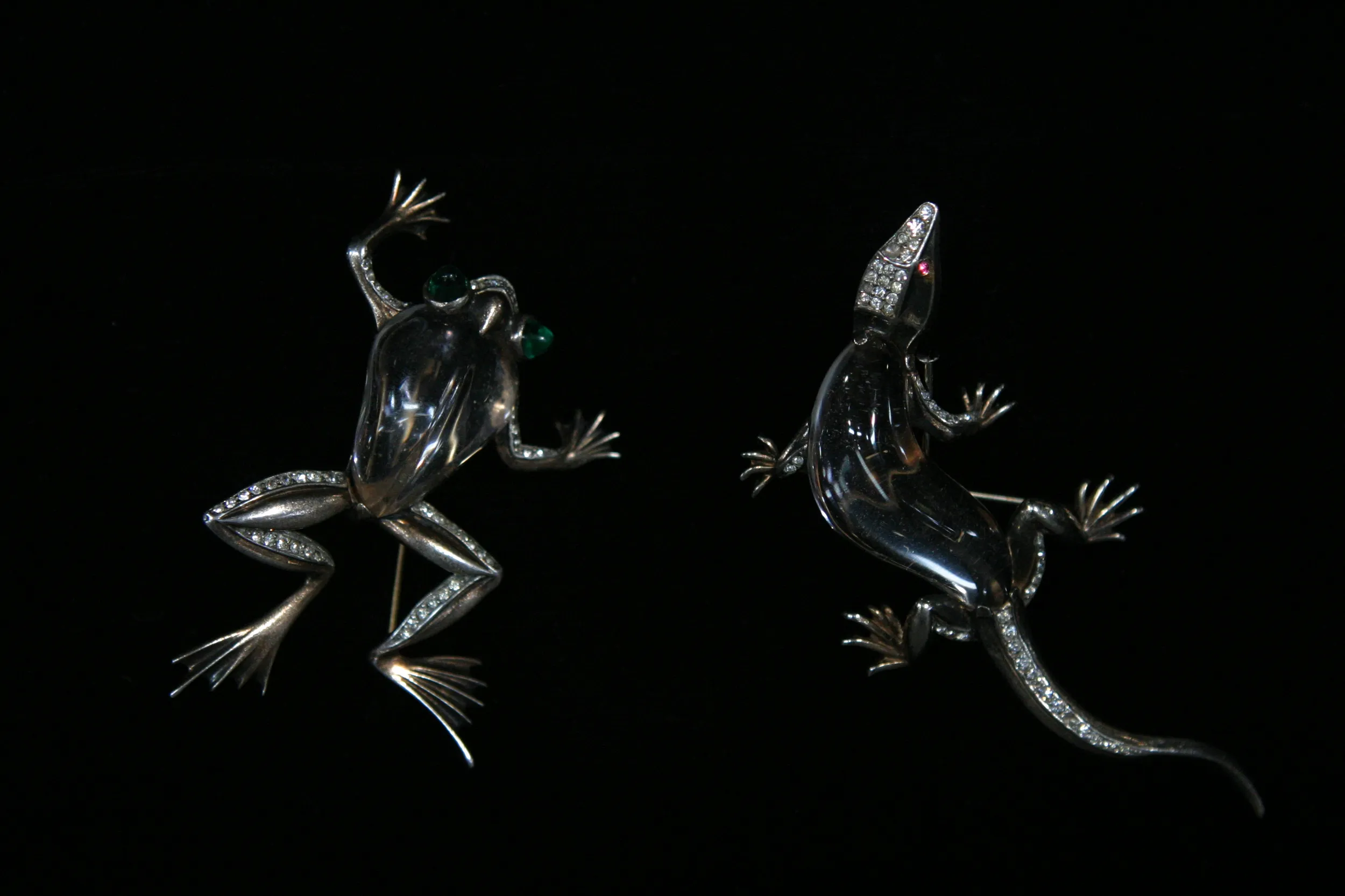
Trifari "Jelly Belly" Pins, ca. 1945
appraisal
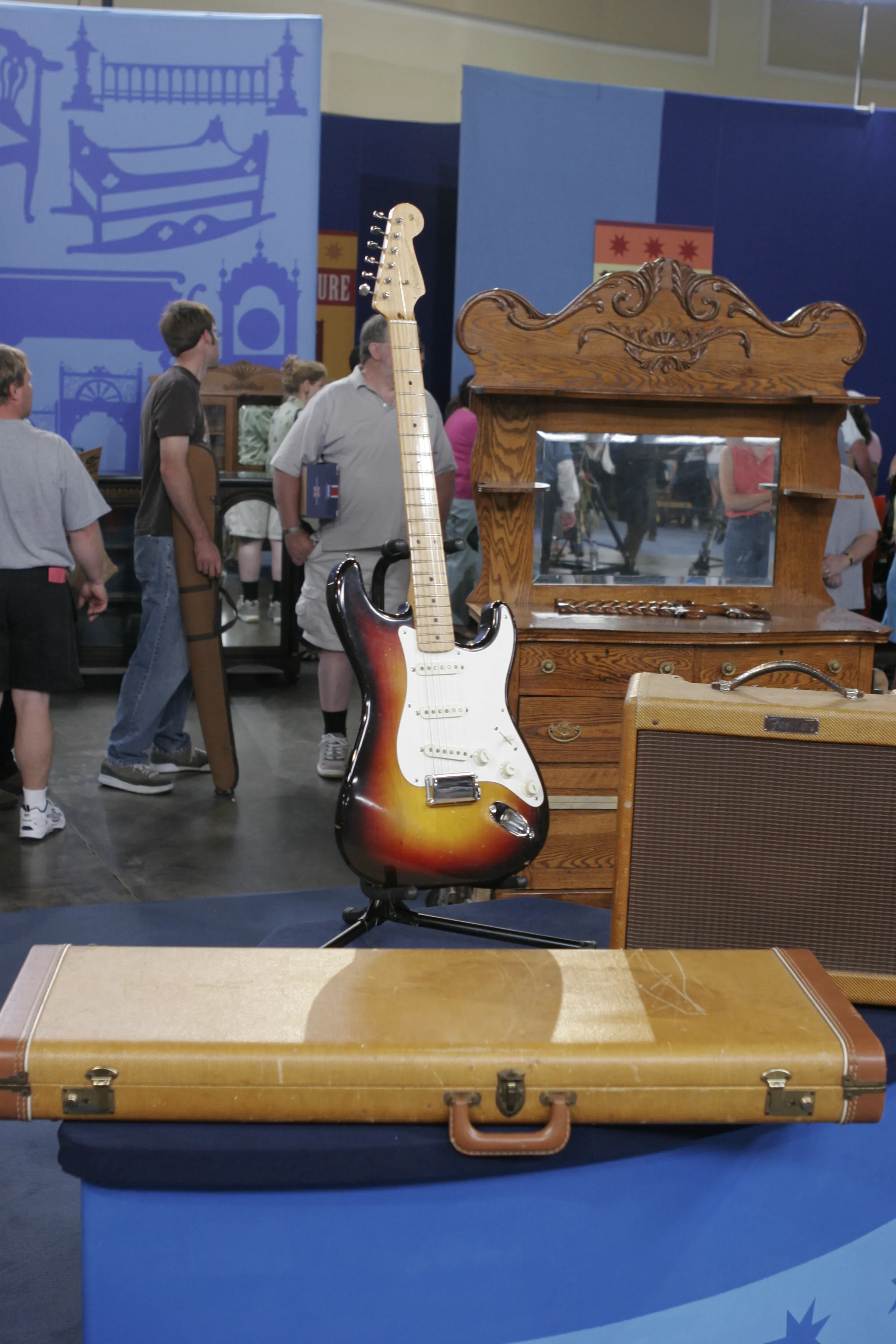
1959 Fender Stratocaster & Amp
appraisal
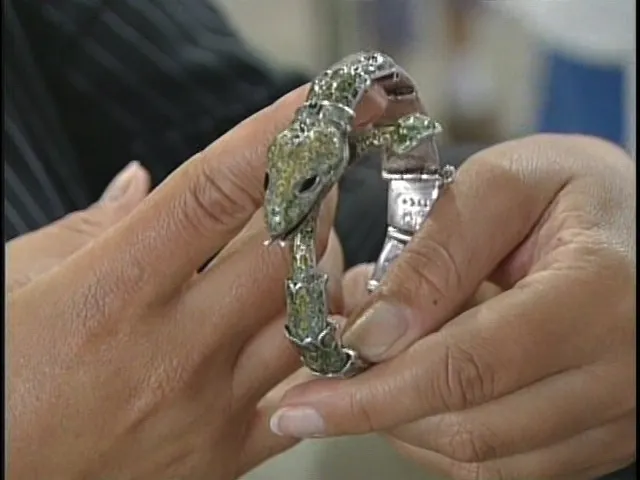
Margot de Taxco Snake Bracelet, ca. 1950
Understanding Our Appraisals
Executive producer Marsha Bemko shares her tips for getting the most out of ANTIQUES ROADSHOW.
Value can change: The value of an item is dependent upon many things, including the condition of the object itself, trends in the market for that kind of object, and the location where the item will be sold. These are just some of the reasons why the answer to the question "What's it worth?" is so often "It depends."
Note the date: Take note of the date the appraisal was recorded. This information appears in the upper left corner of the page, with the label "Appraised On." Values change over time according to market forces, so the current value of the item could be higher, lower, or the same as when our expert first appraised it.
Context is key: Listen carefully. Most of our experts will give appraisal values in context. For example, you'll often hear them say what an item is worth "at auction," or "retail," or "for insurance purposes" (replacement value). Retail prices are different from wholesale prices. Often an auctioneer will talk about what she knows best: the auction market. A shop owner will usually talk about what he knows best: the retail price he'd place on the object in his shop. And though there are no hard and fast rules, an object's auction price can often be half its retail value; yet for other objects, an auction price could be higher than retail. As a rule, however, retail and insurance/replacement values are about the same.
Verbal approximations: The values given by the experts on ANTIQUES ROADSHOW are considered "verbal approximations of value." Technically, an "appraisal" is a legal document, generally for insurance purposes, written by a qualified expert and paid for by the owner of the item. An appraisal usually involves an extensive amount of research to establish authenticity, provenance, composition, method of construction, and other important attributes of a particular object.
Opinion of value: As with all appraisals, the verbal approximations of value given at ROADSHOW events are our experts' opinions formed from their knowledge of antiques and collectibles, market trends, and other factors. Although our valuations are based on research and experience, opinions can, and sometimes do, vary among experts.
Appraiser affiliations: Finally, the affiliation of the appraiser may have changed since the appraisal was recorded. To see current contact information for an appraiser in the ROADSHOW Archive, click on the link below the appraiser's picture. Our Appraiser Index also contains a complete list of active ROADSHOW appraisers and their contact details and biographies.