How American Indian Reservations Came to Be
An Indian reservation is land reserved for and managed by a Native American tribe, its sovereignty limited by federal and state or local law. Today, there are approximately 326 reservations in the United States. But how and why did Indian reservations come to be?
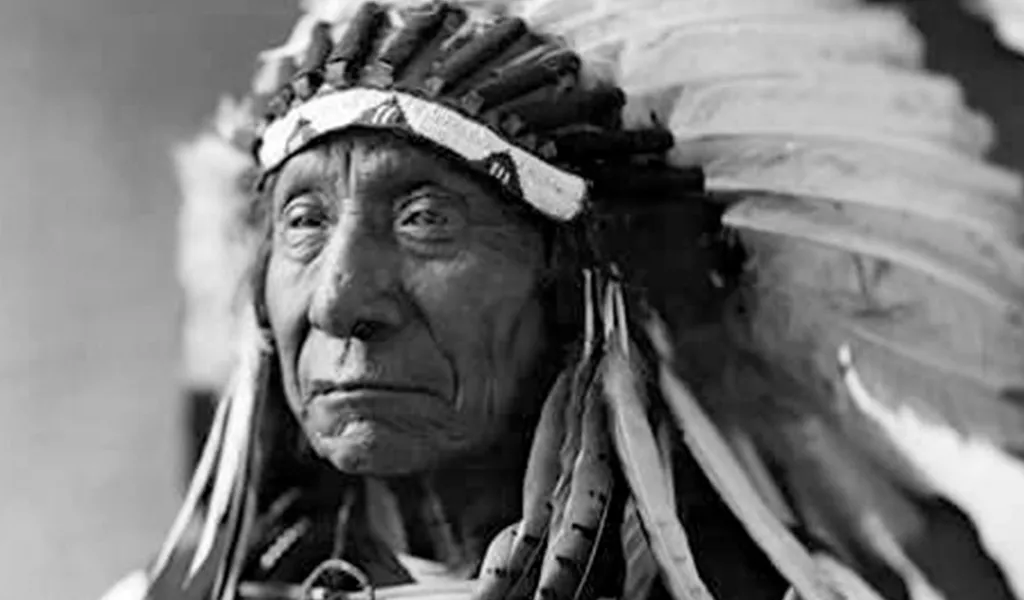
Red Cloud, Lakota chief (1822 – 1909), from a photograph housed at the Library of Congress.
Aug 14, 2024
Originally published on: May 25, 2015
KEY POINTS FROM THIS ARTICLE:
- President Andrew Jackson's Indian Removal Act of 1830 forced tens of thousands of Indigenous Peoples, including the Cherokee, from ancestral lands east of the Mississippi.
- The forced removal, often called the "Trail of Tears," caused illness and death for thousands of Native Americans relocated to Indian Territory, primarily in Oklahoma.
- Federal policies, including boarding schools and the Dawes Act, aggressively attempted cultural annihilation and assimilation of Indigenous Peoples into white American society.
Treaties signed between American Indians and Colonial powers in the 17th and 18th centuries, and then between tribes and American officials in the late 18th and 19th centuries, resulted time and again in either the reduction of Native lands or the relocation of Native Americans from their ancestral homes to designated areas where they lived and governed with limited independence.
The Indian Removal Act, signed by President Andrew Jackson on May 28, 1830, was an unprecedented legal maneuver that gave the president the power to make treaties with every tribe east of the Mississippi, ultimately forcing them to surrender their lands in exchange for territory in the West.
Prior to his presidency, Jackson was called “Sharp Knife” by the Native Americans he had battled on the frontier. In his political life afterward, he was a tenacious architect for the removal of Native Americans from the states and white settlements in the territories. He believed Indigenous Peoples had “neither the intelligence, the industry, the moral habits, nor the desire for improvement which are essential to any favorable change in their condition. Established in the midst of another and a superior race, and without appreciating the causes of their inferiority or seeking to control them, they must necessarily yield to the force of circumstances and ere long disappear.”
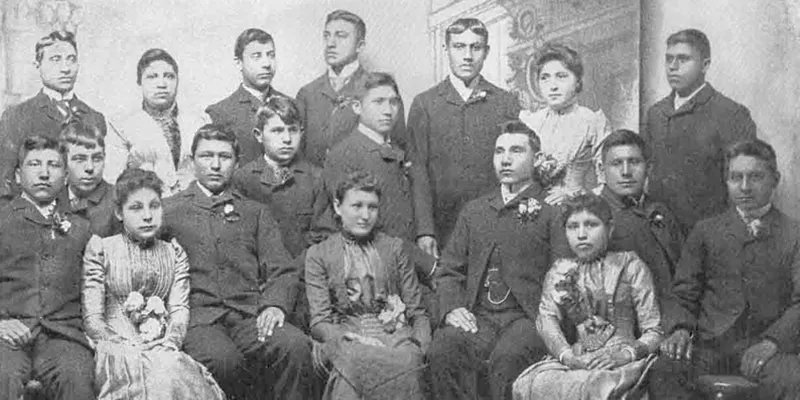
Indigenous Peoples who stayed in their original regions were compelled by the government to relinquish large tracts of the land they had once controlled and were made to live in small, often geographically isolated areas.
Tens of thousands of Native Americans were relocated to Indian Territory (to an area now part of Oklahoma) throughout the 1830s. Some tribes left without conflict, but many were ultimately driven by force from their ancestral land. In the North, Shawnees, Hurons, Ottawas, Miamis, Delawares, and others endured the journey west, while in the South, members of the Cherokee, Choctaw, Chickasaw, Creek, and Seminole tribes were among the migrating masses. Most members of the Cherokee Nation were forcibly removed from parts of North Carolina, Tennessee, Georgia, and Alabama on what they called The Trail of Tears. Many became ill and thousands died during the arduous crossing.
Conflicts between Indigenous Peoples defending their way of life and white Americans determined to overpower, move, and assimilate them into mainstream American culture continued throughout the 19th century.
The U.S. government’s driving desire to incorporate new territories and continue its western expansion, justified as “Manifest Destiny,” meant further displacement and hardship for most Native Americans.
The Indian Appropriations Act of 1851 authorized the creation of Indian areas in what is now Oklahoma. Native Americans were again forced to move to even smaller parcels of land now called reservations. The U.S. government had promised to support the relocated tribal members with food and other supplies, but their commitments often went unfulfilled, and the Native Americans’ ability to hunt, fish and gather food was severely restricted. Illness, starvation, and depression remained a constant for many.
Throughout this time, the federal government’s policies towards Native Americans and the sentiments of white Americans in general included a varying combination of paternalism, racism and greed. In addition to being moved to reservations, Indigenous Peoples were subjected to an organized strategy of cultural annihilation. From the 1860s on through the beginning of the 20th century, Indian boarding schools were created with the mandate to indoctrinate Indigenous children into white American culture, in an attempt to eradicate their Indigenous ideologies and traditions. On top of being separated from their families and communities for long periods of time, the schools forbade the children from speaking their tribal languages, required them to wear American-style dress and hairstyles, and encouraged them to abandon their Native American religions for Christianity.
Related Article: Understanding the Origin of American Indian Boarding Schools
The Dawes Act of 1887 (also called the General Allotment Act) was created to further motivate Native Americans to assimilate into American culture. The act supported the American-held ideal of individual ownership of private property, rather than the communal tradition of Indigenous Peoples. Now, reservation land could be divided into allotments for individual American Indians and their families. The law also changed the legal status of Native Americans from tribal members to individuals subject to federal laws and terminated many tribal affiliations.
Near the end of his life, Red Cloud, one of the most important Lakota leaders of the 19th century and a veteran of treaty negotiations, recounted his experience dealing with the U.S. government over disputed lands: “They made us many promises, more than I can remember, but they never kept but one; they promised to take our land, and they took it.”
The 20th century slowly brought some progress for people living on Indian reservations. U.S. policy regarding the reservations began to turn around with the Indian Reorganization Act of 1934. Sometimes called the Indian New Deal, tribal sovereignty and land management by tribes was encouraged. The Act outlined new rights for Native Americans, while also reducing some of the earlier privatization of their collective property.
The trials of life on many Indian reservations remain a complicated national issue today as Native Americans continue to cope with the effects of a legacy of forced relocation and the struggle to retain cultural traditions and languages.
Related info
For more in-depth information on this topic, we suggest the following:
American Experience: We Shall Remain — A provocative film and multi-media project on the essential role of Native Peoples in American history.
Bury My Heart at Wounded Knee: An Indian History of the American West. By Dee Brown, 1970.
Native American Reservations, Explained — From "A People's History" by PBS Digital Studios
Sarah K. Elliott is a producer for ANTIQUES ROADSHOW and a frequent content contributor to the series website. Sarah has been a producer with the series since 2000.