Skip to main content Skip to footer site map
Special

Alsarah: The Sonic Historian

Premiere: 3/19/2026 | 17:36 |

Follow Sudanese musician and ethnomusicologist Alsarah as she leads Alsarah and the Nubatones, a band of immigrants exploring migration’s impact on culture through music — an essential venture amid displacement and an enduring conflict.

About the Series

Alsarah: The Sonic Historian is part of In The Making, a documentary shorts series from American Masters and Firelight Media follows emerging cultural icons on their journeys to becoming masters of their artistic disciplines.


Director Statement from Roopa Gogineni and Wael Gzoly

We followed Alsarah up the stairs of a shopping mall in Kampala. On the top floor, a hundred or so recently displaced Sudanese gathered for a concert. It had been over a year since the war began in Sudan and everyone in the room was in the midst of mourning and crisis management, evacuating family members and coordinating humanitarian relief from a distance. Then the music began. For several hours the audience danced and sang, their collective grief and exhaustion transformed into joyful abandon.

Alsarah did not perform that night, but she was working. The concert was the culmination of a ten-day musical residency she led for displaced Sudanese musicians. The residents, who came from different regions of Sudan, learned one another’s traditional rhythms and lyrics in each other’s native languages. Cultures long pushed to the margins in Sudan were placed at the center. It was a deliberate act, to hold up the very diversity the war was exploiting and trying to destroy.

Many months later, we followed Alsarah on tour for the launch of Seasons of the Road, the third album of her band, Alsarah & the Nubatones. Far from Kampala, audiences in rural Massachusetts and Manhattan were similarly transported into another world, a borderless one in which each song carried histories of resistance and migration.

We are filmmakers, and we are also products of the same transnationalism that shapes Alsarah’s music. It’s what drew us both to her work over a decade ago. Wael’s family is from Nubia. Like Alsarah’s family, they were among those displaced when dozens of villages flooded during the construction of the Aswan Dam. Wael heard in Alsarah’s music a Nubian voice embodying a lost homeland, carried to stages and airwaves around the world. Roopa, who had worked as a journalist in Sudan’s Nuba Mountains, first encountered Alsarah in the documentary Beats of the Antonov (2014) directed by hajooj kuka. In the film, Alsarah records music from the Blue Nile and Nuba Mountains, where, under aerial bombardment, the local rhythms and improvised compositions of girls chronicled the war and became tools of resistance.

Over the years, we’ve both worked with Alsarah on various projects. Wael served as the cinematographer for several of her music videos. Roopa works alongside Alsarah through Sunduq Al Sudan, a mutual aid collective channeling emergency support to communities in Sudan. With this film, we were excited to collaborate again, to share Alsarah’s story and her genre-defying work that has inspired us and countless others.

More about Alsarah

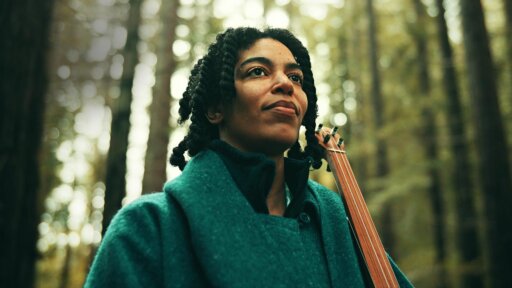
Alsarah is a singer, songwriter, bandleader and somewhat reluctant ethnomusicologist. Born in Khartoum, Sudan, she relocated to Yemen with her family before abruptly moving to the USA, finally feeling most at home in Brooklyn, NY where she has been residing since 2004. She is a self-proclaimed practitioner of East-African Retro-Pop music. Working on various projects, she has toured both nationally and internationally. With her main outfit, Alsarah & the Nubatones, she has released 2 full-length albums titled Silt, followed by Manara (Wonderwheel Recordings, 2014 and 2016). She has also released 1 full-length album with French electronic producer Débruit titled Aljawal (Soundways Recordings, 2013). And she was featured on the Nile Project‘s debut CD, Aswan (named in the top 5 must hear international albums by NPR, 2014). Always trying to connect the musical dots with both her full length albums, the Nubatones saw themselves re-imagined and remixed by various acclaimed electronic producers in 2015’s Silt Remixed and 2017’s Manara Remixed (both via Wonderwheel Recordings). In between albums Alsarah also works with the Sudanese artist collective Refugee Club Productions on a variety of projects including the critically acclaimed documentary “Beats of the Antonov.”


SHARE
PRODUCTION CREDITS

Directed by Roopa Gogineni and Wael Gzoly. Produced by Roopa Gogineni. Edited by Roopa Gogineni. Cinematography by Wael Gzoly.

This program was produced by Roopa Gogineni and Wael Gzoly, who are solely responsible for its content. A production of Firelight Media in association with The WNET Group.

For IN THE MAKING, Executive Producers include Michael Kantor, Stanley Nelson, Marcia Smith, Loira Limbal, Monika Navarro and Joe Skinner. Supervising Producer is Robinder Uppal. Associate Producer is Weenta Girmay. Production Coordinator is Myrakel Baker.

About American Masters
Now in its 39th season on PBS, American Masters illuminates the lives and creative journeys of those who have left an indelible impression on our cultural landscape—through compelling, unvarnished stories. Setting the standard for documentary film profiles, the series has earned widespread critical acclaim: 28 Emmy Awards—including 10 for Outstanding Non-Fiction Series and five for Outstanding Non-Fiction Special—two News & Documentary Emmys, 14 Peabodys, three Grammys, two Producers Guild Awards, an Oscar, and many other honors. To further explore the lives and works of more than 250 masters past and present, the American Masters website offers full episodes, film outtakes, filmmaker interviews, the podcast American Masters: Creative Spark, educational resources, digital original series and more. The series is a production of The WNET Group.

American Masters is available for streaming concurrent with broadcast on all station-branded PBS platforms, including PBS.org and the PBS app, available on iOS, Android, Roku streaming devices, Apple TV, Android TV, Amazon Fire TV, Samsung Smart TV, Chromecast and VIZIO. PBS station members can view many series, documentaries and specials via PBS Passport. For more information about PBS Passport, visit the PBS Passport FAQ website.

About The WNET Group

The WNET Group creates inspiring media content and meaningful experiences for diverse audiences nationwide. It is the community-supported home of New York’s THIRTEEN – America’s flagship PBS station – WLIW, THIRTEEN PBS KIDS, WLIW World and Create; NJ PBS, New Jersey’s statewide public television network; Long Island’s only NPR station WLIW-FM; ALL ARTS, the arts and culture media provider; newsroom NJ Spotlight News; and FAST channel PBS Nature. Through these channels and streaming platforms, The WNET Group brings arts, culture, education, news, documentary, entertainment, and DIY programming to more than five million viewers each month. The WNET Group’s award-winning productions include signature PBS series Nature, Great Performances, American Masters, and Amanpour and Company and trusted local news programs like NJ Spotlight News with Briana Vannozzi. Inspiring curiosity and nurturing dreams, The WNET Group’s award-winning Kids’ Media and Education team produces the PBS KIDS series Cyberchase, interactive Mission US history games, and resources for families, teachers and caregivers. A leading nonprofit public media producer for more than 60 years, The WNET Group presents and distributes content that fosters lifelong learning, including initiatives addressing poverty, jobs, economic opportunity, social justice, understanding, and the environment. Through Passport, station members can stream new and archival programming anytime, anywhere. The WNET Group represents the best in public media. Join us. 

UNDERWRITING

Original production funding for In the Making is provided by the Corporation for Public Broadcasting, The National Endowment for the Arts, Rosalind P. Walter Foundation, Anderson Family Charitable Fund, The Marc Haas Foundation, The Charina Endowment Fund, Ambrose Monell Foundation, Kate W. Cassidy Foundation, Sue and Edgar Wachenheim III, and Philip & Janice Levin Foundation.

Support for American Masters is provided by the Corporation for Public Broadcasting, AARP, Rosalind P. Walter Foundation, Burton P. and Judith B. Resnick Foundation, Blanche and Hayward Cirker Charitable Lead Annuity Trust, Koo and Patricia Yuen, Lillian Goldman Programming Endowment, Seton J. Melvin, Thea Petschek Iervolino Foundation, Candace King Weir, Anita and Jay Kaufman, The Philip and Janice Levin Foundation, Kate W. Cassidy Foundation, The Blanche and Irving Laurie Foundation, The Ambrose Monell Foundation, Ellen and James S. Marcus, The Charina Endowment Fund, The André and Elizabeth Kertész Foundation, The Marc Haas Foundation and public television viewers.

TRANSCRIPT

(mellow music) ♪ One, two, three, four ♪ (Alsarah singing foreign language) - At my foundational level, I am a listener.

I love listening to music.

I love listening to sounds.

I love listening to people make music and sounds.

(Alsarah singing foreign language) The first time I came to New York, I was 14.

It was like two years after we'd moved to the States.

We drove straight to Brooklyn 'cause there's like a big Sudani community in the area.

My name is Alsarah, I am a Sudanese musician, singer, songwriter, band leader, producer, and ethnomusicologist.

("Ya Watan" by Alsarah and The Nubatones) (both singing foreign language) Come, come.

I want everyone to meet my co-founder.

We were discussing migration patterns and the way they affect culture.

And then he was like, "You know, it'd be amazing to do a concert where we highlight that."

I was like, "It'd be amazing to do a band."

- We've had the luxury, in a way, of time with it.

You know that we've done it now for some projects are gone in a blink of eye and like we've been able to do it now for decades.

(mellow percussion music) - [Speaker] Alsarah and The Nubatones (foreign language).

- It's actually the very first song that we recorded together as The Nubatones.

(Alsarah vocalizes) Stand up for the anthem.

- [Speaker 2] Alsarah and the Nubatones.

♪ Habibi ♪ ♪ Habibi ♪ ♪ Habibi ♪ ♪ Habibi ♪ (mellow percussion music) - We're both immigrants.

Everybody in the band is.

For us, it was about really establishing this place in between national concepts and genre concepts that was real and true to the way we saw the world and the way we grew up.

(Alsarah sings foreign language) All right.

- Was that you pretending to kick- - Smash, smash, smash.

- The guitar!

- Rock star.

Smash!

(ethereal music) - When we got to the States, Alsarah got into music first, before I did and then I was just like copying everything she did.

- You weren't copying, you were doing your own thing.

- I was doing my acting thing.

- From the beginning, I was like, I know I want my sister in this band.

I just need to make enough money first 'cause she lives really far away and that ticket's expensive.

I'm doing the immigrant thing, you know, family business.

Family business, y'all.

(Alsarah vocalizes) (Nahid vocalizes) So I had this thing buzzing in my brain.

I wanted to figure out where the melody was gonna go.

Eventually, Rami had this like really sick rhythm to go with it.

Ka ka ka ka ka ka ka.

And Brendan started riffing on it and so did Moena.

(mellow music) That's kind of fed into the second part of it where it's like, (Alsarah hums) and I wrote the lyrics two months later.

- Sometimes it does take time for the words to come and that's totally fine.

- Yeah 'cause for me songs are like, are paintings, you're making a picture.

Sometimes that corner of the painting is calling, and sometimes you start in the middle, and sometimes you start with a color, sometimes you start with a line.

I'm listening.

I'm listening for something.

I'm putting together, we're putting together a picture and I get the pleasure of creating with like expert painters, other expert painters.

(singing foreign language) (gentle music) We're about to go on stage without a rehearsal.

A highly unusual format.

- [Crew Member] Why didn't you do it?

- We didn't have time.

Everybody has a job and a life.

- Okay, how do you feel about "Fa3el Fi Eldawam"?

I heard you listening to it.

- I did, I feel better about it.

I think we should listen to it again.

If we don't hit the background vocals in "Fa3el Fi Eldawam", it just loses the oomph.

- Okay, no no no no, I hear you.

(Nahid vocalizes) (Alsarah sings foreign language) (Nahid vocalizes) - Comfort, comfort.

- Comfort is key and we're warm.

Look how many layers we're wearing.

- I know, I'm so warm.

- But still, the barn is cold so I wanna be ready.

("Fa3el Fi Eldawam" by Alsarah and The Nubatones) (Alsarah sings foreign language) (group speaks foreign language) (Alsarah speaks foreign language) (grandmother speaks foreign language) (grandmother laughs) (Alsarah speaks foreign language) Baba's home, yay!

He upcycles the old bottles.

I love the way Baba does this.

- A wine out of it.

No, and it kept being too bitter for a long time.

- Oh, yeah.

- And then you got it, you really got it after a while.

- Everyone is vegetarian in this house, they driving me nuts.

(group laughs) Seriously.

(group speaks foreign language) (Alsarah sings foreign language) (oud plays) Bye, Baba, I love you.

Thank you.

(mellow music) (Alsarah sings foreign language) (bright music) I remember when I first got this tape.

It was the first time I really like started to wrap my mind around the fact that as a woman and as a Sudanese woman, I come from a long lineage of very strong musicians and composers.

Because of all these tapes, I wanted my own tape so our first tape with The Nubatones.

Sold out.

And this was the second baby that I made with The Nubatones.

And this was the third and final baby I made with The Nubatones.

Not final, we're gonna have more obviously, but.

"Seasons of the Road", I think of the sound of the album as a deeper dive into what I call East African retro pop.

("Seasons of the Road" by Alsarah and the Nubatones) (Alsarah sings foreign language) I come from a Nubian background so we've been going through displacement since my great grandparents.
My parents, being the leftist organizers that they are, we left Sudan to go to Yemen because they kind of landed on the wanted list and then in 1994, there was a war that broke out in Yemen and we ended up moving to the States very randomly, very suddenly with zero plans to move here.

I do not think of home as a physical space anymore so for me, Sudan is wherever there is Sudanese people.

(ethereal music) The war, which has now ravished Sudan completely since 2023, is really an extension and an escalation of all that's been going on in the last 30 years, which had already displaced so many of us.

I'm here, in Kampala, gathering displaced Sudanese musicians for a music residency.

(group speaks foreign language) (bright music) One of the primary focuses that we have in this residency is to exchange music, to exchange knowledge, and to build with one another.

(Alsarah speaks foreign language) We are really decentralizing the dominant narrative that has been taking place in Sudan since 1956 of an Arab centered, (indistinct) centered sound.

And I wanted a real strong representation of language, genders, religions.

(Alsarah vocalizes) (upbeat music) (group singing foreign language) Some of the musicians here are, at multiple times, displaced.

Myself included.

To have a narrative that includes all of us just, it feels like going home.

(bright music) (both speaking foreign language) Do I need a name card as well?

- Yeah.

- Probably, right?

(crowd murmurs) - [Speaker 3] One, two.

Check, one, two.

(Alsarah speaks foreign language) (gentle music) (singing foreign language) We don't have an archive right now.

Not a true archive that really reflects Sudanese people and its massive, massive cultural heritage.

We have to become active participants in creating the new archive.

(Alsarah speaks foreign language) (crowd cheers) (bright music) Any hope of peace, it has to come from a space of learning about each other's cultures, each other's languages, each other's music and rhythms.

I've been in the music industry for 20 years now.

Sometimes I forget that joy.

I want everyone to know that joy is kind of a right, it's not a privilege.

We have the right to be happy, we have the right to enjoy music, we have the right to festivals, we have the right to all of this.

(upbeat music) (crowd shouts) I love this view.

Even when she's cloudy, she's cute.

We recorded the concert at the end of the residency and we're now mixing it to produce a live album.

This is the time to start writing our own vocabulary, our own history, our own story with our own hands.

Unlike me, most other musicians... Camillo!

- Hello.

- Hi.

I have something for you.

- Nice.

- It's the album and this is the incense I made to go with it.

- Nice.

- I think the first session I ever recorded in New York was here.

2007.

"Beldna Smih", number ten.

Can we go to that one for a sec?

(bright music) - 'Cause it was a like recording, then there were technical challenges.

- There was definitely some moments where I was like, "Oh, someone knocked the mic over."

- Yes, yes, yes, a few moments where- - Someone's talking to someone next to the microphone!

- Yeah.

(bright music) I bring up those claps.

- No bags on the chairs 'cause chairs are for the humans.

- Okay.

(oud plays gently) (crowd cheers) - Music for me, it's a really, really, really powerful time keeper.

This is why I will always stay invested and true to it.

(crowd member shouts) ("Nuba Noutou" by Alsarah and the Nubatones) (Alsarah sings foreign language)