Interviewer: So the most obvious beginning Question.
Lorne Michaels: Mhm.
Interviewer: How did you meet David and what were your first impressions of him?
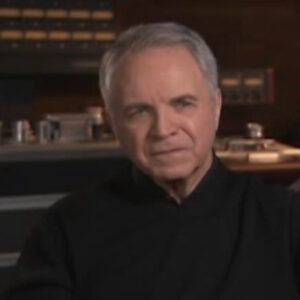
Lorne Michaels: Um, How did we meet? I think, the first time, at least the first time I remember was in his office at William Morris. Um, I was part of a comedy team writing and performing then, it’s probably 1967 or ’68. And I remember thinking that I remember I’m from Canada and so was the guy I was writing with. So, um needless to say, we were out. You know, on a slower pace. I remember. Thinking how much he sort of understood how things work and how little I understood how things work. And ah, he was impressive. He was very forthright, very direct and funny and funny in a way that we didn’t have in Canada because nothing moved that quickly. So it was. I remember thinking he’s in show business.
Interviewer: Was he your agent?
Lorne Michaels: Yeah. I, I. I think he was. Yeah, I think there was somebody else in California. But I think he was. Yeah. I think yes. I think he was. Yes.
Interviewer: If you could say: “He was our Agent.”.
Lorne Michaels: Yes. He was our agent. Yeah.
Interviewer: Did that. Did that cross? One More time.
Lorne Michaels: Yeah. Well, he was he because my partner would have made the arrangement. I mean, I, and, And so I think that ah, I don’t remember a moment where ah, we shook hands and he said: “I am your agent.”. But we were. He was definitely we we were in his office at William Morris, So I’m assuming from that that he is my agent. Yeah.
Lorne Michaels: Great. Did he get you your first job?
Lorne Michaels: No, we were already we done a bunch of work in Canada and we were at that point writing for standups, um, most notably Woody Allen, who was very gracious and supportive of us, and Joan Rivers and Dick Cavett, all of whom were managed by Jack Rollins. And so we, we would write monologues, we would go back to Canada, come back down with whatever we’d written and spend time with whoever we were working with. And then we go back to Canada again. ah, And we were doing the sort of ah, performing and writing in Canadian television. So.
Interviewer: When, did you and David. Just one second.
Lorne Michaels: Yeah. .
Lorne Michaels: Ooh, much better, yeah. It’s Almost more moody, almost smokey like. Yeah, go ahead. There we go. OK.
Interviewer: Less smokey.
Lorne Michaels: Yeah.
Interviewer: It’s Ok?
Lorne Michaels: Yeah.
Interviewer: When did it crossover from him being your agent, to you becoming friends?
Lorne Michaels: I think that we re… I think I met him again with obviously with Elliot Roberts, aha, in the Asylum days. And, because the show that I was doing in Canada um, for both Neil Young and Joni Mitchell, who are Canadian stars, once or twice a year, I would come to California and plead with Elliott to help me get Neil or help me get Joni to come back to Canada and work. But they were both always really nice to me and supportive and. And I went back and forth to California in 1968. I went out there and I worked on television shows. For about a year and a half and then went back to Canada. But in that, in that period, that’s that’s the point at which David had left. William Morris and comedy and, and had gone to music.
Interviewer: And describe those, those early days, I mean, what, what how did your friendship form? What did you do together?
Lorne Michaels: I remember, I remember very vividly Paul Simon and I and David having dinner at Elaine’s. It would have been in the first season of SNL and ah, we were always incredibly comfortable together. And ah, sort of David and I got to renew our friendship then.
Interviewer: Is it true you all dated Carrie Fisher?
Lorne Michaels: No, I didn’t date Carrie Fisher no. No.
Interviewer: Where, where did that story come from?
Lorne Michaels: That’s definitely not me. Carrie.
Lorne Michaels: No, no, no. no, no. No. I was. I was. No, not, not. never.
Interviewer: David went on a date them.
Lorne Michaels: Who?
Interviewer: David went on a date.
Lorne Michaels: Yeah, I know. I know David did. I think Dan Akroyd is probably the Saturday Night Live connection, No, I was. Have you seen your show? I haven’t, but she was on the Jimmy Fallon show earlier yesterday.
Interviewer: (As a guest)
Lorne Michaels: That, I was down there. Yeah.
Interviewer: So. David was when he was first getting started.
Lorne Michaels: Yes.
Interviewer: All of this. What was he like? Did you know immediately?
Lorne Michaels: As I said, he was like burst a you know, he was he was really funny. He was um, impatient. You know, in the way that New Yorkers are tremendous energy and, you know, a lot of fun to be around.
Interviewer: Do you have a hunger in him?
Lorne Michaels: I don’t think I was looking for hunger at that point ah, ah whether he, he had hunger. I assume he had hungry because we were all at the beginning of our careers. And I think we were all. He didn’t strike me as one of those people who would burst into flames if he didn’t become successful. Ah, And what was, what our, My impression of him was not so much driven as ah, someone who is at the center of things and had a really good instinct for where the most interesting thing ah, was going on was going on.
Interviewer: Did you witness his relationship with artists and clients and, that he had at the time?
Lorne Michaels: No. A little bit in the you know, I, I was in the offices on Sunset and you could kind of it was a very um, you know, it was California and it couldn’t have been more different than New York at that time. So, ah that was you know, um, it was a more. It was, the phrase they used to use was Laid Back. I’m not sure that that’s what it was, but it was, a time in which people were making it up as they went along. So that, that period in the music business resonates for me with what happened with comedy when SNL came along, because we didn’t know what we could do, we didn’t know what couldn’t be done, and we just kept ah, pushing it and, and sort of seeing whether, I mean, it was all uncharted. So I think that was the music business got there first, you know, and there was. You know, fame and money and, and, and all the things that go along with that.
Interviewer: So I mean, did you hang? I mean, were you part of the Sunset Strip? Tribute or scene.
Lorne Michaels: No, I mean, I was because I was working for. I was living in the Chateau Marmont from 1972. To 1975, and I was writing for Lily Tomlin and for four other television shows, and so I would have been at the Troubadour a lot. And sort of the comedy seems a little bit there to, um, people like Albert Brooks would would perform there. And people like Dan Hicks and Salt Licks. There was a, a, it was, you know, um, ah, The Troubadour. There was Maxwell, Maxwell Blue, which was next door. And um, there was a certain life that for me, living at the Marmont, there was a certain set of um, You know, of restaurants, experiences, clothing stores, you know, primarily restaurants, I think, where you would see the same people. And the comedy people, the writing comedy people performing comedy people would have been, um, you know, in the same sphere. Steve Martin was, was just starting to be Standup then. And. You know, you can go to. Dan Tana’s on a Friday night and, and pretty much be assured of the fact that you’d know everybody there.
Interviewer: What did you say? You just coughed right in the middle of saying Steve Martin and just started doing standup there, There would be very helpful to us. Interview Steve Martin. Would you just say Steve Martin, I mean, Steve performed at the Troubadour. There was a there was a scene, you know, when and, and ah, whether the scene was at night or at breakfast, you’d, you’d recognize most of the people there, I because I lived at the [ … ] breakfast at Schwab’s, but there was a sort of staggered times there, like working writers got there at a different time than nonworking writers and working actors were there at a time before non-working actors. So you kind of if you came alone, you could always find somebody else to sit with or join another group in a booth. Dukes on in the Tropicana Motel at the same thing, a very good breakfast in those days and at night. There was just, again, the same the, the people everybody sort of knew. Not so much everybody else. But I think we were definitely a subculture of Show Business. There was established show business and particularly in television where I was working. There just wasn’t. You know, there weren’t that many people working who were in their ’20s and I was one of them.
Interviewer: And that’s a, that’s a really good description sets up a portrait, paints a portrait because it’s there’s, what was described, David, in that scene.
Lorne Michaels: Well, David, you know, was a leader, you know, so he was always just slightly ahead of both in success and in, you know, knowing where where the next thing was, you know, and without being. He’s a fiercely loyal guy. And as you know, for the number of people who’ve sat for interviews, he’s done a lot of people for a long time. And, and has stayed in touch and, and looked out for them. And I think. That in my case, because I don’t think except for that brief moment at William Morris, the waiver actually worked together. But we were. He was somebody I always knew that, ah someone I looked forward to having lunch with. Talking with. Spending time with. And so many of the other people that I was close to. You know, [Mull] and Evelyn Austin and Paul and Steve Ross and Courtney Ross. There were a lot of people, a lot of places where our lives intersected and Sandy and, you know, [Kalvin] etc. etc.
Interviewer: How about Studio 54. Can you tell us a little bit about that in ’70s?
Lorne Michaels: Yeah, I. I was more in the. I was both early and late to Studio 54, probably went there very early. But I, I think I didn’t I was probably on a music level. Not one of the first to embrace disco I was still stuck in and, you know, in the kind of music that I would be more likely to be listening to Talking Heads than, ah, than Donna Summer at the time. But I think that at the same time it was happening and then with with Studio 54 coalesced because it was both fun to be with it. Exciting. And you went somebody spent an enormous amount of money on a nightclub at a point when New York was at its, at its bottom, you know. And, and so there was just incredible excitement and, you know, and of course, a haunting sense of decadence as well.
Interviewer: Nicely put. Now, when David was hanging around a lot of Studio 54, during the time, that he had the cancer scare and he thought he had. Gallbladder cancer.
Lorne Michaels: Yes.
Interviewer: Did you, did you. Were you in touch with him during this time? Can you talk about the effect it had on him?
Lorne Michaels: I, eh, no, I, I, If I did it would have been in an oblique way. There was never any. I would see him. I would see Steve Rubell, who um. Who he knew really well. And, and. And Paul would be around. You know, we would all see each other, but it would be more likely at dinner than in the basement at Studio 54.
Interviewer: But did he talk to you about the cancer?
Lorne Michaels: Yeah, yeah.
Interviewer: I Mean, he talked to me at length.
Lorne Michaels: Yeah, yeah, yeah. No I’m sure. Yeah. Yeah; No. David is not shy.
Interviewer: Yeah.
Lorne Michaels: Um, It was. I mean, how was it effect. I mean, it’s good to hear from other people. Your perception …
Lorne Michaels: I think that, you know, when David, you know, became head of production and Warner Brothers and all of that transition from, you know, music business to movie business. And at that point, it had been, you know, a sort of rocket ride straight up and. And on a certain level, the of the implant didn’t take you know, there was a rejection by a more established culture of of this guy who’d on some level they felt. I didn’t get there by the the the way that they would have preferred him to get there. You know, he hadn’t waited his turn. And I think that that reversal, which was I think the first real big reversal in his life on a career level, was huge and it ended through him. And I think it was in that at that time that I think he turned not introspective because I never thought of him as being not introspective. But I think he began to reassess. And I remember. It’s gonna be early 80s, I guess, when Mo was urging him to come back into the music business. And Paul and David and I were in Barbados and I think he talked a lot about it at that point. I was still searching for a name for the record company, but I think he knew he was coming back. But I think he felt he’d also had that star 80s thing. There’d been no storage. What was the Robert Towne personal personal best song? You know, that that sense, you know. It had been a period where things were were just, you know, not we’re not connecting. And I think and for somebody who’d gone from thing, from success to success there, probably I mean, it happens ah, to us all and clearly happens to the best of us. But I think it I think, i think he was thrown for a loop.
Interviewer: And how does David manifest thrown for a loop?
Lorne Michaels: I think he had no. Well, first of all, he’d talk to you and he’d get very close to you as he was talking. But I think he. He never I never felt that he. That there that he was hiding anything. I always felt he was completely candid about what he was going through and if he was angry. You heard it. He was frustrated. You heard it. If he was excited about something, you heard that, too. I think he’s. He has an incredible self-awareness. You know, in a way that he’s looked very deep into himself. And I think isn’t somebody who is likely to fool himself, you know, and, and doesn’t go out of his way to fool others either. Is, is pretty straightforward, almost always.
Interviewer: Why do you think why do you think the movie thing didn’t take? Why the implant not take?
Lorne Michaels: I wasn’t there and I was at, you know, in in. I was in New York in the middle of a whole other movie. So I, I think. What I could, what I could sense with it was that. um. That there was an established culture. And Steve Ross was changing that established culture and he had a strong sense of I know he had enormous faith in David. So it was, you know, they’d never do anything directly. So it was on some way. He was given. He was not given real power. And that, and in the movie business, people can walk past you and know whether you have real power or not. They don’t need to hear you speak or, or see what car you pull up in. It’s, it’s everyone’s business to know. In a world where only a handful of people are really in power, it’s everyone’s business to know who those, um, few people are. And ah, titles mean very little. And all the normal ways of identifying people don’t, don’t really work. So I think I don’t think David was misled. So he’s too smart for that. But I think that there was probably something that was, was maybe ambiguous.
Interviewer: When I think there’s a little more to the Barbados storiy, as I understand it. He was. You know, at twists and turns about what to do nex.t
Lorne Michaels: Yeah. Yeah. No; it was a.
Interviewer: You and Paul advised him.
Lorne Michaels: Yeah.
Interviewer: Sail or stick with what you Know.
Lorne Michaels: Yeah. And also that it’s a.. Well, you’re good at it. It will give you time to, to regroup. And also, um, you know, most of us get our sense of self from being busy and, and feeling useful. And I think that for David to be back in action again and he is someone who is completely built for action and to be in the middle of the game again was you knew A.) He’d excel again and B.) That’s he’s that he missed it. And when you get lost in your own thoughts or spend too much time trying to, to improve or fix yourself, it’s not as. Also, listen, he’d taken care, in the management and he’d been responsible and taking care of so many people that he was depleted when he left it. I know what that was like because in 1980, when I left SNL, I went through the same kind of withdrawal and your, your kind of lost because, you know, if you’re in the business, of, of I’ll use the example of producing, you know, if, if producing is a pie. Well, then you divide the pie up and the writer wrote it and the director directed it and the star had the idea in Highschool. And when, you when you’re done, there’s no pie left. So you look down and people say, well, what do you know? What was your part? And you go, well, I you know, he was he was always in the room and, and he was there kind of. But. But I think I was on the phone a lot. And so it’s, it’s harder when you’re in a world in which people are bery covetous of both power and status and um, that. You can get lost. You get lost in terms of what it is you really do. And I thought with David for him to get back in it, that once he is back in the middle of it, he’d know exactly what to do. And, and that’s what happened.
Interviewer: Well, he’s, you know, he’s the guy who made the wheels turn.
Lorne Michaels: Yeah. And also, they, they beat him up, you know. And when you were when they beat you up, you know what? You have to get, back in the game.
Interviewer: You mean, the artists he was representating a lot of them did. Because he was representing a lot of them did. Yeah.
Lorne Michaels: Well, you know, I, I think. Well, talented people move on. That’s the rule of life. And I think that very often the least talented choose to be the most loyal. And the restlessness that’s there in an artist is they have an obligation to that and people. And it’s a you know, a sort of it’s axiomatic to me that talent and character seldom, you know, reside in the same place. So um, to expect it. Ah, is natural and, and not, An odd thing to be doing, but it is seldom the case. And when you find it. Ah, Steve Martin is a perfect example of it. It’s a joy, but most of the time of the talent, it’s enough. You know? And all of those old Hollywood cliches. If you want a friend, get a dog. All of that stuff was there long before we got there. So I think for David, because particularly in the late ’60s, early ’70s, and because there was a lot of pot involved, most things got blurred. So it was the artist. Everybody was friends, you know. And there was enough money and success to go round. And then when when that, when the, you know, The Band moved on. I mean, literally in this case, I think it was you. You’re left with. So what. What was what actually did happen? And. And after you get over. Oh, wait. So and so did that. And, and I thought that we were gonna be doing this for a long time or whatever it is you thought once you remove yourself from that and realize that it’s not personal, that it just it’s just the nature of the game, then it’s easier to come back. And I think he got very clear in his time off.
Interviewer: I think it was a lot of the artist, felt they had been abandoned. To tell the truth.
Lorne Michaels: I think that the artist’s felt that. I think that it is. You know, ah, when you’re there in support. People can only see you there in support. So the way they see you is as an extension of themselves. So when you say, well, that’s actually I was kind of thinking I was going, you know, because everyone’s lead in their own movie, you know, nobody nobody has the supporting part in their own movie. They think of themselves as the lead. And and when you’re in someone else’s movie, you have to accept that their are the lead of that. And, and so a lot of those things have to be adjusted. And I’m sure there were.
Interviewer: Very nicely put. Amazing. You’re Really good at this. Yes. Yes, you said and some of them, have still not forgiven him. I know. I know.
Lorne Michaels: Ok, Alright, I’m good.
Interviewer: So, When he came back.
Lorne Michaels: Uh huh.
Interviewer: At your urging, and started [Geffen Records] at Warner with Steve Ross.
Lorne Michaels: Yeah. Ask me at one point, he was going to call it: Integrity.
Interviewer: OK. What was he going to call it at one point?
Lorne Michaels: I think; integrity.
Interviewer: So he going to call it?
Lorne Michaels: No, I’m not going to tell the story, because I want you to ask him about it.
Interviewer: Oh, you want me to ask you?
Lorne Michaels: Yeah.
Interviewer: OK. Alright. So, you were going to call it Integrity Records?
Lorne Michaels: I always wanted the guy I love. Yeah, he wanted it. Well, I think that would’ve been a tough one to live. Exactly right.
Interviewer: But um, was David worried at all when he came back with Geffen records.
Lorne Michaels: Oh, yeah. I mean, you know, he had ah, it wasn’t in any way, in my opinion, like a comeback or anything. Mo was a person who was at that point a rock in David’s life and. And Mo knew his value. And Mo, in my opinion, was the smartest person working in the record business. And he saw in David ah, somebody. And I won’t go to Kindred Spirit because I don’t think that’s what it is. I think that he’s sensed and knew David’s talent and at a point when you’re confused about that, somebody having that level of faith in you is very it’s a very good feeling. And I think, um, you know, Mo knew that it would be successful. You know, it might take time, but it would be successful. And he was betting on David. And, you know, at a point in which David’s reputation, as you know, Boy Wonder had changed, you know. So.
Interviewer: In what way? Had it changed.
Lorne Michaels: Well, I mean, you’re only a boy wonder for a little while. Particularly, while you’re a boy, h, you could only be, you know, a phenomenon once you get that’s you know, and it’s more interesting to ah, not so much prove it again as, as people can go: “Hey, Oh, yeah. Who did. Oh, I see. So he did that. Wow, I., I thought he was. And perception changes. You know…
Interviewer: Yeah, I mean, particularly after what happened in the movie business, people might have sort of thought it’s kind of over.
Lorne Michaels: I, I don’t think it was out of the anybody would have counted David out. But also, remember, in the movie business, no one’s thinking about anybody else. So when you have that, I think if he was not at the game that week, nobody went. Somebody else sat in his seat, you know. So it wasn’t like he wasn’t, you know, a wall. You know, there wasn’t what. Whatever happened to or whatever he was around. He was just redefining himself was how did you perceive or did you perceive that there was a different David after the started Geffen Records And he knew that he wasn’t gonna have a colostomy bag for the rest of his life. He talked to me,
Lorne Michaels: Yeah.
Interviewer: Quite at length about it. Yeah. You know, there’s a moment, where David Marci Klein has been with me for 150 years. David called me and said, there’s this girl, she just loves the show, would you just you know, would you ah, see her she her life’s dream is to work at SNL. So she came in and I saw and I liked what I saw and I hired her. And I remember when. she hadn’t been there very long, she said, David. David’s going to call you. He talked to me about this band, Nirvana, and ah, And David called and he said: “There’s this band and it’s just ah, exploding everywhere. And I think you should have ’em.” Now, I don’t think he’d ever done that before. You know what? Most people from record companies call and say, we have so-and-so. Can you find a date for. You know, it’s just normal ah, because we we do 22 shows a year and and we sell records. So but this was spoken with real passion and it was huge for us because we were there right at the beginning with it. And which isn’t unusual for us. That’s sort of what we do. But it was. David was on it, if you know what I mean. It wasn’t like he was back at, you know, completely back in, you know, center stage again.
Interviewer: So he had, we actually sort of skipped over.
Lorne Michaels: Yeah.
Interviewer: a little bit.
Lorne Michaels: Yeah, we did.
Interviewer: The, the, The Passion.
Lorne Michaels: uh huh.
Interviewer: That David had.
Lorne Michaels: Mhmm.
Interviewer: For the artist when he had Asylum. It was really I mean, if this was not just a normal kind of record label.
Lorne Michaels: No.
Interviewer: Relationship.
Lorne Michaels: Yes.
Interviewer: That he had with these artists, did he ever talk to you about it, did he ever talk about who, what he loved about the music. Help me…
Lorne Michaels: David was, you know um, You know, David was and and can be fierce, you know I mean? In defense of, of what he believes in, defensive of the things he’s working on, you know, he has and doesn’t mind having enemies in a business in which people don’t have enemies. They just have friends that they’re closer or less close to. And um, there isn’t anybody who doesn’t say, of course I know. I’ve known him for years. David will go. I hate him, you know, or he’s you know, he’s a complete liar or, or wor… You know, women. You’ve heard him talk, so um, he doesn’t. There’s nothing politic about the way he behaves to the way he thinks. And for artists um, who are often about pleasing, that is a huge thing for him. I cut myself shaving so thats why I’m doing that… so go ahead.
Interviewer: So we were talking about. But I actually wanted to know. If he ever really talked to you about the music.
Lorne Michaels: Oh, yeah.
Interviewer: How did think about the music?
Lorne Michaels: Um, Well, you know, when it began to change, I mean, I. He never called me in and poured his heart out. But Whitesnake, you know, I think David has his own taste. And you knew what that was. And then there’s other things in the same way that I have music on SNL that, you know, was not my taste, but that is of the moment and is great in its own way. So I think it wasn’t. I think David became a much more interesting person after he came through that period. He was somebody you could talk about anything to, passionate about what he was interested in. New. Always knew, Just a little more than I knew. But I think he was and is always the thing that doesn’t get said about him much is he’s really funny and he couldn’t be as disarming as he is, without that. If it was just a frontal assault or and and, you know, again, you don’t want him as an enemy and you don’t want to lie to him and you don’t want, again, you don’t. He’s not afraid to have enemies.
Interviewer: Oh, Warren.
Lorne Michaels: Yeah
Interviewer: Beatty.
Lorne Michaels: Yes.
Interviewer: Introduced him, I don’t know if you were there the night he received this…
Lorne Michaels: I’m seldom there when the when, those things happened. But go ahead.
Interviewer: I can’t remember what the event was, Aids Project Los Angeles.
Lorne Michaels: Yeah, Yeah. Yes. Which is a night he actually came. It was just an idea.
Lorne Michaels: Yeah. Is that for AIDS or against it?
Interviewer: He Was getting an award for all the work he had done for AIDS awareness. Absolutely. And Warren Beatty introduced him.
Lorne Michaels: Ah Ha.
Interviewer: And he said two things I’m interested in, the way you addressed one.
Lorne Michaels: I’m interested anything that moilize (…).
Interviewer: … David, as somebody one on your side? Not, thinking about, you know.
Lorne Michaels: Right
Interviewer: You don’t want him. Not on your side. Right. Which you kind of address. But he also said that he was a captain of industry with the soul of an artist. Would you agree with that?
Lorne Michaels: I think he is totally empathetic ah, to the artist. I think he also has a bias towards good work. He would rather I think he knows what, what we sort of all know, which is it has to be a hit. But the idea that it could be a hit with honor or that it could be something you’re proud of. And also a hit is the goal. I don’t think he wants to make things that that he believes in, that he didn’t feel will will connect, you know. And I think it’s the artist’s job, at least in my end of it, to figure out the way to make it connect. So, um, I think he’s you’d want there are lots of people in his end of the business whose opinion about what your work is irrelevant, their opinion about your career would matter to you, or their opinion, you know, about whether you should be given more freedom, more given more money or whatever would be of great interest. But, David, you want to hear what he thinks about the movie and you never get the sense of him being, quote, unquote, out of touch. He’s always on the edge of it. He knows that.
Interviewer: And Nirvana is a good example of that.
Lorne Michaels: Yeah. And I could give you countless examples. That one just stood out because it was such a, you know, from nowhere, because it was happening more in another part of the country. And it wasn’t sort of on anyone’s radar yet.
Interviewer: Did you know it, did you were you hanging out with David when he was spending a lot of time with John and Yoko?
Lorne Michaels: Um, Yeah, but not with them. No. The night that John Lennon was shot, I was with Gilda Radner and Joe Smith and Mo Neville, everyone at Mr. Chow’s. And we’d been in the Dakota. That. Earlier that night to pick up Gilda because she lived there. Um, and then at the restaurant, we were told that he was. He’d been shot, and I think. David and Mo talked. It’s sort of impossible now to remember a time without cell phones. So I’m not actually sure how that happened, but I remember um, how much he was took charge then and, and saw everybody through it.
Interviewer: I think he was the only person that Yoko called.
Lorne Michaels: Yeah.
Interviewer: So, I mean, he was the only one who went to the hospital.
Lorne Michaels: Yeah, I did an interview with her the other day, and it was. I was sort of dreading it because I knew I’d go through this painful yeah. But we kind of got through it.
Interviewer: Let’s do the interview., but uh.
Lorne Michaels: It’s a long time ago not.
Interviewer: But still.
Lorne Michaels: No, no it was always hurt. With you. It’ll always hurt. Yeah. Oh, yeah. No, no. I’m just been in the sense that it is. And you think about it, its
Interviewer: Um, So did you know Batya? David Mothers.
Lorne Michaels: Only by description? I think I must have met her, but I… was with David on Steve Ross’s boat with Courtney, just after she died. And Mona were there and Quincy Jones was there. And, and he was. He was dealing with it in such a. I’ll be obviously sad, but he had she’d been such a huge presence and such a big part of his life, that just to integrate that to to be able to. And I think he was one of the first of my friends to go through that. And I lost my father when I was 14. So I I’d I’d gone through that and, you know, and when at 14, it’s an earthquake. But you could sense with David how. But just how emotionally was and how deeply felt. The things he was talking about were.
Interviewer: Can you give any example’s of the things he was turning in.
Lorne Michaels: I think there was a most of the things he talked about. She was pretty funny, you know, and so you could see the direct light of the sense of humor, but also tough. And you could you could you know, that that’s for the toughness also came from. And clearly, he was the center of her world. You know, so. It’s a Jewish boy and his mother. You know?
Interviewer: King David; she called him.
Lorne Michaels: Yeah, yeah. Well, they’re have it yeah.
Interviewer: He Told me today. You… know I was a terrible student. He said, I had attention deficit disorder, I was slightly dyslexic. And One time they even called me mother in.
Lorne Michaels: In those days I just called slow. Yeah, but go ahead yeah. You know, they would call it. I don’t think your sons very simple.
Lorne Michaels: Yeah.
Interviewer: And she said, oh, he’s very smart. He’s just not a good student.
Lorne Michaels: Yeah. Ah, That’s great. That’s great. Very astute.
Interviewer: She really Understood, sh understood her son.
Lorne Michaels: Yeah.
Interviewer: Um, What about David [‘gets you lost’] you mentioned that, I mean what happened there?
Lorne Michaels: Um, Well, did David ever tell you the story of ah, how Steve Ross finally closed, the Asylum Records thing?
Interviewer: Well, you mean, when he sold it?
Lorne Michaels: Yeah. When he sold it, you know, to Steve, there were alone in the in the office, I think. And, and David was smoking then. And every time whatever he was saying that was Combative or whatever, every time he picked up a cigarette. Steve Ross lit, with this lighter, you know, part of which is the sort of background of the funeral home and coming out of that, but also that kind of manners. And he was. More sophisticated. You know, David had built this thing that he cared about, that he’d built it. It wasn’t there. And then it was there. And now it had value. What the value was, was the thing that was kind of impossible. It was whatever somebody would pay for it, I suppose. But it was. ah, You know, he was building record companies. He was buying record companies. David’s was, you know, a very hot record company. And. And I think they were in two different games. And I think for. David, Steve was probably. You know, somebody who was playing in a bigger game. And although it turned out really well for David at the end of it, not only do you sell your company, you sold a big chunk your identity. So I think. And Steve had that paternal side. And I think he recognized David’s talent. So he wanted to draw him in. But it was now Steve’s. So, you know, when you sell your house, the people who buy it, they can paint any color they want. And that’s that’s what happens if you go. Why would you? You know, we spend a lot of money on that woodwork. You know, why would you want to paint it? But. Not yours anymore.
Interviewer: And what affect, I mean, how did that affect their relationship?
Lorne Michaels: Well, I think there was the movie business part and then there was ah, the coming back into the music business part, and then there was how David sold his record company. You know, when you. So he did not sell Steve Ross. No, he sold. Yeah. Which I think came as a surprise to that.
Interviewer: I’m sorry, I stepped on that again.
Interviewer: Yeah. Say that again,.
Lorne Michaels: Yeah.
Interviewer: Without my stepping on it?
Lorne Michaels: Um, just that I think that they had long. You know, I was with them in my first of all, Again, I never worked with any of them. So it’s easier for me because I was just off. I was just round. And when we would travel with Steve, again, I, I was working at NBC and and of course, still am working at NBC. But they were, you know, with both Steven and, and, and David and I suppose to a certain extent with Dustin Hoffman as well. Steve was a paternal figure, you know, adoring and supportive, but still in in business, you know, and, and in business you don’t always get, what, you know, you don’t get everything you were hoping you gonna get. And I think. David, ah, remember, I’m on the East Coast, so I, I I only, you know, dimly perceived what was going on on the West Coast. But my sense with it was, David, more than any other person I talked to in that period, knew what was going on. And I think that’s pretty much true in almost any period.
Interviewer: OK, I know you’ve got to go. Talk about.
Lorne Michaels: No, will You ask out there, whether the person who’s coming to see me has arrived or whatever? Thanks.
Interviewer: So what did David have anything to do with the Simon & Garfunkel concert in thePark?
Lorne Michaels: oh, yeah. Yeah. Yeah.
Interviewer: Yes, I know. There was a little disagreement, about the album.
Lorne Michaels: Mhmm, yeah, there was. More than a little disagreement.
Interviewer: That played out again, what year was that?
Lorne Michaels: Eighty One.
Lorne Michaels: What, What? [The person is here] OK, um, How much longer, is he? Is he OK? [Mhmm…] Sorry [I just checked on him, that he’s downstairs.] How long has he been here? [Seven minutes.] OK, can you wait another five?
Interviewer: Wait Five OK,.
Lorne Michaels: Five Yeah. OK. [Boy, this is going better than we thought.] Yeah.
Interviewer: Actually, Yes.
Lorne Michaels: We can do another one. [we can use it].
Interviewer: We could do.
Lorne Michaels: Yeah, Yeah. I got it. Just he’s from England and, and, and he was suppose to be here at Six. Yeah.
Interviewer: So tell us about the concert in the park, because it’s sort of playiong put, with something similar that happend to Will…
Lorne Michaels: Yeah. I, I, I, think that Paul was, There was a man named Walter Yetnikoff who was not a. Was giving Paul a really hard time about the fact that Paul had left CBS Records and gone to Warner Brothers to work with Mo, which seemed to me the more, you know, a much better place for him to be at that time. But Walter controlled Simon & Garfunkel, which Paul wasn’t doing anymore. But when we did the concert in Central Park. I think David sensed that there could be an album with it, but that meant that you’d have to give between Walter and Mo. You know, both of whom would, would love to have the album because it was going to be a double album. And of course, it was a huge event with, you know, hundreds of thousands of people in it. I was doing the, the television of it and and working with Paul and Artie on it. And I think that David offered to go to Walter and see if he could figure out a way in which the album could be released. CBS would get foreign. I think and and Warner Bros. Would get domestic. And since Paul and Walter were not talking or if there were, there was mostly in very short sentences, I think David got in the middle of it. And I think the understanding between him and Paul got a little blurry.
Interviewer: Because he didn’t consult Paul.
Lorne Michaels: No, he consulted Paul. I think that it was. It was what label it was going to come out, that was all.
Interviewer: What, Eventually happened?
Lorne Michaels: Album was a huge success.
Interviewer: On which was label?
Lorne Michaels: Honestly, I don’t remember because it’s a long time ago, but I think I think Warner’s had it here. I can’t remember.
Interviewer: I, I don’t I actually…
Lorne Michaels: Yeah. Not my end of it, but. But it was a very successful album.
Interviewer: How do you how much do you think David’s coming out publicly changed his life?
Lorne Michaels: This is going to sound odd, but I don’t think that much. I think David never hid. Never pretended to be anything else but who he was. And he was. So there wasn’t this enormous facade that, that crumbled. You know. Ah, Or the. Oh, my God. It was like I thought it was brave of him. And but also, he does brave things. So I didn’t. It didn’t seem. Again, I, I, I live in you know, in show business, you know, reality is. Is what I pass through on my way to the studio, so I don’t really know the the outside effects of it, but I know that. In my world, that was you don’t. Barely ripple. You know, David is one of those people that you’re seldom shocked that you didn’t know that he. David is very much a presence and very clear about who he is. And. And there’s not much hidden, you know. And I’ve known about, you know, a long time.
Interviewer: Listen, Given that you’re,.
Lorne Michaels: Yeah.
Interviewer: At a, Your time is short.
Lorne Michaels: Yeah. One last question?
Interviewer: I don’t want to ask you a last question, I wantd to ask, what you want to say about David, I haven’t asked you that. Then, I want you to tell me what you think he’s proudest of. And I want you to describe him in three words.
Lorne Michaels: Alright, I think what he’s proudest of is that he built as many things as he built. I think he is. As long as I’ve known him, both he and Paul are always getting out of show business. You know, I’ve already committed to, you know, a lifetime. So. But there you go, David. I, I have no interest in it anymore. Go: “Really. No interest?” And I go, You know, and I go: “Well, there’s a thing about that. We know that. I know as a producer, which is you have to get off the stage in order to make another entrance. And there’s also an old blues song, How Can I Miss You If You Don’t Go Away?” So David, I think never spends too much time on stage. And then he disappears. And my, my expectation is that he’ll come back with something new. I don’t know what it’ll be, but whatever it is, it will be. I’ll be: “Oh, oh, So that’s what he’s doing?” It’ll be interesting. And in three words? You know, it depends on which side of him you want to emphasize. I would say Funny. I would say Smart. I would say Loyal. But I’m already at three and say Fierce. Outspoken. Direct. He’s got very good judgment, and he’s he’s a very strong advocate for his way of looking at things. And sometimes when I disagree with him, I; the resistance is futile sign, starts to flash in my brain. So I just hope we can change topics and, and move on because that’s my natural defense.