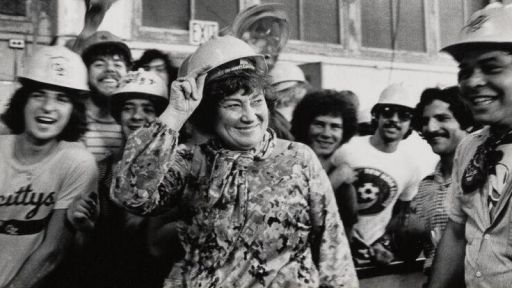
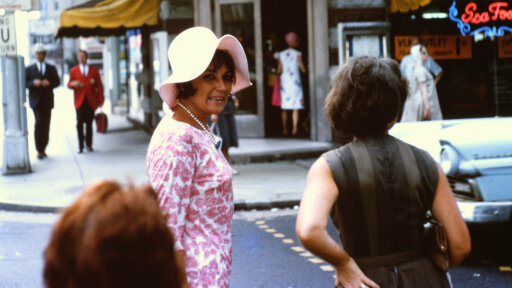
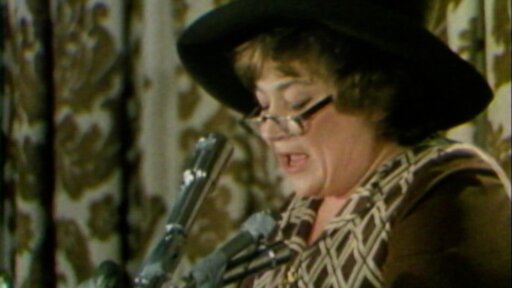
Bella Abzug is considered one of the first feminists to be elected to Congress.
Her commitment to women’s rights and progressive causes upended the status quo in Washington. This timeline explores Bella Abzug’s life and the major milestones in her career:
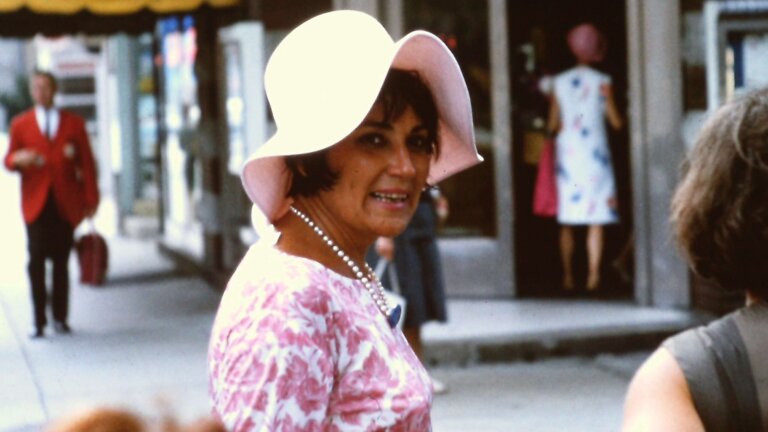
Bella Savitzky is born in the Bronx, New York City to Russian Jewish immigrants Emmanuel Savitzky and Esther Tanklefsky.
The family owns “The Live and Let Live Meat Market” at the corner of 9th Avenue and 41st Street in Manhattan.
EARLY ACTS OF DEFIANCE
Bella is 13 when her father suddenly dies of a heart attack. She honors his memory saying the Mourner’s Kaddish prayer in the family synagogue, a tradition carried out by sons, not daughters.
Abzug attends all-women Hunter College after graduating from Walton High. As Hunter’s student body president, she appears on stage with First Lady Eleanor Roosevelt. Abzug’s progressive student activism leads The New York Post to label her a “campus pink.”
Abzug enrolls in Law School at Columbia University where she is one of nine women in her class. She marries Martin Abzug in 1944.
WORKING AS A LAWYER
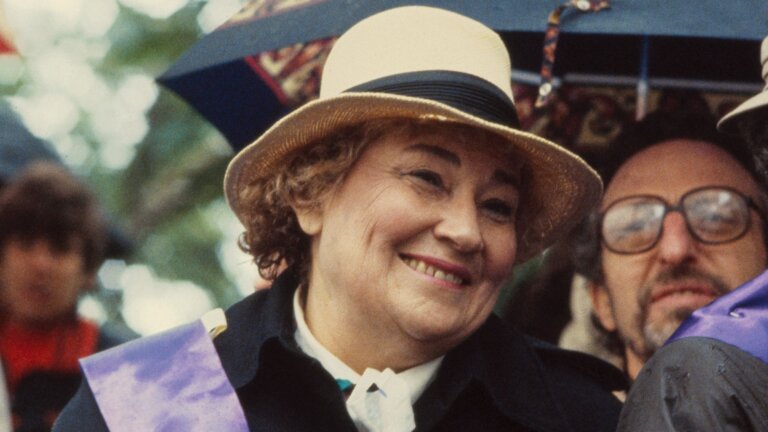
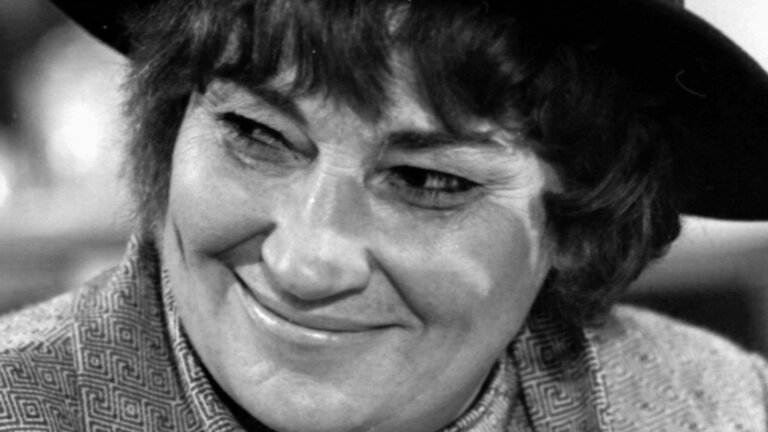
She graduates from Law School, and becomes an active member of the National Lawyers Guild. She begins working as a labor lawyer, and starts regularly wearing hats to distinguish herself as a professional—not “the secretary.”
Abzug’s first daughter, Eve, is born. Her second daughter, Isobel Jo “Liz” is born 1952.
She goes to Mississippi at the urging of The Civil Rights Congress to defend Willie McGee, a Black man facing the electric chair on the accusation of rape. Bella fights for re-trials, stays of execution and appeals to The Supreme Court and to President Harry Truman. Ultimately, McGee is executed in 1951.
Abzug defends clients accused of supporting Communism in the McCarthy Era witch hunt. She appears for the first time on the cover of the New York Times with blacklisted actor Elliott Sullivan.
Abzug moves to Mt. Vernon, outside of New York City, where integration was progressing faster than in many other American cities.
JOINING WOMEN STRIKE FOR PEACE
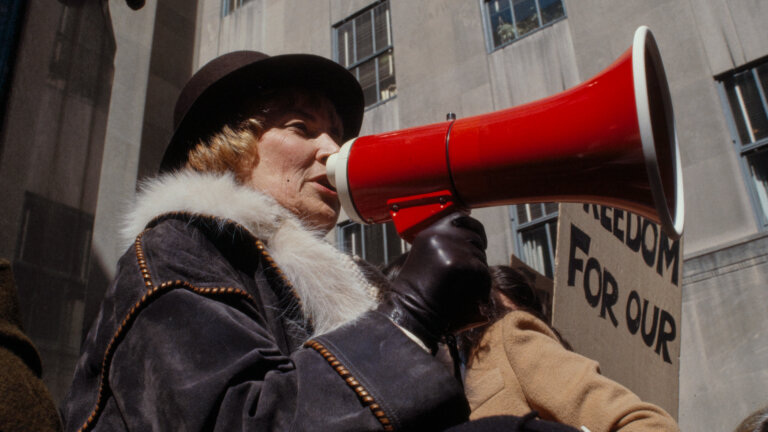
She becomes an active member of Women Strike for Peace, an organization determined to end nuclear testing, both for the risk of nuclear war, and the fact that U.S. testing was causing the spread of the metal, Strontium-90 to be absorbed into baby milk. The group stages protests in cities across the country, and challenges the behavior roles placed on women in that era.
After the murder of Malcolm X, a committee is formed by Sidney Poitier, Ossie Davis and Ruby Dee to find a home for Betty Shabazz and her children. Abzug offers to sell her home to the family, and moves her family to New York’s Greenwich Village.
Women Strike for Peace shifts focus to The Vietnam War, at the same time as women also begin staging demonstrations in the fight for gender equality. Abzug meets Gloria Steinem at a march on The Pentagon. The two find a lot of similar goals and begin collaborating.
Abzug and Ronnie Eldridge are active in the New York City political clubs, and force political candidates to state their position on The Vietnam War. Bella is recruited by Mayor John Lindsay to help on his 1969 re-election campaign. The experience leads her to finally pursue public office herself.

JOINING CONGRESS
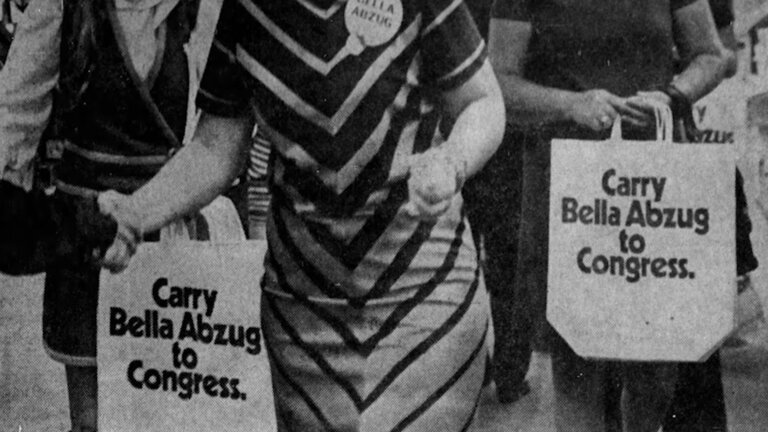
Abzug launches a challenge against the Democratic representative in Manhattan’s 19th Congressional District, which comprises many of the ethnically diverse neighborhoods of Lower Manhattan. Her campaign includes slogans, buttons, shopping bags, celebrity endorsement (notably Barbra Streisand), and tireless on-the-street campaigning. She embraces the LGBTQ community, speaks Yiddish to the Lower East Side Jews, and campaigns on an anti-Vietnam War platform. She wins. She’s not the first woman in Congress—but one of the first to win in this type of on-the-street campaigning.
On her first day in Congress, Abzug calls for the U.S. withdrawal from Vietnam. She subsequently begins calling for the impeachment of Richard Nixon.
Bella Abzug, Ron Dellums and other anti-war representatives coordinate with protestors to shut down Washington, D.C. in an anti-war protest. Police arrest 12,000 people over 3 days, using RFK stadium as a temporary prison. Bella commandeers a helicopter pilot to get to the scene to find solutions for release. It remains the largest mass arrest in U.S. history.
Abzug and Shirley Chisholm introduce a comprehensive childcare bill that passes both houses. It is vetoed by Nixon.
A TWIST OF FATE
Several New York congressional districts are re-drawn—pitting Abzug against like-minded Rep. Bill Ryan. Abzug and her supporters believe it’s a way to oust her from Congress. She campaigns again in a heated battle, seeking support in new neighborhoods and famously campaigns in The Continental Baths. She loses to Ryan, only for the ultimate plot twist—Ryan succumbs to illness. His widow challenges Abzug, but Abzug prevails, returning to Congress.
INTRODUCING THE EQUAL CREDIT OPPORTUNITY ACT
Abzug introduces The Equal Credit Opportunity Act—allowing women the independence to apply for credit cards and loans in their own name. This ended the gender imbalance forced upon women to have a husband or male figure’s sponsorship on an application.
Abzug begins her third term in Congress and chairs the Subcommittee on Government Information and Individual Rights. She brings CIA Director William Colby to testify, and discovers in the process that intelligence agencies have been spying on her since the 1950s, labeling her as dangerous, and invading her rights to privacy.
Abzug and longtime rival, Rep. Ed Koch, introduce the nation’s first LGBTQ Rights Bill—an amendment to the Civil Rights Bill. In a time when being gay was still illegal in much of the country, the bill sought to protect from employment and housing discrimination. The bold and symbolic gesture was years ahead of its time, gaining just a small number of supportive votes.
Abzug and a group of House delegates travel to Vietnam and Cambodia to assess funding of the war. She is instrumental in a bill that defunds the war, bringing it to an end.
In a daring move, Abzug announces that she would be giving up her House Seat in a run for the U.S. Senate from New York. If elected, she would be the first woman to hold the seat, and be the only woman in the totally male Senate. She crisscrosses New York State on weekends. Daniel Patrick Moynihan, a Democrat who worked in the Nixon White House, challenges her. The combative race led to a historic split at The New York Times between the editor and publisher. Moynihan defeats Abzug by 1%, a crushing result that devastates Bella and her supporters.
Abzug quickly refocuses to run in the upcoming election for New York City mayor. If elected, she would be the first female mayor of New York. A boisterous campaign ensues against five other big personalities, with Abzug seen as the front-runner. The race occurs against the backdrop of a New York suffering from a budget crisis, severe decay and crime, a murderer on the loose, and a heat wave that leads to a blackout and days of looting, fire and vandalism. Abzug wins Manhattan, but is beaten citywide by her old foe, Ed Koch.
CHAIRING THE NATIONAL WOMEN'S CONFERENCE
Abzug chairs a historic event—The National Women’s Conference in Houston, Texas that draws together roughly 20,000 participants, including three First Ladies. The delegates vote on a platform of issues, with the results presented to President Jimmy Carter. The National Women’s Conference was a federally funded, bipartisan initiative appropriated by Congress.
Abzug runs for Ed Koch’s former Congressional seat, losing to a little-known Republican. It’s a stunning three losses in a row that have the media writing her political obituary.
That sting worsens when Carter fires Abzug from her role as Chair of the National Advisory Committee for Women after the committee publicly challenged Carter's budget priorities. It leads to the mass resignation of many members of the committee, including Rep. Maxine Waters, Gloria Steinem and Marlo Thomas.
Abzug attempts another run for Congress from her old Mt. Vernon, Westchester neighborhood. Martin Abzug dies in the middle of the campaign. She wins the primary but loses the election.
Abzug attends UN conferences all around the world, and continues to teach, speak, and lead the fight on a number of causes. She attends the 4th World Conference on Women in Beijing, alongside First Lady Hillary Clinton—even as her health is deteriorating.
Abzug succumbs to illness at the age of 77.
HONORED BY NYC
Abzug is honored by New York City with the first official testaments to her contributions to the city. Bank Street in Greenwich Village is named “Bella Abzug Way” and “Bella Abzug Park” in Hudson Yards is officially opened.