
Go behind the scenes of episode two of “Becoming Elephant: The Orphans of Reteti,” as the team captures the historic release of the oldest herd back into the wild. From emotional reunions to filming elephants at night using infrared light, they reveal what it took to document this extraordinary moment.
Features
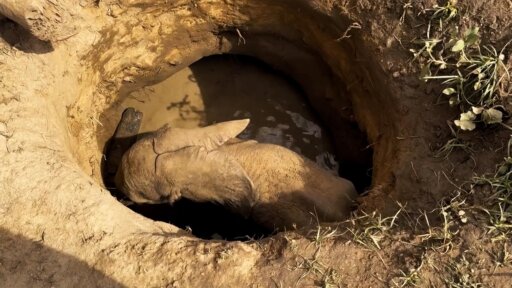
Saving a Trapped Elephant Calf
A call comes in: a week-old elephant calf has fallen into a well.
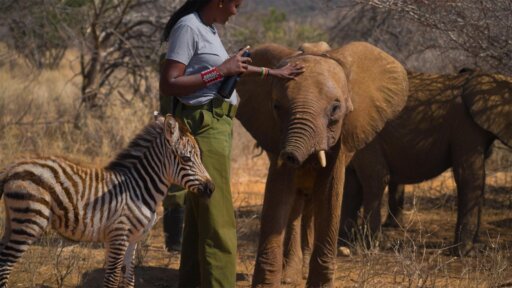
Baby Zebra Finds Her New Home
A young zebra forms a close bond with her keeper, but not everyone is ready to share the attention.
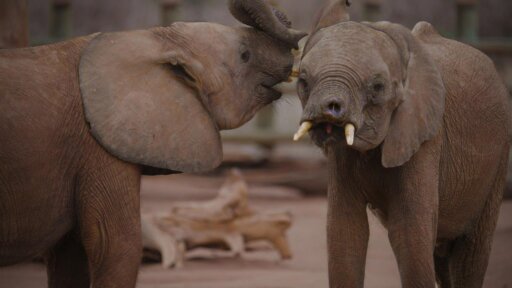
Graduation Day | Becoming Elephant: The Orphans of Reteti
At Reteti Sanctuary, caretakers prepares to release their oldest orphans into the wild.
TRANSCRIPT
(birds chirping) - The release of the oldest group of elephants was the biggest event at Reteti across the year that we filmed there.
So they had planned it as part of a massive ceremony with the community invited, Kenyan dignitaries, everybody was going to this event.
(birds chirping) To cover the release, we needed multiple cameras.
So we had GoPros in every conceivable place.
We had multiple cameras running.
We had a drone.
We had planned it all out meticulously.
(indistinct chatter) There was a lot going on.
(elephants trumpeting) You've got the elephants coming out of the gate.
You've got people crying.
The emotion during that event was palpable.
You want to capture the whole sense of the occasion.
(birds chirping) And then just after the release had happened, there was this feeling of just quiet and emotion.
(birds chirping) And we started packing our kit up, and then maybe about five minutes later, we heard this huge sound system start up.
So keepers and all the Samburu were having this huge party.
We asked would they mind if we filmed?
It was really special to be there and witness that.
And as Naomi says in the episode, it was really a way for them to work through their emotion.
And I think you really can feel it in that scene.
So in the dry season, the Samburu and the wildlife all use these water holes in the dry river beds.
So they are initially dug by elephants, and then the Samburu come and they dig them even deeper.
And they are called singing wells, because the Samburu will sing to their cattle to call them.
So each Samburu herd will have a different song to call their herd of cattle.
So they'll come during the day, but at nighttime, that's when the elephants come and drink from the very same wells.
And this is when baby elephants can fall into the wells, which is a reason for a lot of the rescues at Reteti.
Obviously babies are much smaller, their trunks can't reach as far.
There's a lot of elephants, all jostling for position, desperate to rehydrate after a hot day, and babies sometimes can get pushed in.
So we wanted to film this night sequence with the elephants drinking.
So I was working with DOP Andy Nelson Berger to figure out how we could do this.
Andy came up with the idea of setting up infrared lights across the riverbank.
- Now we're rigging infrared lights for today night.
We have some singing wells where we think or hope that elephants will come at night, also digging for their own waters in the river.
And to be able to film that, we are filming with infrared cameras and infrared lights.
So we're racking up one down here for a nice, low angle lighting.
And then we have three on top, and that's a setup for today.
- He wanted to flood the entire width of the riverbed, which was substantial, probably 400 meters with infrared lights.
Using a panel from the calf, he could control which lights were on and off at any one time because obviously he doesn't wanna drain the battery within the first couple of hours.
Soon after nightfall, the elephants would arrive and in huge numbers actually.
Andy was working with a modified camera that could see infrared spectrum, and he was able to capture the elephants coming to the wells.
(elephants trumpeting) It looked like moonlight.
Elephants and the other animals cannot see the infrared lights.
So we were capturing natural behavior that our cameras normally wouldn't be able to see.
On that river bed at nighttime, it was bustling.
It was like a marketplace.
Everyone was coming, interacting.
And we did see a baby elephant lying on his belly, reaching down and all these huge elephants with their big legs kind of moving around him and the mom trying to shield the baby.
They really understand the risks and so that particular baby that we saw was lucky and didn't fall in.
We were over the moon to witness what goes on in the river bed at night.