
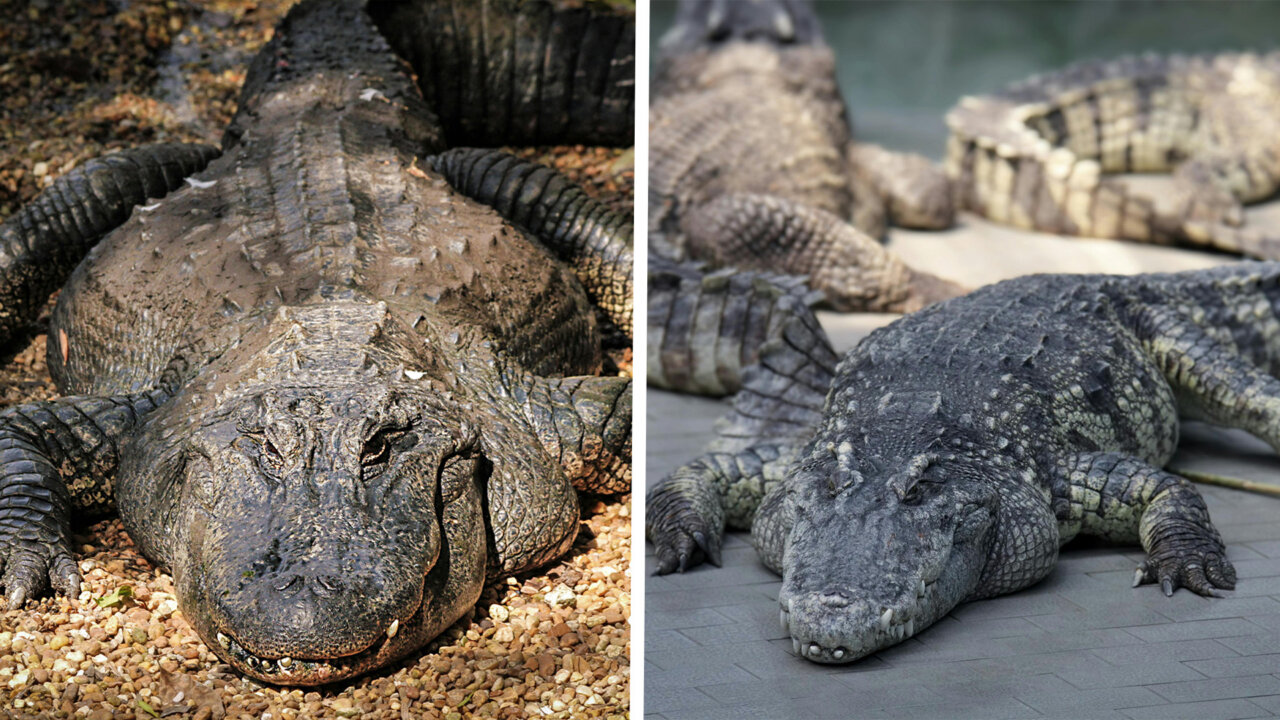
Alligator on left (Credit: J. Littler/ Pexels) / Crocodile on right (Credit: 3K/ Pexels)
At a glance, alligators and crocodiles look nearly identical. Both are massive reptiles with armored skin, powerful jaws and a prehistoric lineage that stretches back more than 200 million years.
These closely related reptiles belong to the order Crocodylia, a group that also includes caimans and gharials. However, they belong to different families within that order. Alligators are part of the family Alligatoridae, while crocodiles belong to the family Crocodylidae.
These ancient predators have several key differences, from the shape of their snouts to where they live. Here’s how to tell them apart.
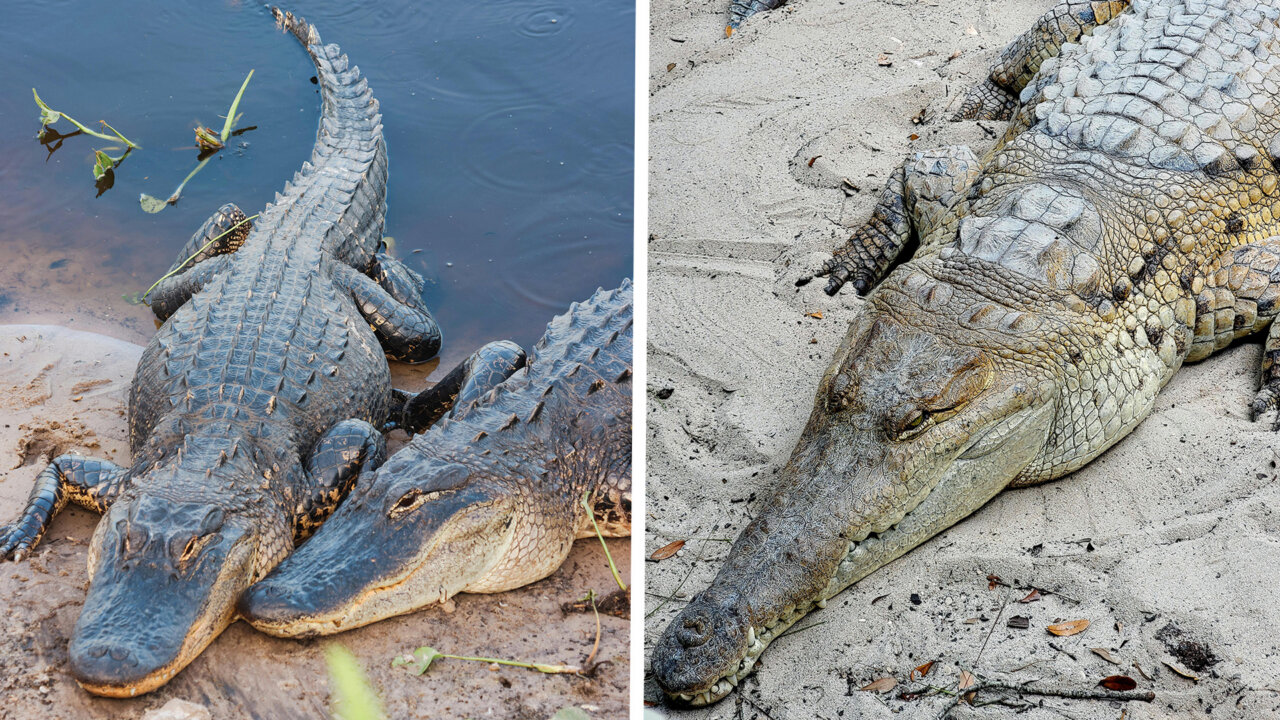
Alligator on left (Credit: Vasilis Karkalas/ Pexels) / Crocodile on right (Credit: Christopher Moon/ Pexels)
Alligator vs. Crocodile: Key Differences
| Feature | Alligator | Crocodile |
|---|---|---|
| Snout shape | Wide, rounded U-shape | Narrower, pointed V-shape |
| Teeth visibility | Lower teeth usually hidden when mouth is closed | Upper and lower teeth visible when mouth is closed |
| Color | Darker grayish-black | Lighter olive or tan |
| Habitat | Mostly freshwater | Freshwater and saltwater |
| Range | Mainly southeastern United States and China | Africa, Asia, the Americas, and Australia |
| Temperament | Often less aggressive toward humans | Often more aggressive, depending on species |
Snout Shape
One of the easiest ways to tell an alligator from a crocodile is by looking at the shape of the snout. Alligators have broad, rounded snouts shaped like a “U,” while crocodiles have narrower, more pointed snouts shaped like a “V.”
The wider snout of an alligator gives its jaws extra strength for crushing hard prey like turtles and shellfish. Crocodiles have slimmer snouts that are better suited for catching fish and other quick-moving prey in the water. The narrower shape helps reduce water resistance, allowing crocodiles to snap more quickly at their targets.
Teeth and Jaw Structure
Another key difference between alligators and crocodiles is the appearance of their teeth and jaws when their mouths are closed. In alligators, the upper jaw is wider than the lower jaw, so the lower teeth fit neatly into sockets in the upper jaw. As a result, when an alligator’s mouth is closed, most of its lower teeth are hidden from view.
Crocodiles have upper and lower jaws that are about the same width, so their teeth interlock when the mouth closes. This leaves several teeth visible, especially the large fourth tooth on the lower jaw, which sticks up outside the upper jaw. When their mouths are shut, crocodiles may appear to be showing their teeth.
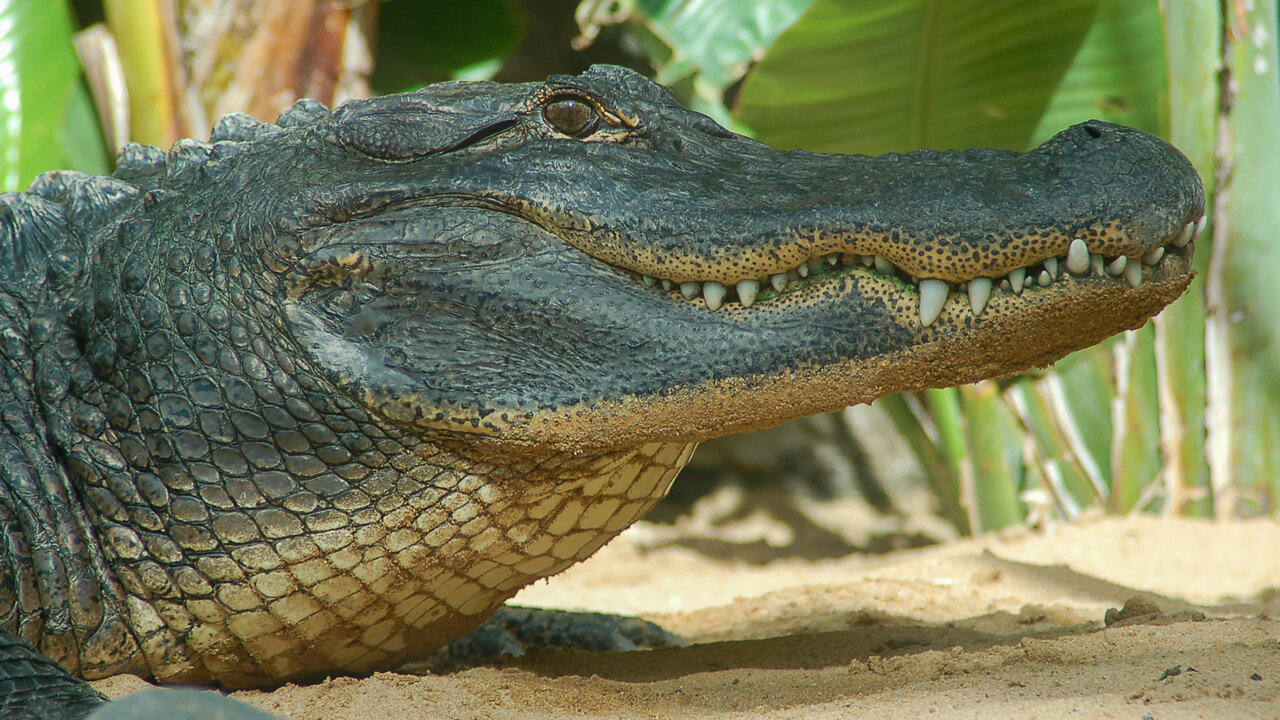
Close up of a crocodile (Credit: Jan van der Wolf/ Pexels)
Size and Weight
In general, crocodiles tend to grow larger and heavier than alligators. The largest crocodile species, the saltwater crocodile, can reach more than 20 feet in length and weigh over 2,000 pounds.
Alligators are usually smaller. The American alligator, the largest alligator species, typically grows to about 10–15 feet long and weighs 500–1,000 pounds.
Habitat and Range
Alligators are found primarily in freshwater habitats, such as swamps, marshes, rivers and lakes. Most alligators live in the southeastern United States, particularly in Florida and Louisiana. A smaller species, the Chinese alligator, lives in eastern China.
Crocodiles, by contrast, have a much wider global range and can live in both freshwater and saltwater environments. Thanks to special glands that help them tolerate salt, many crocodile species inhabit coastal areas, estuaries and even open ocean waters. Crocodiles can be found across Africa, Asia, Australia and parts of the Americas, depending on the species.
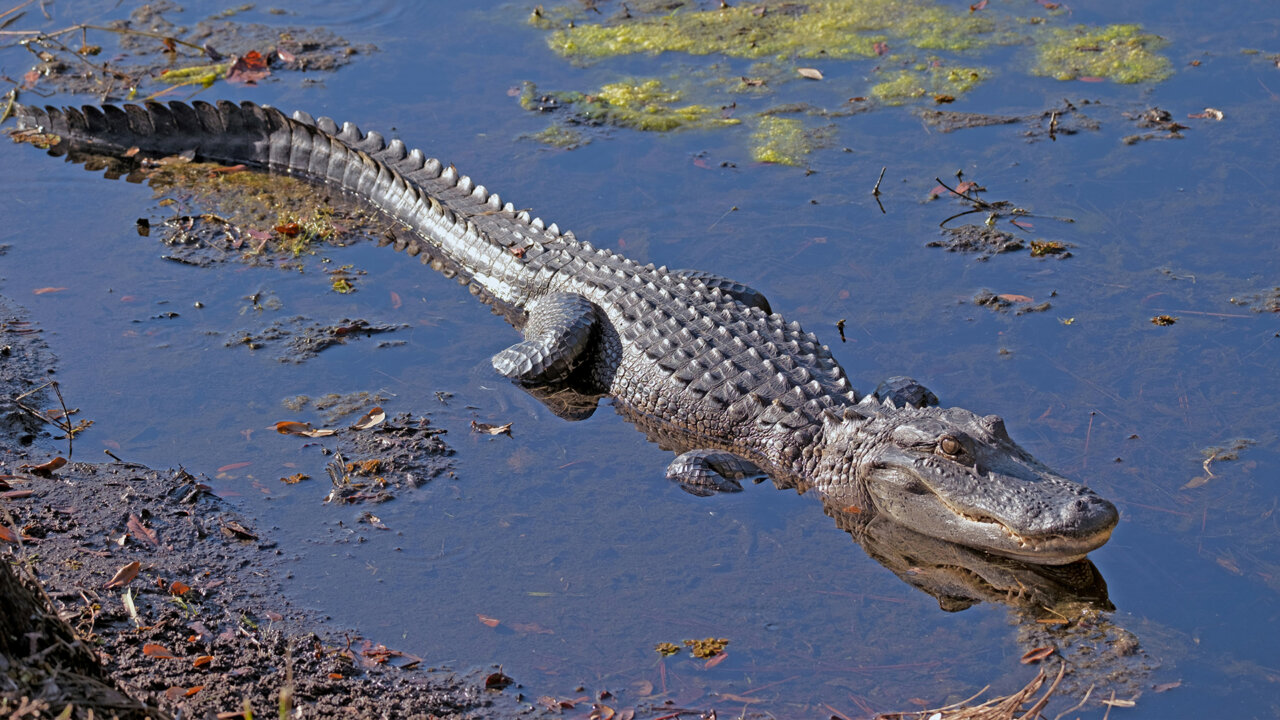
Alligator in a pond in Lakewood Ranch, Florida. (Credit: David Cashbaugh/ Unsplash)
Behavior and Temperament
Alligators and crocodiles also differ in their behavior and temperament. Alligators are generally more reclusive and less aggressive toward humans, avoiding people when possible. They tend to live in quieter freshwater habitats and typically become dangerous only if they feel threatened or are protecting their nests.
Crocodiles are considered more aggressive and territorial, particularly certain species — notably the Nile crocodile and saltwater crocodile. They are more likely to defend their territory and approach potential prey. This can make them dangerous to humans in areas where crocodiles and people share waterways.
Can You Tell the Difference?
Alligators and crocodiles may look similar, but a few key traits make them easier to tell apart. Look for the shape of the snout, check to see if the teeth are visible when the mouth is closed, and notice where the animal lives. With these clues in mind, you’ll be able to spot the differences between these ancient predators.
Interested in learning more? Explore more videos and stories about crocodiles and alligators.