
This piece comes to us from the Wildlife Conservation Society (WCS). To honor Black History Month, WCS and Nature are sharing stories of nature and conservation.
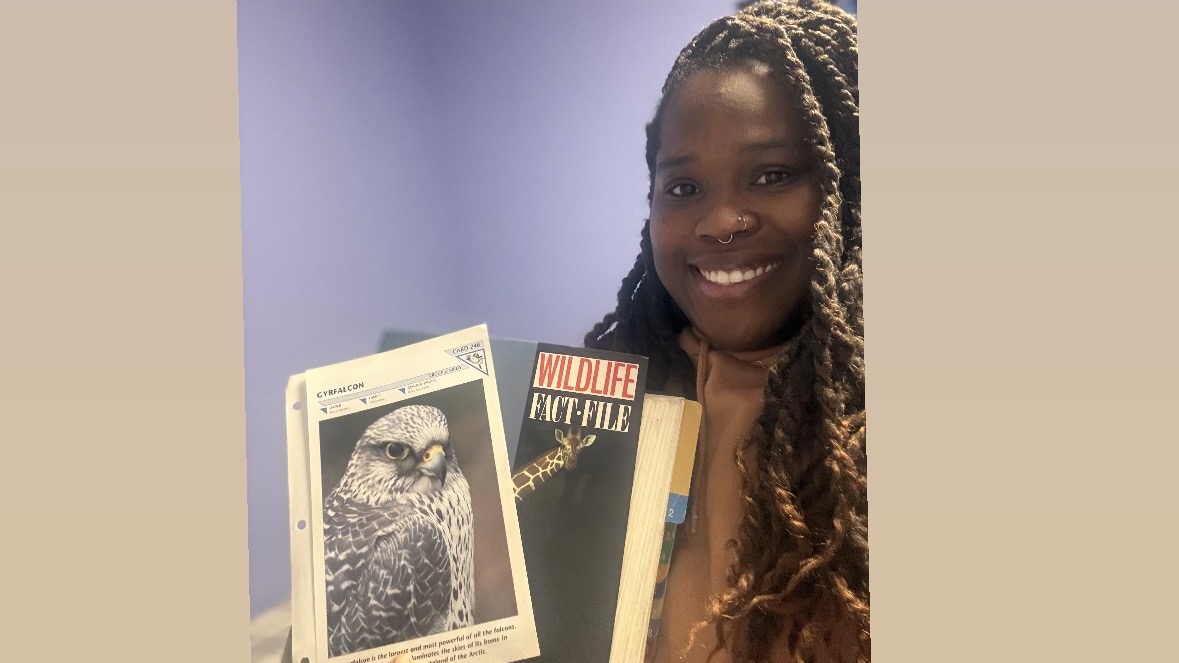
One of Ayesha’s many Wildlife Fact Files binders. Photo courtesy Ayesha Smith.
One of my earliest memories is collecting animal fact cards for my Wildlife Fact-File binder. Each month, a new set of twelve color-coded cards arrived in the mail, ready to be organized in a ring binder. Every card featured a photograph and detailed information about an animal’s habitat, diet, behavior, and conservation status. At the time, I didn’t even know the word “conservation,” but I was captivated by the diversity of animals and the lives they led.
While collecting cards sparked curiosity, watching documentaries with my dad made me fall in love with wildlife. Some of my favorite memories are of us sitting together in the evenings, watching the Wild Discovery series, and spending hours learning about animals from around the world.
Yet even with that early interest, I never imagined a future in wildlife. As I grew older, my focus shifted toward human medicine, and I became set on becoming a doctor. It felt like a practical career rooted in science, skill, and helping others. That changed in college when I took a course on animal behavior. It rekindled the curiosity I felt as a child, but this time grounded in science and ethics. I became interested not just in animals themselves, but in how they experience their environments and communicate.
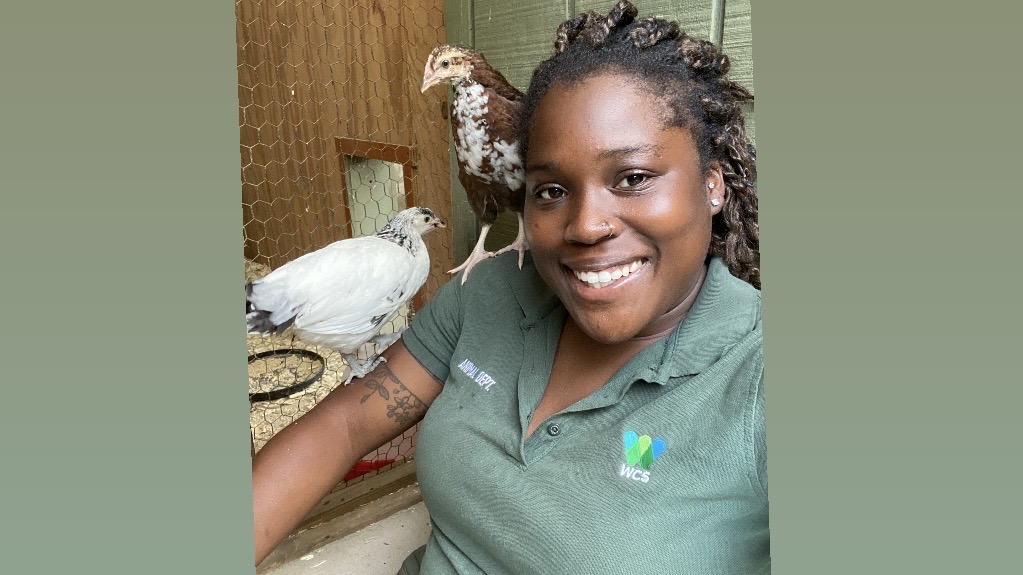
Ayesha with Prospect Park Zoo chickens. Photo credit: ©️WCS.
Gradually, I realized the aspects of medicine I loved—observation, care, and improving quality of life—were central to animal welfare and conservation as well. Changing direction wasn’t easy, but the more I learned, the more it felt like I was returning to something I had set my course on long ago.
This realization inspired me to pursue a master’s degree in Animal Welfare and Conservation in London. Studying abroad broadened my understanding of conservation and deepened my perspective on global challenges. I also learned that systems like protected areas and wildlife policies had often been developed without the voices of Indigenous and Black communities, despite their long history of ecological knowledge.
During my graduate program, I completed a two-week internship at a wildlife reserve in South Africa. Although brief, it was transformative. Growing up, I rarely saw people who looked like me represented in nature programming or conservation careers. In South Africa, I experienced conservation through a Black lens, which made the field feel more accessible and personal. That experience confirmed that I had made the right choice and strengthened my commitment to building a career in conservation.
After completing my degree, I joined the Wildlife Conservation Society and am currently a Senior Wild Animal Keeper. I work with animals ranging from fluffy sheep and sassy alpacas to colorful parrots and rambunctious sea lions. Every day is different, sometimes fast-paced, sometimes slow, but always exciting. My work involves daily care, behavioral monitoring, and welfare-based decision-making to ensure each animal thrives.
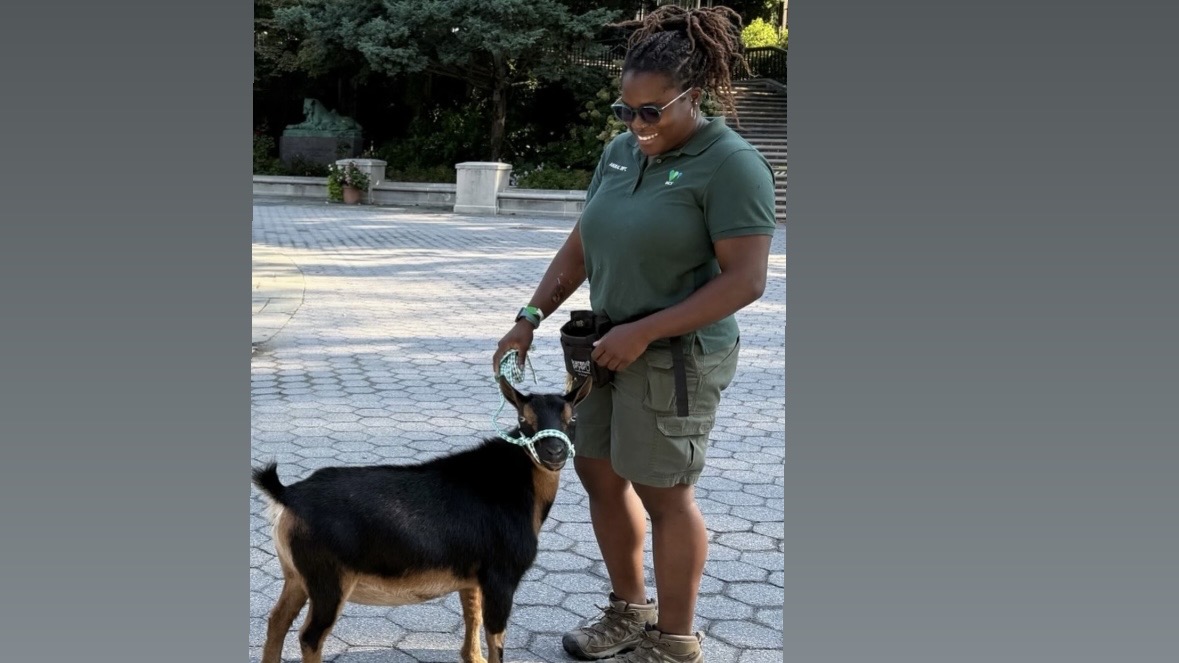
One of the Prospect Park Zoo’s goats trained to walk on a halter around the park. Photo credit: Angela Gnagnarelli ©️WCS.
One of my most memorable experiences was being present for the birth of a lamb who had a rough start in life. She was weak and struggling to latch onto her mother, so we became her lifeline. The keeper staff rotated, staying late into the night and coming in early each morning to bottle feed her.
Those quiet, late-night feedings, although exhausting at times, helped build a special bond between the keepers and this tiny animal we affectionately called Lamby. With time and care, she grew stronger. Watching her eventually nibble on hay and reunite with her siblings was a proud moment. It is still one of the most fulfilling experiences of my time as a keeper.
Alongside these achievements, I carry the memories of special animals who have since passed. Each left a lasting mark on me and deepened my love for animal care. Losing them was never easy, but their memory continues to inspire me. These triumphs, challenges, and farewells have shaped who I am today as a keeper.
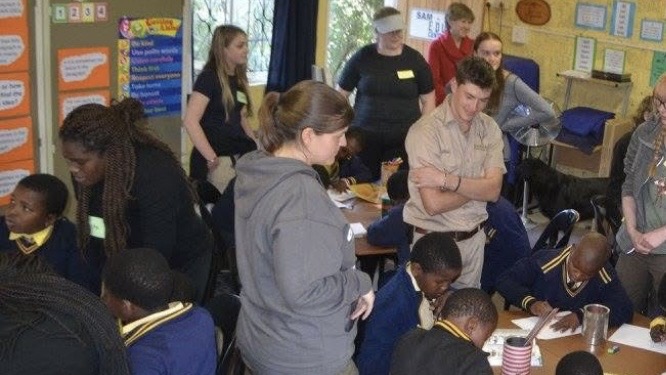
At a school in South Africa teaching children about the importance of conservation. Photo courtesy Ayesha Smith.
As a Black keeper in conservation, I am driven to help others see that there is space for them here too. Representation matters and it shapes who feels welcome and who can imagine a future in this field. Looking back, my journey hasn’t been a straight line. I once aspired to be a doctor, yet I found my way back to a childhood passion for wildlife.
From watching documentaries with my dad, to a powerful internship in South Africa, to working with WCS today, each step has reconnected me to curiosity and care. I returned to something I loved as a child, now deepened by experience and knowledge, in a field that grows stronger when it includes the diverse voices that have always shaped our relationship with the natural world.