
This piece comes to us from the Wildlife Conservation Society (WCS). To honor Women’s History Month, WCS and Nature are sharing stories of nature and conservation.
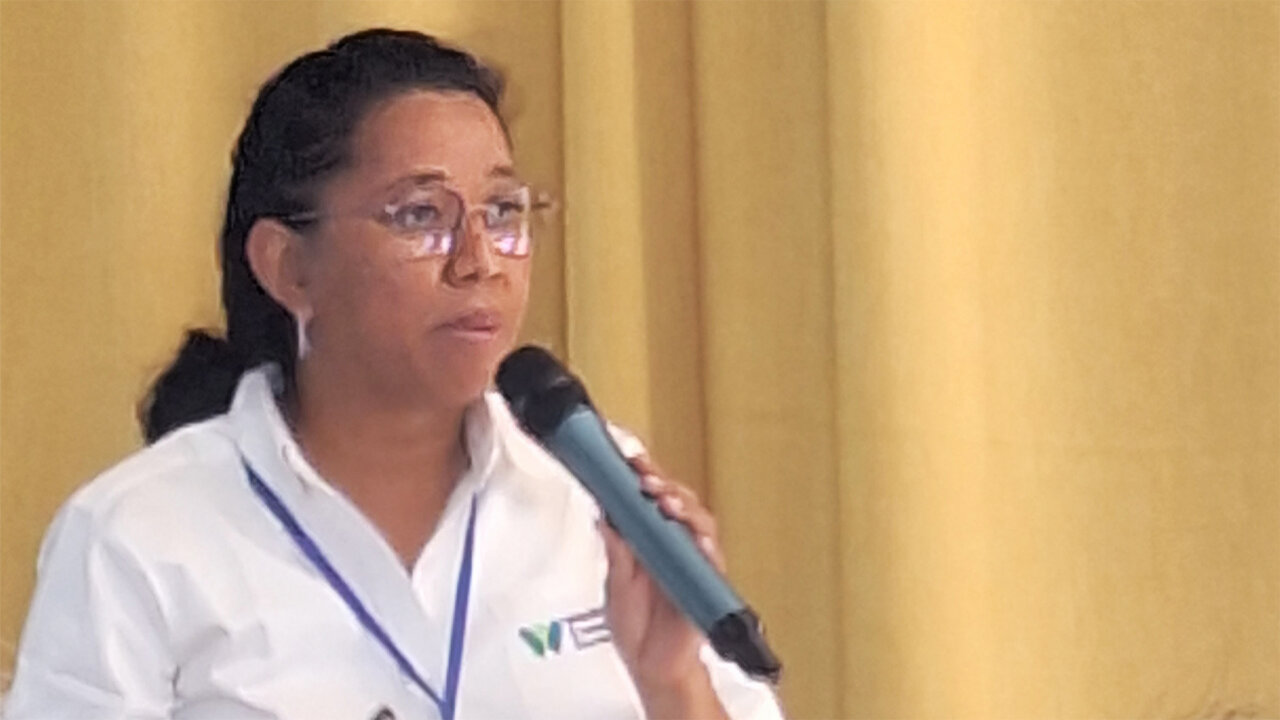
Ravaka sharing WCS marine conservation and comanagement work at a National Marine Symposium. Credit: ©️WCS Madagascar.
My passion for nature began early, inspired by wildlife documentaries and stories of exploration that revealed the richness and resilience of the natural world. This curiosity deepened during my master’s studies in environmental economics, where I explored concepts such as natural capital, intergenerational equity, and sustainable financing for conservation.
I began my career with a Malagasy environmental trust fund supporting community-based natural resource management. Madagascar is a global biodiversity hotspot, home to unique and endemic species, yet many of its people depend directly on natural resources—forests and small-scale fisheries—for their daily survival. This dual reality shaped my understanding of conservation from the outset.
Through extensive field visits across the country’s diverse ecoregions, I witnessed how communities interact closely with nature. Natural resources are primarily used for subsistence, not for wealth, but increasing pressures—population growth, climate change, and economic vulnerability—are making this balance harder to sustain.
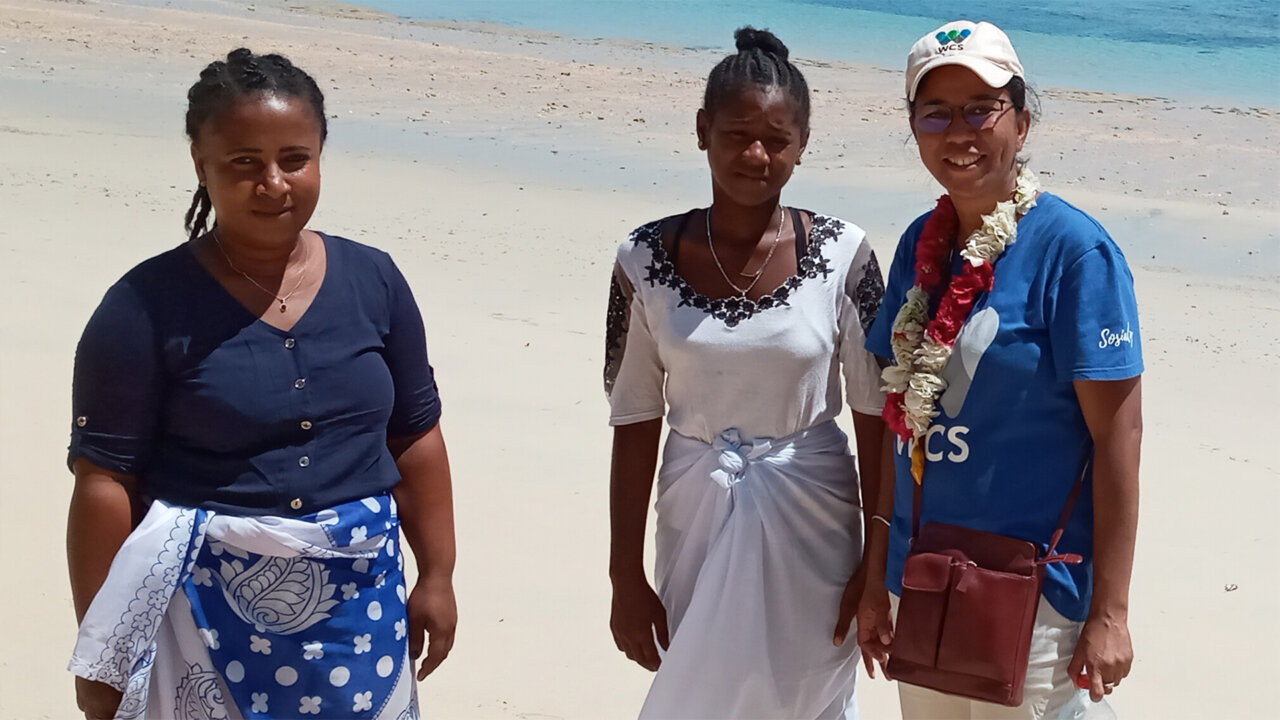
Ravaka (far right) with women association leaders in Ampapamena-Ankivonjy Marine Protected Area. Credit: ©️WCS Madagascar.
In southern Madagascar, I met communities striving to cope with water scarcity, food insecurity, and environmental degradation, while still protecting ecosystems such as sacred or “taboo” forests. These traditional conservation practices, however, are increasingly under strain.
I saw the daily challenges people face: reliance on low-productivity slash-and-burn agriculture, long hours spent collecting firewood, exposure to indoor air pollution, and insecure land tenure.
Yet I witnessed as well the collaboration between private sector and communities to protect watersheds for water supply and for beekeeping and fish framing efforts. These realities reinforced a key lesson: conservation can only succeed when grounded in the needs and priorities of local communities in a holistic approach.
These experiences informed a collaborative, bottom-up approach. Working alongside community representatives, scientists, conservation practitioners, and government partners, we co-designed programs that integrate environmental and socio-economic priorities. These included reforestation, renewable energy, biodiversity conservation, applied research, and environmental education.
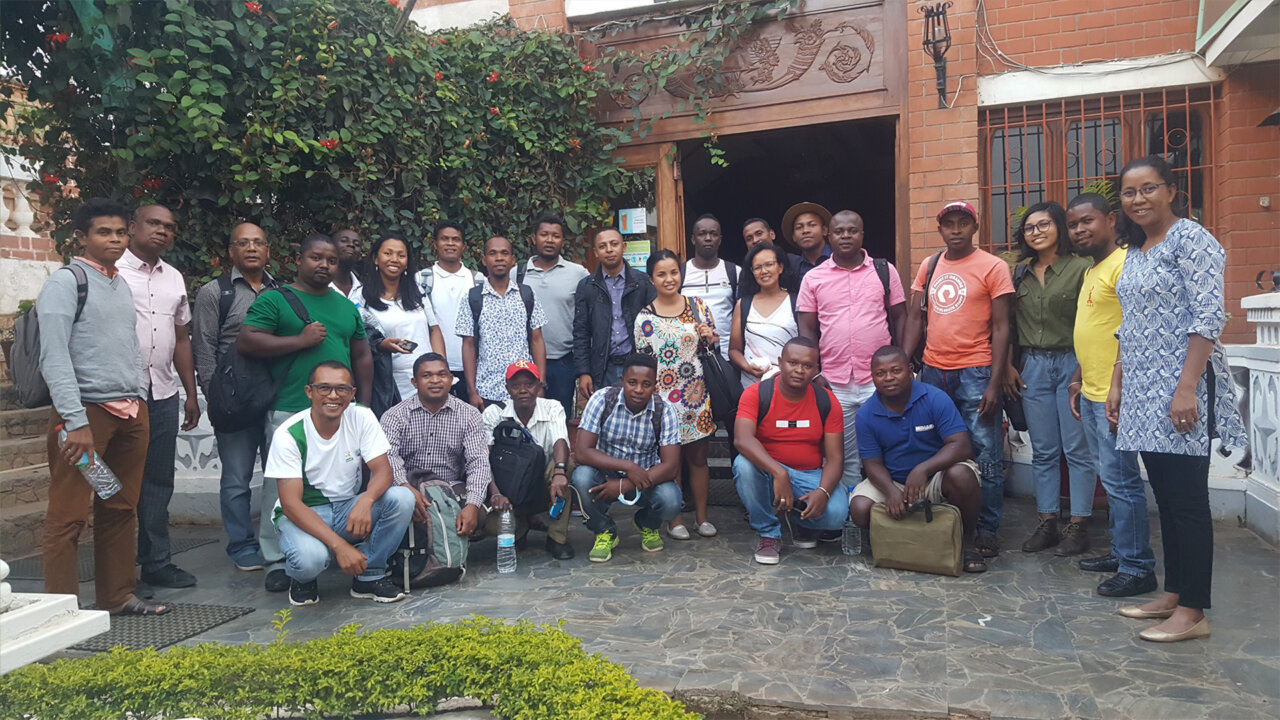
Madagascar marine team during marine the annual coordination meeting, December 2021. Credit: ©️WCS Madagascar.
I also engaged with donors and partners to mobilize financial and technical support, while collaborating with conservation trust funds across Africa, and Latin America to strengthen sustainable financing mechanisms. After sixteen years in conservation finance, I transitioned to an implementing role with Wildlife Conservation Society in Madagascar. This shift brought me closer to field realities and offered a new perspective on conservation practice.
For seven years, I led marine conservation efforts across three seascapes known for their exceptional biodiversity—including coral reefs, mangroves, sharks and rays, marine mammals, and sea turtles. I supported the co-management of marine protected areas (MPAs), promoted sustainable fishing in Antongil Bay, and contributed to the creation of new MPAs.
The coastal communities in these areas are among the most marginalized, often located in remote locations with limited access to services and opportunities. Local communities are both part of the system placing pressure on natural resources and among the most impacted by their decline, often due to limited alternatives. Ensuring their meaningful participation in conservation requires continuous engagement and trust-building.
Strengthening co-management systems has been central to this work. This involves ensuring that governance structures are inclusive and representative of all resource users, including women and youth. Promoting women’s participation required both empowerment and efforts to foster social acceptance, including approaches that engage men as allies – positive masculinity.
Accountability is a critical pillar. We established mechanisms to regularly share results from scientific and participatory monitoring with communities, enabling joint review and adjust conservation measures. One key challenge was communicating scientific findings in contexts with high illiteracy rates. By working closely with science and technical teams, we developed simple, visual tools that made data accessible and meaningful, significantly increasing community engagement.
A strong example of community ownership is the “caisse bleue” (blue fund), a locally managed financing mechanism inspired by village savings groups. Communities contribute savings that are partially allocated to support the management of MPAs. Since 2021, this system has been successfully implemented across the existing three MPAs, strengthening both financial sustainability and local commitment.
Over the past four years, women’s participation in participatory surveys (catch, seagrass and mangrove surveys), as well as in local social convention committees, has increased. Similarly, participation in caisse bleue groups has grown, with women now outnumbering men—a notable shift compared to when the concept was first introduced a few years ago.
My role also involves engaging with government and donors to ensure that challenges encountered in the field inform policy and funding decisions. This contributes to improving legal frameworks, strengthening institutional collaboration, and mobilizing long-term support for conservation.
Balancing operational and strategic responsibilities remains challenging, particularly when introducing new approaches that require sustained capacity-building for both WCS team and the local stakeholders, including local communities. Yet, each milestone achieved demonstrates the value of investing in community-led conservation; and there remains more to do.
My experience has shown that bottom-up approaches are not only more inclusive—they are more effective. When communities are empowered, informed, and actively engaged, they become true stewards of their natural resources. And this requires long term investment.
It is both a privilege and pleasure to contribute to advancing co-management and community conservation in Madagascar, helping ensure that its extraordinary biodiversity is preserved for generations to come.