
The smoke floating around me smelled of campfire, grass, and burnt leaves. “Give me a puff or two here,” my father said, pointing his gloved hand at the top of the open beehive. I squeezed the triangular bellows and a puff of smoke rushed across the frames, sending the numerous honeybees who were growing increasingly suspicious of me and my father down into the hive.
Smoke doesn’t make honeybees “drowsy or sleepy,” as some people think. It masks their alarm pheromones and triggers an instinct to help the hive survive a wildfire. They gorge on honey in case they need energy to fly away and find a new home.
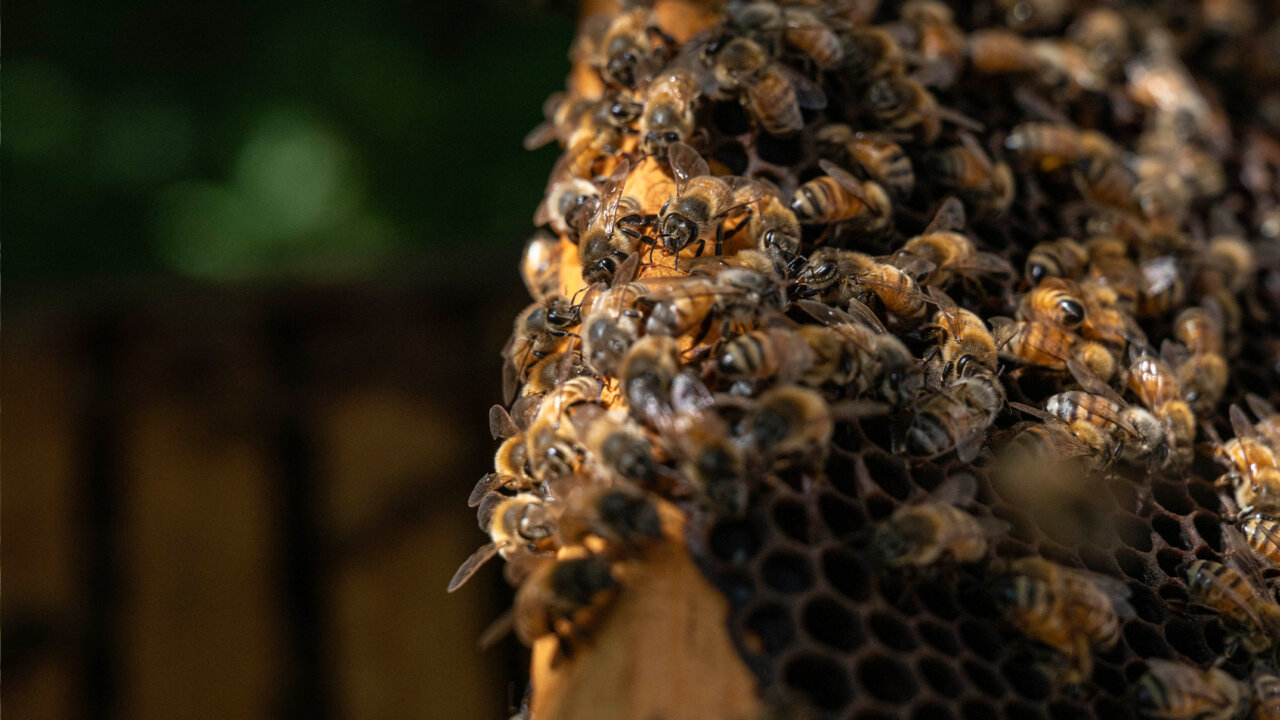
Honeybees on a hive frame. Credit: Terria Clay ©️WCS
Before I studied science, I grew up in the countryside of Ohio. We had several gardens and a variety of animals, including several beehives, which my father encouraged me to help tend throughout my childhood. I had a child-sized beekeeper suit and will never forget the afternoon a persistent bee managed to get into my veil and sting me on my lower lip!
In time I moved away, went to college and changed careers a few times. I spent several years in film production, as an EMT in Brooklyn (quite an adventure for an Ohio boy), and eventually stumbled into my passion—science education. I thought about beekeeping from time to time, going so far as to periodically suggest to my roommates that we get a hive but, no one else thought that was a good idea, and it was consistently vetoed.
About eleven years ago I was lucky to become the Curator of Education at the Wildlife Conservation Society’s Prospect Park Zoo. The Bee Conservancy had done an incredible job maintaining two hives at the zoo for many years. Last spring, the conservancy shifted its priorities, opting to spend more time documenting, researching, and promoting native bees instead of honeybees.
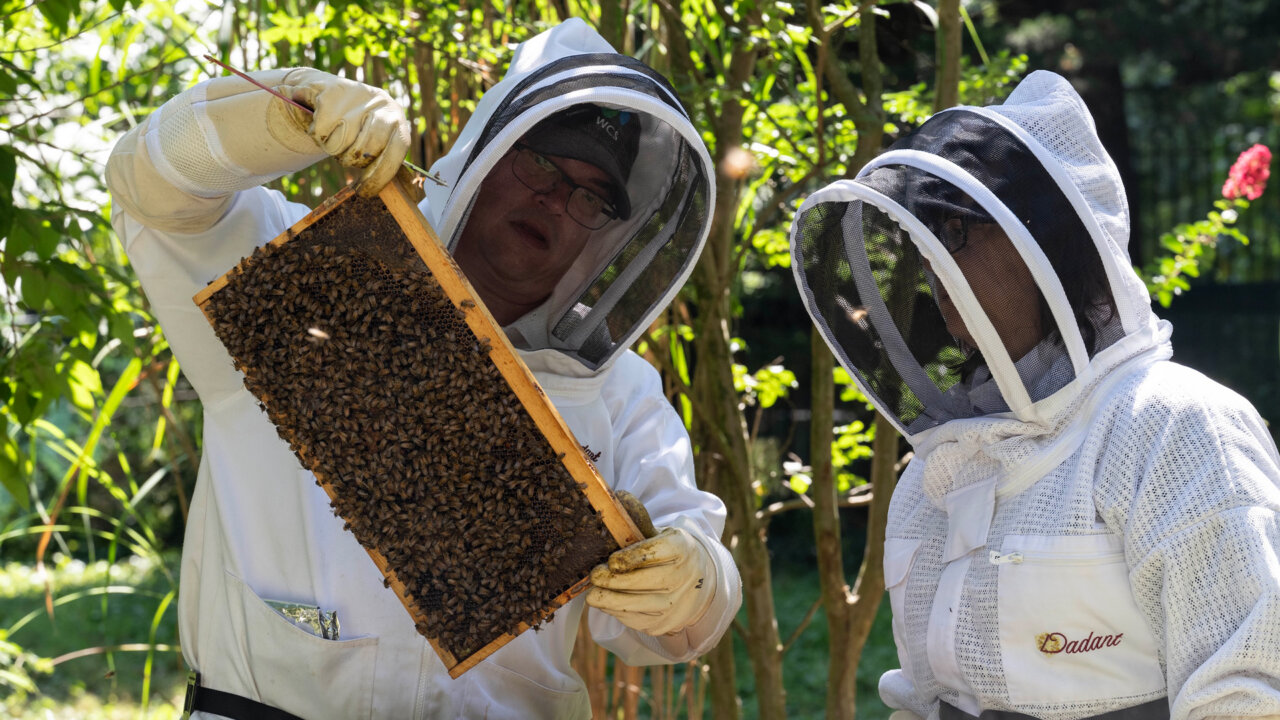
Prospect Park Zoo Curator of Education William Elliston with Animal Department Supervisor Nichole Shelmidine inspecting a hive. Credit: Terria Clay ©️WCS
The zoo officially took over care of our tiny apiary, and I was honored and excited to be asked to lead this project, connecting a cherished part of my childhood to my current work in conservation education.
Several staff members at the zoo have gone through Cornell’s beekeeping certificate program and are working with me to keep the hives healthy and thriving. This July our extremely productive bees allowed us to harvest fifty-one pounds of honey, which was shared with staff. That, by the way, is a very respectable amount of honey for a small urban apiary!
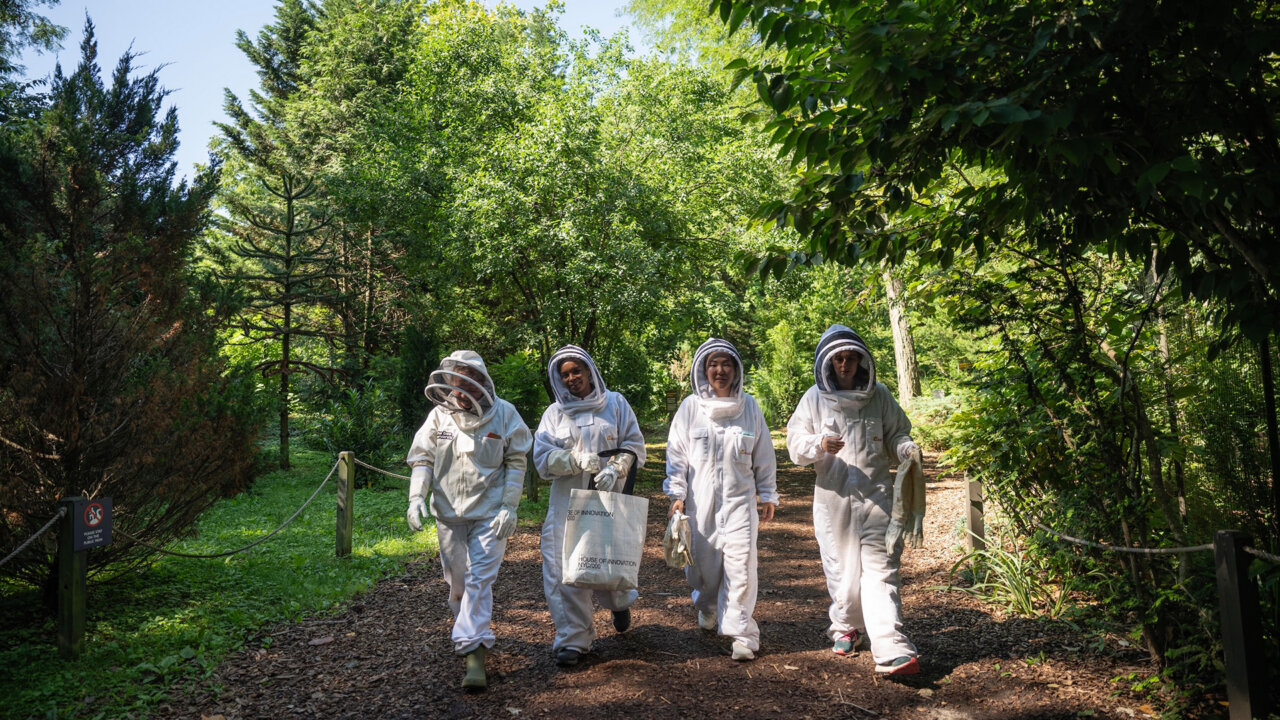
Prospect Park Zoo Animal Department Zookeepers Ashley Sawyer, Tiffani Smith, and Carol Yi with Animal Department Assistant Supervisor Veronica Thomas after a hive inspection. Credit: Terria Clay ©️WCS
It’s exciting to share honey, but more importantly, the hives allow us to talk to visitors about the importance of bees. They regularly have questions: what they’re like, whether they bite (they do not), how they make honey, if they’re really that important to the food we eat. In the education department, we use that curiosity to expand understanding of animals and conservation.
Most people know that honeybees make honey, are fuzzy and striped, and have a stinger. Increasingly, people know about their importance in agriculture, which cannot be overstated. Honeybees are the pollinators for a surprisingly large amount of food we eat. Through public engagement programs and interpreters, we teach visitors about their importance, their usually gentle temperament, and how vital they are to our environment.
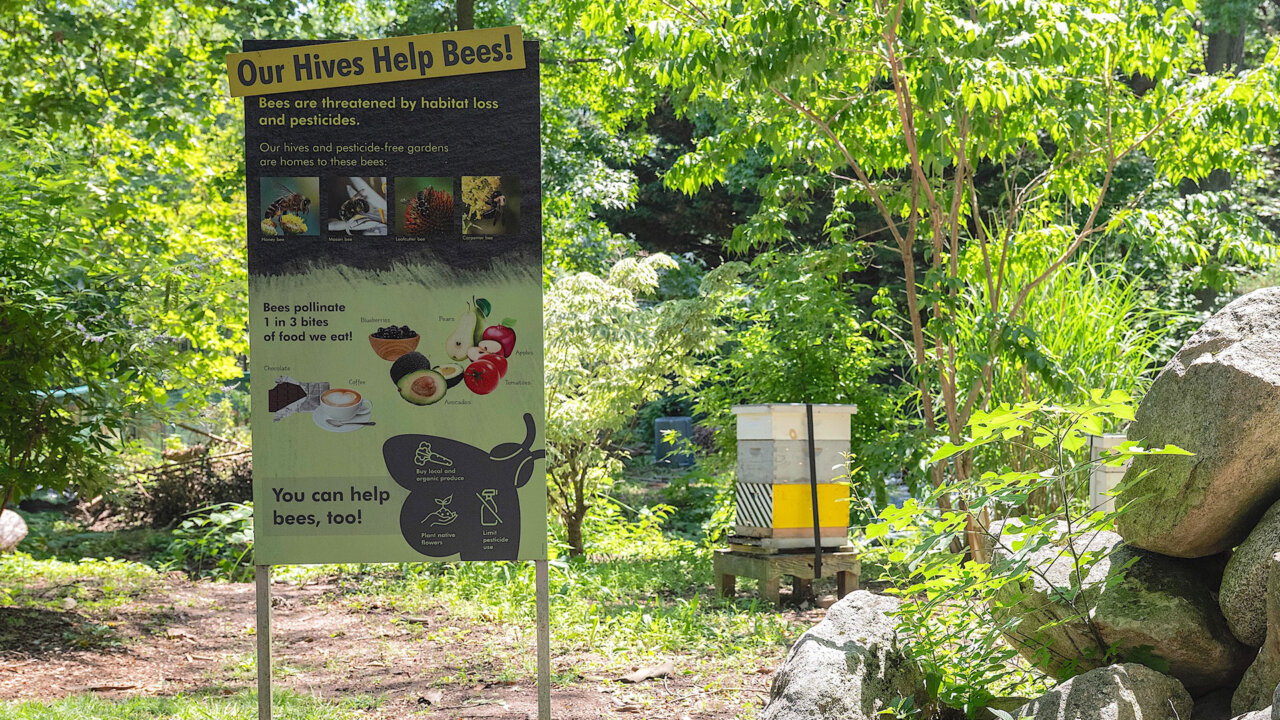
Beehives and exhibit sign on the Prospect Park Zoo’s Discovery Trail. Credit: Terria Clay ©️WCS
Honey collection has been documented for at least 9,000 years, with people relying on honeybees from Spain to ancient Egypt. But they are not the only kind of bees. We build upon interest in honeybees to open a conversation about other pollinators and the importance of native bees.
Numerous native bees, such as bumblebees, mason bees, and Gotham bees (which were discovered across the street from Prospect Park Zoo at the Brooklyn Botanic Garden in 2010) are highly effective pollinators, especially with wildflowers and native plants because they coevolved. They are also in significant decline because of pesticide use, habitat loss, and a lack of plant diversity.
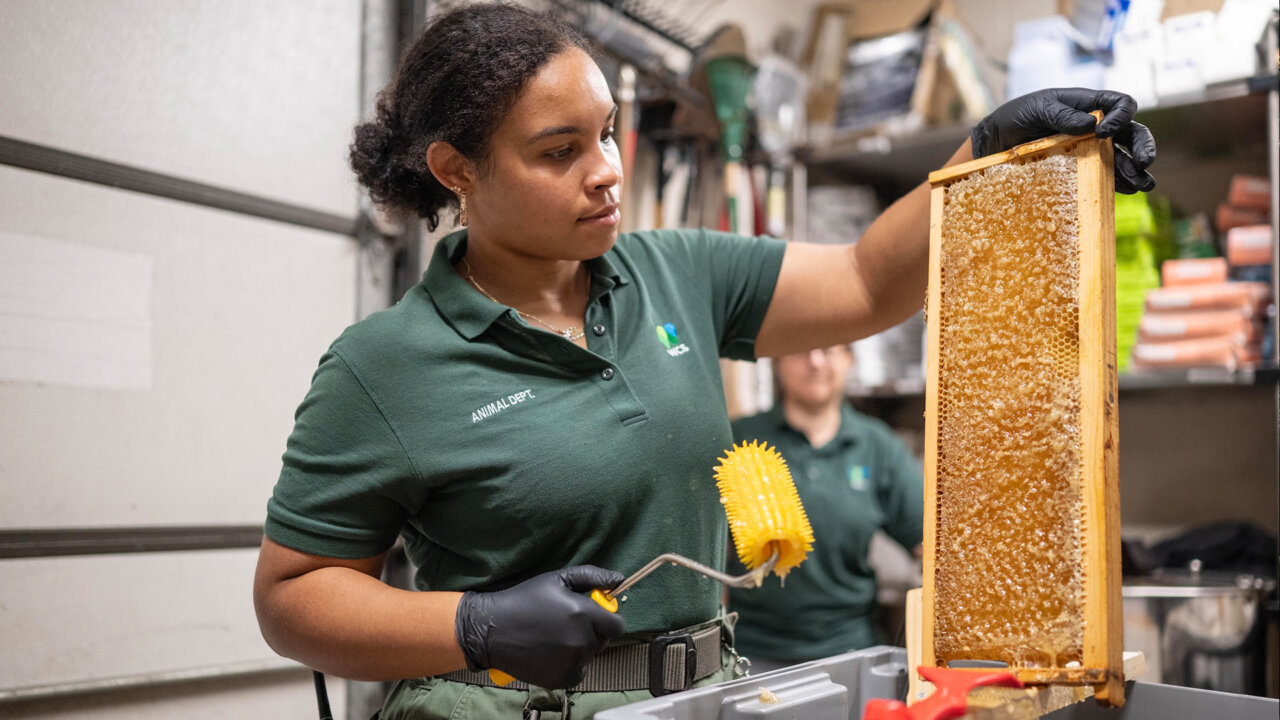
Prospect Park Zoo Animal Department Zookeeper Tiffani Smith using a needle roller to uncap honey. Credit: Terria Clay ©️WCS
You don’t need to have hives or a backyard to support bees. Buying honey and beeswax from local, smaller-scale apiaries can help support healthy and well-managed honeybee colonies. A farmers’ market is a good place to start. Choosing organic produce can help reduce the need for the pesticides that harm bees of all kinds. If you have a yard, planting a variety of native flowering plants instead of short grass can make a real difference.
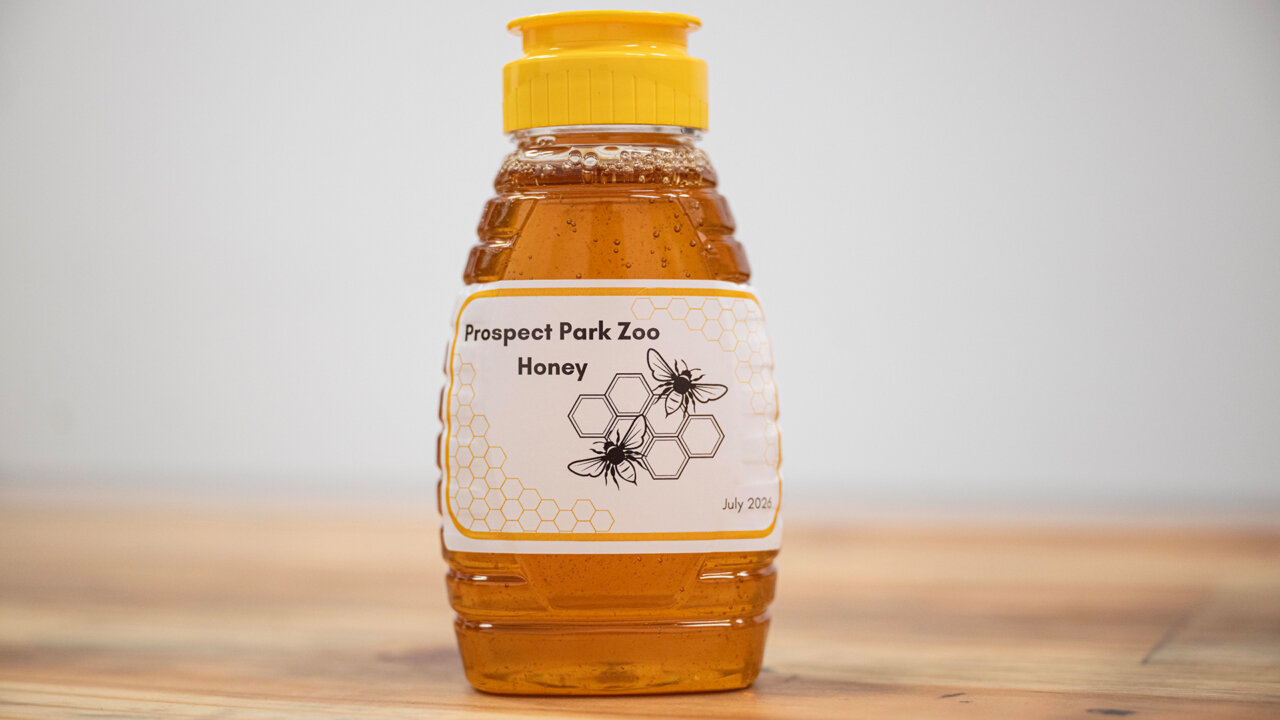
Bottled honey from the Prospect Park Zoo beehives. Credit: Terria Clay ©️WCS
I count myself extremely lucky to reconnect with bees through my work in a large city. They give us a way to tell a larger story. Conservation isn’t happening somewhere else. It’s in the food we eat, the plants we have in our parks and yards, the habitats we protect, and the choices we make. For me, it also turns out to be a thread between my adult passion and my life as a boy in Ohio whose father connected him to the wonders of nature.