
This piece comes to us from the Wildlife Conservation Society (WCS). To honor Women’s History Month, WCS and Nature are sharing stories of nature and conservation.
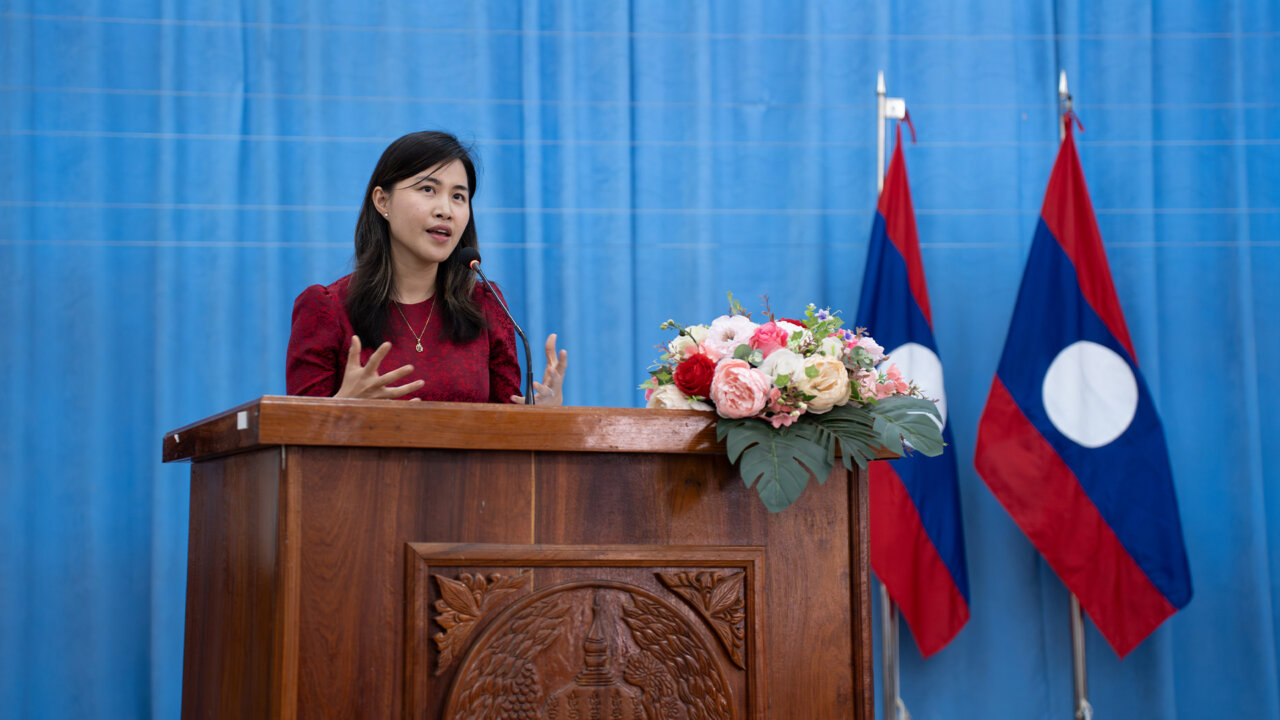
Manoly at NPA Roadmap Kick-Off. Photo credit: Phetpakay Bounhaxay ©️WCS Lao PDR
When people imagine conservation work, they often picture scientists tracking wildlife through dense forests or rangers protecting wild places on the front lines. My journey into conservation began in a different place: policy meetings, diplomatic receptions, and development discussions about how countries grow.
I was born and raised in Vientiane, the capital of Laos, and originally trained to become a diplomat. I began my career at a multilateral development bank in the 2010s, working on Laos’ green growth strategy and projects related to forests, biodiversity, water, and rural livelihoods.
At the time, I did not see myself as a conservationist. I was simply passionate about international cooperation for peace and national development. I saw how investment decisions inevitably shape the future of nature, and how development itself depends on the ecosystem services that healthy landscapes provide—from the pollination of flowers by insects to the filtration of water by wetlands—making it essential to plan development in ways that avoid irreversible harm.
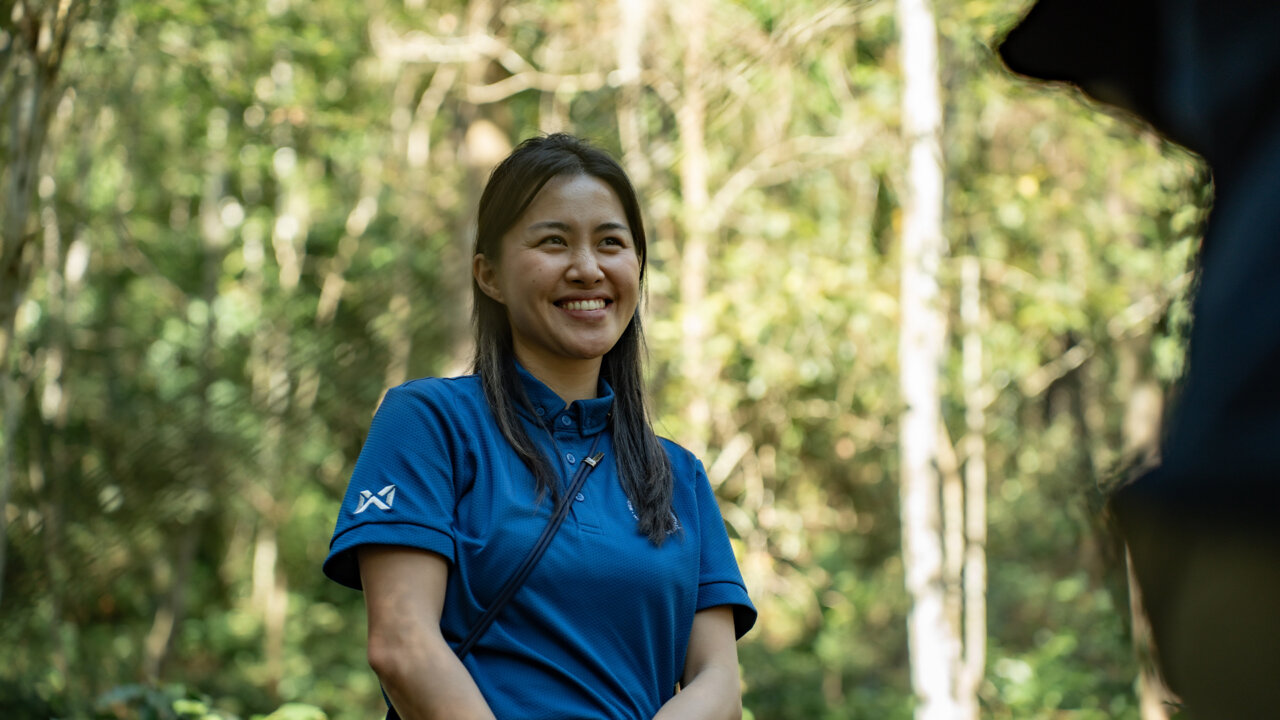
Manoly visiting shade grown coffee plantation in Nam Et-Phou Louey National Protected Area. Photo credit: Phetpakay Bounhaxay ©️WCS Lao PDR
At the same time, my work took me into Laos’s vast protected landscapes, including Nam Et–Phou Louey National Park and the forests of the Annamite Range. Guided by rangers and community members who have lived alongside these ancient forests for generations, I began to experience these landscapes more deeply. They are home to multiethnic communities who share a close relationship with the land, alongside endemic and critically endangered species, forming some of the most biologically rich forests in the world.
Laos established its first national protected areas in 1993, around the same time I was learning to move as a toddler. My first encounter with the idea of “protected areas” and “wildlife conservation” came in Grade 4, when a poster of bird species from Nam Kan Protected Area was taped beside the classroom blackboard. I was captivated. At the time, I never imagined a career in conservation. I didn’t even know it existed.
Years later, the lending portfolios I worked on connected me directly with Laos’ Department of Forestry, the Wildlife Conservation Society (WCS), and the real world of protected areas and wildlife conservation, including their challenges. This experience inspired me to pursue a master’s degree at Cornell University to deepen my understanding of how policy, science, and local realities could come together to strengthen both conservation and development outcomes.
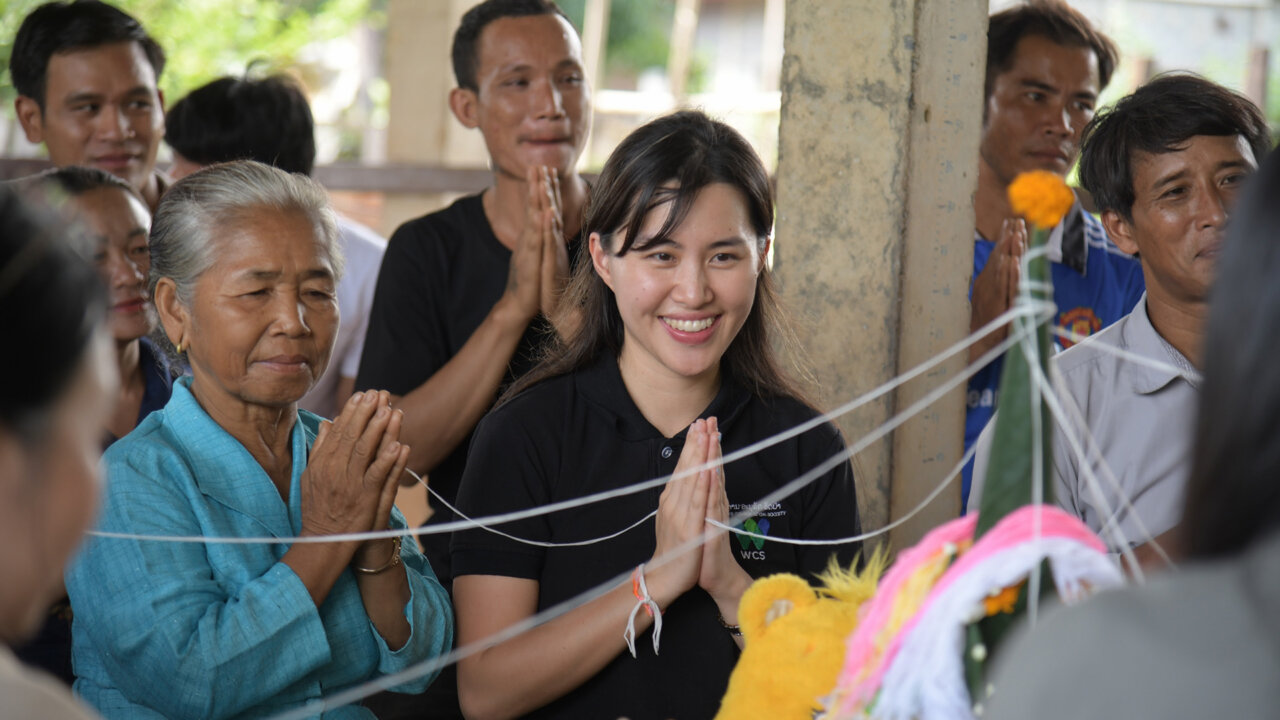
Manoly at Basi Ceremony by local villagers. Photo credit: Phetpakay Bounhaxay ©️WCS Lao PDR
In 2019, I was privileged to join the WCS Lao PDR Program as Deputy Country Director. More limited in scope at the time, we have since expanded both our team and conservation portfolio significantly. Today, I help co-lead a team of around 100 professionals working across protected area and wetland management, wildlife protection, biodiversity-compatible livelihoods, and private sector engagement.
Much of my work focuses on supporting the Lao government in strengthening governance systems that safeguard biodiversity in line with national and international commitments. This includes assisting with the development of protected area and wildlife legislation, improving law enforcement capacity, and integrating tools such as the Mitigation Hierarchy into development planning, ensuring that investments are designed to avoid irreversible harm to species and habitats. We also apply a One Health approach that links animal, ecosystem and human health to prevent disease emergence.
Working in conservation has taught me the importance of attentive listening. Environmental policy involves many voices: government officials, scientists, enforcement officers, communities, development partners, and businesses. My role is to help represent the interests of nature. Building trust across these perspectives is essential. Professionalism, humility, and persistence are more effective than ego or confrontation.
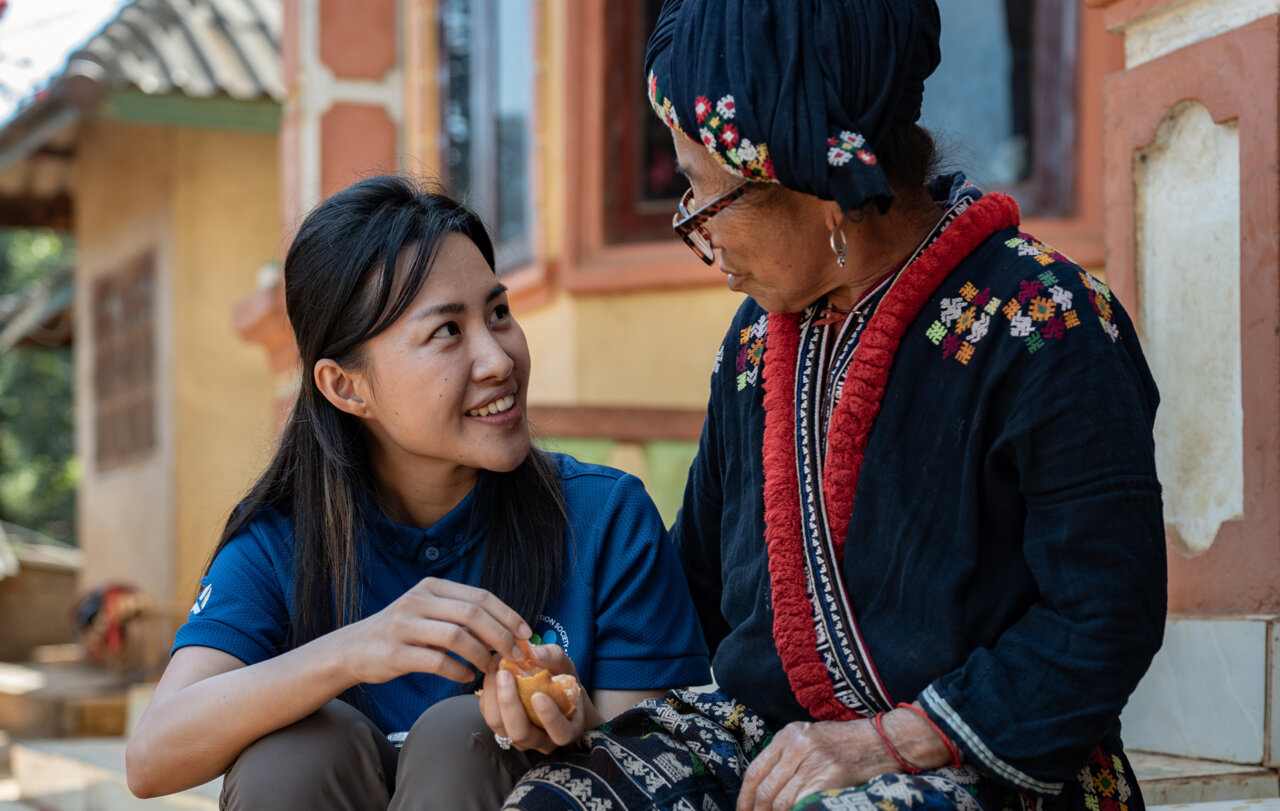
Manoly visiting local villager in Nam Et-Phou Louey National Protected Area. Photo credit: Phetpakay Bounhaxay ©️WCS Lao PDR
From my experience, women often bring a collaborative, bridging perspective and a can-do attitude to this work. We are practiced in navigating complexity, finding common ground, and ensuring that diverse viewpoints are heard and respected —not for personal gain, but to achieve outcomes that benefit both people and nature. Conservation—and development—need that kind of leadership.
My motivation is also deeply personal. I feel fortunate in many ways—I was not trapped by poverty nor constrained by opportunity. I want others to have that same freedom: the chance to read, to express themselves, to study, to travel, to work, and ultimately to choose a path that contributes to protecting life on Earth.
That privilege carries responsibility.
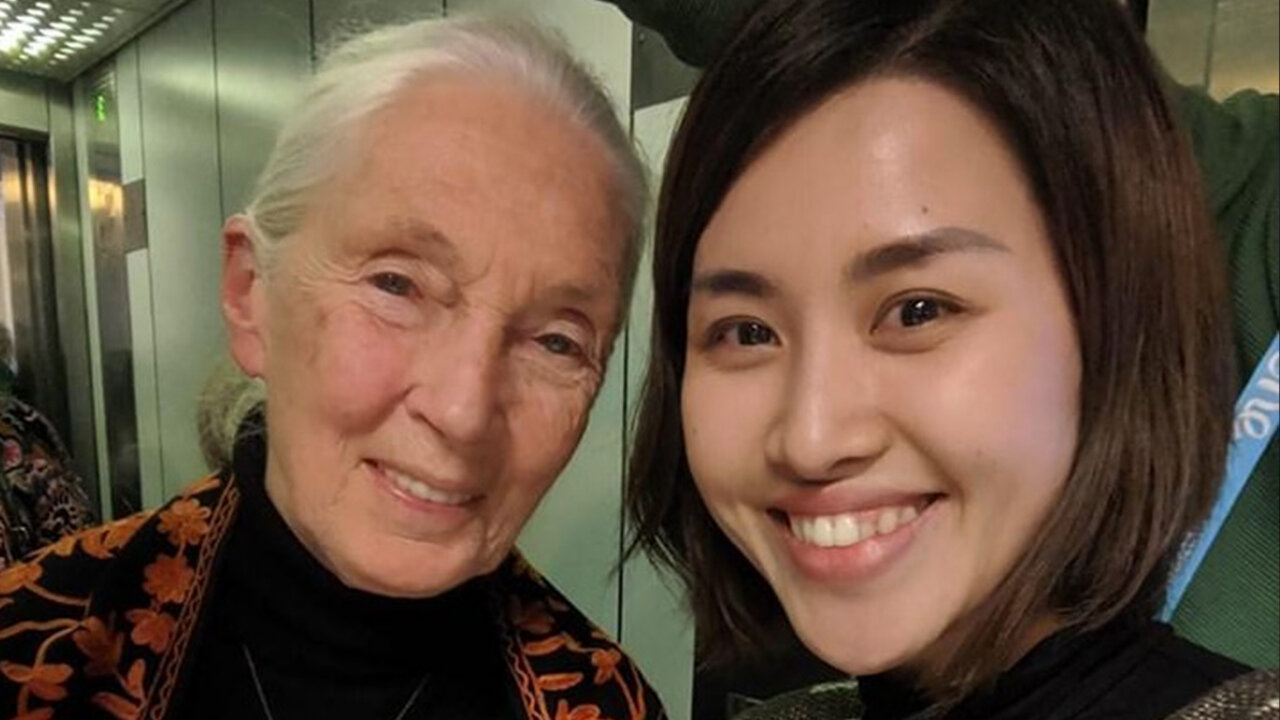
Manoly and Jane Goodall. Photo courtesy Manoly Sisavanh
As Laos continues to develop, roads and railways will be built and industries will expand. Our responsibility is to help shape this investment wisely—using science, knowledge, and cooperation in peaceful, inclusive, and sustainable ways. When conservation is embedded in the policies and systems that guide development, economic progress can advance while safeguarding the ecosystems on which societies depend.
To me, conservation means ensuring that present and future generations respect and share landscapes where forests still stand, wildlife still thrives, and ecosystems continue to sustain livelihoods, economies and human wellbeing—as interconnected parts of a single, living system.