
A few days ago in Brazil’s Pantanal, I watched a pair of jaguars resting in tall grasses, their bodies almost disappearing into the landscape. It is mating season, and for a brief moment, the future of this iconic species felt tangible—alive in front of me.
But that future is far from secure.
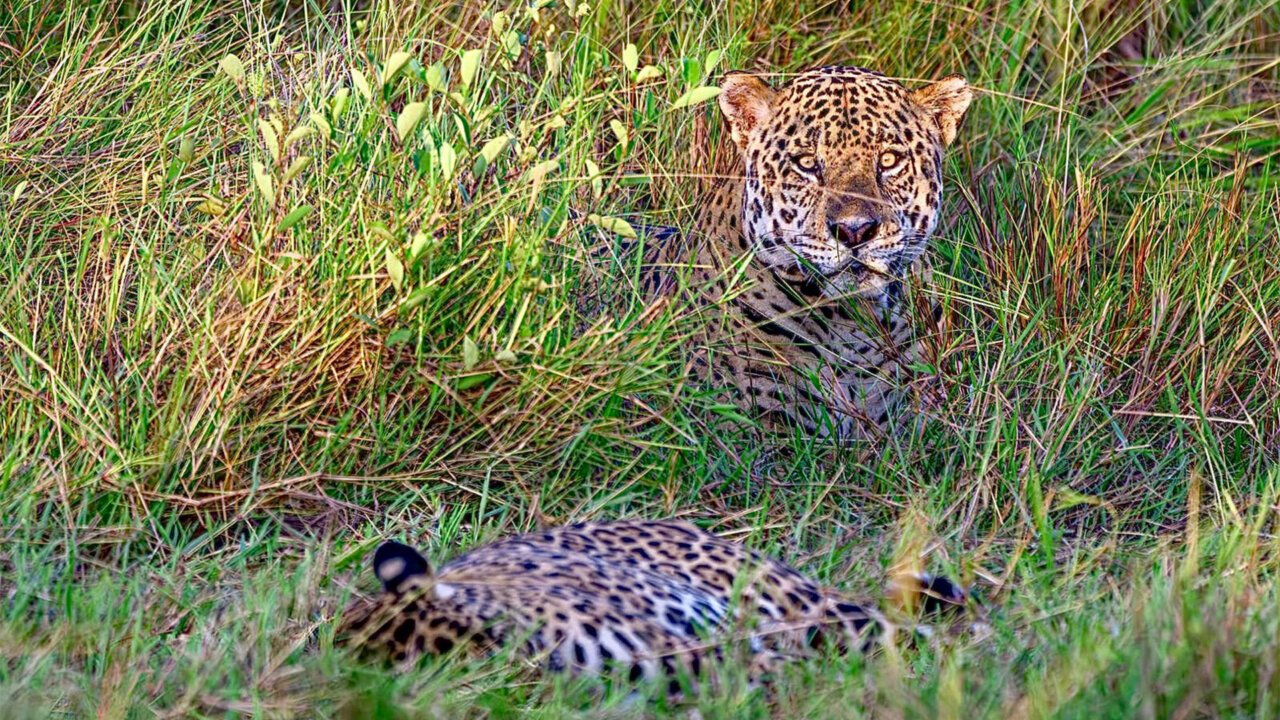
Jaguars resting in tall grasses of Brazil’s Pantanal, the world’s largest tropical wetland and one of its most extraordinary ecosystems—home to species such as jaguars, giant otters, capybaras, giant anteaters, and hyacinth macaws. Photo credit: Marcos Amend ©️WCS.
Jaguars, like so many migratory and wide-ranging species, depend on vast, connected habitats that stretch across national borders. The Pantanal itself spans Brazil, Bolivia, and Paraguay. What happens to jaguars in one country inevitably affects their survival in another. Their fate is a reminder of a broader truth: conservation cannot stop at political boundaries.
This week, governments from around the world have gathered in Campo Grande, Brazil, for a meeting that will shape the future of species like these—and many others.
The 15th Conference of the Parties to the Convention on the Conservation of Migratory Species of Wild Animals (CMS) brings together 133 countries to confront a deceptively simple challenge: how to conserve species that do not recognize national borders. From whales crossing oceans to birds spanning continents to sharks moving through entire ocean basins, migratory species depend on connected ecosystems and coordinated international action.
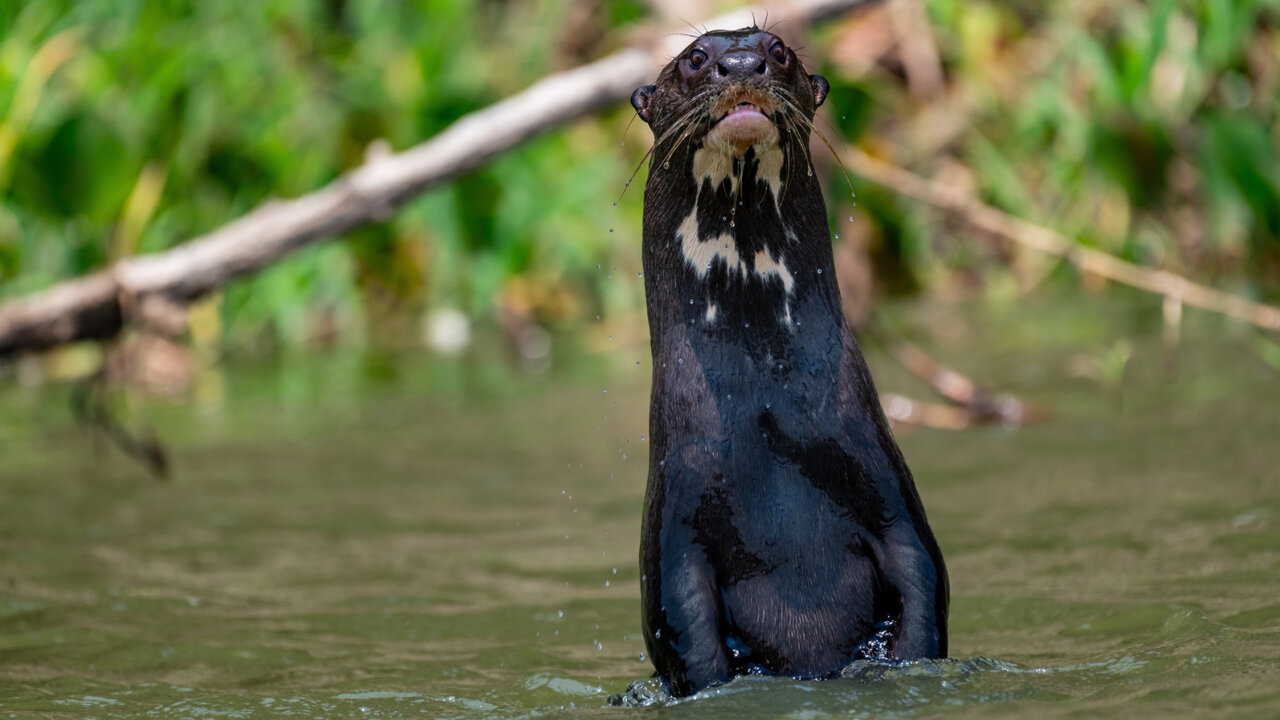
Often described as a sentinel of freshwater ecosystem health, the giant otter depends on intact, connected river systems that cross national boundaries. Photo credit: Omar Torrico ©️WCS.
The latest science tells us we are falling behind. Nearly half of all migratory species protected under this global treaty are now in decline, and roughly a quarter face extinction. These species pollinate crops, disperse seeds, regulate ecosystems, and support fisheries that sustain millions of people. Their decline and disappearance is not only a biodiversity crisis, but a direct threat to food security, local livelihoods, cultural expression, and ecological stability.
What is driving this loss is also becoming clearer. While habitat destruction remains a fundamental threat, overexploitation has emerged as an equally urgent—and often more immediate—pressure. Across oceans, rivers, and landscapes, migratory species are being taken from the wild at unsustainable levels, often illegally, caught in fishing gear as bycatch, hunted for consumption or for profit, or killed as perceived threats.
This is where CMS matters. Unlike other international agreements, CMS is built around a recognition that it is not enough to protect animals in one country if they are vulnerable in another. The treaty focuses on connectivity—protecting migration routes, safeguarding key habitats, and coordinating action across borders.
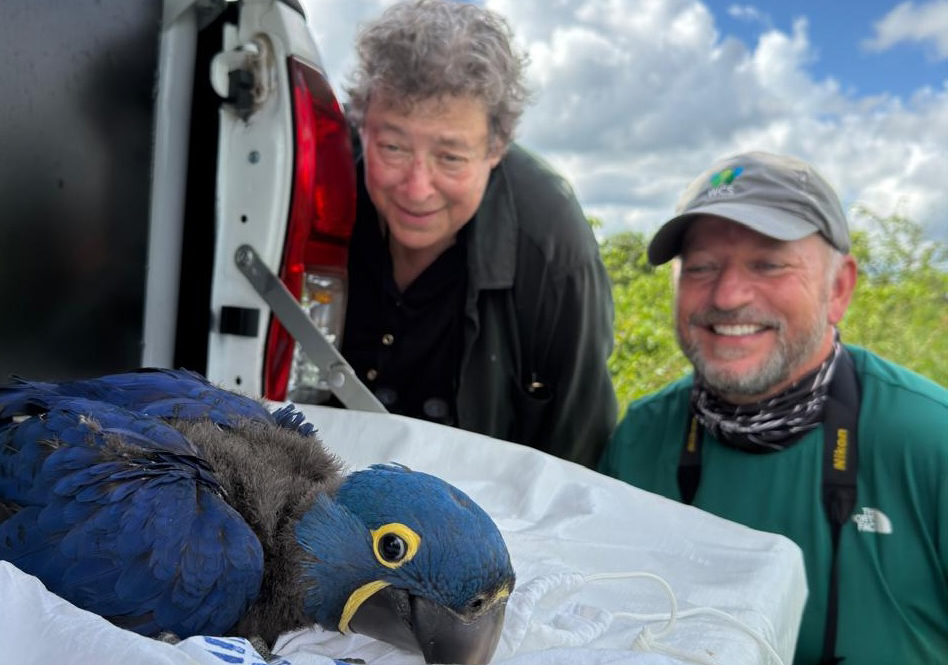
Dr. Susan Lieberman and WCS Brazil Country Director Marcos Amend observe the health of a Hyacinth macaw on a field visit with scientists from the Instituto Arara Azul (Hycacinth Macaw Institute), whose work includes monitoring nests, building artificial nest boxes, and checking on the health of macaw chicks. Photo credit: Marco Amend ©️WCS.
At this meeting, governments will consider proposals to strengthen protections for threatened migratory species such as the striped hyena and the giant otter, as well as several highly migratory shark species and freshwater migratory catfish from major river systems in South America. But the real test of success will also lie beyond these listings.
WCS will be hosting, co-hosting, or speaking at multiple events and working with governments and partners on key issues, including ecological integrity and connectivity; overexploitation and trade; freshwater fish conservation in river basins such as the Amazon, Orinoco, and Pantanal; shark and ray conservation; and Central Asian migratory mammals.
Countries will also decide whether to confront the broader forces driving decline: illegal and unsustainable take, fisheries bycatch, marine pollution, and the fragmentation of habitats that migratory species depend on. And they will consider whether to launch a global initiative to address the taking of animals that could bring critical attention and coordination to a problem that spans ecosystems and jurisdictions.
Brazil is hosting this summit in the Pantanal—the world’s largest tropical wetland and one of its most extraordinary ecosystems, home to species such as jaguars, giant otters, capybaras, giant anteaters, and hyacinth macaws. It is a place defined by ecological richness—and by the reality that protecting it requires cooperation across borders. Brazil has a clear stake in the outcome of this meeting, as do all Parties to the treaty.
Not every government will be present, given today’s geopolitical tensions. But those that are have a critical opportunity—and responsibility—to act decisively, using the best available science to halt and reverse the worrying trends in the conservation of migratory species and their ecosystems.
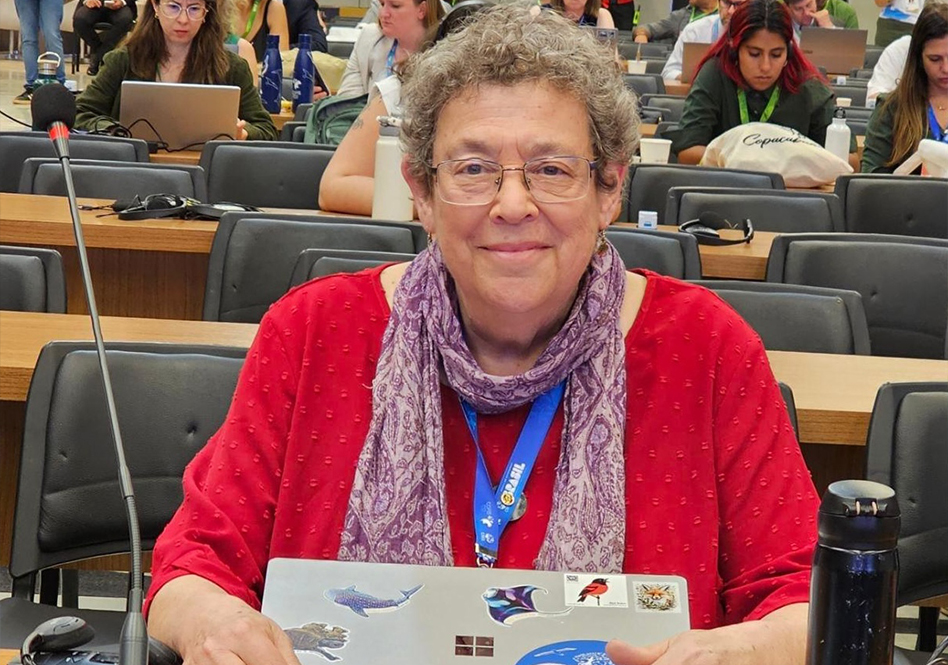
Dr. Susan Lieberman at the 15th conference of the parties (CoP) to the Convention on Migratory Species (CMS), in Campo Grande, Brazil, March 23, 2026.
Freshwater ecosystems offer one of the clearest examples of what is at stake. Migratory fish populations have collapsed in many parts of the world, with some declining by as much as 90 percent over the past half-century. Their survival depends not only on regulating harvest, but on maintaining the integrity and connectivity of river systems.
The jaguars I saw in the Pantanal cannot advocate for themselves. Their survival depends on whether governments are willing to work together—across borders, across sectors, and across competing interests—to protect the ecosystems they depend on.
CMS CoP15 is not just another international meeting. It is a test of whether governments are prepared to act on the science before them—to recognize that conservation in a connected world requires cooperation at a scale that matches the movements of the species we are trying to protect.
The tools exist. The knowledge is there. What is needed now is the will to use them.