
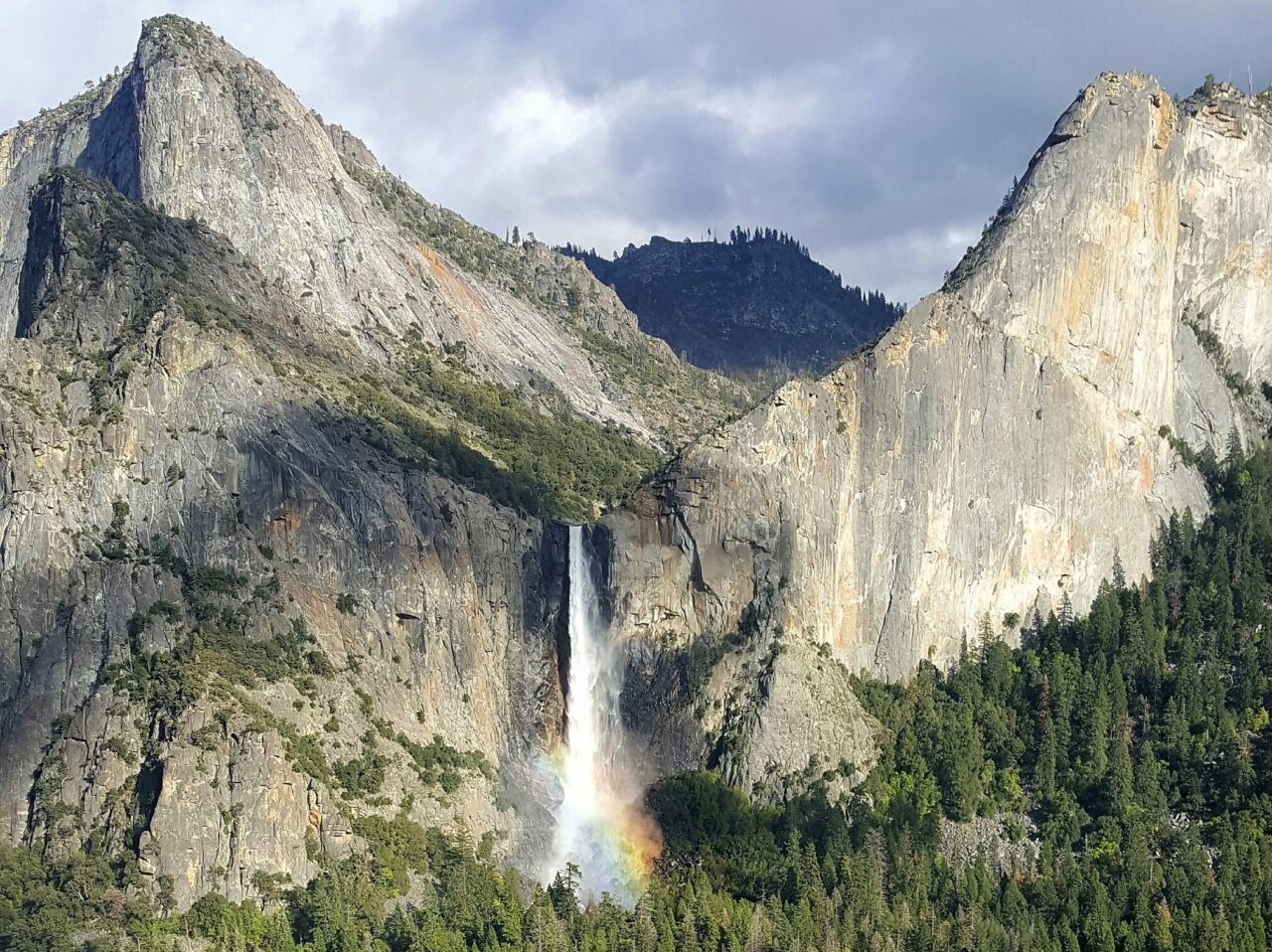
Image of Bridalveil Fall in Yosemite National Park. Credit: Yosemite Conservancy/Gretchen Roecker
Location: Tuolumne, Mariposa, Mono and Madera Counties, California, United States
Size: 748,542 acres (16th largest National Park)
Established: October 1, 1890 (Third national park established in the U.S.)
Overview:
The ancestral homeland of seven associated tribes, Yosemite National Park is home to hundreds of wildlife species and over 1,000 plant species. “Not just a great valley, but a shrine to human foresight, the strength of granite, the power of glaciers, the persistence of life, and the tranquility of the High Sierra.”
— National Park Service
Designated in 1890, Yosemite National Park has been a catalyst for the American National Park system, grounded in the idea that natural beauty and wilderness should be protected for all time. Covering approximately 748,000 acres in California’s Sierra Nevada mountain range, the park is internationally celebrated for its towering granite cliffs, cascading waterfalls, ancient sequoia groves, and deep biological diversity. Yosemite encompasses one of the largest unbroken wilderness areas in the contiguous U.S., where over 94% of the landscape is officially designated as wilderness, and stretches of the Tuolumne and Merced Rivers are protected as Wild and Scenic Rivers.
More than a national treasure, Yosemite was among the first parks to receive international recognition, earning UNESCO World Heritage status in 1984 for its profound geological and ecological significance. Today, it draws over four million visitors annually who come not just for its iconic scenery, but also for education, outdoor recreation, and cultural heritage.
Experience the awe and beauty of Yosemite in 60 seconds:
Hear directly from renowned National Park Ranger Shelton Johnson on why he loves Yosemite, and his answers to other questions from the public:
The Birth of Conservation:
“I have seen persons of emotional temperament stand with tearful eyes, spellbound and dumb with awe, as they got their first view of the Valley from Inspiration Point, overwhelmed in the sudden presence of the unspeakable, stupendous grandeur.”
– Galen Clark, guardian of the Yosemite Grant
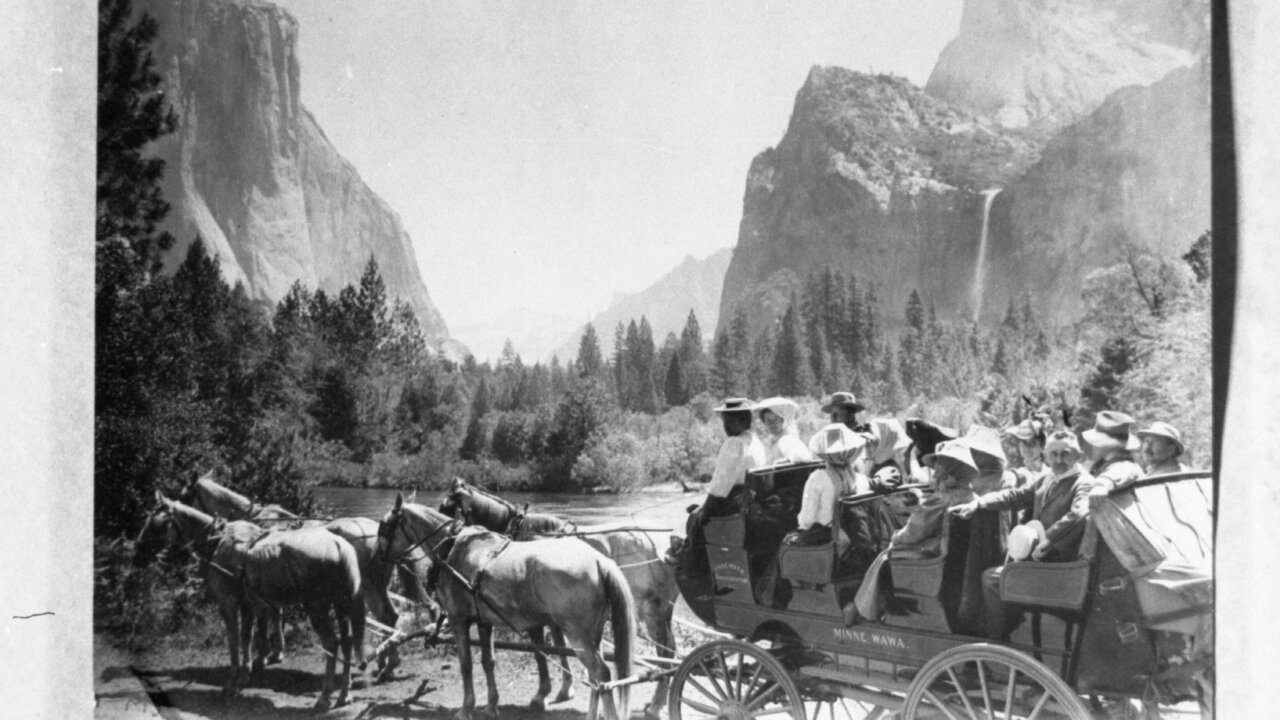
Image of a stagecoach in Yosemite Valley, 1900. Credit: U.S. National Park Service.
Indigenous peoples have lived in Yosemite for as long as 8,000 years, with archeological evidence suggesting that the earliest people ground seeds on small flat stones and hunted using spears and atlatls (spear throwers). The Ahwahneechee people called Yosemite Valley Ahwahnee, meaning “gaping mouth-like place.” In 1851 the Mariposa Battalion, sent to remove Native people from their ancestral homes, became the first recorded group of non-Indigenous people to enter Yosemite Valley. Their reports triggered the curiosity of artists, writers, and photographers, who began sharing Yosemite’s beauty with the world. In 1855 James Hutchings led a tourist expedition into the valley, sparking early tourism in the region.
The valley received federal protection in 1864 when President Lincoln signed the Yosemite Grant, preserving Yosemite Valley and Mariposa Grove for “public use, resort, and recreation.” In 1890, Congress officially established Yosemite National Park, encompassing both the valley and extensive surrounding Sierra landscapes. Yosemite Valley and its groves were transferred from state to federal stewardship in 1906, cementing the park’s modern boundaries.
Valley of Falling Water:
Yosemite is home to countless waterfalls, many making their best showing during spring snowmelt (May–June), while others maintain flow throughout the year. The park’s waterfalls were sculpted by glaciers that carved steep valleys and cliffs, creating dramatic, plunging cascades.
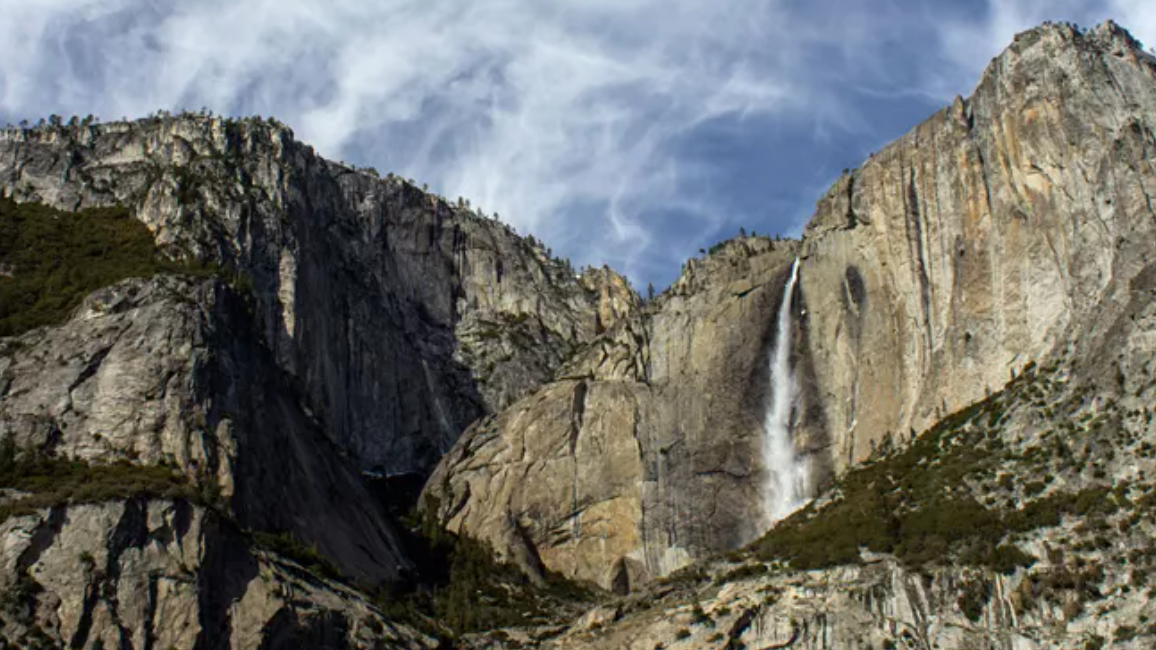
Image of Yosemite Falls in Yosemite National Park. Credit: Yosemite National Park/Cindy Jacoby.
Yosemite Falls – At a towering 2,425 feet, it is one of the world’s tallest waterfalls. Yosemite Falls is actually composed of three separate falls: Upper Yosemite Fall (1,430 ft), Middle Cascades (675 ft), and Lower Yosemite Fall (320 ft). You can see Yosemite Falls from numerous places around Yosemite Valley, especially around Yosemite Village and Yosemite Valley Lodge.
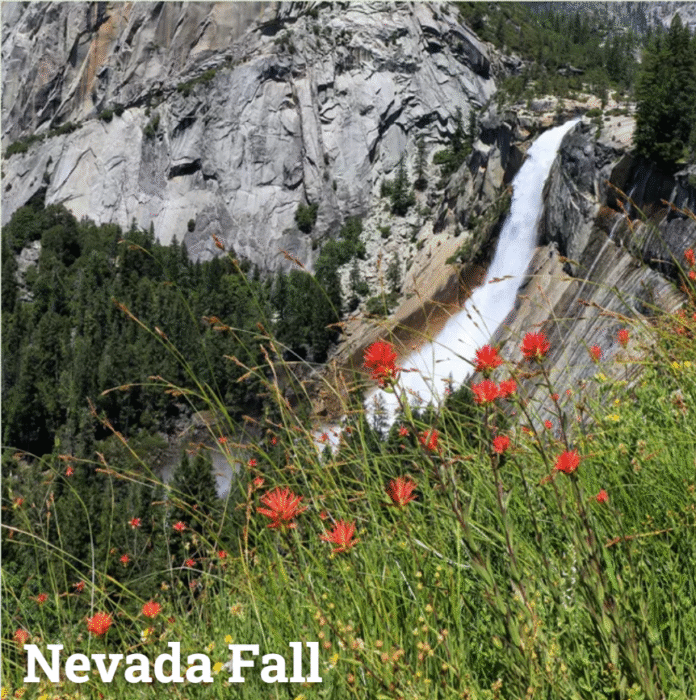
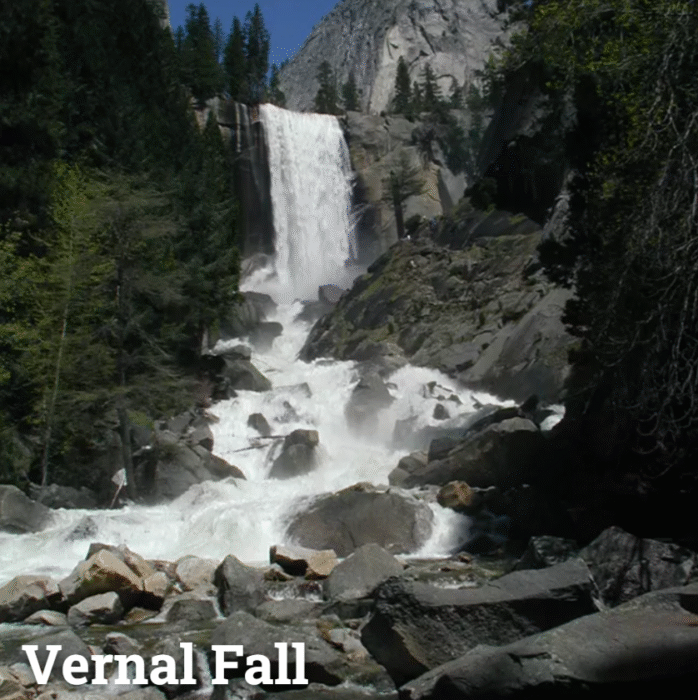
Nevada Fall and Vernal Fall – Nevada Fall (594 ft) and Vernal Fall (317 ft) are two stunning waterfalls that can be seen from Glacier Point. The road to Glacier Point is normally open late May into November. You can also hike to both waterfalls via a steep trail.
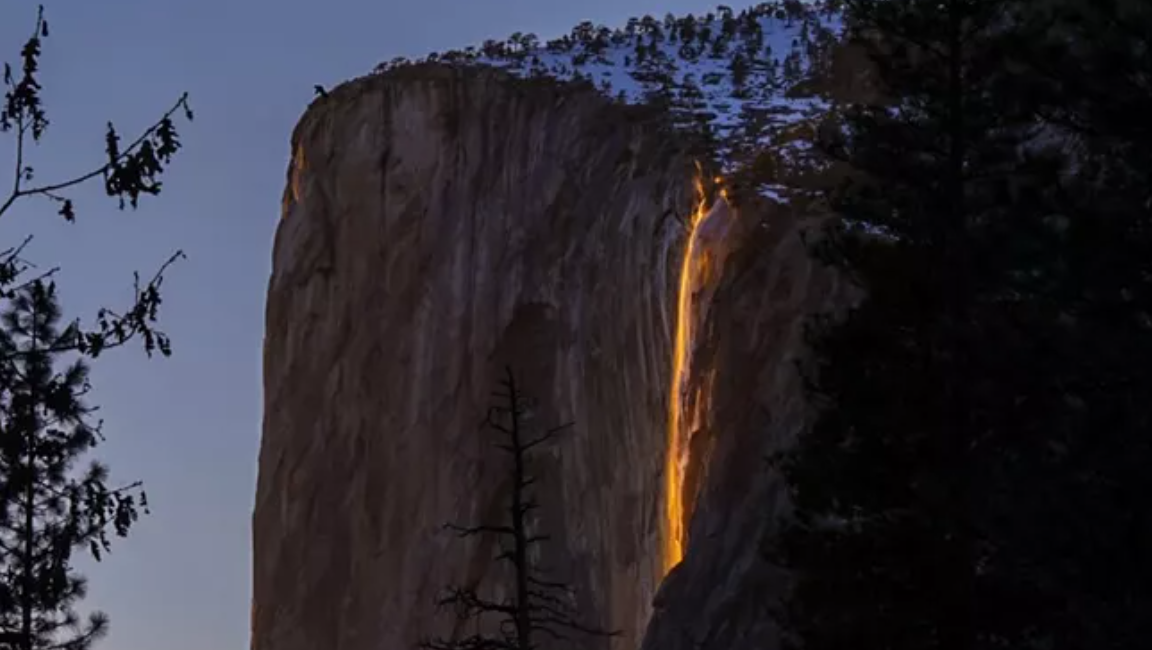
Image of Horsetail Fall in Yosemite National Park. Credit: Yosemite National Park.
Horsetail Fall “Firefall” – Horsetail Fall is a seasonal cascade on the east side of the towering granite wall “El Capitan,” flowing primarily from December through April. In mid-to-late February, under very clear skies and given enough water flow, Horsetail Fall may be backlit at sunset. This causes it to glow a vivid orange, creating the renowned “Firefall” effect. Horsetail Fall is most easily seen from the El Capitan picnic area in Yosemite valley.
Yosemite Peregrines — A Story of Hope:
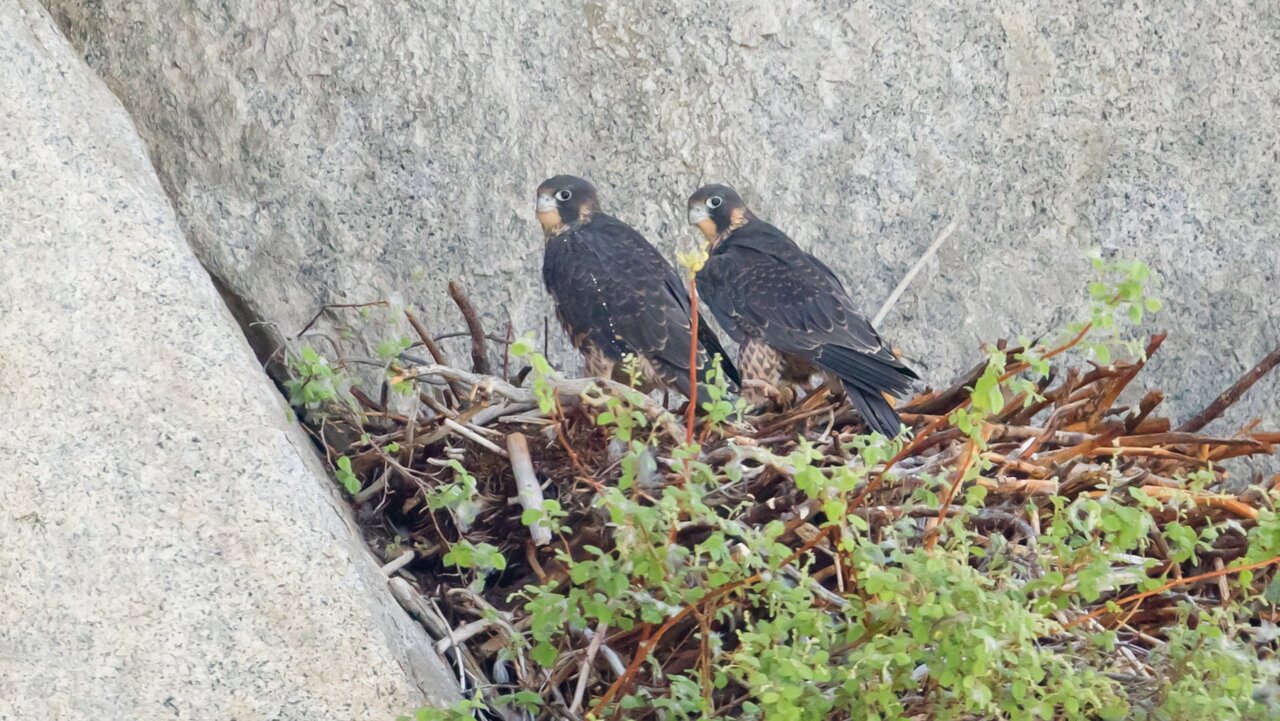
Image of nesting peregrine falcons in Yosemite National Park. Credit: National Park Service.
The towering cliffs of Yosemite National Park offer perfect habitat for the peregrine falcon (Falco peregrinus). This extraordinarily fast bird of prey is able to dive at speeds close to 200 miles per hour! Its remarkable eyesight allows it to spot prey from over a mile away.
The peregrine falcon population in Yosemite began to decline in the 1940s due to the use of pesticides (DDT) by farmers. By the end of the decade, peregrines had completely vanished from the park. A turning point came in 1972, when the government banned the use of DDT.
In 1978, climbers discovered the first nesting peregrine falcons to be seen on El Capitan in over three decades. That same year, active recovery efforts were launched through a collaboration among Yosemite climbers, UCSC’s Predatory Bird Research Group, and park biologists, supported by the Yosemite Conservancy. These initiatives included monitoring nest sites, breeding management, and habitat protection.
This concerted effort paid off. By the 1990s, Yosemite housed the highest nesting density of peregrine falcons in the Sierra Nevada. In 2010, park surveys recorded eight active nests in a single season, the highest number ever documented. Today, thanks to decades of sustained conservation work, the peregrine falcon stands as one of the most compelling success stories of species recovery under the Endangered Species Act.
Check out this video from the National Park Service to learn more:
Yosemite Bears — Black Bear & The Lost Grizzly:
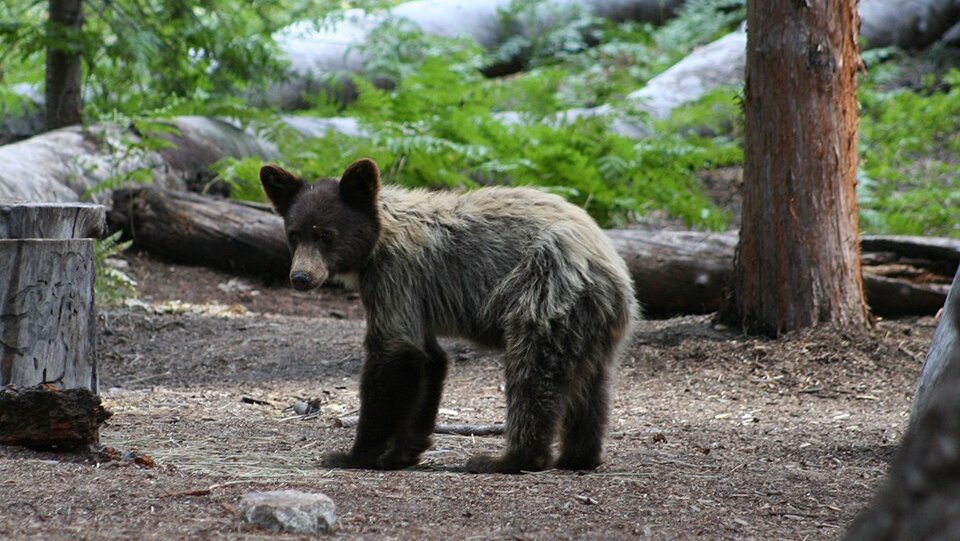
Image of a juvenile black bear in Yosemite National Park. Credit: National Park Service.
Yosemite National Park is home to only one type of bear, the American black bear (Ursus americanus), with an estimated 300 to 500 living in the park today. Contrary to the name, most of the black bears in Yosemite are not black, but brown in color. Truly black-colored black bears are rare in the West. These bears are not typically aggressive toward humans. They eat mostly grasses and berries, with acorns as a favored food in the fall. While adult males average around 250 pounds and females around 150, some grow much larger (the heaviest bear recorded in Yosemite weighed 690 pounds). In winter, black bears enter a state of light hibernation. With lowered body temperature, pulse, and respiration, the bears survive for months without eliminating waste, recycling it instead into energy. Remarkably, the oldest known black bear in Yosemite lived to the age of 32.
Yosemite was once also home to another type of bear, the grizzly bear (Ursus arctos horribilis) — a much larger and more formidable species that roamed California in great numbers. As Euro-American settlers spread across the state, grizzlies were seen as threats to human activity and were relentlessly hunted. The last known grizzly bear in the area was shot outside the Yosemite region in the early 1920s, and the species no longer exists in California — despite its image on the California state flag.
More information on bears in Yosemite HERE.
Sources: All images and data are public domain provided via the Yosemite National Park NPS Site, National Park Service Gallery, and the Yosemite Conservancy.
This piece comes to us from our nonprofit partner Post Pigeon EDU. With a mission to spark curiosity about the amazing nature in our public lands, Nature and Post Pigeon EDU are collaborating on a series of posts that will share the histories and stories of our National Parks.
More about Post Pigeon EDU: To ignite the next generation of planetary stewards, Post Pigeon EDU is a nonprofit organization working to increase exposure and access to the outdoors by bringing public lands and leadership into K-12 classrooms, virtually.