Pallas’s cats have learned to cope with mountain life. They often live in rock dens, which keep them well protected. They hunt insects, small rodents, and birds by using rocks for cover. But out in the open these 9 pound cats are vulnerable to attack ...
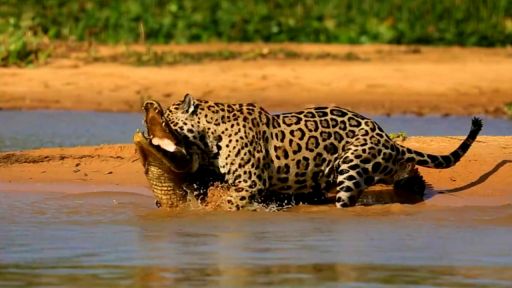
With their aquatic skills – and powerful bite – jaguars are able to prey on the crocodile-like caiman. An extraordinary act of such predation was filmed by a tourist in Brazil’s Pantanal.
The American pronghorn is the second fastest land mammal on the planet - reaching speeds of fifty miles an hour. But it’s pace long baffled scientists. It’s speculated that an arms race between the american cheetah and the pronghorn may be the reason for the ...
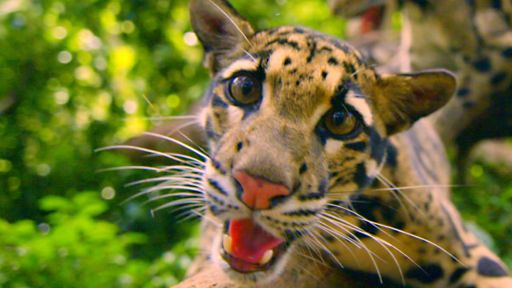
The clouded leopard is the most ancient type of cat alive today and its genetic blue print is shared by all cats. Every feline species alive today shares the clouded leopard’s razor sharp canines, heightened senses and their extreme agility.
In this conclusion, we discover how cats first crossed from Asia into North America and how they went on to become the top predators of the continent. Today there are 13 feline species in the Americas – from the mighty jaguar, to the urban mountain ...
Our experiments tested the abilities of individual hummingbirds to fly in reduced oxygen, such as occurs at extreme high altitudes. The results allow us to understand the limits of high-altitude performance, how these limits differ among species, how they relate to genetic characteristics, and how ...
Weighing up to two tons, the giraffe is a colossal animal and unlike any other. Wildlife vet Julian Fennessy walks us through the giraffe's unique anatomy by examining the bones of a enormous male specimen.
Men and women in charge of caring for Uganda’s wildlife have gathered from across the entire country to capture a rare Rothschild's giraffe. Their goal is to transport the animal across the Nile River, to an area safe from oil drilling.
A population of rare Rothchild’s giraffes are endangered due to poaching and oil drilling plans in the African Nation of Uganda. Dr. Julian Fennessy and the Uganda Wildlife Authority work out an ambitious plan to protect the species.