During two months of blizzards and frigid temperatures dipping to -80 degrees, each male Emperor penguin who breeds in Antarctica must nurture and protect a single egg that harbors his offspring. But once the eggs hatch by midwinter, these dads are ready to move on ...
Have scientists discovered the biggest animal to have ever walked the planet? Deep in a South American desert, a giant is being awakened after 101 million years of sleep. Watch scientists, engineers and artists reconstruct its entire skeleton in a timelapse lasting only 60 seconds.
Sauropods were long-necked, plant-eating dinosaurs that started off relatively small. However, after 20 million years of evolution, they grew to enormous proportions. Naturalist David Attenborough compares the thighbones of early sauropods to the largest ever found.
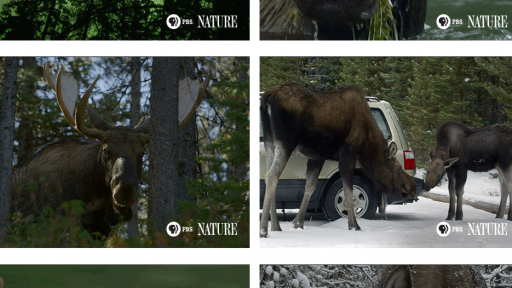
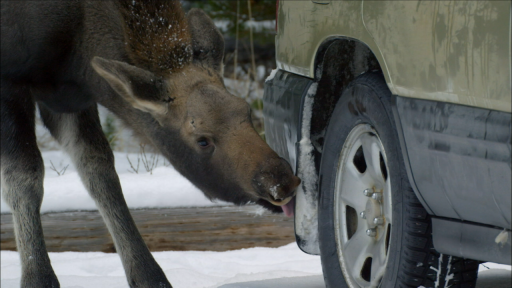
A mineral lick (also known as a salt lick) is a place where animals can go to lick essential mineral nutrients from a deposit of salts and other minerals. When there isn't a natural lick nearby, moose make due with the closest salty object.
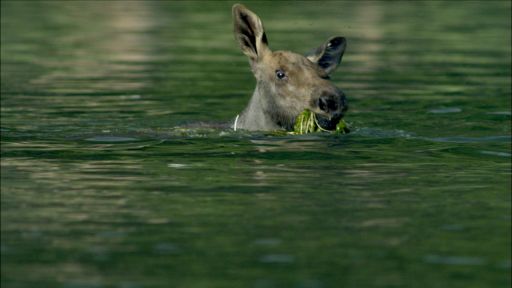
Young moose must learn to swim, so that they can feast on pond weed and other aquatic plants. These plants are the main source of sodium for moose and only available for a short time during the summer months.
Moose populations have declined in recent years and scientists still aren't sure of the cause. A brain parasite, normally found in white-tailed deer, may be partially to blame.
In the most innovative series NATURE has ever presented, the five-part “Spy in the Wild” employs over 30 animatronic “spycams” disguised as animals to secretly record behavior in the wild. These spy cameras reveal animals as having emotions and behavior similar to humans – specifically, ...
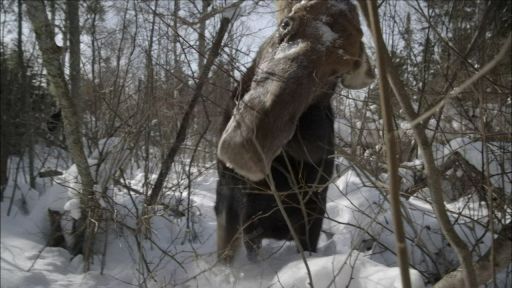
In North America, moose populations are declining. One reason is that many of the newborn calves are not surviving their first year. In order to find out why, an intrepid cameraman spends a year documenting the life of a moose calf and its mother to ...