Skip to main content Skip to footer site map

American Bison & Buffalo

Bison bison

The American bison (Bison bison), often called the American buffalo in North America, is a large grazing mammal native to the continent’s grasslands and prairies. Once numbering in the tens of millions, bison were systematically slaughtered during the 19th century, leaving only a few hundred wild plains bison by 1889. Today, the species has rebounded largely through protection, breeding, and reintroduction, but most bison are now in managed herds rather than truly wild, wide-ranging populations.

More generally, “buffalo” usually refers to Old World animals such as the African (Cape) buffalo (Syncerus caffer) and the Asian water buffalo (Bubalus spp.), while bison occur in North America and parts of Europe. “Buffalo” remains a common (but technically imprecise) North American name for the American bison. Physically, bison have a prominent shoulder hump while true buffalo generally do not. Buffalo tend to have larger, sweeping horns while bison horns are typically shorter and sharper. Bison often look shaggier and “bearded,” especially in the head/shoulder region.
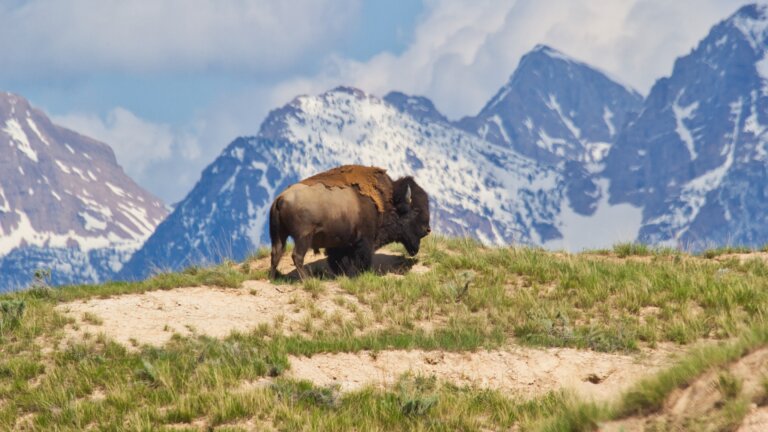
The American bison (Bison bison), often called the American buffalo in North America, is a large grazing mammal native to the continent’s grasslands and prairies. Once numbering in the tens of millions, bison were systematically slaughtered during the 19th century, leaving only a few hundred wild plains bison by 1889. Today, the species has rebounded largely through protection, breeding, and reintroduction, but most bison are now in managed herds rather than truly wild, wide-ranging populations.

More generally, “buffalo” usually refers to Old World animals such as the African (Cape) buffalo (Syncerus caffer) and the Asian water buffalo (Bubalus spp.), while bison occur in North America and parts of Europe. “Buffalo” remains a common (but technically imprecise) North American name for the American bison. Physically, bison have a prominent shoulder hump while true buffalo generally do not. Buffalo tend to have larger, sweeping horns while bison horns are typically shorter and sharper. Bison often look shaggier and “bearded,” especially in the head/shoulder region.