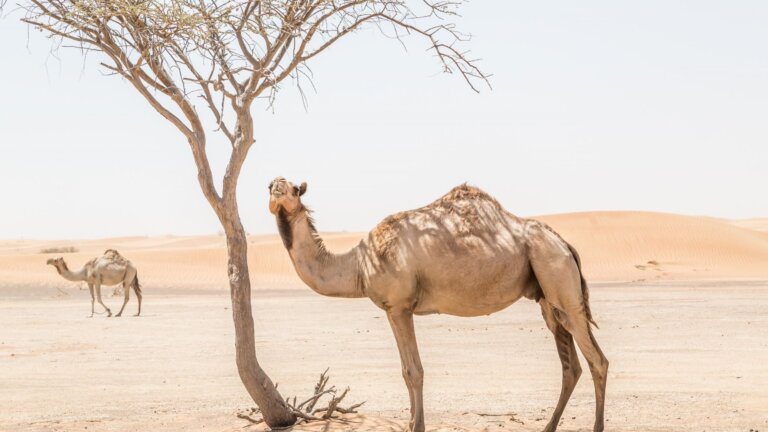
Camel
Camelus bactrianus and Camelus dromedarius
Camels are large even-toed ungulates in the genus Camelus (family Camelidae), well adapted to dry environments. Their characteristic “humps” are fat reserves (not water) that can be metabolized for energy and help them cope when food is scarce.
There are three living species of Camelus: the one-humped dromedary (Camelus dromedarius, domesticated; no truly wild populations today), the two-humped domestic Bactrian camel (Camelus bactrianus), and the two-humped wild Bactrian camel (Camelus ferus), which survives in small populations in China and Mongolia and is not simply a feral form of the domestic Bactrian.