Skip to main content Skip to footer site map

Hippopotamus

Hippopotamidae

Hippopotamuses (family Hippopotamidae) are large, semiaquatic, even‑toed ungulates native to Africa. The common hippopotamus (Hippopotamus amphibius) spends much of the day resting in rivers, lakes, and swamps and typically grazes on land at night; it can remain submerged for about five minutes or more before surfacing to breathe. The only other living species is the smaller, more solitary pygmy hippopotamus (Choeropsis liberiensis), which is restricted to Liberia, Côte d’Ivoire, Guinea, and Sierra Leone and is listed as Endangered. Hippos are the closest living relatives of whales and dolphins (though not their ancestors). Hippos also produce a reddish skin secretion often called “blood sweat” (it’s neither blood nor sweat); the pigments help absorb UV and inhibit bacterial growth. The common hippo is currently classified as Vulnerable on the IUCN Red List.
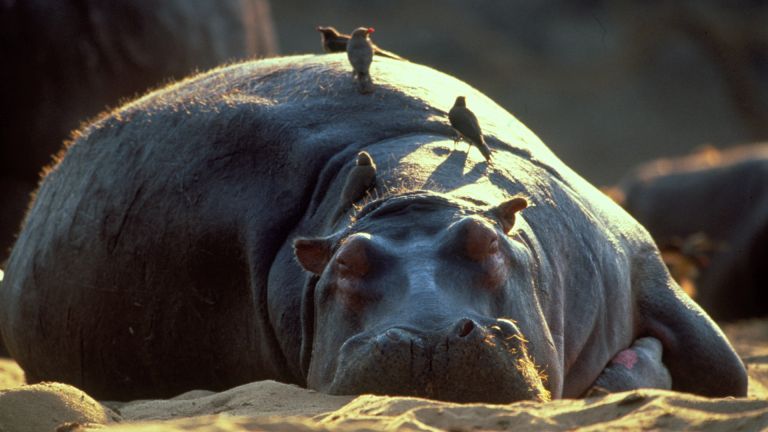
Hippopotamuses (family Hippopotamidae) are large, semiaquatic, even‑toed ungulates native to Africa. The common hippopotamus (Hippopotamus amphibius) spends much of the day resting in rivers, lakes, and swamps and typically grazes on land at night; it can remain submerged for about five minutes or more before surfacing to breathe. The only other living species is the smaller, more solitary pygmy hippopotamus (Choeropsis liberiensis), which is restricted to Liberia, Côte d’Ivoire, Guinea, and Sierra Leone and is listed as Endangered. Hippos are the closest living relatives of whales and dolphins (though not their ancestors). Hippos also produce a reddish skin secretion often called “blood sweat” (it’s neither blood nor sweat); the pigments help absorb UV and inhibit bacterial growth. The common hippo is currently classified as Vulnerable on the IUCN Red List.